

 English
 русский
 Español
 عربى

Content
- 1 What Is a Free-Stop Gas Spring?
- 2 How the Product Works
- 3 Advantages Over Conventional Alternatives
- 4 Key Application Areas
- 5 Material and Cylinder Options
- 6 Manufacturing Strengths and Product Development Capability
- 7 Engineering and Selection Guidelines
- 8 Quality Control for Reliable Performance
- 9 Why Manufacturing Partnership Matters
- 10 Free-Stop Gas Springs in Ergonomic Furniture Design
- 11 Installation and Maintenance Recommendations
- 12 Common Design Mistakes to Avoid
- 13 Frequently Asked Questions
- 13.1 What is the main difference between a free-stop gas spring and a standard gas spring?
- 13.2 Does a free-stop gas spring require a release lever?
- 13.3 Can it hold a panel at any angle?
- 13.4 What products are suitable for this type of gas spring?
- 13.5 Can free-stop gas springs be used with standing desks?
- 13.6 Are stainless steel cylinders available?
- 13.7 How do I select the correct gas force?
- 13.8 Can one gas spring be used on a wide panel?
- 13.9 Does the product eliminate the need for mechanical safety stops?
- 13.10 What information should be provided when requesting a quotation?
- 13.11 Why is application testing important?
- 14 Conclusion
- 15 References
- 16 Product: Free-stop gas spring (friction-type free-stop gas strut)
Free-Stop Gas Springs for Flexible, Controlled Motion in Furniture and Equipment
2026-08-26
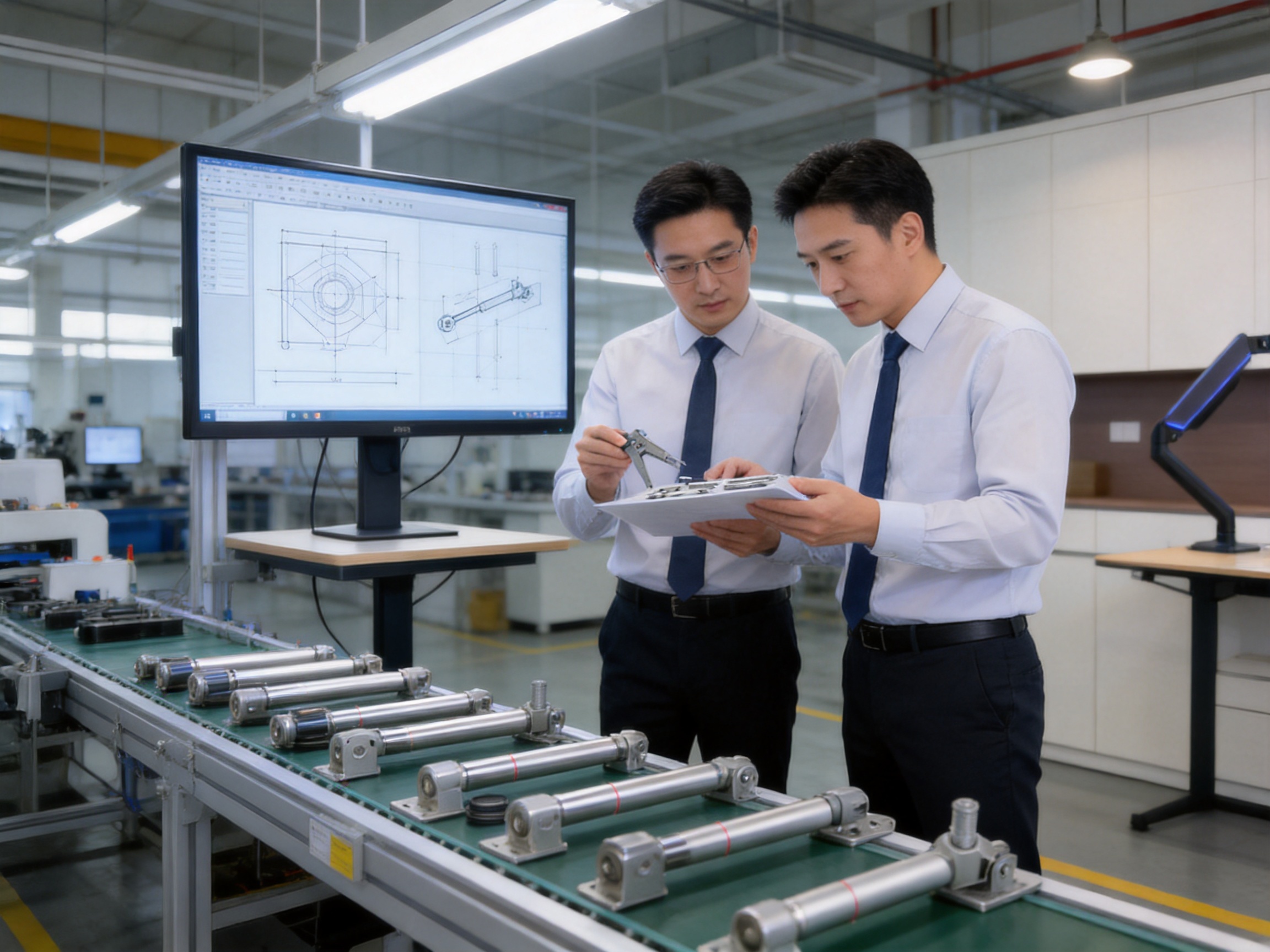
Modern furniture and equipment increasingly require movement that is smooth, quiet, safe, and easy to control. A panel may need to remain open at several different angles. A monitor platform may need to stop at a precise viewing height. An overhead cabinet door may need lifting assistance without a visible handle, release lever, or complicated control system. In these applications, a conventional gas spring may provide useful support, but it may not deliver the positioning flexibility users expect.
Free-stop gas springs, also called friction-type gas springs or arbitrary-stop support struts, are designed to solve this problem. They combine gas-assisted lifting with friction-based resistance, allowing a connected panel or platform to hover and remain in position at practically any point within its stroke. The user can manually push or pull the supported component to adjust its position, without operating an external unlocking switch.
This operating principle places the free-stop gas spring between two familiar product categories. A standard free-extension gas spring assists movement but normally extends toward a fixed end position. A controllable self-locking gas spring can lock and release through a valve, lever, cable, or button. A free-stop model uses internal friction to provide continuous resistance, giving users direct and intuitive control with fewer visible components.
For manufacturers of adjustable furniture, cabinets, office equipment, display systems, and lightweight access panels, this design offers a practical balance of performance, appearance, installation simplicity, and cost. SuZhou Skyhone Intelligent Technology Co., Ltd. develops and supplies gas spring solutions as part of its broader manufacturing focus on standing desks, adjustable office tables, and intelligent office space equipment. With access to the mature furniture manufacturing ecosystem in Suzhou and the Yangtze River Delta, the company is positioned to support customized applications requiring dependable motion and integrated product development.
What Is a Free-Stop Gas Spring?
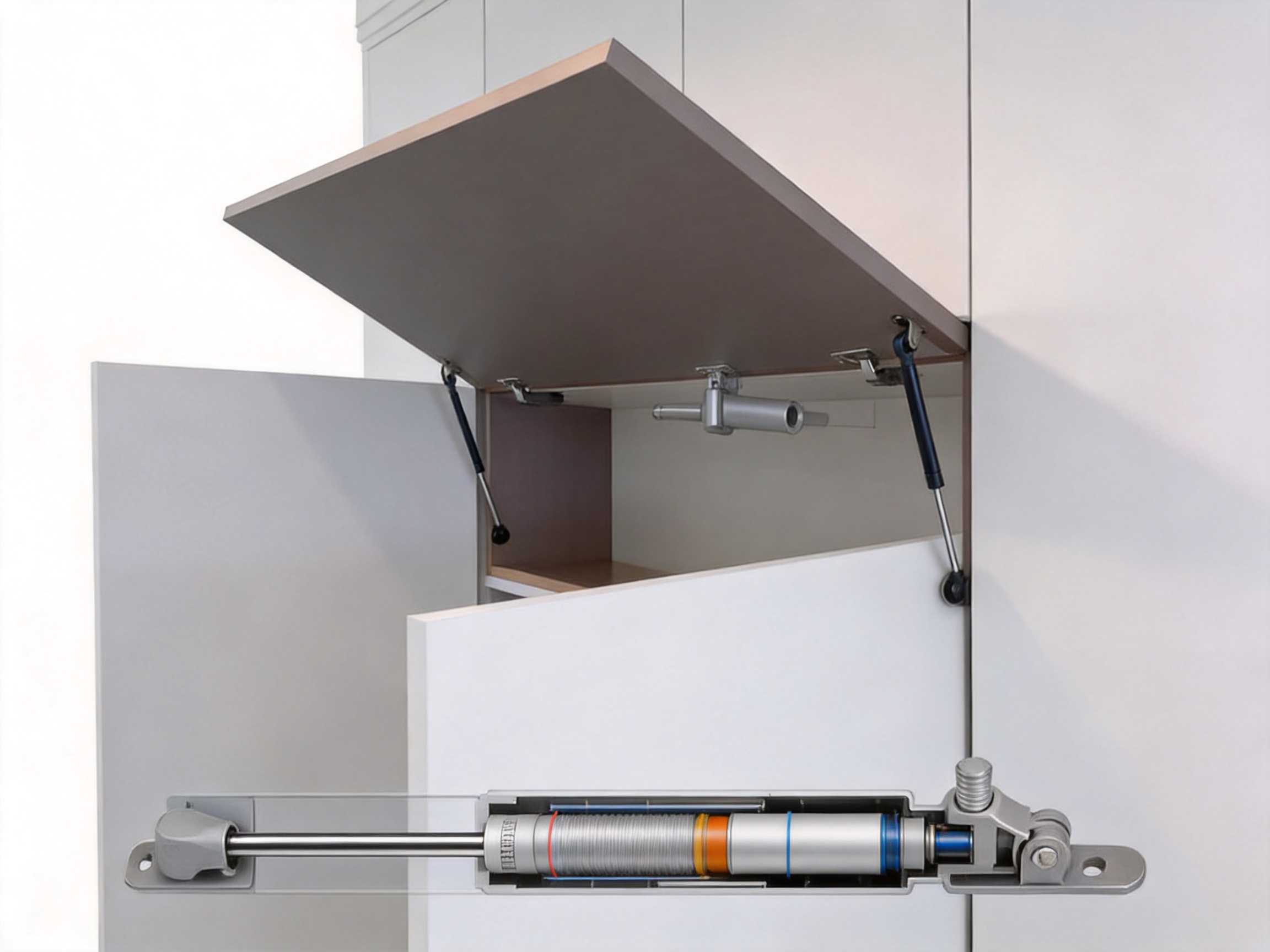
A free-stop gas spring is a compact support device that uses pressurized gas and mechanical friction to resist movement throughout its working stroke. The pressurized gas creates an extension force, while the friction mechanism produces a stabilizing resistance. When the user moves the supported component, the spring assists the motion and absorbs part of the load. When the user stops applying force, the friction mechanism helps the component remain at the selected position.
The term “free-stop” refers to the ability to stop at multiple positions rather than only at the fully extended or fully compressed end of the stroke. Depending on the application, the supported part may be positioned at a low angle, an intermediate angle, or a high angle. This makes the product especially suitable for components that need frequent adjustment by different users.
Unlike a locking gas spring with a release control, the free-stop design does not require the user to find and operate a separate release mechanism. The movement is controlled through direct manual pressure. This creates a clean user experience: lift, lower, push, or pull the panel until it reaches the desired position.
Although the product is simple to operate, its internal design must be carefully balanced. The gas force must be matched to the weight and geometry of the supported component. The friction resistance must be strong enough to hold the position but not so high that the user experiences excessive operating force. Sealing, tube quality, rod finish, connection design, and dimensional accuracy also influence service life and consistency.
How the Product Works
Pressurized Nitrogen Support
The main lifting force comes from high-pressure nitrogen sealed inside the cylinder. When the piston rod moves, the internal gas pressure acts on the piston and produces an extension force. This force can offset part of the weight of a panel, lid, screen, or platform.
The gas does not normally carry the entire load in a free-stop application. Instead, it reduces the manual effort needed to move the component. This is important because a panel that is too heavy to lift directly can become easy to operate when the gas force is correctly selected. The result is assisted motion rather than uncontrolled movement.
Friction-Based Position Resistance
The defining feature of a free-stop gas spring is its wear-resistant friction braking mechanism. The mechanism creates resistance against rod movement. When the user applies force, the gas spring moves gradually. When the applied force is removed, the friction resistance helps prevent the rod from moving freely under the influence of the gas force or the external load.
This arrangement makes it possible to hold the supported part at many positions within the stroke. The exact holding capability depends on the spring specification, installation angle, load distribution, friction characteristics, and the center of gravity of the connected component. Proper selection and testing are therefore essential for reliable performance.
Controlled, Cushioned Movement
In addition to supporting the load, the gas spring helps moderate movement near the ends of the stroke. A properly configured product can reduce sudden impact when a panel approaches its open or closed position. This contributes to a quieter user experience and helps protect hinges, brackets, cabinet structures, and connected equipment.
The cushioning effect is particularly valuable in residential and office environments, where repeated slamming or abrupt movement can create noise and accelerate wear. For monitor stands, display panels, and cabinet doors, controlled movement also improves the perceived quality of the finished product.
Advantages Over Conventional Alternatives
More Flexible Than Standard Free-Extension Gas Springs
A conventional free-extension gas spring is generally designed to extend when released. It can assist opening and may hold a component at an end position, but it is not normally intended to stop securely at every intermediate position. If users need a panel to remain halfway open, additional hinges, stops, stays, or external support mechanisms may be required.
A free-stop gas spring provides more positioning flexibility within the same general form factor. It can help reduce the number of separate mechanical stops and give users a smoother adjustment experience. This is valuable in applications where the ideal position changes according to the user, the task, or the amount of clearance available.
Simpler Than Lever-Controlled Locking Gas Springs
A self-locking gas spring with a valve or release system can provide firm locking, but it usually requires a control action. The user may need to press a button, pull a cable, operate a lever, or coordinate the release mechanism while moving the panel. This can be appropriate for applications demanding a high level of mechanical locking, but it may be unnecessary for lightweight panels and frequently adjusted equipment.
Free-stop models eliminate the need for exposed controls. This simplifies operation and can improve the appearance of the final product. It also reduces the number of visible parts that need to be integrated into the furniture or equipment design. For clean, minimalist products, the absence of a handle or cable is a significant aesthetic advantage.
Cleaner Appearance Than External Stays and Supports
External support arms, folding stays, and manual brackets may occupy valuable space and interrupt the visual design of a cabinet or desk. They can also create pinch points or require the user to engage an additional component before adjusting the panel.
A gas spring can be mounted inside or alongside the structure, where it provides support without dominating the appearance. The rod and cylinder remain compact compared with many external support systems. When combined with suitable brackets and carefully selected mounting points, the result is a streamlined and professional product.
More Convenient for Frequent Fine Adjustment
Some mechanisms work well when a component is opened once and left in a fixed position. They are less convenient when the component must be adjusted repeatedly throughout the day. Free-stop gas springs are intended for direct, frequent adjustment. Users can make small changes without searching for a locking control or repositioning a separate support piece.
This characteristic is useful in office equipment, monitor platforms, laptop risers, presentation surfaces, adjustable display panels, and flip-up furniture. It supports a more natural interaction between the user and the product.
Quiet Operation
Noise is an important consideration in homes, offices, libraries, reception areas, studios, and meeting rooms. A friction-type gas spring supports gradual movement and reduces the likelihood of uncontrolled opening or closing. The product therefore contributes to a quieter environment than many simple spring-loaded or manually braced alternatives.
| Feature | Free-Stop Gas Spring | Standard Free-Extension Gas Spring | Controllable Self-Locking Gas Spring | External Mechanical Stay |
|---|---|---|---|---|
| Intermediate positioning | Available throughout much of the stroke | Limited without additional stops | Available when the locking system is released | Depends on stay design and preset positions |
| External release control | Not normally required | Not normally required | Usually required | Often requires manual engagement |
| Visual appearance | Compact and clean | Compact and clean | May include a valve, lever, or cable | May be visibly mounted outside the structure |
| User adjustment | Direct push or pull | Assisted extension or compression | Release and move, then lock | Move and secure separately |
| Typical application focus | Lightweight panels requiring frequent adjustment | Opening assistance and end-position support | Applications needing controlled locking | Preset support or occasional positioning |
The comparison shows why free-stop gas springs occupy a useful middle position. They are not intended to replace every type of gas spring or mechanical stay. Their strongest advantage is the combination of adjustable positioning, direct operation, quiet movement, and a clean integrated appearance.
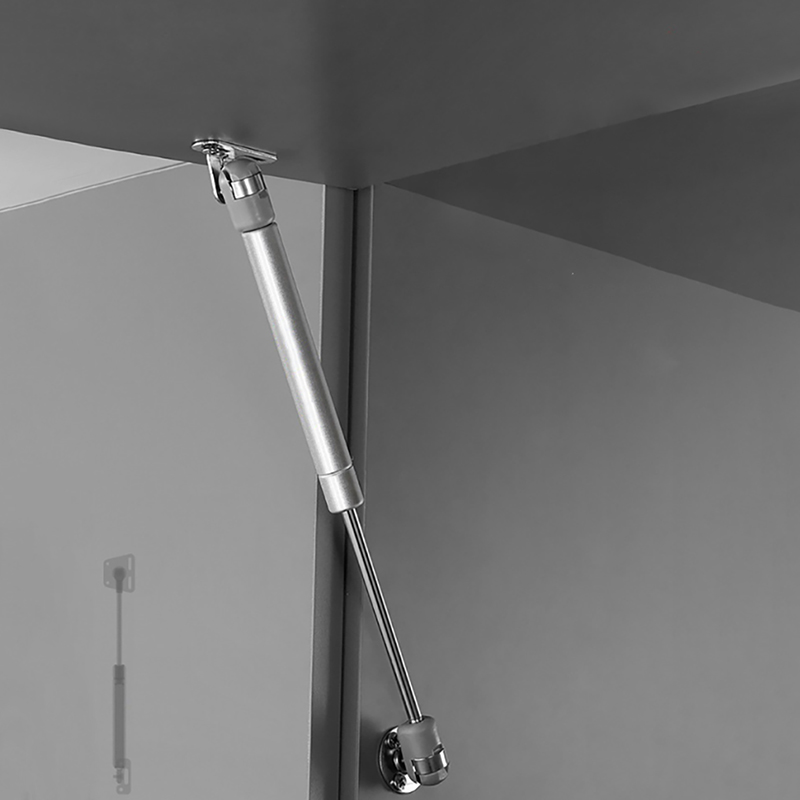
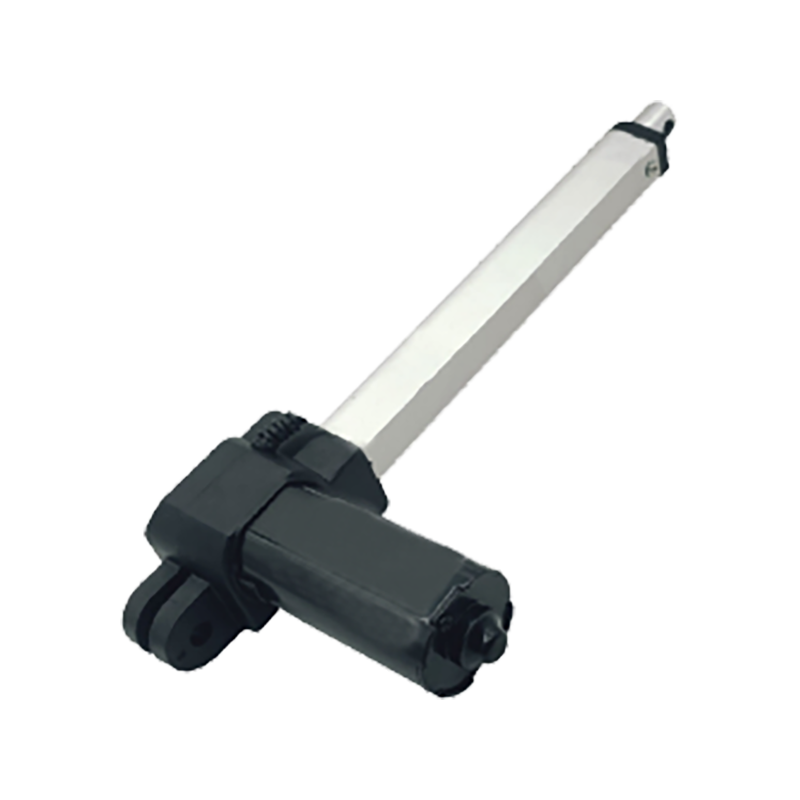
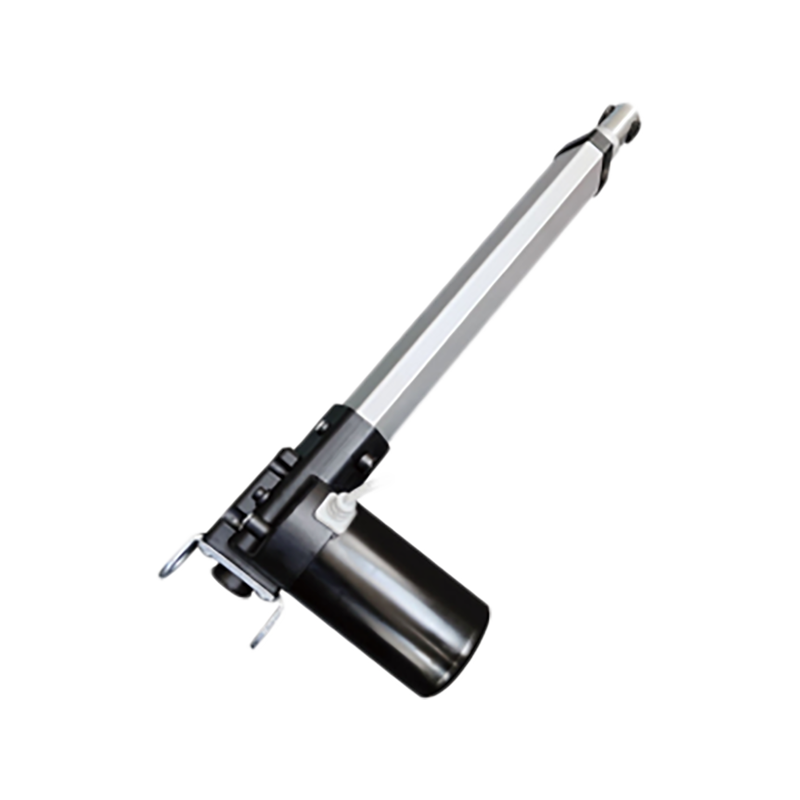
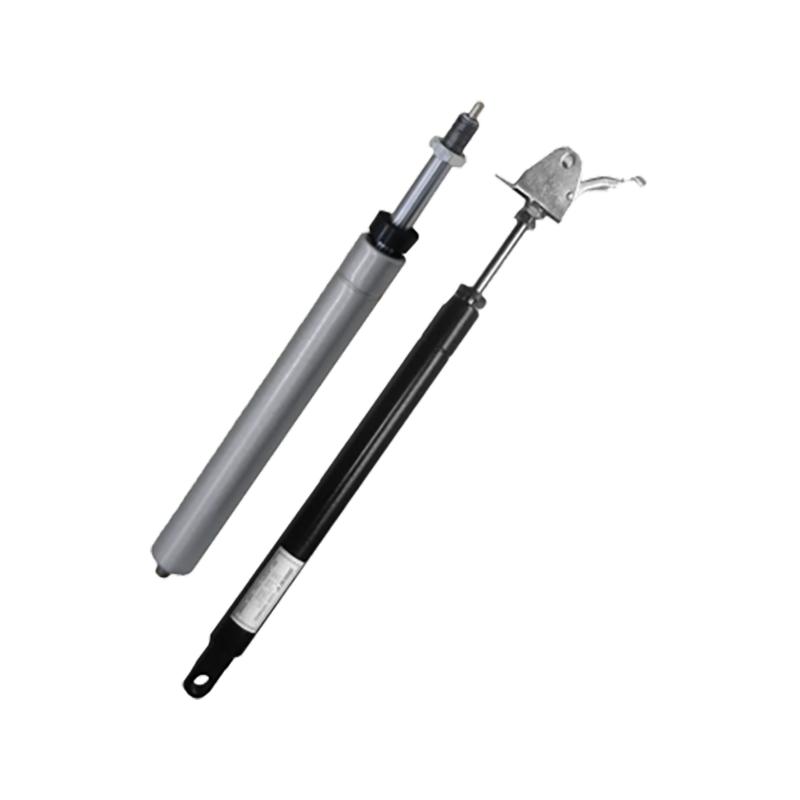
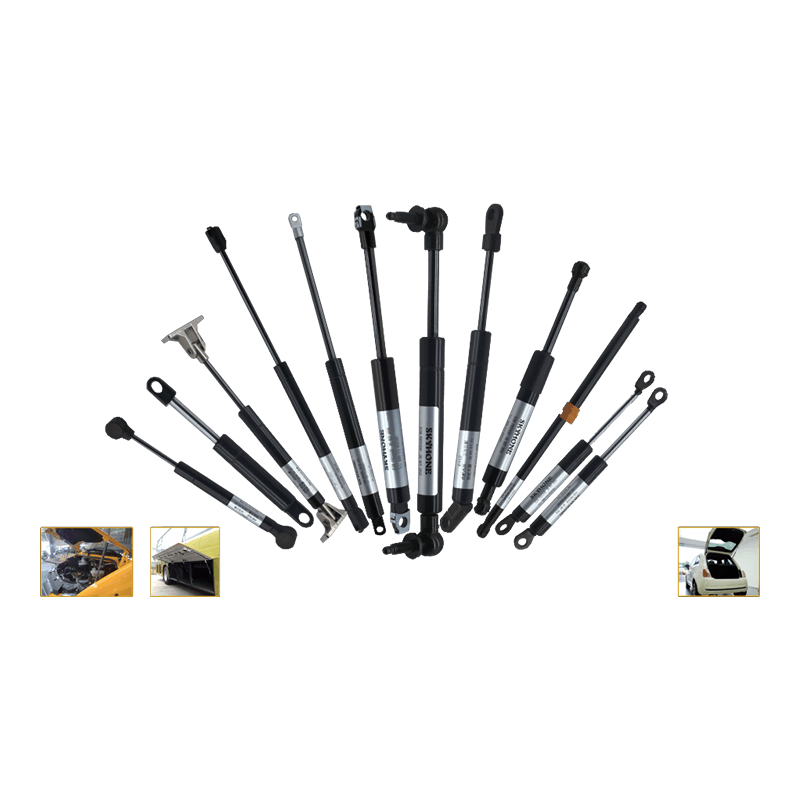
Free-stop gas spring (friction-type free-stop gas strut)
Key Application Areas
Overhead Kitchen Cabinet Doors
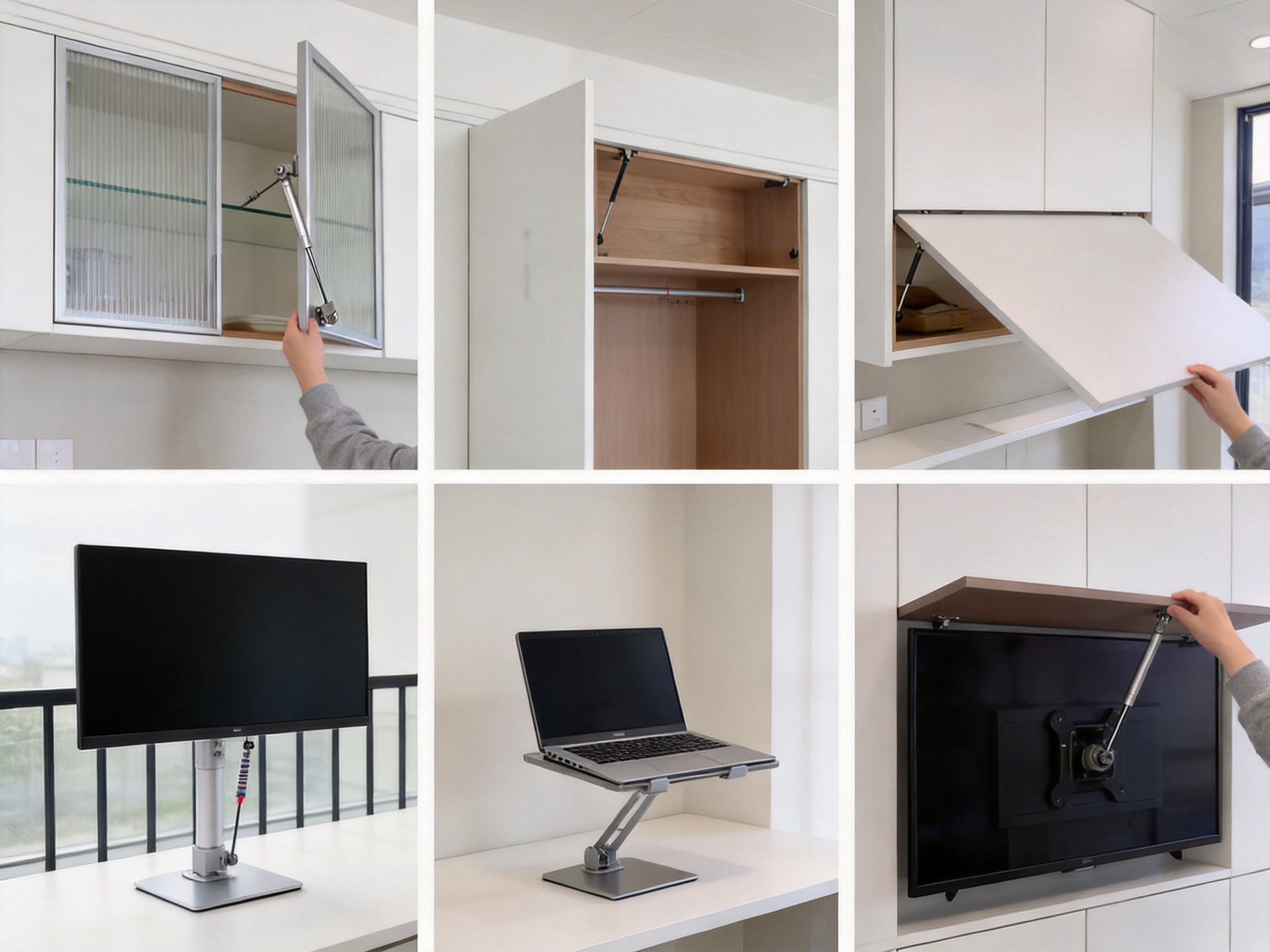
Overhead cabinet doors often need lifting assistance because the user opens them above shoulder level. A free-stop gas spring can reduce the effort required to raise the door and help it remain at a convenient angle. This allows the user to access the cabinet without holding the door continuously.
In contemporary kitchens, aluminum-framed glass doors and slim panels are increasingly common. The support mechanism must therefore fit within a compact space and preserve the clean appearance of the cabinet. A free-stop gas spring can be positioned along the side or within the cabinet structure, reducing the need for a large visible hinge or external stay.
The correct design must account for door weight, width, hinge position, center of gravity, opening angle, and available mounting depth. A pair of gas springs may be used for wider doors to distribute the load and reduce twisting. Application testing should confirm that the door remains stable at the required positions and that the operating force is comfortable for the intended users.
Aluminum-Framed Glass Doors
Glass doors require special attention because the glass panel may be heavy while the aluminum frame has limited space for hardware. Smooth support is important to prevent stress on the frame and reduce abrupt movement. The gas spring should be selected according to the complete door assembly rather than the frame alone.
Free-stop functionality can be useful when the door must stay partially open for ventilation, display, cleaning, or access. The absence of a separate locking handle also helps preserve the visual simplicity of the glass-and-aluminum design.
Wardrobe Flip-Up Panels
Flip-up wardrobe panels are often installed in bedrooms, dressing areas, storage units, and custom furniture. Users may want the panel to remain open while selecting clothing or accessing the storage space. A free-stop gas spring supports the panel while allowing the opening angle to be adjusted according to the available room.
Because wardrobes are frequently used in confined spaces, the panel should not rise too quickly or fall unexpectedly. The gas-assisted friction design helps provide a more measured movement pattern. Compact cylinders and suitable end fittings can be specified to match the thickness and construction of the furniture.
Balcony Storage Units
Balcony storage cabinets may use upward-opening lids or doors. These panels can be difficult to handle because the user may have limited room to stand in front of the cabinet. A free-stop gas spring can reduce lifting effort and help keep the lid in a convenient position.
Outdoor or semi-outdoor locations require careful consideration of material selection and environmental exposure. Cylinder options including stainless steel can be considered where corrosion resistance is important. The final specification should also address sealing, surface treatment, moisture, temperature variation, and the expected operating frequency.
Monitor Lift Stands and Laptop Risers
Ergonomic workstations often require screens and work surfaces to be adjusted according to the user’s height, posture, and task. A free-stop gas spring can support a monitor platform or laptop riser while allowing users to make small height adjustments manually.
In these products, movement quality is as important as lifting force. Excessive resistance may make adjustment tiring, while insufficient resistance may allow the platform to drift. A well-matched friction mechanism helps the platform respond predictably to the user’s hand force. The compact design also leaves more room for cable management and the integration of electronics.
Flip-Up TV Mounts
Flip-up television mounts and media panels may be installed in cabinets, recreational vehicles, compact apartments, hospitality spaces, or multipurpose rooms. The screen may need to be lowered for viewing and returned to a stored position afterward.
A free-stop gas spring can make the panel easier to move while helping it remain at a selected angle. This is useful where the viewing direction changes or where the screen must avoid reflections. The gas spring must be selected carefully to account for the screen mass, mounting bracket, lever arm, and center of gravity.
Adjustable Display Panels and Office Equipment
Training rooms, reception areas, retail displays, and collaborative offices may use adjustable panels that need to be positioned for different presentations or users. A friction-type gas spring provides a practical way to create manual adjustability without adding a complex motor or electronic controller.
For lightweight equipment, this approach can reduce system cost, simplify maintenance, and improve reliability. It is especially suitable when the user needs flexible positioning but does not require automated movement or precise electronic memory settings.
Material and Cylinder Options
The cylinder is a central structural and functional element of the gas spring. It contains the pressurized nitrogen and supports the internal piston and friction components. Material selection affects strength, corrosion resistance, appearance, weight, and application suitability.
Seamless Precision Steel Tubing
Seamless precision steel tubing provides a strong and stable housing for many furniture and equipment applications. Its dimensional consistency supports reliable assembly and helps maintain the alignment of internal components. Steel cylinders can also be combined with suitable surface treatments to improve appearance and resistance to normal indoor conditions.
For office furniture, cabinets, adjustable tables, and indoor equipment, precision steel tubing offers an effective balance between performance and cost. It is suitable for applications in which the gas spring is protected from severe environmental exposure and where the product must remain compact and structurally dependable.
Stainless Steel Cylinders
Stainless steel cylinders are an option for applications where improved corrosion resistance or a particular visual finish is required. They may be considered for balcony storage, humid environments, premium furniture, kitchen installations, and equipment exposed to frequent cleaning.
Material selection should be based on the complete operating environment rather than appearance alone. Temperature, humidity, cleaning chemicals, salt exposure, installation position, and service frequency should all be evaluated during product development.
Rod Surface and Sealing Considerations
The piston rod moves through the sealing area during operation, so its surface quality and dimensional accuracy are important. A well-finished rod helps reduce wear on seals and supports consistent movement. Sealing quality is equally important because the cylinder must retain internal pressure over its service life.
For manufacturers, these details highlight the importance of working with a supplier that understands both the mechanical design and the production process. A gas spring is not simply a tube filled with gas. It is a coordinated assembly in which material quality, machining, sealing, friction control, gas filling, and end fitting design all affect the final result.
Manufacturing Strengths and Product Development Capability
SuZhou Skyhone Intelligent Technology Co., Ltd. is a professional manufacturing enterprise engaged in the research and development, production, sales, and service of standing desks and related adjustable equipment. Its product direction connects closely with the requirements of free-stop gas springs: ergonomic movement, adjustable positioning, compact integration, and reliable daily operation.
The company is based in Suzhou, a core area of the Yangtze River Delta furniture industry. This location provides access to a broad industrial network that supports metal processing, furniture manufacturing, surface treatment, component sourcing, assembly, logistics, and product customization. For customers developing adjustable desks or related furniture, proximity to this manufacturing ecosystem can shorten communication cycles and support more coordinated product development.
Integrated Research and Development
Free-stop gas springs are application-sensitive components. The correct result depends not only on the nominal gas force but also on the geometry of the complete product. A supplier with product development capability can help evaluate the relationship between the gas spring and the connected panel, platform, or frame.
Important development questions include the following:
How much does the supported component weigh?
Where is its center of gravity?
What are the open and closed angles?
How much installation space is available?
What operating force should the user feel?
How frequently will the component be adjusted?
Will the product be used indoors, outdoors, or in a humid environment?
Does the application require one gas spring or a synchronized pair?
By considering these factors during development, the supplier can move beyond a generic catalog selection and work toward a more suitable customized solution.
Precision-Oriented Production
Production quality is particularly important for friction-type mechanisms because small variations can influence movement resistance. The cylinder, piston rod, friction elements, seals, end fittings, and gas charge must work together. Dimensional control and consistent assembly practices help reduce differences between individual units.
A professional manufacturing process should include material inspection, dimensional checks, component preparation, controlled assembly, sealing verification, gas filling, functional testing, and final inspection. The exact process may vary according to the model and customer requirements, but the general objective remains the same: to deliver stable force, consistent friction, and dependable movement.
Customization for Furniture and Equipment
Adjustable furniture manufacturers rarely use one universal specification for every product. Panel dimensions, mounting points, load distribution, available stroke, and desired opening angle can vary substantially. A supplier capable of supporting customized development can help adapt the gas spring length, stroke, force range, cylinder material, rod configuration, end fittings, and surface treatment.
Customization can also include packaging, labeling, batch requirements, assembly instructions, and coordinated delivery. These services are valuable for manufacturers that integrate the gas spring into a larger production line or export finished furniture to different markets.
Connection with Intelligent Office Solutions
The company’s broader focus on standing desks and ergonomic office tables creates a practical understanding of how mechanical components affect the user experience of an adjustable product. A gas spring used in a monitor lift, laptop riser, or adjustable display should support the same general objectives as an ergonomic desk: comfortable operation, flexible positioning, clean design, and improved interaction between the user and the workspace.
Although a free-stop gas spring is a mechanical component, it can contribute to a larger intelligent office solution by enabling manual adjustment where a motorized system would be unnecessary. This can help manufacturers create hybrid products that combine electric adjustment for major height changes with friction-assisted manual adjustment for smaller panels or accessories.
Engineering and Selection Guidelines
Calculate the Effective Load
The weight of the panel or platform is only one part of the selection process. The gas spring force must also account for the distance between the component’s center of gravity and the hinge or pivot point. A long panel may create a larger moment even when its total weight is moderate.
Mounting geometry changes the effective mechanical advantage of the gas spring. The angle between the gas spring and the moving component varies during operation, so the perceived force may change throughout the stroke. Engineers should evaluate the opening and closing forces at multiple positions instead of relying on a single static estimate.
Choose the Correct Stroke and Extended Length
The stroke determines how far the rod can travel. The extended length affects the maximum mounting distance, while the compressed length affects the available space when the panel is closed. Both dimensions must be compatible with the hinge position and the desired movement range.
A gas spring that is too short may not provide the required opening angle. One that is too long may interfere with the structure or prevent the panel from closing fully. Early layout review can prevent these problems and reduce the need for later redesign.
Consider the Number of Gas Springs
Small and lightweight panels may use one gas spring. Wider or heavier panels may require two units to distribute the load. A pair can also reduce twisting and improve stability, particularly when the user applies force away from the center of the panel.
When two gas springs are used, their specifications and installation geometry should be coordinated. Differences in friction or force may cause uneven movement. The supporting structure should also be strong enough to transfer the combined forces without deformation.
Define the Desired Holding Behavior
Free-stop gas springs are intended to support flexible positioning, but the desired holding behavior may differ between applications. Some products require light, easy adjustment. Others require stronger resistance so that vibration or minor contact does not change the position.
The correct balance depends on the user’s available force, the weight of the panel, the angle of installation, and the expected external disturbance. Testing should include normal use as well as foreseeable conditions such as vibration, repeated adjustment, and contact from different directions.
Evaluate Temperature and Environment
Gas pressure and friction characteristics can vary with temperature. Products used in kitchens, balconies, vehicles, industrial spaces, or near heating equipment may experience wider temperature changes than products used in a controlled office.
Environmental evaluation should also include dust, moisture, cleaning agents, corrosion risk, and ultraviolet exposure where applicable. Cylinder material, surface treatment, seal selection, and protective design should be chosen accordingly.
Review Safety and Pinch Points
Any moving panel creates potential pinch points. The gas spring can reduce uncontrolled movement, but it does not replace safe mechanical design. Hinges, brackets, panel edges, and closing gaps should be reviewed throughout the operating range.
Designers should consider whether the panel can fall if a gas spring is damaged or disconnected. Where necessary, secondary retention or a mechanical stop may be appropriate. The final product should include clear installation procedures and user guidance when the application presents a foreseeable safety risk.
Quality Control for Reliable Performance
Consistent free-stop performance depends on more than a successful prototype. Production units must maintain stable gas force, friction resistance, sealing performance, dimensions, and connection strength across the manufacturing batch.
Incoming Material Inspection
Steel tubing, stainless steel materials, piston rods, seals, friction components, and end fittings should be checked against defined specifications before entering production. Surface defects, dimensional variation, contamination, and material inconsistencies can affect assembly and long-term performance.
Dimensional Inspection
Important dimensions include the extended length, compressed length, stroke, cylinder diameter, rod diameter, mounting thread, and end fitting position. Consistent dimensions make installation easier for furniture manufacturers and help prevent misalignment during assembly.
Assembly Control
Assembly must protect seals and friction components from damage. Internal parts should be installed in the correct order and orientation. Clean working conditions are important because contamination can influence sealing and movement resistance.
Gas Filling and Sealing Verification
The gas charge affects the extension force, so filling must be controlled according to the product specification. The sealing system must retain the charge during storage, transportation, installation, and repeated use. Appropriate inspection procedures help identify leakage or abnormal force before products are shipped.
Functional Testing
Functional testing should verify that the rod moves as intended, the friction resistance is within the required range, and the product can support the target component under realistic installation conditions. Depending on the customer’s requirements, testing may include repeated cycling, force measurement, environmental exposure, corrosion evaluation, and end fitting verification.
For customized furniture projects, testing the gas spring alone is not always sufficient. The finished assembly should also be evaluated because hinge friction, panel flexibility, bracket strength, and mounting angle influence the actual user experience.
Why Manufacturing Partnership Matters
Purchasing a gas spring as an isolated component can create avoidable problems when the product is installed into a complex piece of furniture or equipment. A manufacturing partner that understands adjustable products can help identify conflicts between component performance and the complete system.
SuZhou Skyhone Intelligent Technology Co., Ltd. combines product development, manufacturing, sales, and service capabilities. This structure supports communication from initial concept through sampling, production, and application support. For international customers, a single point of coordination can simplify technical clarification and reduce delays caused by fragmented supply chains.
The company’s position in Suzhou also provides access to suppliers and manufacturing resources associated with the furniture industry. This regional advantage is relevant when a customer needs coordinated development of gas springs, adjustable desk structures, cabinet components, monitor supports, or other office furniture parts.
A strong supplier relationship should include clear technical documentation, sample confirmation, agreed inspection requirements, packaging coordination, and feedback after installation. These practices help ensure that the selected free-stop gas spring performs correctly in the customer’s real product rather than only in a laboratory or catalog description.
Free-Stop Gas Springs in Ergonomic Furniture Design
Ergonomic furniture is based on the idea that a workspace should adapt to the user. Standing desks adjust overall desk height, but many related components also benefit from flexible movement. Monitor platforms, document holders, keyboard surfaces, storage lids, privacy screens, and display panels may need to be repositioned throughout the day.
Electric actuators are suitable for powered height adjustment and applications that require synchronized movement, programmable positions, or heavier loads. Gas springs are useful where users need direct manual control, low energy consumption, compact integration, and simple maintenance. A free-stop gas spring can complement an electric standing desk by providing manual adjustment for smaller accessories and secondary surfaces.
This combination allows product designers to use the appropriate technology for each movement. Electric linear actuators can manage the main desk frame, while free-stop gas springs can support a monitor lift, flip-up work surface, or adjustable side panel. The result can be flexible without making every adjustment motorized.
For offices, education spaces, home workstations, and shared environments, this approach can improve usability. Different users can adjust the same product quickly, without waiting for a motor or navigating a complicated control interface.
Installation and Maintenance Recommendations
Install in the Correct Orientation
The recommended orientation depends on the gas spring design and application. Installation instructions should be followed carefully to support proper lubrication, sealing, and movement. Incorrect orientation may affect performance or shorten service life.
Use Suitable Mounting Hardware
End fittings and mounting brackets must be compatible with the load and the structure. Screws, bolts, hinge plates, and inserts should be strong enough to withstand repeated forces. The surrounding furniture material should not split, deform, or pull out under load.
Avoid Side Loading
Gas springs generally perform best when the rod moves along its intended axis. Side loads, bending forces, and misalignment can increase wear on the rod and seals. Brackets should be positioned to allow smooth movement throughout the full stroke.
Protect the Rod Surface
The exposed piston rod should not be scratched, cut, or used as a gripping surface during installation. Damage to the rod can affect sealing and accelerate wear. The product should also be protected from abrasive contamination when used in dusty environments.
Inspect the Complete Assembly
Periodic inspection should include the gas spring, brackets, hinges, fasteners, and connected panel. Loose hardware, unusual noise, increased operating force, visible damage, or loss of support should be investigated before continued use.
Gas springs are sealed components and should not be opened, drilled, heated, or modified by the user. Replacement should be carried out with a product that matches the original force, dimensions, stroke, and end fittings.
Common Design Mistakes to Avoid
One common mistake is selecting a gas spring only according to the weight of the panel. Geometry and center of gravity are equally important. Another mistake is assuming that a stronger gas spring is always better. Excessive force can make closing difficult, increase stress on the structure, and create an uncomfortable user experience.
Designers should also avoid placing the gas spring too close to a hinge without evaluating the resulting leverage. A poor mounting position may produce insufficient support at one point in the stroke and excessive force at another. Early testing with representative prototypes is recommended.
Another issue is ignoring the difference between component testing and system testing. A gas spring may operate correctly on a test fixture but perform differently when installed in a flexible cabinet door, a heavy display panel, or a structure with hinge friction. The complete product should be tested under realistic conditions.
Finally, the intended user should be considered. An office monitor riser used by adults may require a different adjustment force from a kitchen cabinet used by a broad range of family members. Ergonomic usability and safety should guide the final specification.
Frequently Asked Questions
What is the main difference between a free-stop gas spring and a standard gas spring?
A standard free-extension gas spring primarily assists extension and movement toward its extended position. A free-stop gas spring includes friction resistance that helps the supported component remain at selected intermediate positions. It is designed for adjustable positioning throughout the stroke.
Does a free-stop gas spring require a release lever?
No. Its normal operation is based on manual push or pull. The user moves the supported panel or platform directly and stops when the desired position is reached. This is one of the product’s main differences from controllable self-locking gas springs.
Can it hold a panel at any angle?
It can support multiple positions within its working range, but the actual holding capability depends on the force specification, friction level, installation geometry, panel weight, center of gravity, and external disturbance. The complete application should be tested to confirm the required angle range.
What products are suitable for this type of gas spring?
Typical applications include overhead cabinet doors, aluminum-framed glass doors, wardrobe flip-up panels, balcony storage lids, monitor lift stands, flip-up TV mounts, laptop risers, and adjustable display panels. It is most suitable for lightweight or moderate-load components requiring frequent manual adjustment.
Can free-stop gas springs be used with standing desks?
Yes. They can support secondary components such as monitor platforms, flip-up work surfaces, document panels, storage lids, and adjustable accessories. They can complement electric linear actuators that control the main desk height.
Are stainless steel cylinders available?
Stainless steel is one of the cylinder options described for these products. It may be considered where corrosion resistance, cleaning requirements, humidity, or premium appearance is important. The complete environment should be reviewed before final material selection.
How do I select the correct gas force?
Selection should consider panel weight, center of gravity, hinge location, mounting angle, stroke, opening range, desired operating force, and the number of gas springs. The supplier should receive accurate application information and, where possible, representative samples or drawings for evaluation.
Can one gas spring be used on a wide panel?
It may be possible for a small or lightweight panel, but wide or heavy panels often benefit from two gas springs. Two units can distribute the load and reduce twisting. The structure and mounting hardware must be designed for the total force.
Does the product eliminate the need for mechanical safety stops?
Not always. A free-stop gas spring assists and resists movement, but the final furniture or equipment design may still require mechanical stops, retention features, or other safety measures. This is especially important for heavier panels or products used above people.
What information should be provided when requesting a quotation?
Useful information includes the application, panel or platform weight, dimensions, material, center of gravity, hinge position, desired opening angle, required stroke, available installation space, operating environment, expected cycle frequency, cylinder material preference, and end fitting requirements.
Why is application testing important?
Gas spring performance depends on the complete assembly. Hinge friction, panel flexibility, mounting angle, bracket strength, and user force all influence the result. Testing verifies that the product opens smoothly, holds the desired positions, closes safely, and remains reliable during repeated use.
Conclusion
Free-stop gas springs provide a practical solution for products that need assisted, quiet, and continuously adjustable movement. Their combination of pressurized nitrogen and friction-based resistance allows panels and platforms to hover at selected positions without external levers, cables, or unlocking switches.
Compared with standard free-extension gas springs, they provide greater flexibility. Compared with controllable self-locking gas springs, they offer simpler direct operation and a cleaner appearance. Compared with external stays and brackets, they can reduce visible hardware and improve the integration of the finished product.
The technology is especially valuable for overhead kitchen cabinets, glass doors, wardrobe panels, balcony storage units, monitor lift stands, flip-up TV mounts, laptop risers, and adjustable display equipment. Cylinder choices such as seamless precision steel tubing and stainless steel allow the product to be adapted to different furniture styles and environmental requirements.
Reliable results depend on correct force selection, suitable geometry, accurate installation, material compatibility, and consistent production. SuZhou Skyhone Intelligent Technology Co., Ltd. brings together research and development, manufacturing, sales, and service capabilities, supported by the mature furniture industry ecosystem of Suzhou and the Yangtze River Delta. This combination enables the development of customized gas spring solutions for adjustable furniture and intelligent office equipment.
For manufacturers seeking a compact and user-friendly positioning mechanism, a free-stop gas spring can provide an effective balance of convenience, performance, appearance, and manufacturing practicality. When properly specified and tested, it becomes more than a support strut: it becomes an important part of the product’s ergonomic interaction and perceived quality.
References
1. ISO 10100, Gas Springs—Quality Inspection and Testing Principles.
2. ISO 9001, Quality Management Systems—Requirements.
3. EN 16955, Gas Springs for Furniture Applications—General Design and Safety Considerations.
4. International Organization for Standardization, Principles of Mechanical Design for Adjustable Furniture.
5. European Committee for Standardization, Furniture Hardware—Functional Performance and Durability Guidance.
6. Internal product information for free-stop gas springs, friction-type gas struts, and adjustable furniture components.
7. Technical literature on nitrogen-charged gas springs, friction mechanisms, sealing systems, and ergonomic furniture design.
Product: Free-stop gas spring (friction-type free-stop gas strut)


- Contact Info
-
-
 Phone+86-15950656125
-
 Email
-
 AddressRoom 1007-1, South Building, Suyue Plaza, Suzhou Industrial Park, Suzhou City, Jiangsu Province, China
-
- Products
- Follow Us
- Need help? Please contact us
Copyright ©
SuZhou Skyhone Intelligent Technology Co., Ltd.
All Rights Reserved.
Privacy
Custom Ergonomic Adjustable Office Tables Manufacturers

