

 English
  русский
  Español
  عربى
عربى 
Content
- 1 Product Overview and Intended Applications
- 2 Key Technical Specifications
- 3 Balanced Push and Pull Performance
- 4 Quiet Operation for Furniture and Office Environments
- 5 Integrated Safety and Protection Functions
- 6 Construction and Materials
- 7 Advantages Compared with Alternative Actuation Solutions
- 8 Manufacturing Strengths and Engineering Approach
- 9 Use in Adjustable Desks and Ergonomic Office Tables
- 10 Use in Gaming Chairs and Adjustable Seating
- 11 Use in Equipment Covers, RV Systems, and Small Machinery
- 12 Installation and System Design Guidance
- 13 Maintenance and Service Considerations
- 14 Why the TH-05 Is a Practical Medium-Load Choice
- 15 Company Capabilities and Manufacturing Orientation
- 16 Selection Checklist for Buyers and Designers
- 17 Q&A
- 17.1 What type of product is the TH-05?
- 17.2 What are its main force ratings?
- 17.3 Is the TH-05 suitable for adjustable desks?
- 17.4 Can it be used in industrial equipment?
- 17.5 Does it require hydraulic oil or compressed air?
- 17.6 What does the IP54 rating mean?
- 17.7 How does the actuator prevent overtravel?
- 17.8 What happens if the mechanism is overloaded?
- 17.9 Can the stroke length be customized?
- 17.10 Is the actuator designed for continuous operation?
- 17.11 How can the actuator operate more quietly?
- 17.12 What should be checked before installation?
- 18 Conclusion
- 19 References
- 20 Product: TH-05 Balanced Electric Linear Actuator for Home and Industrial Use
Balanced Electric Linear Actuator for Versatile Home and Industrial Applications
2026-08-20
Modern products increasingly depend on compact, reliable, and precisely controlled movement. Adjustable desks must rise smoothly and remain stable under changing loads. Gaming chairs require controlled recline and elevation functions. Equipment covers, access panels, recreational vehicles, and small material-handling systems all need dependable linear motion without the complexity of a full hydraulic or pneumatic installation. The TH-05 Balanced Electric Linear Actuator is designed for these practical requirements, combining balanced load capacity, compact construction, quiet operation, integrated protection, and flexible installation options.
As a dual-purpose actuator for domestic and industrial environments, the TH-05 occupies an important position between lightweight consumer actuators and heavier industrial motion systems. Its 3,000 N pushing force, 2,500 N pulling force, and 4,000 N self-locking force provide useful capacity for medium-load applications. At the same time, its 24 VDC operating voltage, 5 mm/s telescopic speed, integrated limit switches, and 10% duty cycle make it suitable for equipment that needs controlled intermittent adjustment rather than continuous industrial motion.
The actuator uses a composite aluminum alloy body with a silver-and-black industrial appearance. This structure gives the product a practical balance between corrosion resistance, low weight, serviceability, and visual quality. The aluminum alloy housing also supports applications in which the actuator is visible, such as standing desks, ergonomic office furniture, and gaming equipment. Its IP54 protection rating helps protect internal components from dust and water splashes in appropriate installation environments, while CE and RoHS certifications support its use in markets with established electrical safety and material-compliance requirements.
Manufactured by SuZhou Skyhone Intelligent Technology Co., Ltd., the TH-05 reflects a product-development approach centered on standing desks, adjustable furniture, intelligent office equipment, and related motion-control solutions. The company operates in Suzhou, an important manufacturing center within the Yangtze River Delta, where established supply-chain resources, engineering capabilities, component suppliers, and intelligent production infrastructure support the development of electromechanical products.
Product Overview and Intended Applications
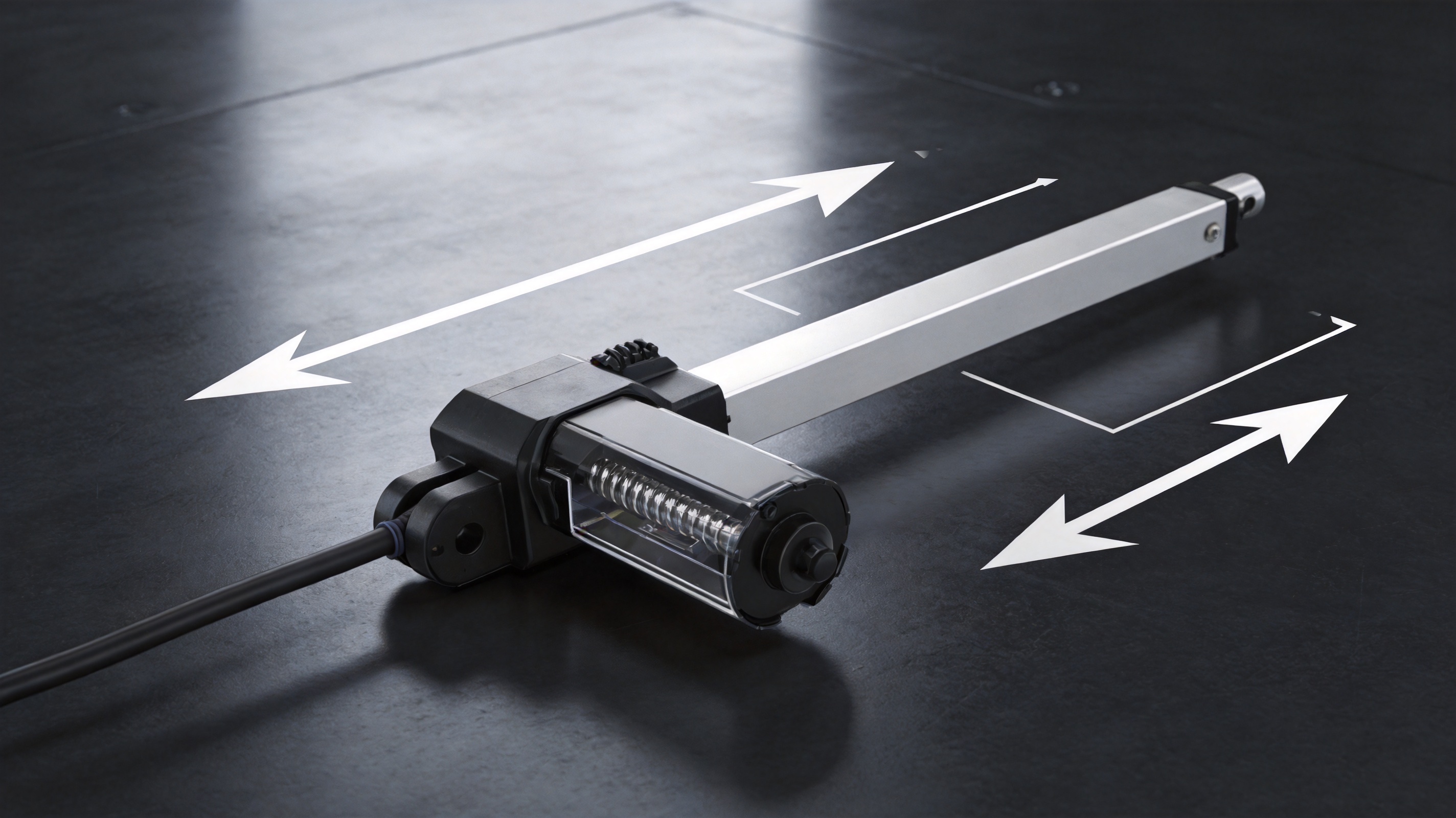
The TH-05 is an electric linear actuator that converts the rotary motion of an internal motor into controlled linear extension and retraction. Unlike hydraulic cylinders, it does not require a pump, reservoir, hydraulic hoses, or fluid maintenance. Unlike pneumatic cylinders, it does not need an air compressor, valves, or a continuous air supply. The actuator is supplied with standard 24 VDC power and can be integrated into electrically controlled equipment with suitable switches, control boxes, relays, or automation systems.
This self-contained design simplifies equipment architecture. A system designer can install the actuator between a fixed frame and a moving component, connect the power and control wiring, and configure the travel direction through the control system. Because the motor, trapezoidal lead screw, electronic limit circuit, and housing are integrated into one assembly, the actuator can reduce the number of separate components needed during machine design and installation.
The product is particularly appropriate for medium-load applications requiring occasional adjustment. Examples include:
• Height-adjustable desks and ergonomic office tables.
• Gaming chairs and other electronically adjustable seating systems.
• Flip lids, access covers, and doors on small and medium-sized equipment.
• Adjustment mechanisms for recreational vehicles and mobile living equipment.
• Small transportation equipment and powered positioning assemblies.
• Compact industrial fixtures, workstations, and equipment supports.
• Furniture mechanisms that require controlled lifting, tilting, or positioning.
The TH-05 should be selected according to the complete mechanical system rather than force specifications alone. Load position, lever-arm length, mounting angle, friction, acceleration, travel frequency, and the stability of the surrounding frame all affect real-world performance. A properly designed application can take advantage of the actuator’s balanced thrust and self-locking characteristics while maintaining the intended service life.
Key Technical Specifications
| Specification | TH-05 Configuration | Application Significance |
|---|---|---|
| Product type | Electric linear actuator | Provides powered extension and retraction for adjustment mechanisms |
| Push force | 3,000 N | Supports medium-load lifting and positioning applications |
| Pull force | 2,500 N | Supports controlled retraction and pulling operations |
| Self-locking force | 4,000 N | Helps resist load movement after power is removed |
| Rated voltage | 24 VDC | Compatible with common low-voltage control architectures |
| Full-load current | 4 A | Provides a practical electrical reference for system design |
| Telescopic speed | 5 mm/s | Offers controlled, stable movement for furniture and equipment |
| Protection rating | IP54 | Helps protect against limited dust ingress and water splashes |
| Duty cycle | 10% | Suitable for intermittent adjustment rather than continuous operation |
| Limit protection | Built-in electronic limit switches | Stops travel at defined end positions |
| Overload protection | Automatic power-off protection | Helps reduce risk from excessive load or mechanical obstruction |
| Housing material | Lightweight aluminum alloy construction | Combines practical weight, rigidity, and corrosion resistance |
| Customization options | Stroke and U-type or fisheye joints | Supports adaptation to different mechanical layouts |
| Certifications | CE and RoHS | Supports regulatory and material-compliance requirements |
These specifications create a balanced performance profile. The actuator is not designed as a high-speed conveyor drive or a continuous-duty industrial cylinder. Instead, it is optimized for controlled movement, moderate speed, repeatable positioning, and intermittent operation. This makes it especially suitable for products in which users value smooth adjustment, limited operating noise, simple electrical integration, and dependable load retention.
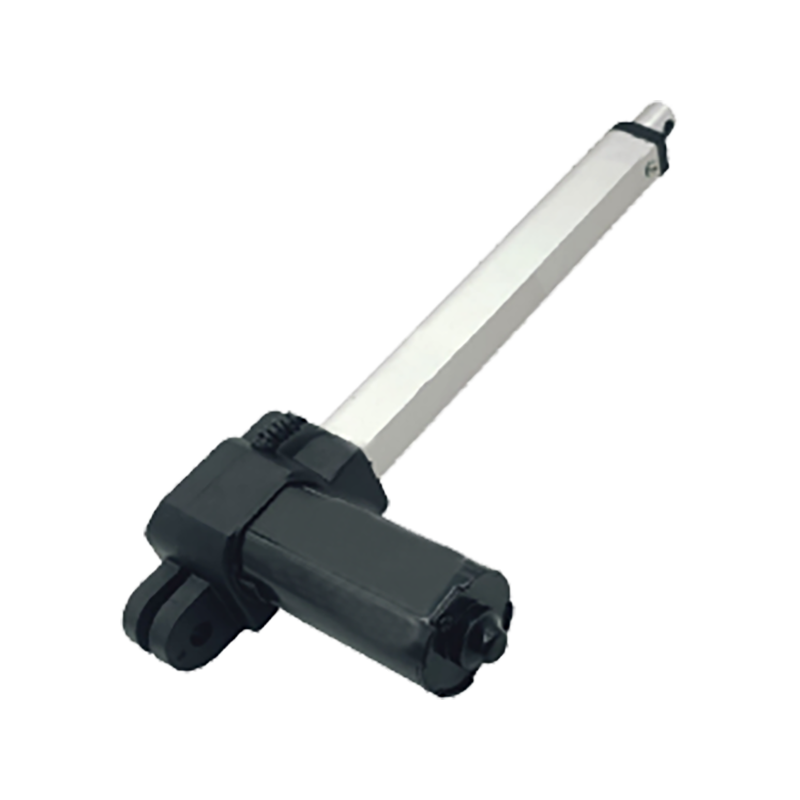
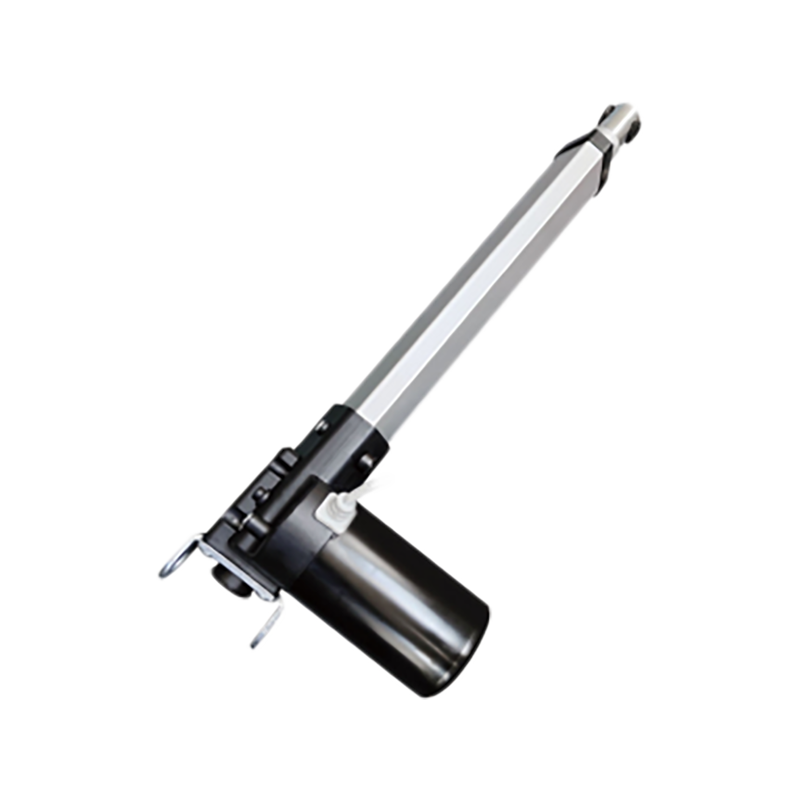
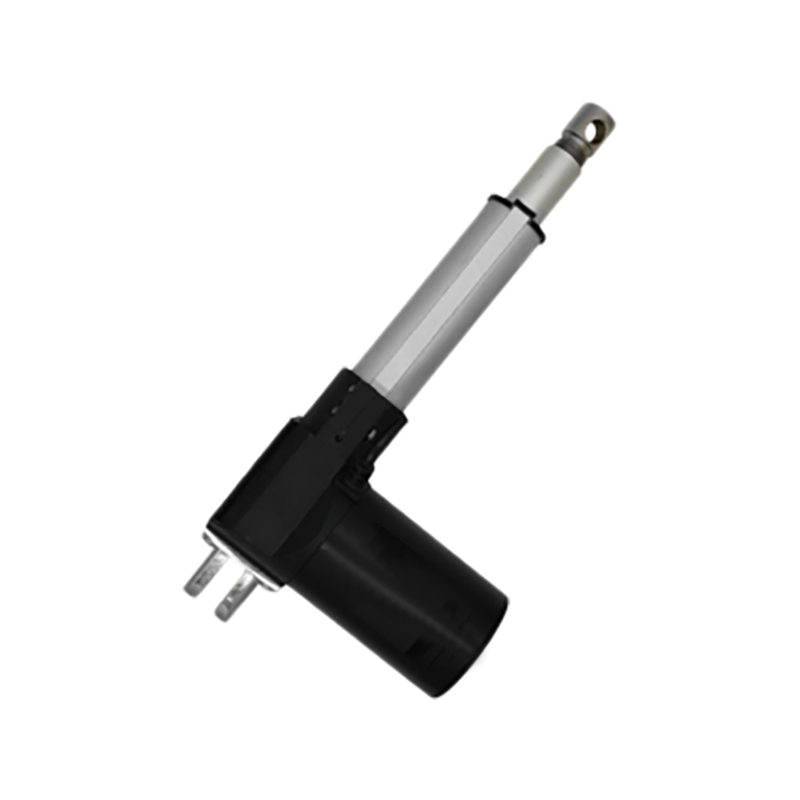
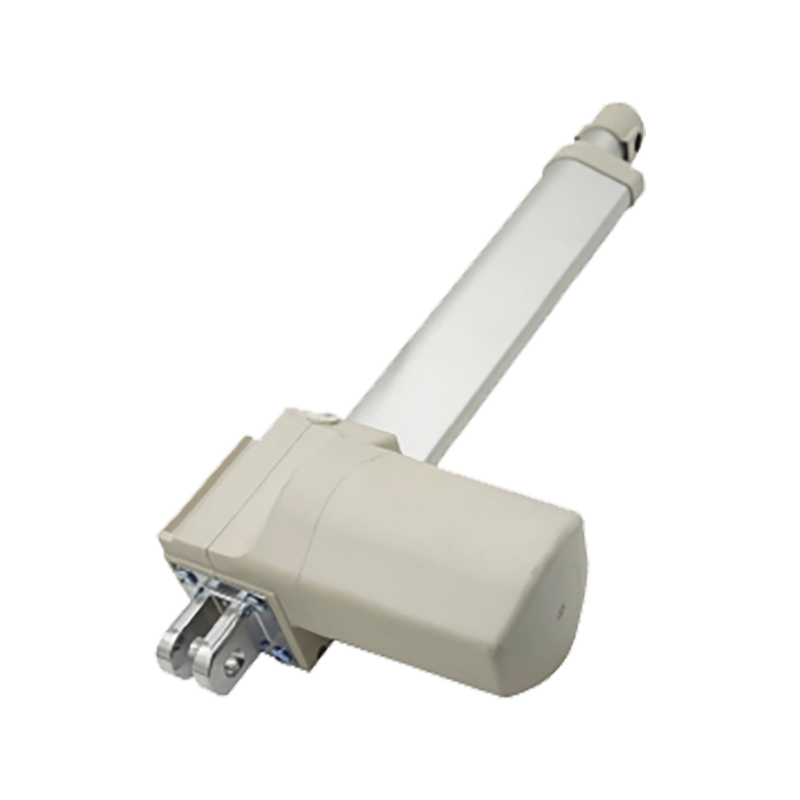
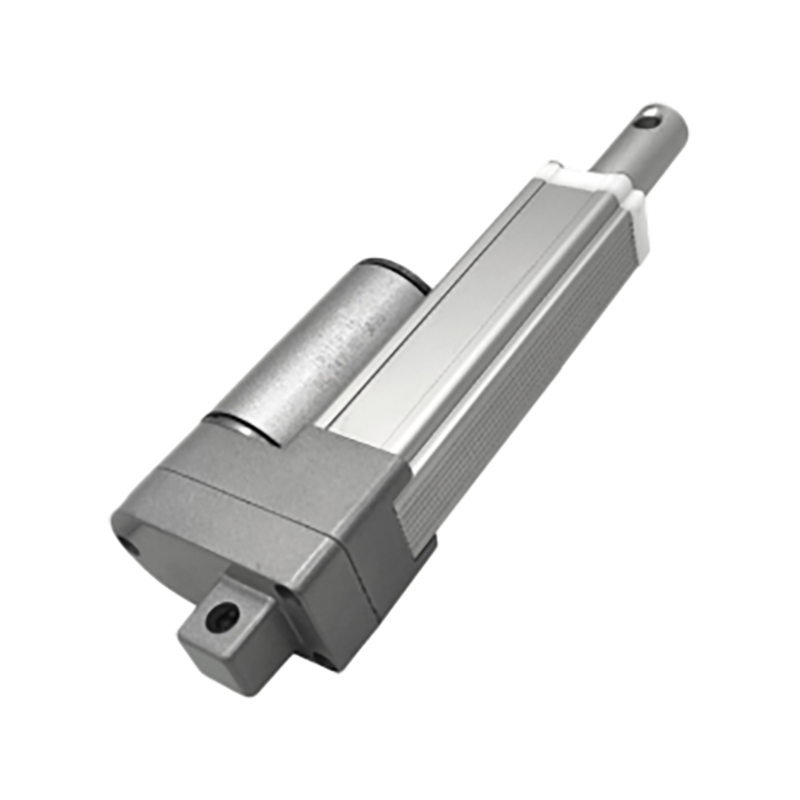
TH-05 Balanced Electric Linear Actuator for Home and Industrial Use
Balanced Push and Pull Performance
One of the TH-05’s primary advantages is the relationship between its push and pull forces. With a rated pushing force of 3,000 N and a pulling force of 2,500 N, it can address both lifting and retracting functions in a wide range of medium-load mechanisms. Many equipment designs require more than simple upward movement. A mechanism may need to raise a panel, draw a component back into position, pull a support arm against resistance, or control movement in both directions. A balanced actuator reduces the need to use separate solutions for different directions of travel.
The 4,000 N self-locking force adds another important safety and functional benefit. When power is removed, the trapezoidal lead screw is designed to resist back-driving under an appropriate load. This helps prevent an adjustable desk, seat, lid, or positioning mechanism from drifting downward or changing position unexpectedly. Self-locking does not eliminate the need for correct mechanical design, and the actual retained load depends on installation conditions and force direction. However, it provides a valuable passive holding characteristic that can reduce the need for an additional mechanical brake in suitable applications.
For adjustable desks, self-locking can help the work surface remain at its selected height when the control is released. For an equipment lid, it can help prevent gradual closure caused by gravity. For a recreational vehicle adjustment system, it can support stable positioning when the actuator is not receiving power. These benefits improve user confidence and reduce the possibility of unwanted movement during normal operation.
The moderate 5 mm/s speed is also intentional. In ergonomic furniture and equipment adjustment, rapid movement is not always desirable. A controlled speed gives users more time to stop the mechanism, reduces sudden changes in load, and can make the system feel more refined. Smooth, slower movement is often preferable when the actuator is moving a desk surface, chair component, equipment cover, or other part located near the user.
Quiet Operation for Furniture and Office Environments
Noise is a major consideration in modern workspaces and homes. A technically capable actuator may still be unsuitable for an office or residential product if it produces excessive vibration, rattling, or mechanical impact. The TH-05 addresses this requirement through internal thickened wear-resistant bushings that help reduce friction between moving components.
Lower friction can provide several practical advantages. It can support smoother lead-screw operation, reduce mechanical noise, limit vibration transmission into the surrounding frame, and reduce wear on sliding or guiding components. The actuator’s integrated structure also helps avoid the additional noise that can result from loose external linkages, exposed chains, or poorly aligned transmission parts.
In a height-adjustable desk, quiet movement helps preserve a focused working environment. In a gaming chair, it avoids distracting sound during adjustment. In a home device, reduced noise makes the mechanism feel less intrusive during daily use. For industrial equipment located near operators, quieter motion can improve comfort and communication.
Noise performance is influenced by more than the actuator itself. Mounting rigidity, alignment, load distribution, frame resonance, power-supply quality, and joint design all affect the final sound level. For this reason, the actuator should be installed on a stable structure with properly aligned mounting points. The use of U-type or fisheye joints can help accommodate different attachment geometries and reduce undesirable side loading when the mechanism is designed correctly.
Integrated Safety and Protection Functions
The TH-05 includes electronic limit switches and automatic overload power-off protection. These functions are essential in compact electromechanical systems because they help prevent the actuator from operating beyond its intended travel or continuing to drive when the mechanism is blocked.
Electronic Limit Switches
Built-in electronic limit switches define the actuator’s available travel range. When the actuator reaches its designated extension or retraction limit, the control circuit stops the motor. This protects the lead screw and internal transmission from unnecessary impact at the end of travel. It also helps protect the connected furniture or equipment from being forced beyond its mechanical design range.
Integrated limits simplify system design because the manufacturer has already incorporated the stopping function into the actuator assembly. The equipment designer does not necessarily need to add separate external limit switches for ordinary end-of-stroke control, although external sensors may still be appropriate for systems requiring additional position feedback, synchronization, or safety redundancy.
Automatic Overload Power-Off
Overload protection helps respond to conditions such as excessive weight, mechanical blockage, misalignment, or an object trapped in the moving mechanism. When the actuator detects an abnormal load condition, automatic power-off can interrupt operation and reduce stress on the motor, lead screw, gearbox, and connected structure.
This protection is particularly useful in consumer and office equipment, where users may place unexpected loads on a desk or encounter an obstruction during adjustment. It is also valuable in industrial fixtures, where a change in the workpiece or mechanism may create a temporary overload. Protection circuits should not be treated as a substitute for guards, emergency-stop systems, correct load calculations, or risk assessment. Instead, they form one layer in a complete safety strategy.
IP54 Protection
The IP54 rating indicates protection against limited dust ingress and water splashes from different directions. This rating makes the actuator appropriate for many indoor and sheltered applications, including offices, homes, workshops, equipment enclosures, and selected vehicle interiors. It does not mean that the actuator is waterproof or suitable for immersion, high-pressure washing, or unrestricted outdoor exposure.
Installation should therefore take account of the operating environment. Cable entries should be protected, the actuator should not be placed where water can collect, and the housing should be inspected after installation. In dusty or humid industrial locations, the complete system should be evaluated rather than relying on the actuator rating alone.
Construction and Materials
The TH-05 uses a lightweight aluminum alloy housing with a silver-black contrasting finish. Aluminum alloy is well suited to products that need a favorable balance between strength, weight, corrosion resistance, and appearance. Compared with a heavier steel enclosure, an aluminum housing can reduce the weight added to a desk, chair, lid, or mobile mechanism. This is important when the actuator is installed on a structure that must also be lifted or repositioned.
The external design supports both industrial and furniture applications. The silver-black finish presents a professional appearance in exposed installations while remaining compatible with common office furniture colors and equipment housings. A well-finished enclosure can also make the actuator easier to incorporate into a finished product rather than hiding it completely inside a frame.
Internally, the actuator integrates the motor, trapezoidal lead screw, limit circuit board, and related transmission components. This compact arrangement reduces the need for separate mounting brackets, transmission shafts, fluid systems, or external drive mechanisms. It can make assembly more straightforward and help manufacturers create products with fewer potential failure points.
The use of a trapezoidal lead screw is particularly relevant to applications that require stable positioning. Its geometry supports mechanical self-locking and load retention while providing controlled linear movement. In contrast to a high-speed, low-friction screw intended primarily for rapid motion, a trapezoidal screw is suitable for applications in which force transmission and resistance to back-driving are important.
Advantages Compared with Alternative Actuation Solutions
Compared with Hydraulic Systems
Hydraulic systems are powerful and appropriate for many heavy-duty applications, but they require multiple components, including a pump, reservoir, valves, hoses, fittings, and hydraulic fluid. These components add design complexity and may increase maintenance requirements. Fluid leakage, hose routing, noise from the pump, and the need for a dedicated power unit can also make hydraulic systems less attractive for desks, chairs, small equipment, and indoor products.
The TH-05 offers a self-contained electric alternative for medium-load applications. It requires no hydraulic fluid, no pump station, and no pressure hoses. This can reduce installation time and simplify product packaging. A 24 VDC actuator is also easier to integrate into electrically controlled furniture and compact machinery than a complete hydraulic circuit.
Compared with Pneumatic Systems
Pneumatic systems provide fast movement, but they depend on compressed air. A compressor, air treatment system, control valves, tubing, and pressure regulation are normally required. Pneumatic systems may also produce exhaust noise and can have difficulty maintaining a precise position without additional controls.
The TH-05 does not require a continuous air supply. Its lead-screw design provides controlled motion and self-locking after power is removed. For equipment where speed is moderate and stable positioning is more important than rapid cycling, the electric actuator can provide a more compact and convenient solution.
Compared with Manual Adjustment Mechanisms
Manual adjustment systems may have low initial cost, but they require users to apply physical effort and may produce inconsistent positioning. A manual desk crank, chair lever, or mechanical support often requires the user to stop an activity to make an adjustment. Electric operation improves accessibility and enables integration with control panels, switches, memory functions, or automated routines.
The TH-05 can support more inclusive designs by reducing the force required from the operator. It can be especially useful for users who need frequent height, tilt, or position adjustments during a working day.
Compared with Basic Consumer Actuators
Some lightweight consumer actuators are designed for low loads and simple furniture mechanisms. They may not provide the combination of 3,000 N pushing force, 2,500 N pulling force, overload protection, and 4,000 N self-locking capacity needed for more demanding applications. The TH-05 is positioned as a more capable medium-load solution while retaining a compact, low-voltage, and relatively quiet design.
Its suitability for both household and industrial environments also provides a wider design range. A manufacturer can use the same general actuator platform in several product families, potentially simplifying procurement, testing, service training, and spare-parts management.
Manufacturing Strengths and Engineering Approach
The performance of an electric actuator depends not only on its advertised specifications but also on the consistency of its production process. Dimensional accuracy, screw alignment, motor assembly, electrical testing, sealing, and final inspection all influence operating life. SuZhou Skyhone Intelligent Technology Co., Ltd. focuses on the research, development, production, sales, and service of standing desks and related intelligent office products. This specialization provides a practical foundation for understanding the movement, stability, noise, and user-experience requirements of adjustable furniture.
Located in Suzhou Industrial Park, the company benefits from the wider manufacturing ecosystem of the Yangtze River Delta. The area is known for its developed industrial supply chains, engineering talent, electronics capabilities, metalworking resources, and export-oriented manufacturing infrastructure. These regional advantages can support efficient sourcing of motors, electrical components, aluminum housings, machined parts, fasteners, cable assemblies, and packaging materials.
Integrated Product Development
A key strength of the TH-05 is the integration of the motor, lead screw, control circuit, and housing into one coordinated product. Integrated design requires cooperation between mechanical engineering, electrical engineering, materials selection, and production engineering. The result is more than a collection of individual components: it is an actuator platform that can be evaluated as a complete operating unit.
During product development, engineers must consider force output, motor current, screw efficiency, thermal behavior, limit-switch operation, housing strength, noise, lubrication, and mounting geometry. These factors interact. For example, increasing load capacity may influence motor size and current demand, while reducing noise may require changes to bushings, gear engagement, or housing support. A balanced product is achieved when these elements are optimized together rather than treated independently.
Manufacturing Process Considerations
The aluminum alloy housing begins with material preparation and forming or machining processes appropriate to the final design. Important production controls include dimensional inspection, surface-finish consistency, hole-position accuracy, and verification of mounting interfaces. Accurate housing dimensions help maintain correct alignment between the motor, lead screw, internal supports, and external mounting points.
The motor and transmission assembly require careful positioning. The lead screw must rotate smoothly, and the internal bushings must support moving components without creating excessive friction. Proper assembly helps maintain the specified speed and reduces vibration. Fasteners should be tightened consistently, and electrical connections should be secured to resist loosening during repeated operation.
The electronic control board is integrated with the limit-switch system and overload protection. Production testing can verify electrical continuity, correct polarity, current behavior, limit response, and automatic shutdown under simulated abnormal conditions. These checks are important because an actuator is both a mechanical device and an electrical control component. A product that meets mechanical dimensions but fails to stop correctly would not provide a satisfactory operating solution.
Testing and Quality Assurance
A dependable actuator manufacturing program should include incoming-material inspection, in-process checks, assembly verification, functional testing, and final inspection. For a product such as the TH-05, quality assurance may evaluate:
• Housing dimensions and mounting geometry.
• Motor operation and current draw.
• Extension and retraction direction.
• Telescopic speed under defined load conditions.
• Push and pull force performance.
• Limit-switch activation at both ends of travel.
• Overload power-off response.
• Noise, vibration, and smoothness during operation.
• Appearance, surface finish, and assembly completeness.
• Certification and material-compliance documentation.
Repeatable testing is especially important when actuators are supplied for adjustable desks or other products manufactured in large quantities. A small difference in motor performance, screw alignment, or limit position can become noticeable when multiple actuators are installed in the same product family. Consistent manufacturing helps customers achieve predictable assembly results and reduce field-service issues.
Customization Capability
The TH-05 supports customization of stroke length and joint configurations, including U-type and fisheye joints. This capability is important because actuator installation dimensions vary considerably between desk frames, chair structures, equipment lids, vehicle mechanisms, and industrial fixtures.
Stroke customization allows the actuator to match the required movement range without forcing the equipment designer to use an unnecessarily long or short unit. Joint customization can help align the actuator with the surrounding structure and accommodate different pivot arrangements. However, customization should always be evaluated in relation to load, speed, duty cycle, mounting angle, and available space. A longer stroke or modified joint may change the mechanical leverage and should be validated through application testing.
Use in Adjustable Desks and Ergonomic Office Tables
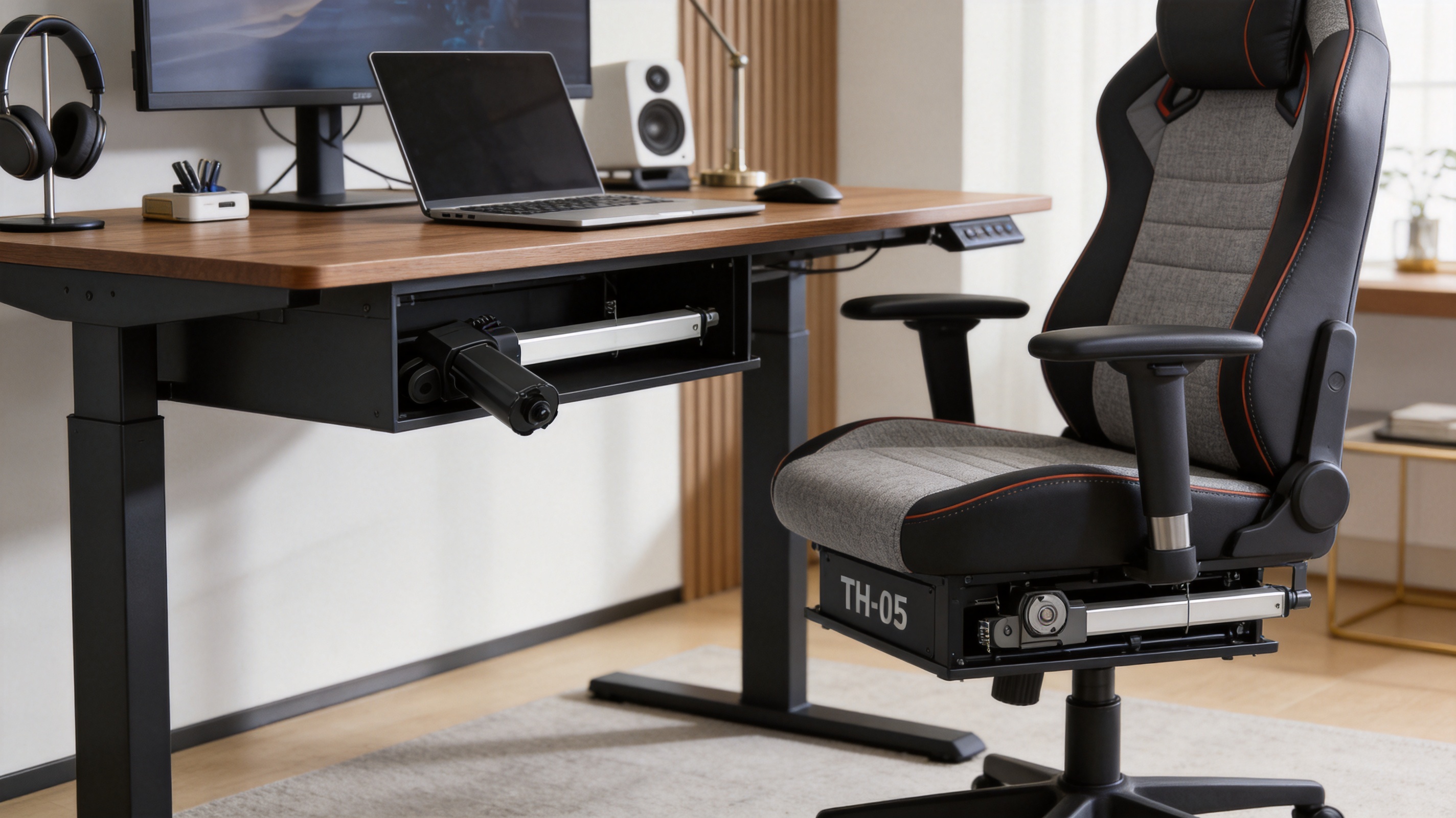
Standing desks and adjustable office tables are among the most natural applications for an electric linear actuator. Users increasingly alternate between seated and standing positions, and an electric adjustment system allows the work surface to move without manual lifting. The TH-05’s 24 VDC power architecture, 5 mm/s speed, 3,000 N pushing force, and self-locking behavior support the fundamental requirements of a medium-load desk mechanism.
For a desk application, designers should consider the total desktop weight, monitor arms, computers, accessories, cable management, and any dynamic load created when users lean on the surface. The actuator must be mounted so that the force is distributed evenly through the frame. If a desk uses two or more actuators, synchronization and control-system compatibility must be assessed carefully. The actuator itself provides linear movement, but the complete desk also requires a stable frame, appropriate guides, correct wiring, and a suitable control strategy.
Quiet operation is especially valuable in offices, libraries, studios, and home workspaces. A smooth actuator can help the desk transition between positions without creating a disruptive mechanical sound. The 10% duty cycle is appropriate for normal intermittent desk adjustment, where the desk moves for a short period and then remains stationary for an extended time. It is not intended for repeated continuous cycling without adequate rest periods.
The actuator can also support customized ergonomic furniture designs. A manufacturer may adapt stroke length to different desktop heights or use alternative joints for special frame geometries. This flexibility allows the same general product platform to serve home-office desks, executive workstations, laboratory tables, educational furniture, and compact industrial workbenches.
Use in Gaming Chairs and Adjustable Seating
Gaming chairs and premium seating systems increasingly include powered adjustments beyond a simple reclining backrest. Users may want to change seat height, tilt, leg-support position, lumbar-support position, or other ergonomic features. An electric linear actuator can provide precise, convenient movement while reducing the need for large mechanical levers.
The TH-05 is suitable for medium-load chair mechanisms when the force path and mounting structure are properly designed. Its compact form can be integrated into a chair base or concealed within a support frame. The low-voltage power supply is compatible with electronic control panels and other powered chair functions.
Chair applications require particular attention to dynamic loads. A person sitting down, leaning back, or shifting weight can create forces that differ significantly from static body weight. The chair frame, pivot points, brackets, and actuator joints must be designed to manage these forces. The actuator’s self-locking characteristic can help the chair maintain its selected position, while overload power-off protection provides an additional safeguard against abnormal resistance.
Use in Equipment Covers, RV Systems, and Small Machinery
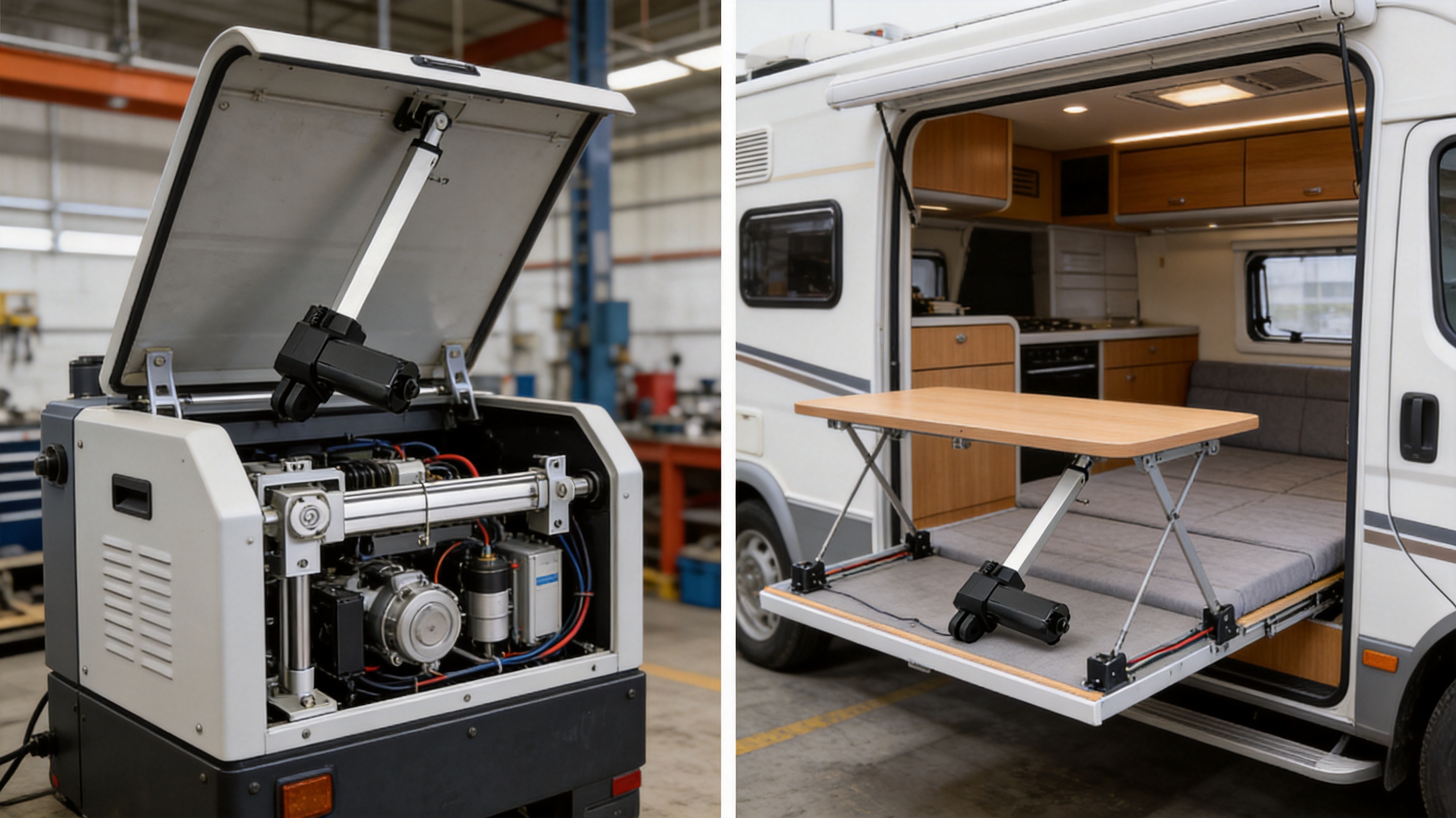
Many equipment covers and access lids are awkward to open manually because they are heavy, positioned above the operator, or located in a confined area. The TH-05 can provide controlled opening and closing for medium and small equipment lids. Its self-locking capacity can help the lid remain in position when power is removed, provided that the load and geometry remain within the application limits.
Recreational vehicles also benefit from compact electric adjustment mechanisms. The actuator may be used in seating, storage access, bed platforms, vents, tables, steps, or other movable components. The 24 VDC voltage is especially convenient in vehicle environments that already use low-voltage electrical systems. Designers should still protect wiring from abrasion, moisture, excessive heat, and vibration, and should verify that the IP54 rating is sufficient for the intended installation location.
For small transportation equipment and industrial fixtures, the TH-05 can support positioning, clamping assistance, cover movement, and height or angle adjustment. Its moderate speed helps reduce abrupt motion around operators. The integrated limit and overload functions can simplify the control architecture, while the aluminum housing helps control total equipment weight.
Installation and System Design Guidance
Correct installation is essential for achieving the actuator’s rated performance. The actuator should be mounted in a straight and stable force path whenever possible. Side loads, bending forces, twisting, and misalignment can increase wear and reduce operating life even when the nominal load is within the stated push or pull capacity.
Load Calculation
Designers should calculate the actual actuator force rather than assuming that the moving component’s total weight equals the required actuator force. Lever arms, pivot locations, inclination angles, friction, acceleration, and load distribution all influence the required force. A lid or desk surface may weigh less than the actuator’s rated push capacity but still require substantial force if the actuator is mounted close to a pivot.
Static calculations should be supplemented by testing under realistic conditions. Testing should include the maximum expected load, possible off-center loading, repeated adjustment, and any foreseeable obstruction. The system should remain stable when the actuator stops and when power is removed.
Mounting and Alignment
Mounting brackets must be strong enough to withstand the actuator force and any dynamic loads. The two attachment points should remain aligned throughout the complete stroke. If the moving component follows an arc, the joint arrangement must allow the necessary angular change without binding.
U-type and fisheye joints provide options for different attachment configurations. They should be selected based on the pivot geometry and the expected direction of force. Joints should not be used to compensate for a fundamentally misaligned frame. Good mechanical design minimizes side loading and ensures that the actuator extends and retracts along its intended axis.
Electrical Integration
The standard 24 VDC supply should be matched with a suitable power source capable of handling the actuator’s full-load current. Wiring should be selected according to current, length, installation temperature, and applicable electrical standards. Polarity and control direction must be verified before normal operation.
Control equipment should account for startup current, overload response, end-of-stroke behavior, and the 10% duty cycle. If multiple actuators are used together, the system may require synchronization controls or position monitoring. The built-in limit switches stop travel at the actuator’s internal endpoints, but they do not automatically ensure that multiple actuators reach the same position under all conditions.
Duty Cycle and Thermal Management
The 10% duty cycle means that the actuator is designed for intermittent use. A typical application may operate the actuator for a short period and then allow sufficient rest before the next adjustment. Excessive repeated cycling can produce heat in the motor and transmission, potentially reducing performance or service life.
Manufacturers should define the expected operating pattern during product development. A desk that moves several times per day presents a different duty requirement from a machine that cycles every few minutes. Where higher frequency is needed, the complete application should be reviewed with the actuator supplier to confirm suitability or identify a different model.
Maintenance and Service Considerations
The integrated design of the TH-05 simplifies maintenance compared with hydraulic or pneumatic systems because there are no fluid reservoirs, pressure lines, or compressor components. Routine service should still include inspection of mounting bolts, joints, cables, housing condition, and surrounding mechanical guides.
Operators should listen for changes in noise, observe irregular movement, and check for unusual heating or delayed stopping. Any sign of binding, repeated overload shutdown, or mechanical instability should be investigated before continued operation. The actuator should not be forced manually beyond its intended movement range.
Because the housing is designed for protection against limited dust and water splashes, installation should prevent direct exposure to harsh cleaning chemicals, immersion, high-pressure sprays, and environments beyond the specified rating. Keeping the surrounding mechanism clean can also reduce the chance that contaminants will create excessive resistance.
Service planning is easier when manufacturers maintain accurate records of actuator model, stroke, joint type, voltage, installation date, and operating conditions. For products supplied in volume, standardized actuator platforms can simplify spare-parts inventory and technician training.
Why the TH-05 Is a Practical Medium-Load Choice
The TH-05 combines several features that are often evaluated separately: useful force capacity, low-voltage operation, controlled speed, self-locking behavior, electronic limits, overload protection, aluminum construction, IP54 protection, and customization options. Its principal advantage is the balance among these characteristics.
A high-force actuator may be too large, noisy, expensive, or power-intensive for office furniture. A lightweight furniture actuator may lack the capacity or protection required for industrial equipment. A hydraulic system may deliver greater force but introduce unnecessary complexity for a desk or small mechanism. The TH-05 provides a middle-ground solution for designers who need more than a basic consumer mechanism but do not require a large continuous-duty industrial cylinder.
This balance also supports product-platform strategies. A manufacturer may use the actuator in several related products, adapting the stroke or mounting joint while retaining the same general electrical architecture. This can reduce development time and support consistency across product families. For international buyers, CE and RoHS certifications provide useful documentation for compliance planning, although the final assembled product must still meet all requirements applicable to its own market and intended use.
Company Capabilities and Manufacturing Orientation
SuZhou Skyhone Intelligent Technology Co., Ltd. is a professional manufacturing enterprise focused on the research and development, production, sales, and service of standing desks and intelligent office solutions. Its location in Suzhou Industrial Park places it within a mature manufacturing environment with access to supporting industries and technical resources.
The company’s product orientation is connected to the broader development of healthy, efficient, and intelligent workspaces. Adjustable desks are no longer viewed simply as furniture with a motor. They are part of a complete ergonomic system involving posture variation, space efficiency, user comfort, electronic control, structural stability, and long-term reliability. Experience in this field helps inform actuator requirements such as smooth movement, low noise, safe stopping, compact integration, and dependable load holding.
Its manufacturing strengths are reflected in the TH-05’s integrated structure and application flexibility. The company can support customers that need standard actuator supply as well as those requiring customized strokes or joint configurations. A product-development relationship of this type can be valuable to furniture factories, equipment manufacturers, system integrators, distributors, and engineering teams developing new motion-enabled products.
For business customers, supplier evaluation should include more than a product data sheet. Important factors include engineering communication, sample support, production consistency, documentation, packaging, delivery coordination, after-sales service, and the ability to adapt products to changing requirements. A supplier with experience in both product development and manufacturing can help identify installation issues earlier and support a smoother transition from prototype to production.
Selection Checklist for Buyers and Designers
Before specifying the TH-05, buyers should confirm the following points:
• The required push and pull forces remain within the actuator’s suitable operating range.
• The load is calculated using the actual mounting geometry and lever-arm relationship.
• The required stroke matches the available travel and mechanical clearance.
• The 5 mm/s speed is appropriate for the desired user experience and safety conditions.
• The operating pattern is compatible with the 10% duty cycle.
• The 24 VDC power supply and control system can support the full-load current.
• The mounting points remain aligned throughout the stroke.
• The selected joint style matches the movement geometry.
• The installation environment is compatible with IP54 protection.
• The complete product includes any additional guards, emergency stops, sensors, or control functions required by its risk assessment.
• Certification documents and technical drawings are available for the target market.
• Customized stroke or joint requirements are confirmed before production.
Q&A
What type of product is the TH-05?
The TH-05 is an electric linear actuator designed to provide controlled extension and retraction. It integrates a motor, trapezoidal lead screw, electronic limit switches, overload protection, and a lightweight aluminum alloy housing.
What are its main force ratings?
The actuator provides a stated push force of 3,000 N, a pull force of 2,500 N, and a self-locking force of 4,000 N. Actual application performance depends on mounting geometry, load distribution, alignment, and operating conditions.
Is the TH-05 suitable for adjustable desks?
Yes. Its 24 VDC operation, 5 mm/s speed, quiet-running design, self-locking lead screw, and 10% duty cycle make it suitable for many medium-load height-adjustable desk and ergonomic office table applications.
Can it be used in industrial equipment?
Yes. It can be used in suitable medium-load industrial applications such as equipment lids, access panels, fixtures, small machinery, and positioning mechanisms. The complete system must be evaluated for force, duty cycle, environmental conditions, and safety requirements.
Does it require hydraulic oil or compressed air?
No. The TH-05 is an electrically powered actuator and does not require hydraulic fluid, a pump, an air compressor, or pneumatic tubing.
What does the IP54 rating mean?
IP54 indicates protection against limited dust ingress and water splashes. It is not a rating for immersion, high-pressure washing, or unrestricted outdoor exposure.
How does the actuator prevent overtravel?
Built-in electronic limit switches stop the actuator when it reaches its designated extension or retraction endpoint.
What happens if the mechanism is overloaded?
The actuator includes automatic overload power-off protection. When an abnormal load or obstruction is detected, the system can stop power to help reduce stress on the motor and transmission. Proper mechanical safety design remains necessary.
Can the stroke length be customized?
Yes. Stroke customization is available for suitable projects. U-type and fisheye joint configurations can also be adapted to different installation requirements.
Is the actuator designed for continuous operation?
No. The stated 10% duty cycle indicates intermittent use. Buyers should provide the expected cycle frequency and operating pattern when confirming suitability for a specific machine or product.
How can the actuator operate more quietly?
The actuator uses thickened wear-resistant internal bushings to reduce friction and support smoother operation. Correct alignment, rigid mounting, suitable joints, and a properly designed surrounding mechanism are also important for controlling noise.
What should be checked before installation?
Designers should confirm force requirements, stroke, mounting geometry, joint type, power supply, control compatibility, duty cycle, environmental conditions, and the need for additional safety devices.
Conclusion
The TH-05 Balanced Electric Linear Actuator is a versatile medium-load solution for applications that require dependable electric movement without the complexity of hydraulic or pneumatic equipment. Its combination of 3,000 N pushing force, 2,500 N pulling force, 4,000 N self-locking force, 24 VDC power, 5 mm/s speed, IP54 protection, electronic limits, overload shutdown, and 10% duty cycle creates a well-balanced platform for home and industrial use.
Its value is particularly clear in adjustable desks, ergonomic office tables, gaming chairs, equipment covers, recreational vehicle mechanisms, small transportation systems, and compact industrial fixtures. The aluminum alloy housing supports a practical and professional appearance, while the integrated motor, lead screw, and control components simplify installation and maintenance.
Beyond the actuator itself, the product benefits from a manufacturing organization focused on standing desks and intelligent office solutions, supported by the industrial resources of Suzhou and the Yangtze River Delta. Custom stroke lengths and joint configurations give equipment manufacturers additional flexibility when adapting the actuator to specific designs.
For successful implementation, the TH-05 should be selected as part of a complete mechanical and electrical system. Correct load calculations, alignment, mounting, wiring, duty-cycle management, and safety evaluation are essential. When these factors are properly addressed, the actuator offers a practical combination of smooth motion, stable load retention, compact integration, and broad application potential.
References
1. IEC 60529, Degrees of Protection Provided by Enclosures, International Electrotechnical Commission.
2. European Commission, Guidance on CE Marking and Product Compliance.
3. European Union, Directive 2011/65/EU on the Restriction of the Use of Certain Hazardous Substances in Electrical and Electronic Equipment.
4. ISO 12100, Safety of Machinery: General Principles for Design, Risk Assessment and Risk Reduction.
5. General engineering principles for electric linear actuator selection, load calculation, alignment, and duty-cycle evaluation.
6. Technical specifications and application information supplied for the TH-05 Balanced Electric Linear Actuator.
7. Product-development and manufacturing information supplied by SuZhou Skyhone Intelligent Technology Co., Ltd.
Product: TH-05 Balanced Electric Linear Actuator for Home and Industrial Use


- Contact Info
-
-
 Phone+86-15950656125
 -
 Email
Email -
 AddressRoom 1007-1, South Building, Suyue Plaza, Suzhou Industrial Park, Suzhou City, Jiangsu Province, China
-
- Products
- Follow Us
- Need help? Please contact us
Copyright ©
SuZhou Skyhone Intelligent Technology Co., Ltd.
All Rights Reserved.
Privacy
Custom Ergonomic Adjustable Office Tables Manufacturers

