

 English
  русский
  Español
  عربى
عربى 
Content
- 1 Product Overview
- 2 Key Product Specifications
- 3 Ergonomic Value of Pneumatic Height Adjustment
- 4 Advantages Over Competing Mobile Workstations
- 5 Why Gas Spring Lifting Matters
- 6 Tabletop Design and Material Performance
- 7 Frame Structure and Flat-Legged Support
- 8 Mobility and Stability in Daily Use
- 9 Application Scenarios
- 10 Manufacturing Strengths Behind the Product
- 11 Company Capabilities and Customer Value
- 12 Comparison With Electric Height-Adjustable Desks
- 13 Comparison With Standard Fixed Tables
- 14 Design Details That Improve User Experience
- 15 Procurement Considerations for Buyers
- 16 Maintenance and Long-Term Use
- 17 Q&A Section
- 17.1 What is the main purpose of this pneumatic height-adjustable desk?
- 17.2 What is the height adjustment range?
- 17.3 How does the height adjustment work?
- 17.4 Why choose a pneumatic desk instead of an electric desk?
- 17.5 What is the tabletop made of?
- 17.6 What are the tabletop dimensions?
- 17.7 Does the desk have wheels?
- 17.8 What color options are available?
- 17.9 What makes the flat-legged design useful?
- 17.10 Who manufactures this type of product?
- 17.11 What manufacturing strengths support the product quality?
- 17.12 Is the desk suitable for heavy industrial work?
- 18 Conclusion
- 19 References
- 20 Product: TH01-3 iPad (Flat-Legged) Pneumatic Height-Adjustable Desk
Flat-Legged Pneumatic Height-Adjustable Desk for Mobile Ergonomic Work
2026-07-07
Modern work environments increasingly require furniture that can move, adapt, and support healthier working habits without creating unnecessary complexity. The flat-legged pneumatic height-adjustable desk described in this article is designed for precisely that purpose: a mobile workstation with smooth gas spring lifting, a practical tabletop size, stable triangular support, durable surface treatment, and caster-based mobility for flexible use in offices, training rooms, product display areas, laboratories, light assembly spaces, and creative workstations.
This desk belongs to the pneumatic height-adjustable table category and is engineered for users who need quick transitions between sitting and standing positions. With a lifting range from 750 mm to 1060 mm, it supports multiple working postures while remaining compact enough for environments where space efficiency is important. Its 715 mm by 475 mm tabletop provides a balanced work surface for tablets, laptops, documents, testing instruments, small devices, teaching materials, or demonstration products.
Unlike many electric adjustable desks that depend on motors, control boxes, power cords, and electronic keypads, this desk uses a gas spring lifting principle. The pneumatic lifting mechanism enables convenient manual height adjustment without relying on electricity. This gives the product a strong advantage in locations where mobility, simple operation, low maintenance, and cable-free positioning are essential.
SuZhou Skyhone Intelligent Technology Co., Ltd. manufactures and supports this type of height-adjustable workstation with a focus on standing desk research, production, sales, and service. Located in Suzhou, within the Yangtze River Delta furniture and manufacturing ecosystem, the company benefits from a mature industrial chain, efficient supply capabilities, and intelligent manufacturing advantages. These strengths help the company provide practical ergonomic office solutions for global customers who require dependable adjustable furniture.
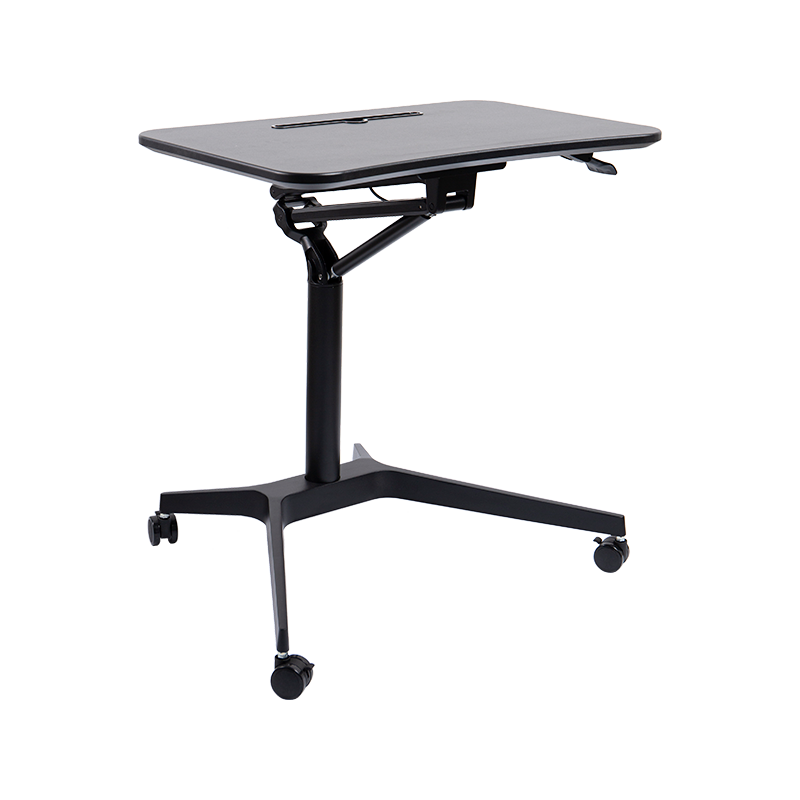
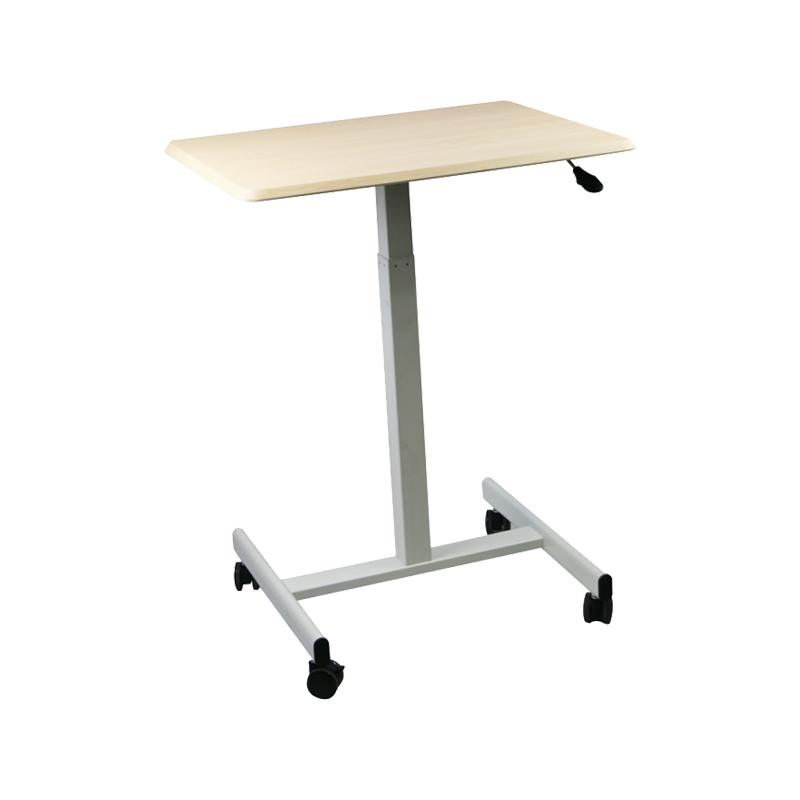
TH01-3 iPad (Flat-Legged) Pneumatic Height-Adjustable Desk
Product Overview
The flat-legged pneumatic height-adjustable desk is a compact mobile workstation built around a gas spring height-adjustment system. Its height range of 750 mm to 1060 mm enables users to shift between seated and standing work. This range is especially useful in shared workplaces where different users may need different desk heights throughout the day.
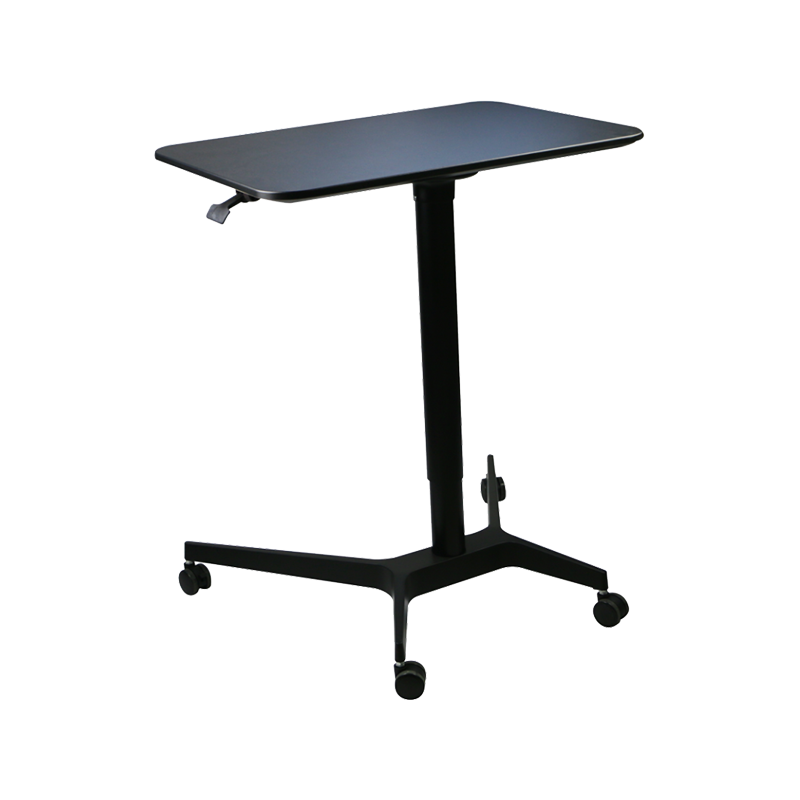
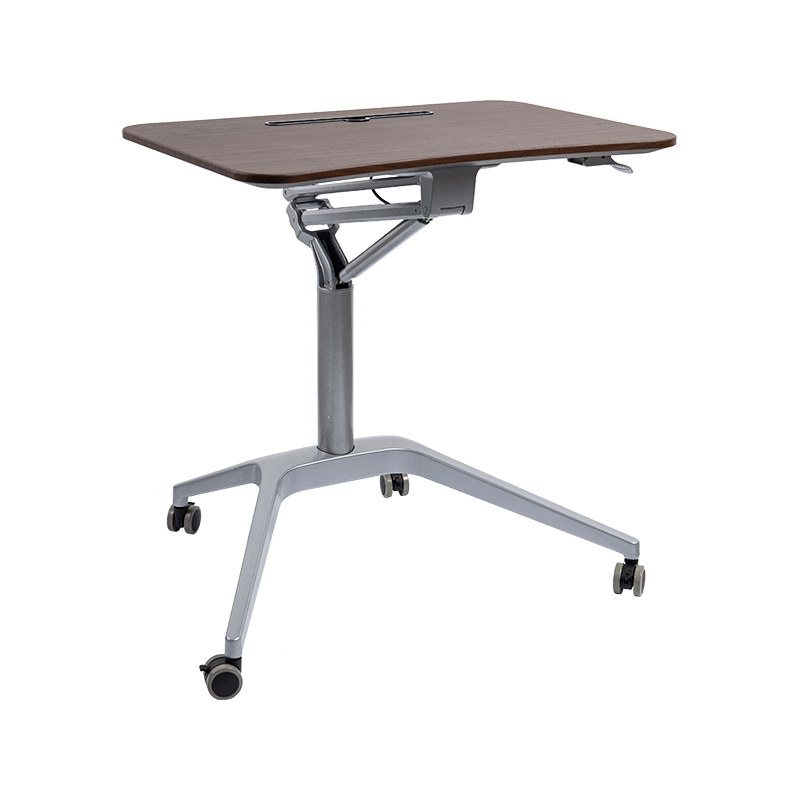
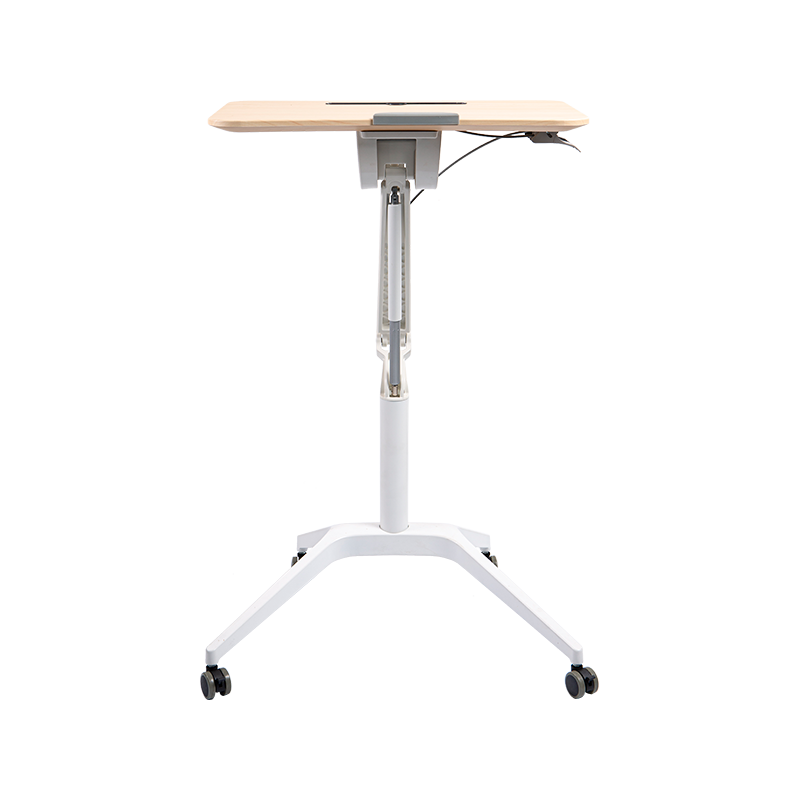
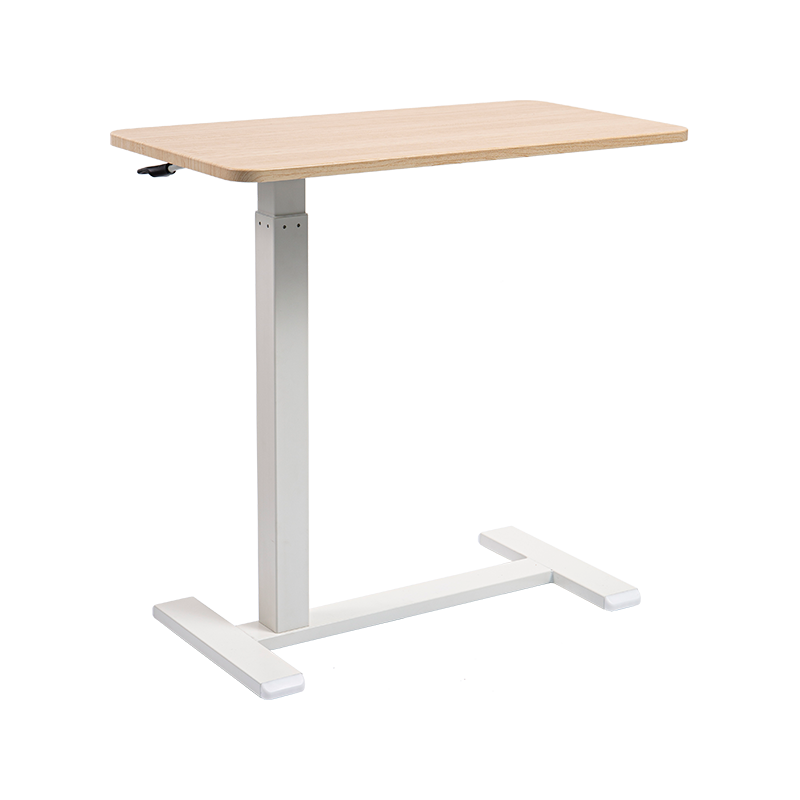
The tabletop measures 715 mm by 475 mm and is made from a 25 mm MDF core with a PVC vacuum-formed surface. This construction gives the tabletop a clean appearance, practical thickness, and improved resistance to routine wear. The available tabletop color options include white, maple, walnut, and black, allowing the desk to fit different interior styles, from bright educational rooms to modern offices and technical work areas.
The frame uses aluminum and iron, combining the lightweight benefit of aluminum with the structural reliability of iron. The surface is treated with powder coating and can be supplied in white, silver, or black. Powder coating helps create a uniform finish and improves resistance to scratches, corrosion, and daily handling marks compared with untreated metal surfaces.
Mobility is another defining feature. The product is equipped with four caster wheels: two with locks and two without locks. This configuration allows the user to move the desk conveniently and then secure it in position when stability is required. In environments where furniture layouts change frequently, such as classrooms, training centers, showrooms, and testing departments, this mobility is a major practical advantage.
The flat-legged design uses a triangular support structure. The outward angle of the legs is slightly larger, the lines at the center connection are more distinct, and the structural transition is direct and linear. This gives the desk a modern visual identity while supporting stability during daily use.
Key Product Specifications
Item |
Specification |
Practical Benefit |
Lifting Range |
750 mm to 1060 mm |
Supports seated and standing working postures for different users and tasks. |
Tabletop Dimensions |
715 mm × 475 mm × 25 mm |
Compact yet useful surface for tablets, laptops, documents, and light equipment. |
Tabletop Material |
25 mm MDF with PVC vacuum forming |
Provides a smooth surface, practical durability, and easy cleaning. |
Frame Material |
Aluminum and iron |
Balances structural strength with manageable product weight. |
Surface Treatment |
Powder coating in white, silver, or black |
Enhances appearance and helps protect the metal surface. |
Caster Wheels |
Two lockable casters and two non-locking casters |
Allows movement when needed and stable positioning during work. |
Panel Colors |
White, maple, walnut, and black |
Supports different workspace aesthetics and purchasing preferences. |
Foot Design |
Flat-legged triangular support structure |
Improves stability, creates a clean profile, and supports mobile use. |
Working Principle |
Gas spring lifting |
Provides smooth manual height adjustment without electrical power. |
Ergonomic Value of Pneumatic Height Adjustment
Ergonomics is no longer limited to large corporate offices. Schools, laboratories, hospitals, exhibition centers, factories, and home offices increasingly recognize the value of furniture that adapts to the user rather than forcing the user to adapt to fixed furniture. A height-adjustable desk supports this principle by allowing changes in posture throughout the workday.
The 750 mm to 1060 mm lifting range provides flexibility for a wide variety of tasks. At the lower end of the range, the desk can function as a seated workstation. At the higher end, it becomes suitable for standing activities such as device testing, product demonstrations, presentations, mobile teaching, inventory review, or short-duration laptop work.
The gas spring system makes adjustment simple. Users do not need to search for a power outlet, connect cables, wait for a motor to respond, or worry about electronic controller failure. Instead, height can be changed through manual operation assisted by pneumatic force. This direct and responsive adjustment encourages users to change posture more often, which is important because the ergonomic benefit of a sit-stand workstation depends on regular movement.
Compared with a fixed-height desk, this pneumatic model gives users more control over their working environment. A fixed desk may be comfortable for one user but unsuitable for another. In shared spaces, this problem becomes more serious. The height-adjustable design helps reduce that limitation by accommodating different body heights and task requirements.
Compared with many electric desks, the pneumatic system offers a different kind of convenience. Electric desks are valuable in many office settings, but they often require heavier frames, motors, control units, and stable access to power. In contrast, this pneumatic desk is more suitable where movement and simplicity are more important than programmable electronic controls.
Advantages Over Competing Mobile Workstations
Many mobile desks on the market provide only basic movement and a small tabletop. Some are designed primarily as laptop carts, while others are simple bedside tables or presentation stands. The flat-legged pneumatic height-adjustable desk improves on these basic designs by combining height adjustability, a durable tabletop, a metal support frame, powder-coated finish, lockable mobility, and a refined triangular base structure.
One important competitive advantage is the pneumatic lifting mechanism. In lower-cost mobile tables, height adjustment may depend on manual knobs or clamping structures. These systems can be slow, uneven, or inconvenient, especially when the user needs frequent adjustment. A gas spring system provides smoother lifting assistance, making the desk more comfortable to adjust during daily work.
Another advantage is the tabletop construction. The 25 mm MDF core offers a substantial surface compared with thinner boards frequently used in lightweight carts. The PVC vacuum-formed surface improves appearance and helps resist daily wear, making it suitable for professional environments where furniture must remain presentable after repeated use.
The caster configuration also gives the product a practical edge. Two lockable casters allow the desk to be secured when in use, while the remaining casters support movement. Some competing products either lack brakes or use less stable wheel configurations, which can reduce user confidence during writing, typing, testing, or product demonstration tasks.
The triangular support structure is also meaningful. Mobile height-adjustable desks must balance movement and stability. A base that is too light may wobble, while a base that is too bulky may be difficult to move or position. The flat-legged triangular design creates a stable footprint with clear structural lines, giving the desk an efficient balance between stability and mobility.
Color and finish options further increase competitiveness. White, maple, walnut, and black panel choices allow customers to match the desk to different furniture systems. Frame finishes in white, silver, and black help buyers create consistent interior themes, whether they prefer a clean medical look, a modern technical style, or a warmer office atmosphere.
Why Gas Spring Lifting Matters
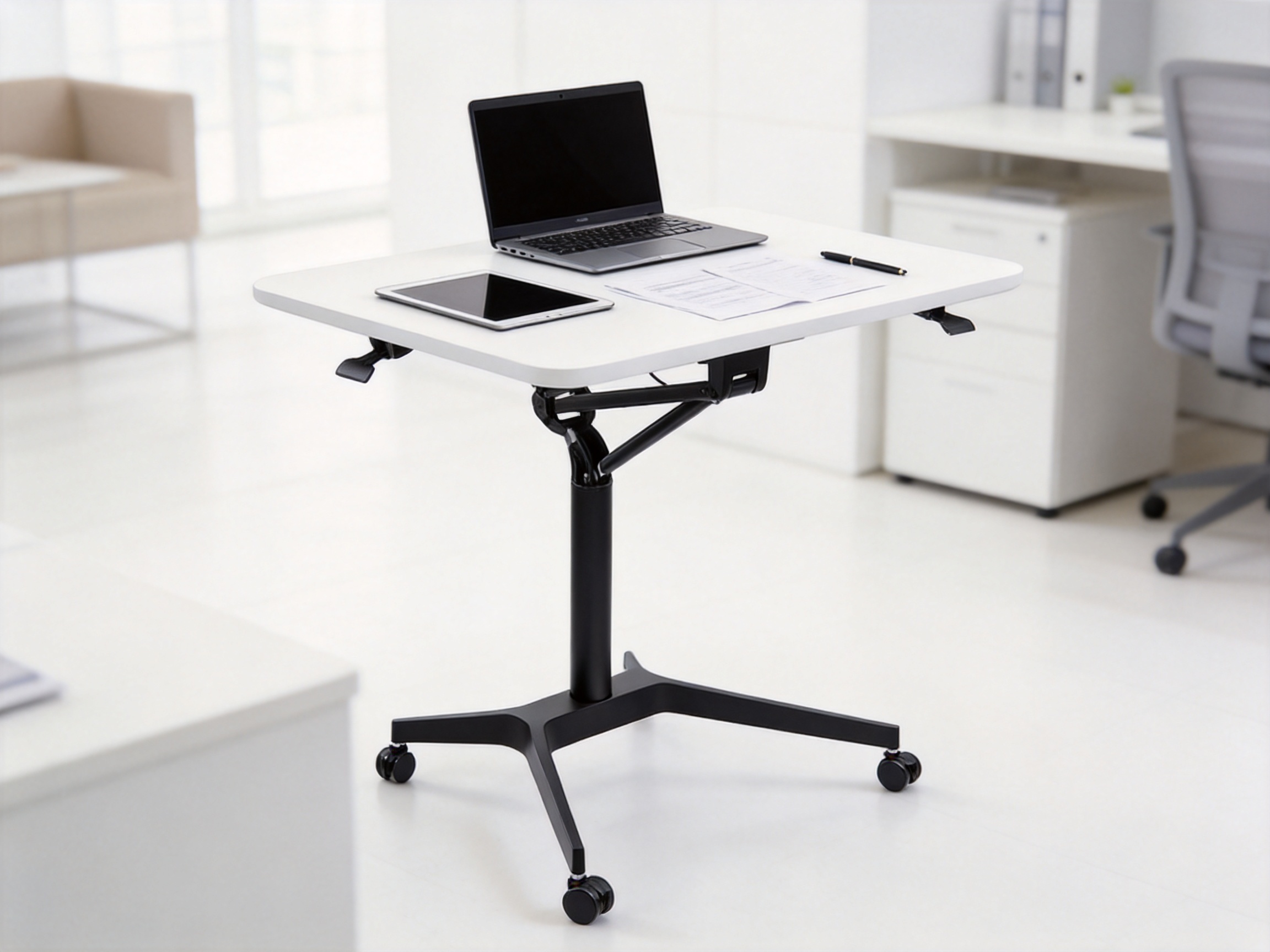
Gas spring lifting is a practical solution for adjustable furniture that needs to move easily and operate without electricity. The principle relies on compressed gas to assist lifting and lowering, reducing the physical effort required from the user. In a mobile desk, this is especially useful because the product can be moved anywhere in a room without being limited by power outlet locations.
For educational training, gas spring adjustment allows instructors to quickly change the height of the desk when switching between seated explanation, standing demonstration, and group discussion. For product demonstration, the desk can be raised to show items more clearly to an audience or lowered for preparation and storage. For electronic device testing, technicians can adjust the work surface to a comfortable level for close inspection.
The absence of electrical components simplifies maintenance. Electric height-adjustable desks often contain motors, cables, controllers, lifting columns, and electronic switches. While these components can provide advanced features, they also create additional points of failure. A pneumatic table avoids many of these concerns, making it suitable for spaces where users need reliable daily function without specialized technical support.
Gas spring lifting also supports a quieter work environment. Without a motor, height adjustment can be performed smoothly and with limited noise. This is valuable in classrooms, libraries, shared offices, clinics, and meeting areas where sudden mechanical noise may distract others.
Another benefit is operational independence. If a building experiences power limitations, if the desk is used outdoors for a temporary event, or if it is moved into a location with no nearby socket, the pneumatic function remains available. This makes the desk a flexible tool for organizations that frequently change layouts or use furniture in multiple rooms.
Tabletop Design and Material Performance
The tabletop is a central part of the user experience. At 715 mm by 475 mm, it is compact enough for mobility while still large enough for common tasks. It can support a tablet with accessories, a laptop and mouse, paperwork, sample products, testing devices, or classroom materials. This size is especially useful where a full-size office desk would be too large or too difficult to move.
The 25 mm MDF core provides thickness and a solid feel. MDF is widely used in furniture because it offers a smooth surface and consistent structure. When combined with PVC vacuum forming, the tabletop gains a protective and decorative outer layer. This construction helps the surface resist everyday scuffs, contact, and cleaning routines.
PVC vacuum forming also supports rounded edges and smooth transitions, depending on the production design. This is important for mobile furniture because users frequently touch, move, and reposition the desk. A smooth tabletop surface and edge treatment improve comfort during handling.
The available color choices broaden the product’s market appeal. White panels work well in medical, educational, and modern office environments. Maple gives a lighter natural tone suitable for learning spaces and casual offices. Walnut provides a warmer and more traditional look. Black creates a professional technical appearance, especially suitable for showrooms, studios, and electronic testing areas.
Many competing mobile tables use thin laminated panels or basic boards that may feel less substantial. The 25 mm tabletop thickness gives this desk a more professional presence. For organizations purchasing furniture for repeated public or employee use, the appearance and feel of the surface can influence satisfaction and perceived quality.
Frame Structure and Flat-Legged Support
The frame combines aluminum and iron, taking advantage of the useful characteristics of both materials. Aluminum contributes to a lighter and cleaner structure, while iron provides strength where load-bearing and stability are important. This combination is appropriate for a mobile workstation that must be strong enough for daily tasks but not overly difficult to move.
The powder-coated finish improves both appearance and protection. Powder coating is commonly used for metal furniture because it can create a consistent, attractive, and durable surface. It also helps the frame resist minor scratches and environmental effects better than untreated metal.
The flat-legged design is visually distinct. Instead of using an ordinary vertical pedestal or simple cross base, the structure uses a triangular support concept with clear linear transitions. The outward angle of the legs is slightly larger, which helps create a stable base. The defined center connection adds a sense of precision and strengthens the product’s modern appearance.
For a mobile desk, base geometry is very important. Users may push the desk from room to room, adjust its height, place devices on the tabletop, or lock it in position during use. The base must support these activities without feeling unstable. The triangular support structure helps distribute forces and provides confidence during typical mobile workstation tasks.
The flat-legged form also makes the desk easier to position around chairs, standing users, demonstration areas, and equipment. A bulky base can interfere with feet, cables, or surrounding furniture. A more direct linear base design reduces visual clutter and supports efficient space planning.
Mobility and Stability in Daily Use
Mobility is one of the strongest features of this pneumatic height-adjustable desk. In many modern workplaces, furniture must not remain fixed in one position. A desk may be used in a meeting room in the morning, moved to a training room in the afternoon, and then positioned in a showroom or testing area the next day. The caster system supports this kind of flexible use.
The product includes two lockable casters and two non-locking casters. This arrangement provides a practical balance. When the desk needs to be moved, the user can roll it into position. When the desk is being used, the lockable casters can help keep it steady. This is especially important when typing, writing, demonstrating products, or using small instruments.
Compared with fixed desks, the mobility of this product reduces the need to purchase multiple workstations for different rooms. One mobile workstation can serve several temporary tasks. For companies, schools, and organizations with changing layouts, this can improve resource efficiency.
Compared with lightweight rolling carts, the product provides a more professional working surface and adjustable height range. Many rolling carts are limited in stability or surface quality. This desk is designed as a more capable mobile workstation, suitable for more demanding daily work.
The lockable caster design also supports safer operation. When a mobile table cannot be secured, accidental movement may occur. Locking casters reduce that risk and provide users with greater control over the workspace.
Application Scenarios
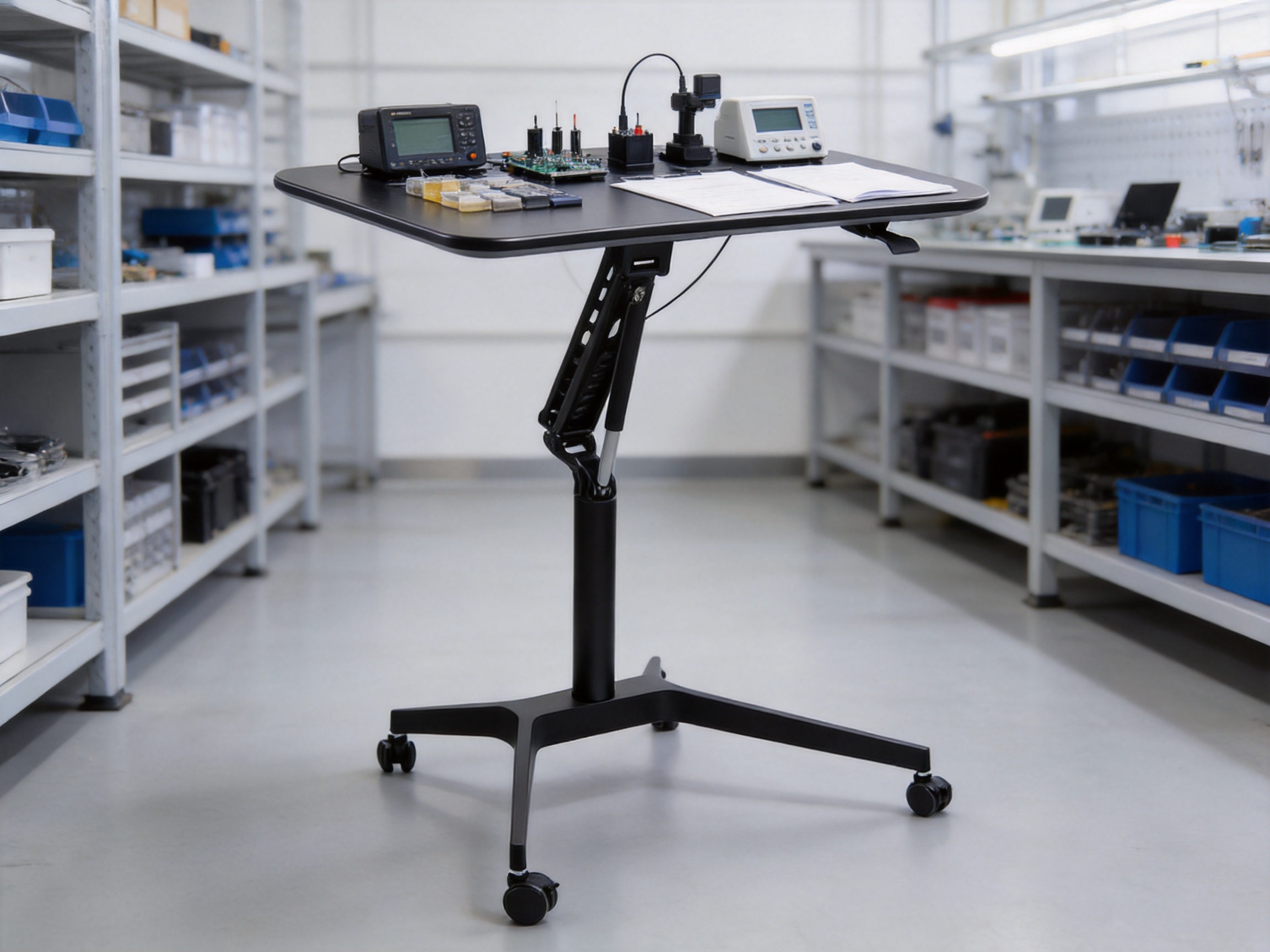
The desk is suitable for electronic device testing, where technicians may need a compact adjustable surface for tablets, mobile devices, small instruments, or inspection materials. The height adjustment allows the tabletop to be positioned at a comfortable level for close work, while the caster wheels allow the workstation to move between benches, storage areas, and testing stations.
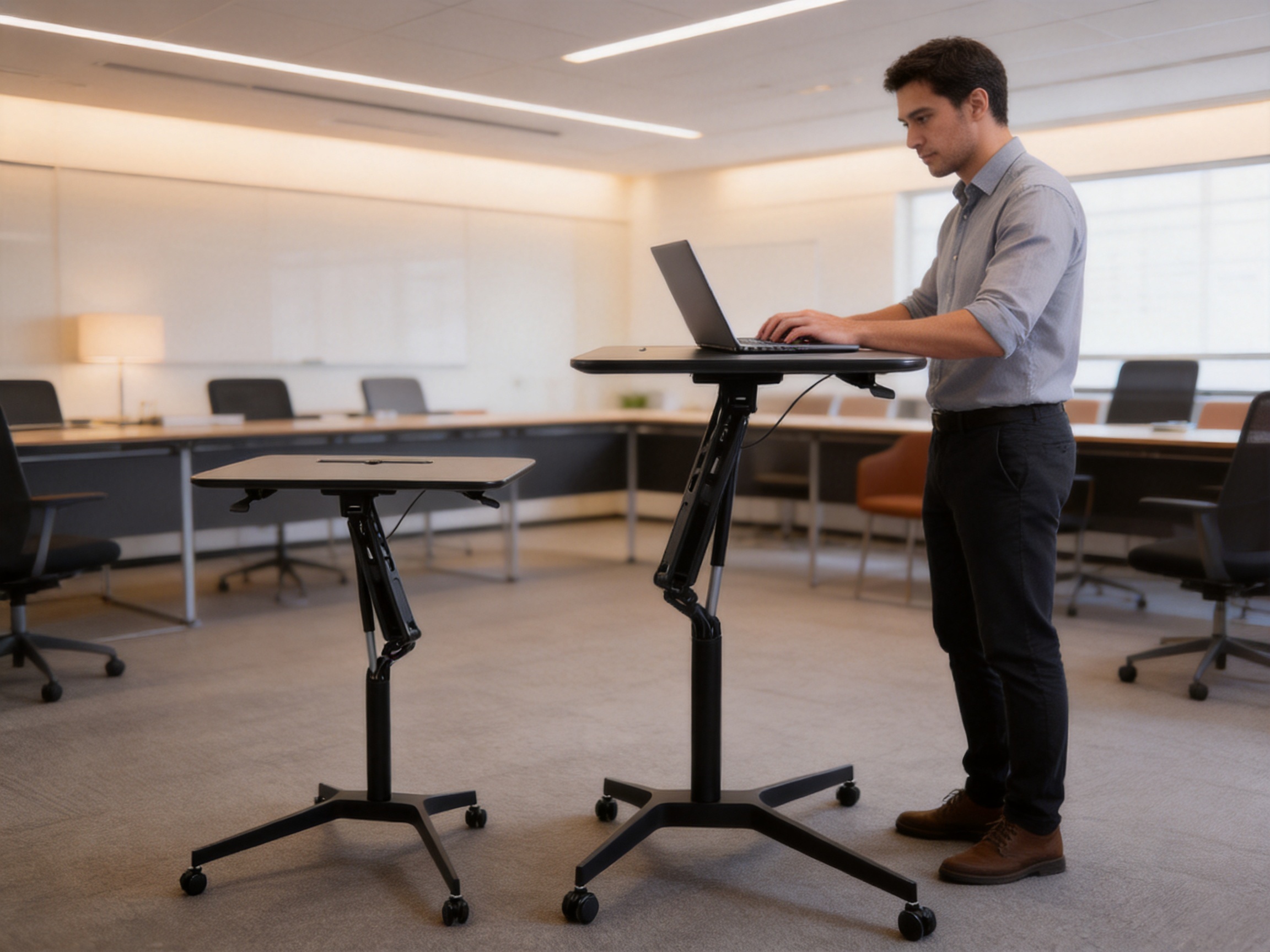
In product demonstration environments, the desk can be used as a mobile display platform. A presenter can position the tabletop at a suitable height for viewing, move it closer to an audience, and lock the wheels during the demonstration. The clean finish and color choices help the product look appropriate in showrooms and sales presentations.
In educational training, the desk can serve as an instructor’s mobile teaching station. It can hold a tablet, laptop, teaching tools, printed materials, or demonstration objects. The pneumatic lifting system allows quick adjustment for different instructors and teaching styles.
In light assembly stations, workers may need to shift between standing and seated positions during repetitive tasks. The compact work surface can hold small components, tools, or assembly documents. The gas spring lifting system supports height changes without interrupting workflow with electrical controls.
In creative workspaces, the desk can function as a flexible project surface. Designers, content creators, and studio staff can move it between rooms, adjust it for sketching or device use, and match the tabletop color to the surrounding environment.
In medical or care-related support spaces, the desk’s mobility and adjustable height can be useful for temporary documentation, device support, or training tasks. The smooth tabletop surface and powder-coated frame support easy maintenance routines, although the desk should always be used according to the specific hygiene and load requirements of the environment.
In home offices, the product can help users create a compact sit-stand workstation without installing a full-size electric standing desk. Because it does not require power for height adjustment, it can be positioned in different rooms as work needs change.
Manufacturing Strengths Behind the Product
The manufacturing quality of an adjustable desk depends on more than its visible appearance. It depends on material selection, frame processing, surface treatment, assembly accuracy, gas spring integration, caster installation, tabletop quality, and final inspection. SuZhou Skyhone Intelligent Technology Co., Ltd. operates as a professional manufacturing enterprise focused on standing desk development, production, sales, and service, which provides a strong foundation for consistent product performance.
The company’s location in Suzhou is significant. Suzhou is part of the Yangtze River Delta, one of China’s most developed industrial regions. This area offers mature supply chains, strong logistics, skilled manufacturing resources, and access to furniture, metal processing, surface treatment, and component suppliers. These regional advantages help manufacturers respond quickly to customer requirements and maintain stable production capability.
Advanced manufacturing for a pneumatic height-adjustable desk begins with engineering design. The lifting range, tabletop size, base angle, caster placement, frame strength, and user operation must all be considered together. A desk that adjusts smoothly but lacks stability is not successful. A desk that is stable but difficult to move also fails to meet the needs of a mobile workstation. Good design balances all these factors.
Material processing is another important stage. Metal components require accurate cutting, forming, drilling, welding, or fastening processes. The alignment of the frame directly affects stability, appearance, and ease of assembly. Consistent processing helps ensure that the desk feels solid and operates as intended.
Surface treatment is also critical. Powder coating requires proper preparation of the metal surface, controlled coating application, and curing. A good powder-coated finish should be even, attractive, and resistant to routine use. Color options such as white, silver, and black allow the product to serve different market preferences without sacrificing frame protection.
The tabletop manufacturing process also requires control. MDF must be selected and processed to the specified size and thickness. PVC vacuum forming must be applied carefully to create a smooth and consistent surface. Since the tabletop is the part users interact with most directly, its finish strongly influences the perceived quality of the entire product.
Gas spring integration is one of the most important production steps. The lifting mechanism must match the table structure and intended use. It should provide smooth assistance through the height range and allow users to adjust the desk comfortably. Proper installation and testing help ensure dependable operation.
Caster assembly must also be handled carefully. Wheels need to roll smoothly, locks must engage properly, and the base must remain balanced. Since mobility is a key selling point, poor caster performance would reduce user satisfaction. The combination of lockable and non-locking casters requires correct placement and secure fastening.
Final inspection is essential. A reliable manufacturing process should check the product’s height adjustment, frame stability, tabletop appearance, caster movement, locking function, coating finish, and packaging condition. These steps help ensure that customers receive a desk that performs as expected from the first use.
Company Capabilities and Customer Value
As a professional enterprise engaged in standing desk research and development, production, sales, and service, SuZhou Skyhone Intelligent Technology Co., Ltd. focuses on healthy, efficient, and intelligent office space solutions. This direction is highly relevant to global workplace trends. Customers increasingly want furniture that supports productivity, comfort, and flexible layouts.
The company’s manufacturing background allows it to support customization needs for ergonomic adjustable office tables. Customization can include color preferences, tabletop finishes, frame colors, and product configurations based on project requirements. For distributors, office furniture contractors, and institutional buyers, this flexibility is valuable because different markets often have different style and functional expectations.
The company’s connection to the complete industrial chain of the Yangtze River Delta supports efficient sourcing and production. This can help improve delivery reliability, cost control, and product development speed. In competitive furniture markets, the ability to combine manufacturing efficiency with product quality is a major advantage.
The product also reflects a practical understanding of end-user needs. It is not designed only as an office object; it is designed as a tool for changing work patterns. The gas spring mechanism, caster mobility, color choices, and compact tabletop all respond to real environments where people need flexible and ergonomic surfaces.
For business buyers, supplier strength matters because furniture purchases often involve repeated orders, after-sales communication, packaging requirements, and quality consistency. A manufacturer with experience in standing desk production is better positioned to provide stable support than a general trading supplier without direct manufacturing knowledge.
For end users, the value is experienced through daily convenience. The desk can be moved easily, adjusted quickly, locked in place, and matched to different interiors. These details make work smoother and more comfortable.
Comparison With Electric Height-Adjustable Desks
Electric height-adjustable desks are popular in modern offices, and they offer useful features such as motorized lifting, memory presets, and larger work surfaces. However, they are not always the best solution for every environment. The pneumatic flat-legged desk provides a different set of advantages that may be more suitable for mobile and shared applications.
First, pneumatic adjustment does not require power. This eliminates cables, plug limitations, and electrical setup. In rooms where furniture is moved frequently, avoiding power dependence is a major advantage. Users can place the desk wherever it is needed without checking outlet locations.
Second, the pneumatic desk is simpler to operate. There are no electronic control panels, no programming steps, and no motor system. This simplicity is beneficial in shared spaces where many different users may operate the desk for short periods.
Third, the product is well suited to compact applications. Many electric standing desks are designed as full office workstations. They may be too large or heavy for temporary teaching, demonstration, or testing tasks. The 715 mm by 475 mm tabletop offers a more focused work area while preserving mobility.
Fourth, maintenance may be easier because the pneumatic desk has fewer electronic components. Organizations with limited technical support may prefer mechanical simplicity and lower dependence on electrical parts.
Fifth, the caster system makes the desk more adaptable than many standard electric desks, which are often placed in one location and left there. The pneumatic desk can be part of a dynamic workspace strategy, supporting different rooms, users, and activities.
Comparison With Standard Fixed Tables
Fixed tables remain common because they are simple and familiar. However, they have obvious limitations. A fixed table cannot adapt to different user heights, cannot easily support standing work, and may not be convenient to move. The flat-legged pneumatic height-adjustable desk addresses these limitations directly.
For shared use, height adjustment is especially important. A table height that works for one person may be uncomfortable for another. In training rooms, laboratories, and demonstration areas, multiple people may use the same desk in a single day. The adjustable range helps the desk serve all of them more effectively.
For posture variation, fixed tables offer little flexibility. Users may remain seated longer than they prefer because the furniture does not support standing work. A pneumatic adjustable desk encourages healthier work patterns by making height changes easier.
For space planning, fixed tables can be restrictive. If a room layout changes, moving traditional furniture can be inconvenient. The caster-equipped design allows faster reconfiguration and better use of limited space.
For specialized tasks such as device testing or product display, fixed tables may be too large, too low, or too difficult to reposition. The mobile pneumatic desk can be adjusted and moved to fit the task rather than forcing the task to fit the table.
Design Details That Improve User Experience
Good furniture design is often found in details that users may not notice immediately but appreciate over time. The tabletop thickness, lifting range, wheel configuration, frame finish, base angle, and color options all contribute to the desk’s usability.
The 25 mm tabletop thickness gives users a more stable and professional feeling than very thin boards. The PVC vacuum-formed surface supports daily use and cleaning. The compact dimensions make the desk easy to place near chairs, walls, equipment, and presentation areas.
The lifting range is practical because it does not attempt to be unnecessarily extreme. Instead, it focuses on common seated and standing working heights. This makes the product suitable for many general tasks without overcomplicating the structure.
The caster system supports movement while the lockable wheels support stability. This combination is essential for a desk that may be pushed frequently but still needs to remain steady during work.
The powder-coated frame provides a clean finish and helps maintain appearance. Color choices allow the desk to match modern office furniture, educational interiors, technical spaces, or display environments.
The triangular support structure gives the product a more refined look than simple utility carts. This matters because mobile furniture is often visible in customer-facing or shared environments. A desk that looks professional contributes to the overall impression of the space.
Procurement Considerations for Buyers
When selecting a mobile height-adjustable desk, buyers should consider the intended environment, user frequency, required tabletop size, height range, mobility needs, appearance, and maintenance expectations. This pneumatic model is especially suitable when users need frequent repositioning and fast height adjustment without electrical dependency.
For schools and training centers, the desk can support instructors, mobile device use, and flexible classroom layouts. Buyers should consider color combinations that match the learning environment and choose finishes that are easy to maintain.
For corporate offices, the desk can serve as a hot-desking support station, meeting room auxiliary table, presentation cart, or temporary standing workstation. Its compact size makes it useful where full-size standing desks are unnecessary.
For laboratories and technical departments, buyers should evaluate the types of devices and tools placed on the tabletop. The desk is suitable for light tasks, product testing, and documentation support. Heavy-duty industrial loads should be assessed separately according to project requirements.
For distributors and furniture dealers, the product’s combination of pneumatic lifting, caster mobility, color options, and professional manufacturing support makes it attractive for multiple market segments. It can be positioned as a flexible ergonomic solution rather than a single-purpose cart.
For custom projects, communication with the manufacturer is important. Buyers may need specific color combinations, packaging requirements, labeling, or order planning. A professional manufacturing enterprise with standing desk experience can provide better support for such requirements.
Maintenance and Long-Term Use
The desk is designed for convenient daily maintenance. The PVC vacuum-formed tabletop can be cleaned according to normal furniture care practices, avoiding harsh chemicals that may damage the surface. The powder-coated frame can be wiped to remove dust and marks, helping preserve its appearance.
Users should operate the gas spring lifting system smoothly and avoid forcing the mechanism beyond its designed range. Proper use helps maintain lifting performance. The tabletop should be used for appropriate light workstation tasks, and users should avoid overloading it with excessive weight or uneven pressure.
Caster wheels should be kept free from debris, especially in environments with dust, packaging material, or small particles. Locking mechanisms should be checked periodically to ensure stable positioning. If the desk is used in multiple rooms, users should move it over suitable floor surfaces and avoid impacts with thresholds or obstacles.
Powder-coated metal surfaces are durable, but they can still be damaged by sharp impacts or abrasive tools. Basic care helps maintain the frame finish over time. In institutional settings, simple user guidelines can help extend product life and reduce unnecessary wear.
Q&A Section
What is the main purpose of this pneumatic height-adjustable desk?
The main purpose is to provide a compact, mobile, and ergonomic workstation that can be adjusted between seated and standing working heights. It is suitable for offices, classrooms, training rooms, product demonstrations, device testing, light assembly stations, and creative workspaces.
What is the height adjustment range?
The desk adjusts from 750 mm to 1060 mm. This range supports a variety of seated and standing tasks and allows different users to set a more comfortable working height.
How does the height adjustment work?
The desk uses a gas spring lifting mechanism. This pneumatic system assists manual lifting and lowering, allowing smooth height changes without requiring electricity.
Why choose a pneumatic desk instead of an electric desk?
A pneumatic desk is ideal when mobility, simplicity, and power-free operation are important. It does not need a motor, control box, power cord, or outlet, making it easier to move and use in different locations.
What is the tabletop made of?
The tabletop is made from a 25 mm MDF core with a PVC vacuum-formed surface. This construction provides a smooth appearance, practical durability, and easy maintenance for everyday use.
What are the tabletop dimensions?
The tabletop measures 715 mm by 475 mm with a thickness of 25 mm. It is compact but suitable for tablets, laptops, documents, teaching materials, small devices, and light work tools.
Does the desk have wheels?
Yes. The desk has four caster wheels, including two lockable casters and two non-locking casters. This allows easy movement and stable positioning when the locks are engaged.
What color options are available?
The tabletop panels are available in white, maple, walnut, and black. The powder-coated frame can be supplied in white, silver, or black.
What makes the flat-legged design useful?
The flat-legged triangular support structure provides stability while maintaining a clean and modern appearance. The outward leg angle and direct structural transition help the desk remain practical for mobile use.
Who manufactures this type of product?
SuZhou Skyhone Intelligent Technology Co., Ltd. is a professional manufacturer engaged in the research and development, production, sales, and service of standing desks and ergonomic adjustable office furniture solutions.
What manufacturing strengths support the product quality?
The manufacturer benefits from its location in Suzhou and the Yangtze River Delta industrial chain. Its strengths include product development capability, metal frame processing, powder coating coordination, tabletop production, gas spring integration, assembly, inspection, and customer service support.
Is the desk suitable for heavy industrial work?
The desk is best suited for mobile ergonomic tasks, device testing, demonstrations, training, office work, and light assembly. For heavy industrial use, buyers should confirm load and application requirements with the manufacturer before purchasing.
Conclusion
The flat-legged pneumatic height-adjustable desk is a practical and competitive solution for work environments that require mobility, ergonomic adjustment, and professional appearance. Its gas spring lifting system provides smooth manual height adjustment from 750 mm to 1060 mm without electrical power. Its 715 mm by 475 mm tabletop offers a useful compact surface, while the 25 mm MDF and PVC vacuum-formed construction supports daily durability and easy maintenance.
The aluminum and iron frame, powder-coated finish, triangular support structure, and caster system create a balanced product that is stable, movable, and visually clean. Compared with fixed tables, it provides superior adaptability. Compared with many electric desks, it offers greater mobility and simpler power-free operation. Compared with basic rolling carts, it provides a more professional ergonomic workstation experience.
Behind the product is the manufacturing and service capability of SuZhou Skyhone Intelligent Technology Co., Ltd., a company focused on standing desk development and intelligent office space solutions. Supported by the industrial strengths of Suzhou and the Yangtze River Delta, the company is positioned to deliver adjustable office furniture that meets the needs of modern global users.
For organizations seeking flexible workstations for offices, education, demonstrations, testing, or light task environments, this pneumatic height-adjustable desk provides a strong combination of ergonomic value, mobility, durability, and manufacturing reliability.
References
Grandjean, E. Fitting the Task to the Man: An Ergonomic Approach. Taylor and Francis.
Kroemer, K. H. E., and Grandjean, E. Fitting the Task to the Human: A Textbook of Occupational Ergonomics. CRC Press.
Bridger, R. S. Introduction to Ergonomics. CRC Press.
Pheasant, S., and Haslegrave, C. M. Bodyspace: Anthropometry, Ergonomics and the Design of Work. CRC Press.
Dul, J., and Weerdmeester, B. Ergonomics for Beginners: A Quick Reference Guide. CRC Press.
Sanders, M. S., and McCormick, E. J. Human Factors in Engineering and Design. McGraw-Hill.
Product: TH01-3 iPad (Flat-Legged) Pneumatic Height-Adjustable Desk


- Contact Info
-
-
 Phone+86-15950656125
 -
 Email
Email -
 AddressRoom 1007-1, South Building, Suyue Plaza, Suzhou Industrial Park, Suzhou City, Jiangsu Province, China
-
- Products
- Follow Us
- Need help? Please contact us
Copyright ©
SuZhou Skyhone Intelligent Technology Co., Ltd.
All Rights Reserved.
Privacy
Custom Ergonomic Adjustable Office Tables Manufacturers

