

 English
  русский
  Español
  عربى
عربى 
Content
- 1 Designed Specifically for Vertical Lifting
- 2 Core Technical Performance
- 3 Multi-Stage Column Construction
- 4 Precision Guidance and Reduced Shaking
- 5 Strong Load Support and Self-Locking Performance
- 6 Electronic Limits and Dual Overload Protection
- 7 IP54 Protection and Certification Support
- 8 Manufacturing Strengths Behind the Product
- 9 Advantages Over Conventional Hydraulic and Pneumatic Solutions
- 10 Advantages Over Basic Single-Section Actuators
- 11 Advantages Over Less Specialized Lifting Columns
- 12 Applications in Adjustable Office Furniture
- 13 Industrial Inspection and Production Platforms
- 14 Medical Examination Beds and Care Equipment
- 15 Heavy Equipment Jacking Structures
- 16 Automated Warehouse Lifts
- 17 Synchronization for Multi-Column Systems
- 18 Customization Options
- 19 Installation and System Design Guidance
- 20 Duty Cycle and Long-Term Static Loads
- 21 Maintenance and Service Considerations
- 22 Why the TH-10 Is a Strong OEM Choice
- 23 Selection Checklist for Buyers
- 24 Q&A About the TH-10 Multi-Stage Electric Lifting Column
- 24.1 What is the TH-10 designed to do?
- 24.2 What is the maximum push force?
- 24.3 What is the self-locking force?
- 24.4 Does the TH-10 require hydraulic oil?
- 24.5 Does it need compressed air?
- 24.6 Can several TH-10 columns work together?
- 24.7 What is the no-load telescopic speed?
- 24.8 What does the IP54 rating mean?
- 24.9 What safety features are built into the product?
- 24.10 Can the stroke length be customized?
- 24.11 Can the mounting flange be customized?
- 24.12 Is the TH-10 suitable for standing desks?
- 24.13 Is it suitable for medical equipment?
- 24.14 What is the duty cycle?
- 24.15 What power supply does the column use?
- 25 Conclusion
- 26 References
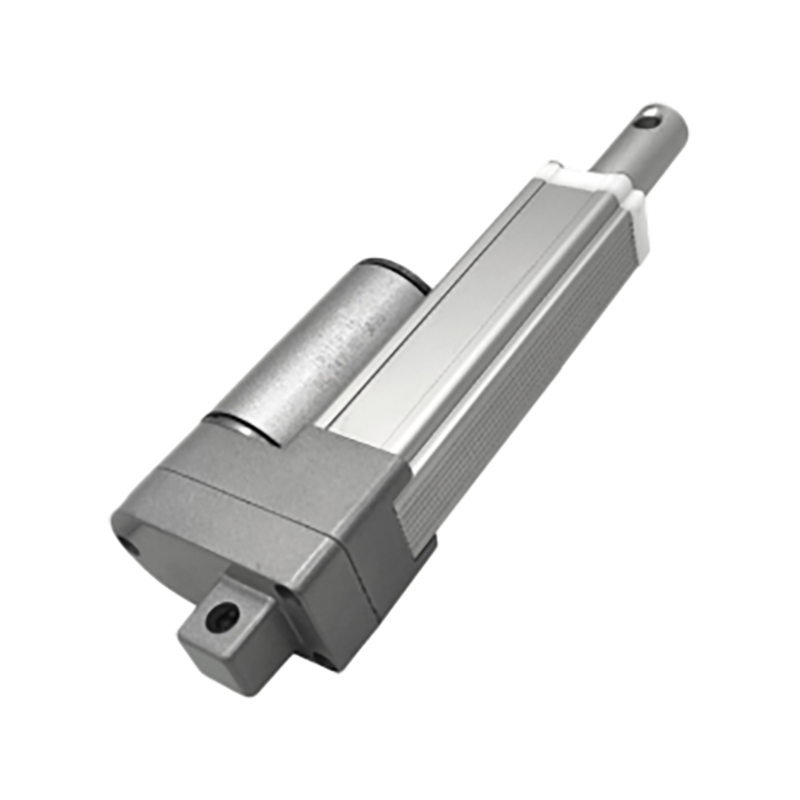
- 27 Product: TH-10 Multi-Stage Electric Lifting Column
TH-10 Multi-Stage Electric Lifting Column: Stable, Precise, and Reliable Vertical Motion for Modern Equipment
2026-07-23
Vertical lifting systems are becoming increasingly important across office furniture, industrial automation, medical equipment, warehouse systems, and specialized machinery. As users demand safer height adjustment, greater load stability, quieter operation, and more compact mechanical designs, conventional lifting methods are often no longer sufficient. Hydraulic systems may require pumps, hoses, reservoirs, and regular maintenance, while pneumatic systems depend on an external air supply and may provide less precise positioning. Standard single-section electric linear actuators can offer convenient motion, but they may not provide the structural stability, vertical guidance, and compression resistance required for demanding lifting applications.
The TH-10 Multi-Stage Electric Lifting Column is designed specifically to address these challenges. As a dedicated vertical lifting actuator, it combines a multi-layer telescopic column structure with a strong aluminum profile tube, precision internal wear-resistant bushings, electronic limit protection, dual overload protection, and a self-locking trapezoidal lead screw. The result is a compact and dependable lifting solution for applications that require controlled vertical movement and reliable load support.
With a push force of 5,000 N, pull force of 4,000 N, self-locking force of 4,000 N, 24 VDC power input, and no-load telescopic speed of 5 mm/s, the TH-10 is engineered to provide stable performance in vertical lifting scenarios. Its 10% standard duty cycle makes it particularly suitable for equipment that performs periodic adjustments or supports static loads for extended periods. It can operate as an independent lifting column or as part of a multi-column synchronized lifting system controlled by a suitable controller.
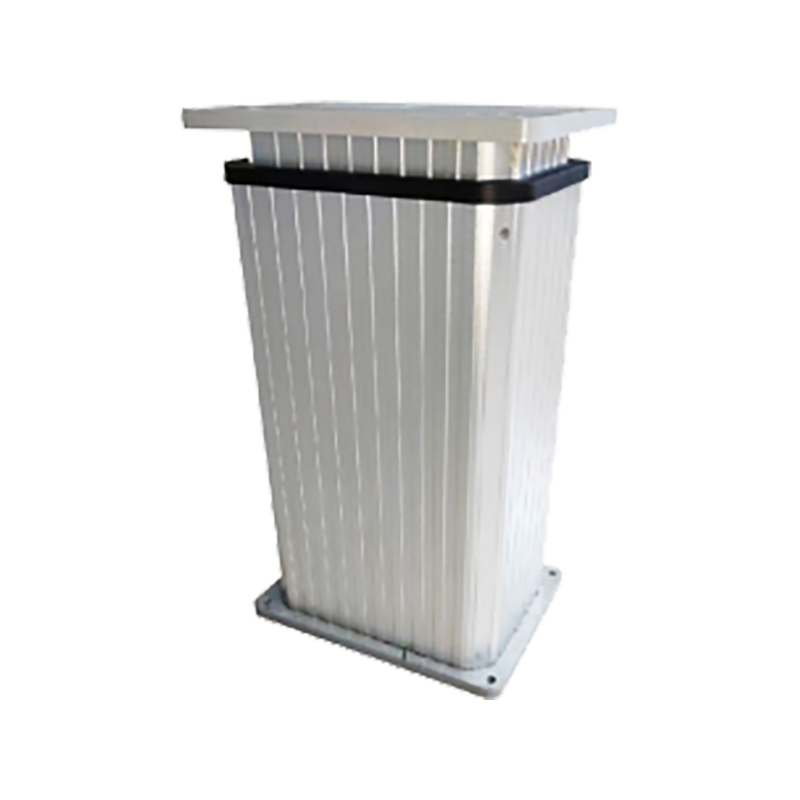
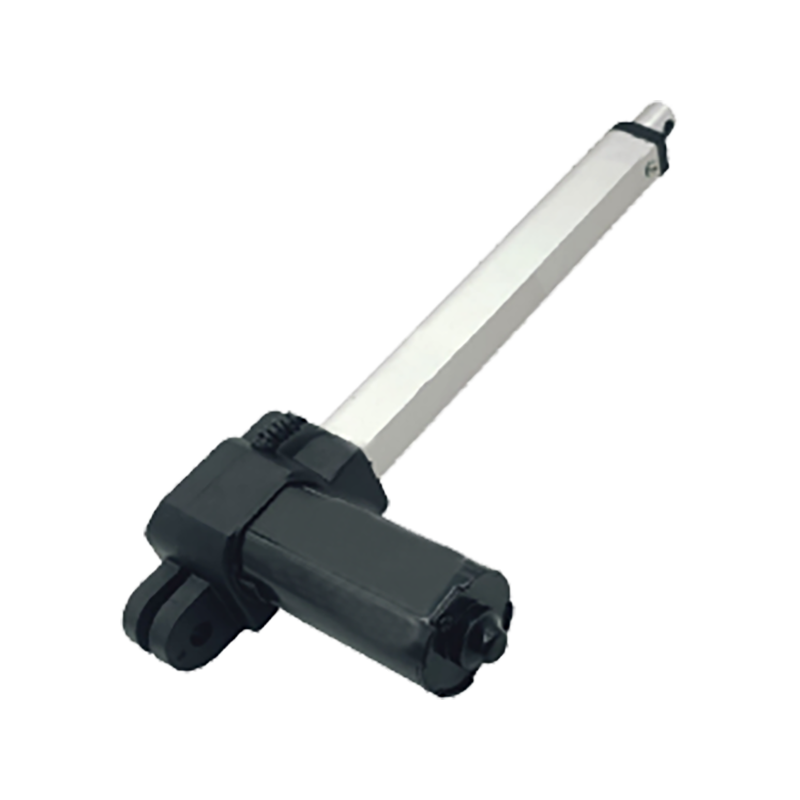
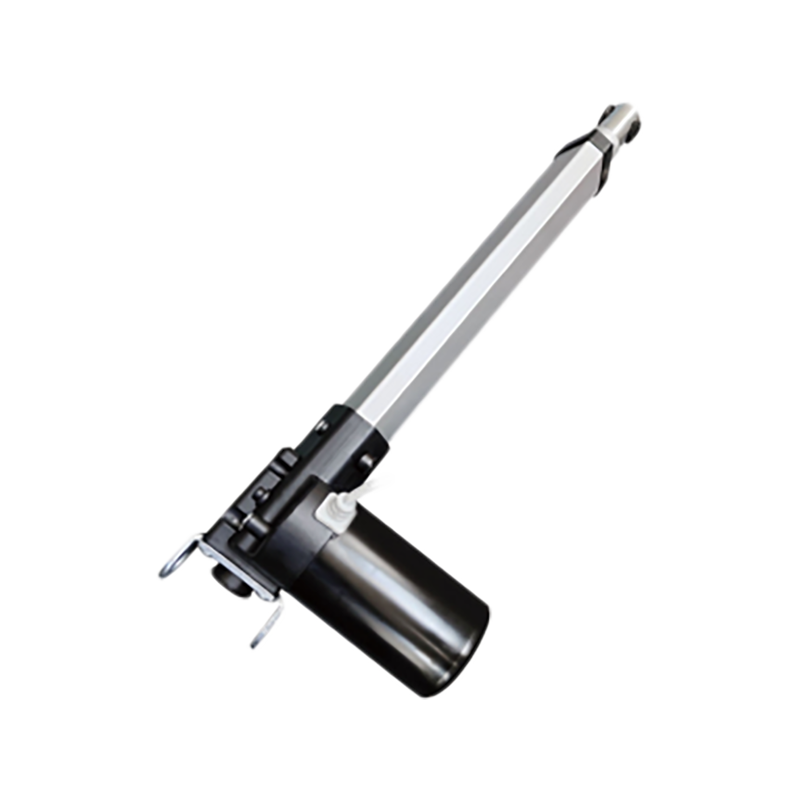
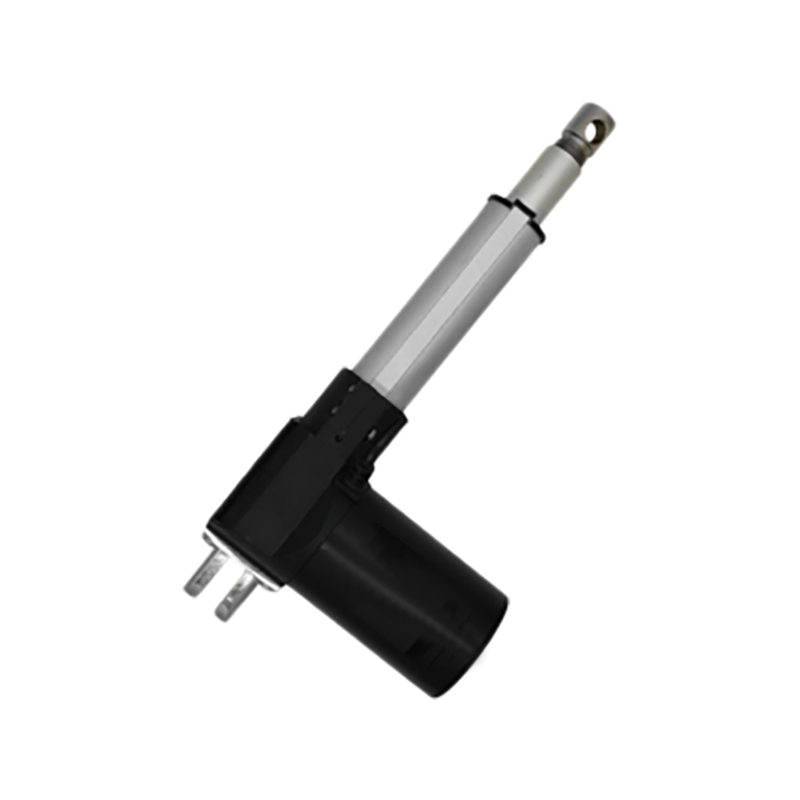
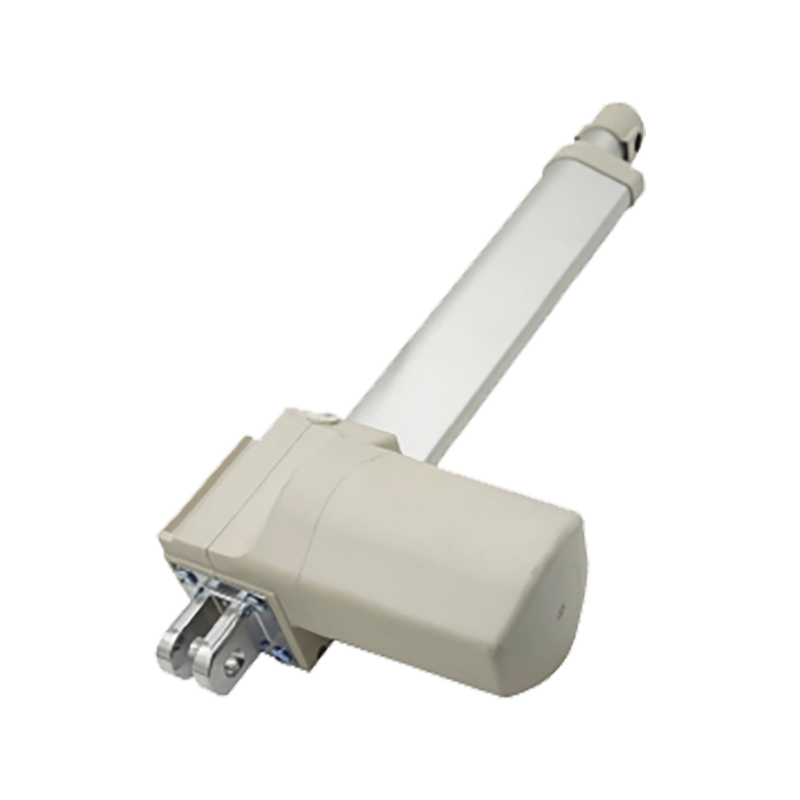
TH-10 Multi-Stage Electric Lifting Column
Designed Specifically for Vertical Lifting
Many electric actuators are developed as general-purpose push-and-pull devices. They can be useful for opening, closing, tilting, or positioning components, but a vertical lifting application creates additional mechanical demands. The actuator must support the load in a straight vertical direction, resist lateral movement, maintain alignment throughout the stroke, and remain secure when power is removed. These requirements are particularly important in standing desks, examination beds, inspection platforms, and lifting structures that carry people, equipment, or sensitive instruments.
The TH-10 is designed around these vertical-motion requirements rather than being adapted from a general actuator platform. Its multi-stage column structure provides a larger guided profile than a typical single-section actuator. This construction helps improve resistance to compression, bending, and unwanted movement during extension and retraction. The column is supported by internal wear-resistant bushings that help maintain alignment and reduce shaking as the sections move.
This purpose-built structure gives the TH-10 an important advantage in applications where vertical stability is more important than simple linear movement. A standard actuator may generate sufficient force but still allow visible deflection or lateral play when extended. A dedicated lifting column is better suited to maintaining a stable platform, tabletop, medical surface, or machine component throughout its travel.
The multi-stage design also makes it possible to achieve useful lifting movement while maintaining a relatively compact retracted form. This is valuable in adjustable furniture and industrial equipment, where installation space is limited but a practical height range is still required. The column can be integrated into a frame, base, platform, or custom enclosure according to the requirements of the final equipment.
Core Technical Performance
The mechanical and electrical specifications of the TH-10 are balanced for stable vertical lifting rather than high-speed cycling. Its rated push force is 5,000 N, while the pull force is 4,000 N. The self-locking force is also rated at 4,000 N, helping the column hold a load after the power supply has been disconnected. The actuator uses a 24 VDC power supply, with a full-load current of 4 A and a no-load telescopic speed of 5 mm/s.
These specifications make the product suitable for controlled lifting applications that value force, stability, and holding capability. The 24 VDC input is also convenient for equipment manufacturers because it can be integrated with widely used low-voltage control systems, power supplies, and motion controllers. In systems where several columns operate together, the common DC supply and controller architecture can simplify electrical integration.
| Performance Item | TH-10 Specification | Application Significance |
|---|---|---|
| Product type | Multi-stage electric lifting column | Designed for vertical lifting and guided height adjustment |
| Push force | 5,000 N | Supports substantial vertical lifting loads |
| Pull force | 4,000 N | Provides controlled retraction and downward movement |
| Self-locking force | 4,000 N | Helps maintain position after power interruption |
| Power supply | 24 VDC | Compatible with common low-voltage control architectures |
| Full-load current | 4 A | Supports power-system and controller selection |
| No-load telescopic speed | 5 mm/s | Provides controlled, stable adjustment |
| Protection rating | IP54 | Provides protection against limited dust ingress and water splashes |
| Standard duty cycle | 10% | Suitable for intermittent adjustment and long static holding tasks |
| Compliance | CE and RoHS certifications | Supports use in regulated product development and export markets |
Actual performance in a complete machine depends on factors such as load distribution, mounting geometry, stroke length, duty cycle, power-supply quality, operating temperature, and synchronization requirements. For this reason, equipment designers should evaluate the complete application rather than selecting an actuator based solely on nominal force.
Multi-Stage Column Construction
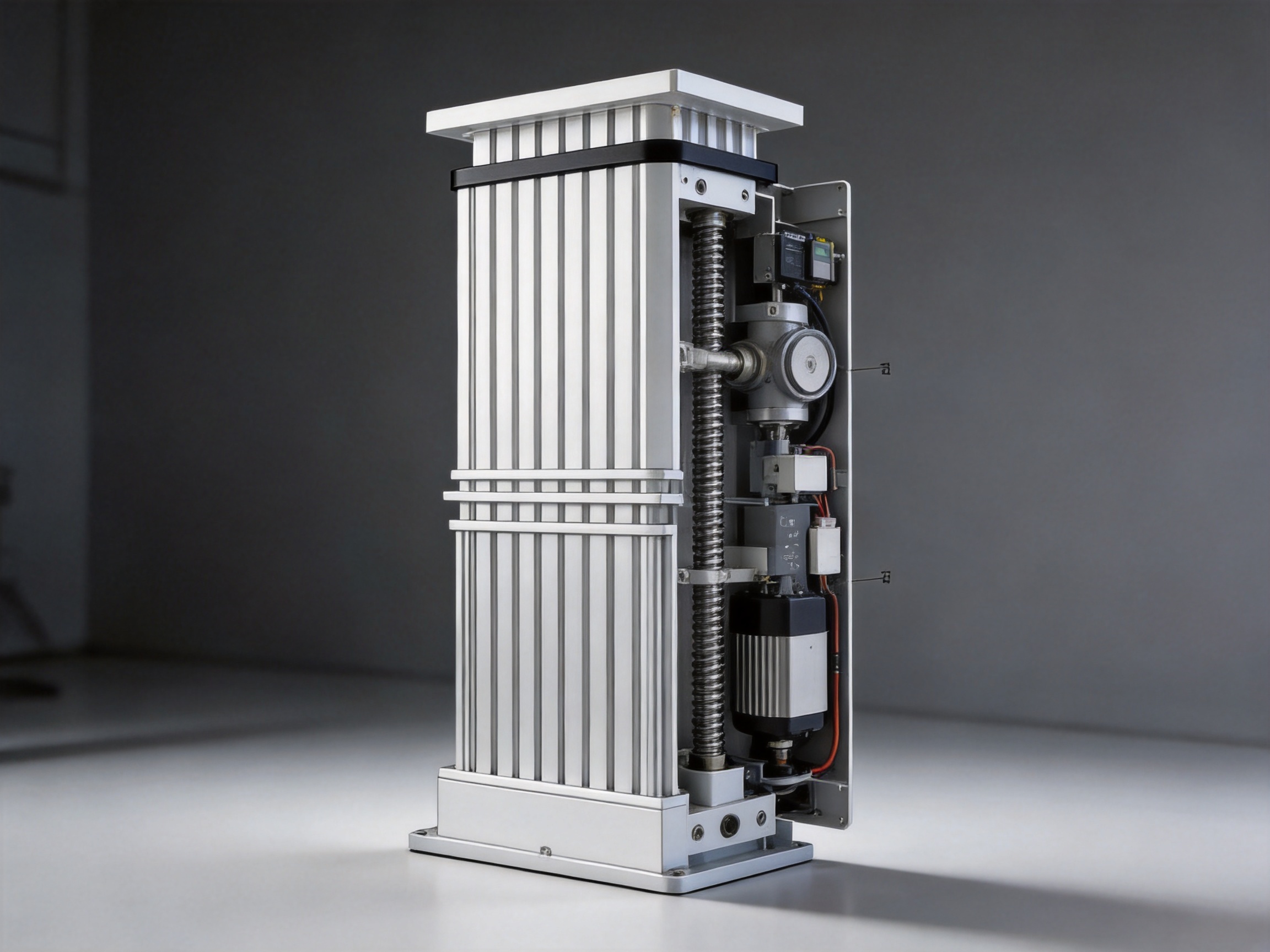
The most visible structural feature of the TH-10 is its multi-stage telescopic column. Instead of relying on one moving rod or one exposed actuator tube, the column uses multiple nested sections to guide vertical movement. This arrangement distributes the load over a larger structural area and creates a more stable lifting interface.
The column is manufactured from a thick aerospace-grade integrated aluminum profile tube. The integrated profile construction contributes to a clean appearance and a strong structural body. Aluminum offers a useful combination of low weight, corrosion resistance, and structural stiffness, making it suitable for office furniture, medical equipment, and industrial systems where the overall mass of the moving assembly must be controlled.
The matte silver-white finish gives the product a neutral and professional appearance. This allows it to fit into modern office furniture, clinical environments, laboratory equipment, and industrial installations without requiring extensive cosmetic treatment. The surface appearance is also consistent with applications where clean design and easy integration are important.
Compared with ordinary steel components, aluminum can reduce the weight added to a moving structure. Lower moving mass may help the complete system respond more efficiently and reduce the load placed on the drive mechanism. At the same time, the thick profile provides the material strength needed for compression and vertical support. The balance between low weight and structural performance is one of the reasons aluminum profiles are widely used in adjustable equipment.
The multi-stage arrangement also improves the relationship between retracted height and usable lifting travel. Although the final travel depends on the selected configuration and customization requirements, the telescopic architecture enables designers to create compact equipment without abandoning vertical movement capability.
Precision Guidance and Reduced Shaking
Vertical lifting equipment must do more than move up and down. It must move in a controlled path. Any looseness between moving sections can produce shaking, uneven motion, noise, or platform deflection. These problems can be especially serious for medical beds, inspection platforms, display systems, and workstations where the user expects a smooth and stable adjustment.
The TH-10 incorporates precision internal wear-resistant bushings to guide the moving sections. These bushings help reduce clearance-related movement and maintain the alignment of the telescopic column during operation. By limiting unnecessary play between the sections, the design helps prevent the column from shifting or leaning during lifting.
Wear-resistant internal components also support long-term repeatability. As a lifting column is used repeatedly, its guiding surfaces must remain effective under changing loads. The internal bushing arrangement is intended to reduce friction and wear while preserving the controlled movement of the column. Proper lubrication, operating conditions, and load distribution remain important, but the internal guidance structure provides a strong mechanical foundation.
This feature gives the TH-10 an advantage over basic linear actuators that depend mainly on a single moving rod. A single rod can provide linear force, but the final structure may still need external guide rails, support columns, or anti-rotation mechanisms. The TH-10 integrates the lifting and guiding functions into a dedicated column assembly, potentially reducing the number of separate components required by the equipment manufacturer.
Reducing the number of external guide components can simplify system design. It may also reduce the time required for installation, alignment, and maintenance. For original equipment manufacturers, an integrated column can make product development more efficient because the vertical support system is provided as a more complete mechanical module.
Strong Load Support and Self-Locking Performance
The TH-10 provides a 5,000 N push force and a 4,000 N pull force. These values give designers a substantial force range for vertical lifting applications. However, force capacity should always be considered together with the position of the load, the number of lifting columns, the platform structure, and the duty cycle.
In a single-column installation, the load should be centered as closely as possible over the column unless the complete mechanical structure has been designed to withstand offset loading. In a multi-column system, the loads should be distributed evenly and the columns should be synchronized to prevent twisting or uneven extension. The product supports both independent use and multi-column synchronous lifting linkage, allowing system designers to choose an architecture that matches the application.
The 4,000 N self-locking force is especially valuable in vertical equipment. The trapezoidal lead screw can lock the load firmly when power is removed, helping prevent unintended descent. This feature can simplify the design of equipment that must remain at a selected height without continuous motor power.
Self-locking also contributes to energy efficiency in static applications. If a platform must remain elevated for an extended period, a self-locking mechanical transmission can hold the position without requiring the motor to run continuously. This reduces unnecessary energy consumption and may reduce heat generation in the drive system.
Self-locking should not be treated as a replacement for all external safety measures. The final equipment may require mechanical stops, guards, emergency controls, anti-pinch provisions, or additional load-support structures depending on the application. Nevertheless, the self-locking lead screw provides an important internal layer of position retention and helps the TH-10 perform reliably during power interruptions.
Electronic Limits and Dual Overload Protection
Safety and repeatability are central requirements in powered lifting systems. The TH-10 is equipped with built-in electronic limit switches that control the end positions of the telescopic movement. These limits help prevent the column from being driven beyond its intended travel range, protecting the mechanical assembly and supporting consistent operation.
Electronic limit control is useful in applications where the lifting column is integrated into a programmed piece of equipment. The system can be configured to operate within defined upper and lower positions, helping ensure that connected cables, panels, platforms, and mechanical structures are not exposed to unnecessary travel.
The product also incorporates dual overload protection. Overload protection helps reduce the risk of damage when the column encounters excessive resistance, an improperly distributed load, or an obstruction during movement. The dual arrangement provides an additional layer of protection compared with systems that depend on only one overload response.
In practical equipment design, overload protection should be combined with appropriate control logic. A complete system may include a current-limiting power supply, controller-based fault detection, emergency stop functionality, operator controls, and physical safety barriers. The actuator provides an important protection foundation, while the equipment manufacturer remains responsible for evaluating the hazards of the final machine.
The combination of electronic limits, overload protection, and self-locking transmission gives the TH-10 a balanced safety profile for vertical adjustment. It is not merely a motorized screw; it is a coordinated lifting component designed to help control motion, detect abnormal operating conditions, and retain position after power loss.
IP54 Protection and Certification Support
The TH-10 has an IP54 protection rating. This rating indicates that the enclosure provides protection against limited dust ingress and water splashes from different directions. It is appropriate for many indoor and semi-protected environments, including offices, workshops, laboratories, medical settings, and industrial equipment areas where occasional dust or splash exposure may occur.
IP54 is not intended to indicate complete dust tightness or protection against immersion. Equipment designers should therefore consider the actual installation environment, including cleaning methods, humidity, chemical exposure, temperature, and the possibility of direct water jets. If the product is to be installed in a more demanding environment, the complete system may require additional covers, seals, or environmental controls.
The TH-10 has CE and RoHS certifications. These certifications support the use of the product in projects that require documented conformity with applicable safety, environmental, and market-access requirements. For original equipment manufacturers, certification support can make the compliance process more organized and reduce the burden of evaluating every basic actuator feature independently.
Certification is most valuable when supported by consistent manufacturing, traceable components, documented testing, and clear technical communication. A professional actuator supplier should be able to provide product information that helps customers evaluate electrical integration, mechanical installation, intended use, and compliance documentation during the design phase.
Manufacturing Strengths Behind the Product
The performance of a lifting column depends not only on its nominal specifications but also on how consistently it is manufactured. Small variations in profile dimensions, bushing fit, screw alignment, electrical limit settings, or assembly torque can affect noise, movement smoothness, and service life. For this reason, advanced manufacturing capability is a critical part of actuator quality.
The TH-10 is produced by SuZhou Skyhone Intelligent Technology Co., Ltd., a professional manufacturing enterprise engaged in the research, development, production, sales, and service of standing desk and lifting-system products. Based in Suzhou, within the Yangtze River Delta furniture manufacturing region, the company benefits from access to a mature industrial supply chain and a strong regional manufacturing ecosystem.
The location is relevant because a complete lifting-column product requires cooperation among multiple technical disciplines. Aluminum profile processing, motor and transmission components, electrical control parts, machining, surface treatment, assembly, and testing all influence the final product. A developed manufacturing region can support closer coordination between these activities and help improve production responsiveness.
The company’s focus on standing desks and intelligent office-space solutions also gives it application-specific experience. Adjustable furniture is not simply a matter of adding a motor to a table. The system must operate quietly, maintain stability, coordinate multiple columns, tolerate repeated adjustment, and integrate with user-friendly control systems. Experience in this field can be transferred to industrial, medical, and specialized lifting applications that share similar motion and stability requirements.
Integrated Aluminum Profile Processing
The use of a thick integrated aluminum profile tube requires careful control of profile geometry and surface quality. The tube must maintain consistent dimensions so that the nested sections can move with appropriate clearance. Excessive clearance can cause shaking, while insufficient clearance can increase friction and affect movement. The profile must also remain sufficiently straight and structurally consistent over its length.
Integrated profile construction helps reduce the number of separate structural pieces in the column body. Fewer joints can create a cleaner appearance and may reduce potential alignment points. It also supports efficient assembly and provides a unified external surface suitable for modern furniture and equipment design.
Precision Component Matching
The internal wear-resistant bushings, lead screw, motor, and telescopic sections must work together as a matched system. Component compatibility is essential to achieving smooth movement and reliable self-locking behavior. Precision component matching helps ensure that the column does not experience unnecessary vibration or inconsistent resistance during operation.
For a lifting column, assembly quality is particularly important because the actuator operates under both moving and static loads. The screw and guide elements must be aligned, the electrical limits must correspond to the actual travel, and the column sections must be fitted without damaging the sliding surfaces. These details distinguish a purpose-built product from a basic collection of unrelated components.
Electrical and Mechanical Integration
The TH-10 combines electrical control and mechanical lifting functions in one product. Its 24 VDC power system, electronic limit switches, and dual overload protection must be integrated with the motor and transmission in a controlled assembly process. This integration allows the actuator to respond to operating commands while protecting the mechanism against abnormal conditions.
For equipment manufacturers, integrated design can reduce engineering complexity. Instead of separately selecting a motor, screw drive, guide structure, limit device, and overload system, the designer can begin with a lifting column that already combines these functions. The remaining work involves selecting the appropriate stroke, mounting configuration, controller, power supply, and external safety features.
Application-Oriented Development
The company’s manufacturing strength is also reflected in its ability to support customization. The TH-10 can be customized in areas such as total stroke, flange base, and synchronous control schemes. This is important because different equipment platforms require different travel distances, mounting patterns, and control architectures.
Customization should not be limited to cosmetic modifications. In a professional lifting system, the key requirement is compatibility between the column and the customer’s complete machine. A customized stroke may help achieve the desired working height. A customized flange base can simplify installation and improve structural connection. A synchronized control scheme can coordinate several columns supporting one platform.
Advantages Over Conventional Hydraulic and Pneumatic Solutions
Hydraulic lifting systems are widely used in heavy equipment, but they often require pumps, reservoirs, hydraulic oil, hoses, seals, valves, and additional maintenance procedures. Leakage can create contamination, cleaning, and environmental concerns. Hydraulic systems can also require more space than an electric column, particularly when the pump and reservoir must be installed near the lifting mechanism.
The TH-10 does not require hydraulic oil or an external pump. Its electric transmission provides direct mechanical movement from a 24 VDC power source. This can simplify installation and reduce the number of fluid-related components in the final equipment. The absence of hydraulic oil also makes it attractive for offices, medical environments, laboratories, and clean production areas where contamination must be minimized.
Pneumatic systems require a compressed-air source, valves, tubing, and air preparation equipment. Air compressors can produce noise and consume energy even when the lifting mechanism is not moving. Pneumatic cylinders may also require additional mechanical control to achieve precise positioning. The TH-10 operates independently from an air supply and can provide controlled electrical adjustment through a compatible controller.
Electric lifting also supports easier digital integration. A controller can be used for speed regulation, position management, synchronization, and user-interface functions. This makes the TH-10 suitable for intelligent desks and automated equipment that must respond to switches, sensors, programmed positions, or external control systems.
Advantages Over Basic Single-Section Actuators
Single-section linear actuators remain useful for many applications, especially where the actuator is supported by an external frame or where the load is relatively light. However, they may not be ideal for a free-standing vertical platform or a wide tabletop that must remain stable throughout the lifting process.
The TH-10’s multi-stage column provides integrated guidance and structural support. This helps reduce the need for separate guide rails and stabilizing components. It can also improve the visual quality of the final product because the column presents a coordinated, enclosed structure rather than an exposed rod and motor arrangement.
The difference becomes more noticeable as the lifting height increases. A long single-section actuator may extend significantly and become more vulnerable to bending or lateral movement. A multi-stage column keeps its guided sections within a structural housing, helping maintain a more controlled vertical path.
The TH-10 is therefore better suited to applications where load stability, appearance, and integration are important. It provides a more complete vertical lifting architecture than a basic push-pull actuator, while retaining the advantages of electric operation and low-voltage control.
Advantages Over Less Specialized Lifting Columns
Not every lifting column is designed for the same duty conditions. Some columns are optimized for office desks, while others are designed for industrial platforms or medical equipment. The TH-10 is positioned as a versatile vertical lifting actuator with a strong force rating, self-locking capability, IP54 protection, and support for customized system configurations.
Its 5,000 N push force and 4,000 N self-locking force give designers greater flexibility when working with heavier platforms or equipment. The precision bushings and multi-stage structure support stability, while the electronic safety features assist with controlled operation. These characteristics make the product suitable for more than ordinary desk adjustment.
At the same time, the 24 VDC power supply and compact column format make it practical for furniture and equipment manufacturers that need a relatively simple electrical architecture. The product can bridge the gap between a consumer-style desk actuator and a more complex industrial lifting mechanism.
Applications in Adjustable Office Furniture
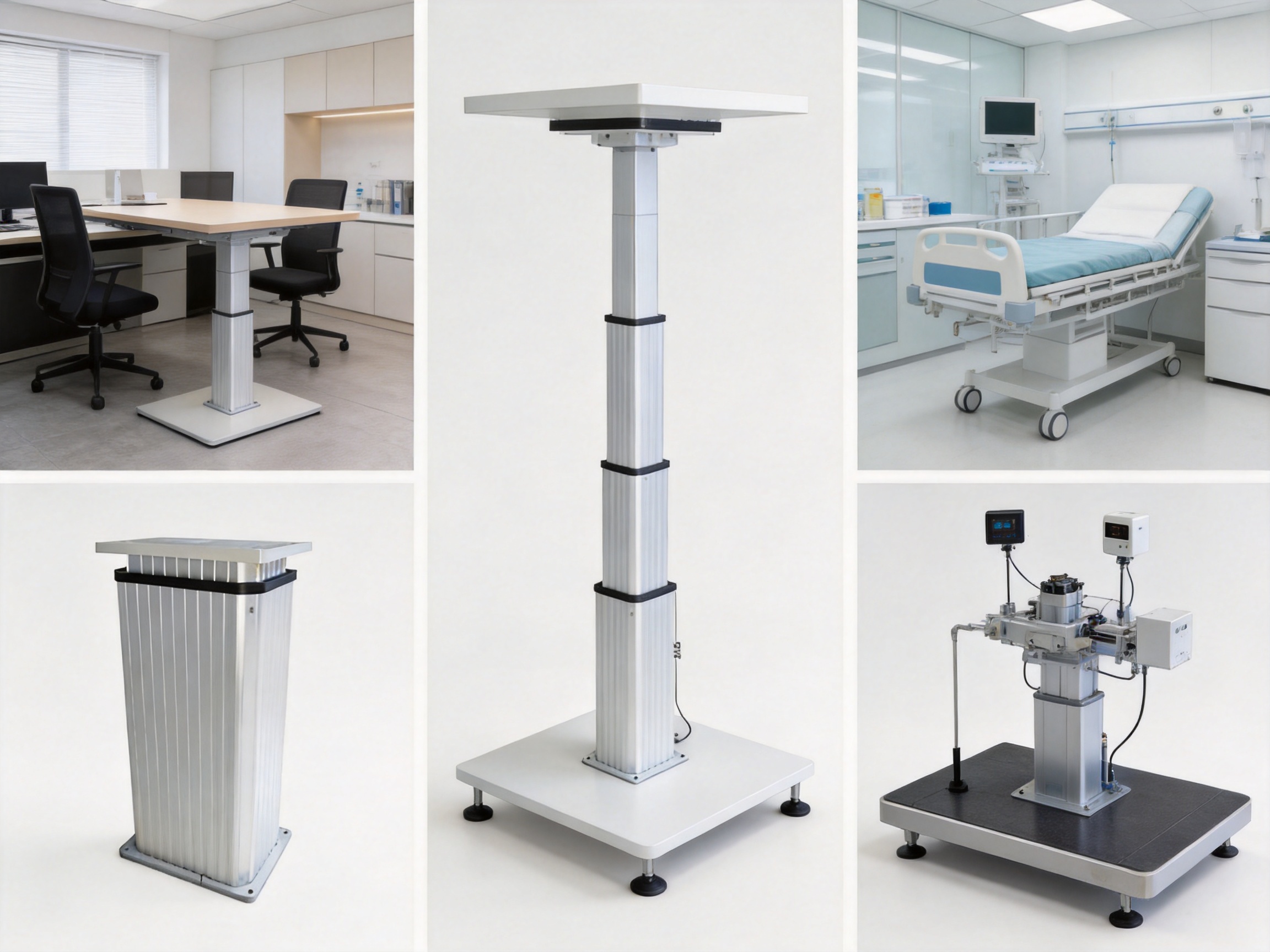
Smart standing desks are one of the most direct applications for the TH-10. A standing desk must provide smooth height adjustment, support a desktop and its contents, resist wobbling, and operate safely in a shared office environment. The multi-stage structure can help maintain stability as the desk rises, while the self-locking screw helps preserve the selected height when the motor is not powered.
The column can be used in single-column products, although many larger desktops are more appropriately supported by multiple columns. In a multi-column configuration, a controller can coordinate movement so that the columns extend and retract together. Synchronous operation is important because even a small difference in movement can cause the tabletop to tilt or bind.
The TH-10’s matte silver-white appearance is suitable for modern office designs. It can be incorporated into minimalist furniture, collaborative workstations, executive desks, laboratory worktables, and specialized ergonomic furniture. Its 24 VDC system can also be integrated with handset controls, memory presets, anti-collision logic, and other desk-management features through an appropriate control system.
Ergonomic furniture manufacturers can use the column to create desks that alternate between sitting and standing positions. This supports flexible work patterns and allows users to adjust the working height for different body sizes, tasks, and equipment arrangements.
Industrial Inspection and Production Platforms
Industrial inspection platforms often require precise vertical adjustment so that cameras, sensors, measuring instruments, or workpieces can be positioned at a repeatable height. Excessive vibration or movement can affect inspection accuracy. The TH-10’s guided multi-stage column and internal bushings help provide a more stable vertical structure than a basic unsupported actuator.
The column can also be integrated into production fixtures, tooling platforms, work-positioning systems, and machine-access equipment. Its 5,000 N push force provides useful capacity for heavier assemblies, while the self-locking feature helps hold the platform when the equipment is stationary.
Industrial designers should consider environmental conditions carefully. IP54 protection may be appropriate for many indoor production areas, but installations exposed to metal chips, cutting fluids, washdown procedures, extreme temperatures, or corrosive chemicals may require additional protective measures or a different product configuration.
Medical Examination Beds and Care Equipment
Medical examination beds and care equipment require controlled height adjustment for both patient comfort and professional access. A stable platform can make it easier for medical staff to perform examinations, transfers, and procedures. The absence of hydraulic oil and compressed air may also simplify the design of equipment used in clean indoor environments.
The TH-10 can support medical equipment manufacturers that need an electrically controlled vertical lifting mechanism. Its self-locking capability can help maintain the selected bed height when power is removed, while the electronic limits help define the usable adjustment range.
Medical equipment requires strict system-level validation. The complete bed or platform must address patient safety, emergency lowering, pinch-point protection, cleaning chemicals, load distribution, electrical safety, and applicable medical-device requirements. The TH-10 should therefore be evaluated as a key component within a complete certified medical product rather than as a standalone substitute for system safety engineering.
Heavy Equipment Jacking Structures
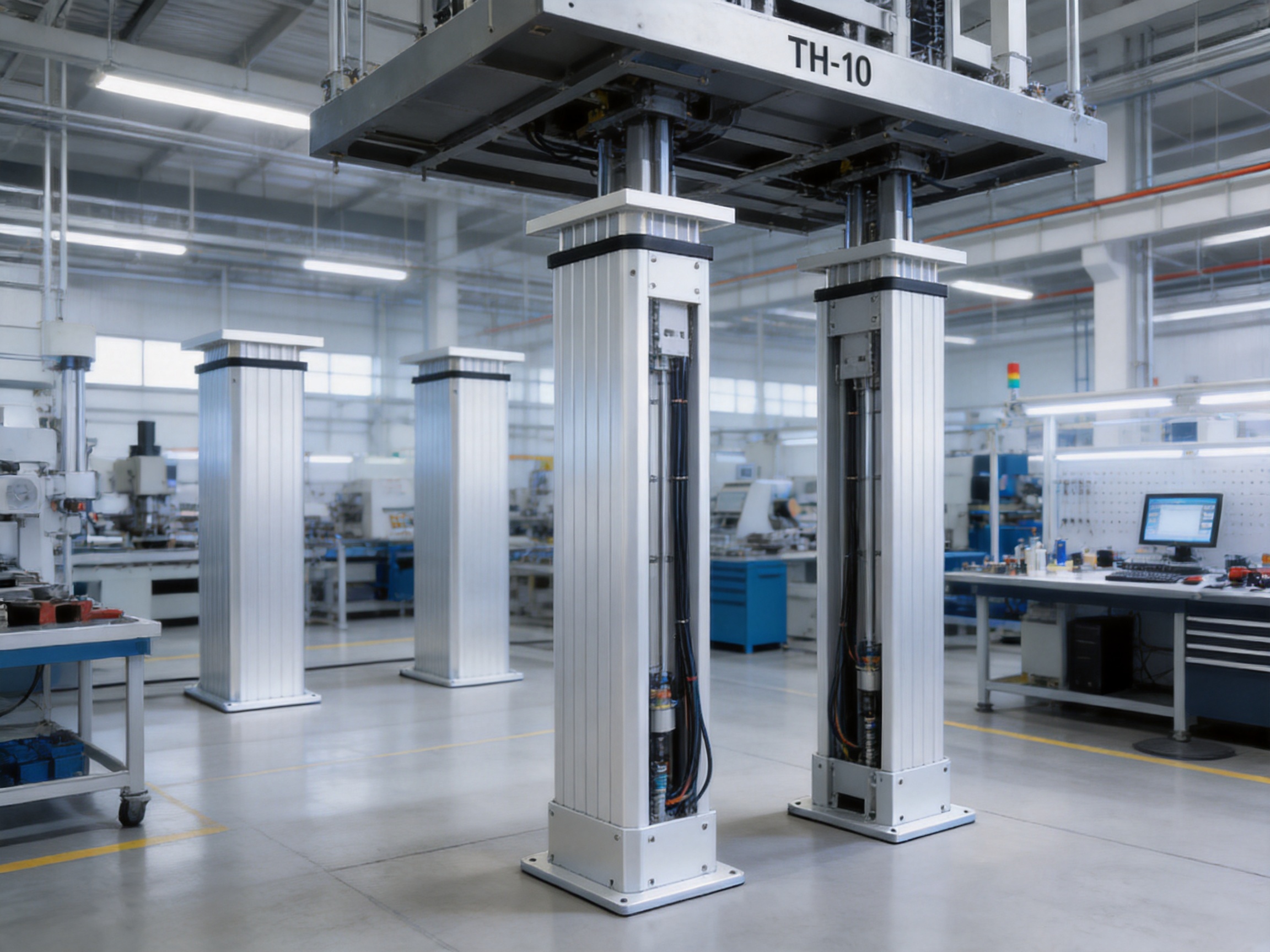
Some heavy equipment requires controlled vertical jacking for maintenance, positioning, alignment, or adjustment. In these applications, the lifting column may be integrated into a reinforced frame or used in a synchronized group. The force rating and self-locking performance of the TH-10 make it a candidate for applications that need electrically controlled movement without a hydraulic power unit.
Heavy equipment designers must pay close attention to load balance and side forces. A lifting column is primarily intended to move a load along its designed axis. Severe lateral loads, impact forces, uneven platforms, or uncontrolled dynamic loads can exceed the intended operating conditions. External guides, mechanical supports, and structural reinforcement may be required for demanding jacking applications.
Automated Warehouse Lifts
Automated warehouses use lifting mechanisms to move storage trays, platforms, sensors, and handling devices between different levels. An electric lifting column can provide a compact way to perform vertical adjustments in equipment that operates on a programmed cycle.
The TH-10 can be integrated with a control system that manages extension, retraction, travel limits, and synchronization. Its 24 VDC supply is compatible with many automation architectures, although the complete electrical design must account for peak current, controller capacity, cable routing, emergency stop functions, and cycle frequency.
Warehouse applications may involve dust, vibration, repeated operation, and restricted maintenance access. The IP54 rating provides a useful level of protection for many indoor environments, but the final design should still include appropriate guarding, inspection intervals, and environmental protection where necessary.
Synchronization for Multi-Column Systems
Wide platforms and large desks often require two or more lifting columns. If the columns do not move together, the platform may tilt, twist, or place uneven stress on the structure. The TH-10 supports multi-column synchronous lifting linkage, allowing several columns to be coordinated through a compatible controller.
Synchronization can be achieved through electrical control strategies that monitor movement, current, position, or other operating parameters. The exact control method depends on the application and the selected controller. System designers should define the required synchronization accuracy, maximum load imbalance, stopping behavior, and response to a fault in one column.
A properly synchronized system should also include a clear initialization or calibration procedure. The controller may need to establish a reference position before normal operation. The platform structure must be assembled with the columns at matching initial heights, and the mounting surfaces must be sufficiently parallel to avoid binding.
Multi-column systems offer more than increased force. They can distribute the load across a larger platform and improve resistance to tilting. However, they also require more careful electrical and mechanical design. Cable lengths, power distribution, controller capacity, mounting rigidity, and emergency behavior should all be evaluated during development.
Customization Options
The TH-10 supports customization of total stroke, flange base, and synchronous control schemes. These options allow the lifting column to be adapted to different equipment architectures rather than forcing every customer to use one fixed configuration.
Total Stroke Customization
Total stroke determines how far the column can extend and retract. A desk may require a moderate height range, while an inspection platform or warehouse lift may require a different travel distance. Selecting the correct stroke helps ensure that the column reaches the required positions without creating unnecessary retracted height or excessive structural extension.
When defining the stroke, designers should consider the full movement envelope, cable movement, minimum and maximum platform heights, mechanical clearances, operator access, and the possibility of objects entering the travel path.
Flange Base Customization
The flange base connects the column to the equipment frame or platform. A customized flange pattern can simplify installation and help distribute the lifting load into the surrounding structure. The base must be strong enough to resist not only vertical force but also any moment created by an offset load.
Proper flange design is particularly important in standing desks, medical beds, and wide platforms. The connection should be rigid, accurately aligned, and supported by a structure capable of carrying the expected loads without excessive deflection.
Synchronous Control Customization
Customers using multiple columns may require a specific synchronous control scheme. The controller must coordinate movement, respond to overload conditions, stop the system at the correct limits, and provide a safe response if one column encounters resistance or loses power.
Control customization can also support application-specific functions such as memory positions, programmed height settings, external sensors, foot switches, operator panels, or integration with a larger automation system.
Installation and System Design Guidance
The TH-10 should be installed so that its movement axis remains properly aligned with the intended lifting direction. Misalignment can increase friction, place uneven loads on the bushings, and reduce the service life of the mechanical components. Mounting surfaces should be flat and rigid, and the flange connection should be tightened according to the final equipment design requirements.
Loads should be distributed as evenly as possible. An offset load creates a moment that can increase stress on the column and its mounting structure. If offset loading is unavoidable, the equipment should include external guides or a reinforced frame designed to manage the resulting forces.
The power supply must be capable of delivering the required 24 VDC input and full-load current. A system using multiple columns should account for the combined current demand, startup behavior, wiring losses, controller capacity, and emergency-stop requirements. Electrical cables should be routed so that they do not become pinched, stretched, or trapped as the column moves.
Operators should not place hands, tools, or objects inside the moving column sections. Even with electronic limits and overload protection, all moving equipment can create pinch and crush hazards. Guards, warning labels, emergency controls, and safe operating procedures should be selected according to the complete machine design.
Duty Cycle and Long-Term Static Loads
The TH-10 has a 10% standard duty cycle. This means it is designed for intermittent operation rather than continuous, high-frequency movement. The product is well suited to applications where the height is adjusted periodically and the column then supports a static load for an extended time.
Examples include a standing desk that changes position several times during a workday, an examination bed that is adjusted between patients, or an inspection platform that moves to a new position and remains there during a measurement process. In these applications, the actuator does not need to operate continuously, and the self-locking lead screw can help maintain the selected position.
Designers should calculate the expected operating pattern, including movement duration, rest time, load condition, ambient temperature, and number of cycles per hour. Operating beyond the recommended duty cycle can lead to increased motor temperature, faster wear, reduced performance, or premature failure.
If an application requires continuous cycling or rapid repeated movement, the manufacturer should be consulted about a suitable configuration or alternative product. Selecting an actuator based only on force while ignoring duty cycle can create reliability problems in the complete system.
Maintenance and Service Considerations
The TH-10 is designed as a clean electric lifting solution that does not require hydraulic oil or an air compressor. This reduces the number of routine service tasks compared with hydraulic or pneumatic systems. Nevertheless, regular inspection remains important for maintaining reliable operation.
Inspection should include the mounting flanges, fasteners, cables, external surfaces, moving clearances, and signs of unusual noise or vibration. The lifting column should be kept free from objects that could enter the telescopic sections. If the equipment is used in a dusty or humid environment, the condition of the external protection should be checked periodically.
Operators should pay attention to changes in movement quality. Increased shaking, unusual noise, slower movement, irregular synchronization, or repeated overload activation may indicate a problem with the load, mounting structure, power supply, controller, or internal components. Continuing to operate a system after abnormal behavior has appeared can increase the risk of damage.
Maintenance procedures should follow the equipment manufacturer’s instructions. The column should not be disassembled by unauthorized personnel, especially where internal electrical limits and transmission components are involved. A controlled service process helps preserve the product’s original alignment and protection features.
Why the TH-10 Is a Strong OEM Choice
Original equipment manufacturers need more than a component with an attractive specification sheet. They need a supplier that can understand the application, provide consistent products, assist with customization, and support the transition from prototype to production.
The TH-10 offers a combination of mechanical strength, integrated guidance, electrical protection, low-voltage operation, and customization potential. This combination allows manufacturers to develop a wide range of products around one basic lifting platform. It can be incorporated into furniture, medical products, industrial machinery, and automated equipment without requiring a completely different actuator concept for every application.
The company’s specialization in standing desks and intelligent office-space solutions provides a foundation for understanding height-adjustable mechanisms, synchronized lifting, ergonomic requirements, and modern furniture integration. Its Suzhou manufacturing base places it within a strong industrial supply chain, supporting product development and production coordination.
For customers, the main advantage is the ability to obtain a purpose-built vertical lifting solution rather than assembling a motor, screw, guide, and safety system independently. This can shorten development time, simplify procurement, and improve consistency across the final product range.
Selection Checklist for Buyers
Before selecting the TH-10 for a project, buyers should define the total lifted mass, the desired stroke, the number of columns, the operating frequency, and the required height range. They should also identify whether the load is centered or offset and whether the platform requires external guidance.
The electrical design should specify the 24 VDC power source, the available current, controller type, cable length, limit-control requirements, and synchronization method. If the product is part of a larger automated system, the control interface and fault-handling behavior should be discussed during the engineering stage.
The environment should also be evaluated. IP54 protection is suitable for many indoor applications, but exposure to water jets, immersion, corrosive chemicals, heavy dust, or extreme temperature may require extra protection or a different configuration.
Finally, buyers should confirm the customized total stroke, flange base, mounting dimensions, and delivery configuration before production. A detailed technical review can prevent installation problems and ensure that the column is properly matched to the final equipment.
Q&A About the TH-10 Multi-Stage Electric Lifting Column
What is the TH-10 designed to do?
The TH-10 is designed for controlled vertical lifting and lowering. It is a multi-stage electric lifting column rather than a general-purpose actuator intended for any direction of movement. Its structure is optimized for applications that require vertical stability, load support, and controlled height adjustment.
What is the maximum push force?
The stated push force is 5,000 N. The actual usable load in a complete machine depends on the load center, mounting structure, stroke, operating conditions, duty cycle, and whether one or multiple columns are used.
What is the self-locking force?
The self-locking force is 4,000 N. The trapezoidal lead screw helps hold the load after power is removed, which is useful for equipment that must remain at a selected height without continuous motor operation.
Does the TH-10 require hydraulic oil?
No. The TH-10 is an electric lifting column and does not require hydraulic oil, a pump, a reservoir, or hydraulic hoses. This can simplify installation and reduce the risk of oil-related contamination.
Does it need compressed air?
No. The column operates from a 24 VDC electrical power supply and does not require an external air compressor or pneumatic tubing.
Can several TH-10 columns work together?
Yes. The product can be used independently or in a multi-column synchronous lifting linkage. A compatible controller and properly designed mechanical and electrical system are required for coordinated movement.
What is the no-load telescopic speed?
The no-load telescopic speed is 5 mm/s. Speed under load may vary according to the load, power supply, friction, mounting condition, and control system.
What does the IP54 rating mean?
IP54 indicates protection against limited dust ingress and water splashes. It is intended for suitable indoor and semi-protected environments. It does not indicate protection against immersion or high-pressure water jets.
What safety features are built into the product?
The TH-10 includes electronic limit switches and dual overload protection. Its trapezoidal lead screw also provides self-locking behavior. Additional guards, emergency controls, anti-pinch systems, and mechanical safety measures may be required in the final equipment.
Can the stroke length be customized?
Yes. The total stroke can be customized according to the requirements of the application, subject to technical review and production feasibility.
Can the mounting flange be customized?
Yes. The flange base can be customized to support different frame designs and installation requirements.
Is the TH-10 suitable for standing desks?
Yes. It is suitable for smart standing desks and other height-adjustable office furniture. Larger desktops may require multiple synchronized columns to provide adequate load distribution and stability.
Is it suitable for medical equipment?
It can be used in medical examination beds and related vertical lifting structures, provided that the complete medical device is designed and validated according to applicable safety, hygiene, electrical, and regulatory requirements.
What is the duty cycle?
The standard duty cycle is 10%. This makes the column suitable for intermittent height adjustment and long static load-bearing tasks rather than continuous rapid cycling.
What power supply does the column use?
The TH-10 uses a 24 VDC DC power supply. The full-load current is specified as 4 A. Multi-column systems should be designed with sufficient power capacity for the combined requirements.
Conclusion
The TH-10 Multi-Stage Electric Lifting Column is a specialized solution for vertical lifting applications that require more stability and structural integration than a basic linear actuator can provide. Its multi-stage telescopic construction, thick aerospace-grade integrated aluminum profile tube, precision wear-resistant bushings, trapezoidal self-locking lead screw, electronic limit switches, and dual overload protection work together to create a reliable lifting platform.
With a 5,000 N push force, 4,000 N pull force, 4,000 N self-locking force, 24 VDC power supply, 5 mm/s no-load speed, IP54 protection, and CE and RoHS certifications, the product offers a practical balance of strength, control, safety, and integration. Its electric design eliminates the need for hydraulic oil and compressed air, while its support for synchronized multi-column systems makes it suitable for larger platforms and intelligent equipment.
The product is also supported by an application-oriented manufacturing enterprise based in Suzhou, a major industrial and furniture manufacturing center. The company’s experience in standing desks and intelligent office solutions, combined with its ability to support customized stroke lengths, flange bases, and synchronization schemes, gives equipment manufacturers a flexible foundation for product development.
For smart standing desks, industrial inspection platforms, medical examination beds, heavy equipment jacking structures, and automated warehouse lifts, the TH-10 provides a strong starting point for building stable and controllable vertical motion. When correctly matched to the load, duty cycle, environment, and complete machine structure, it can help manufacturers create safer, cleaner, and more efficient lifting equipment.
References
1. TH-10 Multi-Stage Electric Lifting Column Product Technical Information, SuZhou Skyhone Intelligent Technology Co., Ltd.
2. Product information concerning rated force, self-locking force, power supply, current, telescopic speed, protection rating, duty cycle, and customization options.
3. International protection marking principles for electrical enclosures and equipment.
4. General guidance on low-voltage electric actuator integration and machinery control-system design.
5. General ergonomic principles for adjustable-height workstations and standing desk design.
6. General engineering practices for synchronized multi-column lifting platforms and vertical load-support structures.
Product: TH-10 Multi-Stage Electric Lifting Column


- Contact Info
-
-
 Phone+86-15950656125
 -
 Email
Email -
 AddressRoom 1007-1, South Building, Suyue Plaza, Suzhou Industrial Park, Suzhou City, Jiangsu Province, China
-
- Products
- Follow Us
- Need help? Please contact us
Copyright ©
SuZhou Skyhone Intelligent Technology Co., Ltd.
All Rights Reserved.
Privacy
Custom Ergonomic Adjustable Office Tables Manufacturers

