

 English
  русский
  Español
  عربى
عربى 
Content
- 1 1. Product Overview
- 2 2. Ergonomic Value of Height Adjustment
- 3 3. Gas Spring Lifting Mechanism
- 4 4. Structural Design and Material Selection
- 5 5. Mobility and Space Efficiency
- 6 6. Typical Application Environments
- 7 7. Manufacturing Strengths and Product Development Capability
- 8 8. Quality Considerations for Buyers
- 9 9. Installation, Operation, and Daily Use
- 10 10. Sustainability and Resource Efficiency
- 11 11. Why the TH09 Is a Competitive Choice
- 12 12. Purchasing and Project Planning
- 13 13. Frequently Asked Questions
- 13.1 Q1: What type of height-adjustable desk is the TH09?
- 13.2 Q2: What is the height adjustment range?
- 13.3 Q3: Is the desk electrically powered?
- 13.4 Q4: What are the tabletop dimensions?
- 13.5 Q5: What is the tabletop made of?
- 13.6 Q6: What materials are used in the frame?
- 13.7 Q7: Can the desk be moved?
- 13.8 Q8: Can the desk be folded for storage?
- 13.9 Q9: Is the TH09 suitable for home offices?
- 13.10 Q10: Is it suitable for classrooms and training rooms?
- 13.11 Q11: Can it be used in a laboratory?
- 13.12 Q12: How does it compare with an electric standing desk?
- 13.13 Q13: What maintenance does the desk require?
- 13.14 Q14: What should be considered when placing equipment on the desk?
- 13.15 Q15: Can the product be customized?
- 13.16 Q16: Who manufactures the TH09?
- 14 14. Conclusion
- 15 References
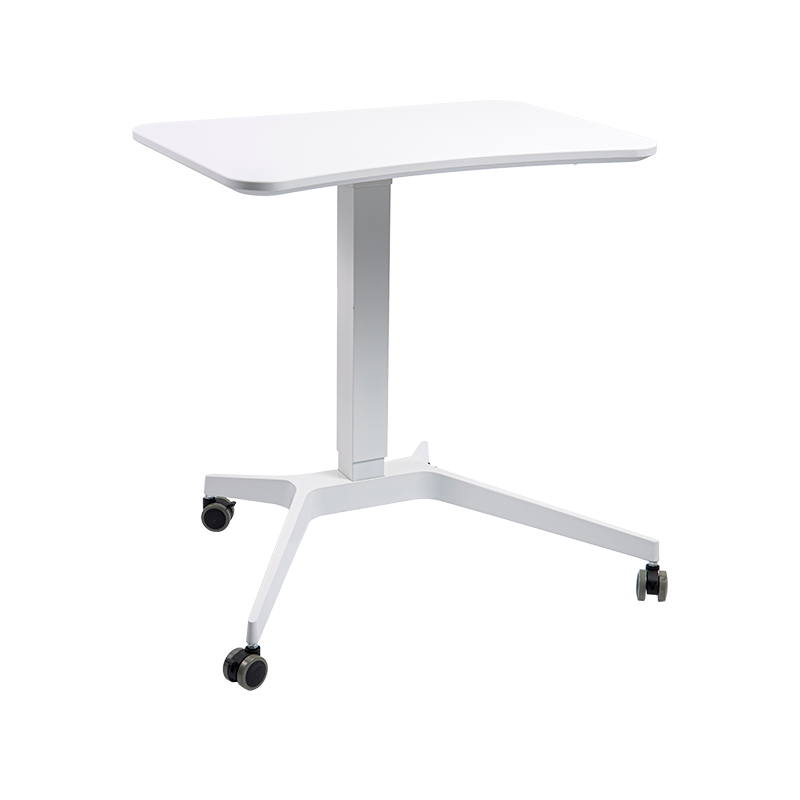
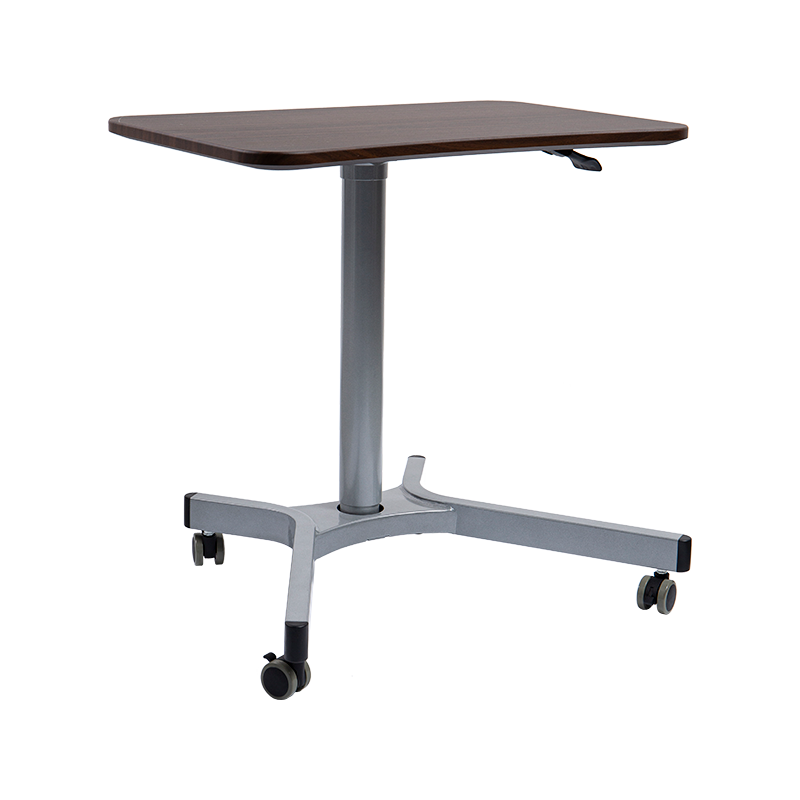
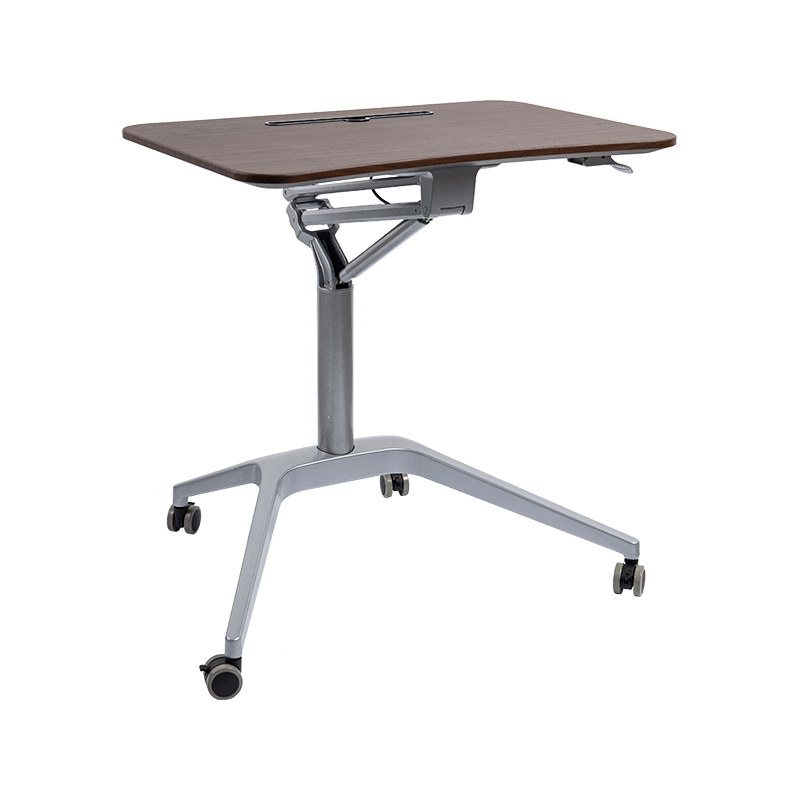
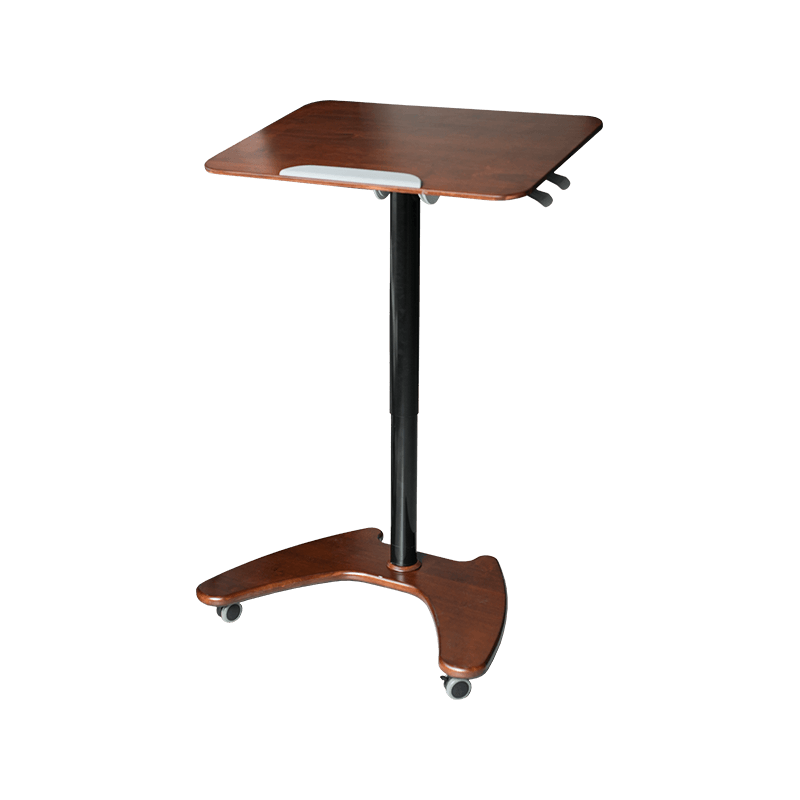
- 16 Product: TH09 (Square Aluminum Tube) Pneumatic Height-Adjustable Desk
TH09 Square Aluminum Tube Pneumatic Height-Adjustable Desk: A Practical Guide to Ergonomic, Flexible Workspaces
2026-08-02
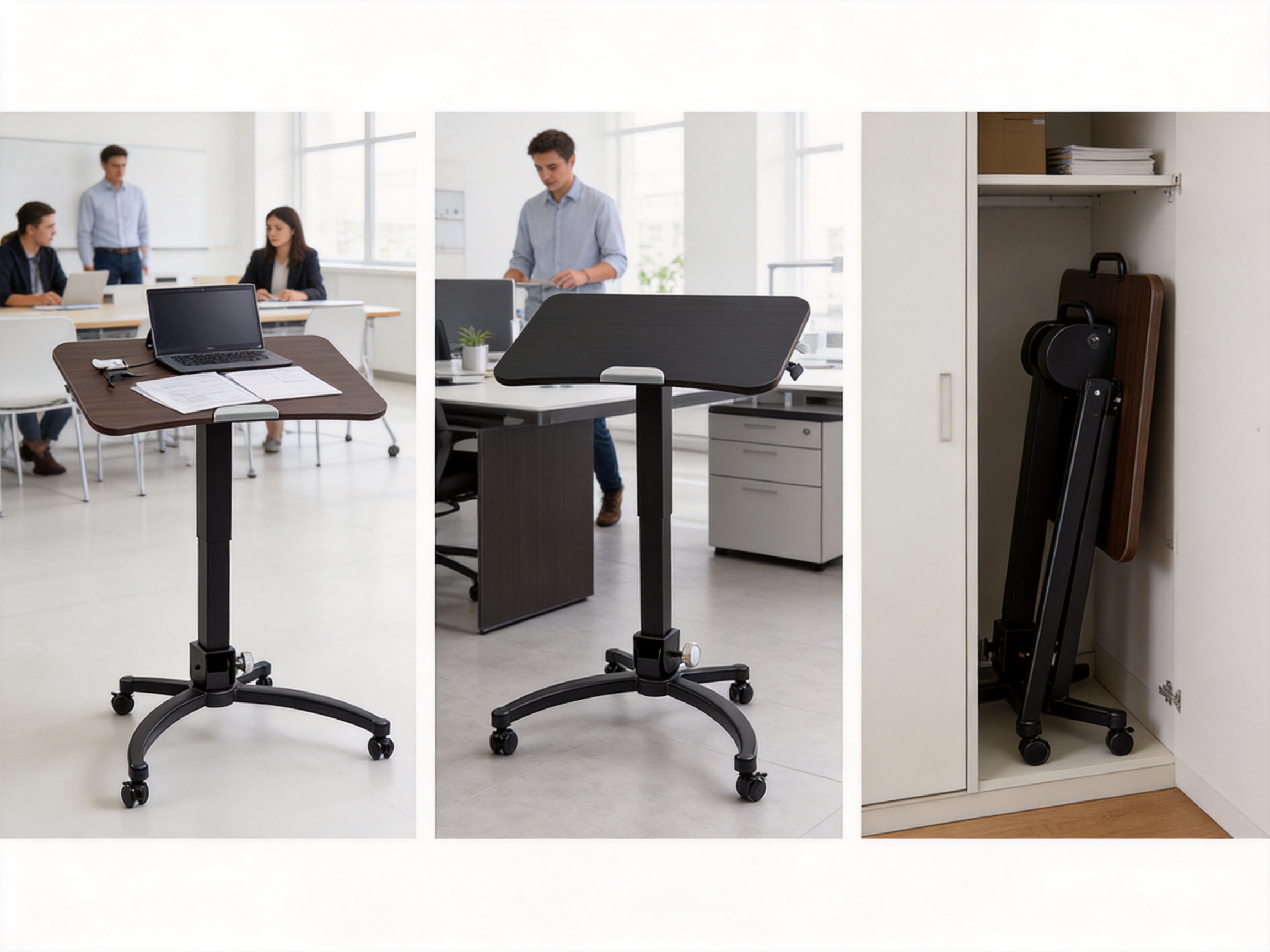
Modern workspaces are becoming more flexible, compact, and health-conscious. Employees may alternate between sitting and standing, home offices may need to serve several purposes, and temporary work areas may need to be moved or stored quickly. In these environments, a height-adjustable desk must provide more than a simple lifting function. It should be stable, easy to operate, space-efficient, durable, and suitable for different working conditions.
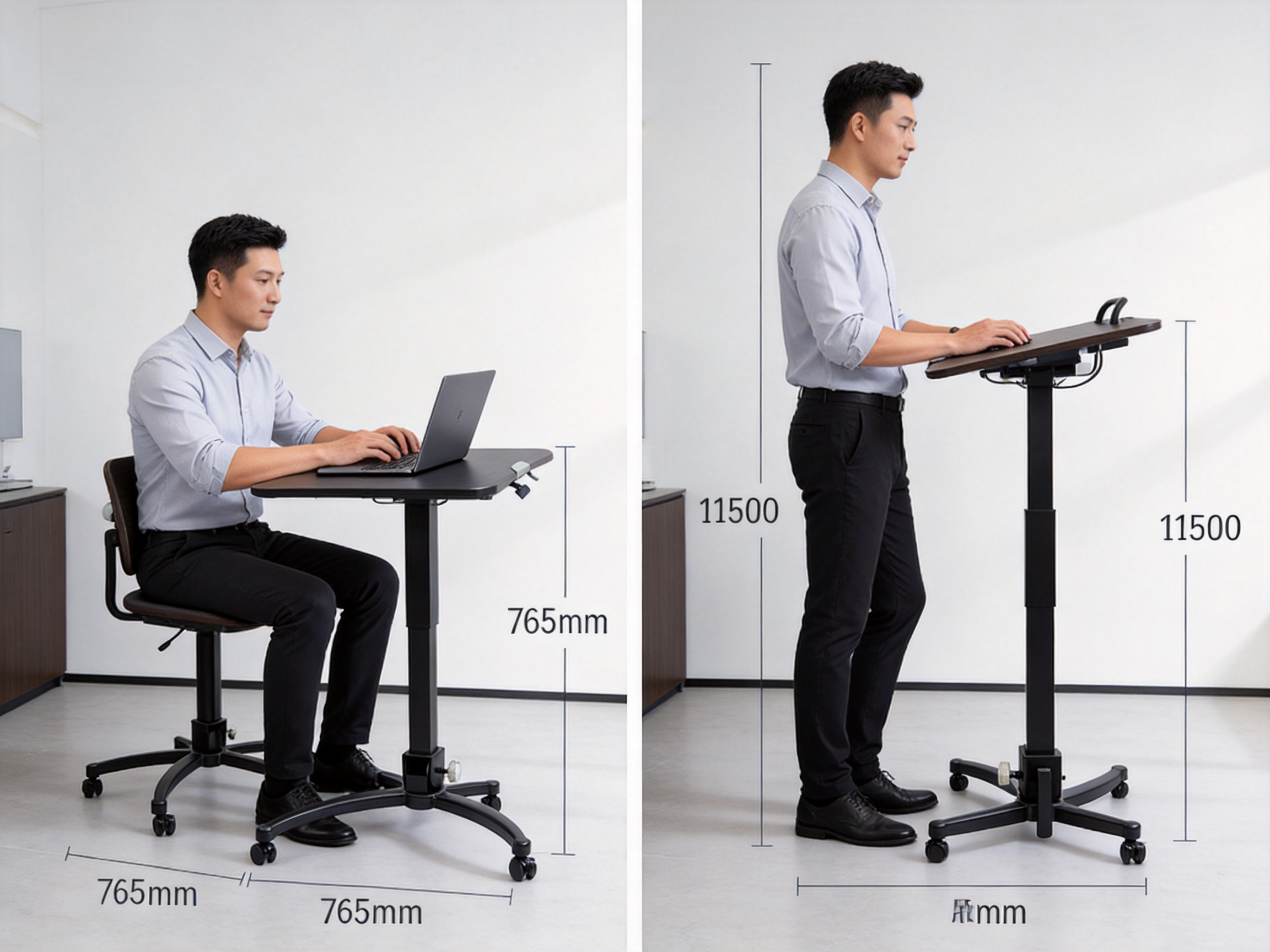
The TH09 Square Aluminum Tube Pneumatic Height-Adjustable Desk is designed around these requirements. It combines a manual gas spring lifting system, a foldable structure, a compact tabletop, and a mobile base with four casters. Its height range of 765 mm to 1150 mm allows users to work in seated and standing positions, while its straightforward pneumatic mechanism avoids dependence on electrical power.
Unlike conventional electrically powered standing desks, the TH09 does not require a motor, control handset, power adapter, or permanent connection to a wall outlet. Unlike many fixed-height tables, it supports posture variation. Unlike bulky mobile workstations, its folding structure makes transportation and storage easier. These characteristics give the product a distinctive position among compact ergonomic tables, portable workstations, and manually adjustable office furniture.
This article examines the product’s construction, operation, applications, manufacturing considerations, competitive advantages, maintenance requirements, and suitability for different users. It also explains how SuZhou Skyhone Intelligent Technology Co., Ltd. applies its product development and intelligent manufacturing capabilities to the standing desk sector.
1. Product Overview
The TH09 is a pneumatic height-adjustable desk with a square aluminum tube column design. It is intended for users who need a practical workstation that can support different working postures without complicated operation. Its built-in gas spring provides manual lifting assistance, allowing the desktop to move through its specified height range with no external electrical source.
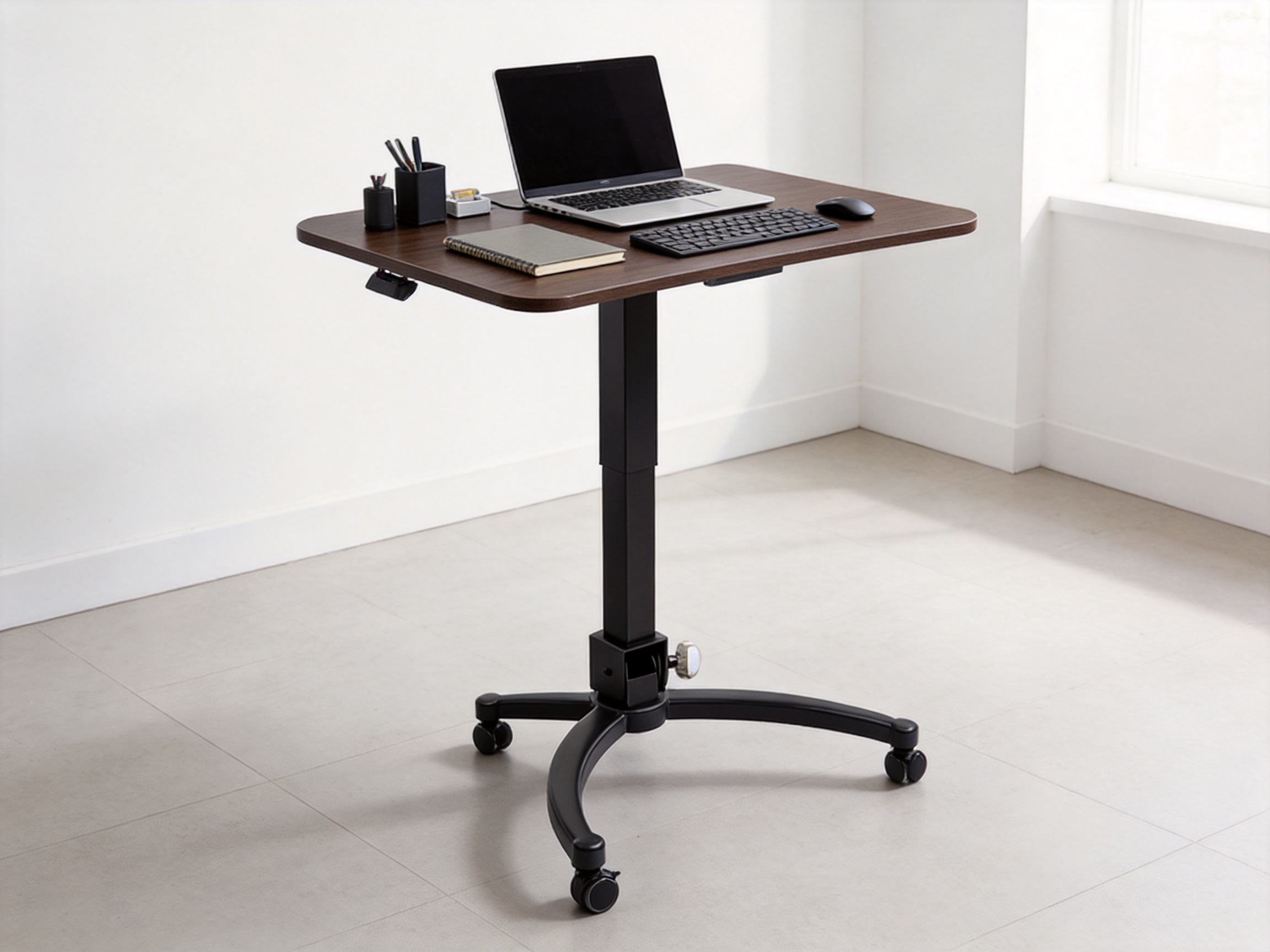
The tabletop measures 715 mm by 475 mm and is 25 mm thick. This size provides a functional working surface for a laptop, monitor, documents, writing materials, or small laboratory equipment while remaining compact enough for smaller rooms and mobile applications. The tabletop is constructed from 25 mm MDF with a PVC vacuum-formed surface. Walnut and black panel colors are available, allowing the desk to coordinate with different office interiors.
The base and structural components are designed for regular daily use. The iron frame is finished with black powder coating, giving the structure a consistent appearance and helping protect the surface against ordinary wear. The square aluminum tube column contributes to a clean, modern profile and supports the product’s stable lifting structure.
Mobility is provided by four castors. Two wheels include locking mechanisms, while the other two are non-locking. This arrangement enables the desk to be moved when required and secured when placed in its working position. The foldable design further improves portability by reducing the desk’s storage footprint when it is not in use.
Product Item |
Specification |
Product name |
TH09 Square Aluminum Tube Pneumatic Height-Adjustable Desk |
Product category |
Pneumatic Height-Adjustable Table |
Lifting range |
765 mm to 1150 mm |
Tabletop dimensions |
715 mm × 475 mm × 25 mm |
Tabletop construction |
25 mm MDF with PVC vacuum forming |
Primary structural material |
Iron frame with square aluminum tube column design |
Surface treatment |
Black powder coating |
Panel colors |
Walnut and black |
Casters |
Four castors: two locking and two non-locking |
Adjustment method |
Manual gas spring lifting |
Storage function |
Foldable structure |
2. Ergonomic Value of Height Adjustment
Maintaining one fixed posture for a long period can contribute to discomfort in the neck, shoulders, back, wrists, and legs. A height-adjustable desk encourages users to change position during the working day. The TH09 supports this principle by allowing the tabletop to move from a seated working level to a standing working level within a practical range.
The lifting range extends from 765 mm to 1150 mm. The lower setting is suitable for seated tasks when paired with an appropriate chair. The upper setting can accommodate standing work for many users, particularly for activities such as reading, note-taking, using a laptop, viewing documents, or operating equipment. Because body proportions vary, users should select the setting that allows the elbows to remain comfortable and the shoulders to stay relaxed.
Posture variation is one of the most important benefits of an adjustable desk. The product does not require the user to stand continuously. Instead, it enables a regular change between sitting and standing. This flexibility can make a workstation more adaptable to different tasks and personal preferences.
The compact tabletop is also relevant to ergonomic planning. A smaller desktop encourages users to keep only necessary items within reach, which can reduce excessive reaching. At the same time, the 715 mm by 475 mm surface offers enough room for common compact-workstation equipment. A laptop, keyboard, mouse, notebook, and small accessories can generally be arranged within the available area.
For users working with larger monitors, multiple devices, or substantial paper materials, the available surface should be assessed before purchase. The TH09 is optimized for compact and flexible work rather than for a large executive workstation. This focused design is one of its strengths because it avoids unnecessary bulk in spaces where floor area is limited.
3. Gas Spring Lifting Mechanism
The TH09 uses a built-in gas spring mechanism to assist manual height adjustment. A gas spring contains compressed gas that generates controlled force through a piston and cylinder assembly. In a desk application, this stored energy helps counterbalance part of the tabletop and frame weight during lifting and lowering.
The main practical benefit is independence from electrical power. The user does not need to connect the table to a socket or manage motor cables. This makes the desk suitable for rooms where electrical access is limited, temporary workstations, mobile teaching spaces, laboratories, and areas where cables could create clutter or trip hazards.
Manual pneumatic adjustment also simplifies the user interface. There is no electronic control panel, programmable memory system, motor noise, or control-box installation. The operating concept is direct: release the mechanism, guide the tabletop to the desired position, and secure it. For many users, this simplicity is more valuable than advanced electronic features that may not be needed for a compact desk.
Compared with a basic mechanical lift without assistance, a gas spring can make movement smoother and less physically demanding. Compared with an electric actuator, it reduces the number of powered components and eliminates dependence on a motor and electrical control system. This can help lower maintenance complexity and make the product suitable for environments where long-term simplicity is a priority.
Correct operation is important. Users should keep the tabletop reasonably balanced and avoid placing excessive loads at one edge during adjustment. The lifting mechanism should be operated according to the supplier’s instructions, and the desk should not be forced if resistance, unusual noise, or uneven movement occurs.
3.1 Advantages Over Electric Height-Adjustable Desks
Electric standing desks are highly useful for users who want push-button adjustment or programmable height memory. However, they also require motors, power cables, control switches, and electrical components. In some workplaces, these features may increase purchase cost, installation requirements, and potential points of failure.
The TH09 offers a different value proposition. It is appropriate when the user wants ergonomic height variation without powered operation. Its gas spring mechanism can be used in locations where power outlets are unavailable or where furniture needs to be moved regularly. The absence of a motor can also help maintain a quieter working environment.
Another advantage is deployment flexibility. An electric desk may need to remain near a power source, while the TH09 can be positioned more freely. This is particularly useful in classrooms, event spaces, training rooms, shared offices, medical environments, and temporary project areas.
3.2 Advantages Over Fixed-Height Tables
A fixed-height table generally has a simple structure and may be economical, but it cannot adapt to different users or postures. If the table is too high or too low, users must compensate with their chair, foot position, or upper-body posture. A height-adjustable design offers greater flexibility and can support a wider range of working situations.
The TH09 also provides a better long-term utilization value because it can serve more than one purpose. It may be used as a seated desk in the morning, a standing workstation later in the day, and a mobile temporary table during a meeting or training session. Its foldable structure allows it to be stored when the room must be cleared.
3.3 Advantages Over Bulky Mobile Workstations
Mobile workstations often include large surfaces, storage compartments, extensive frames, or heavy-duty equipment supports. These designs are useful for demanding applications but may be excessive for compact offices and homes. The TH09 focuses on essential workstation functions while keeping the dimensions relatively small.
Its four-castor base supports movement, while two locking casters help keep the desk in place. The foldable construction adds another layer of practicality by allowing the product to be moved or stored with less effort than a permanently assembled workstation.
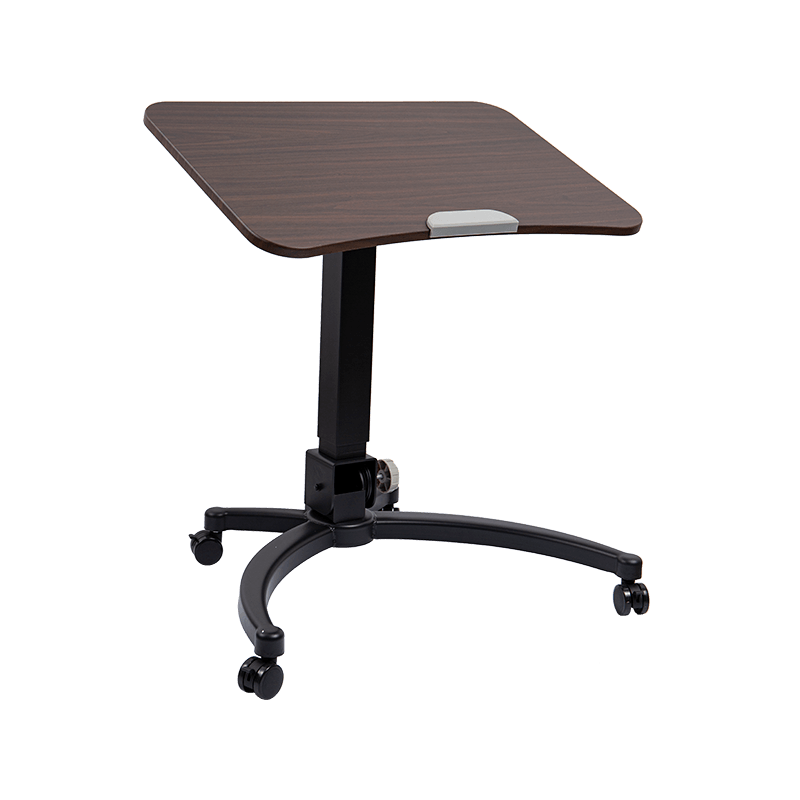
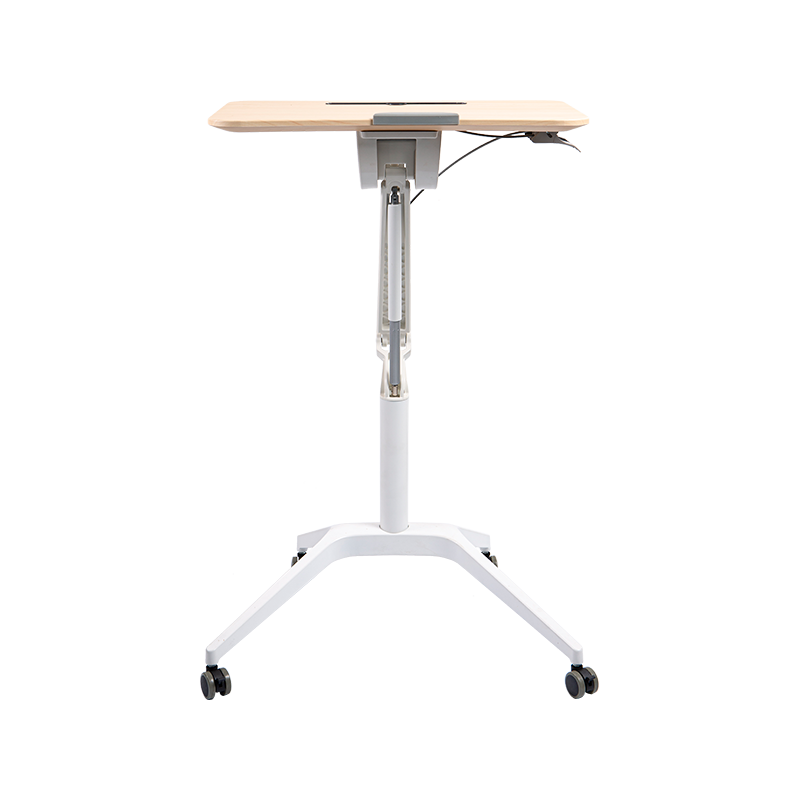
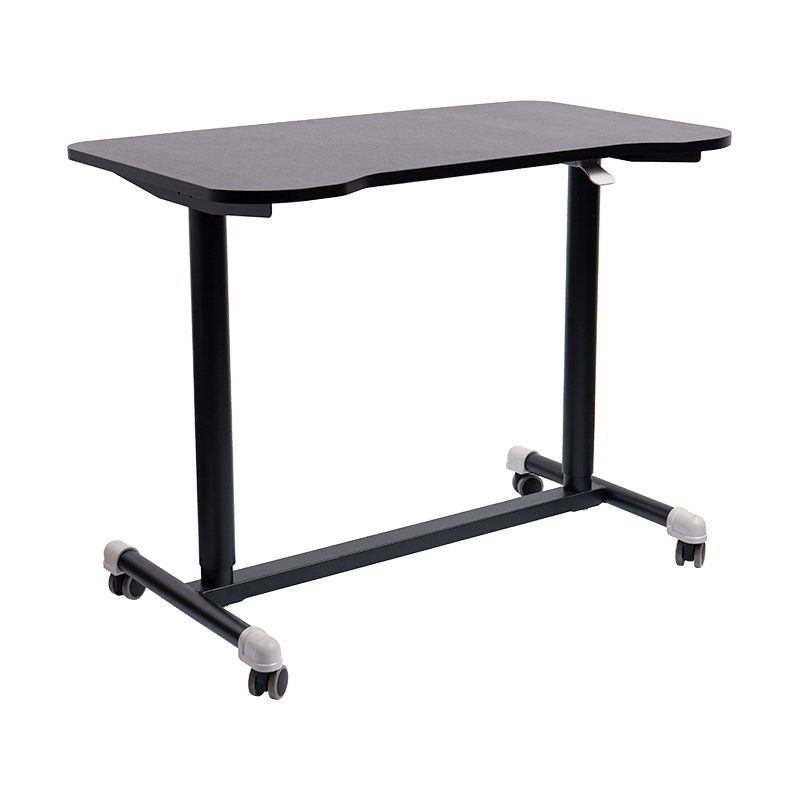
TH09 (Square Aluminum Tube) Pneumatic Height-Adjustable Desk
4. Structural Design and Material Selection
The TH09 combines several materials, each selected for a specific purpose. The tabletop uses 25 mm MDF with a PVC vacuum-formed finish. MDF provides a uniform engineered-wood substrate with a smooth surface suitable for a laminated exterior. The PVC surface contributes to visual consistency and simplifies routine cleaning.
The available Walnut and black panel colors support different design environments. Walnut can introduce a warmer, furniture-oriented appearance, while black provides a more technical and contemporary look. The black frame and powder-coated finish create a coordinated visual structure for both options.
The structural frame is made from iron, while the product incorporates a square aluminum tube column design. This combination balances structural support and visual refinement. Iron is widely used in furniture frames because it can provide dependable strength and can be formed into tubes, brackets, supports, and connecting elements. The square column profile offers clear geometric lines and can help guide the lifting structure.
Square tubing also provides useful resistance to twisting compared with a flat or poorly supported profile. The exact performance of any desk depends on dimensions, wall thickness, joints, welding quality, load distribution, and assembly accuracy. Nevertheless, the square-column concept is well suited to a compact height-adjustable desk because it creates a stable and orderly lifting arrangement.
Powder coating is used on the black surface of the frame. In this process, a dry coating material is applied to the prepared metal surface and cured to create a continuous finish. Compared with a simple liquid paint layer, a properly applied powder coating can offer good resistance to ordinary abrasion and provide a consistent appearance across the frame.
Surface treatment is not only an aesthetic decision. It also affects how a product performs in daily use. A well-finished frame is easier to clean, less vulnerable to visible scuffing, and more consistent across production batches. The finish must be supported by appropriate metal preparation, coating control, curing conditions, and inspection.
4.1 Tabletop Functionality
The 25 mm tabletop thickness gives the desk a substantial appearance while supporting routine office and educational applications. The PVC vacuum-formed surface can help protect the MDF substrate from ordinary marks and spills when maintained correctly. Users should still wipe away liquids promptly and avoid prolonged exposure to moisture around edges and joints.
The compact dimensions make the tabletop suitable for laptops, tablets, notebooks, paperwork, and lightweight office accessories. It can also support selected laboratory or training applications where the equipment footprint is limited. Before using the table for specialized equipment, purchasers should confirm the required load capacity and stability conditions with the supplier.
A smaller desktop has logistical advantages as well. It can pass through narrow spaces more easily, occupy less floor area, and fit into rooms where a traditional 1200 mm or 1600 mm desk would be impractical. This makes the TH09 relevant to apartments, small offices, dormitory rooms, clinics, libraries, and shared work areas.
4.2 Foldable Construction
The foldable design is a major differentiator of the product. Conventional height-adjustable desks are often intended to remain assembled in one location. The TH09 is better suited to environments in which furniture needs to be put away after use or transported between rooms.
Folding can support several operational models. A training center may open desks for a class and fold them after the session. A home user may store the desk against a wall to recover floor space. A business may keep spare units in a storage area and deploy them for temporary projects. An educational institution may reorganize rooms for lectures, examinations, group work, or events.
To preserve safe operation, the folding points, hinges, locking elements, and structural connections should be used as intended. The desk should be folded on a clear surface, and users should keep fingers away from closing joints. The tabletop should be cleared of loose objects before folding or moving the product.
5. Mobility and Space Efficiency
The four castors make the TH09 more versatile than a stationary table. Two casters have locking functions and two do not. When the workstation must be moved, the locks can be released and the desk guided to its new location. Once positioned, the locking casters can be engaged to reduce unwanted rolling.
Casters are especially useful in shared environments. A room can be rearranged without lifting the entire desk, reducing handling effort and helping staff adapt the space to different activities. Mobile furniture can also be valuable in offices that use hot-desking or project-based layouts.
The locking mechanism should be engaged whenever the user is working, especially during writing, typing, or height adjustment. A locked caster does not replace the need for balanced loading and proper floor conditions, but it provides an important additional measure of placement security.
The compact and foldable format improves storage efficiency. When not required, the desk can be folded and placed in a designated storage area rather than occupying a permanent workstation footprint. This is valuable for organizations with limited floor area and for residential users who need a room to serve multiple functions.
Space efficiency also reduces transportation challenges. The product’s compact dimensions and foldable form can simplify internal movement, warehouse organization, and delivery planning. For distributors and project buyers, these logistical features may reduce the amount of space required for temporary storage and deployment.
6. Typical Application Environments
6.1 Home Offices
Home offices often need to fit into bedrooms, living rooms, guest rooms, or multipurpose areas. The TH09 can be used as a dedicated compact workstation or brought out only when needed. Its foldable structure allows users to recover floor space after the workday.
The pneumatic adjustment function allows a home user to alternate between sitting and standing without installing a power cable across the room. This can be useful in homes where furniture placement changes frequently or where the desk is located away from a convenient outlet.
6.2 Compact Commercial Offices
Small businesses may need ergonomic furniture but have limited space and budgets. The TH09 provides adjustable functionality without the infrastructure required by powered desks. It can be used in reception support areas, small private offices, shared rooms, or flexible project zones.
Its black frame and selectable tabletop colors allow it to coordinate with contemporary office interiors. The relatively small surface can be assigned to individual users without creating a crowded arrangement of oversized desks.
6.3 Educational Environments
Schools, training centers, and universities often reconfigure rooms. A foldable mobile desk can support different teaching formats, including individual study, computer training, demonstrations, examination arrangements, and group activities.
Height adjustment may also accommodate users of different sizes. Educators can establish a seated arrangement for reading or writing and a standing arrangement for demonstrations or practical work. The absence of electrical cables can make room changes simpler.
6.4 Laboratories and Technical Work Areas
Some laboratories require compact surfaces for documentation, laptop use, instrument observation, or temporary task support. The TH09 may be suitable where the equipment load and environmental requirements fall within the product’s intended operating conditions.
Purchasers should evaluate chemical exposure, cleaning agents, static-control requirements, moisture, and equipment weight before selecting the desk for laboratory use. The standard tabletop and powder-coated frame are appropriate for many ordinary work environments, but specialized applications may require additional specifications or customized materials.
6.5 Temporary and Event Workstations
Temporary workstations are often needed for exhibitions, registration areas, training events, field projects, and short-term offices. A foldable, manually adjustable desk can be transported, positioned, used, and stored without depending on permanent electrical infrastructure.
The mobility of the TH09 enables staff to adapt the layout as event requirements change. Its height range may also support both seated registration and standing interaction, depending on the task and user preference.
6.6 Healthcare and Service Areas
In certain healthcare, reception, and service environments, compact mobile tables are useful for documentation, computer access, or temporary consultation support. The ability to lock the casters after movement helps the desk remain positioned during use.
Organizations should assess hygiene protocols and cleaning-product compatibility before using the product in clinical areas. Where high-frequency disinfection or specialized infection-control standards apply, the material and finish requirements should be confirmed in advance.
7. Manufacturing Strengths and Product Development Capability
SuZhou Skyhone Intelligent Technology Co., Ltd. is a professional manufacturing enterprise engaged in the research and development, production, sales, and service of standing desks. Based in Suzhou, Jiangsu Province, the company operates within one of China’s major manufacturing regions and benefits from the surrounding furniture industry ecosystem.
The company’s product focus includes adjustable-height desks, electric linear actuators, gas springs, and related ergonomic office furniture. This combination of product categories is important because height-adjustable furniture depends on coordinated expertise in structural design, lifting mechanisms, metal components, surface finishes, and final assembly.
The TH09 demonstrates a product development approach centered on practical application. Instead of adding unnecessary electronic functions, the design concentrates on the gas spring system, compact dimensions, folding capability, caster mobility, and durable surface treatment. This kind of focused engineering can be advantageous for customers seeking reliable functionality and straightforward operation.
A manufacturing company’s strength is not defined only by the final appearance of a desk. It also includes how consistently the product can be produced, how clearly specifications are controlled, how components are matched, and how quality is managed through production. A standing desk requires coordination between the tabletop, column, frame, adjustment mechanism, hinges, casters, and fasteners. Dimensional accuracy in one component can affect the fit and movement of another.
7.1 Regional Industrial Advantages
Suzhou is located in the Yangtze River Delta, a region known for developed industrial networks, engineering resources, component suppliers, logistics infrastructure, and manufacturing talent. Operating in this environment can support efficient sourcing and coordination for furniture products and mechanical components.
For international buyers, a manufacturing base in an established industrial region may offer advantages in production organization, supply-chain integration, export coordination, and product customization. These benefits are especially relevant for distributors, project contractors, office-furniture brands, and institutional purchasers.
7.2 Integration of Mechanism and Furniture Design
Adjustable desks require more than ordinary furniture production. The lifting mechanism must work with the frame geometry, tabletop weight, column alignment, and user operating force. A company that works with gas springs and linear actuator products can better understand the relationship between movement systems and furniture structures.
For the TH09, this integration appears in the combination of a gas spring lifting system and a foldable mobile frame. The design must allow the desk to adjust through its height range while retaining a compact form and supporting normal movement across the floor. The tabletop, column, frame, casters, and folding elements must function as one coordinated product.
7.3 Intelligent Manufacturing Orientation
The company describes its production approach as supported by intelligent manufacturing advantages. In practical terms, an intelligent manufacturing orientation may include digital production planning, standardized process control, traceable quality records, equipment-assisted fabrication, and improved communication between product development and manufacturing teams.
For adjustable desks, process consistency is particularly important. Metal components must be cut and formed to controlled dimensions. Welded joints must be positioned accurately. Powder coating must be applied evenly. Gas spring components must be fitted correctly. Hinges and locking elements must operate smoothly. Assembly procedures must ensure that the desk remains aligned throughout its lifting and folding movements.
When these steps are organized through standardized manufacturing procedures, the company can improve repeatability across production batches. This supports stable product quality and gives business customers greater confidence when ordering multiple units for an office, school, hotel, or commercial project.
7.4 Research, Development, and Customization
The company’s stated involvement in research and development, production, sales, and service supports a complete product lifecycle. Research and development can address product structure, lifting performance, dimensions, appearance, mobility, and application-specific needs. Production converts those designs into repeatable manufactured units. Sales and service provide communication before and after delivery.
Customization is especially relevant in commercial furniture. Different customers may require alternative tabletop colors, packaging, branding, dimensions, caster arrangements, or structural details. Any customization must be evaluated in relation to lifting force, stability, folding behavior, and production feasibility. A manufacturer with experience across desks, gas springs, and linear actuators is better positioned to discuss these relationships with customers.
8. Quality Considerations for Buyers
When comparing the TH09 with competing height-adjustable tables, buyers should evaluate the entire product rather than focusing on one feature. The most useful comparison points include adjustment range, mechanism type, tabletop quality, structural materials, mobility, folding capability, finish, operating environment, service support, and customization potential.
Height range should be considered in relation to the intended users. A desk that offers a wide range but is difficult to operate may be less practical than a desk with a carefully selected range and a smooth mechanism. The TH09’s 765 mm to 1150 mm range is designed for compact seated and standing work, but buyers should still assess whether it suits the body dimensions and tasks of their target users.
Mechanism type affects power requirements and maintenance expectations. Gas spring adjustment is suitable for buyers who prioritize independence from electricity and straightforward operation. Electric adjustment may be preferred when users need frequent powered movement, memory presets, or automated control. The correct choice depends on the application rather than on the assumption that one technology is always superior.
Stability should be evaluated at different heights. Any height-adjustable product may feel different at its lowest and highest positions because the center of gravity and column extension change. Users should place heavy items centrally, avoid leaning heavily on the edge, and confirm the supplier’s load recommendations for the selected configuration.
Mobility is another important consideration. Casters make repositioning easier, but the quality of the floor, the caster design, the locking function, and the desk’s load distribution all affect performance. Buyers should verify that the desk can be moved safely through doorways, corridors, elevators, and storage areas in their facility.
For larger orders, purchasers should request production samples, packaging information, inspection standards, and service procedures. They may also ask about replacement gas springs, caster availability, spare hardware, assembly documentation, and warranty terms. These factors influence the total cost of ownership.
9. Installation, Operation, and Daily Use
Before using the desk, confirm that all structural parts, fasteners, casters, folding elements, and adjustment components have been assembled correctly. The product should be placed on a level surface. Any protective packaging should be removed carefully, and the tabletop should be inspected for visible damage.
To adjust the height, the user should operate the release control or adjustment interface according to the supplier’s instructions while guiding the tabletop steadily. The movement should be controlled rather than abrupt. The user should stop at the required height and confirm that the lifting system has engaged securely.
During adjustment, keep hands, cables, papers, and other objects away from the column, frame, folding joints, and underside of the tabletop. Do not allow children or untrained users to operate the mechanism without supervision. The desk should not be moved while a person is leaning on it or while unstable objects are placed on the surface.
When relocating the desk, release the caster locks and push from a stable part of the frame. Avoid pulling the tabletop sharply, moving across steps, or forcing the casters over obstacles. After the desk reaches its new position, engage the two locking casters and check that the workstation remains secure.
Before folding, remove equipment and loose items from the tabletop. Fold the structure on a clear, level surface and keep fingers away from moving joints. Store the desk in a dry location where it will not be struck by other furniture or exposed to excessive humidity.
9.1 Maintenance
Routine maintenance is uncomplicated but important. Wipe the tabletop with a soft, slightly damp cloth and use cleaning products compatible with PVC surfaces. Do not allow water to remain on the tabletop edges or enter mechanical joints. Avoid abrasive pads and aggressive solvents that could damage the finish.
Inspect the frame, fasteners, casters, hinges, and column at regular intervals. Tighten loose hardware using appropriate tools, but do not overtighten components that require movement. Check that locking casters engage and release correctly. If the desk becomes uneven, difficult to adjust, or unstable, remove it from service until the cause is identified.
Gas springs are mechanical components with a service life influenced by usage frequency, load, temperature, storage conditions, and installation alignment. They should not be punctured, heated, disassembled, or lubricated in a way that conflicts with the manufacturer’s instructions. Replacement should be performed with a compatible component by qualified personnel.
10. Sustainability and Resource Efficiency
Product sustainability includes the materials used, the service life, the repairability of components, the efficiency of transportation, and the ability to use the furniture in more than one setting. The TH09’s foldable and mobile structure can support longer utilization because the desk can be adapted to changing room layouts and work requirements.
A desk that can move between seated and standing applications may reduce the need for separate furniture types. Its compact dimensions can also improve storage efficiency. When many desks are stored or transported, foldable construction may help reduce the space needed for internal movement and warehousing.
Durability is another aspect of sustainability. The iron frame, powder-coated surface, MDF tabletop, PVC finish, and mechanical lifting system are designed for regular use. Proper handling and maintenance can extend the useful service life and reduce the frequency of replacement.
Buyers should consider the complete lifecycle when comparing products. A low purchase price may not represent good value if the furniture is difficult to repair, unsuitable for multiple rooms, or quickly becomes obsolete. A practical, adaptable product can deliver better value when it continues to serve different users and applications over time.
11. Why the TH09 Is a Competitive Choice
The TH09 competes through a combination of features rather than through one isolated specification. Its most notable advantages are the manual pneumatic lifting mechanism, compact tabletop, foldable construction, mobile base, square aluminum tube column design, and selectable panel colors.
Its gas spring system provides height adjustment without external power. This is a clear advantage for customers who want a standing desk but do not need electronic controls. It can reduce cable clutter and make the desk easier to deploy in temporary or mobile settings.
The foldable structure distinguishes the TH09 from many fixed-frame standing desks. It is more convenient for storage, room conversion, transportation, and periodic use. This feature is valuable to organizations that cannot dedicate permanent floor space to every workstation.
The compact tabletop gives the desk a smaller physical footprint than many full-size office tables. This supports use in rooms where efficient space planning is essential. At the same time, the 25 mm MDF tabletop with PVC vacuum forming provides a finished work surface suitable for common office and educational tasks.
The caster arrangement adds practical mobility. Two locking wheels help secure the desk after positioning, while the remaining wheels support movement. This combination is more useful than a purely stationary base for shared rooms and changing layouts.
The square aluminum tube column design provides a contemporary appearance and contributes to the product’s structural concept. Combined with the iron frame and black powder-coated finish, it gives the desk a professional look suitable for offices, homes, classrooms, and technical spaces.
Finally, the product is supported by a manufacturer whose business includes standing desks, electric linear actuators, and gas springs. This product knowledge can help customers discuss not only the visual design but also the lifting mechanism, structural integration, and possible project requirements.
12. Purchasing and Project Planning
Individual users should begin by identifying how the desk will be used. Important questions include whether the desk will remain in one place, how frequently it will be adjusted, whether electrical power is available, how much equipment will be placed on the tabletop, and whether storage or folding is required.
For business buyers, the planning process should also include room layouts, user groups, delivery access, assembly procedures, maintenance responsibilities, and replacement-part planning. A compact desk may be appropriate for individual workstations but unsuitable for heavy equipment or large-format document work. Matching the product to the actual task is essential.
Distributors should review packaging, product dimensions, shipping configuration, color options, order quantities, and after-sales support. They may also evaluate whether the product fits their existing ergonomic furniture range. Because the TH09 does not depend on electrical power, it can complement electric standing desks rather than directly replace them in every application.
Project customers may request customization. Potential areas for discussion can include tabletop finish, panel color, branding, packaging, caster options, structural details, or order-specific documentation. Any modification should be reviewed for its effect on lifting balance, stability, folding operation, and production consistency.
Clear communication of specifications is important. Purchasers should confirm the lifting range, tabletop dimensions, material description, finish, caster arrangement, adjustment method, folding function, packaging, inspection requirements, and delivery terms before placing a production order.
13. Frequently Asked Questions
Q1: What type of height-adjustable desk is the TH09?
The TH09 is a pneumatic height-adjustable desk that uses a built-in gas spring for manual lifting. It is designed for seated and standing work and does not require an electric motor or external power supply.
Q2: What is the height adjustment range?
The specified lifting range is 765 mm to 1150 mm. Users should select a height that allows comfortable arm positioning and relaxed shoulders. Suitability may vary according to user height, chair dimensions, and task requirements.
Q3: Is the desk electrically powered?
No. The desk uses a manual gas spring lifting mechanism. This makes it suitable for locations where electrical access is limited or where users prefer a simple cable-free workstation.
Q4: What are the tabletop dimensions?
The tabletop measures 715 mm by 475 mm and has a thickness of 25 mm. It is intended for compact workstation applications such as laptop use, writing, reading, training, and light equipment support.
Q5: What is the tabletop made of?
The tabletop is made from 25 mm MDF with a PVC vacuum-formed surface. Panel colors include Walnut and black.
Q6: What materials are used in the frame?
The product uses an iron frame and features a square aluminum tube column design. The frame has a black powder-coated surface treatment.
Q7: Can the desk be moved?
Yes. The desk has four castors. Two include locking functions and two do not. The desk should be moved with the caster locks released and secured in its new position by engaging the locking casters.
Q8: Can the desk be folded for storage?
Yes. The TH09 has a foldable structure. The tabletop should be cleared before folding, and users should keep their hands away from hinges and other moving joints.
Q9: Is the TH09 suitable for home offices?
Yes. Its compact size, manual adjustment, mobility, and folding function make it suitable for many home-office environments. Users should verify that the tabletop provides enough space for their equipment.
Q10: Is it suitable for classrooms and training rooms?
It can be suitable for classrooms and training spaces that need flexible layouts. The desk can support seated or standing activities and can be moved or folded when the room is reorganized.
Q11: Can it be used in a laboratory?
It may be used for suitable light-duty laboratory or technical tasks, such as documentation or laptop support. Buyers should confirm load, chemical-resistance, moisture, cleaning, and hygiene requirements before selecting it for a specialized laboratory application.
Q12: How does it compare with an electric standing desk?
The TH09 does not provide powered movement or electronic memory presets. Its advantages are simple manual operation, no external power requirement, reduced cable dependence, and suitability for mobile or temporary workstations. An electric desk may be preferable for users who require push-button adjustment or programmable heights.
Q13: What maintenance does the desk require?
Routine maintenance includes cleaning the tabletop, checking fasteners, inspecting casters and locks, and confirming that the folding and lifting mechanisms operate correctly. Users should not disassemble or modify the gas spring without appropriate technical guidance.
Q14: What should be considered when placing equipment on the desk?
Equipment should be distributed evenly and placed centrally where possible. Users should avoid excessive edge loading, leaning heavily on the tabletop, or exceeding the supplier’s recommended load. Specialized equipment should be evaluated before use.
Q15: Can the product be customized?
Customization may be possible depending on project requirements and production feasibility. Customers can discuss colors, packaging, structural details, branding, or other specifications with the manufacturer before confirming an order.
Q16: Who manufactures the TH09?
The product is manufactured by SuZhou Skyhone Intelligent Technology Co., Ltd., a company specializing in standing desks and related lifting products, including electric linear actuators and gas springs.
14. Conclusion
The TH09 Square Aluminum Tube Pneumatic Height-Adjustable Desk is a practical solution for users who need ergonomic flexibility without electrical complexity. Its 765 mm to 1150 mm lifting range supports seated and standing work, while the gas spring mechanism provides manual adjustment without an external power source.
The product’s compact 715 mm by 475 mm tabletop is suitable for space-conscious environments. Its 25 mm MDF and PVC vacuum-formed construction offers a finished working surface, and Walnut and black panel colors provide design flexibility. The iron frame, black powder coating, and square aluminum tube column create a durable and contemporary structural package.
Mobility and storage are central to the product’s competitive value. Four castors allow the desk to be repositioned, two locking casters help secure it, and the foldable structure supports compact storage. These features make the desk relevant to home offices, shared workplaces, classrooms, laboratories, temporary workstations, and multipurpose rooms.
SuZhou Skyhone Intelligent Technology Co., Ltd. strengthens the product proposition through its focus on standing desks, gas springs, electric linear actuators, research and development, production, sales, and service. Its location in Suzhou’s developed industrial environment and its intelligent manufacturing orientation support the coordinated production of mechanical and furniture components.
For buyers seeking a compact, mobile, foldable, and power-independent adjustable desk, the TH09 offers a balanced combination of ergonomic function and practical engineering. Its value is not based on unnecessary complexity, but on the integration of a reliable manual lifting concept with thoughtful space-saving design.
References
1. Product specification materials for the TH09 Square Aluminum Tube Pneumatic Height-Adjustable Desk.
2. Manufacturer-provided information concerning pneumatic height adjustment, gas spring operation, folding construction, tabletop materials, caster configuration, and surface treatment.
3. General ergonomic principles for alternating seated and standing work postures.
4. General manufacturing references concerning MDF panels, PVC surface forming, metal furniture frames, powder coating, and gas spring mechanisms.
5. General workplace furniture planning principles for compact offices, educational environments, laboratories, and mobile workstations.
Product: TH09 (Square Aluminum Tube) Pneumatic Height-Adjustable Desk


- Contact Info
-
-
 Phone+86-15950656125
 -
 Email
Email -
 AddressRoom 1007-1, South Building, Suyue Plaza, Suzhou Industrial Park, Suzhou City, Jiangsu Province, China
-
- Products
- Follow Us
- Need help? Please contact us
Copyright ©
SuZhou Skyhone Intelligent Technology Co., Ltd.
All Rights Reserved.
Privacy
Custom Ergonomic Adjustable Office Tables Manufacturers

