

 English
 русский
 Español
 عربى

Content
- 1 1. The Growing Need for Flexible Work Furniture
- 2 2. Product Overview
- 3 3. Gas Spring Height Adjustment
- 4 4. Center-Mounted Structural Design
- 5 5. Tabletop Construction and Finish
- 6 6. Powder-Coated Iron Frame
- 7 7. Advantages Over Conventional Fixed Desks
- 8 8. Advantages Over Some Motorized Alternatives
- 9 9. Manufacturing Strength and Product Development
- 10 10. Quality-Oriented Production Process
- 11 11. Application Scenarios
- 12 12. Ergonomic Use Recommendations
- 13 13. Design and Interior Integration
- 14 14. Procurement Considerations for Businesses
- 15 15. Maintenance and Long-Term Use
- 16 16. Why the SK03 Is a Balanced Product Choice
- 17 17. Frequently Asked Questions
- 17.1 Q1: What type of desk is the SK03?
- 17.2 Q2: What is the height-adjustment range?
- 17.3 Q3: Does the desk require electricity?
- 17.4 Q4: What are the tabletop dimensions?
- 17.5 Q5: What is the tabletop made from?
- 17.6 Q6: What material is used for the frame?
- 17.7 Q7: Can the desk be moved easily?
- 17.8 Q8: Is the desk suitable for shared workspaces?
- 17.9 Q9: What is the advantage of the center-mounted structure?
- 17.10 Q10: How does the SK03 compare with an electric standing desk?
- 17.11 Q11: Where can the desk be used?
- 17.12 Q12: How should the desk be maintained?
- 17.13 Q13: What manufacturing capabilities support the product?
- 17.14 Q14: Are different panel colors available?
- 18 18. Conclusion
- 19 References
- 20 Product: SK03 Center-Mounted Pneumatic Height-Adjustable Desk
SK03 Center-Mounted Pneumatic Height-Adjustable Desk: A Practical Guide to Ergonomic, Mobile Workspaces
2026-10-01
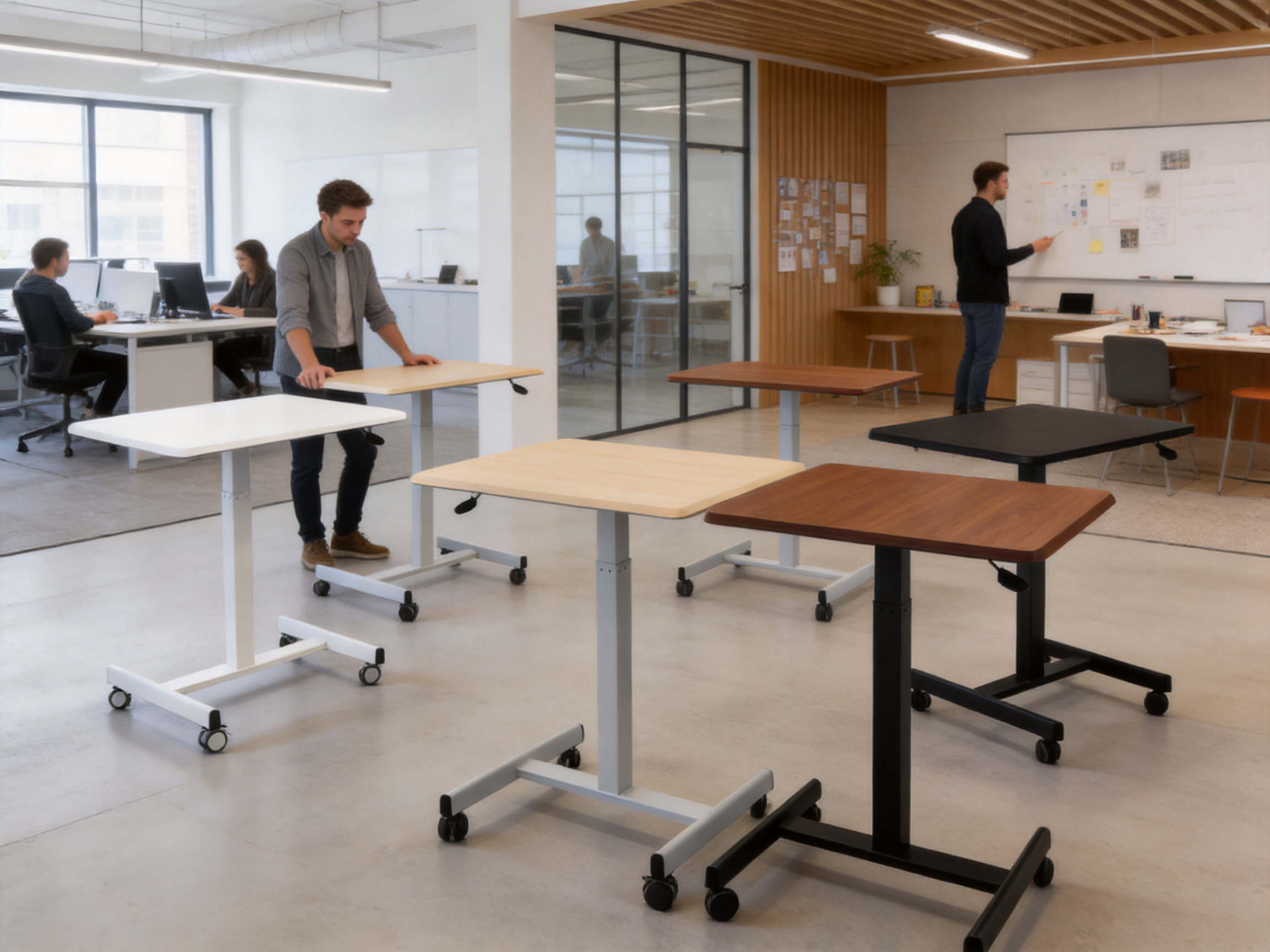
Modern workspaces are no longer limited to fixed-height desks. Offices, home workstations, training rooms, laboratories, and creative studios increasingly require furniture that can respond to different users, tasks, and working positions. A height-adjustable desk provides a practical way to alternate between sitting and standing, improve workspace flexibility, and support more personalized working habits.
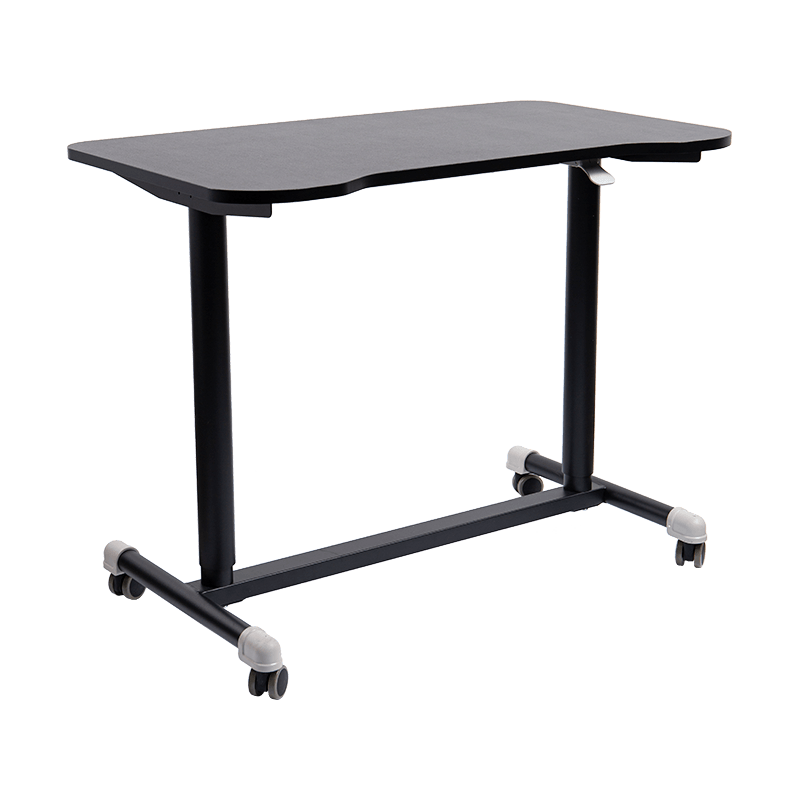
The SK03 Center-Mounted Pneumatic Height-Adjustable Desk is designed around these requirements. It uses a gas spring lifting mechanism to provide smooth manual height adjustment, a center-mounted structure for balanced support, and four cast wheels for convenient mobility. Its compact desktop, durable iron frame, powder-coated surface, and selection of panel colors make it suitable for professional and residential environments where flexibility, stability, and efficient use of space are important.
Unlike many fixed desks, the SK03 allows users to adjust the working surface between 745mm and 1060mm. This range accommodates seated and standing work for users of different statures and supports changing activities during the day. The result is a compact workstation that can be repositioned, adapted, and integrated into many types of interiors.
1. The Growing Need for Flexible Work Furniture
Traditional desks are generally designed around one fixed working height. Although fixed furniture can be economical and straightforward, it may not suit every user or every task. Differences in body height, chair dimensions, work habits, and equipment requirements can make a fixed desk less comfortable over long periods.
A height-adjustable desk addresses this issue by allowing the user to change the position of the desktop. A lower setting can support seated computer work, writing, reading, or administrative activities. A higher setting can support standing work, short meetings, presentations, sorting tasks, and activities that benefit from a more upright posture.
The need for flexible furniture is particularly clear in shared environments. In a training room, different users may need the same desk at different heights. In a laboratory, the working position may change depending on the equipment or process. In a home office, a compact desk may need to support work, study, video calls, and creative activities within the same room.
The SK03 responds to these needs through a combination of height adjustability, compact dimensions, and mobility. Instead of occupying a large permanent footprint, it provides a personal work surface that can be positioned where it is needed and stored or relocated when the activity is complete.
2. Product Overview
The SK03 is a center-mounted pneumatic height-adjustable desk. Its main lifting function is provided by a gas spring mechanism. Gas springs use compressed gas within a controlled cylinder to assist movement. In a desk application, this principle helps reduce the effort required to raise or lower the tabletop.
The center-mounted configuration places the primary support structure beneath the central area of the tabletop. This arrangement creates a balanced visual appearance and helps distribute the load through the frame. It also leaves more usable space around the edges and beneath the sides of the tabletop than some designs with multiple side-mounted legs or large cross-bracing structures.
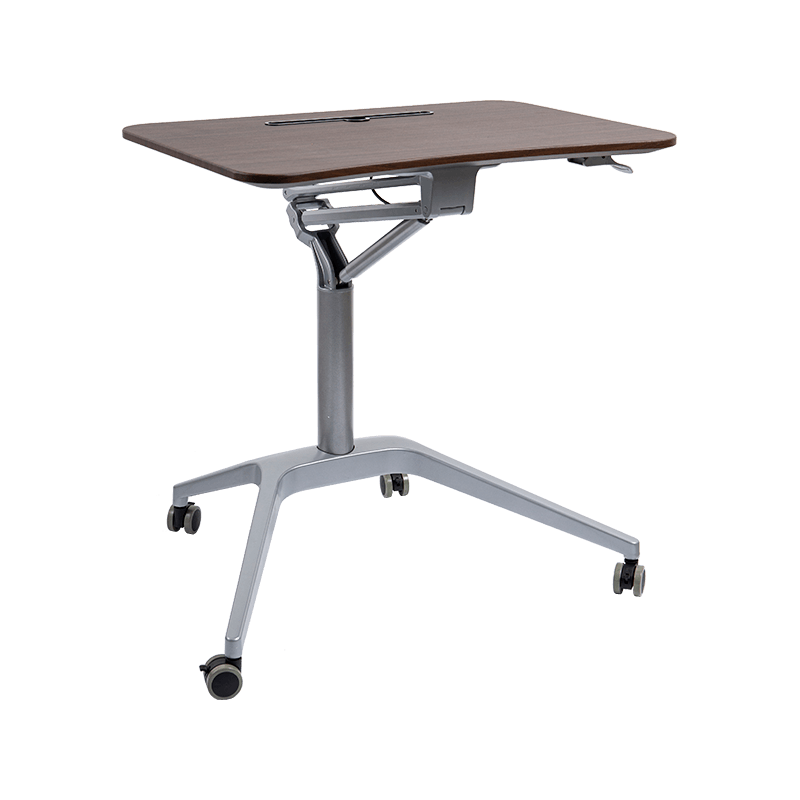
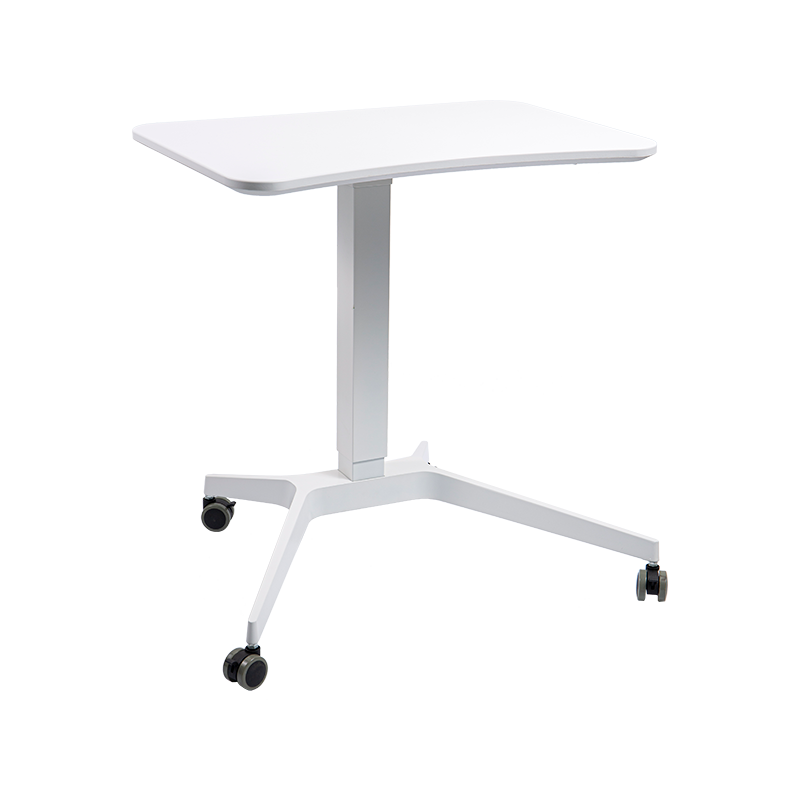
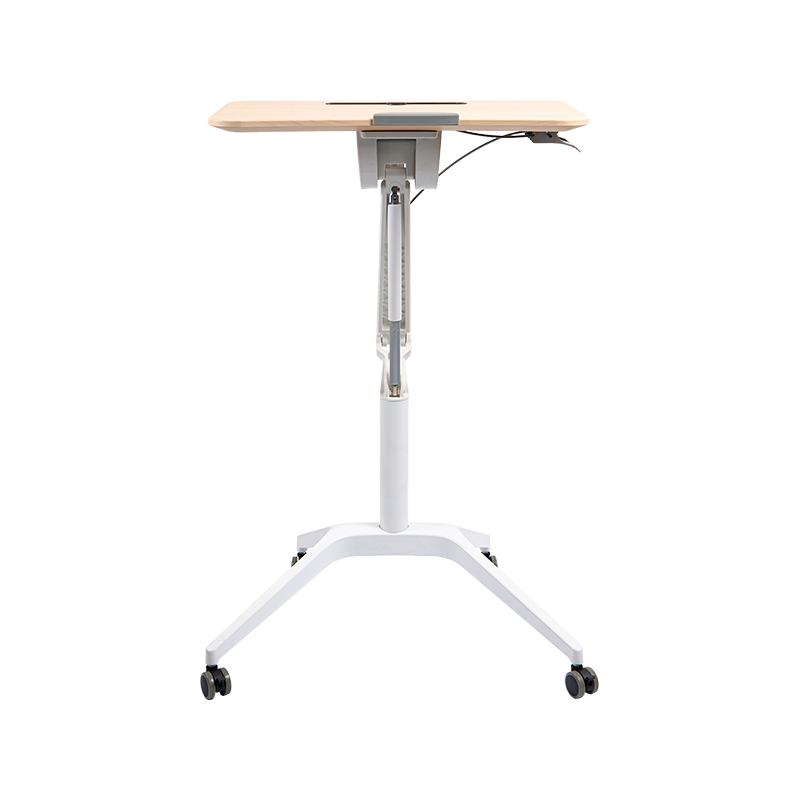
The desk includes a tabletop measuring 650mm by 480mm, with a thickness of 15mm. This size is suitable for compact workstations, temporary work areas, small offices, learning environments, and flexible collaboration spaces. The tabletop is manufactured from MDF and finished with a PVC vacuum-formed surface. This construction allows the panel to combine a stable engineered-wood core with a decorative and protective outer surface.
The supporting frame is made from iron and finished with powder coating. The four cast wheels include two locking wheels and two non-locking wheels. This combination allows the desk to be moved when necessary while giving the user the ability to secure it during work.
Product item |
Specification |
Product model |
SK03 |
Product type |
Center-mounted pneumatic height-adjustable desk |
Lifting range |
745mm to 1060mm |
Tabletop dimensions |
650mm × 480mm × 15mm |
Tabletop construction |
15mm MDF with PVC vacuum forming |
Frame material |
Iron |
Surface treatment |
Powder coating |
Castors |
Four cast wheels, including two locking wheels and two non-locking wheels |
Panel colors |
White, Maple, Walnut, and Black |
Adjustment principle |
Gas spring lifting |
The combination of these specifications gives the SK03 a clear product identity: it is a compact, mobile, manually adjustable workstation intended for users who want ergonomic flexibility without requiring a powered lifting system.
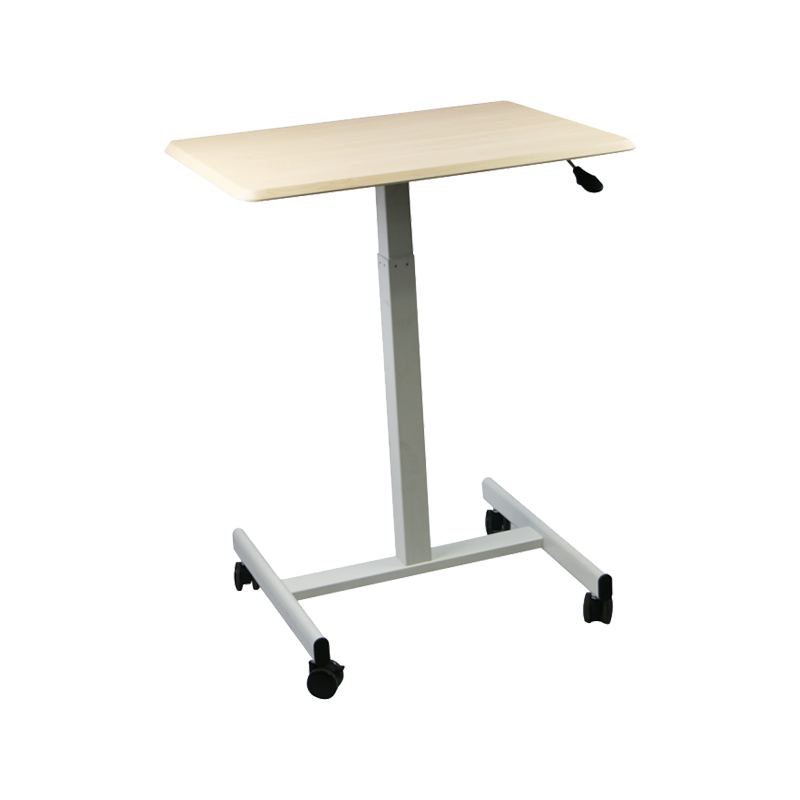
SK03 Center-Mounted Pneumatic Height-Adjustable Desk
3. Gas Spring Height Adjustment
The central functional feature of the SK03 is its gas spring lifting system. A gas spring assists the user during height adjustment, helping the tabletop move in a controlled manner instead of requiring the user to lift the entire weight of the work surface and frame directly.
This operating principle is useful in locations where simple manual operation is preferred. The desk does not depend on an electrical connection for height adjustment, so it can be positioned in rooms where power access is limited or where cable management would be inconvenient. It also avoids the need for a motor, control box, handset, and electrical lifting columns.
A pneumatic desk can be especially practical for shared or temporary work areas. Users can adjust the desk when they begin a task and return it to another position afterward. The adjustment process is direct and does not require programming or electronic controls.
3.1 Supporting Seated and Standing Work
The 745mm to 1060mm lifting range allows the SK03 to support both seated and standing positions. The lower section of the range is suitable for use with an office chair or task chair, while the upper section provides a standing work surface for many users.
Actual comfort depends on the user's height, chair dimensions, footwear, and work activity. The important advantage is that the desk is not restricted to one fixed position. Users can select a setting that places the keyboard, documents, tools, or other work materials at a more suitable level.
Changing position during the working day can also make a workstation feel more dynamic. A user may choose a seated position for extended computer work, raise the desk for short periods of standing work, and lower it again for reading or detailed tasks. This flexibility supports varied work routines without requiring separate furniture.
3.2 Manual Pneumatic Adjustment Compared with Electric Desks
Electric standing desks are popular because they can offer powered movement and electronic memory functions. However, they can also require a power supply, additional electrical components, and more complex installation. In certain environments, these requirements are unnecessary or undesirable.
The gas spring mechanism gives the SK03 a different competitive position. It focuses on straightforward manual adjustment, compact construction, and operational independence from electrical power. For buyers who value simplicity, the absence of a motor system can be an advantage. The desk can be used in flexible layouts without routing a power cable to every unit.
Compared with a fixed-height desk, the SK03 offers significantly greater adaptability. Compared with a motorized desk, it provides a mechanically simple alternative. This makes it suitable for customers evaluating total workspace practicality rather than selecting a desk only by its electronic features.
4. Center-Mounted Structural Design
The center-mounted design is an important part of the SK03's appearance and function. A central support layout creates a visually balanced relationship between the tabletop and base. It also helps keep the lifting mechanism concentrated near the center of the workstation.
For compact tables, the use of a center-mounted support can help preserve usable legroom and reduce visual clutter. Users can approach the tabletop from different directions, depending on the surrounding layout. This is useful in training rooms, shared workspaces, laboratories, and studios where the desk may be used from more than one position.
The iron frame provides a durable structural foundation. Iron is widely used in furniture frames because it offers useful strength and can be formed into support components suited to repeated daily use. The powder-coated finish adds a protective layer over the metal and gives the frame a consistent appearance.
Structural performance depends on correct assembly, appropriate loading, and use within the product's intended application. The center-mounted design is therefore best understood as part of a coordinated system that includes the frame, gas spring, tabletop, caster base, and locking mechanism.
4.1 Stability During Use
Mobility and stability must be considered together in a mobile workstation. Wheels make relocation easier, but a desk should remain securely positioned during normal use. The SK03 addresses this balance through two locking castors and two non-locking castors.
The locking wheels can be engaged after the desk has been moved into position. This helps reduce unintended movement while a user is typing, writing, operating equipment, or participating in a meeting. When the desk needs to be relocated, the locks can be released and the unit can be rolled to a new position.
Users should place the desk on a reasonably level floor and distribute work materials appropriately across the tabletop. The locking function is intended to secure the castors, while good workspace practice supports overall stability and safe operation.
5. Tabletop Construction and Finish
The SK03 tabletop measures 650mm by 480mm and is 15mm thick. Its dimensions provide a practical surface for a laptop, keyboard, documents, writing materials, or small tools. The compact format is suitable for locations where a large executive desk or broad sit-stand workstation would occupy too much space.
The tabletop uses MDF as its core material. Medium-density fiberboard is an engineered wood product manufactured from refined wood fibers and binding materials. It provides a uniform panel structure that can be shaped and finished consistently for furniture production.
The outer surface uses PVC vacuum forming. In this process, a decorative PVC layer is shaped over the panel using controlled heat and vacuum pressure. This technique can create a smooth surface with consistent coverage across the panel edges and top surface. It also supports a range of visual finishes, helping the product fit different interior styles.
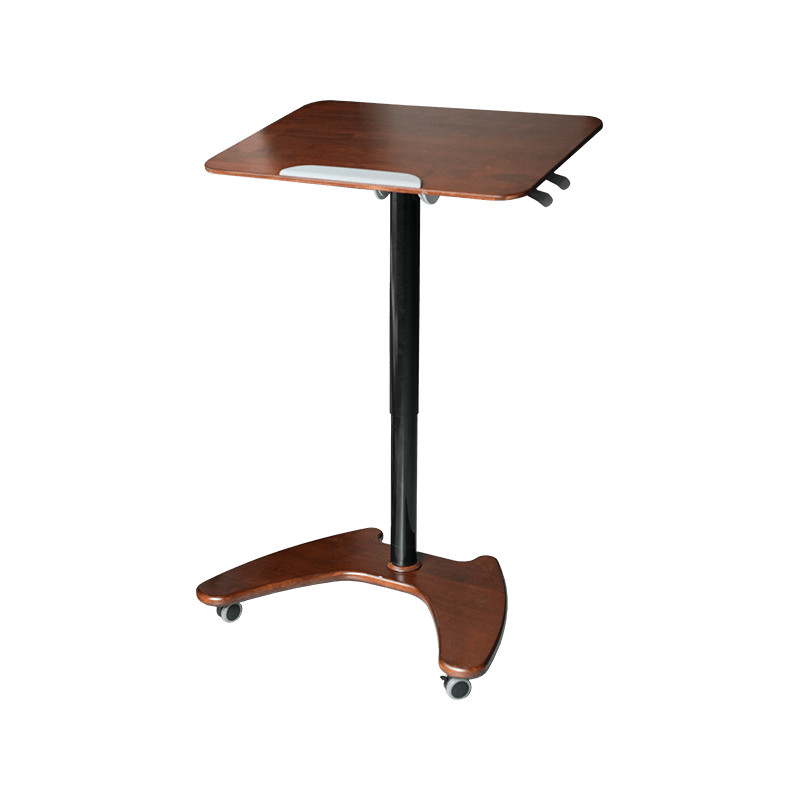
The available panel colors are White, Maple, Walnut, and Black. White can create a clean and contemporary appearance. Maple offers a lighter wood-inspired finish. Walnut provides a deeper and warmer visual impression, while Black can complement modern industrial or minimalist interiors.
The choice of surface color is more than a decorative decision for commercial buyers. When several desks are installed in the same room, color selection can support a consistent furniture program. Different colors can also be used to distinguish work zones, training areas, meeting spaces, or departments.
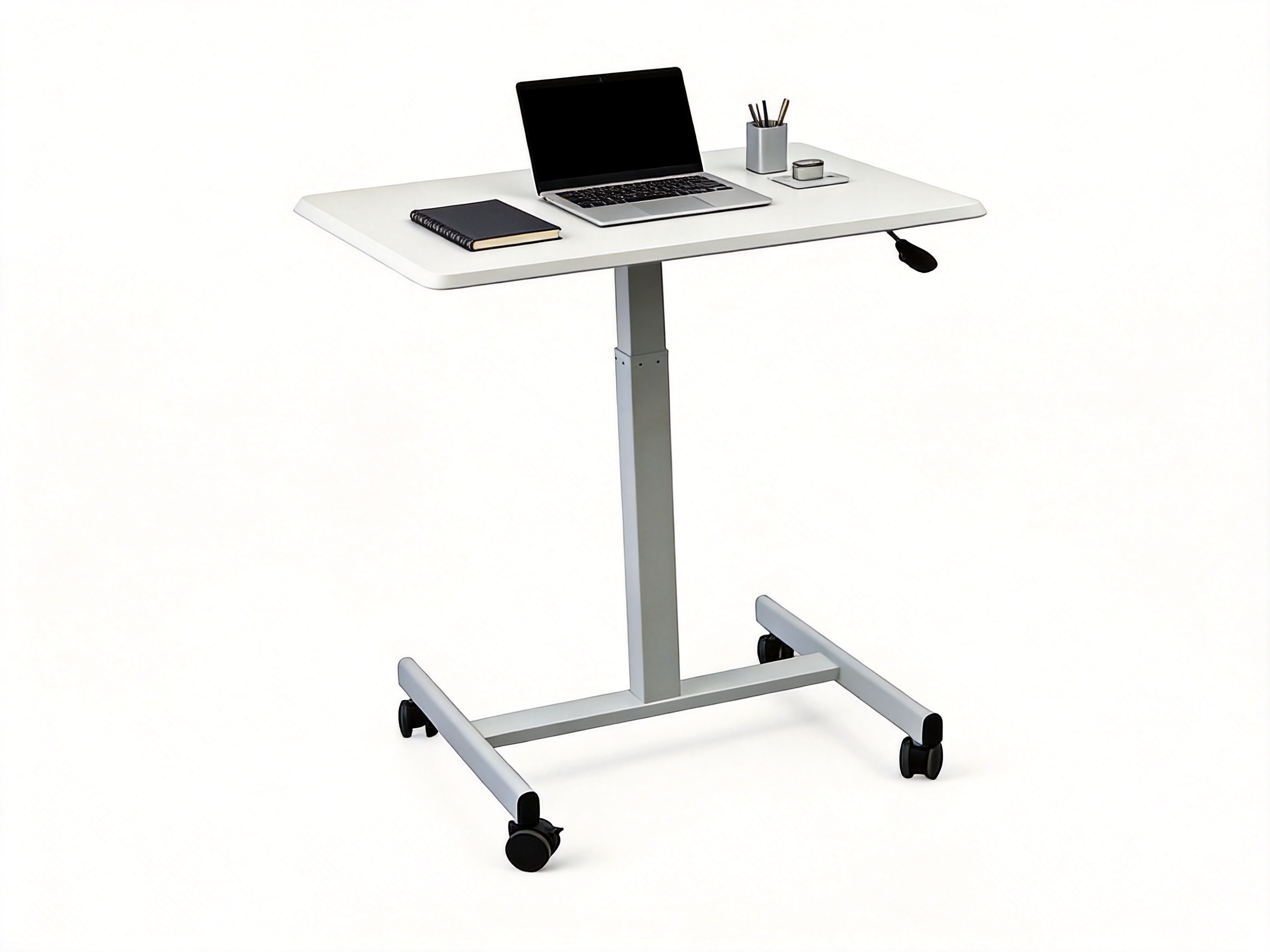
6. Powder-Coated Iron Frame
The frame is made from iron and treated with powder coating. Powder coating is a dry finishing method in which electrically charged powder particles are applied to a prepared metal surface and then cured under controlled heat. The curing process forms a continuous finish that adheres to the frame.
For furniture applications, powder coating offers several practical benefits. It can create a uniform appearance, improve resistance to everyday wear, and provide a protective barrier between the metal and the surrounding environment. The finish also supports different color options and can be applied consistently across batches when production controls are properly maintained.
A high-quality metal finishing process begins before the powder is applied. The frame components must be cut, formed, welded, cleaned, and prepared according to the required production standards. Surface preparation is important because contamination, oil, or uneven treatment can affect coating adhesion and appearance.
After coating, inspection can include visual checks for coverage, surface defects, color consistency, and damage around connection areas. These manufacturing controls help ensure that the frame is not only functional but also suitable for professional interiors where appearance matters.
6.1 Durability for Repeated Use
The SK03 is intended for regular use in offices and other professional environments. Repeated adjustment, movement, and repositioning place demands on the frame, lifting mechanism, tabletop connections, and castors. The use of an iron frame with a powder-coated surface provides a practical foundation for this type of product.
Durability is influenced by many factors, including assembly accuracy, component quality, handling, floor conditions, maintenance, and load distribution. A durable product is therefore the result of both material selection and process control. The manufacturer's role is to combine suitable components with consistent production and inspection procedures.
7. Advantages Over Conventional Fixed Desks
The most direct advantage of the SK03 over a conventional fixed desk is height flexibility. A fixed desk may be appropriate for one user and one activity, but it cannot easily respond to changes in body height, chair height, or work method.
The SK03 can support more than one posture and more than one type of activity. A user can lower the tabletop for seated work or raise it for standing tasks. In a shared setting, the next user can make a new adjustment rather than adapting to the previous user's preferred position.
Its castors also provide an advantage over many stationary desks. A fixed desk may need to be lifted or disassembled before it can be moved. The SK03 can be rolled to another location, allowing rooms to be reconfigured more efficiently.
The compact tabletop creates another distinction. Large desks offer more surface area, but they may not be suitable for small offices, narrow rooms, temporary work areas, or dense training arrangements. The SK03 offers a smaller footprint while retaining the main benefit of height adjustment.
8. Advantages Over Some Motorized Alternatives
The SK03 is not intended to replace every electric standing desk. Motorized desks may be preferable when users require automatic movement, programmable height memory, or a larger desktop. However, the pneumatic design has its own competitive strengths.
First, it does not require a power cable for lifting operation. This simplifies placement and can reduce cable clutter in mobile environments. It is also useful in rooms where sockets are limited or where furniture is frequently rearranged.
Second, the gas spring system is mechanically direct. Buyers who prefer a simpler operating concept may value the reduced dependence on motors, control panels, and electronic components. This can make the product easier to understand and convenient for users who want immediate manual control.
Third, a manually adjustable desk can be appropriate for applications where height changes are occasional rather than constant. A training room, laboratory, or shared project area may need flexible height adjustment without requiring each workstation to be connected to an electrical system.
The product's competitive value therefore comes from balance: it offers adjustability without the complexity of a powered desk, mobility without the footprint of a large workstation, and a professional appearance without an unnecessarily complicated control system.
9. Manufacturing Strength and Product Development
The manufacturer is a professional enterprise engaged in the research and development, production, sales, and service of standing desks. Its location in Suzhou places its operations within the Yangtze River Delta, a region known for extensive manufacturing resources, supplier networks, engineering capabilities, and furniture-industry support.
A standing desk is not a single-component product. It combines metal fabrication, lifting mechanism integration, tabletop processing, surface finishing, caster installation, assembly, inspection, packaging, and customer service. A manufacturer with experience across these stages can coordinate the product more effectively than a business focused only on final assembly or distribution.
Research and development is important because adjustable furniture must balance several design requirements at the same time. The frame must support the tabletop, the gas spring must operate with appropriate resistance, the height range must be practical, and the castors must provide mobility without compromising positioning. The tabletop must also be attractive, easy to clean, and compatible with the support structure.
Product development begins with identifying the intended application. The SK03 is designed as a compact, mobile, pneumatic workstation rather than a large executive desk. This clear positioning helps guide decisions about dimensions, lifting range, frame structure, surface materials, and caster configuration.
9.1 Integrated Production Considerations
Metal components may require cutting, bending, drilling, welding, grinding, cleaning, and coating. Each operation affects the following stage. Accurate dimensions support easier assembly. Proper welding supports frame integrity. Surface preparation supports coating adhesion. Consistent drilling and connection points help the tabletop and base fit correctly.
The tabletop requires a separate production path. The MDF panel must be prepared to the specified dimensions and thickness, while the PVC vacuum-forming process must provide consistent surface coverage. The final panel must align with the frame and maintain a neat appearance around the edges and connection points.
The gas spring and caster system must then be integrated with the frame. Assembly quality influences the smoothness of adjustment, the alignment of the tabletop, and the stability of the completed desk. A final inspection can verify the appearance, basic movement, caster operation, and overall assembly condition.
These coordinated procedures are part of the manufacturer's production strength. Intelligent manufacturing does not mean that every step is automated. It means that production resources, process controls, engineering decisions, and quality checks are organized to create repeatable results.
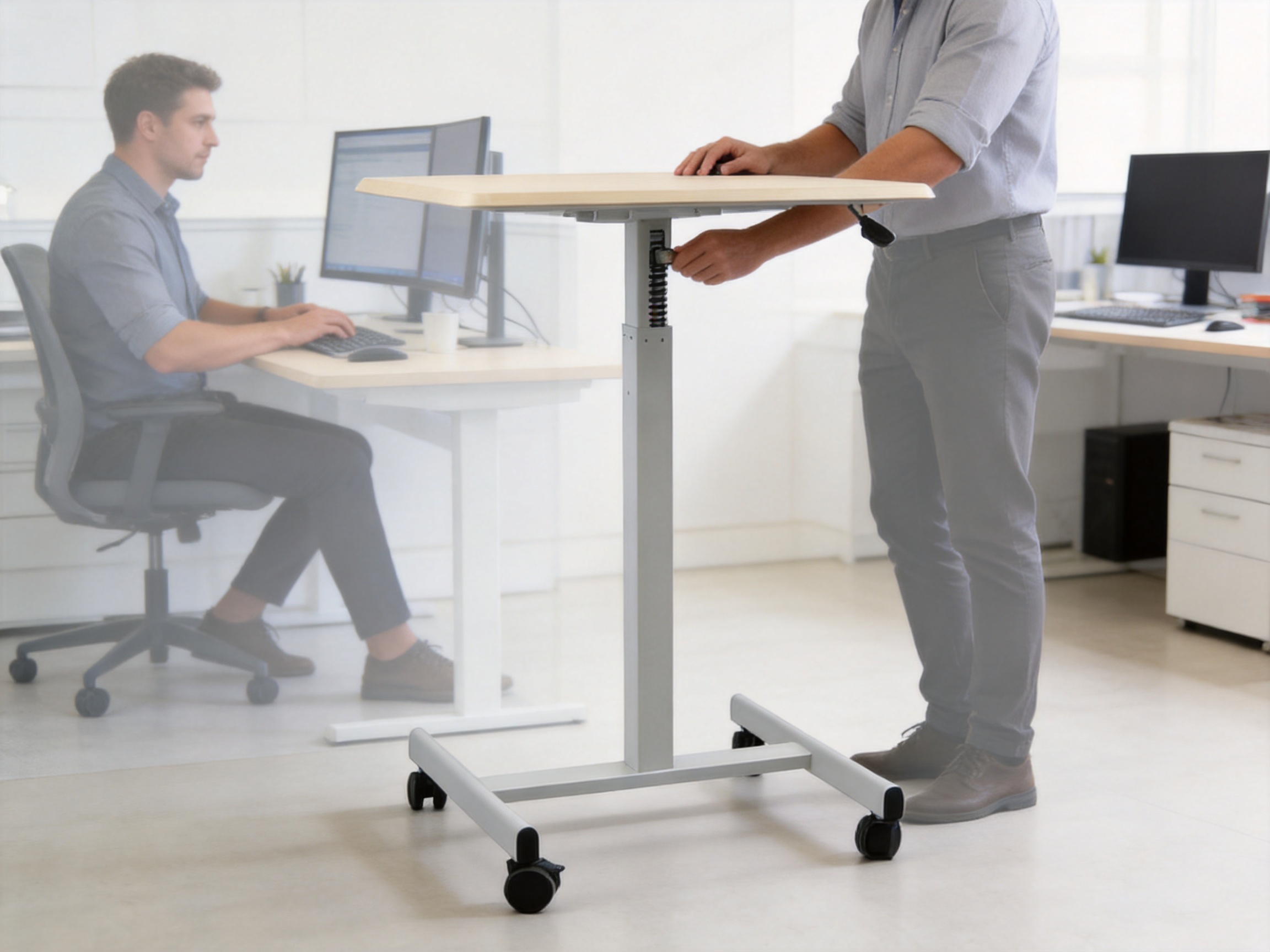
10. Quality-Oriented Production Process
Although the final product has a relatively clean appearance, its performance depends on several hidden manufacturing details. The frame must be dimensionally consistent. The lifting components must be installed correctly. The tabletop must be securely connected. The castors must be aligned and fastened. The powder coating must cover the required surfaces evenly.
A quality-oriented production process can be considered in several stages.
10.1 Incoming Material Control
Materials such as iron components, MDF panels, PVC surface materials, gas springs, castors, fasteners, and coating materials should be checked before entering production. This helps identify dimensional or visual problems early and reduces the possibility of inconsistent components entering the assembly line.
10.2 Component Fabrication
Metal components are formed according to product drawings and process requirements. Cutting and forming accuracy influence the fit of the frame. Welding must be performed consistently so that the structure remains aligned. Any sharp edges or irregularities should be treated before finishing.
10.3 Surface Treatment
Powder coating requires suitable surface preparation, controlled application, and proper curing. A consistent coating process improves the appearance of the frame and helps protect the metal during daily use. Inspection after curing can identify incomplete coverage, marks, or other visible defects.
10.4 Tabletop Processing
The MDF panel is prepared to the specified size and thickness. The PVC surface is applied through vacuum forming, creating the selected color and finish. The completed panel should be checked for edge coverage, surface smoothness, color consistency, and compatibility with the frame.
10.5 Final Assembly
During final assembly, the frame, gas spring, tabletop, and castors are combined into a complete unit. Fasteners must be installed correctly, and moving parts must be checked for proper operation. The locking castors should be tested to confirm that they engage and release as intended.
10.6 Finished Product Inspection
Inspection of the completed desk can include checking the height-adjustment range, movement smoothness, tabletop alignment, frame appearance, caster function, locking performance, and general assembly quality. Packaging inspection is also important because the desk must reach the customer without unnecessary surface damage.
11. Application Scenarios
11.1 Home Offices
Home offices often have limited space and may need furniture that serves more than one purpose. The SK03 can be positioned beside a wall, near a window, or in a multipurpose room. Its compact dimensions help it fit into areas where a large desk would be impractical.
The desk can support laptop work, writing, online meetings, reading, and occasional standing tasks. When the room needs to be used for another activity, the castors make repositioning easier.
11.2 Professional Offices
In a professional office, the SK03 can function as an individual workstation, touchdown desk, visitor desk, or flexible project table. Its height range gives employees an alternative to fixed work surfaces, while its color options allow it to coordinate with existing office furniture.
The center-mounted design can also support a clean and uncluttered office appearance. Because the desk does not require a lifting power cable, it can be placed in more locations without adding another electrical connection to the floor plan.
11.3 Training Rooms
Training rooms often need to change configuration for lectures, group exercises, examinations, workshops, and presentations. A mobile height-adjustable table can be moved between rows, separated into individual workstations, or repositioned around a trainer's area.
The locking wheels help the desk remain in place during use, while the height range can accommodate different users and activities. The compact tabletop provides enough area for common training materials without creating an overly large arrangement.
11.4 Laboratories
Laboratory work may involve equipment, samples, documents, and short-term procedures. The ability to adjust the tabletop and relocate the desk can support changing workflows. The powder-coated iron frame also provides a professional material appearance suitable for technical environments.
Laboratory operators should confirm that the product's materials, dimensions, cleaning requirements, and load suitability match the intended application. The desk should be used according to the buyer's operational and safety requirements.
11.5 Creative Studios
Creative work often changes from seated computer tasks to standing review, sketching, sorting, or assembly. The SK03 can provide a flexible surface for designers, illustrators, makers, photographers, and project teams.
The choice of White, Maple, Walnut, or Black panels also allows the desk to complement different studio aesthetics. A studio may select one consistent color for a unified appearance or use multiple colors to define separate areas.
12. Ergonomic Use Recommendations
A height-adjustable desk is most effective when it is adjusted to the user's body and activity. When seated, the tabletop should generally allow the shoulders to remain relaxed and the elbows to rest in a comfortable working position. The display should be placed so that the user can view it without excessive neck bending.
When standing, the user should avoid locking the knees or leaning continuously against the desk. The keyboard, mouse, documents, and frequently used tools should be placed where they can be reached without repeated twisting. A supportive floor surface and suitable footwear may also improve standing comfort.
Users should adjust the desk gradually and keep hands, cables, and objects clear of moving parts. The tabletop should not be overloaded, and items should be distributed rather than concentrated at one edge. Before beginning work, the user should check that the castor locks are engaged when a stationary position is required.
These recommendations apply to height-adjustable furniture generally. The SK03 provides the adjustment capability, while the user determines the most appropriate position for the specific body size, task, and environment.
13. Design and Interior Integration
Furniture must perform well, but it must also fit the visual language of its surroundings. The SK03 offers four panel colors to support different design requirements. White is suitable for bright, modern, and minimalist rooms. Maple can introduce a lighter natural appearance. Walnut can create a warmer and more traditional atmosphere. Black can support a contemporary, technical, or industrial theme.
The powder-coated iron frame provides a coordinated structural appearance and can be integrated into office, education, healthcare-related, technical, or creative settings. Its clean form helps the desk function as practical equipment without appearing out of place in a finished interior.
For commercial projects, color selection can support visual consistency across several rooms. Buyers may also consider wall colors, flooring, storage units, chairs, lighting, and other work surfaces when selecting the appropriate panel finish.
14. Procurement Considerations for Businesses
Businesses evaluating adjustable desks should consider more than the lifting mechanism alone. The intended environment, frequency of relocation, required tabletop size, available floor area, and user profile all influence the appropriate product choice.
The SK03 is particularly suitable when a buyer needs a compact, manually adjustable, mobile desk. It may be a strong option for projects where electrical connection is inconvenient, where furniture must be moved regularly, or where the desk will serve several users.
Buyers should establish the expected number of units, preferred panel color, delivery requirements, assembly needs, and after-sales service expectations. They should also confirm how the desks will be used and whether the tabletop dimensions are appropriate for the equipment to be placed on them.
For larger projects, working directly with a manufacturer can offer benefits in product communication, configuration coordination, production planning, and service support. A manufacturer involved in research, production, sales, and service can provide a more connected purchasing experience than a purely transactional supplier.
15. Maintenance and Long-Term Use
Routine maintenance can help preserve the appearance and function of the SK03. The tabletop should be cleaned with suitable products that do not unnecessarily damage the PVC surface. Spills should be removed promptly, particularly in laboratory, training, or workshop environments.
The frame can be wiped with a soft cloth and a suitable mild cleaning solution. Abrasive tools and harsh chemicals should be avoided unless specifically approved for the surface. The castors should be kept free of debris that could interfere with rolling or locking.
Users should periodically check visible fasteners and connection points. If a component becomes loose, the desk should be taken out of service until it has been safely inspected and corrected. The gas spring and other moving components should not be disassembled by unqualified personnel.
When relocating the desk, users should avoid dragging it sideways while the castors are locked. Releasing the locks before moving helps reduce unnecessary stress on the wheels and floor. The tabletop should be cleared of unstable objects before the desk is moved.
16. Why the SK03 Is a Balanced Product Choice
The SK03 is not based on one feature alone. Its value comes from the way several practical features work together. The gas spring provides manual height adjustment. The 745mm to 1060mm range supports seated and standing work. The center-mounted structure creates a balanced form. The iron frame provides a durable foundation. Powder coating protects and finishes the metal. The four castors support mobility, while two locks help secure the desk. The MDF and PVC tabletop provides a compact and visually adaptable work surface.
Compared with a fixed desk, it offers significantly more flexibility. Compared with a large electric standing desk, it can provide a simpler and more mobile solution. Compared with a basic mobile table, it adds a useful height-adjustment function. These differences make it suitable for buyers who need a versatile workstation without unnecessary complexity.
The product also reflects the manufacturer's broader strengths in standing-desk development and production. By combining engineering, material processing, surface finishing, assembly, inspection, and service, the manufacturer can approach the product as a complete system rather than as a collection of unrelated components.
17. Frequently Asked Questions
Q1: What type of desk is the SK03?
The SK03 is a center-mounted pneumatic height-adjustable desk. It uses a gas spring mechanism to assist manual height adjustment and is designed for seated and standing work.
Q2: What is the height-adjustment range?
The desk adjusts from 745mm to 1060mm. This range is intended to support both seated and standing positions for users with different body heights and working preferences.
Q3: Does the desk require electricity?
No. The height-adjustment system uses a gas spring rather than an electric motor. This allows the desk to be adjusted without connecting it to a power outlet.
Q4: What are the tabletop dimensions?
The tabletop measures 650mm by 480mm and has a thickness of 15mm. It is suitable for compact computer work, writing, reading, training tasks, and other activities that do not require a large work surface.
Q5: What is the tabletop made from?
The tabletop uses a 15mm MDF panel with a PVC vacuum-formed surface. The surface is available in White, Maple, Walnut, and Black.
Q6: What material is used for the frame?
The frame is made from iron and finished with powder coating. This combination provides a durable structural base and a consistent protective surface finish.
Q7: Can the desk be moved easily?
Yes. The SK03 is equipped with four cast wheels. Two wheels include locks, allowing the desk to be moved when needed and secured when placed in the desired position.
Yes. Its height-adjustment range and mobile design make it suitable for offices, training rooms, project areas, laboratories, and other shared environments where different users or activities may require different positions.
Q9: What is the advantage of the center-mounted structure?
The center-mounted structure provides a balanced support arrangement and a clean visual appearance. It can also help preserve usable space around the sides of the tabletop and beneath the work surface.
Q10: How does the SK03 compare with an electric standing desk?
The SK03 provides manual pneumatic adjustment instead of powered adjustment. It does not require electricity, motorized lifting columns, or electronic controls. It is therefore well suited to buyers who prefer a simpler, mobile, and power-independent workstation.
Q11: Where can the desk be used?
The desk can be used in home offices, professional offices, training rooms, laboratories, creative studios, workstations, and flexible collaboration areas. Buyers should confirm that the tabletop size and product characteristics match the specific application.
Q12: How should the desk be maintained?
The tabletop and frame should be cleaned with suitable mild products, while the castors should be kept free from dust and debris. Users should periodically check visible fasteners and avoid moving the desk with the caster locks engaged.
Q13: What manufacturing capabilities support the product?
The manufacturer is involved in research and development, production, sales, and service. The product requires coordinated metal fabrication, powder coating, tabletop processing, gas spring integration, caster installation, assembly, and inspection.
Q14: Are different panel colors available?
Yes. The available panel colors are White, Maple, Walnut, and Black. These options allow the desk to coordinate with different office, educational, technical, and residential interiors.
18. Conclusion
The SK03 Center-Mounted Pneumatic Height-Adjustable Desk is designed for users who need a flexible work surface without the complexity of a powered lifting system. Its gas spring mechanism supports smooth manual adjustment across a 745mm to 1060mm range, allowing the desk to serve seated and standing activities.
Its center-mounted iron frame provides a balanced structure, while powder coating contributes to a durable and professional appearance. The 650mm by 480mm MDF tabletop with PVC vacuum forming offers a compact work surface and a choice of four colors. Four cast wheels make the desk easy to reposition, and two locking wheels help secure it during use.
These features give the SK03 a practical position between fixed desks, basic mobile tables, and motorized standing desks. It can be used in home offices, professional workplaces, training rooms, laboratories, and creative studios where adaptability, mobility, and efficient use of space are important.
The manufacturer's capabilities in research and development, production, sales, and service further support the product's value. By coordinating metal processing, powder coating, tabletop manufacturing, pneumatic mechanism integration, assembly, and inspection, the company can provide a complete adjustable-furniture solution for customers seeking reliable and adaptable workspaces.
References
1. Product specification information for the SK03 Center-Mounted Pneumatic Height-Adjustable Desk.
2. General engineering principles for gas spring lifting mechanisms in adjustable furniture.
3. General manufacturing principles for MDF panels and PVC vacuum-forming surface treatments.
4. General industrial guidance on powder coating for metal furniture frames.
5. General ergonomic principles for alternating seated and standing work positions.
6. General workplace planning considerations for mobile and height-adjustable workstations.
Product: SK03 Center-Mounted Pneumatic Height-Adjustable Desk


- Contact Info
-
-
 Phone+86-15950656125
-
 Email
-
 AddressRoom 1007-1, South Building, Suyue Plaza, Suzhou Industrial Park, Suzhou City, Jiangsu Province, China
-
- Products
- Follow Us
- Need help? Please contact us
Copyright ©
SuZhou Skyhone Intelligent Technology Co., Ltd.
All Rights Reserved.
Privacy
Custom Ergonomic Adjustable Office Tables Manufacturers

