

 English
 русский
 Español
 عربى

Content
- 1 1. Product Overview
- 2 2. Key Technical Specifications
- 3 3. Two Dimensions of Adjustability
- 4 4. Solid Rubberwood and Refined Appearance
- 5 5. Aluminum Frame Engineering
- 6 6. Mobility Without Sacrificing Practical Stability
- 7 7. Advantages Over Conventional Fixed Desks
- 8 8. Advantages Over Motorized Sit-Stand Desks
- 9 9. Advantages Over Basic Tilting Tables
- 10 10. Applications Across Different Environments
- 11 11. Ergonomic Contribution
- 12 12. Product Development and Manufacturing Strengths
- 13 13. Aluminum Extrusion and Frame Production
- 14 14. Solid Wood Panel Processing
- 15 15. Gas Spring Integration
- 16 16. Quality-Oriented Assembly
- 17 17. Customization and Project Support
- 18 18. Operating Guidance
- 19 19. Who Should Choose the SK06?
- 20 20. Frequently Asked Questions
- 20.1 Q1: What is the height range of the SK06 desk?
- 20.2 Q2: Does the tabletop tilt?
- 20.3 Q3: What mechanism controls the height adjustment?
- 20.4 Q4: What is the tabletop made of?
- 20.5 Q5: How large is the tabletop?
- 20.6 Q6: Is the desk easy to move?
- 20.7 Q7: What is the load capacity?
- 20.8 Q8: Is the desk suitable for drawing and drafting?
- 20.9 Q9: Can the desk be used in a school or classroom?
- 20.10 Q10: What is the advantage of the Walnut finish?
- 20.11 Q11: How is the frame protected?
- 20.12 Q12: Does the desk require electrical installation?
- 20.13 Q13: Is the desk intended for heavy industrial work?
- 20.14 Q14: What type of company manufactures the product?
- 20.15 Q15: Why is the company’s Suzhou location useful?
- 21 21. Conclusion
- 22 References
- 23 Product: SK06 Solid Wood Walnut Pneumatic Height-Adjustable Tilting Desk
Why the SK06 Solid Wood Pneumatic Tilting Desk Is a Smarter Choice for Flexible Workspaces
2026-10-07
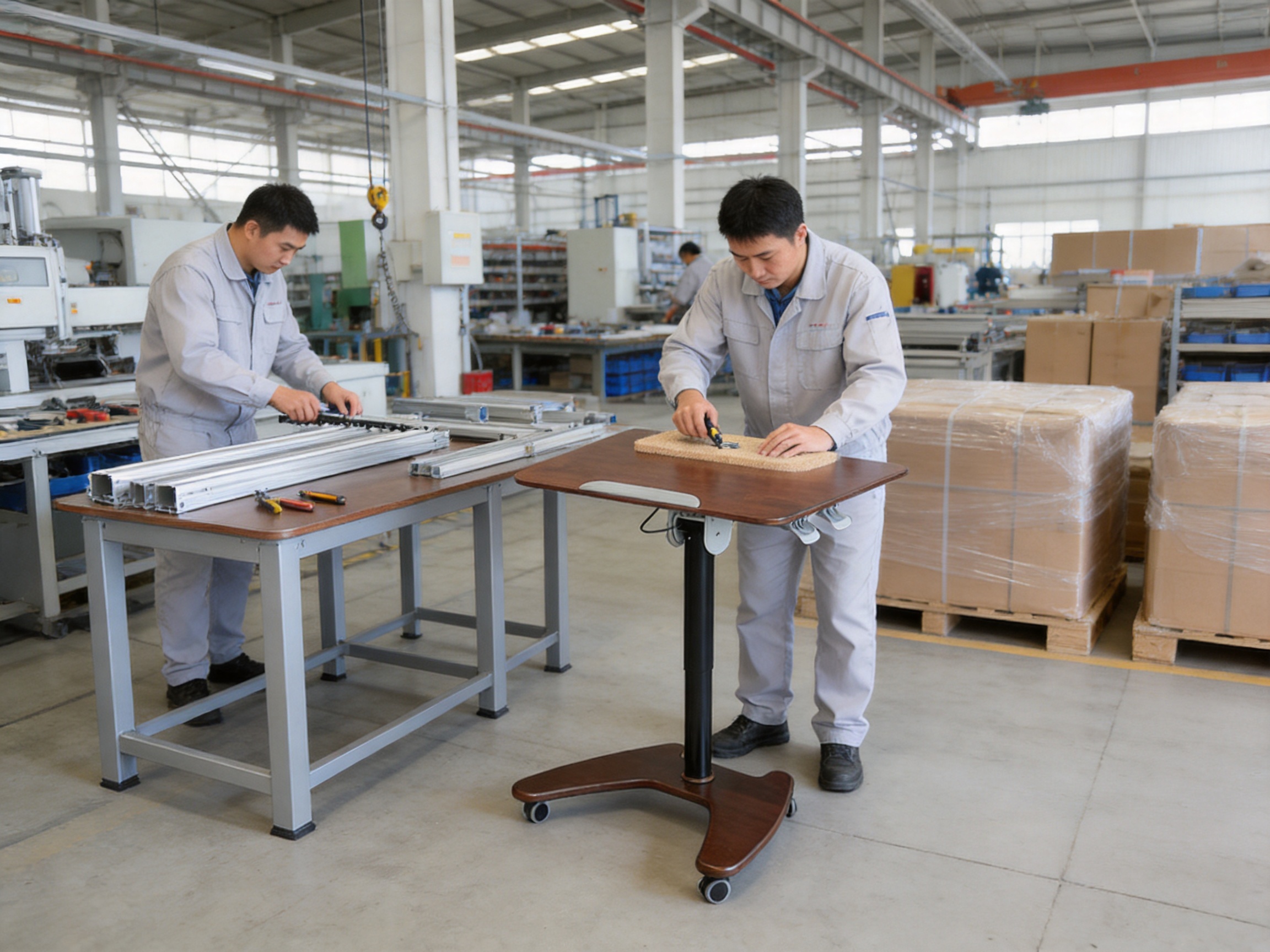
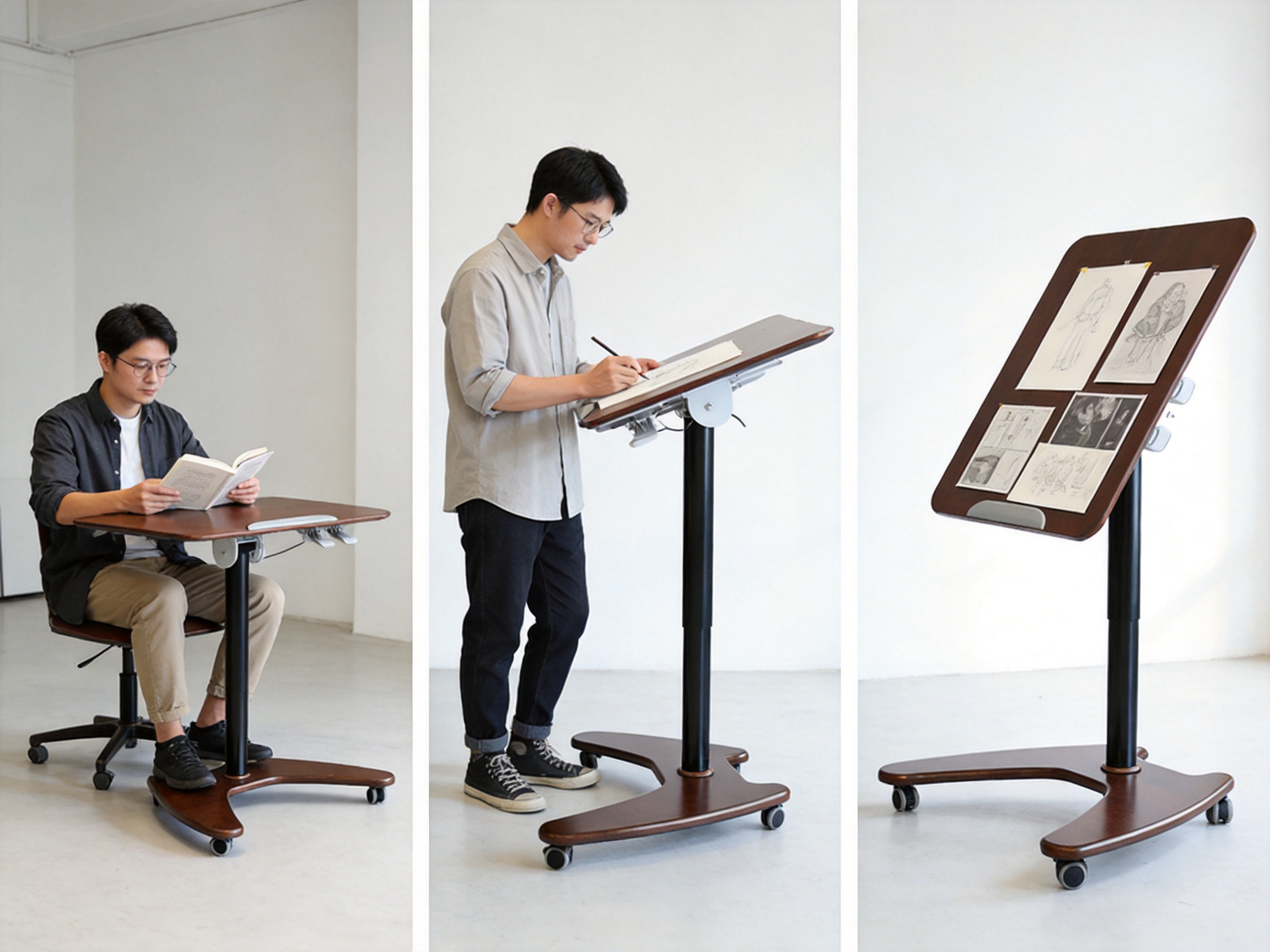
Modern workspaces are no longer limited to a single fixed posture or one type of activity. A desk may need to support computer work in the morning, reading in the afternoon, sketching in the evening, and occasional standing or collaborative tasks throughout the day. Conventional fixed-height tables are often unable to accommodate these changing requirements. Even many height-adjustable desks focus only on vertical movement and do not provide a practical way to change the working angle of the tabletop.
The SK06 Solid Wood Walnut Pneumatic Height-Adjustable Tilting Desk addresses both challenges in one compact workstation. It combines continuous gas spring-assisted height adjustment with a tabletop that can tilt and lock at any angle from 0° to 90°. This combination allows users to create a more comfortable and task-appropriate working position for writing, reading, drawing, drafting, studying, and light-duty office work.
Its design also balances function and appearance. A 20 mm solid rubberwood tabletop gives the desk a warm, natural character, while the Walnut and Natural Wood finishes make it suitable for home offices, professional studios, education spaces, medical environments, and boutique commercial interiors. An extruded aluminum frame with powder coating provides a lightweight yet durable structural foundation, and bidirectional PU casters make the desk easy to reposition when a room layout changes.
Behind this product is a manufacturing organization with capabilities covering research and development, production, sales, and service. Based in Suzhou, a major furniture and manufacturing center in the Yangtze River Delta, SuZhou Skyhone Intelligent Technology Co., Ltd. benefits from a mature industrial supply chain and a strong regional manufacturing ecosystem. Its focus on standing desks and ergonomic workspace solutions supports the development of products that combine mechanical performance, practical usability, and contemporary design.
This article examines the SK06 in detail, explains how it compares with more limited desk formats, and explores the product development and manufacturing strengths that support its performance.
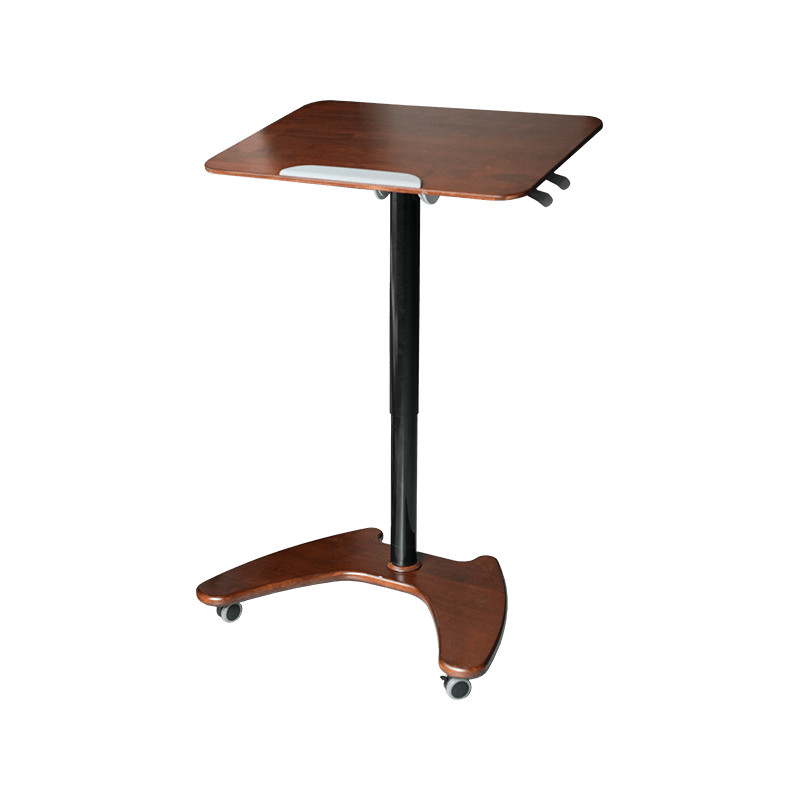
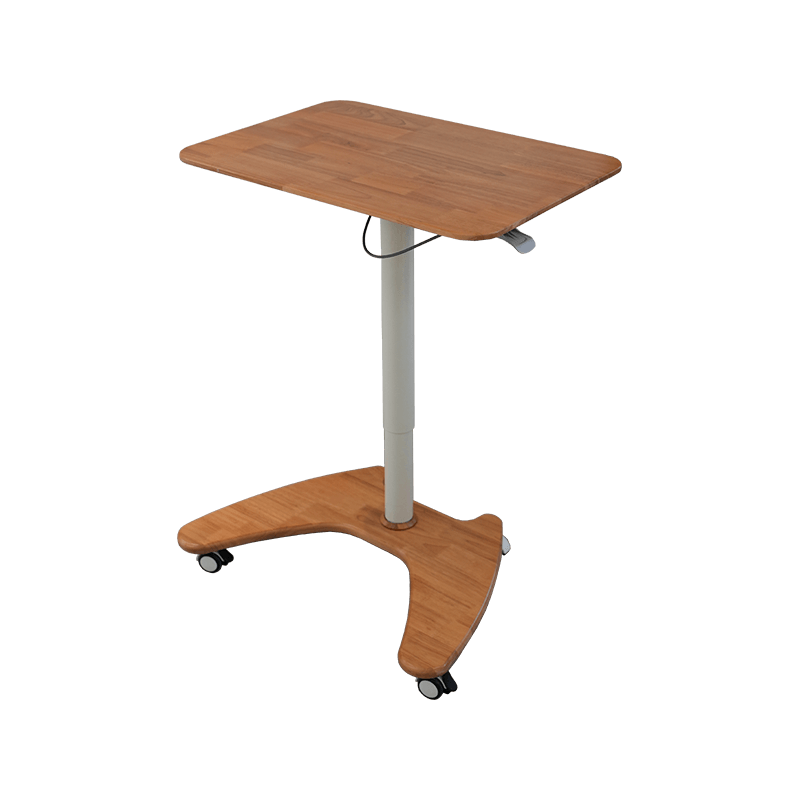
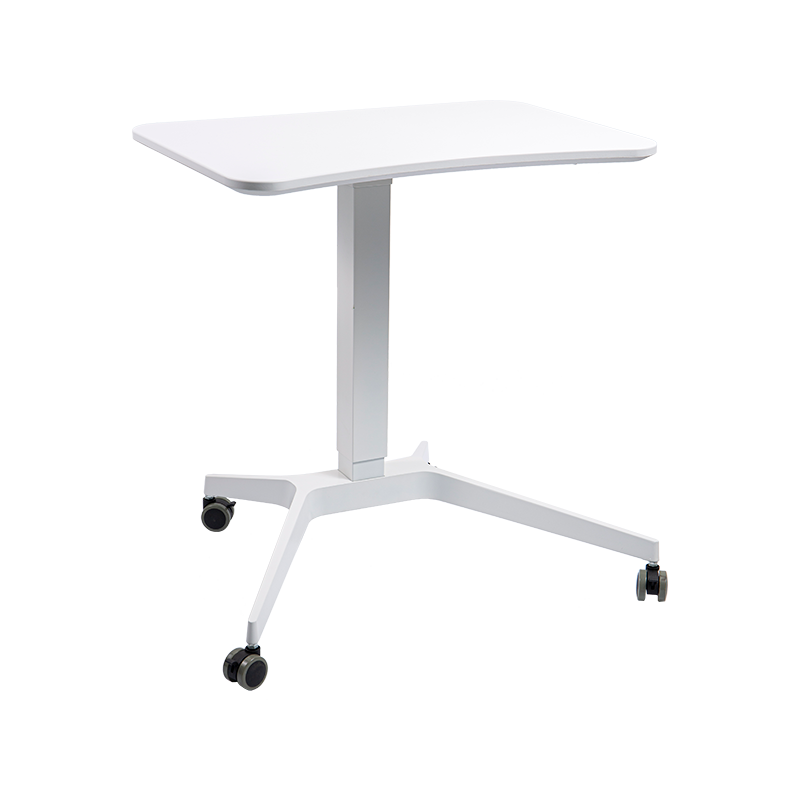
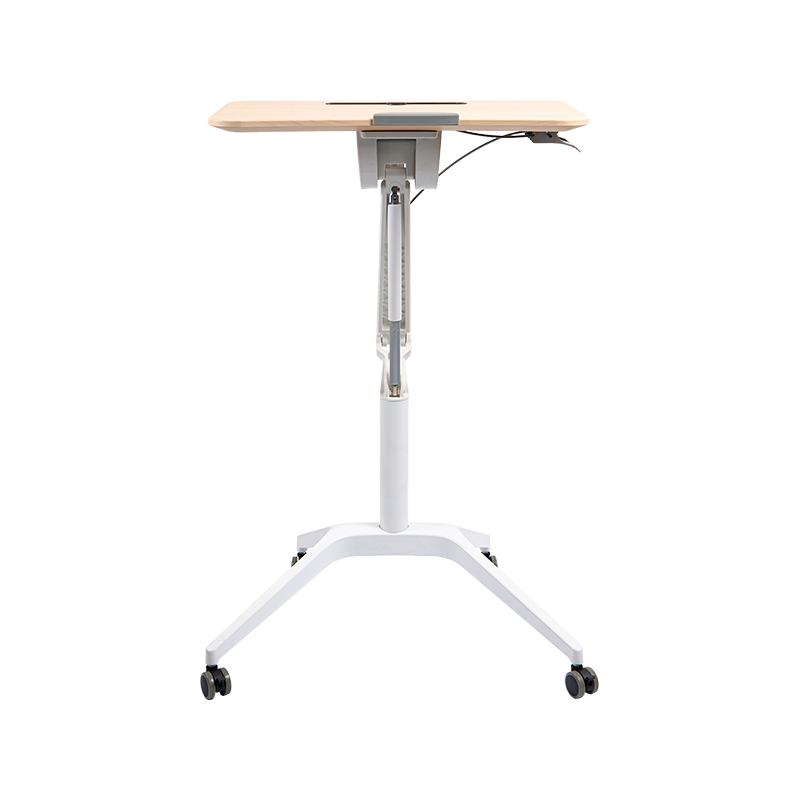
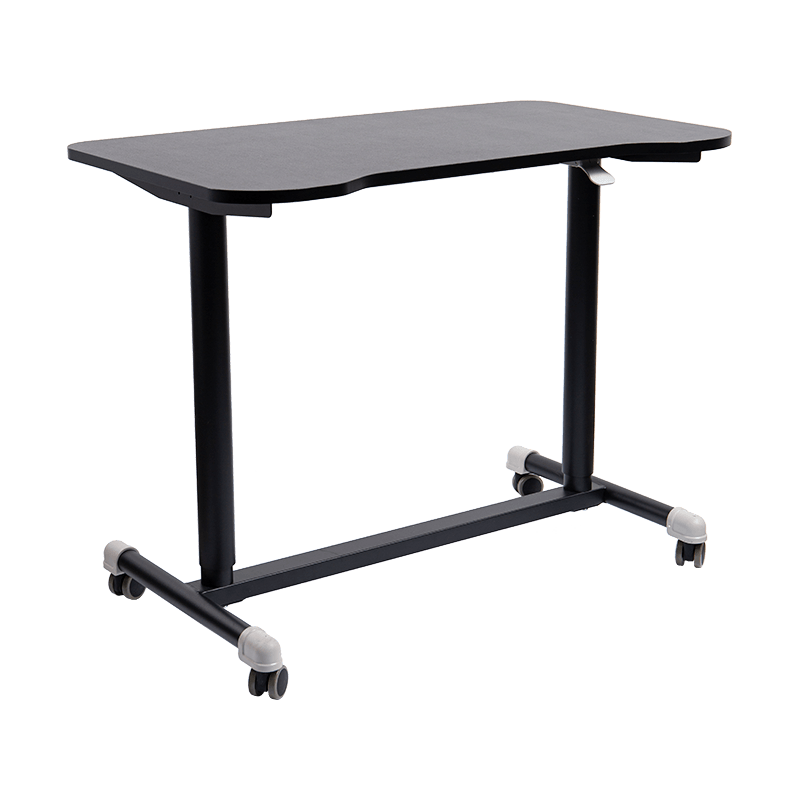
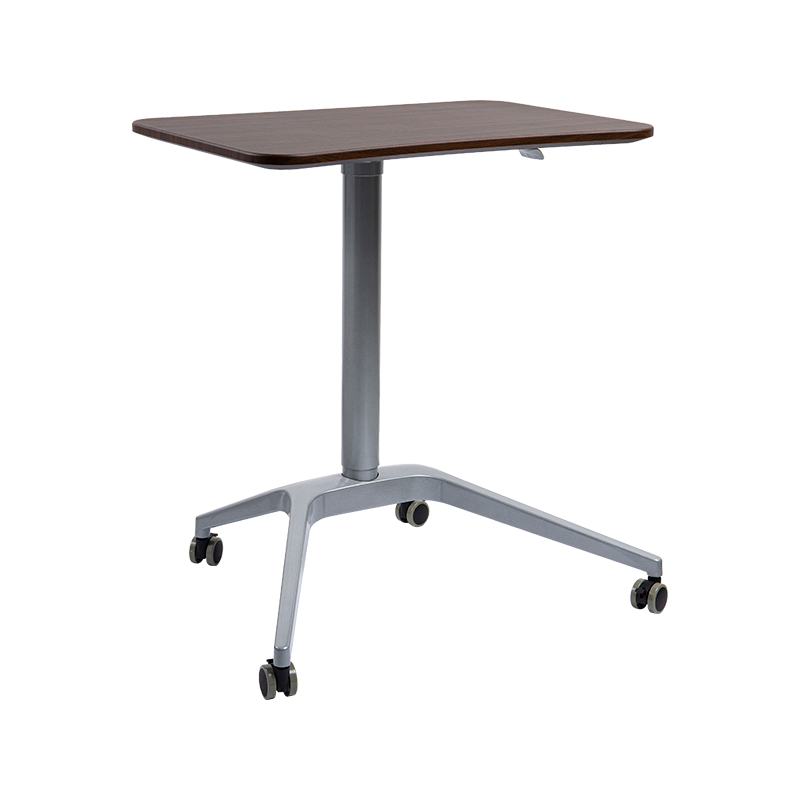
SK06 Solid Wood Walnut Pneumatic Height-Adjustable Tilting Desk
1. Product Overview
The SK06 is a pneumatic height-adjustable table designed for users who require both vertical flexibility and tabletop angle adjustment. Its working height can be continuously adjusted from 750 mm to 1170 mm. This range supports seated use, elevated seated use, and standing or semi-standing activities, depending on the user’s height and task requirements.
Unlike an ordinary sit-stand desk with a permanently horizontal work surface, the SK06 adds a tilting function. The tabletop can be adjusted from a flat 0° position to an upright 90° position and locked at any desired angle within that range. A flat position is suitable for general office work, while a moderate incline can make reading, writing, sketching, and drafting more comfortable. A steeper angle can be used for displaying materials, reviewing drawings, or supporting certain creative activities.
The desk uses a gas spring-assisted lifting system. Gas spring technology is well suited to compact ergonomic furniture because it provides controlled movement without requiring an electrical motor, control panel, or power cable. The result is a clean, quiet, and straightforward operating experience. Users can adjust the height with a simple touch instead of managing complicated controls.
The tabletop measures 715 mm wide by 495 mm deep and is 20 mm thick. This size offers a practical personal work area while keeping the overall desk compact enough for rooms where floor space is limited. The solid rubberwood surface is available in Walnut and Natural Wood finishes, allowing the product to fit both modern and traditional interiors.
The supporting frame is constructed from aluminum. Its extruded profile provides a combination of low weight and structural strength, while the powder-coated surface improves resistance to everyday wear, oxidation, and fading. Bidirectional PU casters support mobility and help users move the desk without subjecting ordinary floor surfaces to the harsh contact associated with hard wheels.
2. Key Technical Specifications
The following table summarizes the principal specifications of the SK06 Solid Wood Walnut Pneumatic Height-Adjustable Tilting Desk.
| Specification | Product Details |
|---|---|
| Product type | Pneumatic height-adjustable tilting desk |
| Height adjustment range | 750–1170 mm |
| Lifting mechanism | Gas spring-assisted height adjustment |
| Tabletop dimensions | 715 × 495 × 20 mm |
| Tabletop tilt range | 0° to 90°, lockable at any angle |
| Tabletop material | 20 mm solid rubberwood |
| Tabletop finishes | Walnut and Natural Wood |
| Frame material | Aluminum |
| Frame finish | Extruded aluminum with powder coating |
| Mobility system | Bidirectional PU casters |
| Dynamic load capacity | 5–10 kg |
| Static load capacity | Up to 80 kg |
The distinction between dynamic and static load capacity is important. The stated static capacity of up to 80 kg refers to the desk’s ability to remain stable under a stationary load. The dynamic load rating of 5–10 kg reflects the recommended load during movement or adjustment. Users should follow the dynamic rating when raising, lowering, tilting, or repositioning the desk, especially when equipment or materials are placed on the tabletop.
3. Two Dimensions of Adjustability
3.1 Continuous Height Adjustment
The SK06 is designed to accommodate different users, working styles, and task positions. Its 750–1170 mm adjustment range allows a user to select a lower working position for seated tasks and a higher position for standing or elevated activities. Because adjustment is continuous rather than limited to a small number of preset levels, users can fine-tune the desk according to their body proportions, chair height, task type, and personal comfort.
Continuous adjustment is especially useful in shared spaces. A classroom, studio, rehabilitation environment, or office may be used by people of different heights. Instead of providing a fixed table that suits only one user, the SK06 can be adjusted whenever the workspace changes hands.
The gas spring mechanism also contributes to a more accessible user experience. Unlike powered desks, the pneumatic system does not rely on electrical power or a motorized control system. This makes the desk suitable for locations where power outlets are limited, where cable management is inconvenient, or where a quiet manual adjustment system is preferred.
3.2 Multi-Angle Tabletop Adjustment
Vertical adjustment alone cannot fully address the ergonomic requirements of drawing, reading, or drafting. When a flat surface is used for extended periods, users may bend their necks and lean forward to view materials. The SK06’s tilting tabletop allows the working surface to be brought closer to a more natural viewing angle.
The tabletop can be tilted at any angle up to 90° and locked into position. The broad adjustment range enables users to select a subtle incline for writing, a moderate angle for reading, or a steep angle for displaying visual material. This flexibility is valuable because different activities require different surface orientations.
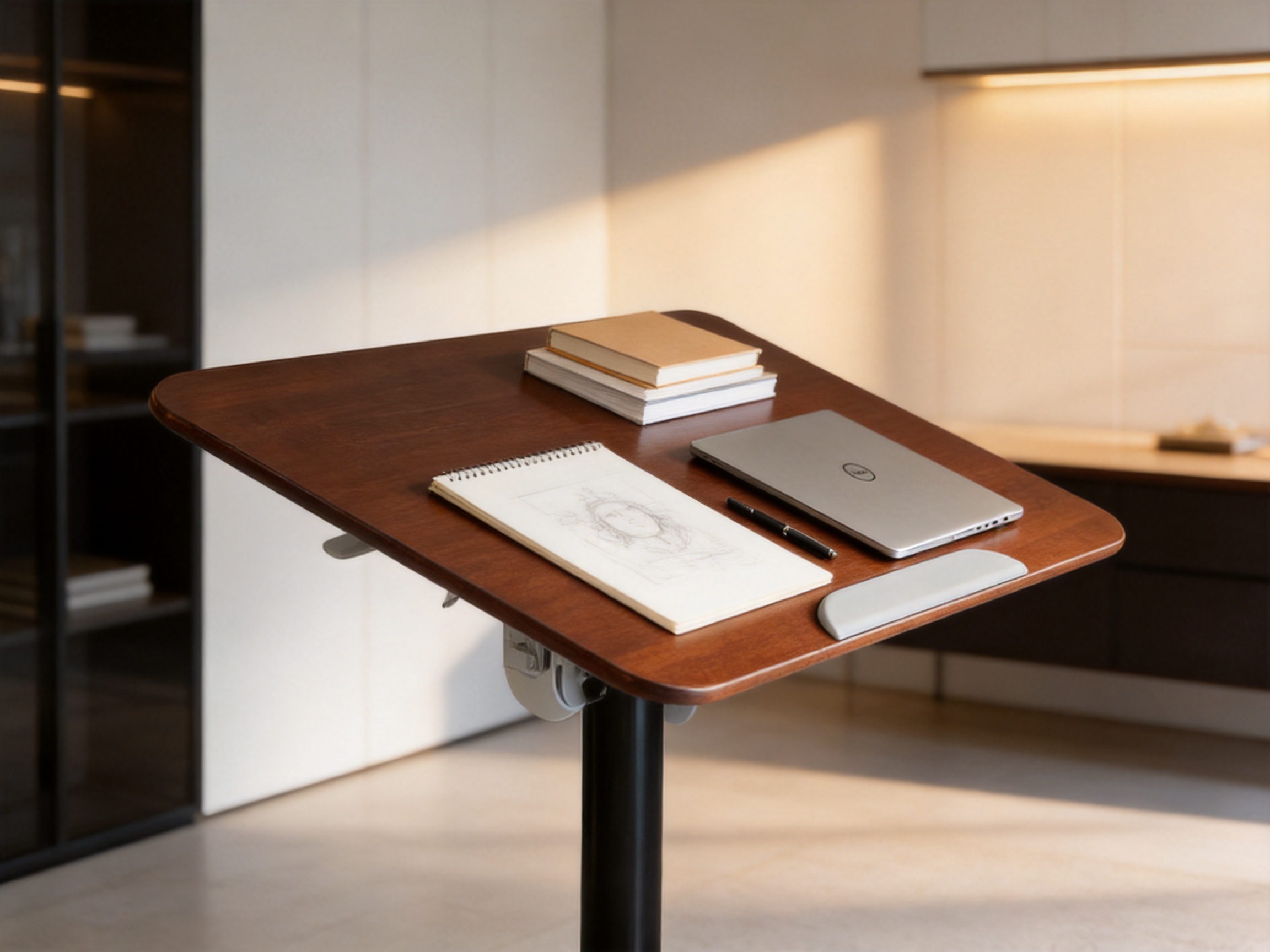
For sketching and technical drawing, an inclined surface can reduce the need to bend over the work. For reading, the tilted tabletop can bring books and documents into a more visible position. For writing, a moderate angle may make handwriting more comfortable for some users. When a conventional horizontal surface is required, the tabletop can be returned to 0°.
The locking function is equally important. A tilting work surface must remain stable while the user applies pressure with a pen, pencil, or hand. By locking the tabletop at the selected angle, the SK06 provides a more controlled work area than a loose or unsupported adjustable board.
4. Solid Rubberwood and Refined Appearance
The tabletop is made from 20 mm solid rubberwood. Solid wood contributes more than visual appeal. It provides a tactile surface that feels warmer and more natural than many thin synthetic panels or basic metal worktops. The visible grain also gives each desk a distinctive appearance rather than the uniform look associated with mass-produced laminated surfaces.
The Walnut finish offers a darker, more sophisticated appearance that can complement executive offices, private studies, design studios, libraries, and high-end commercial spaces. The Natural Wood finish provides a lighter and more relaxed visual effect for classrooms, home offices, creative workshops, and contemporary interiors.
A 20 mm thickness gives the tabletop a substantial presence while keeping the overall product suitable for a compact workstation. The panel is large enough for writing materials, books, drawing tools, and selected office equipment without making the desk unnecessarily bulky.
Wood surfaces require appropriate care. Users should avoid prolonged exposure to standing moisture, excessive heat, and abrasive cleaning products. Routine cleaning with a soft, slightly damp cloth can help preserve the surface. Proper care supports the long-term appearance of the wood and maintains the desk’s decorative value as well as its working function.
5. Aluminum Frame Engineering
The SK06 uses an aluminum stand with an extruded and powder-coated surface. Aluminum is an effective material for adjustable furniture because it offers a useful strength-to-weight ratio. A lighter frame is easier to move, yet a properly designed aluminum structure can provide the rigidity needed for everyday office, study, and creative activities.
Extrusion is a practical manufacturing method for producing consistent structural profiles. The process allows the material to be formed into repeatable cross-sectional shapes that can be cut, prepared, and assembled into a stable frame. Consistency in profile geometry supports repeatable product quality and simplifies production control.
Powder coating adds a protective and decorative layer. Compared with an unfinished metal surface, a coated frame is better protected against routine handling, minor scratches, oxidation, and visual fading. The coating also allows the frame to maintain a clean appearance over extended use.
The aluminum frame supports a balanced design philosophy. It is not unnecessarily heavy, but it is engineered to work with the gas spring, tabletop, tilt mechanism, and caster system as one coordinated structure. This balance benefits users who need to move or reconfigure the desk frequently.
6. Mobility Without Sacrificing Practical Stability
The SK06 is equipped with bidirectional PU casters. Mobility is useful in many real working environments. A user may need to move the desk closer to a window, reposition it for a group activity, clear space for cleaning, or change the layout of a studio or classroom.
Polyurethane casters are commonly selected for their smooth rolling characteristics and their ability to reduce the risk of harsh contact with floor surfaces. Compared with hard wheels, PU casters can provide a more floor-friendly movement experience on suitable indoor surfaces.
The casters also support the product’s multifunctional purpose. A drawing table in a design studio may need to be moved between different work zones. A study table may be repositioned to improve lighting. A medical reading stand may need to follow the user or be placed beside a chair or bed. Mobility makes these changes easier and helps one desk serve more than one role.
When moving the product, users should remove or secure loose materials and observe the dynamic load rating. The desk is designed for controlled movement, not for transporting a fully loaded work area at high speed. Proper use helps protect the tabletop, casters, frame, and adjustment mechanisms.
7. Advantages Over Conventional Fixed Desks
A fixed-height desk is simple, but its simplicity can become a limitation. Its height may suit one user and one activity, yet feel uncomfortable for another. A fixed horizontal surface is also less effective for drawing, drafting, or reading over long periods.
The SK06 offers a broader range of use because it addresses both height and angle. A conventional table may require users to adapt their posture to the furniture. The SK06 allows the furniture to adapt more closely to the task and the user.
Its mobility is another advantage. Many fixed desks are heavy or difficult to reposition. The SK06’s casters make layout changes easier, helping users create a more flexible room without replacing the entire workstation.
The product also offers a more distinctive visual identity. Solid rubberwood and a Walnut finish can create a warmer and more premium atmosphere than a basic office table. This is particularly valuable in customer-facing spaces, boutique offices, design studios, and residential interiors where furniture must support both performance and decoration.
8. Advantages Over Motorized Sit-Stand Desks
Motorized electric desks are useful for users who require frequent powered height changes, but they are not the ideal solution for every environment. They require a power source, electrical components, control interfaces, and cable management. In some locations, these requirements increase installation complexity or create additional maintenance considerations.
The SK06 uses a gas spring-assisted system instead of an electric lifting column. Its operation is independent of a wall outlet, which can be advantageous in classrooms, studios, temporary work areas, and rooms where cable clutter is undesirable. The mechanical system also supports a clean and quiet workspace.
Another distinction is the tilting tabletop. Many motorized standing desks use large, permanently horizontal tops intended primarily for computer work. The SK06 is more specialized for drawing, reading, writing, and other tasks that benefit from an adjustable working angle.
The two product categories serve different needs. A large electric desk may be more appropriate for heavy computer equipment or extensive office storage. The SK06 is better suited to users who value compact dimensions, manual pneumatic operation, mobility, solid wood appearance, and multi-angle functionality.
9. Advantages Over Basic Tilting Tables
A basic tilting table may provide angle adjustment but remain fixed at one height. This limits its adaptability. Users may still need to bend, reach, or work from an unsuitable elevation because the table cannot be raised or lowered.
The SK06 combines both functions. The user can first select a suitable height and then choose the correct tabletop angle. This two-dimensional adjustment makes the workstation more versatile than a single-function tilting board.
The height range also makes the product relevant to more than one user group. Children, students, adults, artists, designers, and office workers may each require different working elevations. A desk with both height and angle adjustment can support these changing requirements without needing multiple dedicated tables.
10. Applications Across Different Environments
10.1 Design Studios and Drafting Areas
Designers, architects, illustrators, and technical drawing users often alternate between flat documents, sketches, reference materials, and digital devices. The SK06 can function as a compact drafting desk by combining an appropriate height with a tilted surface.
The 0° to 90° range allows users to adjust the working angle according to the medium. A shallow incline may be suitable for writing and measured drawing, while a steeper orientation may help display a presentation board or reference sheet.
10.2 Schools and Art Classrooms
Educational spaces benefit from furniture that can accommodate different students and activities. The adjustable height helps serve users of varying stature, while the tilting function supports drawing, painting, reading, and project work.
The casters make it easier for instructors to reorganize the classroom. Desks can be grouped for collaborative projects, separated for individual work, or moved aside to create space for demonstrations and exhibitions.
10.3 Home Offices and Children’s Study Areas
In a home environment, one desk may need to serve several purposes. It may be used for homework, reading, crafts, computer work, or personal projects. The SK06 allows the surface to be adapted instead of requiring separate furniture for each activity.
The solid wood appearance also makes it easier to integrate the desk into a residential setting. The Walnut finish can complement darker furniture, while the Natural Wood finish can suit brighter and more informal interiors.
10.4 Medical and Rehabilitation Settings
The desk can be considered for medical reading stands, rehabilitation areas, and other light-duty environments where users may need adjustable positioning. The ability to move the desk and change both its height and angle can support different seating positions and activities.
Healthcare facilities should evaluate the product against their own cleaning, hygiene, load, and safety requirements before selection. The desk is intended for light-to-medium duty applications, and its stated capacity should always be observed.
10.5 Light-Duty Assembly Workstations
Small assembly, inspection, sorting, and preparation tasks can benefit from an adjustable surface. Operators may select a height that reduces unnecessary bending and tilt the tabletop when visual access to components is important.
The product is not intended to replace heavy industrial benches. However, for clean, light-duty assembly environments, its mobility and adjustability can improve the flexibility of the work area.
11. Ergonomic Contribution
Ergonomics is not limited to choosing a chair or raising a computer monitor. The working surface itself influences posture, viewing angle, shoulder position, and the amount of forward bending required during a task.
The SK06 supports healthier working habits by allowing users to change position during the day. A user can alternate between seated and standing work where appropriate, helping avoid remaining in one posture for too long. The ability to tilt the tabletop can also reduce the need to lean forward when reading or drawing.
Individual comfort depends on body size, task, equipment, and work technique. The desk does not automatically create a perfect posture for every person. Instead, it provides the adjustment range needed for users to find a more suitable position and change it when the task changes.
A practical ergonomic setup should also consider monitor height, chair support, lighting, foot position, and the placement of frequently used tools. The SK06 serves as an adjustable foundation within this broader setup.
12. Product Development and Manufacturing Strengths
The product’s performance depends on more than its visible appearance. A reliable adjustable desk requires coordinated design of the frame, gas spring, tabletop support, tilt-locking structure, caster system, and surface materials. SuZhou Skyhone Intelligent Technology Co., Ltd. positions itself as a professional manufacturing enterprise engaged in research and development, production, sales, and service for standing desk solutions.
This integrated scope provides an important advantage. Product development can be connected to manufacturing feedback, while customer requirements can be communicated back into design and production. Instead of treating the desk as an isolated furniture item, the company can approach it as a complete ergonomic workspace product.
The company’s location in Suzhou provides access to the Yangtze River Delta’s developed furniture and manufacturing ecosystem. A regional industrial chain can support sourcing, component coordination, processing, assembly, logistics, and technical collaboration. These conditions are valuable for a manufacturer serving both standard product demand and custom project requirements.
The SK06 reflects several manufacturing disciplines:
Material selection for structural and visual performance.
Consistent aluminum extrusion and profile preparation.
Protective powder coating for surface durability.
Solid rubberwood tabletop processing and finishing.
Gas spring and mechanical adjustment integration.
Tabletop tilt mechanism assembly and functional checking.
Caster installation and mobility verification.
Packaging and product coordination for delivery.
Each stage affects the user experience. A high-quality tabletop cannot compensate for an improperly aligned frame. A strong frame is less useful if the tilt mechanism does not lock consistently. A smooth gas spring system must be correctly matched to the moving load. The manufacturing process must therefore control the product as a complete system.
13. Aluminum Extrusion and Frame Production
Aluminum extrusion supports repeatable production of structural components. The profile can be designed to provide the required mounting surfaces, connection points, and load distribution while maintaining a manageable weight. Repeatable geometry also helps ensure that assembled units maintain consistent dimensions.
After extrusion, profiles may require cutting, drilling, machining, deburring, and preparation for connection with other components. These operations must be controlled carefully because inaccurate lengths or poorly prepared edges can affect assembly quality and appearance.
Powder coating is another important production stage. The aluminum surface must be prepared before coating so that the finish adheres consistently. A controlled coating process helps produce a uniform appearance and supports resistance to ordinary wear. Attention to coating quality is especially important for furniture that is frequently handled and moved.
For an adjustable desk, frame production also requires attention to alignment. The support structure must work smoothly as the height changes, and the tabletop must remain properly supported when tilted. Consistent component production reduces variation during final assembly.
14. Solid Wood Panel Processing
The 20 mm rubberwood tabletop contributes to the product’s natural appearance and tactile quality. Processing solid wood involves more than simply cutting a panel to size. The material must be selected, prepared, shaped, sanded, and finished to achieve a stable and attractive surface.
Dimensional consistency is important because the tabletop interfaces with the tilt mechanism and supporting frame. Smooth edges improve user comfort and reduce the chance of accidental contact with sharp corners. Surface finishing must preserve the visual character of the wood while providing a practical surface for everyday use.
The Walnut and Natural Wood options give the product flexibility in different markets and interior styles. A manufacturer that can coordinate material selection with finishing requirements is better positioned to serve customers seeking both functional performance and a specific visual identity.
15. Gas Spring Integration
A gas spring-assisted lifting system must be selected and integrated according to the desk’s moving components, intended load, and adjustment range. The mechanism must provide enough assistance to make height changes manageable while avoiding uncontrolled movement.
Correct installation is essential. The gas spring, control interface, frame joints, and tabletop support must operate together. Assembly checks should confirm that the desk moves smoothly, remains stable at its selected height, and responds predictably during adjustment.
The pneumatic system offers a useful balance between simplicity and functionality. It avoids the electrical infrastructure of a motorized desk while providing more convenient adjustment than a manual screw or pin-based system. This makes it an appropriate solution for a compact, movable workstation.
16. Quality-Oriented Assembly
Final assembly is where individual components become a functioning product. For the SK06, assembly quality affects height adjustment, tabletop tilt, locking reliability, caster movement, and overall stability.
A quality-oriented process should include checks for fastener security, component alignment, movement smoothness, surface condition, and the correct installation of the tabletop and casters. Functional testing is particularly important for an adjustable product because the desk must be evaluated in motion as well as at rest.
Packaging also requires attention. The tabletop and frame should be protected from impact, abrasion, and movement during handling and transportation. Proper packaging supports the product’s appearance when it reaches the customer and reduces the risk of damage before installation.
The company’s combined manufacturing and service orientation can help identify recurring issues after delivery. Customer feedback about assembly, operation, packaging, or application conditions can contribute to continuous improvement in future production and product support.
17. Customization and Project Support
Different customers may require different finishes, application arrangements, packaging solutions, or product quantities. A manufacturer specializing in ergonomic adjustable tables can use its product and production knowledge to evaluate customization requests more effectively.
Potential project discussions may include tabletop finish selection, workspace layout, quantity planning, application-specific configuration, packaging requirements, and delivery coordination. Any customization must remain consistent with the product’s structural and load limitations.
For distributors, commercial furniture suppliers, educational projects, and institutional buyers, a supplier with research, production, sales, and service capabilities can offer more continuity than a company focused only on trading finished products. Technical communication becomes easier when product information and manufacturing decisions are managed within an integrated organization.
18. Operating Guidance
Before using the desk, place it on a suitable indoor floor and ensure that the casters and frame are properly assembled. Keep the tabletop clear of unstable objects before changing height or tilt angle.
When adjusting height, use the gas spring control as instructed and guide the desk smoothly. Avoid forcing the frame or placing hands near moving joints. When tilting the tabletop, support the surface while changing its angle and confirm that the locking mechanism has engaged before beginning work.
Respect the different load ratings. Keep moving loads within the 5–10 kg dynamic capacity and do not exceed the 80 kg static capacity. Heavy equipment should not be moved on the tabletop unless the total weight and movement conditions are known to be suitable.
For long-term care, clean the wood surface with a soft cloth and avoid abrasive chemicals. Inspect fasteners, casters, and adjustment points periodically. If movement becomes unusual or a component appears damaged, stop using the desk until it has been checked.
19. Who Should Choose the SK06?
The SK06 is a strong choice for users who need a compact workstation with more flexibility than a standard table can provide. It is especially appropriate for people who alternate between writing, reading, drawing, drafting, and light office work.
It is also well suited to organizations that need movable furniture. Schools, design studios, rehabilitation spaces, libraries, and multipurpose offices can benefit from a desk that changes position and function without complex electrical installation.
Users requiring a very large computer desk, heavy industrial workbench, or high dynamic load capacity should evaluate other product categories. The SK06 is optimized for personal-scale, light-to-medium duty applications where adjustability, angle control, mobility, and appearance are central priorities.
20. Frequently Asked Questions
Q1: What is the height range of the SK06 desk?
The desk can be continuously adjusted from 750 mm to 1170 mm. This range supports seated, elevated seated, and standing-oriented activities, depending on the user’s height and the task being performed.
Q2: Does the tabletop tilt?
Yes. The tabletop can be tilted from 0° to 90° and locked at any angle within that range. This supports flat work as well as reading, writing, drawing, drafting, and display-oriented tasks.
Q3: What mechanism controls the height adjustment?
The desk uses a gas spring-assisted lifting system. It provides smooth manual height adjustment without requiring an electric motor or a power outlet.
Q4: What is the tabletop made of?
The tabletop is made from 20 mm solid rubberwood. It is available in Walnut and Natural Wood finishes.
Q5: How large is the tabletop?
The tabletop measures 715 mm wide, 495 mm deep, and 20 mm thick.
Q6: Is the desk easy to move?
Yes. It is equipped with bidirectional PU casters designed to support smooth repositioning across suitable indoor floor surfaces.
Q7: What is the load capacity?
The desk has a dynamic load capacity of 5–10 kg and a static load capacity of up to 80 kg. The dynamic rating should be observed when adjusting or moving the desk.
Q8: Is the desk suitable for drawing and drafting?
Yes. Its adjustable height and lockable 0° to 90° tabletop tilt make it suitable for drawing, drafting, sketching, and related creative activities.
Q9: Can the desk be used in a school or classroom?
It can be suitable for art classrooms, study areas, and multipurpose educational spaces. The height adjustment accommodates different users, while the casters make classroom reconfiguration easier.
Q10: What is the advantage of the Walnut finish?
The Walnut finish gives the solid rubberwood tabletop a darker, refined appearance. It can complement professional offices, design studios, private studies, and high-end commercial interiors.
Q11: How is the frame protected?
The aluminum frame uses an extruded profile with a powder-coated surface. This finish helps improve resistance to routine wear, oxidation, scratching, and fading.
Q12: Does the desk require electrical installation?
No electrical connection is required for the gas spring height-adjustment system. This can simplify placement in rooms where power access or cable management is limited.
Q13: Is the desk intended for heavy industrial work?
No. The SK06 is designed for personal workstations, drawing, reading, writing, office tasks, education, rehabilitation reading, and light-duty assembly. Users should select a dedicated industrial bench for heavy loads or demanding production conditions.
Q14: What type of company manufactures the product?
SuZhou Skyhone Intelligent Technology Co., Ltd. is a professional manufacturing enterprise involved in the research and development, production, sales, and service of standing desks and ergonomic workspace solutions.
Q15: Why is the company’s Suzhou location useful?
Suzhou is located in the Yangtze River Delta, a region with a strong furniture and manufacturing ecosystem. This supports access to industrial resources, component coordination, production expertise, and supply chain services.
21. Conclusion
The SK06 Solid Wood Walnut Pneumatic Height-Adjustable Tilting Desk is designed for users who need more than a conventional horizontal table. Its key value comes from the combination of two adjustment functions: continuous height movement from 750 mm to 1170 mm and tabletop tilting from 0° to 90°.
The gas spring system provides convenient manual operation without electrical power. The solid rubberwood tabletop delivers a natural, refined appearance, while the aluminum frame offers a lightweight structural foundation with a durable powder-coated finish. Bidirectional PU casters add mobility, allowing the desk to adapt to changing room layouts and different working environments.
Compared with fixed desks, the SK06 offers greater flexibility. Compared with many motorized standing desks, it provides a simpler and more portable pneumatic solution. Compared with basic tilting tables, it adds height adjustment for a more complete ergonomic experience.
Its suitability for drawing, reading, writing, drafting, studying, office work, rehabilitation reading, and light-duty assembly reflects the product’s multifunctional design. At the same time, the manufacturer’s involvement in research and development, production, sales, and service supports a more integrated approach to product quality and customer requirements.
For organizations and individuals seeking a compact, attractive, movable, and highly adaptable workstation, the SK06 provides a practical combination of ergonomic function, solid wood character, mechanical simplicity, and manufacturing expertise.
References
1. Product specification sheet for the SK06 Solid Wood Walnut Pneumatic Height-Adjustable Tilting Desk.
2. Product information and application material supplied by SuZhou Skyhone Intelligent Technology Co., Ltd.
3. General principles of ergonomic workstation design and posture variation.
4. Technical background on aluminum extrusion and powder-coated furniture frames.
5. General manufacturing practices for solid wood panel preparation and furniture finishing.
6. General engineering principles for gas spring-assisted adjustment mechanisms.
7. General guidance for caster selection and mobile indoor furniture design.
Product: SK06 Solid Wood Walnut Pneumatic Height-Adjustable Tilting Desk


- Contact Info
-
-
 Phone+86-15950656125
-
 Email
-
 AddressRoom 1007-1, South Building, Suyue Plaza, Suzhou Industrial Park, Suzhou City, Jiangsu Province, China
-
- Products
- Follow Us
- Need help? Please contact us
Copyright ©
SuZhou Skyhone Intelligent Technology Co., Ltd.
All Rights Reserved.
Privacy
Custom Ergonomic Adjustable Office Tables Manufacturers

