

 English
 русский
 Español
 عربى

Content
- 1 Designed for Balanced Performance
- 2 Mechanical Construction and Material Selection
- 3 Protection Features for Safer Equipment Integration
- 4 Self-Locking Performance After Power-Off
- 5 Quiet Operation for Domestic and Office Environments
- 6 Application in Adjustable Desks and Office Furniture
- 7 Application in Gaming Chairs and Ergonomic Seating
- 8 Application in Equipment Lids and Compact Machinery
- 9 Application in Recreational Vehicles and Compact Transportation Equipment
- 10 Advantages Compared with Alternative Actuation Solutions
- 11 Manufacturing Strengths and Engineering Approach
- 12 Compliance, Protection, and Quality Considerations
- 13 Installation and System Design Guidance
- 14 Maintenance and Serviceability
- 15 How to Select the Right Configuration
- 16 Frequently Asked Questions
- 16.1 What type of product is the TH-05?
- 16.2 What is the maximum push force?
- 16.3 What is the pull force?
- 16.4 How does the actuator hold a load after power is removed?
- 16.5 Is the actuator suitable for adjustable desks?
- 16.6 Can it be used in gaming chairs?
- 16.7 Does it require a hydraulic pump or compressed air?
- 16.8 What does the IP54 rating mean?
- 16.9 What voltage does the actuator use?
- 16.10 What is the actuator speed?
- 16.11 What is the standard duty cycle?
- 16.12 Can the stroke length be customized?
- 16.13 How does overload protection work?
- 16.14 Is the actuator quiet?
- 16.15 What certifications are available?
- 17 Conclusion
- 18 References
- 19 Product: TH-05 Balanced Electric Linear Actuator for Home and Industrial Use
Balanced Electric Linear Actuator for Home and Industrial Applications
2026-09-21
Modern homes, offices, workshops, recreational vehicles, and compact industrial systems increasingly require motion solutions that are dependable, quiet, compact, and easy to integrate. A linear actuator converts rotational motor movement into controlled linear motion, allowing equipment to lift, lower, tilt, open, close, adjust, or position a load with precision. Among the many actuator designs available, the TH-05 Balanced Electric Linear Actuator is developed for applications that require a practical combination of load capacity, self-locking performance, quiet operation, straightforward installation, and long-term serviceability.
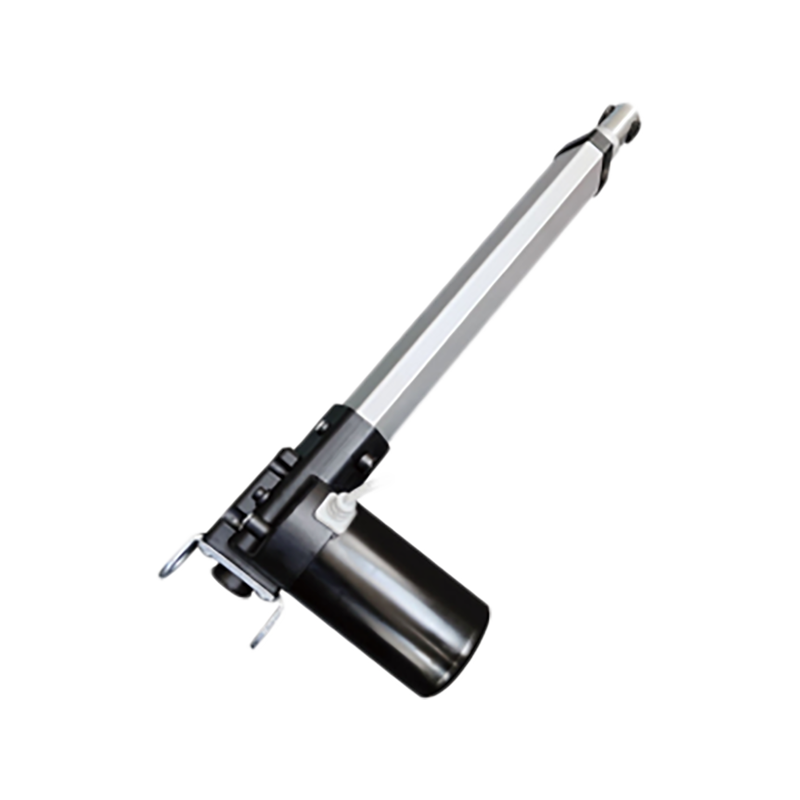
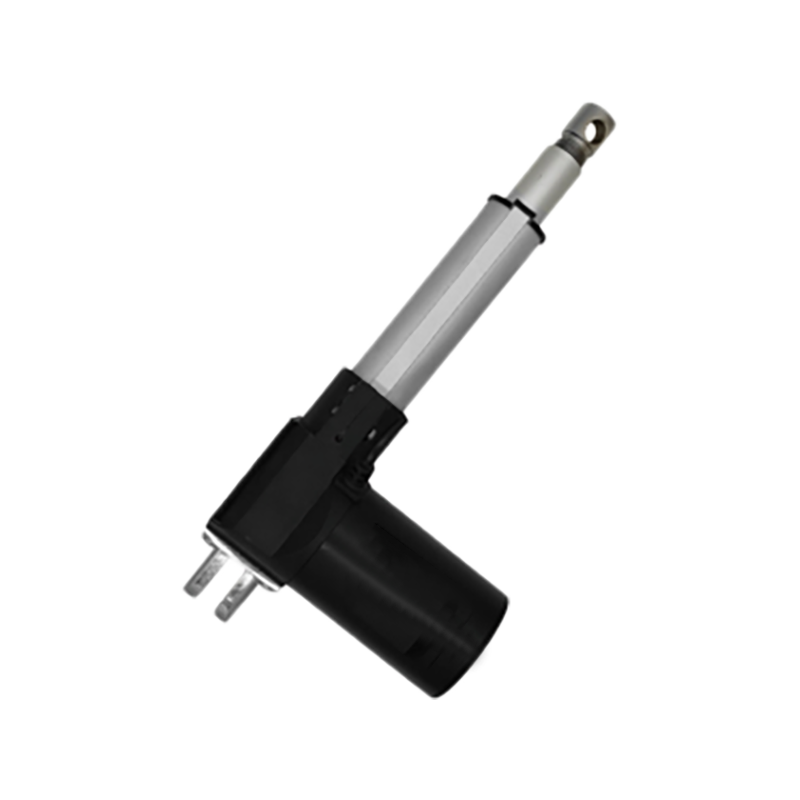
The TH-05 is designed as a dual-purpose actuator for both domestic and industrial environments. Its configuration addresses the needs of medium-load equipment without introducing the complexity of hydraulic pumps, air compressors, hoses, or separate control systems. A composite aluminum alloy body gives the actuator a lightweight and corrosion-resistant enclosure, while the silver-black appearance provides an industrial visual character suitable for furniture, equipment, and machinery applications. Its integrated motor, trapezoidal lead screw, electronic limit switches, and protection circuitry create a compact motion unit that can be incorporated into a wide variety of products.
With a rated push force of 3000 N, pull force of 2500 N, self-locking force of 4000 N, standard operating voltage of 24 VDC, full-load current of 4 A, and telescopic speed of 5 mm/s, the TH-05 offers balanced performance rather than excessive specialization in only one area. It is suitable for adjustable desks, ergonomic gaming chairs, medium and small equipment lids, recreational vehicle adjustment mechanisms, compact transportation equipment, and other systems that require stable, repeatable linear movement.
The value of the TH-05 is not limited to its numerical specifications. Its advantages also arise from the way its mechanical, electrical, and structural features work together. Electronic limit switches help define the travel boundaries. Overload automatic power-off protection helps reduce the risk of damage during abnormal operating conditions. Thickened wear-resistant bushings reduce friction and support smoother movement. The trapezoidal lead screw helps maintain the load position after power is removed. Together, these features make the actuator a versatile choice for designers and manufacturers seeking a dependable motion component that can serve both quiet home environments and demanding equipment applications.
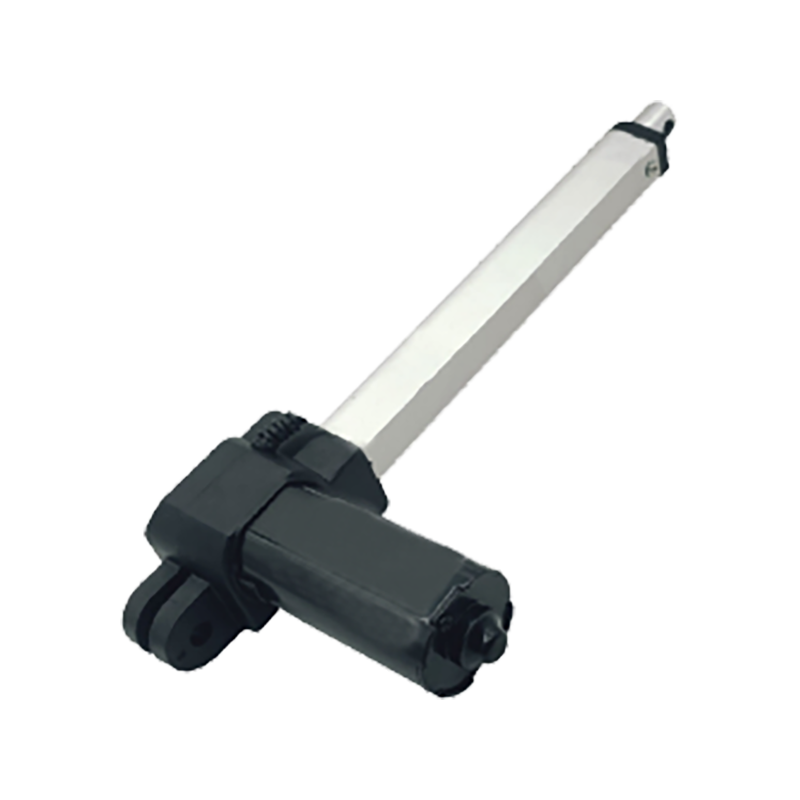
TH-05 Balanced Electric Linear Actuator for Home and Industrial Use
Designed for Balanced Performance
Linear actuators are often selected according to a single headline specification, such as maximum thrust or movement speed. However, a high thrust rating alone does not guarantee that an actuator will be appropriate for a finished product. Designers must also consider current consumption, noise, protection, self-locking behavior, installation space, maintenance requirements, duty cycle, and the operating environment. The TH-05 is designed around this broader understanding of actuator performance.
The 3000 N push force allows the unit to extend against a medium load, while the 2500 N pull force supports controlled retraction in applications where the actuator must draw a component inward or return a mechanism to its original position. This balanced push-and-pull configuration gives equipment designers more flexibility than a unit optimized only for one direction of movement. It can support lifting, lowering, tilting, opening, closing, and adjustment functions without requiring different actuator families for every mechanical direction.
The 4000 N self-locking force is especially important for systems that must hold their position after the motor stops or electrical power is removed. In a height-adjustable desk, for example, the working surface should remain stable rather than drift downward. In a chair, lid, or vehicle mechanism, the actuator should help maintain the selected position under an appropriate load. The TH-05 uses a trapezoidal lead screw to provide strong mechanical resistance to reverse movement. This characteristic reduces dependence on continuous motor power for position retention and can contribute to safer, more energy-conscious equipment design.
The standard 24 VDC operating voltage makes the actuator suitable for many low-voltage control architectures. It can be integrated into furniture control systems, equipment controllers, mobile platforms, and other applications that already use 24 VDC power. Its 4 A full-load current provides a clear electrical reference for system designers when selecting power supplies, switches, wiring, and control modules. The 5 mm/s telescopic speed is intended for stable adjustment rather than rapid motion, making it appropriate for applications where controlled movement and user comfort are more important than high-speed cycling.
Performance Specifications
| Item | TH-05 Specification | Application Significance |
|---|---|---|
| Product type | Electric linear actuator | Provides powered linear extension and retraction |
| Push force | 3000 N | Supports medium-load lifting and extension applications |
| Pull force | 2500 N | Supports controlled retraction and closing movements |
| Self-locking force | 4000 N | Helps retain position after power-off |
| Rated voltage | 24 VDC | Compatible with common low-voltage equipment systems |
| Full-load current | 4 A | Helps determine power supply and wiring requirements |
| Telescopic speed | 5 mm/s | Provides controlled and stable adjustment |
| Protection rating | IP54 | Offers protection against limited dust ingress and water splashes |
| Duty cycle | 10% standard duty cycle | Suitable for intermittent adjustment rather than continuous cycling |
| Certifications | CE and RoHS | Supports use in applications requiring recognized compliance documentation |
Mechanical Construction and Material Selection
The actuator housing uses a composite aluminum alloy body design. Aluminum alloy is widely valued in motion equipment because it can provide a useful balance between structural strength, low weight, corrosion resistance, and manufacturability. For furniture and compact equipment, reducing unnecessary mass can simplify installation and reduce the load placed on the surrounding frame. For industrial equipment, a corrosion-resistant outer casing can help support reliable operation in ordinary indoor environments.
The silver-black contrasting appearance is more than a cosmetic choice. A clean, professionally finished enclosure helps the actuator fit into visible products such as standing desks, office furniture, and gaming chairs, while the industrial styling also suits machinery and equipment. The housing can therefore be used in products where the actuator may be partially visible and where appearance contributes to the perceived quality of the finished system.
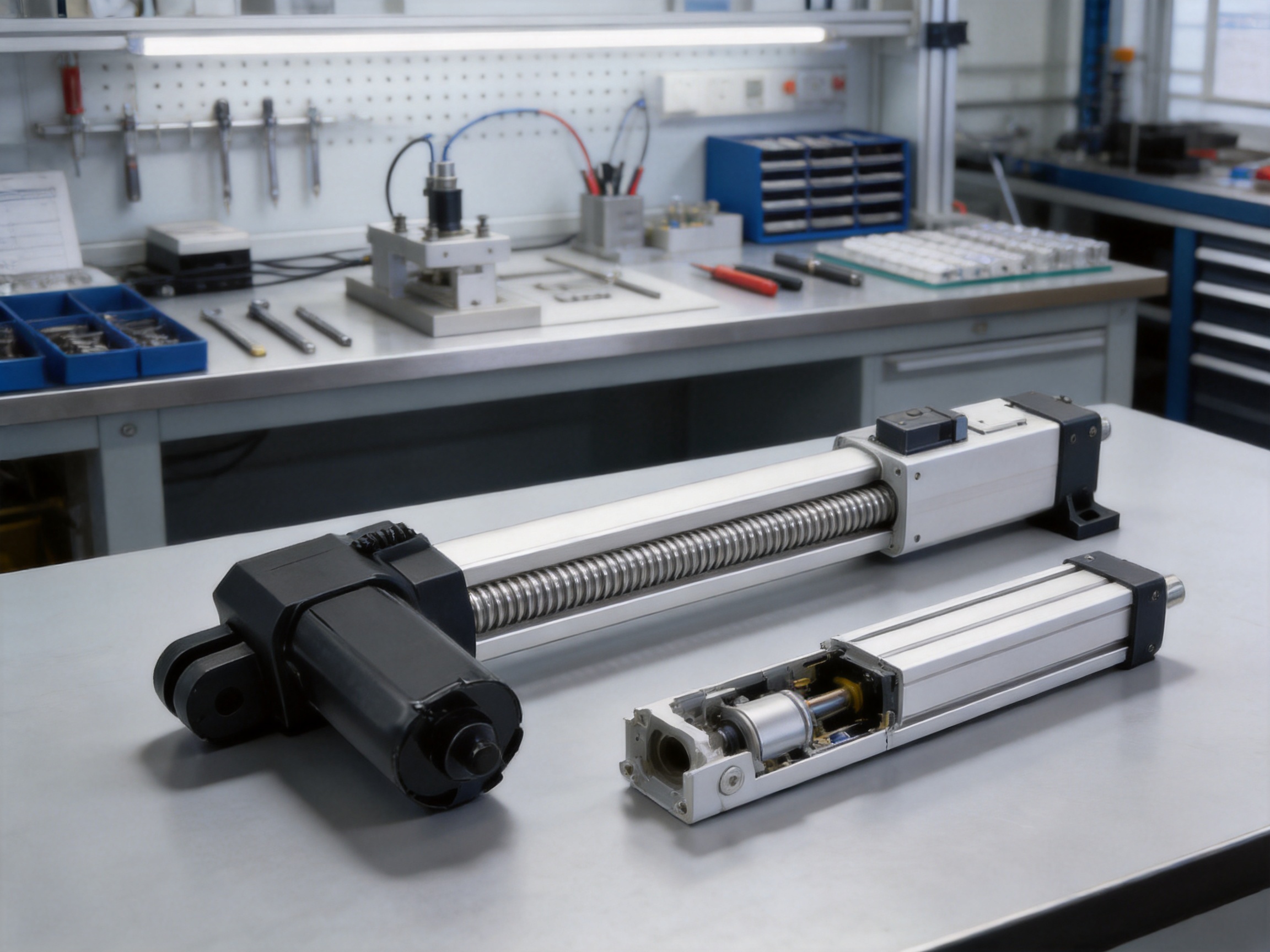
Inside the actuator, the motor, lead screw, and limit circuit board are integrated into one complete assembly. This integrated architecture reduces the need for separate hydraulic or pneumatic support equipment. A hydraulic solution may require a pump, fluid lines, valves, reservoirs, and maintenance procedures. A pneumatic solution may require an air source, regulator, hoses, and control valves. By contrast, the TH-05 is an electrically powered self-contained unit. The system designer can focus on mechanical mounting and electrical control rather than building an entire motion infrastructure around the actuator.
Integration can also simplify product assembly. Fewer external components may reduce the number of connection points and potential failure locations. It can make replacement more direct because the actuator functions as a complete modular unit. For equipment manufacturers, this may support more consistent assembly procedures and easier servicing. For end users, it can reduce the complexity associated with maintenance and troubleshooting.
Wear-Resistant Bushings and Smooth Travel
The TH-05 uses thickened wear-resistant bushings inside the motion structure. Bushings guide moving components, control alignment, and reduce direct contact between surfaces. Their role is particularly important in an actuator because even small amounts of misalignment or friction can influence noise, current demand, movement smoothness, and component wear.
By reducing operating friction, the bushings help the actuator run more quietly and smoothly. This characteristic is valuable in residential and office settings, where mechanical noise can affect comfort and concentration. It is also useful in industrial equipment, where smooth movement can reduce vibration and help the machine produce more consistent results. The combination of a guided internal structure and a trapezoidal lead screw allows the actuator to provide deliberate, controlled motion rather than abrupt or unstable movement.
Reduced friction may also support a longer service life for internal moving components, although actual service life depends on load, installation alignment, operating frequency, environmental conditions, and maintenance practices. Correct mounting remains essential. An actuator should be installed so that the load is applied along its intended direction and side loading is minimized. Proper alignment allows the bushings, lead screw, and housing to operate under more favorable conditions.
Protection Features for Safer Equipment Integration
Safety and equipment protection are central considerations in any powered adjustment system. The TH-05 incorporates electronic limit switches and overload automatic power-off protection to help address two common operating risks: excessive travel and excessive load.
Electronic Limit Switches
Electronic limit switches define the actuator’s permitted movement range. When the actuator reaches its designed endpoint, the limit circuit can stop further extension or retraction. This helps protect the internal mechanism and prevents the actuator from continuing to drive after the available stroke has been used.
Limit control is important in adjustable furniture, where the actuator must stop at the upper and lower desk positions. It is also essential in equipment lids, chair mechanisms, and compact machines, where uncontrolled travel could cause interference with adjacent parts. By integrating the limit circuit board into the actuator, the TH-05 reduces the need for an external travel-control arrangement.
System designers should still evaluate the complete application. Mechanical stops, control switches, synchronized actuators, and external safety functions may be required depending on the equipment design. The integrated limit switches are an important internal protection feature, but they should be considered as one part of a complete risk assessment.
Overload Automatic Power-Off Protection
Loads can exceed normal values for many reasons. A component may become blocked, an object may be placed on a mechanism, a hinge may become difficult to move, or the actuator may be installed with unsuitable alignment. If the motor continues operating under an excessive load, current and heat can rise and mechanical components may be damaged.
The TH-05 includes overload automatic power-off protection to help interrupt operation under abnormal load conditions. This feature can protect the actuator and the surrounding equipment from certain overload-related risks. It is particularly useful in consumer products, where users may not recognize that a moving mechanism has become obstructed, and in industrial equipment, where a temporary blockage could otherwise place excessive stress on the drive system.
Protection circuits should not be used as a substitute for correct engineering. The actuator must still be matched to the load, stroke, installation angle, duty cycle, and required speed. Nevertheless, automatic power-off protection provides an additional level of resilience and supports safer integration into a wide range of products.
Self-Locking Performance After Power-Off
One of the most significant advantages of the TH-05 over less specialized motion solutions is its ability to resist reverse movement after power is removed. The trapezoidal lead screw is designed to provide strong self-locking behavior. When the motor stops, the load is less likely to drive the screw backward under normal operating conditions.
This function has practical benefits in height-adjustable desks. A desk surface should remain at its selected height even when the control switch is released or the power supply is disconnected. In an ergonomic gaming chair, the selected position should remain stable during use. In an RV adjustment mechanism, a component should not move unexpectedly while the vehicle is stationary or being repositioned. In an equipment lid or compact machine, self-locking helps maintain the open or closed position without requiring constant motor operation.
Self-locking can also improve energy efficiency at the system level because the motor does not need to operate continuously merely to hold a position. It may reduce the need for separate mechanical brakes in applications within the actuator’s appropriate load and installation conditions. However, engineers must carefully evaluate dynamic loads, vibration, shock, mounting angle, wear, and the complete safety requirements of the equipment. The stated self-locking force is a specification to be considered during application design, not a reason to omit all external safety measures in high-risk machinery.
Compared with systems that rely on friction brakes, gas springs, or manual locking pins, an electrically self-locking actuator can offer more direct and convenient control. A gas spring may assist movement but does not necessarily provide powered positioning or the same level of programmable adjustment. A manual locking device may hold a position but can require user intervention. A hydraulic system may offer high force but can be more complex and may experience leakage or maintenance requirements. The TH-05 provides an electrically controlled alternative for medium-load applications where controlled adjustment and position retention are both important.
Quiet Operation for Domestic and Office Environments
Motion equipment installed in a bedroom, study, office, gaming room, or shared workspace must operate without creating unnecessary disturbance. Loud mechanical noise can reduce the perceived quality of a desk or chair even when the equipment performs its basic function correctly. The TH-05 addresses this concern with thickened wear-resistant bushings, controlled screw movement, and an integrated mechanical design intended to support quiet and smooth operation.
The 5 mm/s telescopic speed is appropriate for gradual height or angle adjustment. A moderate speed gives users time to stop the movement and observe the changing position. It also reduces the abrupt sensation that can occur with high-speed mechanisms. In a standing desk, controlled travel can make transitions between sitting and standing positions more comfortable. In a gaming chair or equipment lid, smooth travel can provide a more refined user experience.
Noise levels in a complete product depend on more than the actuator alone. The desk frame, mounting brackets, panels, hinges, power supply, and control system can all transmit vibration. For that reason, manufacturers should ensure that the actuator is correctly aligned and firmly mounted. Soft interfaces, suitable brackets, and appropriate structural stiffness may further improve the acoustic performance of the finished product.
Application in Adjustable Desks and Office Furniture
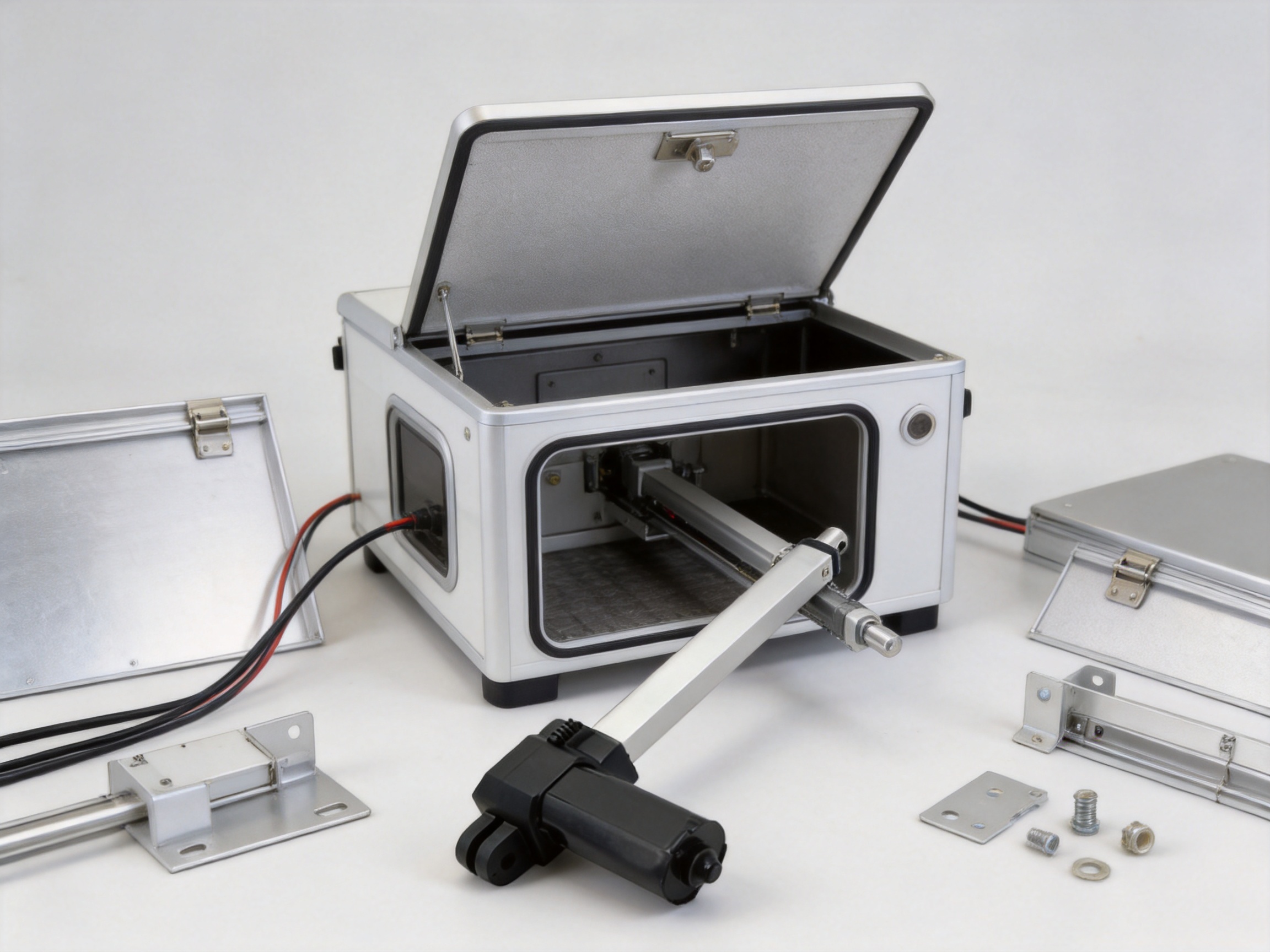
Height-adjustable desks are among the most visible applications for electric linear motion. Users want to change working height quickly and conveniently, while the desk must remain stable when stationary. The TH-05 is suited to medium-load adjustment functions where the actuator’s push force, self-locking ability, low-voltage operation, and controlled speed can be combined with a properly engineered desk structure.
In a desk application, the actuator may be used to raise or lower a work surface, adjust a monitor platform, control a keyboard tray, or operate a compact accessory mechanism. The aluminum alloy housing can help keep the overall system manageable in weight, while the IP54 protection rating provides a level of environmental protection suitable for ordinary indoor conditions with limited dust and incidental water exposure.
Manufacturers can also use the actuator in ergonomic office furniture where adjustable positioning supports different users and working habits. A height-adjustable table can help users alternate between sitting and standing. An adjustable monitor platform can improve viewing comfort. A powered document stand or presentation surface can be positioned for different tasks. The actuator’s integrated limit and overload features may simplify the development of these products.
Product designers must account for the total load, center of gravity, number of actuators, synchronization requirements, and frame rigidity. If two or more actuators are used together, the control system should be designed to manage synchronization and prevent uneven movement. The TH-05 supplies the motion element, while the finished furniture manufacturer remains responsible for the stability and safety of the complete desk.
Application in Gaming Chairs and Ergonomic Seating
Gaming chairs and ergonomic seating products increasingly include powered functions such as seat-height adjustment, backrest movement, leg-rest deployment, and integrated accessory positioning. The TH-05 can support medium-load adjustment mechanisms where quiet operation and position retention are important.
A chair actuator must operate smoothly because the user is in close contact with the product. Excessive noise, vibration, or sudden movement can reduce comfort. The actuator’s wear-resistant bushings and controlled telescopic speed help support a refined movement experience when paired with a properly designed linkage system.
Self-locking performance is also valuable in seating applications. Once the user selects a position, the mechanism should remain stable during normal use. The actuator’s trapezoidal lead screw can help hold the adjustment position after the control is released. Designers should nevertheless evaluate the chair’s full range of motion, load distribution, impact forces, and emergency release requirements before finalizing the product.
Application in Equipment Lids and Compact Machinery
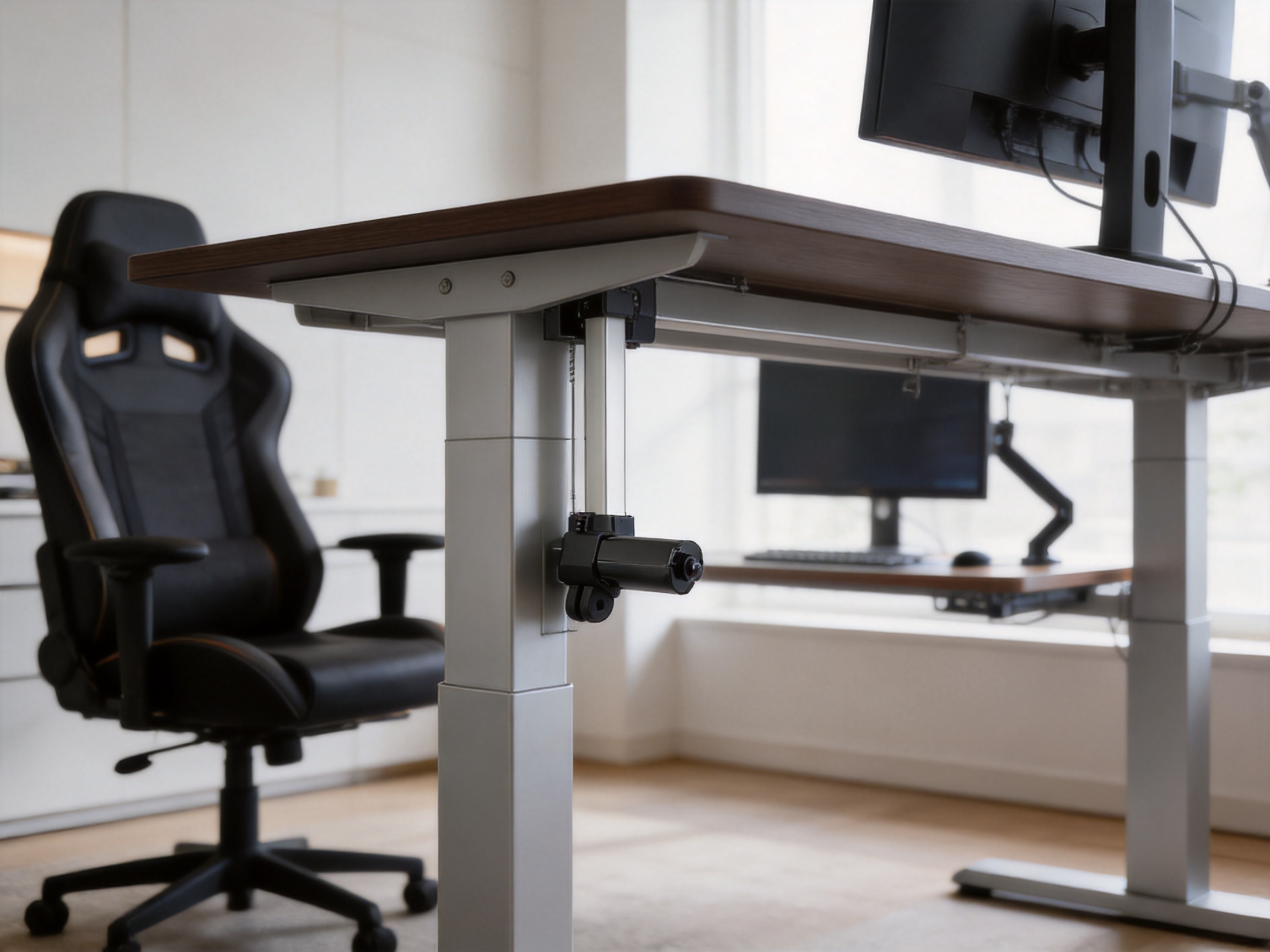
Medium and small equipment often require powered lids, covers, hatches, or access panels. These components may be too heavy for manual operation or may need to open and close at a controlled speed. The TH-05 can be used to extend a lid, retract it, or hold it in a selected position.
In this type of application, the actuator’s pull and push forces allow the designer to select a suitable mounting geometry for opening and closing. The integrated limit switches can help stop the lid at the intended endpoints, while overload protection can help respond if an obstruction prevents normal movement. The IP54 rating may be suitable for many indoor equipment environments, although the actuator should not be treated as fully waterproof or suitable for unrestricted outdoor exposure.
The actuator’s aluminum alloy casing can help reduce the weight added to a movable panel. This is useful when the lid is mounted on hinges and the surrounding structure has limited capacity. The actuator can also be installed as a modular component, simplifying equipment assembly and replacement.
Application in Recreational Vehicles and Compact Transportation Equipment
Recreational vehicles use many adjustable systems, including steps, storage compartments, tables, beds, panels, vents, and interior fittings. Space is limited, so a compact electric actuator can be more convenient than a hydraulic or pneumatic system that requires additional supporting equipment. The 24 VDC operating voltage is also compatible with the electrical architecture commonly used in many vehicle-based systems.
The TH-05 can support adjustment functions in which the load is moderate, movement is intermittent, and position retention is important. For example, it may be used in an adjustable interior table, a powered storage cover, or a compact positioning mechanism. Its self-locking behavior can help prevent unwanted movement when power is unavailable, while its integrated protection features can support reliable operation during normal use.
Vehicle applications require careful attention to vibration, shock, temperature, moisture, wiring protection, and installation orientation. The IP54 rating offers limited protection against dust and water splashes, but the complete installation must provide additional environmental protection when exposure conditions exceed the actuator’s rating. Engineers should also consider road vibration and ensure that brackets and fasteners remain secure throughout the product’s service life.
Advantages Compared with Alternative Actuation Solutions
Compared with Hydraulic Actuators
Hydraulic systems can provide substantial force, but they often require pumps, reservoirs, fluid lines, valves, seals, and maintenance procedures. For medium-load applications, this added infrastructure may increase cost, weight, installation time, and service complexity. The TH-05 integrates the motor, screw, and limit circuit into a single electrically powered unit. This can reduce the number of supporting components and make the system more practical for furniture, compact equipment, and mobile applications.
Electric operation also avoids hydraulic fluid leakage. In office furniture, homes, and recreational vehicles, avoiding fluid systems can simplify cleanliness and maintenance. The appropriate solution still depends on load, speed, duty cycle, and environmental conditions, but the TH-05 offers an efficient alternative when a compact electric system can satisfy the performance requirements.
Compared with Pneumatic Systems
Pneumatic systems require a compressed-air source and associated control components. They can be effective in factories, but the compressor, air preparation equipment, hoses, and valves may be unnecessary for smaller mechanisms. Pneumatic systems can also require additional measures to control position accurately and prevent movement when pressure changes.
The TH-05 uses direct 24 VDC electrical power and provides integrated position limits and mechanical self-locking. This makes it well suited to products that need controlled adjustment without a dedicated air supply. The absence of an air compressor can reduce noise and simplify installation, particularly in offices, homes, vehicles, and compact machines.
Compared with Gas Springs
Gas springs are useful for counterbalancing lids, panels, and covers, but they generally provide assistance rather than fully powered, electrically controlled movement. Their force can vary with temperature, installation angle, and extension position. They may also require manual operation or additional locking components.
The TH-05 can actively extend and retract a mechanism, stop at defined endpoints, and retain position through its self-locking screw structure. This supports more flexible adjustment and easier integration with buttons, control panels, or automated systems. A gas spring may still be suitable for simple manual products, but an electric actuator is often more appropriate where users expect powered movement and repeatable positioning.
Compared with Basic Motorized Screw Units
Some basic motorized screw units may provide movement but lack integrated protection, limit circuitry, or a carefully developed guidance structure. The TH-05 combines these functions with overload automatic power-off protection, electronic limit switches, wear-resistant bushings, and a corrosion-resistant aluminum alloy casing. This integrated approach can reduce the engineering work required to create a dependable finished product.
Manufacturing Strengths and Engineering Approach
SuZhou Skyhone Intelligent Technology Co., Ltd. is a professional manufacturing enterprise engaged in the research, development, production, sales, and service of standing desks and related motion solutions. Based in Suzhou, a major manufacturing area in the Yangtze River Delta, the company benefits from access to a developed furniture industry chain and a strong regional manufacturing ecosystem.
The company’s focus on standing desks and intelligent office solutions provides useful application knowledge for actuator development. A linear actuator used in an adjustable desk must satisfy several requirements at once: it must provide adequate force, operate smoothly, maintain a selected height, fit within a compact frame, and meet user expectations for convenience and appearance. Experience with complete standing-desk systems can help connect actuator design with the actual needs of furniture manufacturers and end users.
The TH-05 reflects an engineering approach based on integration. Instead of treating the motor, lead screw, guide components, and control protections as unrelated parts, the actuator combines them into a coordinated product. This supports more efficient assembly and gives the manufacturer greater control over the relationship between mechanical performance and electrical protection.
Integrated Product Development
Integrated development begins with defining the application requirements. Force, speed, voltage, current, duty cycle, protection level, noise, and mounting conditions must be considered together. A product that has high thrust but excessive noise may not be suitable for an office. An actuator that is fast but lacks sufficient self-locking may not be suitable for a desk. A unit that performs well mechanically but is difficult to install may increase production costs for the equipment manufacturer.
The TH-05 is configured to address this combination of requirements. Its force ratings target medium-load applications. Its 24 VDC architecture supports common control systems. Its 5 mm/s speed provides stable movement. Its 10% standard duty cycle is appropriate for intermittent adjustment. Its IP54 protection level supports many ordinary indoor equipment environments. Its CE and RoHS certifications provide important compliance references for product development and market preparation.
Manufacturing Consistency
Consistent manufacturing is essential for actuators because small differences in screw alignment, bushing fit, motor assembly, or limit-switch positioning can influence noise and performance. A professional manufacturing process should control incoming materials, machining or forming operations, component assembly, electrical connections, protection-circuit installation, and final inspection.
The TH-05’s composite aluminum alloy body, internal bushings, lead screw, motor, and circuit board must work as one coordinated unit. Proper assembly helps maintain smooth telescopic movement and reliable limit operation. Consistent production also supports repeatability for customers who purchase actuators for a series of furniture models or equipment platforms.
Application-Oriented Customization
The actuator supports customization of stroke length and connection options, including U-type and fisheye joints. These options are important because actuator mounting geometry varies significantly between products. A desk may require a particular bracket arrangement, while a chair, equipment lid, or RV mechanism may need a different joint style to accommodate angular movement.
Stroke customization allows the actuator to match the required travel of the finished mechanism more closely. Selecting an appropriate stroke can help reduce wasted space and prevent the actuator from extending beyond the designed movement range. Connection customization can simplify installation and help manufacturers adapt the actuator to their existing frames and linkages.
Customized production should be based on a complete technical review. Customers should provide information about the load, stroke, speed, duty cycle, mounting orientation, operating environment, and control requirements. This allows the actuator configuration to be evaluated against the real application instead of being selected only by a single force value.
Compliance, Protection, and Quality Considerations
The TH-05 carries CE and RoHS certifications. CE marking is associated with applicable European product requirements, while RoHS addresses restrictions on certain hazardous substances in electrical and electronic equipment. These certifications can support manufacturers when they develop products for markets that require relevant compliance documentation.
Certifications are important, but they should be understood as part of a broader quality program. The finished product must also meet the requirements that apply to its own category. For example, a standing desk, gaming chair, RV mechanism, or industrial machine may have additional safety, electrical, electromagnetic compatibility, or furniture-related requirements. The actuator manufacturer provides a certified component, while the complete-product manufacturer is responsible for verifying the final system.
The IP54 rating indicates protection against limited dust ingress and water splashes from specified directions. This rating is useful for many indoor and sheltered equipment applications. It does not mean that the actuator is dust-tight or suitable for immersion, pressure washing, heavy rain exposure, or uncontrolled outdoor environments. Correct enclosure design and installation remain necessary when the operating environment presents greater moisture or contamination risks.
Installation and System Design Guidance
Correct installation is essential for obtaining the best performance from any linear actuator. The actuator should be mounted so that the primary load follows the intended extension and retraction axis. Side loads, bending forces, and misalignment should be minimized. If the actuator is forced to compensate for a poorly aligned mechanism, friction may rise and the internal components may experience unnecessary stress.
Mounting brackets should be strong enough to withstand the rated forces and any additional dynamic loads that may occur during starting, stopping, or accidental obstruction. Fasteners should be selected according to the equipment structure and vibration conditions. In mobile applications, additional retention measures may be needed to prevent loosening over time.
The electrical system should provide a suitable 24 VDC supply and accommodate the 4 A full-load current. Wiring should be sized according to the current, cable length, voltage drop, ambient temperature, and applicable electrical standards. Control switches or electronic controllers should be selected to manage extension and retraction safely. If multiple actuators are operated together, synchronization and overload behavior must be evaluated as part of the control-system design.
The 10% duty cycle should be respected. This standard intermittent duty rating means that the actuator is intended for periods of operation followed by sufficient rest. It is not designed for continuous, repeated cycling without consideration of thermal limits. A desk or chair that adjusts occasionally may fit this duty profile, while a machine requiring constant repetitive movement may need a different actuator configuration or a more comprehensive thermal analysis.
Designers should also provide adequate clearance around the actuator throughout its complete stroke. Moving components should not collide with the frame, wiring, covers, or neighboring mechanisms. End positions should be tested under the actual load and mounting geometry. The electronic limit switches help control travel, but the surrounding product should also be designed to avoid pinch points and unexpected interference.
Maintenance and Serviceability
The integrated design of the TH-05 supports straightforward disassembly and maintenance. Because the motor, lead screw, and limit circuit are contained within the actuator body, service personnel can approach the unit as a modular assembly. If replacement is required, the actuator can potentially be removed from the equipment without dismantling the entire product.
Routine maintenance should include inspection of mounting points, electrical connectors, cables, brackets, and surrounding mechanical components. The actuator should be checked for unusual noise, uneven movement, excessive vibration, or signs of overload. Any change in performance may indicate misalignment, an obstruction, loose mounting hardware, or a problem in the complete equipment system.
The aluminum alloy casing helps resist rust and supports long-term durability in suitable environments. Nevertheless, the actuator should be kept within its specified protection and operating conditions. Exposure to corrosive chemicals, heavy moisture, extreme contamination, or abnormal temperature may affect service life. Preventive inspection is especially important in equipment that is used frequently or installed in a mobile environment.
How to Select the Right Configuration
When evaluating the TH-05 for a project, the first step is to calculate the actual force required to move the load. The calculation should include the load weight, lever geometry, friction, acceleration, angle of installation, and any additional resistance. The actuator should not be selected solely according to the static weight of the component because linkage geometry can increase the required force significantly.
The second step is to define the required stroke and movement speed. A longer stroke may be necessary for a height-adjustable desk or large lid, while a short stroke may be more suitable for a compact chair mechanism. The 5 mm/s speed should be compared with the expected user experience and machine cycle time.
The third step is to verify the duty cycle. If the equipment adjusts once every few minutes or several times per day, the standard 10% duty cycle may be suitable. If the actuator will cycle continuously, the application should be reviewed with the manufacturer before selection.
The fourth step is to evaluate the environment. The IP54 rating may be appropriate for an office, home, workshop, or sheltered equipment area. Additional protection may be required for outdoor, washdown, dusty, or highly humid environments. The designer should also confirm the compatibility of the actuator’s material and finish with the surrounding environment.
Finally, the mounting joints, control method, power supply, safety features, and customization requirements should be confirmed. U-type or fisheye joints may be selected according to the desired connection and angular movement. Stroke and other configuration details should be established before production so that the actuator fits the complete system correctly.
Frequently Asked Questions
What type of product is the TH-05?
The TH-05 is an electric linear actuator designed for controlled extension and retraction. It is intended for medium-load applications in homes, offices, workshops, industrial equipment, recreational vehicles, and compact transportation systems.
What is the maximum push force?
The stated push force is 3000 N. The actual usable force in a finished product depends on mounting geometry, load direction, friction, duty cycle, and environmental conditions. Engineers should evaluate the complete mechanism rather than relying only on the nominal rating.
What is the pull force?
The stated pull force is 2500 N. This supports controlled retraction and closing functions in applications such as equipment lids, seating mechanisms, and compact adjustment systems.
How does the actuator hold a load after power is removed?
The actuator uses a trapezoidal lead screw with self-locking performance. Its stated self-locking force is 4000 N, which helps resist reverse movement after power-off under suitable operating conditions. The complete equipment should still include any additional safety measures required by its application.
Is the actuator suitable for adjustable desks?
Yes. The TH-05 is suitable for appropriately designed adjustable desks and office furniture that require medium-load, controlled adjustment. Its 24 VDC operation, 5 mm/s speed, self-locking performance, electronic limit switches, and quiet-running design are useful for desk applications.
Can it be used in gaming chairs?
Yes. The actuator can support suitable gaming-chair and ergonomic-seating mechanisms, including selected height, tilt, or accessory adjustments. The chair frame, linkage, user load, and safety requirements must be evaluated before final installation.
Does it require a hydraulic pump or compressed air?
No. The TH-05 is an electrically powered, integrated actuator. It does not require a hydraulic pump, fluid reservoir, air compressor, or pneumatic hose system.
What does the IP54 rating mean?
IP54 provides limited protection against dust ingress and water splashes. It is appropriate for many indoor and sheltered applications, but it does not indicate full waterproofing, immersion resistance, or suitability for heavy outdoor exposure.
What voltage does the actuator use?
The standard operating voltage is 24 VDC. The full-load current is specified as 4 A. The power supply and wiring should be selected according to the complete system requirements, cable length, control method, and applicable standards.
What is the actuator speed?
The telescopic speed is 5 mm/s. This is a controlled adjustment speed suitable for desks, chairs, lids, RV mechanisms, and other applications where stable movement is more important than rapid cycling.
What is the standard duty cycle?
The standard duty cycle is 10%. The actuator is intended for intermittent use with rest periods. Applications requiring frequent or continuous cycling should be reviewed with the manufacturer to confirm suitability.
Can the stroke length be customized?
Yes. The product supports customization of stroke and connection options. Customers can discuss the required travel, U-type joints, fisheye joints, load, mounting conditions, and application environment with the manufacturer.
How does overload protection work?
The actuator includes overload automatic power-off protection. When an abnormal load condition is detected, the protection function can interrupt power to help protect the actuator and equipment. Correct load selection and mechanical design remain necessary.
Is the actuator quiet?
The TH-05 is designed for quiet and smooth operation. Thickened wear-resistant bushings reduce friction, while the integrated mechanical structure supports stable movement. The final noise level also depends on mounting, frame stiffness, linkage design, and the surrounding equipment.
What certifications are available?
The actuator has CE and RoHS certifications. These certifications can support product development and market preparation, while the complete finished product must still satisfy all requirements applicable to its own category.
Conclusion
The TH-05 Balanced Electric Linear Actuator is a practical motion solution for manufacturers and designers who need dependable medium-load adjustment in both domestic and industrial environments. Its combination of 3000 N push force, 2500 N pull force, 4000 N self-locking force, 24 VDC operation, 5 mm/s speed, IP54 protection, and 10% duty cycle creates a balanced platform for many applications.
Its key advantages include integrated construction, electronic limit switches, overload automatic power-off protection, wear-resistant bushings, quiet operation, and a trapezoidal lead screw that supports position retention after power-off. These features help distinguish it from simpler motorized mechanisms and provide practical advantages over hydraulic, pneumatic, and gas-spring solutions in suitable medium-load applications.
The actuator is especially well matched to adjustable desks, ergonomic office furniture, gaming chairs, equipment lids, RV adjustment mechanisms, and compact transportation equipment. Its aluminum alloy casing helps combine a professional appearance with manageable weight and corrosion resistance. Its integrated design can simplify installation, servicing, and product development, while customizable stroke and joint options allow manufacturers to adapt the actuator to different mechanical platforms.
Supported by the manufacturing and application experience of SuZhou Skyhone Intelligent Technology Co., Ltd., the TH-05 represents an application-oriented approach to intelligent motion equipment. The company’s connection with standing desks, ergonomic office solutions, and the Suzhou manufacturing ecosystem provides a foundation for developing products that combine mechanical performance, electrical integration, and practical usability. When correctly selected and installed, the TH-05 can help manufacturers create quieter, safer, more convenient, and more versatile adjustable products.
References
1. Product technical information supplied for the TH-05 Balanced Electric Linear Actuator.
2. Product category information covering adjustable height desks, electric linear actuators, and gas springs.
3. Manufacturer information supplied for SuZhou Skyhone Intelligent Technology Co., Ltd., including its standing-desk research, production, sales, and service activities.
4. General engineering principles for electric linear actuator selection, load calculation, mechanical alignment, duty-cycle evaluation, and self-locking mechanisms.
5. General guidance on ingress protection classifications and electrical product compliance considerations.
6. General design practices for adjustable office furniture, ergonomic equipment, recreational vehicle mechanisms, and compact industrial automation.
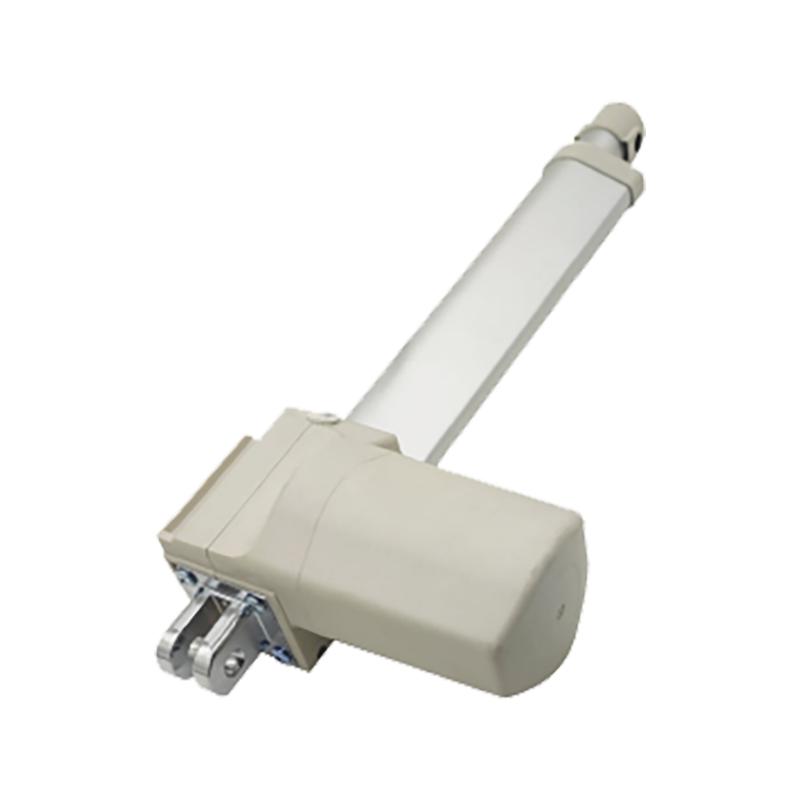
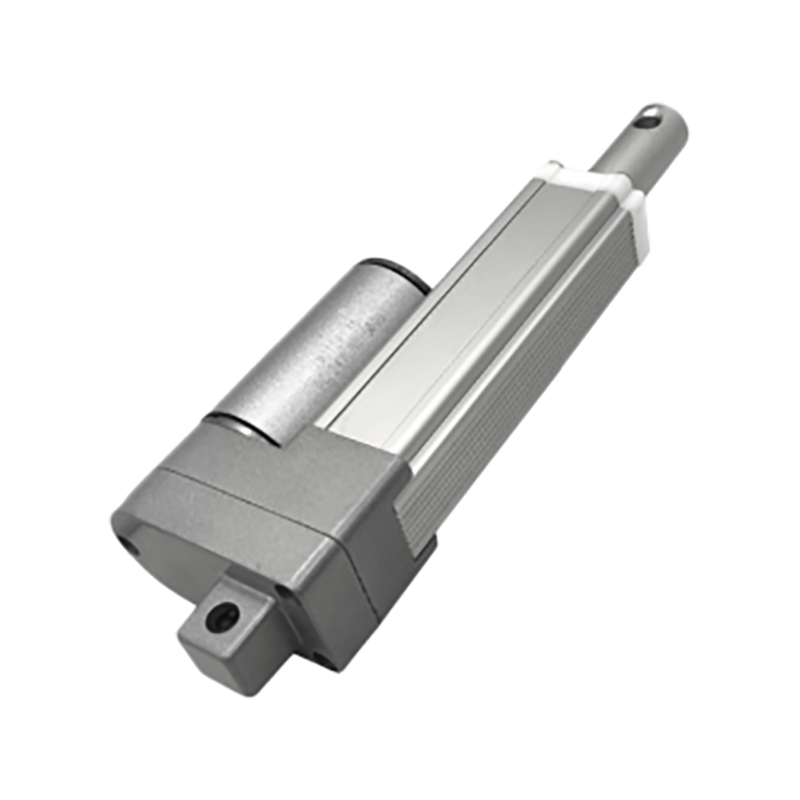
Product: TH-05 Balanced Electric Linear Actuator for Home and Industrial Use


- Contact Info
-
-
 Phone+86-15950656125
-
 Email
-
 AddressRoom 1007-1, South Building, Suyue Plaza, Suzhou Industrial Park, Suzhou City, Jiangsu Province, China
-
- Products
- Follow Us
- Need help? Please contact us
Copyright ©
SuZhou Skyhone Intelligent Technology Co., Ltd.
All Rights Reserved.
Privacy
Custom Ergonomic Adjustable Office Tables Manufacturers

