

 English
 русский
 Español
 عربى

Content
- 1 1. Product Overview
- 2 2. A Compact Solution for Difficult Installation Conditions
- 3 3. Electric Linear Motion Without Pneumatic Infrastructure
- 4 4. Stable Self-Locking and Controlled Position Holding
- 5 5. Integrated Protection for Safer Operation
- 6 6. Low Noise and Smooth Telescopic Movement
- 7 7. Protection Against Dust and Water Exposure
- 8 8. Duty Cycle and Application Matching
- 9 9. Application Areas
- 10 10. Manufacturing Strengths and Product Development Capability
- 11 11. Installation and Integration Considerations
- 12 12. Advantages for OEM and Equipment Manufacturers
- 13 13. Competitive Positioning
- 14 14. Quality, Reliability, and Service Perspective
- 15 15. Frequently Asked Questions
- 15.1 Q1: What type of equipment is the TH-04 designed for?
- 15.2 Q2: What is the maximum push force?
- 15.3 Q3: What is the pull force?
- 15.4 Q4: Does the actuator hold its position when power is removed?
- 15.5 Q5: What power supply does the actuator use?
- 15.6 Q6: How fast does the actuator move?
- 15.7 Q7: What does the 10% duty cycle mean?
- 15.8 Q8: Is the TH-04 suitable for outdoor use?
- 15.9 Q9: Does it require compressed air or hydraulic oil?
- 15.10 Q10: What protection functions are integrated?
- 15.11 Q11: Can the actuator be customized?
- 15.12 Q12: Can the actuator handle side loads?
- 15.13 Q13: What makes the product suitable for narrow equipment?
- 15.14 Q14: Is the actuator appropriate for continuous factory automation?
- 15.15 Q15: Why is the manufacturing location relevant to customers?
- 16 16. Conclusion
- 17 References
- 18 Product: TH-04 Mini Compact Electric Linear Actuator
TH-04 Mini Compact Electric Linear Actuator: Precision Motion for Space-Constrained Equipment
2026-09-29
Modern equipment increasingly demands smaller, quieter, and more precise motion systems. Designers of beauty devices, monitor stands, medical equipment, smart windows, testing fixtures, and other compact machines often need controlled linear movement without adding unnecessary weight, noise, oil, or installation complexity. The TH-04 Mini Compact Electric Linear Actuator is developed to address these requirements with a slim aluminum alloy structure, reliable electric drive, integrated protection functions, and precise low-load adjustment performance.
Unlike large industrial actuators designed primarily for heavy lifting, the TH-04 focuses on compact precision applications. Its design combines a 24VDC micro motor, reduction gear set, trapezoidal lead screw, electronic limit switches, overload protection, wear-resistant guide bushings, and sealed housing into a small motion module. This integrated construction helps equipment manufacturers simplify mechanical layouts while maintaining controlled and repeatable extension and retraction.
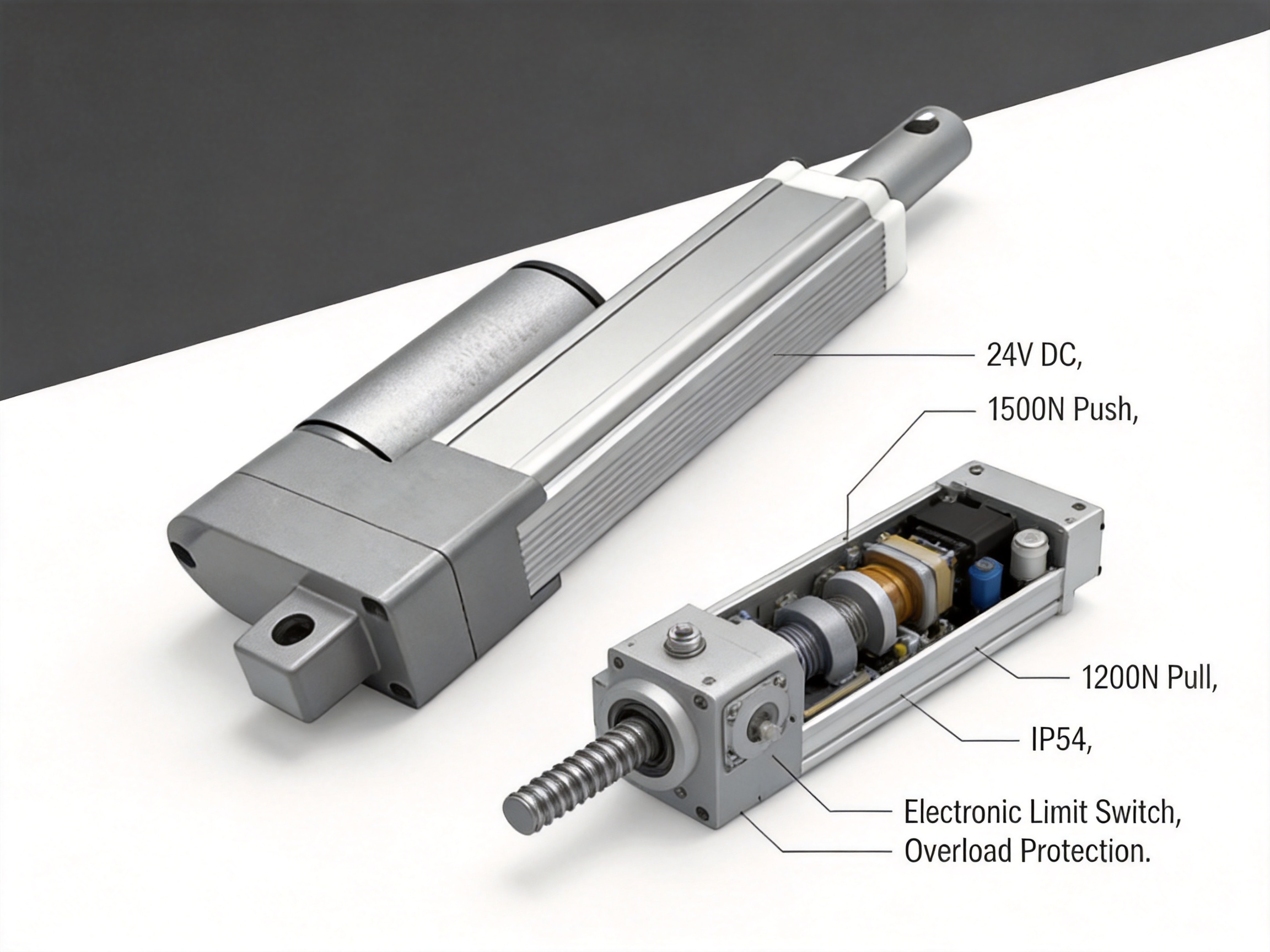
The actuator provides a push force of up to 1500N, a pull force of up to 1200N, and a self-locking force of up to 1500N. With a no-load speed of 5mm/s, it is intended for smooth adjustment rather than high-speed transportation. The 10% intermittent duty cycle supports frequent light-load positioning while allowing the motor and drive system to operate within an appropriate thermal range.
For manufacturers seeking a compact linear motion solution, the TH-04 offers a practical alternative to pneumatic cylinders, bulky motorized mechanisms, and oversized industrial actuators. It does not require compressed air, external oil lines, or complicated auxiliary infrastructure. Its electric architecture also makes it easier to integrate into modern automated equipment that requires direct control, compact installation, and clean operation.
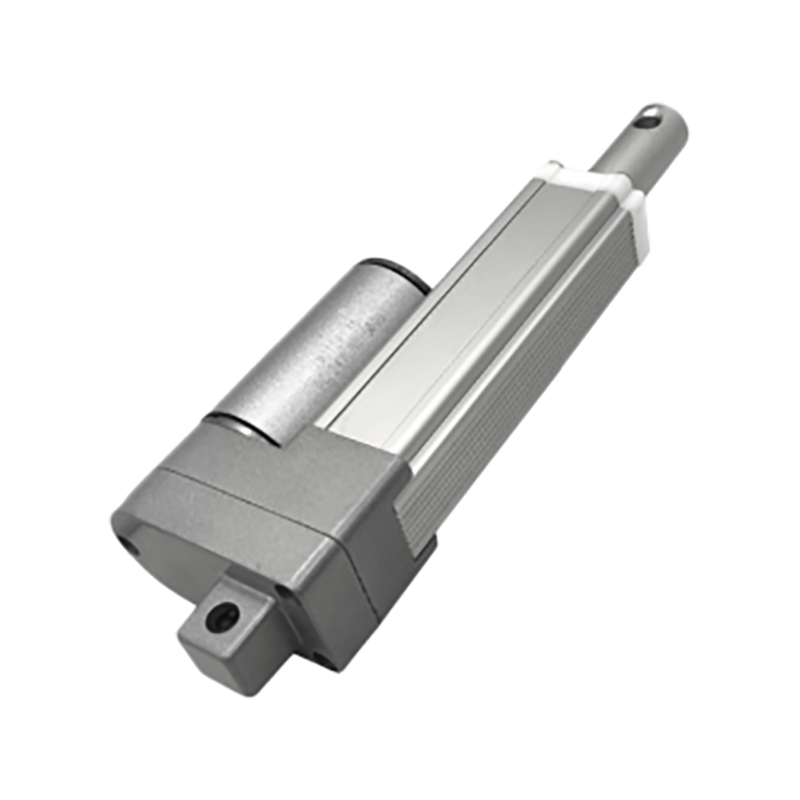
TH-04 Mini Compact Electric Linear Actuator
1. Product Overview
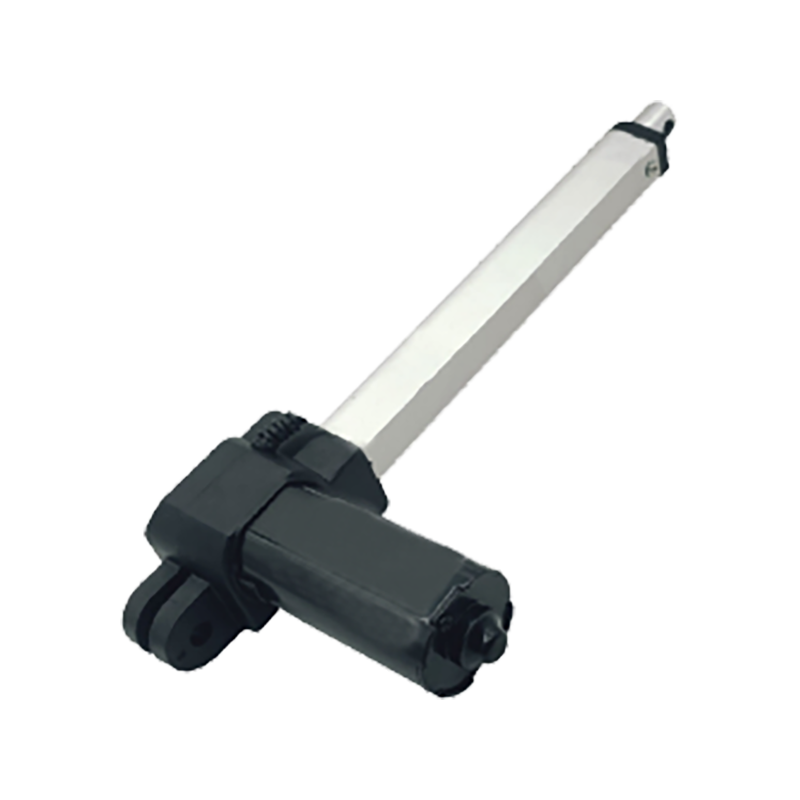
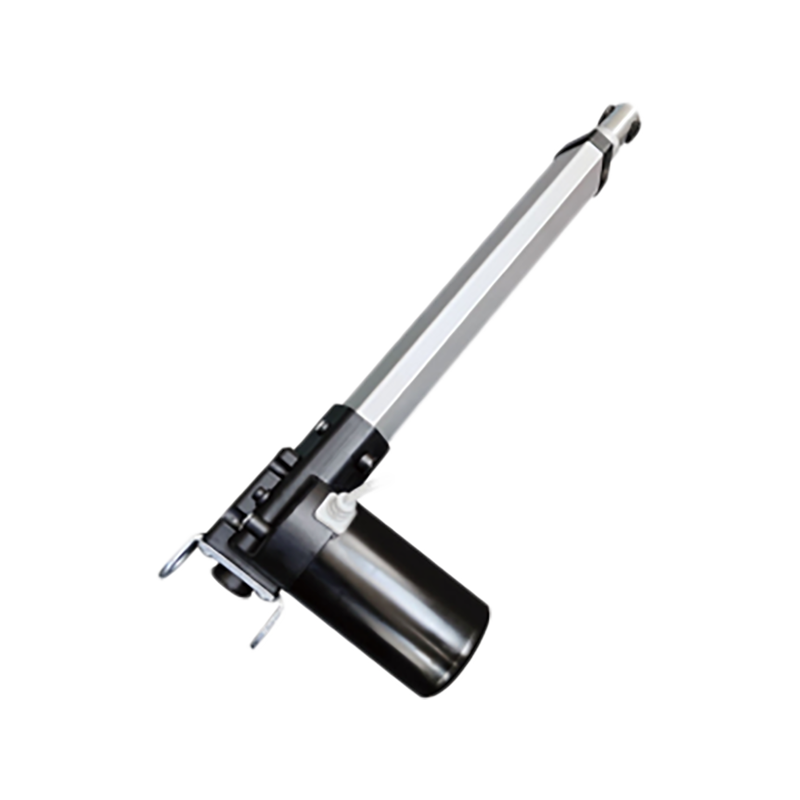
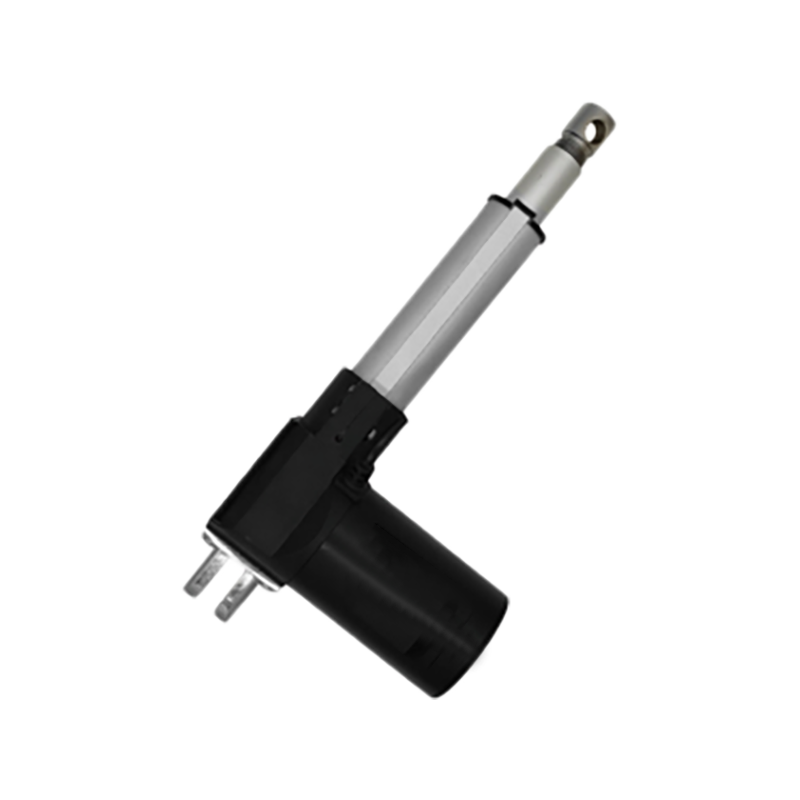
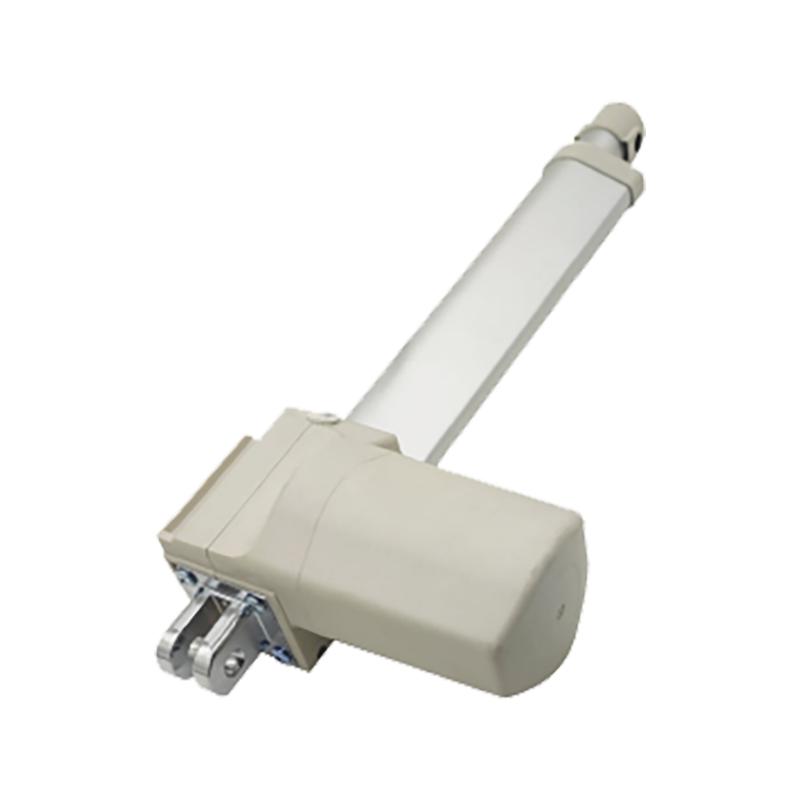
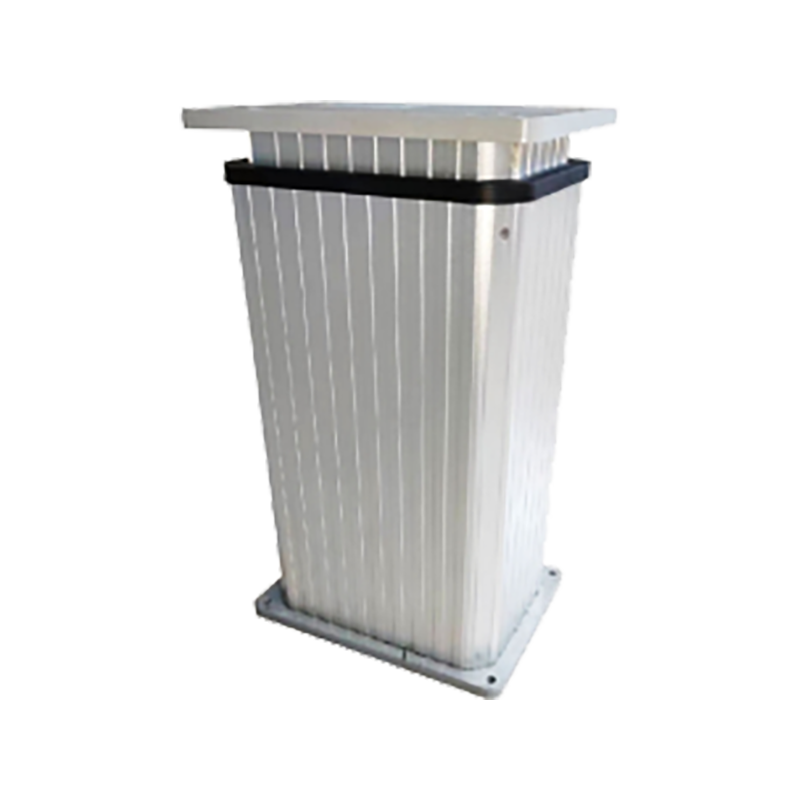
The TH-04 Mini Compact Electric Linear Actuator adopts a slim silver-gray aluminum alloy body. The housing is designed to minimize overall size and weight while providing a structured enclosure for the motor, gearbox, lead screw, limit system, and guide components. This format is particularly useful when an actuator must be installed inside a narrow machine frame or behind a small panel.
Its 24VDC power supply is compatible with many control systems used in commercial equipment, laboratory devices, furniture mechanisms, medical products, and small automation platforms. Low-voltage operation also supports easier integration with control boards, switches, sensors, relays, and programmable control units.
The TH-04 is rated IP54 and has CE and RoHS certifications. The IP54 rating provides protection against limited dust ingress and water splashes from different directions when the actuator is installed and operated under suitable conditions. CE and RoHS compliance support its use in markets and applications where electrical safety, electromagnetic compatibility, and material restrictions are important purchasing considerations.
The actuator is designed for light-load and precision adjustment scenarios. Its application focus is different from that of a large heavy-duty column or high-speed industrial cylinder. The product is most effective where controlled movement, compact dimensions, self-locking, and low maintenance are more important than continuous heavy-duty cycling.
Key Technical Parameters
| Parameter | TH-04 Specification | Design Significance |
|---|---|---|
| Product type | Mini compact electric linear actuator | Suitable for compact equipment and narrow installation spaces |
| Body material | Aluminum alloy | Lightweight structure with a clean and durable exterior |
| Power supply | 24VDC | Compatible with common low-voltage control systems |
| Push force | 1500N | Supports controlled linear extension under suitable load conditions |
| Pull force | 1200N | Provides controlled retraction and pulling movement |
| Self-locking force | 1500N | Helps maintain position when power is removed, subject to application conditions |
| Full-load current | 4A | Provides a reference for power supply and control system selection |
| No-load speed | 5mm/s | Suitable for smooth and deliberate adjustment |
| Protection rating | IP54 | Helps protect against limited dust and water exposure |
| Duty cycle | 10% intermittent duty | Intended for short-duration operation with appropriate rest intervals |
| Safety and compliance | CE and RoHS | Supports international product integration and responsible material selection |
| Control and protection | Electronic limit switches and overload protection | Helps prevent overtravel and reduce the risk of equipment damage |
Actual performance depends on installation orientation, load distribution, stroke length, operating temperature, power supply quality, duty cycle, and the mechanical design of the host equipment. Engineers should evaluate the actuator together with the complete system rather than selecting it only by its maximum force rating.
2. A Compact Solution for Difficult Installation Conditions
Space is often one of the most difficult constraints in equipment development. A machine may have sufficient functional capacity but limited internal space for motors, cables, gearboxes, and structural supports. Traditional drive systems can require separate motors, couplings, brackets, guide rails, and limit switches. Each additional part consumes space and increases assembly work.
The TH-04 addresses this challenge by integrating key motion components into one compact actuator body. The motor and reduction gear set are enclosed within the unit, while the lead screw converts rotary movement into controlled linear movement. Integrated electronic limit switches reduce the need for separate external travel-control devices. The result is a cleaner motion module that can be positioned in narrow areas of a product.
The aluminum alloy housing further supports lightweight design. In applications such as monitor stands, beauty equipment, and small medical devices, excessive actuator weight can affect balance, hinge selection, frame strength, and transportation costs. A compact lightweight actuator can help designers reduce the size of surrounding structures without compromising the required adjustment function.
The slim housing also allows equipment manufacturers to place the actuator behind covers or within movable assemblies. This can improve the appearance of finished equipment while protecting the drive system from accidental contact. For products intended for offices, clinics, salons, laboratories, or homes, a neat internal installation can be an important part of the user experience.
Why Compactness Matters in Product Development
Compactness affects more than the physical dimensions of an actuator. It influences the entire product architecture. A smaller actuator can create more freedom for wiring, sensors, control boards, ventilation paths, and service access. It can also reduce the need for large decorative housings and heavy support frames.
When an actuator is installed in a narrow mechanism, the design team must consider the motor diameter, body width, mounting points, retracted length, moving clearance, cable routing, and potential interference with adjacent parts. A mini actuator designed specifically for confined spaces can shorten the mechanical design process because it provides a more suitable starting point than a general-purpose industrial cylinder.
The TH-04 is especially appropriate when the equipment requires controlled adjustment but does not need continuous high-speed or high-load operation. Its 5mm/s no-load speed enables gradual movement that can be easier for users to control. In precision adjustment applications, smooth and predictable motion may be more valuable than rapid travel.
3. Electric Linear Motion Without Pneumatic Infrastructure
One of the main advantages of an electric actuator is the elimination of compressed-air infrastructure. Pneumatic cylinders can be effective in factories with existing air systems, but they may require compressors, valves, tubing, regulators, filters, and maintenance. For compact standalone equipment, adding these components can increase cost, noise, weight, and installation complexity.
The TH-04 operates from a 24VDC electrical supply. It does not need an oil-filled hydraulic circuit or an external pneumatic pipeline. This simplifies the motion architecture and makes the actuator suitable for equipment installed in offices, clinics, laboratories, workshops, retail environments, and other locations where compressed air is unavailable or undesirable.
Electric operation also supports easier coordination with electronic control systems. A designer can connect the actuator to switches, control boards, relays, programmable controllers, or dedicated motion interfaces, depending on the product architecture. This makes it possible to create user-controlled or automated adjustment functions without adding a separate fluid-power control layer.
The absence of oil pollution is another benefit for equipment used near people, fabrics, optical components, or clean work surfaces. Although every application still requires appropriate sealing and maintenance, an electric actuator avoids the risk of hydraulic oil leakage associated with certain fluid-power mechanisms.
Comparison with Common Alternative Mechanisms
Compared with a manually operated adjustment mechanism, the TH-04 can provide powered movement and more consistent positioning. The user does not need to apply direct force to a lever, screw, or handwheel. This can improve convenience and make adjustments more accessible for users with limited strength or mobility.
Compared with a pneumatic cylinder, the TH-04 can reduce the number of external components in a standalone machine. It is also easier to operate in environments where compressor noise and air consumption are undesirable. Pneumatic systems may still be preferable for high-speed repetitive production tasks, but compact electric motion is often more practical for low-load precision adjustment.
Compared with a hydraulic actuator, the TH-04 offers a cleaner and simpler architecture for small equipment. Hydraulic systems are normally selected for high force density and demanding industrial loads, whereas the TH-04 is intended for applications where compactness, cleanliness, and electrical integration have a higher priority.
Compared with a separate motor-and-screw assembly, the TH-04 reduces the number of individual components that the equipment manufacturer must source and align. A preassembled actuator can simplify mechanical integration, shorten installation time, and reduce the risk of mismatch between the motor, gearbox, screw, guide, and limit-control components.
4. Stable Self-Locking and Controlled Position Holding
The TH-04 uses a trapezoidal lead screw to convert motor rotation into linear extension and retraction. This type of screw mechanism is well suited to controlled movement and can provide stable self-locking characteristics under suitable load and installation conditions.
The stated self-locking force is 1500N. Self-locking can help the actuator maintain its position when electrical power is removed, reducing the need for a continuously energized motor or an additional external holding brake in suitable applications. This feature is valuable for adjustable supports, monitor positioning systems, small lifting mechanisms, and equipment covers that should remain in position after adjustment.
Self-locking performance must always be evaluated in relation to the complete mechanical system. Load direction, vibration, mounting angle, screw condition, acceleration, external forces, and safety requirements can influence whether an application remains securely positioned. Where movement could create a hazard, designers should include independent mechanical supports or additional safety measures.
The controlled movement of a trapezoidal lead screw is also useful when a product requires fine adjustment rather than rapid motion. The 5mm/s no-load speed allows the actuator to extend and retract in a deliberate manner, helping users position small equipment components accurately.
Position Stability in Practical Equipment
In a monitor stand, stable positioning can help prevent unwanted height or angle changes after adjustment. In beauty equipment, it can support the controlled elevation of a small platform or treatment component. In a mini smart window opener, it can help maintain the selected opening position under normal operating conditions.
For rehabilitation equipment, position stability can support repeatable setup and user confidence. In a testing fixture, it can help hold a component or sensor at a selected location during a measurement sequence. These examples illustrate why the actuator is not simply a source of movement; it is also a compact mechanism for maintaining an adjustment state.
5. Integrated Protection for Safer Operation
The TH-04 includes electronic limit switches and overload protection devices. These functions are important because an actuator installed in equipment may encounter end-of-travel conditions, unexpected resistance, misalignment, or an incorrectly positioned component.
Electronic limit switches help control the extension and retraction boundaries. When the actuator reaches the designed travel limit, the control system can stop the motor to prevent unnecessary impact or overtravel. Integrated limits also reduce the need to install separate external switches, which can save space and simplify wiring.
Overload protection helps reduce the risk of damage when the actuator experiences excessive resistance or a load beyond the intended operating range. The protection system should not be viewed as a substitute for correct mechanical design, but it provides an additional layer of protection for the motor, gearbox, lead screw, and host equipment.
For original equipment manufacturers, integrated protection can improve product development efficiency. Instead of designing a separate limit assembly and independent overload strategy for every application, engineers can begin with an actuator that already includes fundamental motion-control safeguards. The final equipment must still be tested under realistic load, stall, temperature, and cycle conditions.
Protection functions also contribute to serviceability. When motion stops at a predictable limit or under an overload condition, technicians can diagnose the system more easily than they could with an uncontrolled mechanical drive. Proper wiring, control logic, and installation alignment remain essential to achieving reliable operation.
6. Low Noise and Smooth Telescopic Movement
The TH-04 is equipped with a micro DC brushed motor and a compact reduction gear set. The motor and gearbox are selected for a small, integrated drive structure suitable for light-load adjustment. The trapezoidal lead screw and guide components work together to convert the motor output into linear movement.
For equipment used near people, noise and vibration can strongly influence perceived quality. A loud or unstable adjustment mechanism may make a product feel unfinished, even when it performs its basic function. The TH-04 is designed for silent operation without noticeable vibration under appropriate operating conditions, supporting a more comfortable user experience.
Wear-resistant guide bushings help reduce operating friction and support smooth telescopic movement. They also help control unwanted lateral play between moving components. Reduced shaking is particularly useful for monitor supports, small medical devices, optical or testing fixtures, and beauty equipment where the moving platform should remain stable during adjustment.
Mechanical smoothness depends on more than the actuator itself. The host equipment must provide accurate mounting, appropriate alignment, sufficient structural rigidity, and suitable load distribution. If an actuator is installed at an angle or forced to absorb excessive side loads, even a well-designed actuator may experience premature wear. For this reason, guide rails or supporting structures should be included when the application generates significant lateral force.
Importance of Low Vibration
Low vibration protects both the user experience and the equipment components. In a monitor stand, it reduces visible shaking while the display is being adjusted. In a testing jig, it can help prevent movement from influencing a measurement. In a rehabilitation device, it can make the motion feel more controlled and reassuring.
In addition, smooth movement can reduce mechanical impact at the beginning and end of a stroke. This may help extend the service life of brackets, covers, fasteners, and connected components. The actuator should still be operated within its rated load and duty cycle, with acceleration and control settings selected appropriately.
7. Protection Against Dust and Water Exposure
The TH-04 has an IP54 protection rating. This rating is useful for equipment that may encounter ordinary workplace dust, occasional splashes, or light environmental contamination. It provides a level of enclosure protection beyond an open motor-and-screw mechanism, making the actuator more practical for equipment used outside a fully sealed industrial cabinet.
Seals are used to support dustproof and waterproof performance. Proper sealing can help protect internal drive components from contamination that might increase friction or accelerate wear. It also supports more stable operation when the actuator is installed in a beauty device, medical support product, smart window mechanism, or small automation platform.
IP54 does not mean that the actuator is suitable for immersion, high-pressure washing, continuous outdoor exposure, or heavily corrosive environments. The host equipment should be designed to prevent direct water accumulation and should provide additional environmental protection where necessary. Cable exits, connectors, mounting positions, and surrounding covers must be considered as part of the complete protection system.
For product developers, the IP54 rating provides a useful baseline when comparing compact motion options. It can reduce the need for completely exposed installations and support more flexible equipment layouts. However, application-specific validation remains essential, particularly when the actuator will be exposed to chemicals, salt spray, extreme temperatures, or frequent cleaning.
8. Duty Cycle and Application Matching
The TH-04 has a 10% intermittent duty cycle. This means it is designed for short periods of operation followed by suitable rest intervals rather than continuous running. The duty-cycle requirement is important because a compact motor and gearbox generate heat during operation, especially under high load or near-stall conditions.
Applications should be analyzed according to the number of movements per hour, movement duration, load level, stroke length, ambient temperature, and rest time. A device that adjusts once every few minutes may be well suited to the actuator, while a machine that cycles continuously throughout a production shift may require a different model.
Correct duty-cycle matching is one of the most effective ways to improve actuator reliability. When a compact actuator is used within its intended operating pattern, the motor, gearbox, screw, seals, and control components are less likely to experience excessive thermal and mechanical stress.
The 10% rating is particularly appropriate for products that perform occasional adjustment rather than constant transportation. Examples include changing the height of a monitor, positioning a small treatment platform, opening or closing a lightweight window, adjusting a rehabilitation component, or repositioning a testing fixture.
Guidelines for Duty-Cycle Evaluation
Engineers should calculate the actual powered operating time during a typical use period. If the actuator runs for six seconds and rests for fifty-four seconds, the operating ratio is approximately 10%. If it operates for twenty seconds and rests for forty seconds, the ratio is significantly higher and may not be suitable without additional evaluation.
Load also affects thermal performance. A motor operating near its maximum force generally produces more heat than the same motor running under a light load. Therefore, application testing should include the heaviest expected load, the most difficult installation angle, the longest expected stroke, and the highest anticipated ambient temperature.
Control systems can also help manage duty cycle. A controller may prevent repeated commands, add rest intervals, monitor current, or stop movement when unexpected resistance occurs. These strategies should be designed alongside the actuator rather than added only after a field problem appears.
9. Application Areas
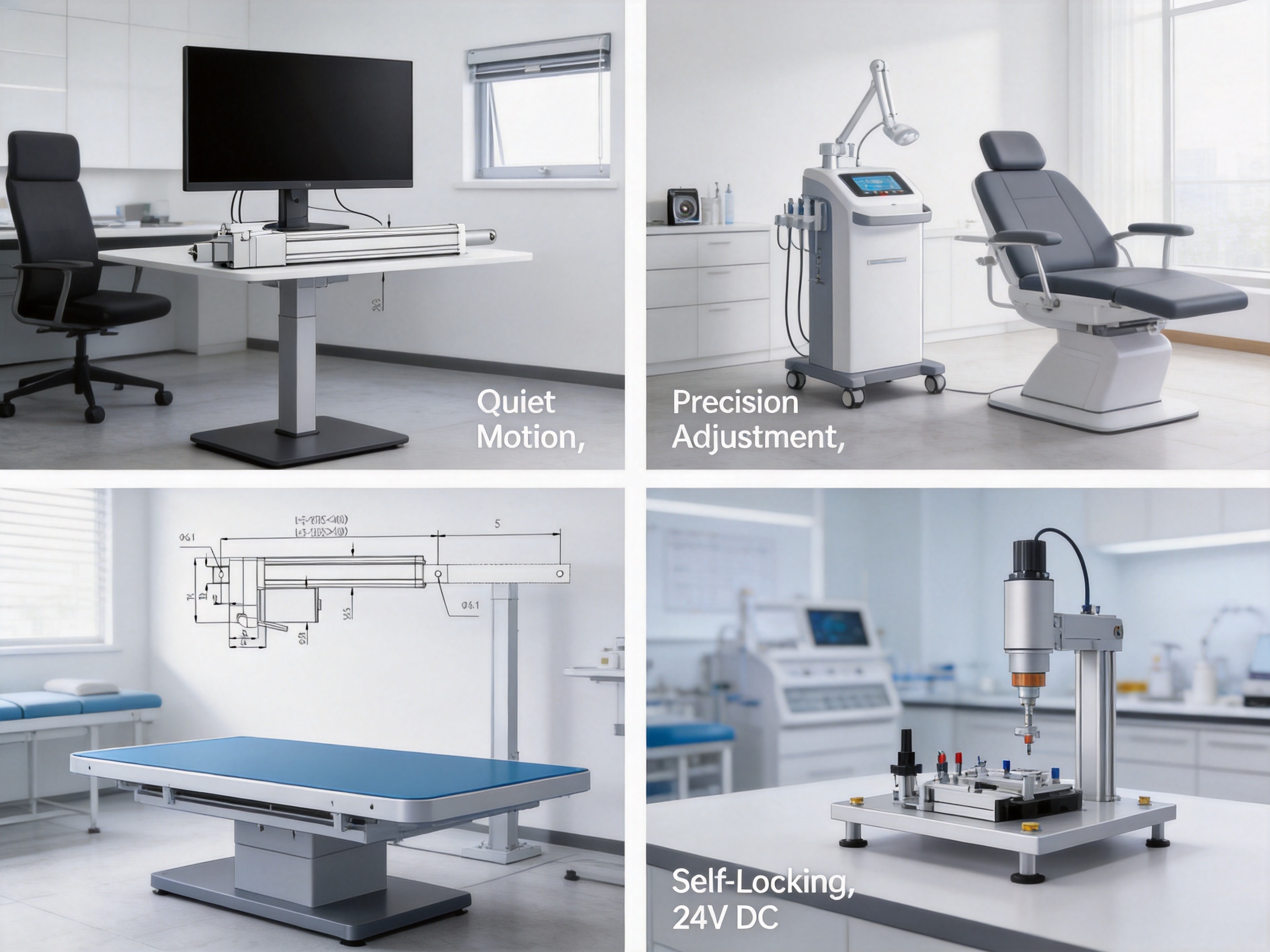
Beauty Equipment
Beauty equipment often requires compact adjustment mechanisms for platforms, supports, trays, headrests, or treatment components. The TH-04 can provide powered positioning while maintaining a clean internal layout. Its low-voltage supply and small body are suitable for equipment where the actuator must be integrated beneath a surface or inside a slim housing.
Quiet movement is important in salons and treatment rooms because users may associate excessive mechanical noise with poor quality. The actuator’s compact drive and guide structure support a more refined adjustment experience when properly installed.
Monitor Stands
Monitor stands and display supports require stable adjustment with limited visible hardware. A mini actuator can be placed inside the support column or beneath the display platform to provide powered height or angle movement. The self-locking feature can help the display remain at the selected position after adjustment, provided that the total load and center of gravity are appropriately designed.
Because monitors can be sensitive to vibration, the use of guide support and correct alignment is important. The actuator should not be expected to handle all lateral forces by itself. A suitable frame or guide mechanism can complement the actuator and improve overall stability.
Mini Smart Window Openers
Small automated windows, vents, and louvers can benefit from a compact electric actuator that operates without compressed air or hydraulic plumbing. The TH-04 can support controlled opening and closing for lightweight panels when the required force and stroke are within specification.
Window applications require careful consideration of wind load, friction, panel weight, hinge geometry, and emergency release requirements. The actuator’s overload protection and limit switches can support the design, but the complete window system should be tested under realistic environmental forces.
Lightweight Medical and Rehabilitation Equipment
Medical rehabilitation products often require controlled positioning, quiet operation, and a clean appearance. The TH-04 can be used for light-load adjustment functions such as moving a support, positioning a small platform, or changing the angle of a component.
Medical applications require especially careful validation. Designers must consider user safety, pinch points, emergency stopping, hygiene, load changes, and failure behavior. The actuator can serve as a motion component, but the final product must comply with all applicable regulations and risk-management requirements for its intended market.
Small Automated Testing Fixtures
Testing fixtures may require a component, probe, sensor, or platform to move to a repeatable position. The TH-04 offers a compact method of creating controlled linear adjustment without installing a large industrial drive. Its limit switches and self-locking behavior can be useful for repeatable setup operations.
Testing equipment should be evaluated for accuracy, repeatability, vibration, and cycle frequency. If the fixture operates continuously, the 10% duty cycle must be reviewed carefully. For occasional positioning and low-load adjustment, the actuator can simplify the fixture design.
10. Manufacturing Strengths and Product Development Capability
SuZhou Skyhone Intelligent Technology Co., Ltd. is engaged in the research and development, production, sales, and service of standing desks and related intelligent motion products. Its location in Suzhou places the company within the Yangtze River Delta, a region recognized for developed manufacturing resources, engineering talent, component supply networks, and industrial cooperation.
This regional manufacturing environment can support the development of compact actuators through access to metal processing, motor components, electronic parts, molds, surface treatment, packaging, and equipment integration resources. A connected supply chain is valuable for actuator manufacturers because product performance depends on the compatibility of many individual components.
The company’s product approach is based on intelligent office and equipment solutions rather than isolated component sales. This broader understanding can help connect actuator design with real application requirements, including installation space, user interaction, load behavior, noise, appearance, and control-system integration.
Advanced manufacturing is not limited to automated machinery. It also includes disciplined product development, controlled sourcing, assembly consistency, inspection procedures, process documentation, and feedback from field applications. For a compact actuator, small differences in screw alignment, gear engagement, seal installation, wiring, or limit-switch positioning can affect the final user experience.
Integrated Research and Development
Research and development provides the foundation for adapting actuator design to different equipment needs. A manufacturer with experience in standing desks and intelligent adjustment systems can evaluate how motorized movement interacts with frames, panels, control interfaces, and user loads.
The TH-04 reflects an application-oriented development philosophy. It is not simply a smaller version of a heavy industrial actuator. Its design focuses on light-load precision adjustment, compact installation, low-voltage integration, self-locking, low noise, and protection functions. This targeted positioning helps customers choose a product that better matches the operating conditions of small equipment.
Development work should consider the full product lifecycle, including assembly, installation, use, troubleshooting, and service. An actuator that performs well in a laboratory but is difficult to install or maintain may create problems for equipment manufacturers. Integrated components and simplified installation points can help reduce these risks.
Intelligent Manufacturing and Process Consistency
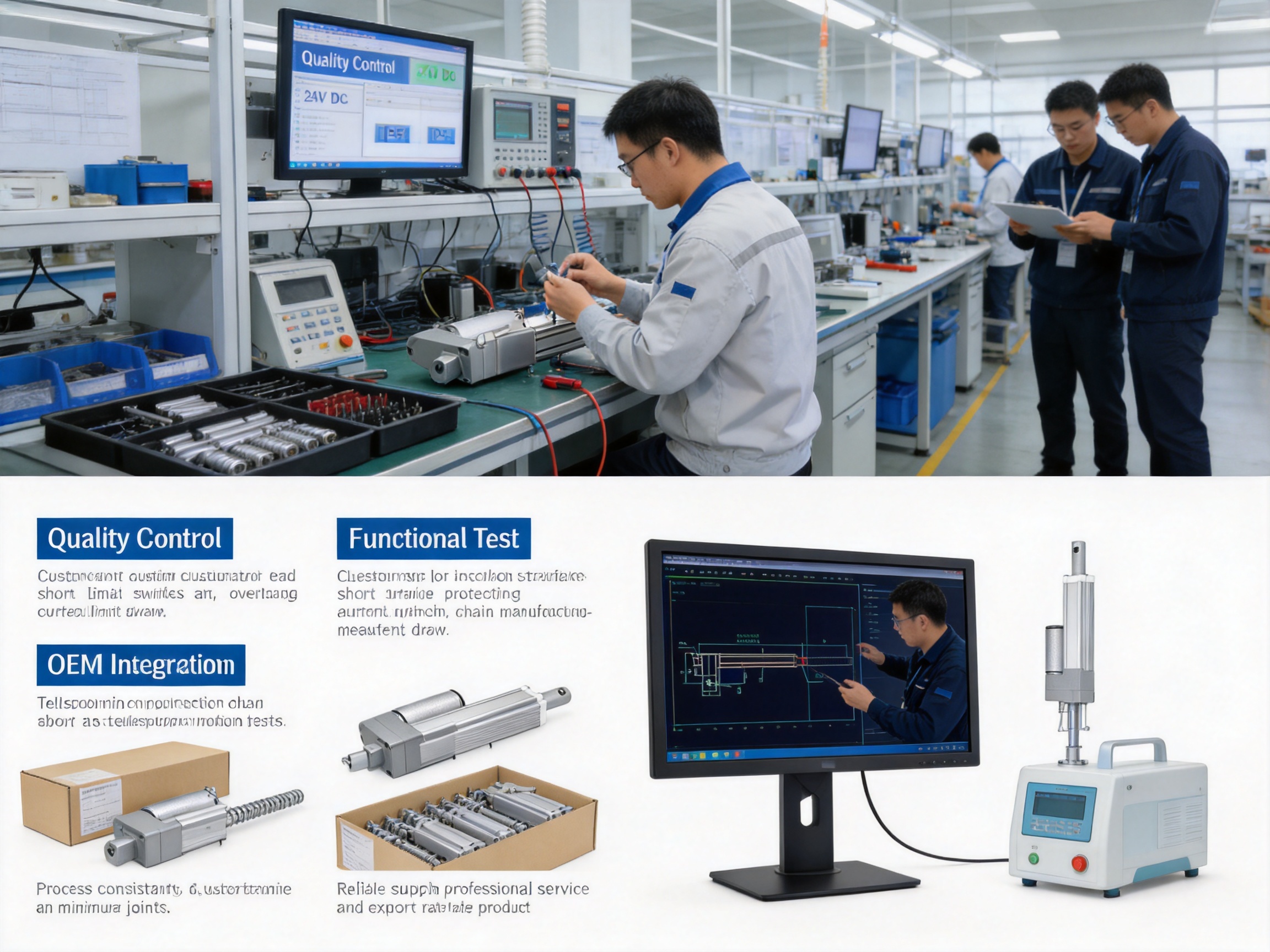
Intelligent manufacturing supports the consistent production of repeated mechanical and electrical assemblies. In actuator production, process consistency may involve housing preparation, motor installation, gear-set assembly, lead-screw alignment, guide-bushing fitting, seal placement, wiring, limit-switch setup, and final functional testing.
Controlled assembly procedures help reduce variation between units. Appropriate inspection equipment can be used to verify dimensions, electrical performance, movement behavior, noise, current draw, limit operation, and protection response. While specific factory equipment and inspection records depend on the manufacturer’s internal systems, a structured process is essential for reliable actuator production.
Component traceability can also support quality management. Recording supplier batches, assembly stages, inspection outcomes, and product identifiers helps manufacturers investigate problems and improve future production. This is especially valuable for OEM customers that need stable product performance across multiple orders.
Supply Chain Coordination
A linear actuator contains mechanical, electrical, and sealing components that must work together. Motor torque, gearbox ratio, screw geometry, guide friction, housing dimensions, and control protection are interdependent. Strong coordination among component suppliers and the final assembly process can improve product consistency.
Being located in an established manufacturing region can make it easier to evaluate alternative components, coordinate technical changes, and support customized requirements. For customers ordering actuators for a specific product, this may improve communication during sample development and mass production preparation.
Customization Capability
The TH-04 supports customization of short strokes and miniature joints. This is important because compact equipment rarely follows one universal mechanical layout. A device may require a particular retracted length, stroke range, connector orientation, bracket arrangement, or mounting interface.
Customization should begin with a clear technical specification. Customers should provide the required force, stroke, speed, duty cycle, installation orientation, available space, load direction, operating temperature, protection requirements, and control method. With this information, the actuator can be evaluated as part of the complete application.
Short-stroke customization can be especially valuable in narrow equipment. A stroke that is longer than necessary may waste internal space or create interference at the end of travel. A properly selected short stroke can improve packaging and reduce unnecessary movement.
Miniature joint customization may support specialized brackets or compact mechanical interfaces. The purpose is to make the actuator easier to integrate without forcing the customer to redesign the entire equipment structure around a standard industrial mounting pattern.
11. Installation and Integration Considerations
Before installing the TH-04, engineers should verify that the selected mounting points create a straight and stable line of motion. The actuator should not be used as a structural guide unless the application has been specifically designed for that purpose. External side loads, bending forces, and misalignment can increase friction and reduce service life.
The host structure should be strong enough to withstand the actuator’s maximum expected force. Brackets must be rigid, fasteners must be appropriately selected, and moving components must have adequate clearance throughout the full stroke. The actuator should be mounted so that the load is distributed properly and does not create excessive moment force.
The 24VDC power supply should be selected according to the full-load current and the starting or transient behavior of the motor. The stated full-load current is 4A, so the power system should provide suitable capacity with appropriate wiring, protection, and control components. Voltage drop over long cables should also be considered.
Electronic limit switches and overload protection should be connected and tested as part of the complete control system. The equipment manufacturer should confirm that the actuator stops correctly at both travel limits and responds appropriately when the load is higher than expected.
Because the actuator has an IP54 rating, installation should avoid locations where water can collect around the housing or cable entry. If the equipment is exposed to cleaning liquids, outdoor weather, corrosive materials, or high-pressure sprays, additional enclosure protection may be required.
Recommended Design Review Questions
What is the maximum static and dynamic load applied to the actuator? Is the load centered, offset, or transferred through a linkage? What is the required stroke and retracted length? How often will the actuator operate during a typical day? What is the ambient temperature? Are there external side loads or vibration sources?
Designers should also ask whether the actuator must hold its position after power loss, whether manual movement is required, whether emergency stopping is necessary, and whether a separate mechanical safety support should be added. These questions help prevent the actuator from being selected only by force rating while overlooking system-level risks.
12. Advantages for OEM and Equipment Manufacturers
For original equipment manufacturers, the TH-04 can reduce the complexity of developing a compact powered adjustment function. Its integrated motor, gearbox, lead screw, guide bushings, limit switches, overload protection, and sealed housing provide a more complete starting point than a collection of unrelated components.
A compact integrated actuator may reduce assembly steps. Instead of installing a motor, coupling, screw, external guide, switches, and protective covers separately, the manufacturer can design around a consolidated motion module. Fewer assembly interfaces can reduce alignment work and make production instructions easier to standardize.
The actuator can also help shorten the path from prototype to finished equipment. Engineers can test the motion module early, evaluate its force and speed, and then refine brackets and control logic around a known component. This can make it easier to compare different configurations and confirm whether the selected product meets the application requirements.
For international customers, CE and RoHS certifications provide useful documentation for product planning and market evaluation. Certification does not replace the responsibility of the final equipment manufacturer to assess the complete product, but it can simplify the preliminary component-selection process.
The company’s research, production, sales, and service capabilities are also relevant to OEM cooperation. Customers may require technical communication during sampling, adjustments to mounting details, production scheduling, packaging coordination, and after-sales support. A manufacturer that can support these stages is more valuable than a supplier that only ships a standard component.
13. Competitive Positioning
The TH-04 competes primarily through application fit rather than maximum force or maximum speed. Its advantages are most visible when an equipment designer needs a small, lightweight, quiet, low-voltage actuator with integrated protection and self-locking behavior.
Against larger industrial actuators, the TH-04 can save installation space and reduce unnecessary capacity for light-load products. Against pneumatic systems, it can eliminate the need for compressed-air infrastructure. Against manually adjusted mechanisms, it can provide powered control and repeatable movement. Against custom-built motor-and-screw assemblies, it can simplify sourcing and integration.
Its aluminum alloy body, IP54 protection, CE and RoHS certifications, electronic limits, overload protection, and wear-resistant guide bushings form a balanced feature set for compact equipment. No single feature is necessarily unique by itself, but the combination is practical for manufacturers seeking a ready-to-integrate mini actuator.
The product is not intended to replace every other type of linear drive. Applications involving continuous operation, very high speed, heavy industrial loads, severe impact, underwater exposure, or extreme environmental conditions may require another actuator class. Competitive selection should always be based on the full application profile.
14. Quality, Reliability, and Service Perspective
Reliability begins with correct product selection and continues through manufacturing, installation, and operation. A high-quality actuator must be assembled consistently, tested appropriately, and used within its force, speed, protection, and duty-cycle limits.
The TH-04’s integrated protection devices, guide bushings, seals, and self-locking lead screw contribute to a reliability-oriented design. These features help control common risks such as overtravel, overload, contamination, friction, vibration, and unintended movement.
Routine inspection should include checking mounting fasteners, cable condition, unusual noise, excessive movement play, water exposure, and signs of overload. If the actuator operates in a dusty or humid environment, the surrounding equipment should be reviewed regularly to ensure that the rated protection level is not being exceeded.
Service planning should also consider the expected life of the complete equipment. A product that is adjusted only occasionally may place less stress on the actuator than a product that operates near its duty-cycle limit. Clear operating instructions can help users avoid repeated commands, excessive loads, and improper manual forcing.
15. Frequently Asked Questions
Q1: What type of equipment is the TH-04 designed for?
The TH-04 is designed for compact, light-load, and precision adjustment equipment. Typical applications include beauty equipment, monitor stands, mini smart window openers, lightweight medical rehabilitation devices, and small automated testing fixtures.
Q2: What is the maximum push force?
The stated maximum push force is 1500N. The actual usable force depends on installation orientation, load distribution, stroke, operating temperature, duty cycle, and the mechanical design of the host equipment.
Q3: What is the pull force?
The stated pull force is 1200N. Designers should evaluate both push and pull conditions because the load direction and linkage geometry may affect the actuator’s working requirements.
Q4: Does the actuator hold its position when power is removed?
The TH-04 has a stated self-locking force of 1500N through its trapezoidal lead-screw mechanism. Position holding must be confirmed for the specific application, especially where vibration, impact, inclined installation, or safety-critical loads are present.
Q5: What power supply does the actuator use?
The actuator uses a 24VDC power supply. The stated full-load current is 4A. The customer should select a suitable power supply, wiring system, controller, and electrical protection based on the complete operating profile.
Q6: How fast does the actuator move?
The no-load speed is 5mm/s. Actual speed may vary according to load, stroke, voltage, temperature, mechanical resistance, and operating conditions.
Q7: What does the 10% duty cycle mean?
The 10% intermittent duty cycle means the actuator is intended for short periods of operation followed by rest intervals. It is suitable for occasional adjustment rather than continuous repetitive operation. The required operating pattern should be calculated before final selection.
Q8: Is the TH-04 suitable for outdoor use?
The actuator has an IP54 protection rating, which provides protection against limited dust and water splashes. It is not automatically suitable for immersion, high-pressure washing, severe weather, or corrosive environments. Additional enclosure and application testing may be required.
Q9: Does it require compressed air or hydraulic oil?
No. The TH-04 is an electric actuator powered by 24VDC. It does not require compressed-air tubing or a hydraulic oil circuit, which can simplify installation and reduce the risk of oil contamination.
Q10: What protection functions are integrated?
The product includes electronic limit switches and overload protection devices. These functions help control end-of-travel movement and reduce the risk of damage caused by excessive resistance or load. They should be integrated into a properly designed control system.
Q11: Can the actuator be customized?
The product supports customization of short strokes and miniature joints. Customers should provide detailed information about force, stroke, speed, mounting space, duty cycle, connector requirements, operating environment, and control method.
Q12: Can the actuator handle side loads?
The actuator should not be expected to absorb significant side loads unless the application has been specifically designed and validated for that purpose. External guides and rigid mounting structures should be used where lateral forces or offset loads are present.
Q13: What makes the product suitable for narrow equipment?
The slim aluminum alloy body, compact motor and reduction gear set, integrated control protection, and lightweight construction help reduce installation space. These characteristics make the actuator suitable for internal installation in small equipment.
Q14: Is the actuator appropriate for continuous factory automation?
The stated 10% duty cycle means the actuator is primarily intended for intermittent adjustment. Continuous or high-frequency factory automation should be reviewed carefully and may require a model designed for a higher duty cycle.
Q15: Why is the manufacturing location relevant to customers?
The company is based in Suzhou, within the Yangtze River Delta manufacturing region. This provides access to industrial supply-chain resources and supports the company’s research, production, sales, service, and customization capabilities.
16. Conclusion
The TH-04 Mini Compact Electric Linear Actuator is a focused solution for equipment manufacturers that need compact, controlled, and reliable linear adjustment. Its slim aluminum alloy body helps save installation space, while the 24VDC electrical architecture supports straightforward integration with modern control systems.
With a 1500N push force, 1200N pull force, 1500N self-locking force, 5mm/s no-load speed, IP54 protection, electronic limit switches, overload protection, wear-resistant guide bushings, and a 10% intermittent duty cycle, the actuator is well suited to light-load precision applications.
Its competitive value comes from the combination of compactness, self-locking, low noise, clean electric operation, integrated safety functions, and customization potential. It can help manufacturers avoid the complexity of pneumatic or hydraulic systems and reduce the number of separate components required for a small powered adjustment mechanism.
Supported by SuZhou Skyhone Intelligent Technology Co., Ltd.’s research and development, production, sales, and service capabilities, the TH-04 is positioned as more than a basic drive component. It is a practical motion module for smart equipment manufacturers seeking efficient installation, consistent production, and application-oriented engineering support.
When selected according to its force, speed, protection, alignment, and duty-cycle requirements, the TH-04 can provide a dependable foundation for beauty equipment, monitor stands, mini smart windows, rehabilitation devices, testing fixtures, and other compact precision products.
References
1. SuZhou Skyhone Intelligent Technology Co., Ltd. Product information for the TH-04 Mini Compact Electric Linear Actuator.
2. International Electrotechnical Commission. Degrees of Protection Provided by Enclosures, IP Code Classification Principles.
3. International Electrotechnical Commission. General Principles for Low-Voltage Electrical Equipment and Control-System Integration.
4. European Union. General Principles of CE Marking and Conformity Assessment for Applicable Products.
5. European Union. Restriction of Hazardous Substances Principles for Electrical and Electronic Equipment.
6. Linear Motion Technology References. Lead-Screw Drives, Self-Locking Mechanisms, and Electric Actuator Selection Methods.
7. Industrial Automation Engineering References. Duty-Cycle Calculation, Motor Protection, Overload Management, and Mechanical Alignment.
Product: TH-04 Mini Compact Electric Linear Actuator


- Contact Info
-
-
 Phone+86-15950656125
-
 Email
-
 AddressRoom 1007-1, South Building, Suyue Plaza, Suzhou Industrial Park, Suzhou City, Jiangsu Province, China
-
- Products
- Follow Us
- Need help? Please contact us
Copyright ©
SuZhou Skyhone Intelligent Technology Co., Ltd.
All Rights Reserved.
Privacy
Custom Ergonomic Adjustable Office Tables Manufacturers

