

 English
 русский
 Español
 عربى

Content
- 1 1. Product Overview
- 2 2. Ergonomic Height Adjustment for Modern Work
- 3 3. Gas Spring-Assisted Operation Without Electrical Dependence
- 4 4. Natural Rubberwood Tabletop: Warm Appearance with Practical Performance
- 5 5. Aluminum Frame Engineering and Powder-Coated Finish
- 6 6. Mobility Through Two-Way PU Casters
- 7 7. Competitive Advantages of the SK06-01 Design
- 7.1 Advantage One: Pneumatic Adjustment Without Power Cables
- 7.2 Advantage Two: More Individualized Positioning Than Fixed Tables
- 7.3 Advantage Three: Natural Wood Appearance Instead of an Industrial-Only Aesthetic
- 7.4 Advantage Four: Lightweight Aluminum Construction
- 7.5 Advantage Five: Mobility for Flexible Layouts
- 7.6 Advantage Six: Low-Complexity Ownership
- 8 8. Manufacturing Strengths and Product Development Capability
- 9 9. Applications Across Different Environments
- 10 10. Choosing the Correct Configuration for Daily Work
- 11 11. Care, Maintenance, and Long-Term Use
- 12 12. Why Pneumatic Desks Remain Relevant
- 13 13. Company Capability and Supply Support
- 14 14. Frequently Asked Questions
- 14.1 Q1: What type of desk is the SK06-01?
- 14.2 Q2: What is the height adjustment range?
- 14.3 Q3: Does the desk require electricity?
- 14.4 Q4: What is the tabletop made of?
- 14.5 Q5: What are the tabletop dimensions?
- 14.6 Q6: Is the desk easy to move?
- 14.7 Q7: What is the load capacity?
- 14.8 Q8: Is this desk suitable for computer work?
- 14.9 Q9: Can it be used in a classroom?
- 14.10 Q10: Is the desk suitable for heavy industrial work?
- 14.11 Q11: How should the rubberwood top be maintained?
- 14.12 Q12: What are the advantages of the aluminum frame?
- 14.13 Q13: What is the purpose of the powder-coated finish?
- 14.14 Q14: Who manufactures the SK06-01?
- 15 15. Conclusion
- 16 References
- 17 Product: SK06-01 Natural Wood Style Pneumatic Height-Adjustable Desk
Natural Wood Style Pneumatic Height-Adjustable Desk: An Ergonomic and Mobile Workspace Solution
2026-10-03
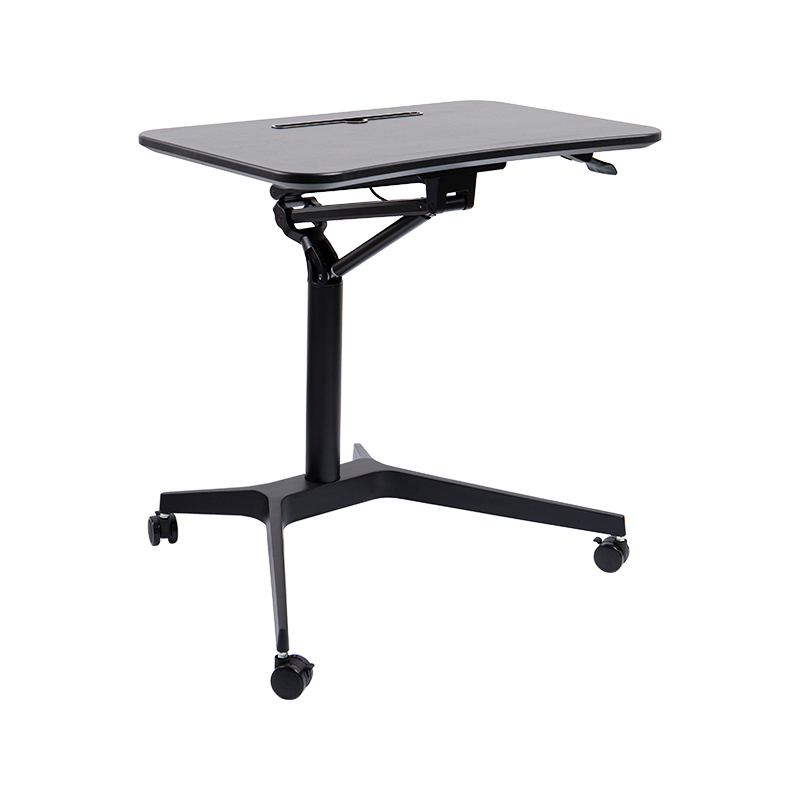
Modern workspaces are changing rapidly. Offices, studios, classrooms, home work areas, and light-duty production environments increasingly require furniture that can adapt to different users, tasks, and working postures. A fixed-height desk may be suitable for one activity, but it can become uncomfortable when users need to alternate between sitting and standing, move the work surface, or accommodate different body heights. The SK06-01 Natural Wood Style Pneumatic Height-Adjustable Desk addresses these requirements through a combination of ergonomic height adjustment, a warm solid-rubberwood tabletop, a lightweight aluminum frame, and mobile PU casters.
Unlike conventional fixed office tables, this pneumatic height-adjustable desk is designed around flexibility. Its work surface can be adjusted continuously from 750 mm to 1170 mm, creating a practical range for seated activities, elevated computer work, drafting, demonstrations, training, and standing tasks. A gas spring-assisted lifting system makes adjustment smooth and simple without requiring an electric motor, control panel, power cable, or complicated wiring.
The product also distinguishes itself visually. Many height-adjustable desks use plain laminated panels or industrial-looking metal surfaces. The SK06-01 uses a 20 mm solid rubberwood tabletop with Walnut or Natural Wood finishes. This combination introduces natural grain, warmth, and tactile appeal into professional environments while maintaining the functional advantages expected from an ergonomic adjustable desk.
Manufactured and supplied by SuZhou Skyhone Intelligent Technology Co., Ltd., the desk reflects the company’s focus on standing desks, adjustable furniture, gas spring systems, aluminum structures, and intelligent office space solutions. Its design brings together material selection, mechanical simplicity, mobility, ergonomic positioning, and practical load performance in one compact workstation.
1. Product Overview
The SK06-01 is a pneumatic height-adjustable table intended for users who need a flexible work surface without the electrical infrastructure associated with powered standing desks. Its lifting system uses gas spring assistance to reduce the effort required during height adjustment. The user can change the working height through a simple manual operation, allowing the same table to support different people and different working modes.
The desk has a height range of 750–1170 mm. At the lower end, the work surface is suitable for seated work and many conventional desk activities. At the upper end, the table can support standing work, presentations, drafting, product inspection, and other tasks where a raised surface is preferred. Because the adjustment is continuous rather than restricted to a few preset levels, users can select a height that better matches their body proportions and task requirements.
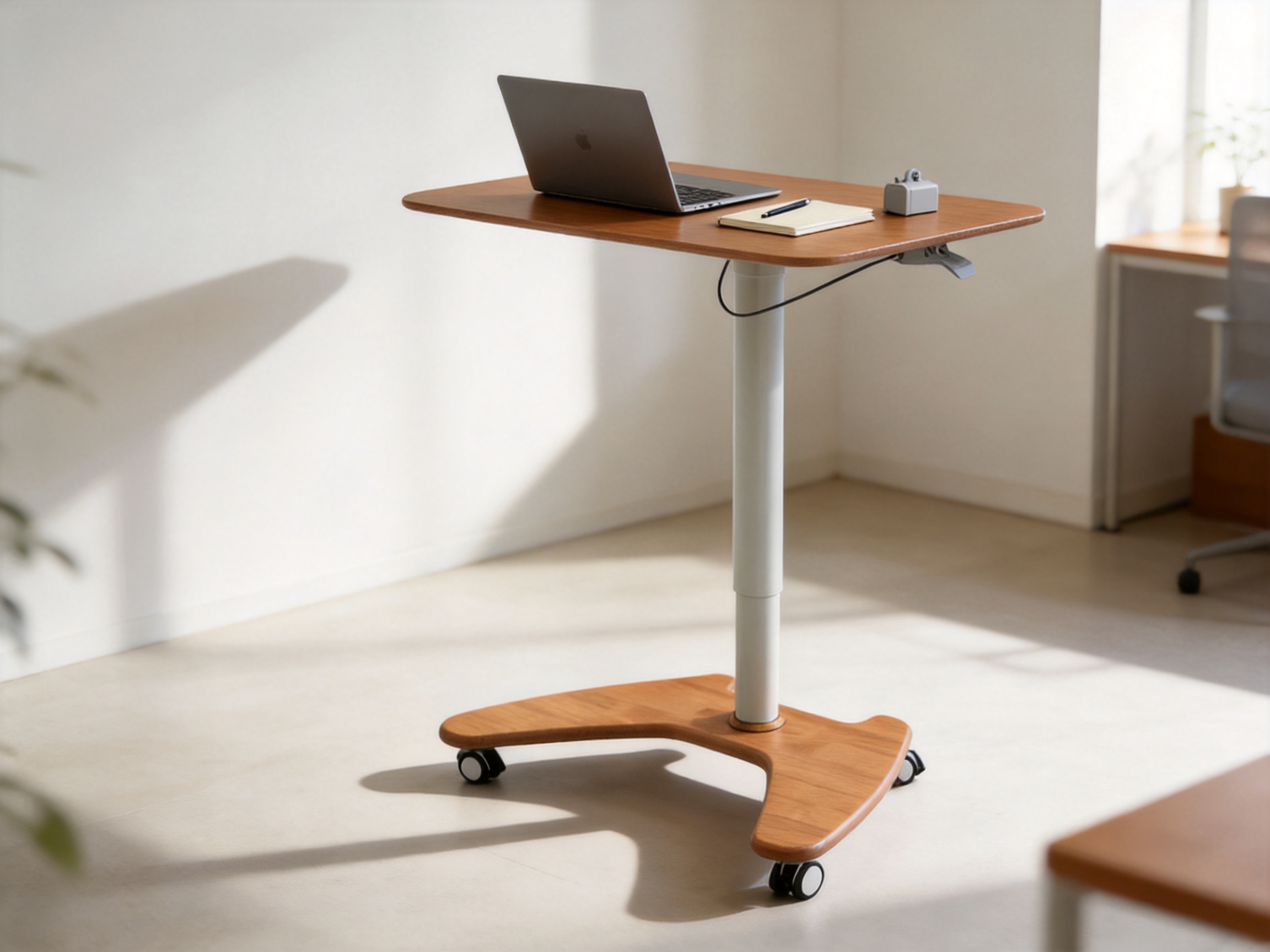
The tabletop measures 715 mm by 495 mm and has a thickness of 20 mm. This compact footprint makes the product suitable for spaces where a full-size workstation would be excessive. It can fit into a home office, studio, classroom, consultation room, retail environment, or flexible office zone while still providing enough surface area for a laptop, documents, writing materials, and other everyday equipment.
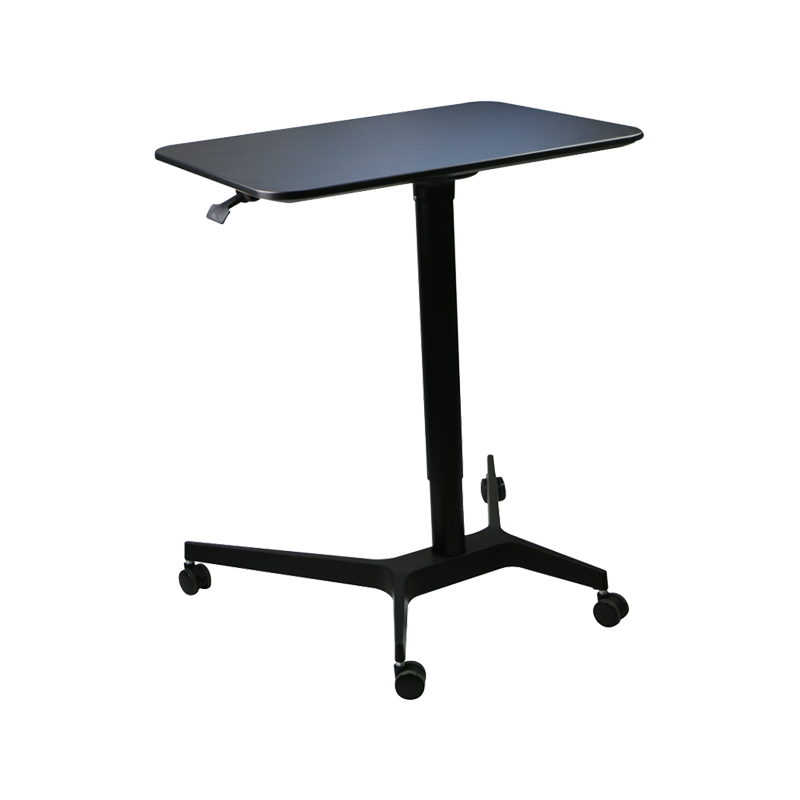
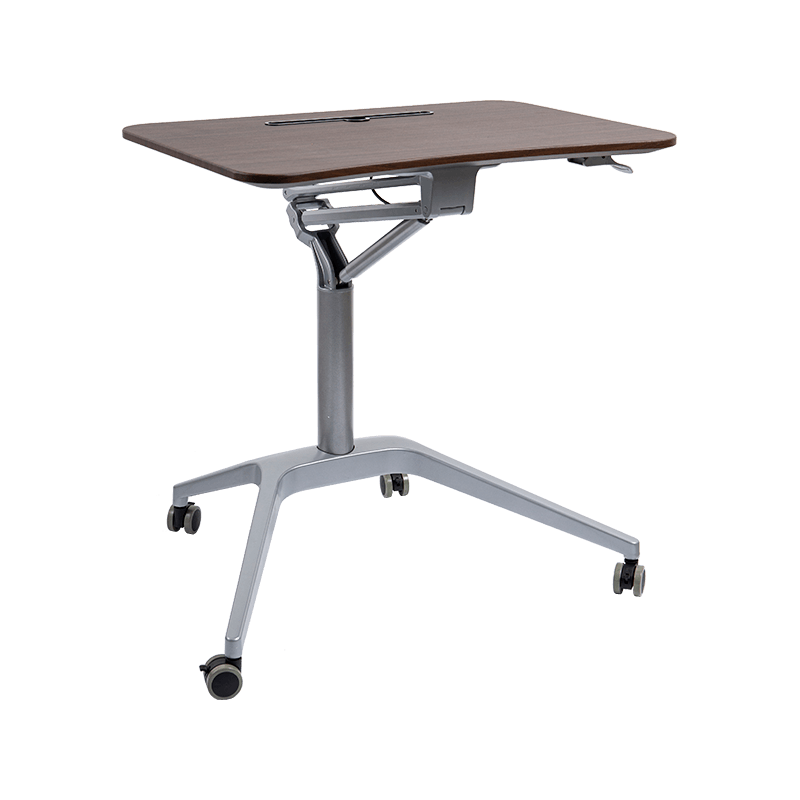
The frame is manufactured from aluminum and finished with powder coating over an extruded aluminum surface. Aluminum provides a useful balance between low weight and structural strength. The powder-coated finish contributes to surface durability and helps the frame maintain a clean appearance during regular use. Solid rubberwood is used for the tabletop, and two-way PU casters provide mobility.
Product item | Specification |
Product model | SK06-01 |
Product type | Pneumatic height-adjustable table |
Adjustable height range | 750–1170 mm |
Frame material | Aluminum |
Frame finish | Extruded aluminum with powder coating |
Tabletop dimensions | 715 × 495 × 20 mm |
Tabletop material | 20 mm solid rubberwood |
Tabletop finishes | Walnut and Natural Wood |
Mobility components | Two-way PU casters |
Dynamic load capacity | 5–10 kg |
Static load capacity | Up to 80 kg |
Lifting mechanism | Gas spring-assisted height adjustment |
2. Ergonomic Height Adjustment for Modern Work
The most important functional advantage of the SK06-01 is its adjustable height. A desk that remains at one fixed level may force users to adapt their bodies to the furniture. When the work surface is too low, users may bend forward or raise their shoulders. When it is too high, users may experience unnecessary arm elevation and wrist strain. A height-adjustable table allows the user to adapt the work surface to the body instead.
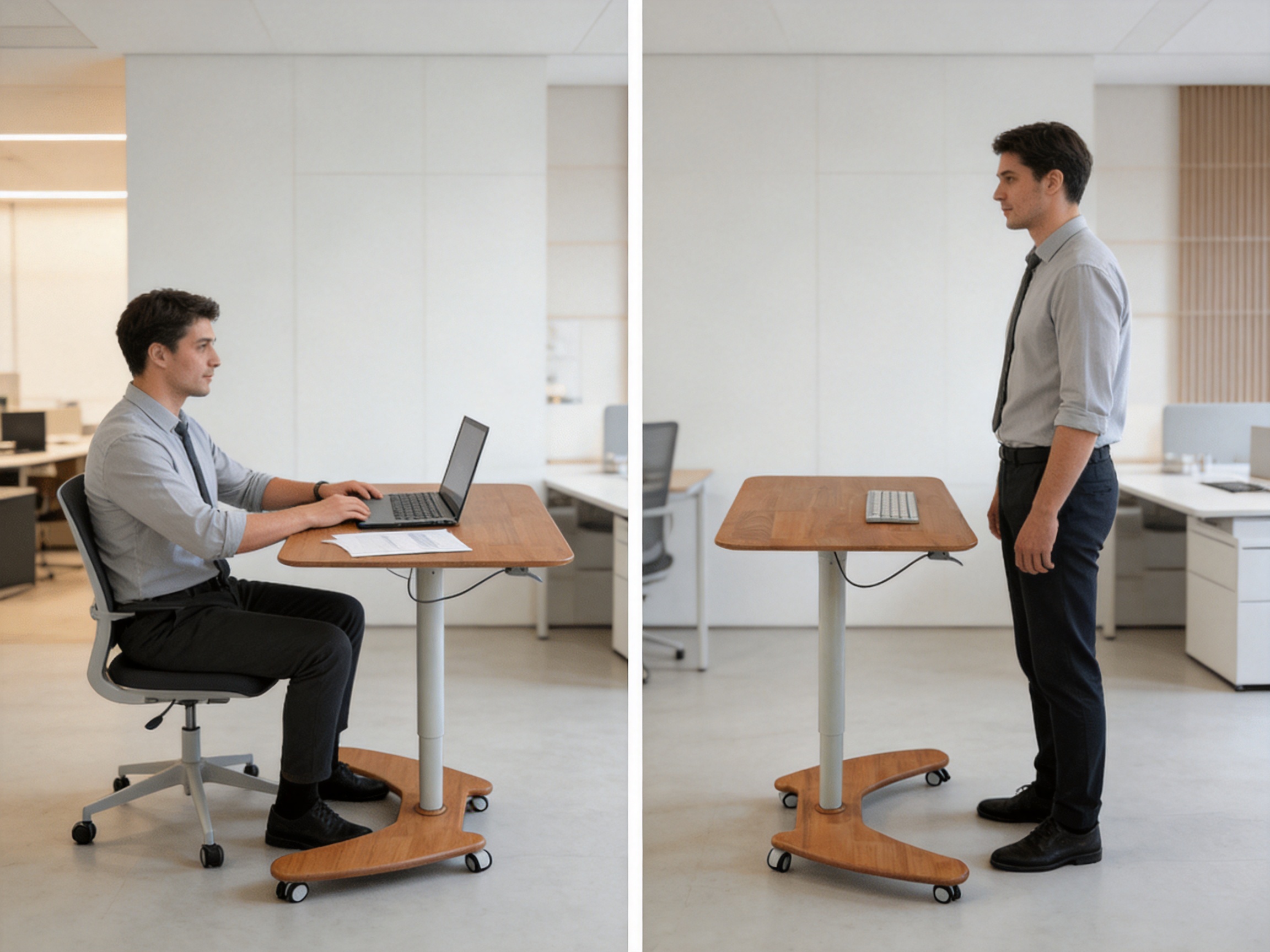
The 750–1170 mm adjustment range covers a broad selection of daily working positions. A user can lower the surface for seated computer work, reading, writing, or study. The surface can then be raised for standing computer use, product demonstrations, team discussions, or short periods of posture variation. This flexibility is especially useful in shared workplaces where different people use the same table.
Continuous adjustment is another important ergonomic feature. Not every user requires the same height, and not every task has identical positioning needs. A user working on a laptop may prefer a different level from a user writing on paper, drawing, handling samples, or reviewing documents. The ability to stop at an intermediate position enables more personalized setup than a table with only two or three fixed height settings.
Alternating between sitting and standing does not mean that users must stand continuously. In practice, ergonomic work often depends on changing positions regularly and avoiding long periods of static posture. The SK06-01 supports this approach by making the transition between lower and higher positions accessible. Users can adapt the table to the task instead of remaining locked into one working posture throughout the day.
The design is also suitable for environments with multiple users. In an educational setting, for example, students or instructors may have different heights. In a training room, the same table may be used for seated instruction, standing demonstrations, or equipment display. In a home office, the user may switch between a seated administrative task and a standing creative activity. A wide adjustment range reduces the need for separate furniture for each situation.
Height Adjustment and User Comfort
Correct height positioning helps users maintain a more natural relationship between the eyes, shoulders, elbows, wrists, and work surface. While the ideal position depends on the user and the task, adjustable furniture makes it easier to create an appropriate setup. The table can be positioned so that the elbows remain closer to a comfortable angle, the shoulders stay relaxed, and the display or work materials are placed at a more suitable level.
For standing work, the table can be raised to reduce excessive forward bending. For seated work, the table can be lowered to better align with the chair and arm position. The result is not a single universal height, but a workstation that can respond to individual requirements.
The adjustment function may also support task rotation. A user can lower the desk for focused keyboard work, raise it for reading or sorting materials, and reposition it again for a short standing break. This ability to vary the working position can make the workstation feel more active and adaptable than a conventional fixed-height table.
3. Gas Spring-Assisted Operation Without Electrical Dependence
The SK06-01 uses a gas spring lifting mechanism rather than an electric motor. Gas springs are widely used in adjustable furniture because they can store and release energy in a controlled manner. In this product, the system assists the user during height changes, reducing the force needed to move the tabletop and helping the surface travel smoothly through its range.
One of the main advantages of pneumatic adjustment is independence from electrical power. The desk does not need a wall outlet, battery pack, motor housing, control handset, or cable management system for its lifting function. This simplifies placement and makes the product practical in rooms where electrical access is limited or where users prefer a clean, uncluttered appearance.
The absence of an electric drive system can also reduce potential operating noise. A gas spring-assisted table can be adjusted without the motor sound associated with powered desks. This characteristic is useful in libraries, classrooms, shared offices, consultation areas, and quiet studio environments where low-noise furniture is preferred.
Mechanical simplicity may also benefit everyday maintenance. There are fewer electronic components involved in the height-adjustment system, so users do not need to manage control-panel settings, software, power adapters, or motor-related accessories. The main maintenance requirements are generally associated with keeping the frame clean, checking moving components, and using the casters and lifting mechanism appropriately.
It is important to operate a pneumatic table within its intended load and adjustment conditions. The product is specified for a dynamic load of 5–10 kg and a static load of up to 80 kg. Users should avoid applying sudden impact loads, exceeding the recommended moving load, or placing heavy equipment on the surface during height adjustment. Proper use helps preserve the smooth action and service life of the lifting system.
4. Natural Rubberwood Tabletop: Warm Appearance with Practical Performance
The tabletop is made from 20 mm rubberwood, a material selected for its natural appearance and solid construction. Compared with a basic synthetic panel, real wood introduces visible grain variation and a warmer visual character. This makes the desk suitable for environments where furniture must support both function and interior design.
The Walnut finish provides a deeper and more sophisticated appearance, while the Natural Wood finish emphasizes the lighter, organic character of the material. Both options can complement modern offices, residential interiors, educational spaces, design studios, boutique commercial settings, and hospitality-inspired work areas.
A natural wood work surface can also contribute to the perceived comfort of a workspace. The surface has a more familiar tactile quality than cold metal or highly uniform plastic. When combined with the aluminum frame, the tabletop creates a balanced design language: the frame provides a clean and contemporary structural base, while the wood adds visual softness and warmth.
The 20 mm thickness provides a substantial appearance without making the tabletop unnecessarily heavy. It is appropriate for daily office tasks and light-to-medium duty applications within the stated load capacity. The dimensions of 715 mm by 495 mm offer a compact but useful working area. Users can place a laptop, monitor, keyboard, notebook, documents, and frequently used accessories on the surface while retaining a manageable footprint.
Because the tabletop uses natural rubberwood, normal care is important. Users should wipe spills promptly, avoid prolonged exposure to standing moisture, and use suitable cleaning products. Sharp objects, excessive heat, and abrasive materials should be kept away from the surface. With reasonable care, the tabletop can preserve its visual appeal and provide a pleasant working surface over an extended period.
Why the Wood-and-Aluminum Combination Matters
Many adjustable desks are designed primarily around industrial efficiency, which can result in a visually cold appearance. The SK06-01 takes a different approach by combining a natural solid-wood top with an aluminum mechanical structure. This creates a product that can fit into both professional and domestic environments.
The wood surface can help the desk integrate with existing furniture, shelves, cabinets, and interior finishes. At the same time, the aluminum frame communicates precision and modern engineering. This combination gives buyers an alternative to all-metal or synthetic-panel adjustable tables without sacrificing height flexibility.
The result is especially valuable for spaces that are visible to clients, visitors, students, or family members. A natural wood desk may feel more appropriate in a reception-adjacent office, private consultation room, creative studio, home workspace, or boutique retail environment than a purely utilitarian workstation.
5. Aluminum Frame Engineering and Powder-Coated Finish
The frame uses aluminum as its primary material. Aluminum is well suited to adjustable furniture because it offers low weight, corrosion resistance, and useful structural performance. A lighter frame can make the table easier to reposition, which is particularly important when the product is equipped with casters.
The frame is produced from extruded aluminum. Extrusion is a manufacturing process in which aluminum is shaped through a forming die to create a continuous profile. This allows designers and manufacturers to create profiles with consistent dimensions, integrated channels, and appropriate structural geometry. Consistency in the frame profile is important for smooth assembly, alignment, and repeatable product quality.
After extrusion and processing, the aluminum receives a powder-coated finish. Powder coating applies a dry coating material to the metal surface and then cures it to form a durable finish. Compared with an untreated metal surface, the coating provides a more uniform appearance and additional protection against ordinary wear, surface marking, oxidation, and fading.
The finish is useful not only for appearance but also for long-term product presentation. Adjustable desks are frequently moved, touched, and repositioned. A durable frame finish helps maintain a professional appearance in offices, classrooms, studios, and commercial environments. The coating also creates a consistent visual connection between different components of the structure.
Manufacturing Consistency and Structural Integration
A well-designed adjustable table depends on the coordination of multiple parts. The frame, lifting mechanism, tabletop supports, caster mounts, and adjustment components must work together. Extruded aluminum provides a repeatable foundation for this integration. Consistent profiles support stable assembly and help reduce variation between production units.
As a manufacturer focused on standing desks and adjustable furniture, SuZhou Skyhone Intelligent Technology Co., Ltd. can draw on the advantages of the Yangtze River Delta furniture manufacturing region. The company is located in Suzhou, Jiangsu Province, an area known for established manufacturing networks, component supply, engineering resources, and industrial logistics.
The company’s stated business scope includes research and development, production, sales, and service for standing desks and related office space solutions. This integrated orientation is important because successful adjustable furniture requires more than a single component. It requires product design, material selection, mechanical development, manufacturing coordination, quality control, packaging, and customer support.
6. Mobility Through Two-Way PU Casters
The SK06-01 is equipped with two-way PU casters. These casters allow the desk to be repositioned without lifting the entire structure. Mobility is useful in multipurpose rooms, flexible offices, classrooms, studios, event areas, and home workspaces where layouts may change regularly.
PU, or polyurethane, is commonly selected for caster wheels because it can provide a balance between smooth movement, resilience, and floor friendliness. Compared with harder wheel materials, PU casters are generally more suitable for indoor surfaces where users want to reduce the risk of harsh contact or excessive marking. The actual performance still depends on floor condition, caster maintenance, load distribution, and correct use.
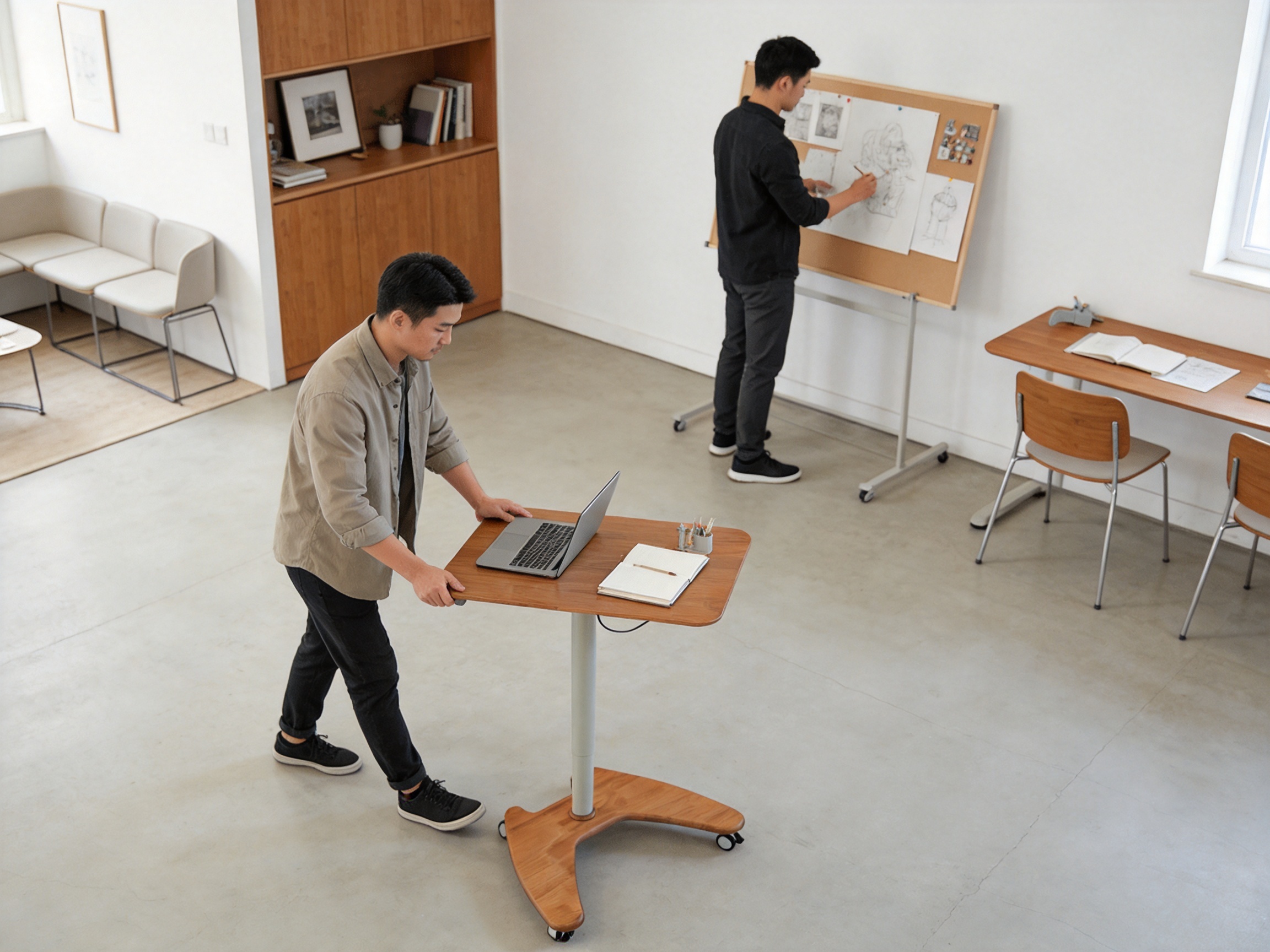
The two-way movement design supports practical repositioning. Users can move the desk when cleaning the room, opening a larger activity area, adjusting the workstation toward a window, creating a temporary collaborative arrangement, or changing the direction of the work surface. This is particularly valuable when the product is used as part of a flexible furniture system rather than as a permanently fixed desk.
Mobility does not eliminate the need for stability. The desk should be positioned on a suitable, reasonably level surface, and users should avoid leaning heavily against the tabletop while the unit is moving. When the desk is being used for concentrated work, it should be placed in a stable position and handled according to the caster design and product instructions.
7. Competitive Advantages of the SK06-01 Design
The adjustable desk market includes electric standing desks, manual crank desks, fixed-height tables, pneumatic workstations, and compact mobile carts. The SK06-01 occupies a distinctive position because it combines gas spring-assisted adjustment, natural wood styling, aluminum construction, and mobile functionality.
Advantage One: Pneumatic Adjustment Without Power Cables
Electric desks require access to power and may need cable routing, control panels, adapters, and additional protection around electrical components. The SK06-01 provides height adjustment without these requirements. This gives users more freedom in room placement and creates a cleaner visual environment.
This advantage is particularly relevant where tables are frequently moved or where electrical outlets are limited. A classroom, workshop, studio, or home office can use the table without planning its location around a power connection.
Advantage Two: More Individualized Positioning Than Fixed Tables
A fixed table offers only one working height. If the height does not suit the user, the user must compensate through chair adjustment, posture changes, or accessories. The SK06-01 allows the working surface itself to be changed, giving users more control over the relationship between the table and their body.
The continuous 750–1170 mm range supports both seated and standing work. It can also accommodate different users in shared environments, making one table suitable for a wider variety of tasks and body sizes.
Advantage Three: Natural Wood Appearance Instead of an Industrial-Only Aesthetic
Many adjustable workstations prioritize mechanism visibility and technical styling. The SK06-01 adds a solid rubberwood tabletop with Walnut and Natural Wood choices. This makes the product easier to integrate into interiors where visual warmth matters.
The wood-and-aluminum combination can appeal to buyers who want ergonomic function without making the workspace look overly mechanical. It is suitable for offices that value design consistency, as well as residential settings where office furniture must harmonize with the rest of the room.
Advantage Four: Lightweight Aluminum Construction
Aluminum supports a more manageable overall structure than many heavier metal alternatives. The lower weight can make the mobile desk easier to reposition while still providing a stable base for normal tasks. The extruded profile also supports consistent structural manufacturing and a clean finished appearance.
Advantage Five: Mobility for Flexible Layouts
Two-way PU casters provide a practical mobility feature that is not available on many stationary office desks. Users can reconfigure furniture without disassembling the table or requiring multiple people to lift it. This supports agile working environments and makes the product useful in rooms that serve more than one purpose.
Advantage Six: Low-Complexity Ownership
With no electric lifting motor or powered control system, the product has a relatively straightforward operating concept. Users do not need to learn electronic presets or manage a power connection for height adjustment. The combination of a mechanical gas spring system and durable frame materials supports practical daily use with uncomplicated maintenance.
8. Manufacturing Strengths and Product Development Capability
The performance of an adjustable desk depends on manufacturing discipline. A desk may have an attractive design, but it must also be assembled accurately, finished consistently, and tested for the intended operating conditions. SuZhou Skyhone Intelligent Technology Co., Ltd. presents itself as a professional manufacturing enterprise engaged in the research and development, production, sales, and service of standing desks.
This end-to-end orientation allows product development and manufacturing feedback to influence one another. Engineers can refine the frame, tabletop support, lifting mechanism, and caster arrangement based on production experience. Manufacturing teams can identify assembly challenges early. Sales and service teams can communicate user requirements back to product development.
The company’s location in Suzhou provides access to a mature regional industrial ecosystem. The Yangtze River Delta has extensive capabilities in metal processing, furniture production, surface treatment, mechanical components, logistics, and export-oriented manufacturing. These regional strengths can support efficient sourcing, coordinated production, and scalable product delivery.
Research and Development Focus
Adjustable furniture requires continuous attention to ergonomics, material performance, user convenience, and space utilization. Research and development may involve evaluating height ranges, support geometry, lifting force, frame profiles, tabletop dimensions, caster design, surface finishes, and packaging requirements.
For the SK06-01, the design challenge is to combine a compact tabletop with a broad vertical adjustment range while maintaining a stable and attractive structure. The product must also balance the different characteristics of solid wood, aluminum, gas spring components, and mobile casters. Each material contributes benefits, but each also requires suitable engineering coordination.
Extruded Aluminum Processing
Extruded aluminum supports dimensional repeatability and design flexibility. Profiles can be selected or developed to provide appropriate support, attachment points, and visual proportions. The extrusion process also enables a consistent structural base that can be processed into finished frame components.
After extrusion, components may require cutting, drilling, machining, deburring, surface preparation, and assembly. These steps must be coordinated to ensure that the frame fits together accurately and that the lifting mechanism operates smoothly. Careful processing helps reduce misalignment, uneven joints, and unnecessary movement in the finished table.
Powder-Coating Capability
Powder coating provides a controlled method for finishing the aluminum frame. A reliable finishing process depends on appropriate surface preparation, coating coverage, curing conditions, and inspection. When these stages are managed correctly, the frame can achieve a consistent appearance and a durable protective layer.
For office furniture, finish quality is visible to the user every day. Uneven coating, exposed metal, or inconsistent color can reduce the perceived quality of a product even when the structure is mechanically sound. A professional surface treatment process therefore supports both product durability and customer confidence.
Assembly and Functional Inspection
Assembly quality is especially important for products with moving parts. The gas spring, frame sections, tabletop supports, and casters must be installed in a way that allows the desk to move and adjust as intended. Inspection can include checking fasteners, alignment, height movement, surface condition, caster attachment, and overall stability.
Functional checks should be performed under appropriate operating conditions. The table should move through its intended adjustment range, the lifting mechanism should respond consistently, and the structure should remain suitable for normal loading. Packaging inspection is also important because the tabletop and powder-coated frame must be protected during transportation.
9. Applications Across Different Environments
Open-Plan Offices
In open-plan offices, teams may change seating arrangements or work modes frequently. A mobile adjustable table can support individual focused work, short standing sessions, collaborative review, or temporary project areas. Its natural wood appearance can also help soften the visual character of a large open office.
Home Offices
Home office users often need furniture that fits into multipurpose rooms. The compact 715 × 495 mm tabletop can provide a dedicated work surface without dominating the space. Users can lower the table when working with a chair and raise it when they want to stand, stretch, or change posture.
The absence of an electrical lifting system is useful in home environments where cable clutter is undesirable. The Walnut or Natural Wood finish can also coordinate with residential furniture more easily than a highly industrial workstation.
Design Studios and Creative Workspaces
Designers, illustrators, model makers, and creative professionals may alternate between computer work, sketching, reviewing materials, and presenting concepts. Different activities often benefit from different surface heights. The adjustable range allows the desk to function as a compact workstation, review surface, or standing presentation table.
Educational and Training Spaces
Classrooms and training rooms often serve users of different heights. An adjustable table can be used by students, instructors, and visitors without requiring a separate table design for each person. The casters allow the room layout to be changed for lectures, group work, demonstrations, and practical sessions.
Children’s Study Areas
A height-adjustable desk can provide a more adaptable study solution as a child grows. The appropriate height should always be selected carefully, and adults should supervise adjustment and use. The compact surface is suitable for books, writing materials, and a computer setup appropriate to the child’s activities.
Light-Duty Assembly and Inspection
In light-duty assembly areas, users may need to work at different heights depending on the size of components and the process being performed. The SK06-01 can support suitable tasks within its dynamic load rating. It is intended for light-to-medium duty applications rather than heavy industrial loads, so users should evaluate tools, materials, impact forces, and operating conditions before deployment.
Boutique Commercial and Hospitality Interiors
The natural rubberwood tabletop makes the desk appropriate for boutique commercial environments where furniture must look intentional and refined. It can be used in consultation areas, small reception workpoints, product display preparation zones, or flexible service spaces. The mobility feature allows staff to adapt the setup when the space is used for different purposes.
10. Choosing the Correct Configuration for Daily Work
Users should begin by identifying the main activities that will take place at the desk. If the primary task is laptop work, document review, writing, or light administrative activity, the tabletop dimensions may provide a suitable compact footprint. If the user needs multiple monitors, large equipment, or extensive paperwork, the available surface area should be assessed carefully.
The load requirement should also be considered. The stated dynamic capacity is 5–10 kg, while the static capacity is up to 80 kg. Dynamic loading refers to the condition in which the table is being moved or adjusted, while static loading refers to a stationary condition. Heavy devices should not be moved on the table during height adjustment, and users should avoid placing concentrated loads that exceed the intended operating conditions.
Room layout is another important consideration. The casters make repositioning easier, but adequate clearance is still needed around the table. Users should check that chairs, cables, rugs, doorways, and nearby furniture do not obstruct movement. The work surface should be kept clear enough for safe height adjustment.
Finally, users should select the tabletop finish according to the surrounding interior. Walnut offers a richer and deeper tone, while Natural Wood provides a lighter and more organic appearance. Both finishes maintain the central visual advantage of genuine rubberwood.
11. Care, Maintenance, and Long-Term Use
Routine care helps preserve both appearance and function. The rubberwood tabletop should be cleaned with a soft, slightly damp cloth and dried after cleaning. Harsh solvents, abrasive pads, excessive water, and unapproved chemical cleaners should be avoided. Spills should be removed promptly to reduce the risk of staining or moisture penetration.
The aluminum frame can generally be cleaned with a soft cloth and mild cleaning solution. Users should avoid aggressive abrasives that could scratch the powder-coated surface. If the table is used in a dusty studio or workshop, the frame and caster areas should be cleaned regularly so that debris does not interfere with movement.
The casters should be inspected periodically. Hair, dust, packaging material, and other debris can collect around wheels and reduce smooth movement. The desk should not be forced across obstacles. If a caster becomes loose or damaged, it should be addressed before continued use.
The height-adjustment mechanism should be operated smoothly rather than forced. Sudden impacts, excessive loads, or adjustment while the surface is obstructed may place unnecessary stress on the gas spring and frame. Any unusual movement, noise, or instability should be checked before the desk returns to service.
When transporting or storing the desk, the tabletop and coated frame should be protected from impact and moisture. Correct packaging and careful handling can help prevent surface damage and maintain the finished appearance.
12. Why Pneumatic Desks Remain Relevant
Electric standing desks are popular, but they are not the only solution for adjustable work. Pneumatic desks remain relevant because they provide height flexibility with a simpler mechanical architecture. They are particularly suitable for users who value portability, low noise, reduced electrical dependence, and straightforward operation.
A pneumatic system can also be advantageous in spaces where multiple tables are used. Removing the need for power cords can simplify room planning and reduce cable clutter. It can make temporary layouts easier to organize and reduce the number of electrical connections required in a classroom, meeting area, or studio.
The SK06-01 adds further differentiation through its natural wood styling. It does not treat adjustment as the only design priority. Instead, it combines ergonomic movement with a tabletop finish that can support a welcoming, residential, or design-conscious environment.
13. Company Capability and Supply Support
SuZhou Skyhone Intelligent Technology Co., Ltd. is based at Room 1007-1, South Building, Suyue Plaza, Suzhou Industrial Park, Suzhou City, Jiangsu Province, China. The company specializes in standing desks and related adjustable office products, with a business model covering research and development, production, sales, and service.
This combination of capabilities is valuable for buyers seeking more than a standard catalog item. Adjustable furniture projects may require specification confirmation, finish selection, packaging coordination, product documentation, and communication regarding application conditions. A manufacturer with experience across product development and supply can provide a more coordinated process.
The company’s focus on healthy, efficient, and intelligent office space solutions aligns with the broader movement toward ergonomic furniture. Its product range includes adjustable-height desks, electric linear actuators, gas springs, and related office furniture categories. This technical background supports an understanding of both complete furniture products and the mechanisms that make them adjustable.
For business buyers, distributors, furniture contractors, and project planners, the manufacturer’s location within Suzhou’s industrial environment can support communication with a broad production network. Product suitability, customization possibilities, minimum order requirements, packaging, lead times, and export documentation should be confirmed directly for each project.
14. Frequently Asked Questions
Q1: What type of desk is the SK06-01?
The SK06-01 is a pneumatic height-adjustable table with a solid rubberwood tabletop, an aluminum frame, gas spring-assisted lifting, and two-way PU casters. It is designed for flexible seated and standing work.
Q2: What is the height adjustment range?
The adjustable height range is 750–1170 mm. The height can be positioned continuously within this range to support different users and tasks.
Q3: Does the desk require electricity?
No. The height-adjustment function is powered by a gas spring-assisted mechanical system. The desk does not require an electric motor, power adapter, or wall outlet for adjustment.
Q4: What is the tabletop made of?
The tabletop is made from 20 mm solid rubberwood. It is available in Walnut and Natural Wood finishes.
Q5: What are the tabletop dimensions?
The tabletop measures 715 mm in width, 495 mm in depth, and 20 mm in thickness.
Q6: Is the desk easy to move?
Yes. It is equipped with two-way PU casters that support repositioning across suitable indoor floor surfaces. Users should move the table carefully and avoid obstacles or uneven surfaces.
Q7: What is the load capacity?
The specified dynamic load capacity is 5–10 kg, and the static load capacity is up to 80 kg. Heavy equipment should not be moved on the tabletop during height adjustment.
Q8: Is this desk suitable for computer work?
Yes. The compact tabletop can support a laptop, keyboard, documents, and other standard office accessories. Users should confirm that their equipment arrangement fits within the available 715 × 495 mm surface.
Q9: Can it be used in a classroom?
Yes. Its adjustable height and mobility make it suitable for educational and training environments, particularly where users have different heights or where room layouts change frequently.
Q10: Is the desk suitable for heavy industrial work?
The product is intended for daily office tasks and light-to-medium duty applications. It should not be treated as a heavy industrial workstation unless the specific load, impact, and operating requirements have been confirmed with the manufacturer.
Q11: How should the rubberwood top be maintained?
Clean the tabletop with a soft, slightly damp cloth and dry it after cleaning. Avoid abrasive materials, excessive moisture, harsh solvents, and prolonged exposure to heat or spills.
Q12: What are the advantages of the aluminum frame?
The aluminum frame provides a combination of low weight, structural performance, corrosion resistance, and a modern appearance. Its extruded profile also supports repeatable manufacturing and consistent assembly.
Q13: What is the purpose of the powder-coated finish?
The powder-coated finish improves the appearance of the frame and helps protect the aluminum surface against ordinary wear, oxidation, scratching, and fading during normal use.
Q14: Who manufactures the SK06-01?
The product is manufactured and supplied by SuZhou Skyhone Intelligent Technology Co., Ltd., a Suzhou-based company focused on standing desks, adjustable office furniture, gas springs, electric linear actuators, and related office space solutions.
15. Conclusion
The SK06-01 Natural Wood Style Pneumatic Height-Adjustable Desk is designed for users who need ergonomic flexibility, practical mobility, and a more welcoming visual style than a conventional industrial workstation. Its 750–1170 mm continuous adjustment range supports seated and standing work, while the gas spring-assisted mechanism provides adjustment without electrical power or complex controls.
The product’s 20 mm solid rubberwood tabletop adds natural character and tactile warmth. Walnut and Natural Wood finishes allow the desk to fit into a wide range of interiors. The extruded aluminum frame contributes lightweight structural performance, and the powder-coated surface supports a durable, consistent appearance. Two-way PU casters add flexibility for rooms that require frequent layout changes.
Compared with fixed tables, the desk offers more individualized positioning. Compared with electric desks, it removes the need for power connections and motorized controls. Compared with purely industrial adjustable tables, it provides a more residential and design-conscious appearance. These combined characteristics make it suitable for offices, homes, classrooms, studios, training areas, boutique commercial interiors, and light-duty workstations.
Behind the product is a manufacturing approach centered on research and development, aluminum processing, surface finishing, mechanical integration, assembly, and service. SuZhou Skyhone Intelligent Technology Co., Ltd. benefits from its location in Suzhou and its connection to the mature Yangtze River Delta manufacturing environment. For buyers seeking an adjustable table that balances ergonomics, natural aesthetics, mobility, and mechanical simplicity, the SK06-01 offers a practical and distinctive solution.
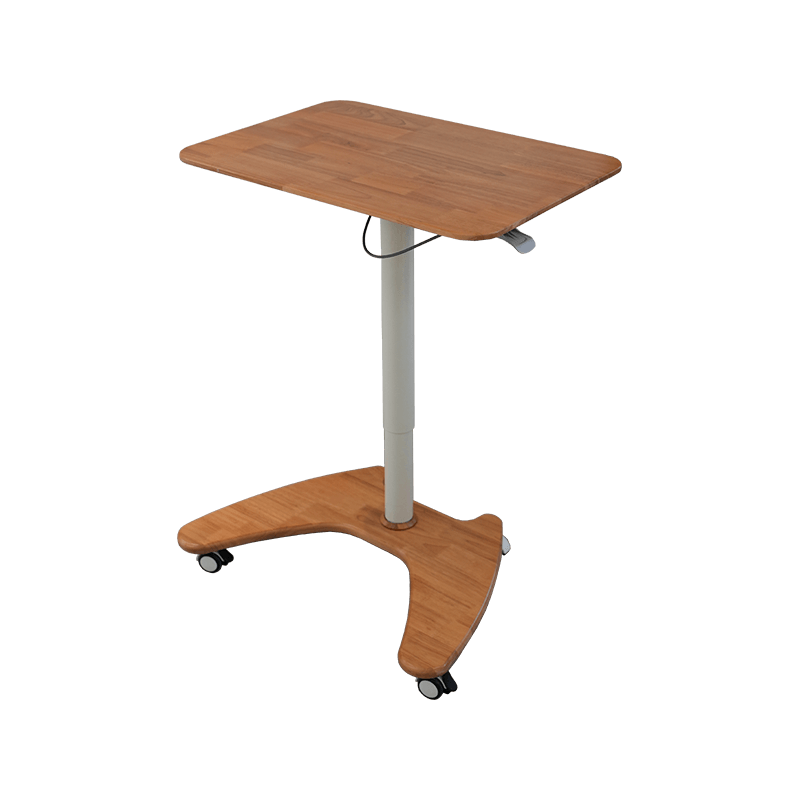
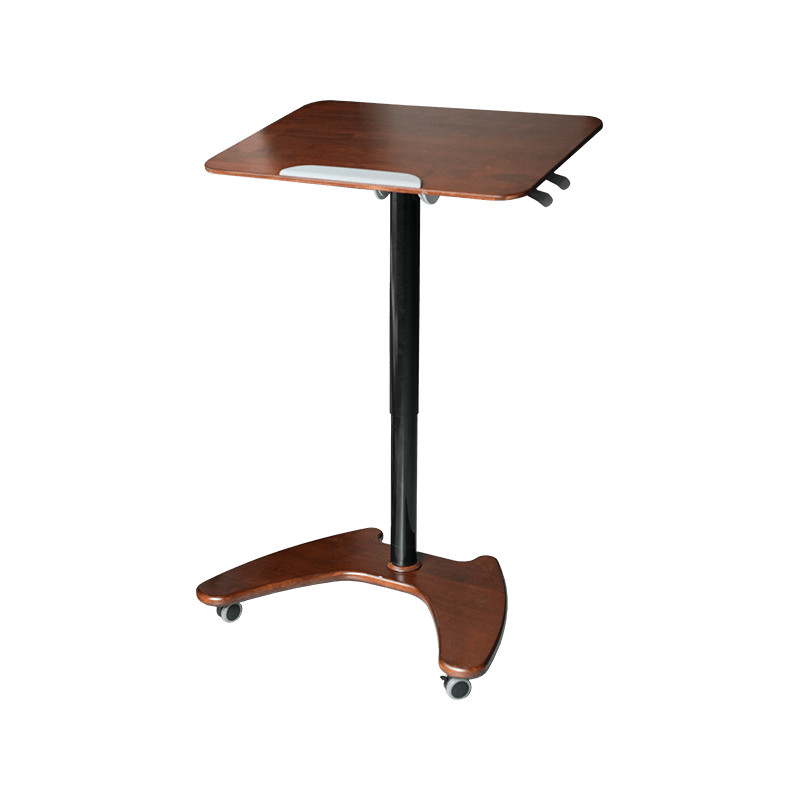
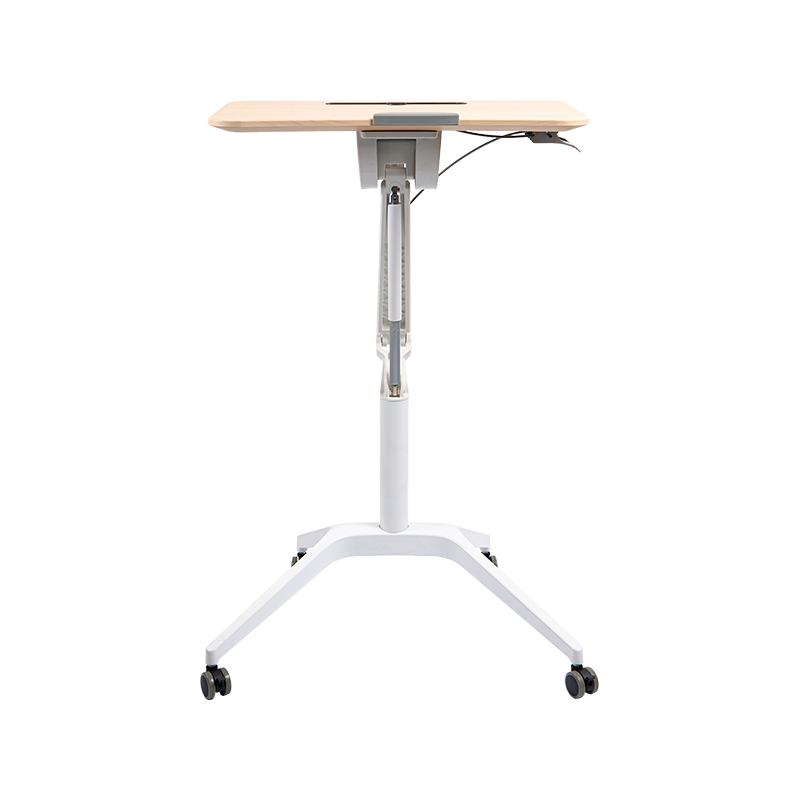
SK06-01 Natural Wood Style Pneumatic Height-Adjustable Desk
References
1. SuZhou Skyhone Intelligent Technology Co., Ltd. Product specification sheet for the SK06-01 Natural Wood Style Pneumatic Height-Adjustable Desk.
2. SuZhou Skyhone Intelligent Technology Co., Ltd. Product information and application guidance for pneumatic height-adjustable tables.
3. General principles of ergonomic workstation design and seated-to-standing work transitions.
4. General manufacturing principles for extruded aluminum profiles and powder-coated furniture frames.
5. General material care guidance for solid rubberwood furniture surfaces and indoor polyurethane casters.
Product: SK06-01 Natural Wood Style Pneumatic Height-Adjustable Desk


- Contact Info
-
-
 Phone+86-15950656125
-
 Email
-
 AddressRoom 1007-1, South Building, Suyue Plaza, Suzhou Industrial Park, Suzhou City, Jiangsu Province, China
-
- Products
- Follow Us
- Need help? Please contact us
Copyright ©
SuZhou Skyhone Intelligent Technology Co., Ltd.
All Rights Reserved.
Privacy
Custom Ergonomic Adjustable Office Tables Manufacturers

