

 English
  русский
  Español
  عربى
عربى 
Content
- 1 Why Ultra-High-Thrust Electric Actuation Matters
- 2 Core Performance of the TH-03 Actuator
- 3 Full Aluminum Alloy Housing for Industrial Protection
- 4 Transmission Design for High Load and Self-Locking
- 5 Protection Systems for Safer Operation
- 6 Advantages Compared with Conventional Hydraulic and Pneumatic Systems
- 7 Strengthened Internal Construction
- 8 Manufacturing Strengths and Engineering Approach
- 9 Application in Medical Operating Beds
- 10 Application in Industrial Equipment Covers and Shields
- 11 Application in Solar Tracking Brackets
- 12 Application in Assembly-Line Production Tools
- 13 Installation and System Integration Considerations
- 14 Maintenance and Serviceability
- 15 How the TH-03 Creates Competitive Value
- 16 Manufacturing and Supply Partnership Benefits
- 17 Selection Guide for Buyers and Engineers
- 18 Frequently Asked Questions
- 18.1 What is the maximum push force of the TH-03?
- 18.2 What is the pull force?
- 18.3 Does the actuator hold a load after power is removed?
- 18.4 What power supply does the actuator use?
- 18.5 How fast does the actuator move?
- 18.6 Is the TH-03 suitable for outdoor use?
- 18.7 What overload protection is included?
- 18.8 Can the mounting lugs be customized?
- 18.9 Can the telescopic stroke be customized?
- 18.10 What is the difference between this actuator and a light-duty desk actuator?
- 18.11 Does the actuator require hydraulic oil or compressed air?
- 18.12 What certifications are associated with the product?
- 18.13 What should be considered when installing the actuator?
- 19 Conclusion
- 20 References
- 21 Product: TH-03 Ultra-High Thrust Electric Linear Actuator
Ultra-High-Thrust Electric Linear Actuators for Heavy-Duty Lifting Applications
2026-08-08
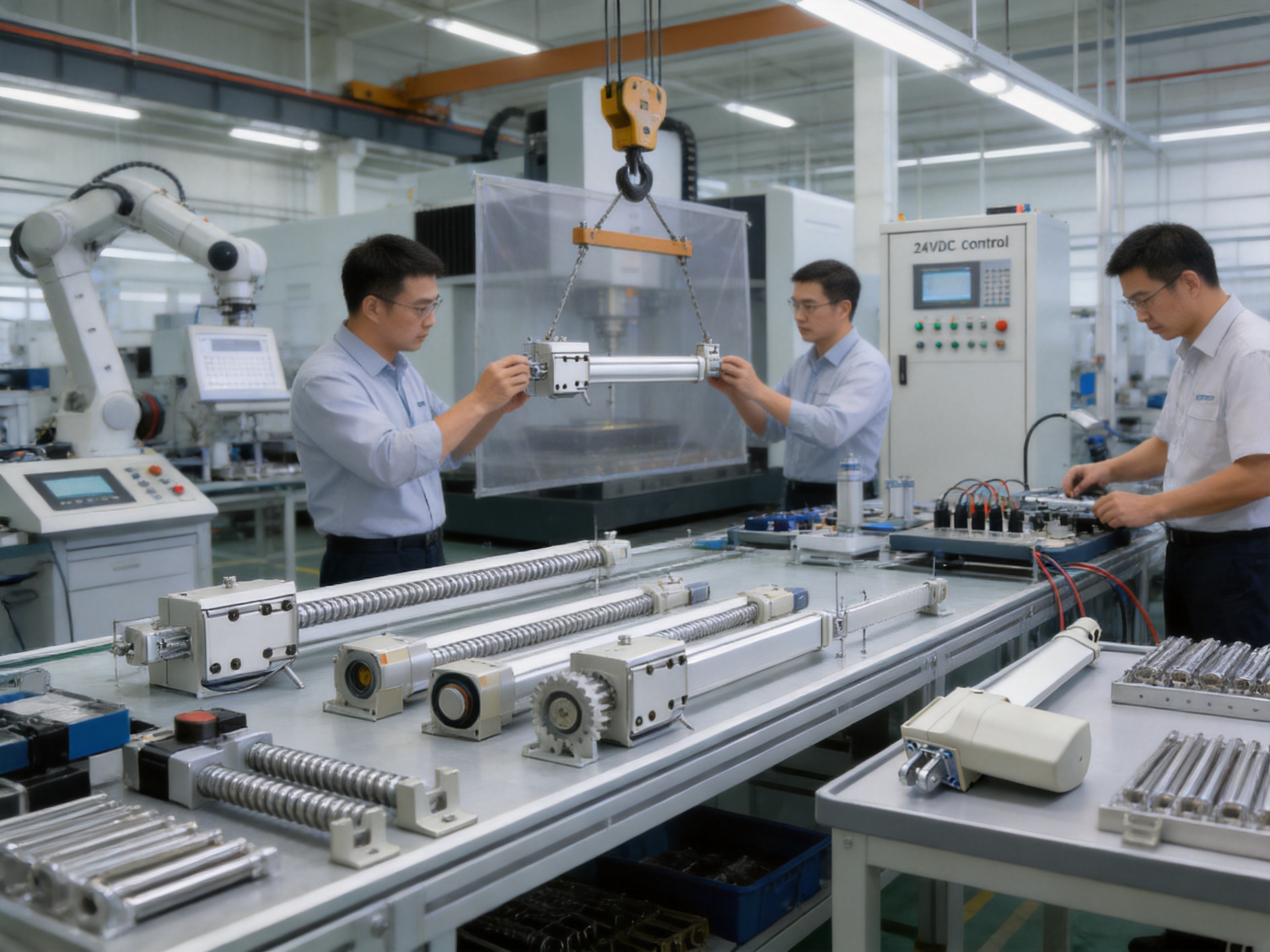
Heavy-duty lifting systems require more than simple up-and-down movement. They must deliver reliable force, stable positioning, controlled motion, and dependable operation in environments where equipment safety and uptime are essential. Medical beds, industrial machinery, solar tracking systems, production-line tools, equipment covers, and other large mechanisms often need an actuator that can repeatedly lift substantial loads without relying on hydraulic oil, compressed air, or complicated external systems.
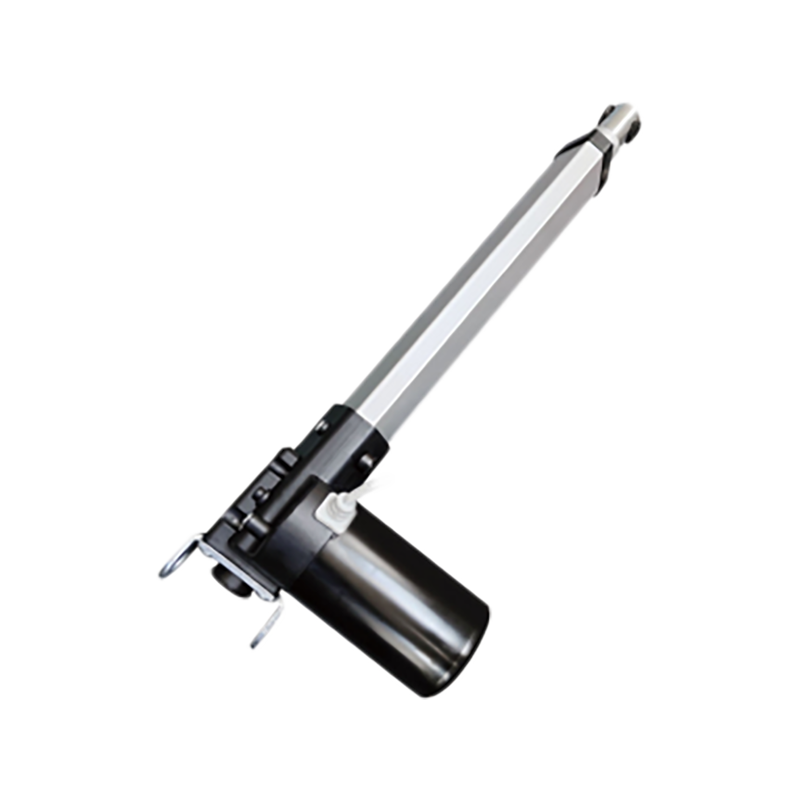
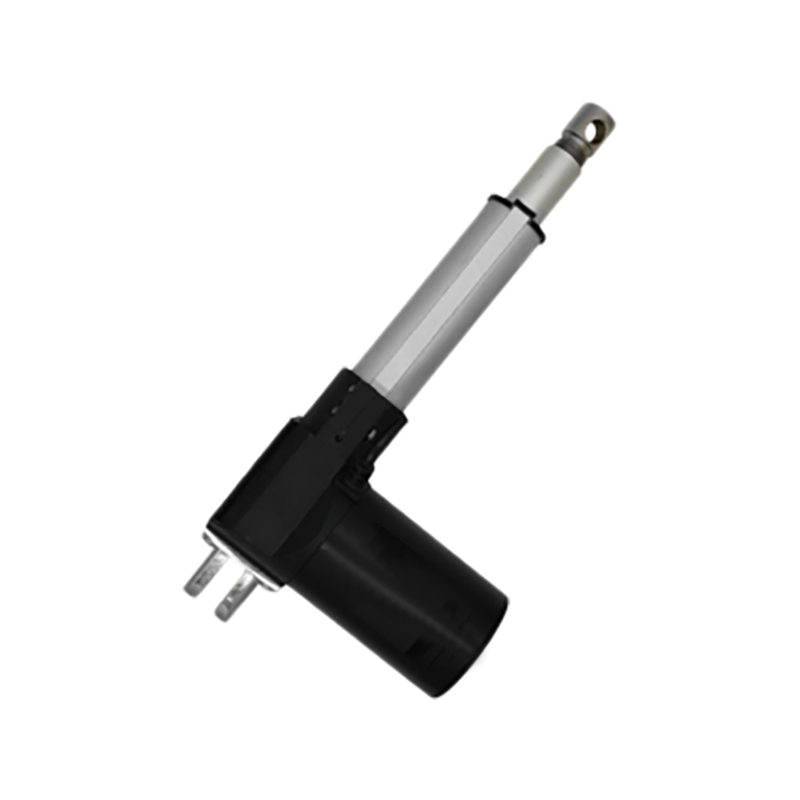
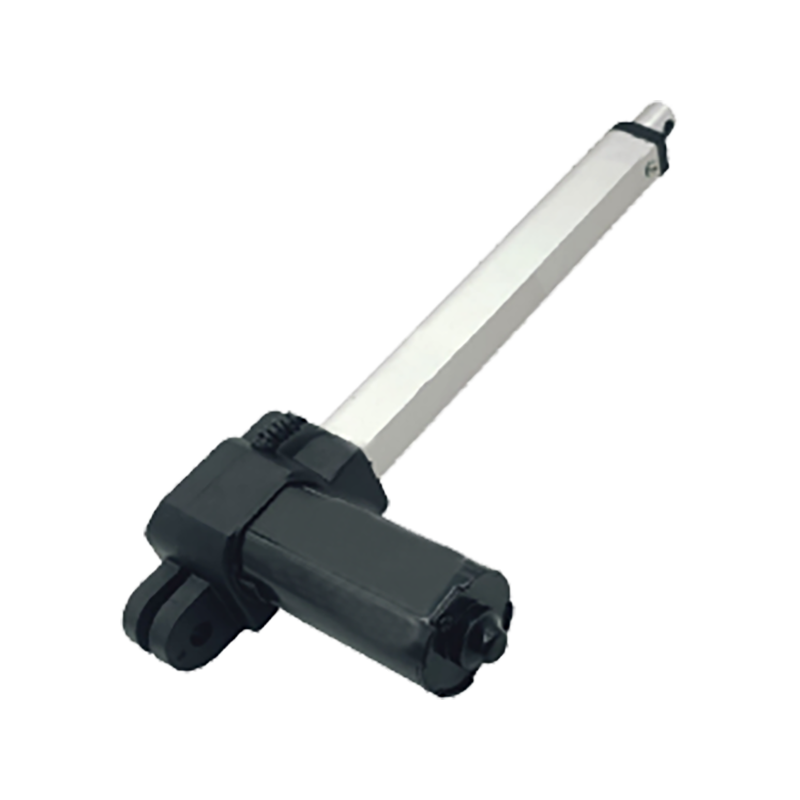
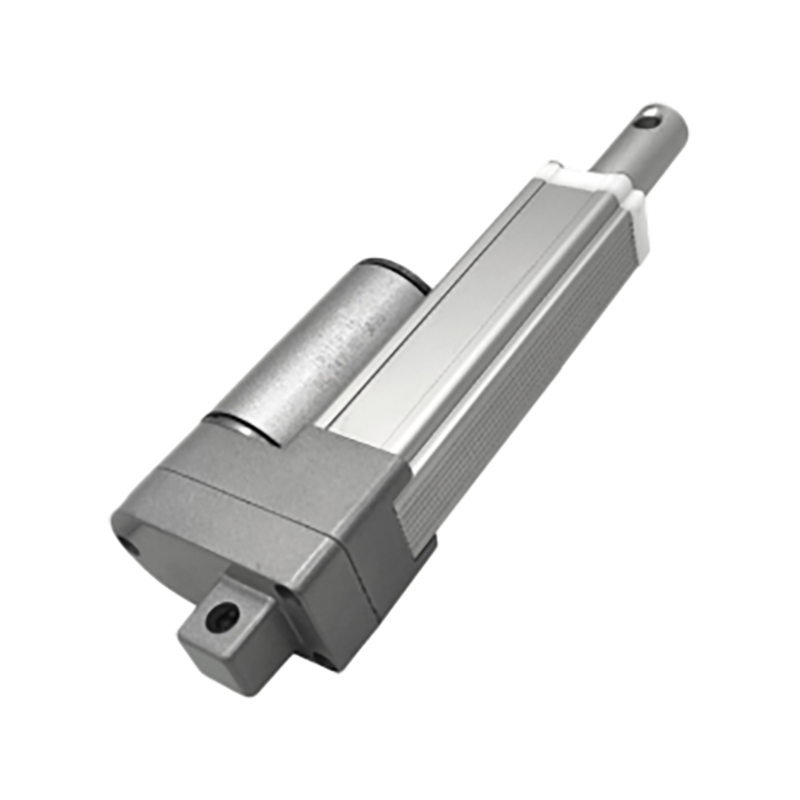
The TH-03 Ultra-High Thrust Electric Linear Actuator is designed for precisely these demanding conditions. Developed for high-load lifting and pushing applications, it combines an aluminum alloy housing, a powerful 24VDC motor system, a trapezoidal lead screw, metal reduction gears, electronic limit switches, overload protection, and a self-locking mechanical structure. Its rated push force reaches 8,000N, while its pull force and self-locking force reach 4,000N. With a uniform telescopic speed of 5mm/s, the actuator provides controlled and stable movement for equipment that must handle heavy loads safely.
Beyond its force output, the actuator reflects a practical approach to industrial product design. It is compact compared with many hydraulic lifting assemblies, easier to integrate than pneumatic systems, and cleaner to operate because it does not require hydraulic oil. Its modular structure simplifies installation, while customizable mounting lugs and stroke lengths allow the actuator to be adapted to different machine configurations.
Manufactured by SuZhou Skyhone Intelligent Technology Co., Ltd., a company focused on research, development, production, sales, and service in intelligent office and lifting solutions, the TH-03 represents an expansion of electric motion technology into heavier industrial applications. The company’s location in Suzhou, within the highly developed Yangtze River Delta manufacturing region, provides access to an extensive industrial supply chain, engineering resources, and intelligent manufacturing capabilities.
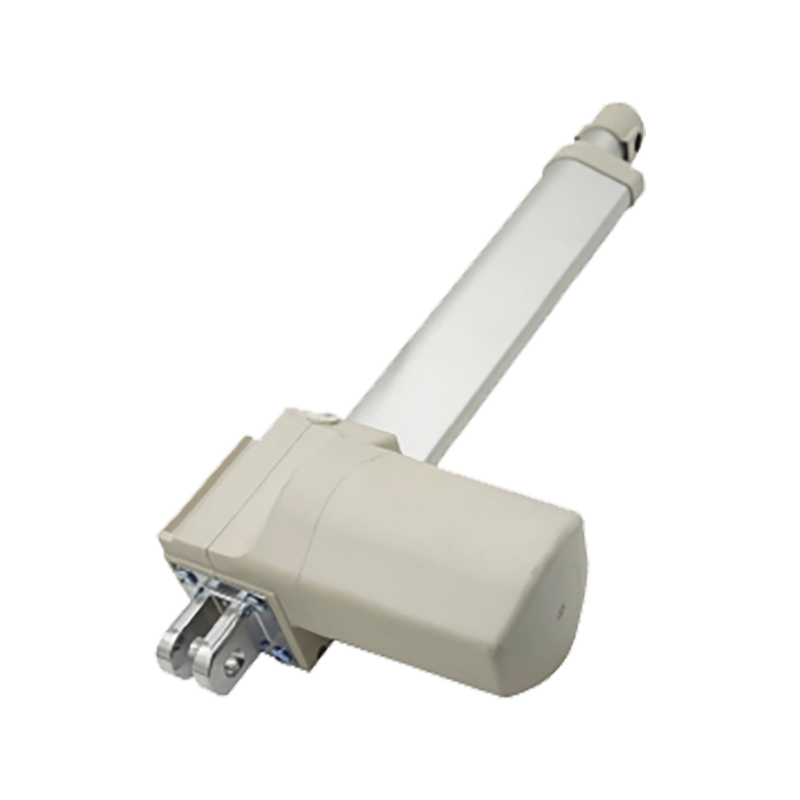
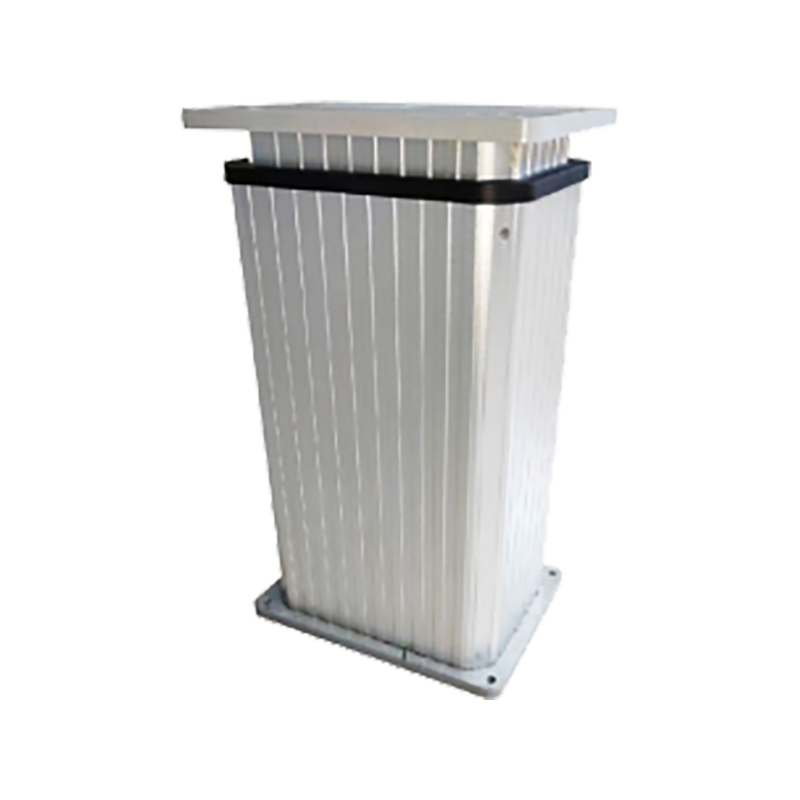
TH-03 Ultra-High Thrust Electric Linear Actuator
Why Ultra-High-Thrust Electric Actuation Matters
Actuators convert energy into mechanical movement. In an adjustable desk, an actuator raises or lowers a work surface. In a medical bed, it changes the position of a backrest, leg section, or platform. In industrial machinery, it may open a protective shield, position a heavy fixture, adjust a solar panel, or lift a production tool.
The challenge increases when the moving structure becomes heavier or when the equipment must operate frequently. A light-duty actuator may be suitable for office furniture but unsuitable for a large machine cover or a heavy production mechanism. Selecting an actuator with insufficient force can lead to slow movement, overheating, premature wear, unstable positioning, or mechanical failure.
Ultra-high-thrust actuators address this problem by combining a high-force motor and transmission system with a mechanical structure designed for compression and load-bearing conditions. The TH-03 is built around this principle. Its 8,000N push rating gives it the capacity to support demanding lifting tasks, while the 4,000N pull rating expands its usefulness to applications where controlled retraction or downward pulling is required.
Force alone, however, does not determine whether an actuator is suitable. A successful industrial actuator must also offer predictable speed, sufficient protection against environmental conditions, reliable end-of-stroke control, resistance to back-driving, and a housing capable of protecting internal components. The TH-03 addresses these requirements as an integrated system rather than treating thrust as an isolated specification.
Core Performance of the TH-03 Actuator
The TH-03 is powered by a 24VDC electrical supply and draws 4A at full load. This voltage is widely used in control systems, industrial equipment, mobile machinery, and low-voltage automation applications. Its 24VDC configuration allows system designers to connect the actuator to suitable power supplies, control boards, relays, switches, or programmable equipment without introducing the complexity of a high-voltage motor circuit.
The actuator provides a uniform telescopic speed of 5mm/s. This speed is intentionally balanced for high-load applications. Extremely fast movement is not always desirable when lifting a heavy structure, because rapid movement can increase impact forces, vibration, and positioning errors. A controlled 5mm/s motion rate helps equipment move steadily and gives operators or control systems more time to respond during adjustment.
The product is rated for an 8,000N pushing force. In practical terms, push force is especially important when the actuator extends to raise, press, open, tilt, or support a load. The 4,000N pulling force supports applications that require retraction under load, although the exact usable capacity of any installation will depend on mounting geometry, load distribution, stroke length, side loading, duty cycle, and the machine structure connected to the actuator.
The stated self-locking force is 4,000N. This characteristic comes from the trapezoidal lead screw and transmission design. When power is removed, the screw mechanism can resist reverse movement and help prevent a supported load from falling back. Self-locking does not eliminate the need for proper structural safety measures, secondary supports, or application-specific risk assessment, but it provides a valuable layer of mechanical stability in equipment that must hold its position after shutdown.
| Specification | TH-03 Performance | Practical Significance |
|---|---|---|
| Actuator type | Electric linear actuator | Provides controlled linear movement without hydraulic oil or compressed air |
| Maximum push force | 8,000N | Suitable for heavy lifting, pushing, opening, and positioning tasks |
| Pull force | 4,000N | Supports controlled retraction and pulling operations |
| Self-locking force | 4,000N | Helps resist reverse movement after power is removed |
| Power supply | 24VDC | Compatible with many low-voltage control and automation systems |
| Full-load current | 4A | Provides a clear basis for power supply and control-system selection |
| Telescopic speed | 5mm/s | Offers steady, controlled motion for heavy loads |
| Protection rating | IP54 | Provides protection against limited dust ingress and water splashes |
| Housing material | Aluminum alloy | Combines low weight, corrosion resistance, and structural protection |
| Limit control | Built-in electronic limit switches | Stops movement at the maximum and minimum stroke positions |
| Overload protection | Dual overload protection devices | Helps reduce the risk of damage caused by excessive load or obstruction |
When integrating the actuator, engineers should distinguish between the actuator’s rated force and the actual force required by the system. A lifting mechanism with an unfavorable lever arm may require much more actuator force than the weight alone suggests. Friction, acceleration, uneven loading, angular alignment, and side forces can also influence performance. Proper mechanical design and testing remain essential, but the TH-03’s high thrust rating gives designers more capacity to work with than many standard office or light-duty actuators.
Full Aluminum Alloy Housing for Industrial Protection
The TH-03 uses a full aluminum alloy lightweight housing. Aluminum alloy is valuable in actuator construction because it offers a useful combination of low mass, rigidity, corrosion resistance, and heat dissipation. Compared with a heavy steel enclosure, an aluminum housing can reduce the weight added to a moving assembly, which is particularly important in adjustable mechanisms and equipment that repeatedly changes position.
The housing also contributes to the actuator’s visual and functional identity. Its silver-white matte finish creates a clean and professional appearance suitable for medical equipment, modern industrial machinery, laboratory devices, and commercial installations. The matte surface is less visually distracting than a glossy finish and can help maintain a consistent appearance across an equipment platform.
Material selection is especially important when an actuator is installed in a humid or exposed environment. Aluminum alloy does not make a system immune to corrosion, and installation conditions must still be evaluated carefully, but it provides a practical foundation for resisting normal environmental exposure. The TH-03 also incorporates protective seals intended to help adapt the product to outdoor humid conditions.
The IP54 protection rating indicates that the actuator is protected against limited dust ingress and water splashes from different directions. It is not designed for immersion or high-pressure water jets. Therefore, the actuator should be installed with the intended orientation, cable routing, and environmental protection in mind. When used within its specified conditions, the IP54 design supports a broader range of industrial and semi-outdoor applications than an unprotected actuator.
Transmission Design for High Load and Self-Locking
At the center of the TH-03’s mechanical system is a trapezoidal lead screw. The trapezoidal thread form is widely used in power transmission because it can transfer force effectively and provide strong mechanical resistance to reverse movement. In a lifting application, this is a major advantage: after the motor stops, the load is less likely to force the screw backward and cause uncontrolled descent.
This self-locking behavior is one of the key differences between an industrial lead-screw actuator and systems that rely primarily on motor braking or external locking components. An electric motor may stop rotating when power is removed, but the load can still back-drive the transmission if the screw and gear arrangement do not resist reverse force. The TH-03’s mechanical self-locking design helps address this issue directly within the actuator.
Self-locking also improves energy efficiency during stationary periods. When a load is held in position by a suitable self-locking mechanism, the motor does not necessarily need to remain energized continuously to maintain the position. This can reduce unnecessary power consumption and help limit heat generation in the motor and control system. The actual holding behavior must still be validated against the installation’s load, angle, vibration, and safety requirements.
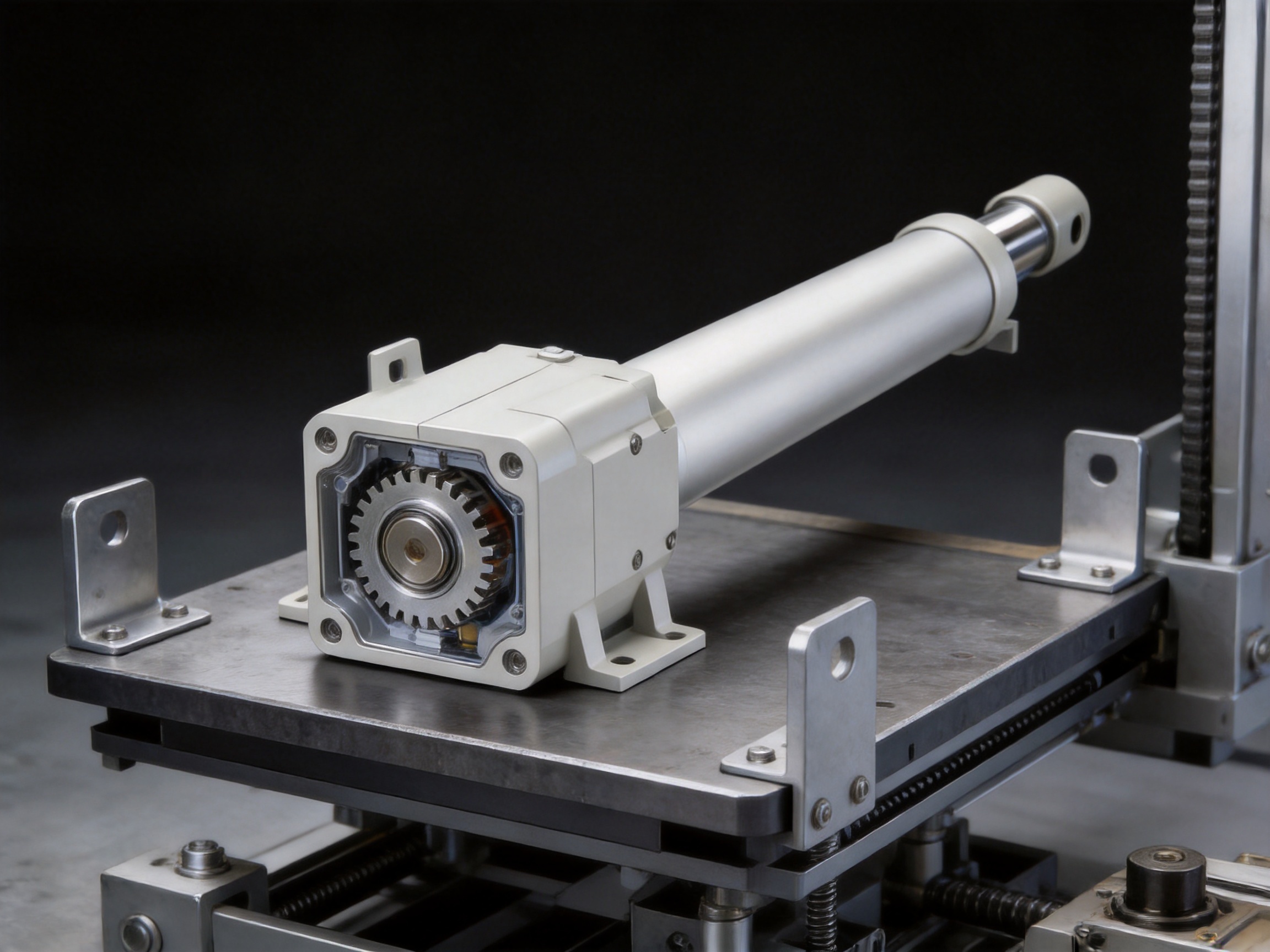
The actuator uses a metal reduction gear set to amplify torque and reduce operating speed. The gear reduction process allows a relatively compact motor to produce the high torque necessary for heavy lifting. It also contributes to the controlled 5mm/s extension and retraction rate. Metal gears are well suited to repeated industrial movement because they are designed to handle mechanical loads more effectively than many lightweight plastic transmission components.
Reduction gearing involves trade-offs. It increases torque and control but can also introduce mechanical wear, backlash, and noise if the gear set is poorly designed or inadequately lubricated. The TH-03 addresses the need for low operating noise through its integrated transmission design. Routine inspection, proper mounting, appropriate duty-cycle management, and avoidance of side loading remain important for achieving long service life.
Protection Systems for Safer Operation
The TH-03 includes built-in electronic limit switches. These switches detect when the actuator reaches the maximum or minimum stroke position and automatically interrupt power. This prevents the internal moving components from continuing beyond their designed travel range.
Limit control is essential in automated and semi-automated equipment. Without it, a motor could continue running after the actuator reaches the end of its stroke. The resulting mechanical pressure may damage the screw, gears, housing, mounting points, or connected machine structure. Built-in limit switches simplify system design by placing end-of-travel control within the actuator rather than requiring every installation to create a separate external stopping mechanism.
The actuator also incorporates dual overload protection devices. Overload protection is designed to help cut off power when the actuator encounters excessive resistance, an abnormal load, or a mechanical obstruction. This is particularly useful in equipment where the actuator may experience changing loads or where an operator could unintentionally place an object in the movement path.
Electronic limits and overload protection serve different but complementary functions. Limit switches respond to the actuator reaching its permitted travel boundary, while overload protection responds to excessive force or current-related stress. Together, they reduce the likelihood that a normal operating error will become a major mechanical failure.
Protection devices should not be treated as a replacement for a complete machine safety strategy. Designers should consider emergency stops, guarding, pinch-point protection, mechanical stops, overload margins, control logic, maintenance procedures, and applicable industry requirements. The TH-03 provides important internal safeguards, while the final system must be engineered for its specific hazards.
Advantages Compared with Conventional Hydraulic and Pneumatic Systems
Traditional hydraulic systems are capable of producing significant force, but they require pumps, reservoirs, valves, hoses, fittings, and hydraulic fluid. These additional components increase system size and installation complexity. Hydraulic systems may also require regular inspection for leaks and fluid contamination. In a clean medical environment or a precision industrial area, the possibility of oil leakage can be a serious concern.
The TH-03 does not use hydraulic oil. Its electric operating principle eliminates the need for a fluid power circuit and simplifies the overall architecture of the lifting system. This can reduce the number of components that must be installed around the actuator. It also supports cleaner equipment design, particularly where maintenance staff want to avoid fluid handling or where a leakage event could damage surrounding products.
Pneumatic systems use compressed air to produce movement. They can be fast and robust, but they require an air compressor, storage capacity, piping, valves, and air treatment equipment. Pneumatic actuators may also be less suitable for applications that require precise holding under a heavy static load unless additional control and locking components are added.
The TH-03 requires no external air source. A suitable 24VDC power supply and compatible control arrangement are sufficient for basic operation. This makes it easier to install in locations where compressed air is unavailable. It also makes the actuator attractive for equipment that must operate as an independent unit or within a compact machine enclosure.
Electric actuation can provide more direct control over movement. Designers can integrate switches, relays, sensors, programmable controllers, and synchronized motion systems according to the requirements of the equipment. The built-in electronic limits and overload devices further simplify the control architecture.
Compared with many general-purpose electric actuators, the TH-03 offers a significantly higher thrust capacity. Standard actuators used in furniture and light automation may not be suitable for large equipment or heavy production tools. The TH-03 is specifically optimized for heavy pressure-bearing applications, with strengthened internal lead-screw and casing dimensions intended to improve compression resistance.
These advantages do not mean that electric linear actuators replace every hydraulic or pneumatic solution. Hydraulic systems may remain appropriate for extremely high force, very fast movement, or specialized environments. Pneumatic systems may be preferred for certain high-speed repetitive tasks. The advantage of the TH-03 is that it provides a strong, clean, and comparatively simple electric alternative for applications where 8,000N push force, controlled speed, and self-locking behavior meet the design requirements.
Strengthened Internal Construction
The TH-03 differs from a basic actuator design by optimizing the thickness of its internal lead screw and casing for heavy pressure-bearing conditions. This is an important engineering decision because high thrust places stress on multiple components, not just the motor. The lead screw must transmit force, the casing must resist deformation, the gears must transfer torque, and the mounting points must maintain alignment.
Increasing the strength of the screw and casing helps the actuator tolerate compressive loads more effectively. It also supports more stable operation when the actuator is used to lift heavy equipment or maintain a loaded mechanism in position. A robust casing protects internal components from impact and helps preserve the alignment needed for smooth screw movement.
Alignment is critical in any linear actuator. The actuator should be mounted so that the load travels along the intended axis. Side loading, bending forces, and misalignment can create friction and uneven wear even when the rated axial force is not exceeded. The TH-03’s strengthened structure is designed for heavy-duty axial work, but it should not be used as a substitute for external guides where the load naturally produces lateral forces.
In a well-designed machine, guides, brackets, hinges, and the actuator work together. The actuator provides the push or pull force, while the surrounding mechanical structure controls the path of movement. This arrangement allows the TH-03 to operate efficiently and reduces unnecessary stress on the screw and housing.
Manufacturing Strengths and Engineering Approach
Manufacturing a high-thrust actuator requires coordinated control over materials, machining, transmission assembly, electrical components, sealing, and final testing. A product may have a high nominal force rating, but its real-world value depends on whether the individual components are accurately manufactured and consistently assembled.
SuZhou Skyhone Intelligent Technology Co., Ltd. is engaged in research and development, production, sales, and service. This integrated business structure supports a product-development process in which customer requirements can be connected with mechanical design, manufacturing, customization, and after-sales support. For buyers of industrial equipment, this can be more valuable than purchasing a generic actuator with no engineering support.
The company is based in Suzhou, a core area of the Yangtze River Delta furniture and manufacturing industry. The region benefits from a mature industrial ecosystem that includes metal processing, electronics, motor components, control equipment, surface treatment, assembly services, and logistics. Access to this network can support responsive product development and efficient supply-chain coordination.
The TH-03 reflects several manufacturing priorities. The aluminum alloy housing requires controlled forming or machining, accurate dimensional control, and appropriate surface treatment. The lead screw and gear set require suitable material selection, thread accuracy, tooth engagement, and assembly alignment. Protective seals must be installed correctly to support the stated IP54 protection level. Electronic limit switches and overload protection devices must be integrated so that the electrical and mechanical systems function together reliably.
An advanced manufacturing process for this type of product generally depends on repeatable procedures rather than one isolated operation. Incoming materials need to be checked for conformity. Machined or formed components need dimensional verification. Transmission parts need to be assembled with correct clearances. Electrical connections need continuity and insulation checks. Finished actuators need functional testing across extension, retraction, limit stopping, and overload response.
These manufacturing disciplines are especially important for customized orders. The TH-03 supports customization of mounting lugs and telescopic strokes. A mounting lug affects the installation geometry and load direction, while stroke length determines the total travel available to the machine. Customization must therefore be managed through engineering review, dimensional confirmation, prototype evaluation when necessary, and production consistency.
Customization can provide a major advantage over off-the-shelf alternatives. Instead of forcing a standard actuator into an unsuitable position, equipment designers can specify a configuration that better matches the frame, hinge, bracket, and load path. This can reduce installation compromises and improve the overall performance of the finished machine.
Application in Medical Operating Beds
Medical operating beds and treatment platforms require controlled adjustment, stable positioning, and clean operation. Electric linear actuators are widely used to raise platforms, tilt sections, or adjust back and leg supports. In such applications, the actuator must work smoothly and stop reliably at defined positions.
The TH-03 can be considered for medical equipment that requires unusually high lifting capacity. Its lack of hydraulic oil helps support a clean equipment design, while its 24VDC power supply is suitable for low-voltage control architectures. The self-locking lead screw can help maintain position when power is removed, although medical-device manufacturers must complete their own safety validation and compliance assessments for the final product.
Medical equipment designers should pay close attention to noise, cleaning procedures, pinch-point protection, emergency lowering, redundant support, and duty cycle. The TH-03’s low-noise transmission design and protective housing can contribute to a suitable platform, but the actuator must be integrated into a complete medical system that meets the required regulatory and clinical standards.
Application in Industrial Equipment Covers and Shields
Large equipment covers and safety shields often need to open for maintenance and close during operation. These structures may be too heavy for manual lifting or too large for a standard light-duty actuator. A high-thrust electric actuator can provide controlled opening and closing while reducing operator effort.
The TH-03’s push force is useful when extending an actuator to open a cover or move a protective shield. Its self-locking behavior can help hold the structure in position after movement stops. Electronic limit switches can define the open and closed positions, while overload protection can respond if the shield encounters an obstruction or unexpected resistance.
For these installations, designers should ensure that the cover is balanced or guided correctly. The actuator should not be expected to absorb all hinge misalignment or lateral loading. Mechanical stops should be designed to prevent excessive force at the end of travel, and control logic should prevent movement when personnel are inside a hazardous area.
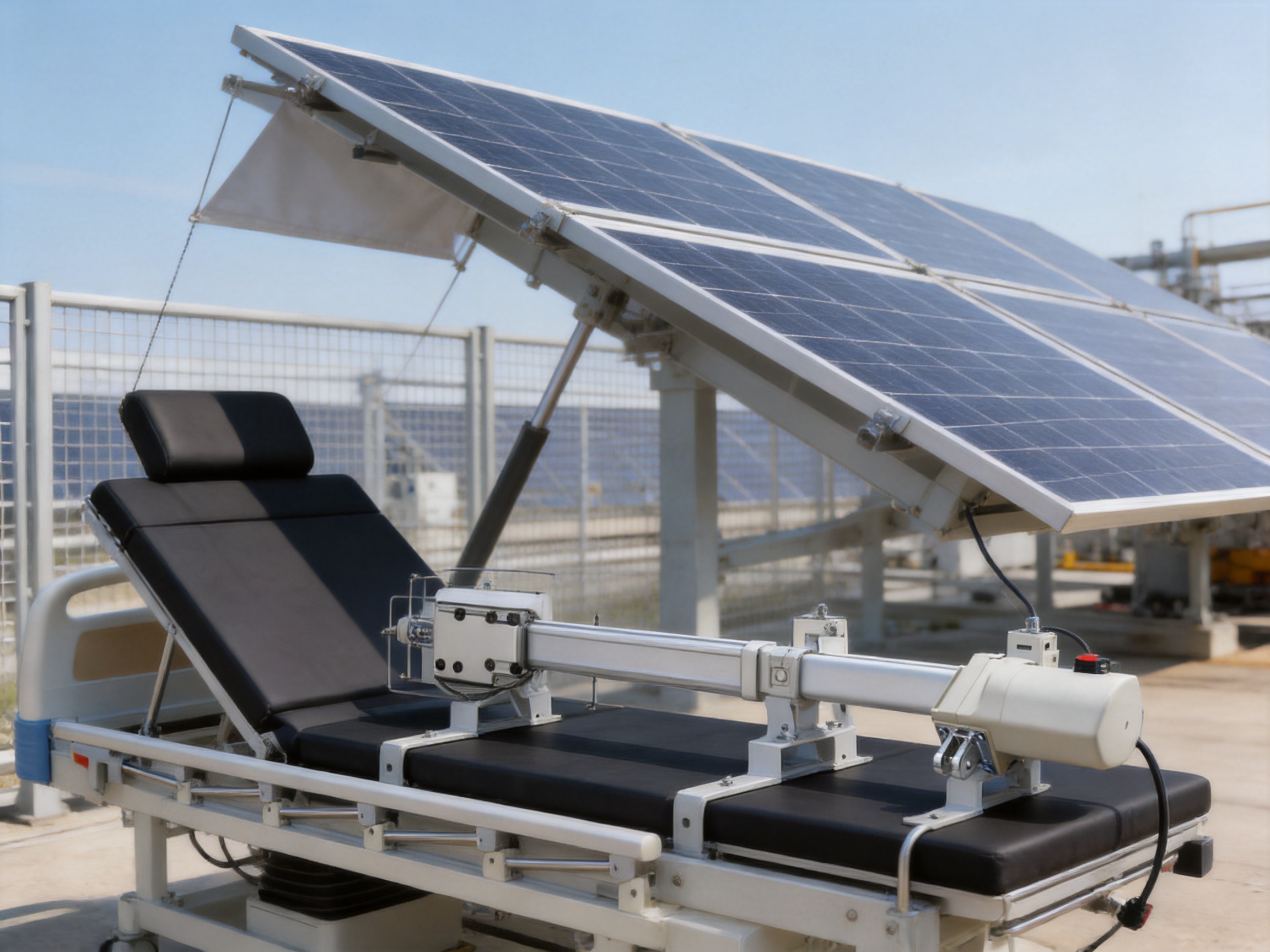
Application in Solar Tracking Brackets
Solar tracking systems adjust the angle of photovoltaic panels to improve exposure to sunlight. These structures may be installed outdoors and may experience wind, humidity, dust, temperature changes, and repeated movement. An actuator used in a solar tracker must provide sufficient force to move the panel array and resist unwanted movement when the motor is not operating.
The TH-03’s IP54 protection rating, aluminum alloy housing, protective seals, and self-locking transmission make it a candidate for selected solar tracking structures. Its 24VDC supply can also fit systems that already use low-voltage electrical architecture. The 5mm/s telescopic speed provides controlled adjustment rather than abrupt movement.
Outdoor solar applications require careful environmental evaluation. IP54 protection is intended for limited dust and water exposure, not immersion or direct high-pressure cleaning. The actuator should be mounted in a position that minimizes standing water, and cable connections should be sealed appropriately. Wind-load calculations, panel weight, leverage, and emergency positioning requirements must be assessed before selection.
Application in Assembly-Line Production Tools
Assembly lines often use lifting fixtures, tooling platforms, positioning devices, and adjustable production aids. Some of these tools must move heavy components repeatedly during a shift. A suitable actuator must provide enough force while tolerating frequent start-stop operation.
The TH-03’s metal reduction gear set is intended for industrial high-frequency start-stop scenarios. Its high thrust capacity can support production tools that exceed the capabilities of standard furniture actuators. The integrated limit and overload protection systems can simplify the design of repeatable motion sequences and help protect the actuator when a fixture is misloaded or obstructed.
Production engineers should evaluate the required duty cycle carefully. Start-stop frequency, load percentage, stroke length, ambient temperature, and rest periods all influence motor and transmission performance. A high force rating does not mean the actuator should operate continuously at maximum load without an appropriate duty-cycle review. Testing under actual production conditions is recommended.
Installation and System Integration Considerations
Correct installation is essential for realizing the benefits of a heavy-duty actuator. The first consideration is axial alignment. The actuator should push or pull along its intended centerline, and the moving structure should have its own guides, hinges, or rails when necessary. Side loads can increase friction and accelerate wear.
Mounting lugs must be selected according to the machine’s geometry. The TH-03 supports customized mounting lugs, which can be useful when standard brackets cannot provide the correct pivot position. The distance between mounting points in the retracted and extended conditions should be calculated before ordering the actuator. The selected stroke must allow the required movement without causing mechanical interference.
The power supply should be capable of providing the required 24VDC output and handling the actuator’s 4A full-load current. Additional capacity may be appropriate depending on startup characteristics, control-system losses, ambient conditions, and whether multiple actuators operate simultaneously. Wiring should be selected according to current, distance, voltage drop, insulation, and environmental conditions.
Control systems should account for the actuator’s built-in limits and overload protection. External controls should not repeatedly command the actuator after it has reached an internal limit or entered an overload state. If the actuator is part of a synchronized multi-actuator system, the control architecture should address position differences, unequal loading, and fault conditions.
Mechanical stops may be useful as an additional protective measure, but they should not be positioned in a way that forces the actuator to drive continuously against them. When the system reaches its intended endpoint, the actuator should stop through the appropriate limit control or external command.
During commissioning, technicians should test operation without the full load first, then gradually introduce the working load. They should observe extension and retraction speed, sound, alignment, current behavior, mounting stability, and limit stopping. Any abnormal noise, vibration, heating, or uneven motion should be investigated before normal operation begins.
Maintenance and Serviceability
Electric linear actuators generally require less supporting infrastructure than hydraulic or pneumatic systems, but they are not maintenance-free. Regular inspection helps identify problems before they affect the entire machine. Maintenance personnel should check mounting bolts, brackets, cables, connectors, seals, and surrounding guides.
The actuator should be kept free of unnecessary impact, excessive contamination, and standing water. Although the IP54 rating provides protection against limited dust and splashing water, correct installation and routine cleaning remain important. Harsh chemicals, abrasive particles, or high-pressure cleaning can exceed the intended protection conditions.
Inspectors should listen for changes in operating noise. A sudden increase in noise may indicate gear wear, screw contamination, misalignment, loose mounting hardware, or excessive loading. Changes in speed or hesitation may also indicate a mechanical or electrical issue.
Because the lead screw and gear set are internal components, service procedures should follow the manufacturer’s recommendations. Unauthorized modification can affect the actuator’s protection rating, limit function, overload protection, and structural integrity. If a product is customized, service personnel should retain the configuration details for the mounting lugs, stroke, wiring, and control arrangement.
How the TH-03 Creates Competitive Value
The TH-03 competes in a market that includes light-duty electric actuators, hydraulic cylinders, pneumatic cylinders, and general-purpose industrial linear drives. Its main competitive value comes from balancing several advantages in one product.
First, its 8,000N push force places it above many actuators intended primarily for office furniture or lightweight automation. This makes it more suitable for heavy equipment and large moving structures.
Second, the actuator uses a mechanical self-locking lead-screw design. This helps support stable load holding after shutdown and can reduce dependence on continuous motor power or additional locking mechanisms.
Third, it provides a cleaner alternative to hydraulic actuation because there is no hydraulic oil and no hydraulic reservoir, pump, or hose network. It also avoids the need for an external compressed-air source required by pneumatic systems.
Fourth, its full aluminum alloy housing offers a balance between protection and weight. A lighter actuator can simplify the design of moving structures, while the corrosion-resistant housing and protective seals support use in humid conditions.
Fifth, electronic limit switches and dual overload protection are integrated into the product. These features reduce the amount of external protection that the equipment designer must develop independently.
Finally, the ability to customize mounting lugs and telescopic strokes gives the product greater adaptability. Many industrial projects involve unusual dimensions, restricted installation spaces, or special pivot arrangements. A configurable actuator can reduce the need for complex adapter structures.
The appropriate comparison is not simply “which actuator has the highest force.” A complete evaluation should consider force, speed, holding behavior, protection, noise, installation complexity, maintenance, energy source, control compatibility, and supplier support. The TH-03 is designed to perform strongly across these categories for applications that require heavy electric linear motion.
Manufacturing and Supply Partnership Benefits
Industrial customers often need more than a single component. They need technical communication, configuration assistance, stable production, quality documentation, delivery coordination, and after-sales support. A manufacturer involved in research, development, production, sales, and service can connect these needs more effectively.
SuZhou Skyhone Intelligent Technology Co., Ltd. focuses on intelligent office and lifting solutions and operates within the manufacturing environment of Suzhou. Its experience with standing desks and adjustable mechanisms provides a foundation in electric lifting systems, while the TH-03 extends that expertise toward higher-load industrial applications.
The company’s regional location supports cooperation with suppliers and manufacturing partners across the Yangtze River Delta. This can be beneficial when products require metal housings, motor systems, gear assemblies, electronic controls, seals, and customized brackets. A connected supply chain can support faster communication between design and production teams and make it easier to address application-specific requirements.
For original equipment manufacturers, customization capability is often a deciding factor. The ability to discuss mounting lugs, stroke dimensions, and application conditions before production can improve integration quality. It also allows the actuator to be evaluated as part of the complete machine rather than as an isolated catalog item.
Quality should be managed throughout the manufacturing process. Material inspection, dimensional checks, assembly control, electrical testing, functional testing, and final inspection all contribute to consistent product performance. The TH-03’s CE and RoHS compliance certifications provide additional evidence that the product has been developed with recognized safety and material requirements in mind. Customers should still confirm the documentation and conformity requirements applicable to their final equipment and market.
Selection Guide for Buyers and Engineers
Before selecting the TH-03, buyers should calculate the actual force requirement of the application. The calculation should include the load weight, angle of movement, leverage, friction, acceleration, and any additional force caused by an unbalanced structure. A safety margin should be included so that the actuator is not operated continuously at its absolute limit.
The required stroke should be measured from the fully retracted mounting position to the fully extended position. Buyers should also verify the available installation length, pivot clearance, and the angle through which the connected structure moves. A stroke that is too short may not achieve the desired motion, while a stroke that is too long can create interference or overextension.
The duty cycle should be defined. A system used occasionally in a medical or laboratory environment may have different requirements from an actuator used repeatedly on an assembly line. The number of cycles per hour, load per cycle, rest period, ambient temperature, and expected service life should be considered during specification.
Environmental conditions should also be documented. Indoor dry environments, humid workshops, outdoor structures, dusty production areas, and washdown zones have different requirements. The TH-03’s IP54 rating is useful for limited dust and splash exposure, but installations involving immersion, strong jets, corrosive chemicals, or severe contamination may require additional protection or a different actuator specification.
Finally, buyers should confirm power and control compatibility. The 24VDC supply and 4A full-load current should be matched with the machine’s electrical system. The control panel should be able to manage direction, stopping, limit behavior, overload response, and emergency conditions.
Frequently Asked Questions
What is the maximum push force of the TH-03?
The TH-03 provides a maximum push force of 8,000N. This makes it suitable for many heavy-duty lifting, pushing, opening, and positioning applications. The real usable force depends on mounting geometry, alignment, duty cycle, load distribution, and the design of the connected machine.
What is the pull force?
The stated pull force is 4,000N. Applications that require retraction under load should be evaluated according to the actual direction of force, leverage, friction, and movement path.
Does the actuator hold a load after power is removed?
The trapezoidal lead screw provides mechanical self-locking performance, with a stated self-locking force of 4,000N. This helps resist reverse movement after shutdown. For safety-critical lifting applications, external mechanical supports or secondary safety systems should still be considered.
What power supply does the actuator use?
The TH-03 uses a 24VDC power supply. Its full-load current is 4A. The power supply and control system should be selected with suitable capacity for the intended load, wiring distance, operating cycle, and number of actuators.
How fast does the actuator move?
The telescopic speed is 5mm/s. This controlled speed is appropriate for many heavy-load applications where smooth and stable positioning is more important than rapid movement.
Is the TH-03 suitable for outdoor use?
The actuator has an IP54 protection rating and protective seals, allowing it to adapt to outdoor humid conditions within the limits of the specification. It is not intended for immersion or high-pressure water exposure. Outdoor installations should be designed to prevent standing water and protect cable connections.
What overload protection is included?
The product includes dual overload protection devices. These are designed to help cut off power when the actuator encounters excessive load or abnormal resistance. The final machine should also include appropriate external safety controls and protection systems.
Can the mounting lugs be customized?
Yes. The TH-03 supports customization of mounting lugs. This allows the actuator to be adapted to specific machine frames, pivot points, and installation dimensions.
Can the telescopic stroke be customized?
Yes. Telescopic stroke customization is supported. Customers should provide the required retracted length, extended length, movement distance, mounting geometry, and application conditions for engineering evaluation.
What is the difference between this actuator and a light-duty desk actuator?
The TH-03 is designed for ultra-high-thrust applications, with an 8,000N push force and strengthened internal lead screw and casing. It is intended for heavy equipment and industrial mechanisms rather than ordinary office lifting requirements.
Does the actuator require hydraulic oil or compressed air?
No. The TH-03 is an electrically powered actuator and does not require hydraulic oil or an external compressed-air source. It operates from a 24VDC electrical supply.
What certifications are associated with the product?
The product has passed CE and RoHS compliance certifications. Customers should verify the relevant documentation and confirm any additional certification requirements for the final machine, industry, and destination market.
What should be considered when installing the actuator?
Important considerations include axial alignment, load distribution, mounting strength, stroke clearance, side-load prevention, power capacity, duty cycle, environmental conditions, limit control, and emergency safety measures. Proper commissioning should begin with low-load testing before full-load operation.
Conclusion
The TH-03 Ultra-High Thrust Electric Linear Actuator is designed for heavy lifting and positioning tasks that exceed the practical range of many standard electric actuators. Its 8,000N push force, 4,000N pull force, 4,000N self-locking force, 24VDC power system, and 5mm/s controlled speed provide a strong foundation for industrial motion applications.
Its advantages extend beyond force output. The full aluminum alloy housing reduces weight while providing corrosion resistance and structural protection. The trapezoidal lead screw supports mechanical self-locking, while the metal reduction gears amplify torque and support controlled movement. Built-in electronic limit switches and dual overload protection devices help protect the actuator and the connected equipment.
Compared with hydraulic and pneumatic alternatives, the TH-03 offers a cleaner and more compact electric solution without hydraulic oil, compressed-air infrastructure, or a large supporting power unit. Its modular construction, customizable mounting lugs, and customizable stroke options also make it suitable for equipment manufacturers that need a product adapted to a specific machine design.
Backed by a Suzhou-based manufacturer engaged in research, development, production, sales, and service, the actuator benefits from an industrial environment known for strong supply-chain resources and intelligent manufacturing capabilities. For medical operating beds, industrial equipment shields, solar tracking brackets, assembly-line tooling, and other heavy-duty systems, the TH-03 provides a practical combination of high thrust, stable holding, protection, customization, and integration flexibility.
References
1. Product technical information supplied for the TH-03 Ultra-High Thrust Electric Linear Actuator.
2. General principles of electric linear actuator selection, including force, speed, stroke, duty cycle, alignment, and load distribution.
3. Industrial guidelines for integrating low-voltage DC motors and actuators into automated equipment.
4. General interpretation of IP protection ratings for dust and water exposure.
5. General engineering practices for trapezoidal lead screws, mechanical self-locking, and power transmission.
6. General considerations for machine guarding, overload protection, limit control, emergency stopping, and risk assessment.
7. Product compliance information relating to CE and RoHS requirements as provided in the product materials.
Product: TH-03 Ultra-High Thrust Electric Linear Actuator


- Contact Info
-
-
 Phone+86-15950656125
 -
 Email
Email -
 AddressRoom 1007-1, South Building, Suyue Plaza, Suzhou Industrial Park, Suzhou City, Jiangsu Province, China
-
- Products
- Follow Us
- Need help? Please contact us
Copyright ©
SuZhou Skyhone Intelligent Technology Co., Ltd.
All Rights Reserved.
Privacy
Custom Ergonomic Adjustable Office Tables Manufacturers

