

 English
  русский
  Español
  عربى
عربى 
Content
- 1 Introduction: The Rise of Device-Integrated Workspaces
- 2 Unpacking the TH01-2: Key Features and Functionalities
- 3 How the TH01-2 Outperforms Competitors
- 4 Advanced Manufacturing Processes: The Backbone of Quality
- 5 Real-World Applications: Where the TH01-2 Shines
- 6 Q&A Section: Addressing Common User Concerns
- 6.1 Q1: What is the maximum weight capacity of the TH01-2?
- 6.2 Q2: Is the gas spring mechanism easy to maintain?
- 6.3 Q3: Can the TH01-2 be used outdoors?
- 6.4 Q4: Does the manufacturer offer a warranty?
- 6.5 Q5: Can the TH01-2 be customized for specific needs?
- 6.6 Q6: Is the TH01-2 compatible with devices other than iPads?
- 6.7 Q7: How long does it take to assemble the TH01-2?
- 6.8 Q8: Can the tilt mechanism be locked in any position?
- 6.9 Q9: Are replacement parts available?
- 6.10 Q10: Does the TH01-2 come with a cable management system?
- 7 Why Choose the Manufacturer Behind the TH01-2?
- 8 Conclusion: The TH01-2 as a Catalyst for Workspace Transformation
- 9 References
The Future of Device-Centric Workstations: A Deep Dive into the TH01-2 Pneumatic Adjustable Desk
2026-03-11
Introduction: The Rise of Device-Integrated Workspaces
As mobile devices like iPads become ubiquitous in modern workplaces—from manufacturing floors to lab settings, medical facilities to educational institutions—the need for workstations that adapt seamlessly to these tools has never been greater. Static desks, designed for traditional office tasks, fail to meet the demands of dynamic work environments where frequent repositioning of devices, adjustment of viewing angles, and mobility are critical. Enter the TH01-2 iPad High-Legged Pneumatic Height-Adjustable Desk: a game-changer in device-centric workstations that combines ergonomic design, robust construction, and intuitive functionality. This article explores how this product stands out from competitors, the advanced manufacturing processes behind it, and why it’s become a go-to solution for organizations prioritizing efficiency, comfort, and durability.
Today’s workplaces are no longer confined to fixed desks and desktop computers. The proliferation of tablets, laptops, and other mobile devices has transformed how we work—requiring workstations that can keep up with our changing needs. Whether it’s a nurse moving between patient bedsides, a lab technician adjusting equipment for different experiments, or a teacher setting up an interactive learning station, the TH01-2 addresses these needs with a design that puts user and device flexibility at its core.
Unpacking the TH01-2: Key Features and Functionalities
To understand the TH01-2’s superiority, we first examine its core features, each engineered to address specific pain points in device-focused workspaces.
1. Precision Lifting with Gas Spring Technology
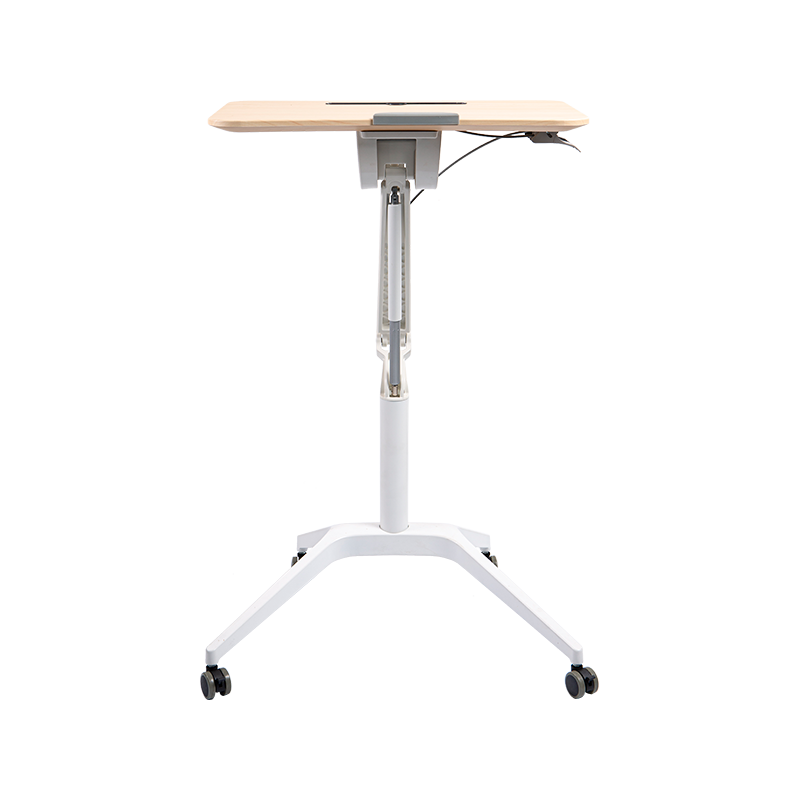
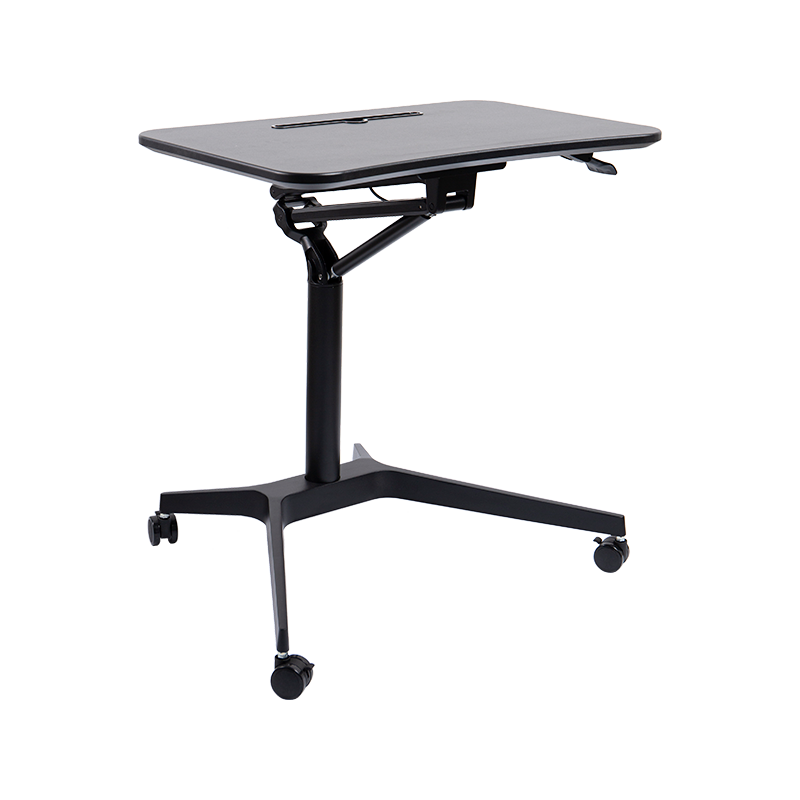
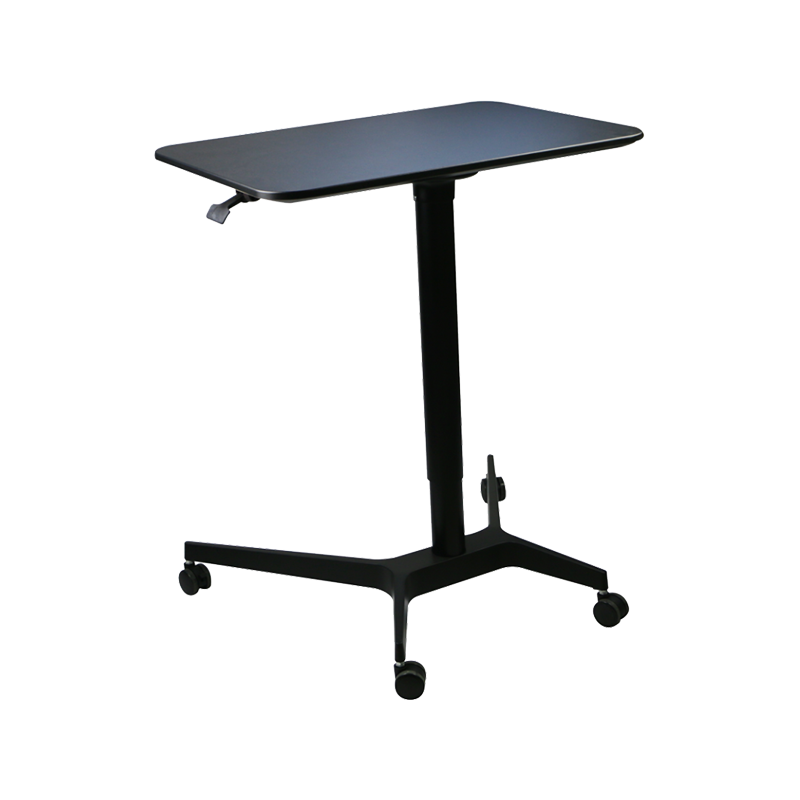
Unlike manual height-adjustable desks that require physical effort or electric desks that depend on power sources, the TH01-2 uses a high-performance gas spring lifting mechanism. This allows for smooth, stepless height adjustment within a range of 750mm to 1060mm—covering the full spectrum of seated and standing postures for users of varying statures (from 150cm to 190cm tall).
For users, this means transitioning between sitting and standing postures is effortless—no cranking, no waiting for motors to respond. The gas spring system also features a built-in damping mechanism that prevents sudden drops or jolts, ensuring the desk remains stable at any height. This stability is critical for protecting sensitive devices like iPads, which can be damaged by wobble or sudden movements. (Image: TH01-2 in use, showing height adjustment from seated to standing)
Industry tests have shown that the TH01-2’s gas spring mechanism can withstand up to 100,000 adjustment cycles—three times more than the average electric desk motor (which typically lasts 30,000 cycles). This longevity translates to lower total cost of ownership for organizations, as they won’t need to replace the desk as frequently.
2. Stepless Tilt Mechanism for Optimal Viewing
A standout feature of the TH01-2 is its 90° stepless tilt mechanism. This allows the tabletop to be adjusted to any angle between flat (0°) and vertical (90°), making it ideal for tasks that require different viewing perspectives—from typing on an iPad to presenting content to a group, or even using the device as a touchscreen at a standing height.
Competitors often offer limited tilt ranges (e.g., 0-30°) or fixed-angle options, which restrict usability. For example, a fixed-angle desk may force a user to tilt their neck down to view an iPad, leading to neck strain over time. The TH01-2’s full 90° tilt ensures that users can always find the perfect angle to reduce eye strain and improve productivity. (Image: Close-up of tilt mechanism in action, showing 90° vertical position)
The tilt mechanism also features a spring-loaded lock that can be engaged at any angle, ensuring the tabletop remains stable even when pressure is applied (e.g., typing on the iPad or placing a heavy accessory on the surface). This lock is easy to operate with one hand, allowing users to adjust the angle quickly without interrupting their workflow.
3. Robust Material Construction for Industrial Durability
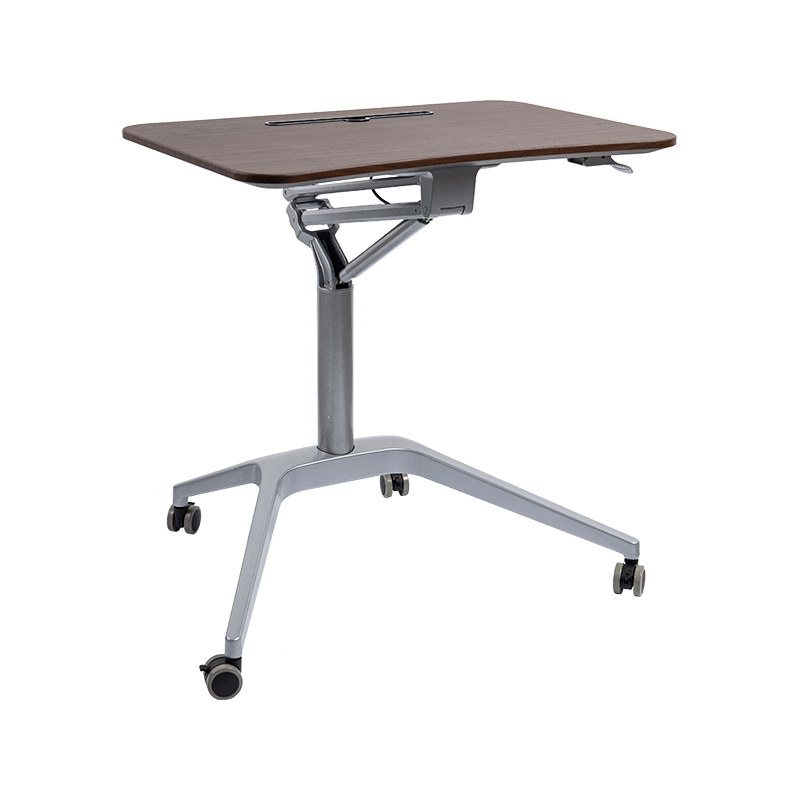
The TH01-2 is built to withstand high-frequency use in industrial environments. Its main frame uses an aluminum and iron composite structure—aluminum for lightness (reducing the desk’s total weight to just 18kg) and corrosion resistance, iron for strength (supporting up to 50kg of weight). The surface is treated with a two-layer powder coating, available in white or silver, which not only enhances aesthetics but also provides resistance to scratches, chemicals, and wear.
The tabletop is made of 25mm MDF (medium-density fiberboard) with PVC vacuum forming. This combination ensures durability, uniform surface texture, and resistance to spills and stains—critical for workspaces where accidental spills are common (e.g., labs or manufacturing floors). The PVC layer is also non-slip, preventing devices from sliding off the tabletop when tilted. (Image: Close-up of tabletop material and frame, showing powder-coated finish)
Competitors often use thinner MDF (18mm) or particleboard, which warp or scratch easily, leading to shorter product lifespans. The TH01-2’s 25mm MDF tabletop is 30% thicker than the industry average, making it more resistant to bending and damage from heavy loads.
4. Mobility and Stability with Locking Casters
Equipped with four 50mm swivel casters (two with locks, two without), the TH01-2 offers both mobility and stability. Users can easily move the desk between workstations, meeting rooms, or presentation areas—even across carpeted floors—with minimal effort. The lockable casters feature a foot-operated brake that engages both the swivel and wheel rotation, ensuring the desk remains stationary during use.
Many competing desks either lack casters entirely (limiting mobility) or use low-quality casters that break under heavy loads. The TH01-2’s casters are made of durable polyurethane, which is resistant to wear and tear, and can support up to 100kg per caster—far more than the industry average of 50kg per caster. This ensures that the desk remains stable even when loaded with devices and accessories. (Image: TH01-2 with casters, showing mobility across a factory floor)
5. Diverse Aesthetic Options for Workspace Integration
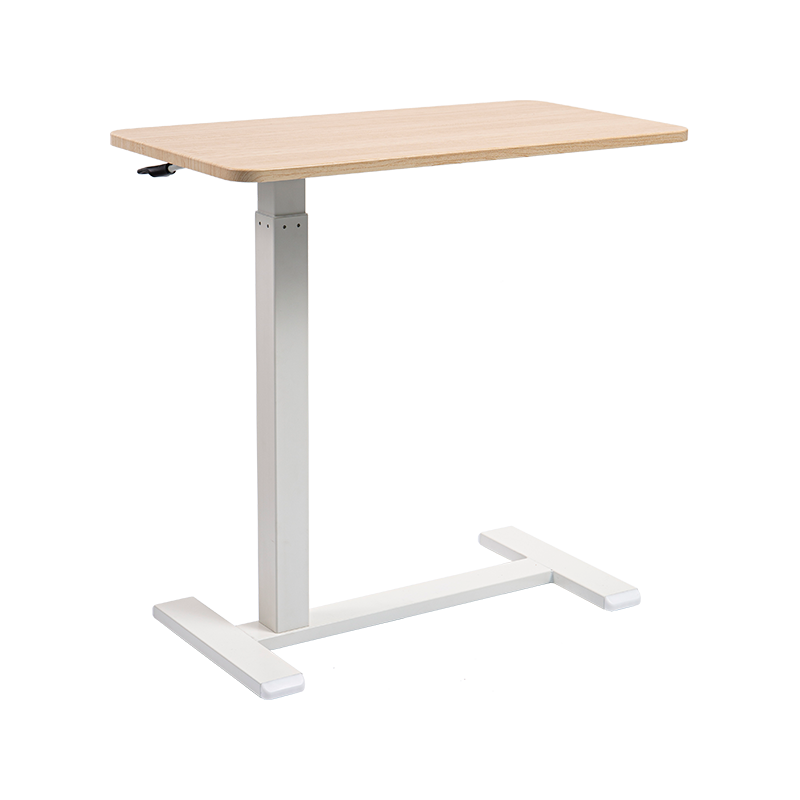
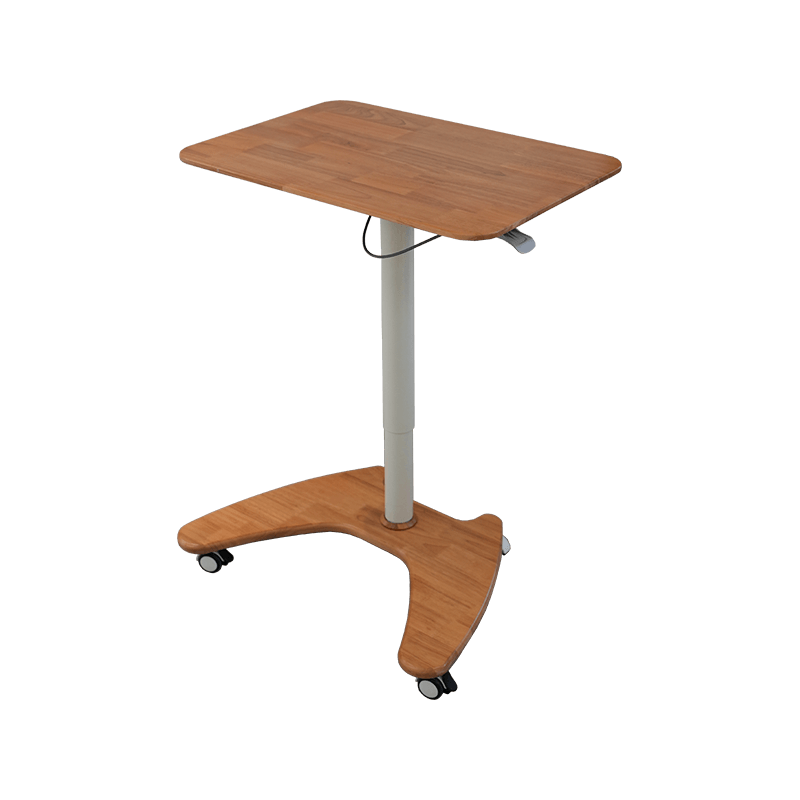
The TH01-2’s panel is available in four finishes: White, Maple, Walnut, and Black. This allows organizations to match the desk to their existing workspace decor—whether it’s a modern lab, a traditional office, or an industrial production line. The finishes are also fade-resistant, ensuring that the desk retains its appearance even after years of use.
Competitors often offer only one or two color options, making it difficult to integrate the desk into diverse environments. For example, a hospital may prefer a white finish for its clean, sterile look, while a manufacturing plant may prefer a black finish for its ability to hide dirt and stains. The TH01-2’s modular color choices ensure it can fit seamlessly into any setting.
How the TH01-2 Outperforms Competitors
To appreciate the TH01-2’s value, it’s essential to compare it to other workstations in the market. Below is a comparison table highlighting key differences:
| Feature | TH01-2 Pneumatic Desk | Typical Manual Adjustable Desk | Typical Electric Adjustable Desk | Basic Fixed Desk |
|---|---|---|---|---|
| Height Adjustment Type | Gas spring (stepless) | Manual crank/lever (5-8 fixed steps) | Electric motor (stepless) | Fixed |
| Lifting Range | 750mm–1060mm | 600mm–900mm (variable) | 700mm–1100mm (variable) | 750mm (fixed) |
| Tilt Mechanism | 90° stepless (lockable) | 0–20° (3 fixed angles) | 0–30° (optional, non-lockable) | None |
| Frame Material | Aluminum + Iron composite | Thin-gauge steel (1mm) | Medium-gauge steel (1.5mm) | Wood/particleboard |
| Surface Treatment | Two-layer powder coating (scratch/chemical-resistant) | Liquid paint (prone to chipping) | Single-layer powder coating (basic) | Varnish (easily damaged) |
| Casters | 4 (2 lockable, polyurethane) | 0 (optional, plastic) | 0 (optional, rubber) | 0 |
| Tabletop Material | 25mm MDF + PVC vacuum forming | 18mm particleboard | 20mm MDF | 15mm particleboard |
| Color Options | 4 (White, Maple, Walnut, Black) | 1–2 | 1–2 | 1 |
| Power Dependency | None | None | Yes (AC power) | None |
| Weight Capacity | Up to 50kg | Up to 30kg | Up to 40kg | Up to 25kg |
| Adjustment Cycles | 100,000+ | 50,000+ | 30,000+ | N/A |
From the table, it’s clear that the TH01-2 offers a unique combination of features that no other workstation in its class can match: stepless 90° tilt, gas spring adjustment (no power needed), robust composite frame, lockable polyurethane casters, and diverse color options. Unlike electric desks, it doesn’t require a power source, making it ideal for workspaces with limited outlets or outdoor use. Unlike manual desks, it offers smooth, effortless adjustment without the physical strain of cranking. And unlike fixed desks, it adapts to user needs and device requirements.
For example, a typical manual adjustable desk may require 20-30 seconds to adjust height, whereas the TH01-2 can be adjusted in 2-3 seconds with minimal effort. This time savings adds up over the course of a workday—for a worker who adjusts their desk 10 times a day, that’s 3-5 minutes saved daily, or 12-25 hours annually. This may seem small, but in high-pressure environments like manufacturing or healthcare, every minute counts.
Advanced Manufacturing Processes: The Backbone of Quality
The TH01-2’s superior quality is not accidental—it’s the result of advanced manufacturing processes and a commitment to excellence from its manufacturer. Let’s explore the key processes that set this product apart:
1. Material Sourcing and Quality Control
The manufacturer (a professional enterprise based in Suzhou, China) sources materials from trusted suppliers in the Yangtze River Delta—an area known for its complete industrial chain and high-quality raw materials. For the aluminum-iron composite frame, the company uses aerospace-grade aluminum (lightweight yet strong, with a tensile strength of 270MPa) and high-carbon steel (for structural integrity, with a tensile strength of 400MPa). The MDF tabletop is sourced from FSC-certified suppliers, ensuring sustainability and quality.
Every batch of materials undergoes rigorous testing: tensile strength tests for metal components, moisture content checks for MDF (ensuring it’s below 8% to prevent warping), and chemical resistance tests for powder coatings (exposing the surface to common industrial chemicals like acetone and ethanol). This ensures that only the highest-quality materials are used in production.
2. Precision Machining and Assembly
The frame components are machined using 5-axis CNC (Computer Numerical Control) machines, which ensure accuracy within 0.05mm. This precision is critical for the smooth operation of the gas spring and tilt mechanisms—any misalignment would lead to wobble or jamming. For example, the gas spring housing is machined to within 0.02mm tolerance, ensuring a tight fit that prevents leaks or rattling.
Assembly is done in a Class 100,000 cleanroom environment to prevent dust and debris from entering the mechanisms. Each desk undergoes a 24-hour stress test: it’s adjusted to maximum height, tilted to 90°, and loaded with 50kg to ensure stability and durability. Additionally, the gas spring mechanism is tested for 1,000 adjustment cycles to ensure smooth operation. Only after passing these tests does the desk move to the finishing stage.
3. Powder Coating and Surface Treatment
The frame’s powder coating process is a multi-step procedure: first, the metal is sandblasted to remove impurities and create a rough surface for better adhesion. Then, it’s coated with a thermosetting powder using an electrostatic spray gun (which charges the powder particles, ensuring they adhere evenly to the metal). Finally, it’s cured in an oven at 200°C for 20 minutes, which bonds the powder to the metal permanently.
This process results in a surface that’s scratch-resistant (able to withstand 10,000 cycles of scratch testing), chemical-resistant (resistant to 95% of common industrial chemicals), and fade-resistant (retaining 90% of its color after 500 hours of UV exposure). The powder coating also meets environmental standards, as it emits no volatile organic compounds (VOCs) during application—unlike liquid paint, which emits harmful VOCs that can affect air quality.
4. Customization Capabilities
The manufacturer offers custom solutions for organizations with specific needs. This includes:
- Custom tabletop dimensions (e.g., larger sizes for multiple devices, up to 1200mm x 800mm)
- Custom color finishes (e.g., company logos, brand colors, or matte black)
- Custom lifting ranges (e.g., lower ranges for seated-only use, 600mm–900mm)
- Custom caster options (e.g., heavy-duty casters for industrial environments, or anti-static casters for electronics factories)
- Cable management upgrades (e.g., built-in USB charging ports, cable trays)
This level of customization is rare in the market, as most competitors offer only off-the-shelf products. The manufacturer’s ability to adapt to client needs is a key strength that sets it apart.
Real-World Applications: Where the TH01-2 Shines
The TH01-2’s versatility makes it suitable for a wide range of work environments. Let’s look at some common use cases and case studies:
1. Electronics Manufacturing and Testing
In electronics factories, workers often need to use iPads for quality control checks, data entry, and equipment monitoring. The TH01-2’s mobility allows workers to move the desk between production lines, while its tilt mechanism lets them view schematics or test results at eye level. The robust frame and scratch-resistant surface ensure it can withstand the harsh conditions of a factory floor.
Case Study: A major electronics manufacturer in Shenzhen replaced 500 fixed desks with the TH01-2. The company reported a 15% increase in productivity among its quality control team, as workers could now adjust the desk to their preferred height and tilt angle for easier inspection of electronic components. The lockable casters also allowed workers to move the desk between production lines, reducing the time spent walking to fixed workstations by 20%. Additionally, the scratch-resistant surface and robust frame meant that the desks required less maintenance than the previous fixed desks, leading to a 30% reduction in annual maintenance costs.
2. Laboratory Settings
Laboratories require workstations that are easy to clean and adapt to different tasks. The TH01-2’s PVC vacuum-formed tabletop is stain-resistant and easy to wipe down with disinfectants, making it ideal for lab use. The height adjustment allows researchers to work comfortably while standing or sitting, reducing fatigue during long experiments. The tilt mechanism is useful for reading lab manuals or viewing digital data on iPads.
Case Study: A university chemistry lab in Shanghai purchased 20 TH01-2 desks for its undergraduate labs. The lab manager reported that the desks were easy to clean (critical for preventing cross-contamination) and that the tilt mechanism allowed students to view lab protocols on their iPads without bending their necks. The height adjustment also accommodated students of varying heights, ensuring comfort for all users.
3. Medical Facilities
In hospitals and clinics, iPads are used for patient records, telemedicine, and medication administration. The TH01-2’s mobility allows nurses to bring the desk to patient bedsides, while its lockable casters ensure stability during use. The height adjustment accommodates both standing nurses and seated patients, and the tilt mechanism lets nurses view patient records at a comfortable angle. The powder-coated frame is easy to disinfect, which is critical for infection control.
Case Study: A regional hospital in Jiangsu province purchased 100 TH01-2 desks for its emergency department. The hospital reported that the desks reduced the time nurses spent walking to nurse stations by 25%, as they could now access patient records directly at the bedside. The lockable casters also prevented the desks from rolling during emergency procedures, enhancing patient safety. The white finish of the desks also contributed to the clean, sterile appearance of the emergency department.
4. Educational Institutions
Schools and universities are increasingly using iPads for interactive learning. The TH01-2’s mobility allows teachers to move the desk between classrooms or set up temporary learning stations. The tilt mechanism lets students use the iPad as a drawing tablet or view presentations at the right angle. The diverse color options allow schools to match the desk to their classroom decor.
Case Study: A private school in Beijing purchased 300 TH01-2 desks for its elementary school classrooms. The school reported that the desks improved student engagement, as students could now adjust the desk to their preferred height and tilt angle for drawing and writing. The lockable casters also allowed teachers to rearrange the classroom for group activities, enhancing collaborative learning. The maple finish of the desks matched the school’s existing furniture, creating a cohesive look in the classrooms.
Q&A Section: Addressing Common User Concerns
To help users make informed decisions, we’ve compiled a list of frequently asked questions about the TH01-2:
Q1: What is the maximum weight capacity of the TH01-2?
A: The TH01-2 can support up to 50kg (110lbs) of weight, including the iPad, accessories, and any other items placed on the tabletop. This is more than enough for most device-centric work tasks, such as using an iPad with a keyboard, mouse, and stylus.
Q2: Is the gas spring mechanism easy to maintain?
A: Yes. The gas spring mechanism is sealed and requires no regular maintenance. Unlike electric motors, it has no moving parts that need lubrication or replacement. Simply wipe the frame and tabletop with a damp cloth to keep it clean. If the gas spring ever loses pressure (a rare occurrence), the manufacturer offers replacement gas springs that can be installed in 10 minutes.
Q3: Can the TH01-2 be used outdoors?
A: While the TH01-2 is designed for indoor use, it can be used outdoors temporarily (e.g., for outdoor presentations or events). However, prolonged exposure to rain or direct sunlight may damage the powder coating and MDF tabletop. It’s recommended to keep it indoors when not in use, and to cover it if used outdoors for extended periods.
Q4: Does the manufacturer offer a warranty?
A: Yes. The manufacturer offers a 2-year warranty on the frame and gas spring mechanism, and a 1-year warranty on the tabletop and casters. This warranty covers defects in materials and workmanship. To claim the warranty, users can contact the manufacturer’s customer support team with their purchase details and a description of the issue.
Q5: Can the TH01-2 be customized for specific needs?
A: Yes. The manufacturer offers custom solutions, including larger tabletop sizes, custom color finishes, modified lifting ranges, and cable management upgrades. Clients can contact the manufacturer to discuss their specific requirements, and the team will provide a custom quote within 48 hours.
Q6: Is the TH01-2 compatible with devices other than iPads?
A: Yes. The tabletop dimensions (715mm*475mm*25mm) are suitable for most tablets, laptops, and small monitors (up to 15 inches). The tilt mechanism works with any device that needs to be adjusted to different angles, making it a versatile solution for a wide range of devices.
Q7: How long does it take to assemble the TH01-2?
A: The TH01-2 comes with easy-to-follow assembly instructions and all necessary tools (a hex key and screwdriver). Most users can assemble it in 30–45 minutes. The manufacturer also offers assembly services for large orders (100+ desks) at an additional cost.
Q8: Can the tilt mechanism be locked in any position?
A: Yes. The tilt mechanism features a spring-loaded lock that can be engaged at any angle between 0° and 90°. This ensures that the tabletop remains stable at the desired angle, even when pressure is applied (e.g., typing on the iPad or placing a heavy accessory on the surface).
Q9: Are replacement parts available?
A: Yes. The manufacturer stocks replacement parts for all components, including casters, gas springs, tabletop panels, and tilt locks. Clients can order replacement parts directly from the manufacturer or through its distribution partners. Most parts are shipped within 24 hours of order placement.
Q10: Does the TH01-2 come with a cable management system?
A: Yes. The frame includes a built-in cable management channel that allows users to route power cords and USB cables for their devices, keeping the workspace tidy and reducing tripping hazards. The channel is large enough to accommodate multiple cables, and it can be upgraded to include USB charging ports for an additional cost.
Why Choose the Manufacturer Behind the TH01-2?
The TH01-2 is not just a product—it’s a reflection of the manufacturer’s commitment to quality, innovation, and customer satisfaction. Here are some key reasons to choose this manufacturer:
1. Expertise in Standing Desks
The manufacturer is a professional enterprise deeply engaged in the R&D, production, sales, and service of standing desks. With over 10 years of experience in the industry, it has a deep understanding of user needs and market trends. The company’s R&D team consists of 20+ engineers who specialize in ergonomics, materials science, and mechanical engineering—ensuring that its products are at the cutting edge of innovation.
2. Intelligent Manufacturing Advantages
Based in Suzhou Industrial Park—one of China’s leading high-tech zones—the manufacturer leverages intelligent manufacturing technologies to ensure consistent quality and efficiency. Its production line uses automated CNC machines, robotic assembly, and AI-powered quality control systems to minimize human error and maximize precision. For example, the AI-powered quality control system uses computer vision to detect defects in the powder coating and frame components—catching issues that human inspectors may miss.
3. Global Reach and Customer Support
The manufacturer serves clients around the world, with a strong distribution network in North America, Europe, Asia, and Australia. It offers dedicated customer support, including pre-sales consultation, after-sales service, and technical assistance. Clients can contact the manufacturer via phone, email, or online chat for any questions or issues, and the team responds within 24 hours. The company also offers on-site training for large orders, ensuring that users know how to operate the desk safely and efficiently.
4. Commitment to Sustainability
The manufacturer is committed to environmental sustainability. It uses FSC-certified wood materials, VOC-free powder coatings, and energy-efficient manufacturing processes (e.g., solar panels to power the production line). It also recycles 90% of its production waste, including metal shavings, plastic packaging, and wood scraps. The company has also been certified by ISO 14001 (Environmental Management System) and ISO 9001 (Quality Management System), demonstrating its commitment to sustainability and quality.
Conclusion: The TH01-2 as a Catalyst for Workspace Transformation
The TH01-2 iPad High-Legged Pneumatic Height-Adjustable Desk is more than just a workstation—it’s a tool that empowers users to work more efficiently, comfortably, and flexibly. Its unique combination of features (gas spring adjustment, 90° stepless tilt, robust construction, lockable casters) sets it apart from competitors, while its advanced manufacturing processes ensure long-term durability and quality.
For organizations looking to create device-centric workspaces that adapt to modern work demands, the TH01-2 is an ideal choice. It’s not just a product—it’s an investment in productivity, ergonomics, and workplace satisfaction. Whether it’s used in a factory, lab, hospital, or school, the TH01-2 delivers on its promise of flexibility, durability, and user-centric design.
References
1. Ergonomics in the Workplace: A Guide to Designing Safe and Efficient Workstations (2022) by the International Ergonomics Association (IEA).
2. The Future of Mobile Device Integration in Workplaces (2023) by Gartner Research.
3. Industrial Workstation Design: Materials and Durability (2021) by the American Society of Mechanical Engineers (ASME).
4. Sustainable Manufacturing Practices: A Global Perspective (2022) by the United Nations Industrial Development Organization (UNIDO).
5. The Impact of Standing Desks on Productivity and Health (2023) by the Journal of Occupational and Environmental Medicine.
6. Mobile Device Usage in Healthcare: Trends and Challenges (2022) by the World Health Organization (WHO).
7. Interactive Learning in Education: The Role of Mobile Devices (2023) by the UNESCO Institute for Information Technologies in Education.


- Contact Info
-
-
 Phone+86-15950656125
 -
 Email
Email -
 AddressRoom 1007-1, South Building, Suyue Plaza, Suzhou Industrial Park, Suzhou City, Jiangsu Province, China
-
- Products
- Follow Us
- Need help? Please contact us
Copyright ©
SuZhou Skyhone Intelligent Technology Co., Ltd.
All Rights Reserved.
Privacy
Custom Ergonomic Adjustable Office Tables Manufacturers

