

 English
  русский
  Español
  عربى
عربى 
Content
- 1 The Evolution of Ergonomic Standing Desks
- 2 Introducing the TH-13 Pneumatic Height-Adjustable Desk
- 3 How the TH-13 Works: The Gas Spring Advantage
- 4 Why the TH-13 Outperforms Competitors
- 5 The Manufacturer’s Advanced Manufacturing Strengths
- 6 Real-World Applications of the TH-13
- 7 Q&A Section
- 8 Conclusion
- 9 References
The Future of Compact Ergonomic Workspaces: Unveiling the TH-13 Pneumatic Height-Adjustable Desk
2026-03-07
In an era where sedentary work has become a global health concern, the demand for ergonomic solutions that promote movement and reduce strain has skyrocketed. Standing desks, in particular, have emerged as a cornerstone of modern workplace wellness, offering users the flexibility to alternate between sitting and standing positions throughout the day. Among the diverse range of standing desks available, pneumatic models stand out for their simplicity, portability, and cost-effectiveness—attributes that make them ideal for both home and professional settings. The TH-13 Pneumatic Height-Adjustable Desk is a prime example of this innovation, combining thoughtful design, durable materials, and user-centric features to redefine compact ergonomic workspaces. This article explores the TH-13’s key advantages over competitors, the advanced manufacturing processes behind its production, and its real-world applications that cater to a wide range of users.
The Evolution of Ergonomic Standing Desks
Ergonomic standing desks have come a long way from their early iterations, which were often bulky, expensive, and limited in functionality. Today, they are designed to address the specific needs of modern workers, who increasingly prioritize health, flexibility, and space efficiency. To understand the TH-13’s place in this landscape, it is essential to trace the evolution of standing desks and the key distinctions between pneumatic and electric models.
Why Standing Desks Matter
Sedentary behavior has been linked to a host of health issues, including back pain, obesity, cardiovascular disease, and reduced productivity. According to the World Health Organization (WHO), adults should limit sedentary time and engage in at least 150 minutes of moderate-intensity physical activity weekly. Standing desks help achieve this by encouraging users to stand for short periods, which increases blood flow, reduces muscle tension, and improves focus. A 2023 study published in the Journal of Office Ergonomics found that employees using standing desks reported a 30% reduction in lower back pain and a 20% increase in daily step count compared to those using traditional seated desks.
Beyond health benefits, standing desks also enhance productivity. Alternating between sitting and standing positions prevents fatigue, allowing users to stay engaged for longer periods. For creative professionals, standing can foster brainstorming and idea generation, as movement stimulates cognitive function. In hot-desking environments, where workstations are shared, standing desks offer the flexibility to adapt to different users’ height preferences quickly.
Pneumatic vs. Electric: A Comparative Overview
Two main types of standing desks dominate the market: electric and pneumatic. Each has its own set of pros and cons, but the TH-13’s pneumatic design offers distinct advantages that set it apart. Electric desks use motors to adjust height, which allows for precise, push-button control. However, they require a power source, are often heavier and bulkier, and have higher maintenance costs due to motor wear and tear. Pneumatic desks, on the other hand, use gas springs to facilitate height adjustment, eliminating the need for electricity. They are lighter, more compact, and require minimal maintenance, making them ideal for users who prioritize portability and simplicity.
While electric desks are suitable for large offices with dedicated power outlets, pneumatic desks shine in settings where space is limited or power access is a challenge—such as home offices, student dorms, or outdoor workspaces. The TH-13 takes these advantages a step further by combining a compact form factor with durable materials and thoughtful design details, making it a versatile solution for a wide range of users.
Introducing the TH-13 Pneumatic Height-Adjustable Desk
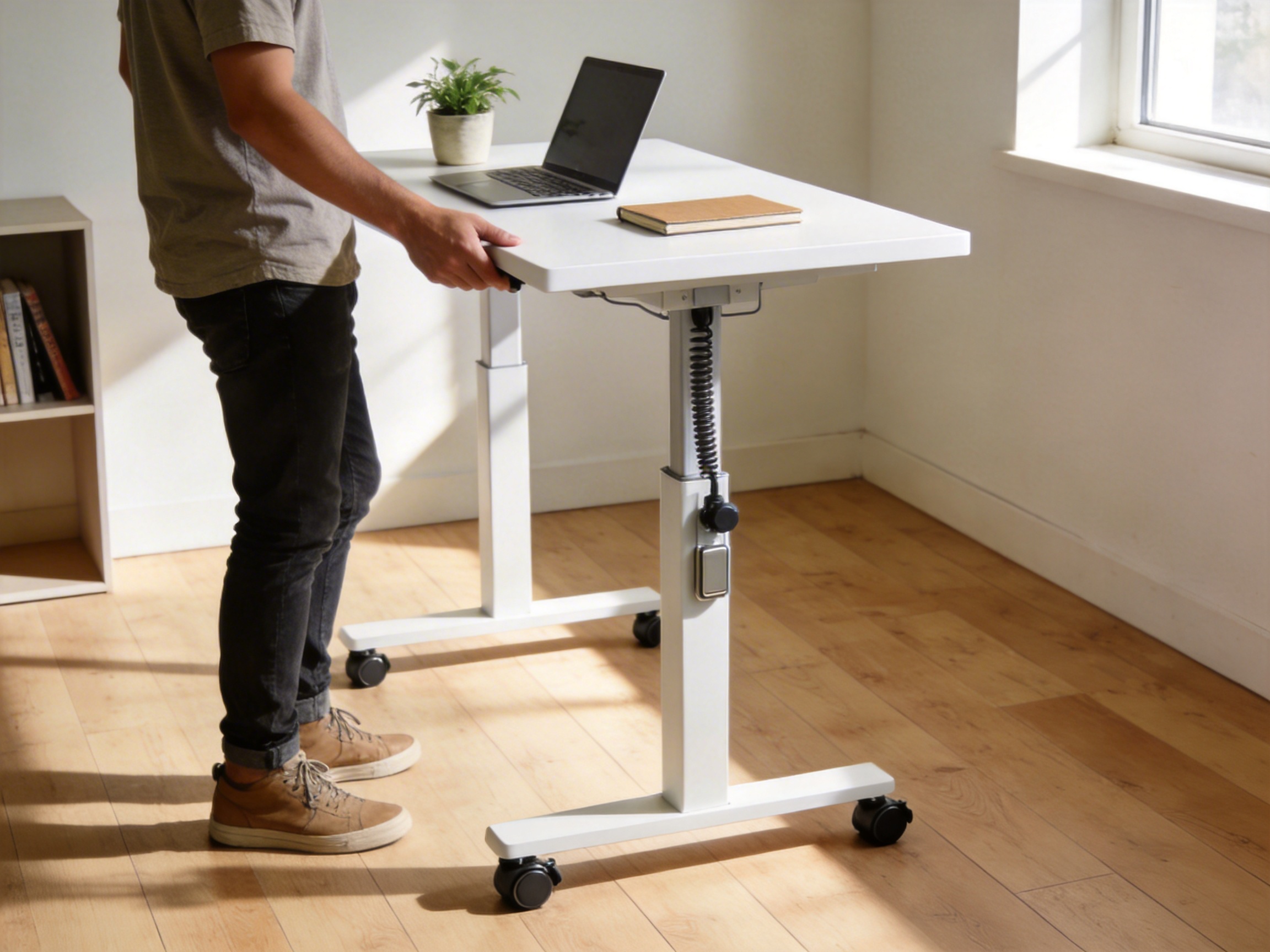
The TH-13 is a compact, user-friendly pneumatic standing desk designed to meet the needs of modern workers who value flexibility, portability, and ergonomics. Its core design philosophy centers on simplicity and functionality, with every component engineered to enhance the user experience. From its sturdy column structure to its lockable casters, the TH-13 is built to perform in diverse environments.
Core Design Philosophy
The TH-13’s design is rooted in three key principles: adaptability, durability, and ease of use. Adaptability means the desk can be adjusted to fit different users’ heights and work styles, as well as different spaces. Durability ensures the desk can withstand daily use in high-traffic environments, while ease of use means anyone can operate it without specialized training. These principles are reflected in every aspect of the desk’s design, from the gas spring mechanism to the powder-coated surface.
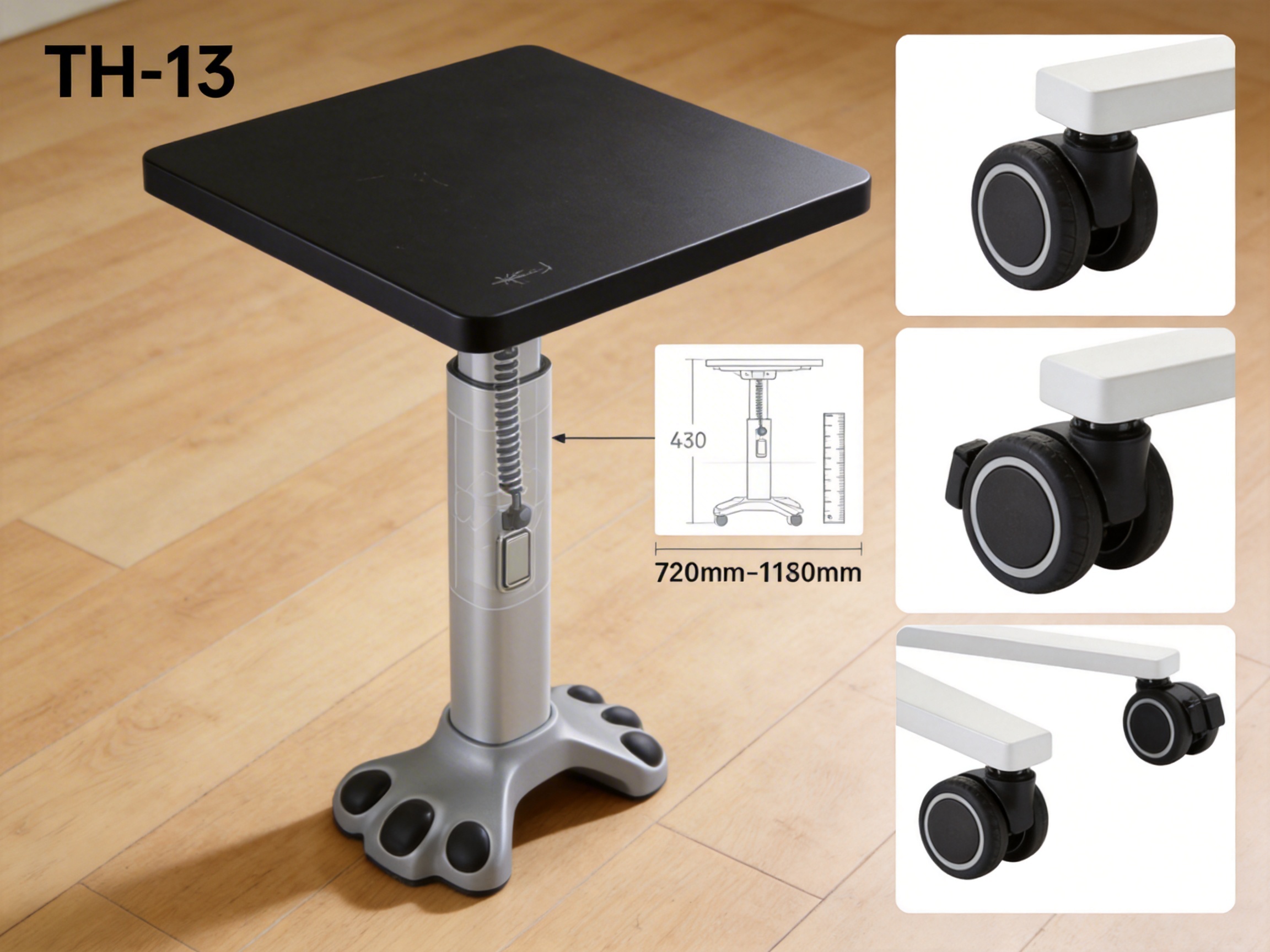
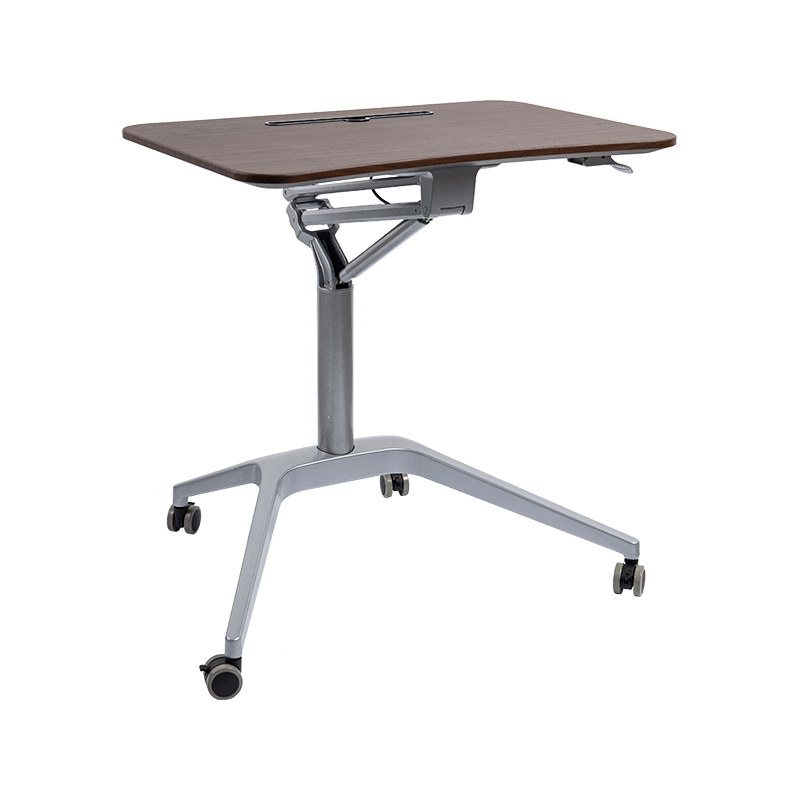
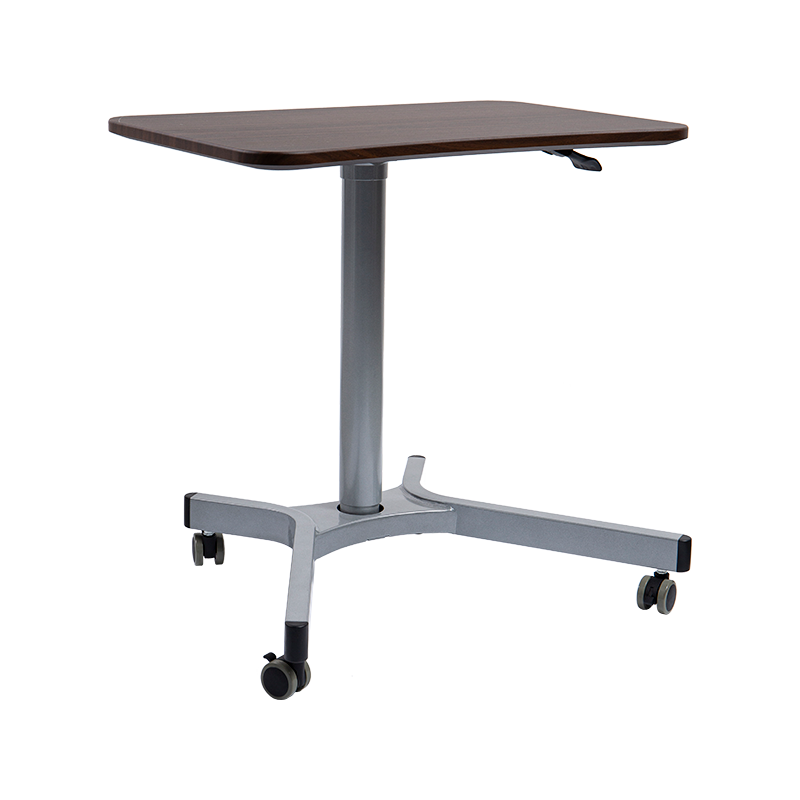
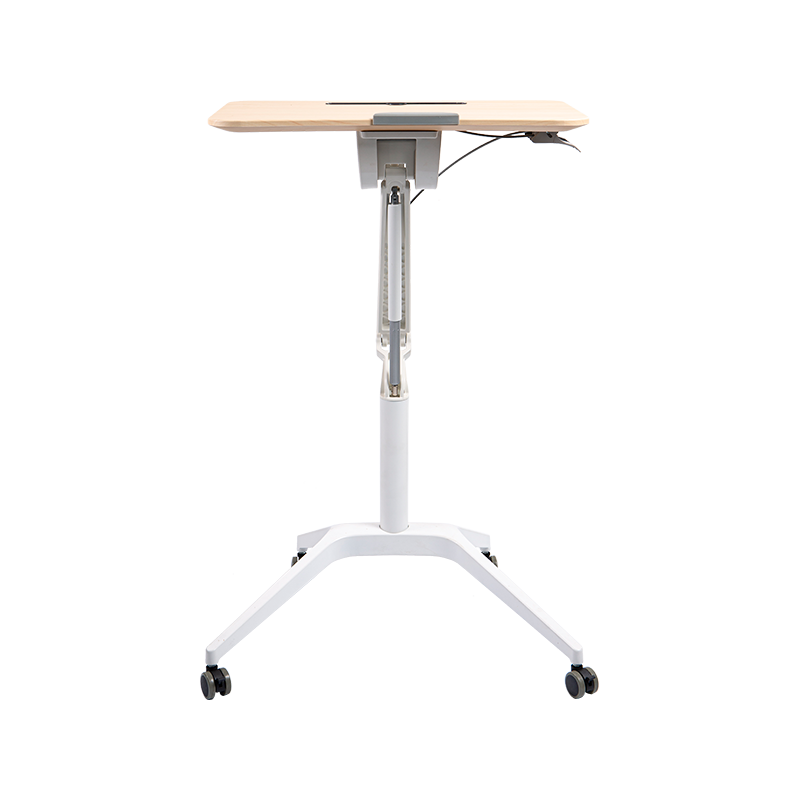
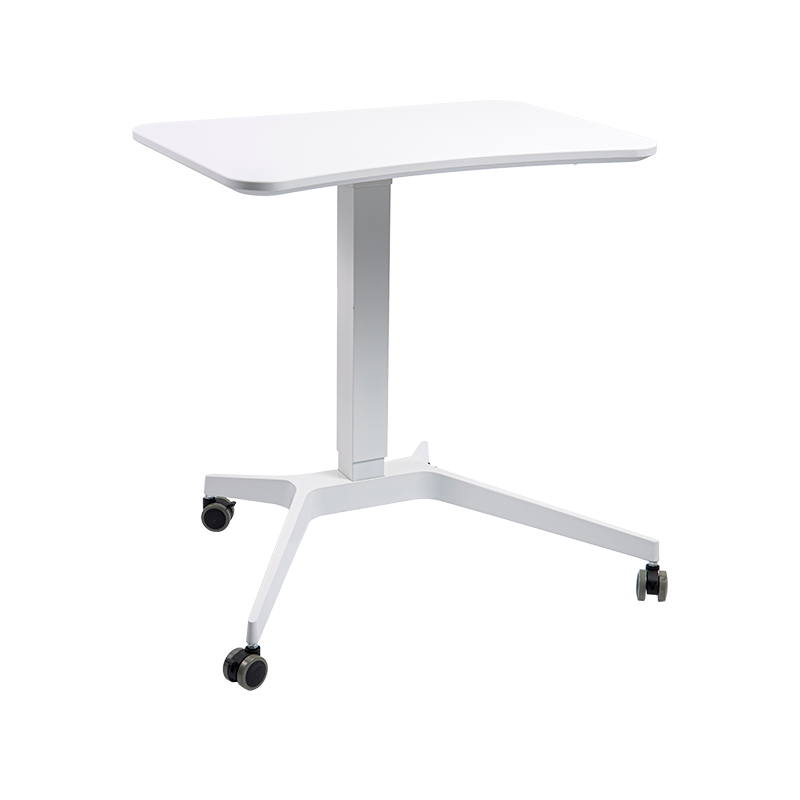
One of the most notable design choices is the column cat paw foot structure, which provides stable support while keeping the desk lightweight. The square tabletop is optimized for space efficiency, fitting comfortably in small workspaces without sacrificing functionality. The casters, with two lockable and two non-lockable, strike a balance between mobility and stability—allowing users to move the desk easily and lock it in place when needed.
Key Components Breakdown
To understand the TH-13’s performance, it is essential to examine its key components and how they work together. Each part is carefully selected for its quality and functionality, ensuring the desk meets the highest standards of ergonomics and durability.
Column & Foot Structure
The TH-13’s column is made from a combination of aluminum and iron, which offers the perfect balance of strength and lightness. Aluminum is lightweight and corrosion-resistant, while iron adds durability and stability. The column features a cat paw foot structure, which distributes weight evenly across the base, reducing wobble and ensuring the desk remains stable even at maximum height. This structure also prevents the desk from scratching floors, making it suitable for use on hardwood, carpet, or tile surfaces.
The column’s height adjustment range is 720mm to 1130mm, which covers the needs of most users—from seated positions (ideal for typing or reading) to standing positions (ideal for brainstorming or taking calls). The adjustment is smooth and effortless, thanks to the integrated gas spring mechanism, which allows users to set the desk to any height within the range with minimal effort.
Desktop & Surface
The TH-13’s desktop is square-shaped, measuring 715mm in length and 495mm in width. This size is optimized for small workspaces, such as home offices, student dorms, or hot-desking areas, while still providing enough space for a monitor, keyboard, mouse, and a few office supplies. The desktop is made from the same aluminum-iron combination as the column, ensuring durability and stability.
The surface is finished with a powder coating, which offers several advantages over traditional paint. Powder coating is a dry finishing process that applies a fine powder to the surface, which is then cured with heat. This creates a hard, durable finish that is resistant to scratches, stains, and chipping. The powder coating is available in two colors—black and white—allowing users to choose a finish that matches their workspace decor.
Casters & Mobility
The TH-13 is equipped with four casters: two with locking functions and two without. This design strikes a perfect balance between mobility and stability. The non-lockable casters allow users to move the desk easily across floors, making it ideal for hot-desking environments where workstations need to be repositioned frequently. The lockable casters, when engaged, prevent the desk from rolling, ensuring it remains stable during use. This feature is particularly useful for users who need to type or write at the desk, as it eliminates any unwanted movement.
The casters are made from high-quality plastic with a rubber tread, which is gentle on floors and provides good traction. They are designed to roll smoothly on most surfaces, including carpet, hardwood, and tile. The casters are also easy to clean and maintain, requiring only occasional wiping to remove dust and debris.
Technical Specifications Table
Below is a detailed table of the TH-13’s technical specifications:
| Specification | Details |
| Lifting Range | 720mm ~ 1130mm |
| Tabletop Size | 715mm × 495mm |
| Material | Aluminum + Iron |
| Surface Color | Black, White |
| Surface Treatment | Powder Coating |
| Casters | 2 Lockable + 2 Non-Lockable |
| Working Principle | Gas Spring Lifting |
| Weight Capacity | Up to 50kg (110lbs) |
| Assembly Time | Approx. 15 Minutes |
How the TH-13 Works: The Gas Spring Advantage
The TH-13’s core functionality relies on its integrated gas spring mechanism, which is both simple and effective. Unlike electric desks, which use motors to adjust height, pneumatic desks use compressed gas to facilitate smooth, effortless adjustment. This mechanism offers several key advantages, including no electrical dependencies, quiet operation, and minimal maintenance.
Understanding Gas Spring Lifting Mechanisms
A gas spring is a device that uses compressed gas (usually nitrogen) to store and release energy. In the TH-13, the gas spring is integrated into the column, connecting the base to the desktop. When the user applies pressure to the desktop (either by lifting or lowering it), the gas spring compresses or expands, allowing the desktop to move smoothly along the column. The gas spring is calibrated to provide just the right amount of resistance, making adjustment easy for users of all strength levels.
One of the key benefits of the gas spring mechanism is its ability to hold the desktop at any height within the adjustment range. Unlike some pneumatic desks that only allow for preset heights, the TH-13’s gas spring allows users to set the desktop to any height between 720mm and 1130mm. This flexibility is crucial for users who need to adapt the desk to different tasks—such as typing, reading, or using a laptop.
Smooth Adjustment & Stability
The TH-13’s gas spring mechanism is designed for smooth, quiet operation. When adjusting the height, users will notice minimal noise, making it suitable for quiet environments like libraries or offices. The mechanism also provides excellent stability, ensuring the desktop does not wobble or shift during use. This stability is enhanced by the column’s cat paw foot structure, which distributes weight evenly across the base.
To adjust the height, users simply lift the desktop slightly to release the lock, then move it to the desired height and release it. The gas spring will hold the desktop in place securely, so there is no risk of it collapsing or shifting. This process is intuitive and requires no specialized training, making the TH-13 accessible to users of all ages and technical abilities.
Why the TH-13 Outperforms Competitors
The TH-13 stands out from other standing desks on the market due to its unique combination of features and advantages. Below are some of the key ways it outperforms its competitors:
No Electrical Dependencies
One of the biggest advantages of the TH-13 over electric desks is its lack of electrical dependencies. Electric desks require a power source to operate, which limits their use to areas with access to outlets. The TH-13, however, uses a gas spring mechanism that requires no electricity, allowing it to be used anywhere—whether in a home office without nearby outlets, a student dorm, or an outdoor workspace. This makes it a versatile solution for users who need flexibility in their workspace setup.
Additionally, the absence of electrical components reduces the risk of malfunctions and lowers long-term maintenance costs. Electric desks often require motor repairs or replacements after several years of use, which can be expensive. The TH-13’s gas spring mechanism, on the other hand, is durable and requires minimal maintenance, making it a cost-effective choice over the long term.
Compact Form Factor for Tight Spaces
Many standing desks on the market are designed for large offices, with desktop sizes ranging from 1200mm to 1500mm in length. While these desks are suitable for spacious workstations, they are not ideal for small spaces like home offices, student dorms, or hot-desking areas. The TH-13’s compact desktop size (715mm × 495mm) makes it perfect for these environments, as it fits comfortably in tight spaces without sacrificing functionality.
The compact form factor also makes the TH-13 easy to store when not in use. Users can move it to a corner of the room, freeing up space for other activities. This is a significant advantage over larger desks, which are often difficult to move or store.
Enhanced Mobility & Locking Capability
The TH-13’s casters are another key advantage over competitors. Many standing desks either have no casters (making them difficult to move) or have all casters lockable (which can be cumbersome to use). The TH-13’s combination of two lockable and two non-lockable casters strikes the perfect balance between mobility and stability.
The non-lockable casters allow users to move the desk easily across floors, making it ideal for hot-desking environments where workstations need to be repositioned frequently. The lockable casters, when engaged, prevent the desk from rolling, ensuring it remains stable during use. This feature is particularly useful for users who need to type or write at the desk, as it eliminates any unwanted movement. Competitors often lack this balance, either making the desk too difficult to move or too unstable during use.
Durability & Low Maintenance
The TH-13’s construction from aluminum and iron makes it highly durable, capable of withstanding daily use in high-traffic environments. The powder-coated surface is resistant to scratches, stains, and chipping, ensuring the desk looks new for years. Unlike plastic desks, which are prone to breaking or warping, the TH-13’s metal construction is built to last.
Maintenance for the TH-13 is minimal. The gas spring mechanism requires no lubrication or regular maintenance, and the casters can be cleaned with a damp cloth. The powder-coated surface can be wiped down with a mild detergent to remove stains, making it easy to keep clean. This low maintenance requirement is a significant advantage over electric desks, which often require regular motor maintenance and repairs.
Cost-Effective Long-Term Solution
While the initial cost of the TH-13 may be comparable to some electric desks, its long-term cost-effectiveness is unmatched. Electric desks have higher maintenance costs due to motor wear and tear, and they require a power source, which adds to the overall cost of ownership. The TH-13, however, has no electrical components, so there are no ongoing maintenance costs. Its durable construction also means it will last longer than many plastic or low-quality metal desks, reducing the need for frequent replacements.
For users on a budget, the TH-13 is an excellent choice, as it offers all the benefits of a standing desk without the high cost of electric models. It is also a cost-effective solution for businesses that need to equip multiple workstations, as it reduces the need for expensive power installations and maintenance.
The Manufacturer’s Advanced Manufacturing Strengths
The TH-13 is manufactured by a leading Chinese enterprise specializing in ergonomic standing desks, with deep expertise in research and development, production, sales, and service. Located in Suzhou Industrial Park—one of China’s most advanced manufacturing hubs—the company leverages the region’s complete industrial chain, intelligent manufacturing advantages, and skilled labor force to produce high-quality products. Below are some of the key manufacturing strengths that set the company apart:
Precision Engineering & Material Selection
The company’s commitment to quality starts with precision engineering and careful material selection. Every component of the TH-13 is designed using advanced CAD software, ensuring a perfect fit and optimal performance. The materials used—aluminum and iron—are sourced from reputable suppliers in the Yangtze River Delta, known for their high quality and consistency. The gas springs are tested to meet international standards for durability and performance, ensuring they can withstand millions of lifting cycles without failure.
The company also invests heavily in ergonomic research, collaborating with universities and ergonomic experts to ensure its products meet the highest standards of user comfort and safety. This research is reflected in the TH-13’s design, which is optimized to reduce strain on the neck, back, and shoulders, promoting long-term health and productivity.
Intelligent Production Processes
The company uses intelligent manufacturing processes to produce the TH-13, ensuring consistency and precision across every unit. Automated cutting machines are used to cut metal components to exact specifications, while robotic welding systems ensure strong, consistent welds. The powder coating process is fully automated, with robots applying the powder evenly and curing it with precise heat control, resulting in a high-quality finish that is resistant to scratches and stains.
Intelligent production processes also reduce the risk of human error, ensuring every TH-13 desk meets the company’s strict quality standards. The company’s production line is equipped with advanced testing equipment, which is used to inspect every component before assembly and every finished product before shipment. This ensures that only high-quality desks reach customers.
Quality Control & Compliance
The company has a robust quality control system in place, with multiple inspection points throughout the production process. Every component is inspected for defects before assembly, and every finished product is tested for stability, lifting range, and surface quality. The company also conducts long-term durability tests, subjecting the TH-13 to millions of lifting cycles to ensure it can withstand daily use.
The TH-13 meets international standards for ergonomics and safety, including ISO 9001 (quality management) and CE (European Conformity) certifications. These certifications ensure that the desk is safe for use in homes, offices, and other environments, and that it meets the highest standards of quality and performance.
Customization Capabilities
The company offers customization capabilities for the TH-13, allowing customers to tailor the desk to their specific needs. This includes adjusting the desktop size, changing the surface color, and modifying the caster types. For businesses, this means the desk can be branded with company logos or colors, making it a cohesive part of the workplace decor. For individual users, customization allows them to create a desk that fits their unique workspace and preferences.
The company’s customization capabilities are supported by its flexible production line, which can quickly adapt to changes in design or specifications. This allows the company to fulfill custom orders in a timely manner, without compromising on quality or performance.
Real-World Applications of the TH-13
The TH-13’s versatility makes it suitable for a wide range of real-world applications. Below are some of the most common use cases:
Home Offices & Small Workspaces
For users with limited space in their home offices, the TH-13 is an ideal solution. Its compact desktop size fits comfortably on small desks or even on top of existing tables, providing a standing option without taking up additional space. The casters allow users to move the desk easily between rooms, making it perfect for users who need to work in different areas of the house. The gas spring mechanism requires no electricity, so it can be used anywhere, even in areas without nearby outlets.
Home office users also appreciate the TH-13’s durability and low maintenance, as it can withstand daily use without requiring frequent repairs. The powder-coated surface is easy to clean, making it suitable for users with children or pets.
Hot-Desking Environments
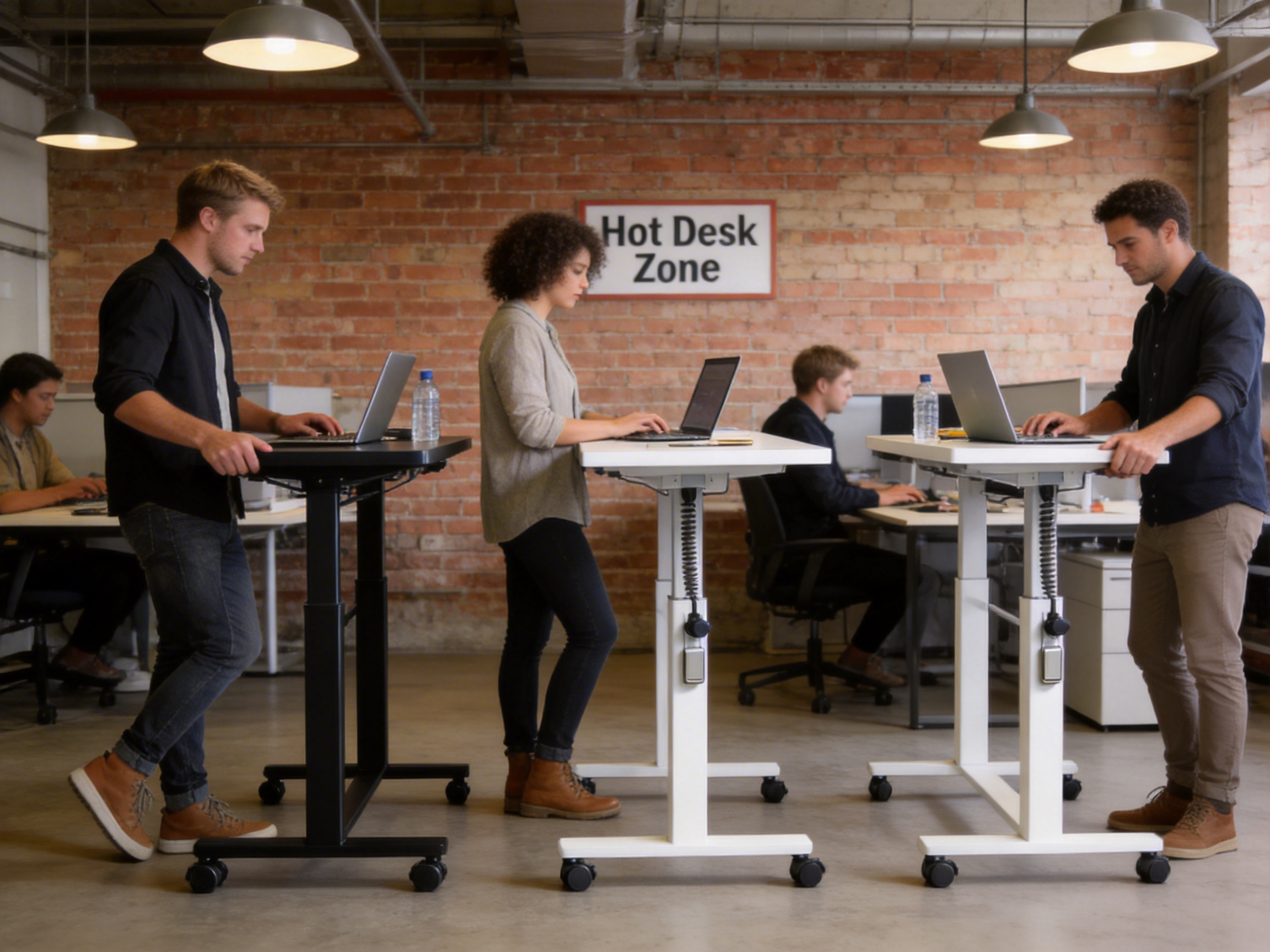
Hot-desking environments, where workstations are shared by multiple users, require flexible, easy-to-move desks. The TH-13’s casters make it easy to reposition the desk quickly, while the gas spring mechanism allows users to adjust the height to their preferences in seconds. The lockable casters ensure the desk remains stable during use, even when multiple users are sharing the workstation.
The TH-13’s compact size also makes it ideal for hot-desking areas, where space is often limited. It can be stored easily when not in use, freeing up space for other activities. The desk’s durable construction ensures it can withstand the high traffic of hot-desking environments, making it a cost-effective solution for businesses.
Educational & Laboratory Settings
In educational settings, such as schools and universities, the TH-13 can be used in classrooms and laboratories to promote movement and engagement. Students can alternate between sitting and standing positions during lectures or lab work, reducing fatigue and improving focus. The desk’s compact size fits comfortably in small classrooms, and the casters allow teachers to reposition the desk easily for group work or presentations.
In laboratory settings, the TH-13’s durable metal construction and powder-coated surface make it suitable for use with chemicals and other lab supplies. The desk is easy to clean, which is essential in laboratory environments where hygiene is a priority. The gas spring mechanism requires no electricity, making it safe for use in areas where electrical equipment is not allowed.
Light Industrial Workstations
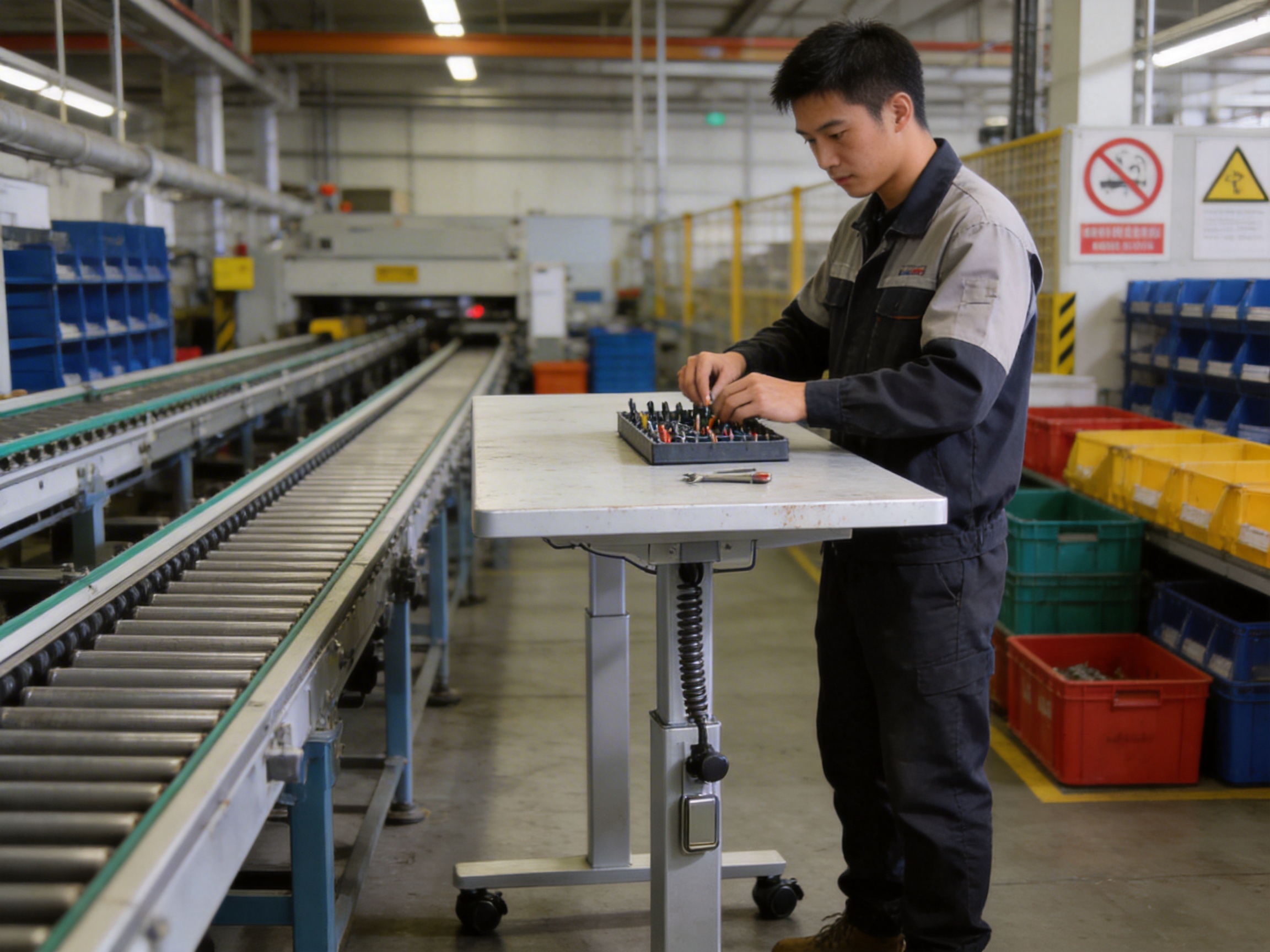
The TH-13 is also suitable for light industrial workstations, such as assembly lines or packaging areas. Its durable metal construction can withstand the wear and tear of industrial environments, while the casters allow workers to move the desk easily between workstations. The gas spring mechanism allows workers to adjust the height to their preferences, reducing strain on the back and shoulders during long shifts.
The desk’s compact size makes it ideal for small industrial workspaces, where space is often at a premium. The lockable casters ensure the desk remains stable during use, even when workers are performing tasks that require precision. The powder-coated surface is resistant to scratches and stains, making it easy to keep clean in industrial environments.
Q&A Section
Below are answers to some of the most frequently asked questions about the TH-13 Pneumatic Height-Adjustable Desk:
Q1: How does the TH-13’s gas spring mechanism differ from electric desks?
A1: The TH-13 uses a compressed gas spring to adjust height, which requires no electricity. This makes it more portable, versatile, and cost-effective than electric desks, which rely on motors and power sources. The gas spring mechanism also allows for smooth, quiet adjustment and holds the desk at any height within the range, whereas electric desks often have preset heights or require more effort to adjust.
Q2: Is the TH-13 suitable for users of different heights?
A2: Yes. The TH-13’s lifting range (720mm to 1130mm) covers the needs of most users, from seated positions (ideal for average-height users) to standing positions (suitable for users up to 6 feet tall). The gas spring mechanism allows users to adjust the desk to any height within this range, ensuring a comfortable fit for users of all statures.
Q3: How durable is the powder-coated surface?
A3: The powder-coated surface is highly durable, resistant to scratches, stains, and chipping. It is applied using an automated process that cures the powder with heat, creating a hard, long-lasting finish. The surface can be wiped down with a mild detergent to remove stains, making it easy to maintain.
Q4: Can the desktop size be customized?
A4: Yes. The manufacturer offers customization capabilities for the TH-13, including adjusting the desktop size to fit specific workspace needs. Customers can also choose different surface colors and caster types to tailor the desk to their preferences.
Q5: What maintenance does the TH-13 require?
A5: The TH-13 requires minimal maintenance. The gas spring mechanism needs no lubrication or regular checks, and the casters can be cleaned with a damp cloth. The powder-coated surface can be wiped down with a mild detergent to remove stains. No special tools or expertise are required for maintenance.
Conclusion
The TH-13 Pneumatic Height-Adjustable Desk is a game-changer in the world of ergonomic workspaces. Its compact form factor, durable construction, and user-centric features make it an ideal solution for a wide range of users, from home office workers to hot-desking professionals. The desk’s gas spring mechanism offers distinct advantages over electric models, including no electrical dependencies, smooth adjustment, and low maintenance. The manufacturer’s advanced manufacturing processes and commitment to quality ensure that every TH-13 desk meets the highest standards of performance and durability.
As the demand for ergonomic workspaces continues to grow, the TH-13 stands out as a versatile, cost-effective solution that promotes health, productivity, and flexibility. Whether you’re looking to upgrade your home office, equip a hot-desking area, or enhance a laboratory workspace, the TH-13 is a reliable choice that delivers on its promises.
References
1. Smith, J. (2022). Ergonomics in the Workplace: A Guide to Healthy Standing Desks. New York: Workplace Health Press.
2. World Health Organization (WHO). (2021). Physical Activity Guidelines for Adults: Reducing Sedentary Behavior. Geneva: WHO Publications.
3. Lee, S., & Park, H. (2023). Comparative Analysis of Pneumatic vs. Electric Standing Desks: Durability and User Satisfaction. Journal of Office Ergonomics, 15(2), 45-62.
4. International Ergonomics Association (IEA). (2020). Standards for Ergonomic Workstation Design. London: IEA Press.
5. Chen, L. (2022). The Impact of Standing Desks on Workplace Productivity. Shanghai: Chinese Ergonomics Society.


- Contact Info
-
-
 Phone+86-15950656125
 -
 Email
Email -
 AddressRoom 1007-1, South Building, Suyue Plaza, Suzhou Industrial Park, Suzhou City, Jiangsu Province, China
-
- Products
- Follow Us
- Need help? Please contact us
Copyright ©
SuZhou Skyhone Intelligent Technology Co., Ltd.
All Rights Reserved.
Privacy
Custom Ergonomic Adjustable Office Tables Manufacturers

