

 English
 русский
 Español
 عربى

Content
- 1 What Is a Standard Free-Type Gas Spring?
- 2 Operating Principle and Internal Construction
- 3 Key Performance Advantages
- 4 Material Options and Environmental Suitability
- 5 Available Specifications
- 6 Advantages Over Alternative Support Solutions
- 7 Manufacturing Process and Quality Strengths
- 8 Applications Across Multiple Industries
- 9 Installation Guidelines
- 10 How to Select the Correct Model
- 11 Safety and Service Considerations
- 12 Why This Product Is a Strong Choice for OEM and Custom Projects
- 13 Frequently Asked Questions
- 13.1 What does “free-type” mean?
- 13.2 Can a free-type gas spring hold a lid open?
- 13.3 How is the required force determined?
- 13.4 What is the difference between stroke and center distance?
- 13.5 Can one gas spring be replaced by two smaller gas springs?
- 13.6 Are stainless steel gas springs necessary indoors?
- 13.7 Do gas springs require lubrication?
- 13.8 Why does a gas spring feel different in cold and warm conditions?
- 13.9 Can a gas spring be installed at any angle?
- 13.10 What causes premature gas spring failure?
- 14 Conclusion
- 15 References
- 16 Product: Standard free-type gas spring
Standard Free-Type Gas Springs: Reliable Pneumatic Support for Furniture, Vehicles, and Equipment
2026-10-05
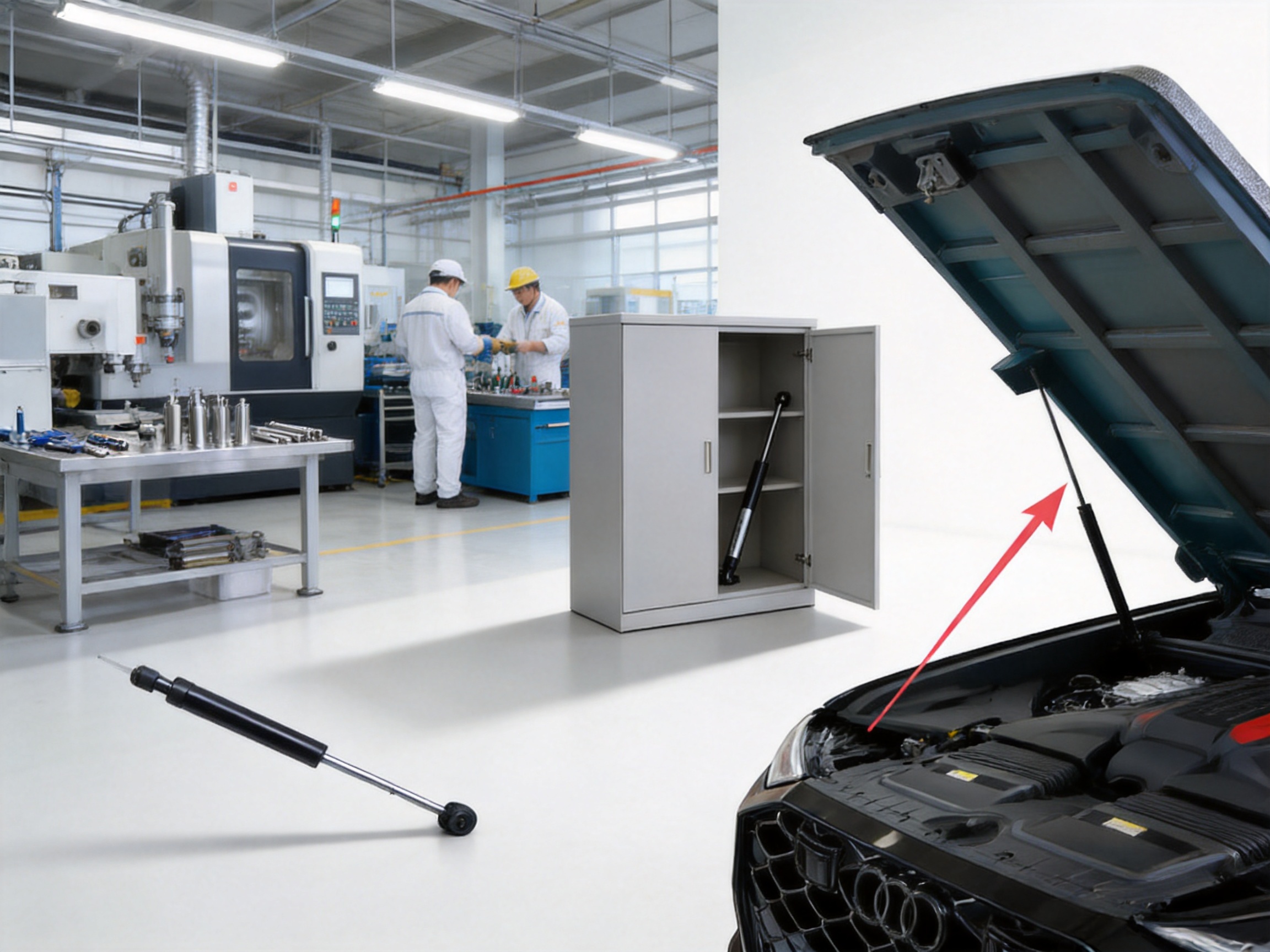
Standard free-type gas springs are among the most practical and versatile support components used in modern furniture, transportation equipment, industrial enclosures, and commercial installations. Designed to assist lifting, holding, and controlled closing, these pneumatic struts make heavy or awkward panels easier to operate while reducing impact, noise, and user effort. Their compact construction, dependable output, and maintenance-free operation have made them a preferred alternative to basic hinges, mechanical counterweights, ordinary coil springs, and less precisely manufactured support struts.
A free-type gas spring is called “free-type” because it is not designed to lock at intermediate positions. It normally provides two defined end positions: fully compressed and fully extended. Between those positions, the supported lid, door, panel, or cover can move freely under the combined influence of the gas spring, gravity, and the user’s applied force. This simple operating principle makes the product economical, dependable, and suitable for a broad range of applications.
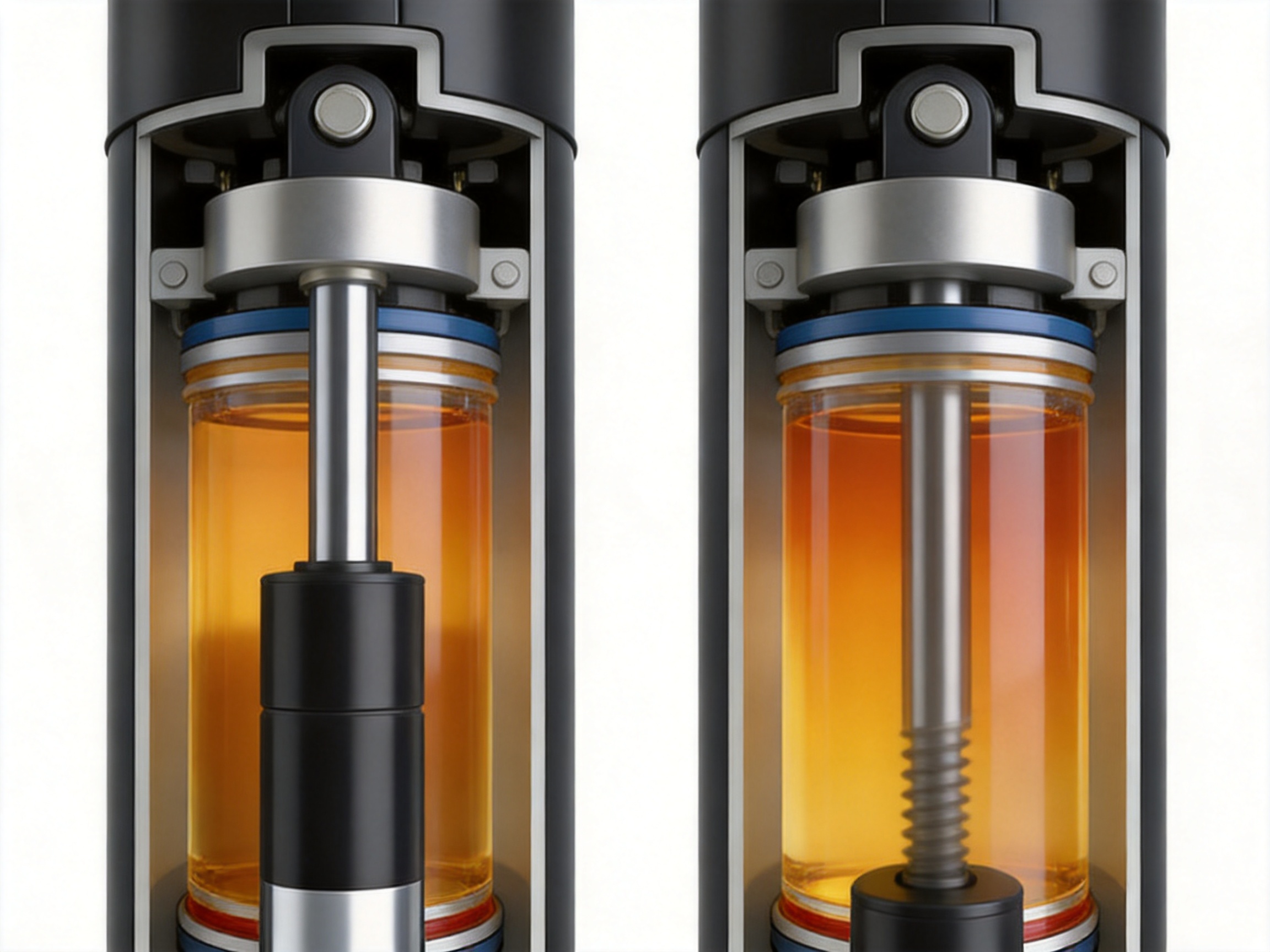
The product described in this article contains high-pressure nitrogen and damping hydraulic oil inside a sealed cylinder. The pressurized gas generates the supporting force, while the oil and internal valve arrangement help regulate movement. During opening, the gas assists the user by offsetting part of the load. During closing, the damping effect helps prevent sudden impact at the end of the stroke. The result is smoother movement, reduced operating noise, and improved protection for both the supported structure and the user.
What Is a Standard Free-Type Gas Spring?
A standard free-type gas spring is a sealed pneumatic lifting and damping device consisting primarily of a pressure tube, piston, piston rod, seals, guide components, and end fittings. The pressure tube contains nitrogen at high pressure. A carefully controlled quantity of hydraulic oil is also used to provide damping during movement. When the piston rod is pushed into the cylinder, the internal gas is compressed and stores energy. When the rod is released, the gas expands and produces an outward force.
The force generated by the gas spring is not intended to lift every load completely on its own. Instead, it is selected according to the weight, center of gravity, hinge position, opening angle, and required operating effort of the application. Correct selection allows the spring to balance part of the load and make opening easier without causing the lid or door to rise too quickly.
Unlike locking gas springs, free-type models do not hold the component at a chosen intermediate position. They are therefore especially appropriate where the supported panel only needs to move between a closed position and an open position. Typical examples include upward-opening cabinet doors, storage box lids, vehicle hoods, automotive tailgates, machinery covers, display enclosures, and advertising kiosks.
The absence of an intermediate locking mechanism is not a weakness in applications that do not require it. In fact, it simplifies the construction and reduces the number of internal components that could wear or malfunction. This straightforward design contributes to a competitive purchase price, consistent performance, and easier installation.
Operating Principle and Internal Construction
The pressure tube is the primary structural element of the gas spring. It contains the pressurized nitrogen charge and supports the internal piston assembly. Depending on the application, the tube may be manufactured from precision seamless steel tubing or stainless steel. Precision tubing supports dimensional consistency, while stainless steel provides improved resistance to corrosion in demanding environments.
The piston separates the internal working areas and interacts with the nitrogen and hydraulic oil. As the piston rod moves inward, the available gas volume changes, increasing the pressure inside the cylinder. This pressure acts on the effective piston area and produces the extension force. The force level is selected during production by controlling the nitrogen pressure in accordance with the required specification.
The piston rod transfers the pneumatic force to the supported lid, door, or panel. Its surface must be smooth, accurately sized, and sufficiently resistant to wear because it passes through the guide and sealing system during every operating cycle. A well-finished rod helps reduce friction and supports long-term seal performance.
Seals prevent the loss of nitrogen and hydraulic oil while excluding dust and moisture from the cylinder. The guide supports the piston rod and helps maintain alignment as the spring moves. Internal damping passages regulate the flow of oil and gas during extension and compression. This controlled flow is important because an undamped gas spring may open or close too aggressively, creating noise, vibration, and unnecessary mechanical stress.
At the end of the extension or compression movement, the internal design provides a controlled limit condition. The spring does not normally replace a structural stop in the surrounding product, so the application should still include suitable mechanical limits where necessary. Correctly positioned external stops protect the gas spring from excessive loading and help extend its service life.
Key Performance Advantages
Reduced Manual Effort
The primary advantage of a standard free-type gas spring is its ability to reduce the effort needed to open a heavy panel. A properly selected model offsets a portion of the panel’s weight throughout its movement. This is particularly valuable for large lids, upward-opening doors, and covers installed above shoulder height.
Compared with a simple hinge, the gas spring provides active lifting assistance. Compared with a basic mechanical spring, it can deliver a more controlled and predictable force over the operating range. The user does not need to lift the entire load from the closed position, which improves convenience and reduces the risk of sudden strain.
Soft and Quiet Closing
Built-in hydraulic damping helps slow the supported component near the end of its travel. This soft-closing effect reduces slamming and prevents the lid or door from striking the frame with excessive force. Lower impact levels protect hinges, mounting brackets, panels, locks, and surrounding structures.
Reduced impact also lowers operating noise. This is useful in homes, offices, public facilities, retail installations, vehicles, and equipment rooms where repeated mechanical noise can be distracting or undesirable. A damped gas spring supports a more refined user experience than an unsupported panel or an unregulated spring mechanism.
Maintenance-Free Sealed Design
Standard free-type gas springs are sealed during production and do not require routine refilling, lubrication, or adjustment under normal operating conditions. The internal nitrogen charge is contained within the cylinder, and the hydraulic oil is isolated from the outside environment. This makes the product particularly valuable in locations where maintenance access is limited.
Although the spring is maintenance-free, the exposed piston rod should still be protected from scratches, heavy contamination, welding spatter, and corrosive chemicals. Proper installation and periodic visual inspection can help identify damage before it affects performance.
Compact Installation
Gas springs provide a high supporting force in a relatively small package. This allows designers to avoid bulky counterweights, large external mechanisms, or complex lifting systems. The slim cylindrical profile can be integrated into cabinets, vehicle body structures, furniture frames, and equipment housings without occupying excessive usable space.
The compact design also enables installation in pairs. Two gas springs can distribute the load across a wide lid or door, improve stability, and reduce twisting forces. When paired models are used, their force ratings should be matched as closely as possible, and their installation geometry should be symmetrical whenever the application permits.
Cost-Effective Performance
The standard free-type configuration is one of the most economical gas spring designs because it does not include an intermediate locking mechanism or complex control system. The product delivers lifting assistance and damping while keeping the number of internal components relatively low.
This cost advantage is important for manufacturers producing furniture, storage boxes, vehicle components, machinery, and commercial fixtures in volume. A reliable standard design can reduce both component cost and assembly complexity while improving the finished product’s usability.
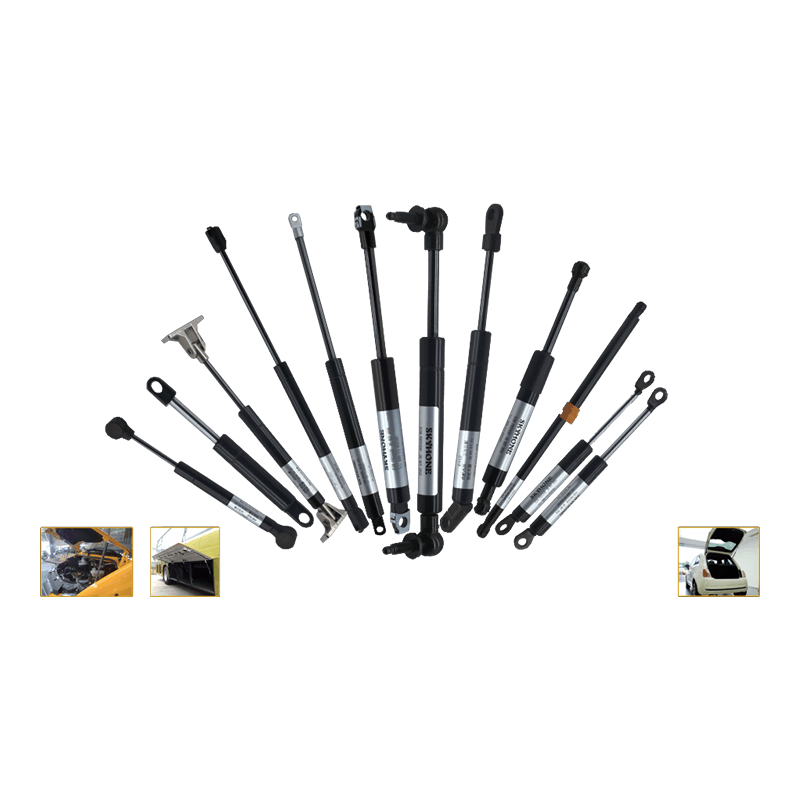
Standard free-type gas spring
Material Options and Environmental Suitability
The pressure tube can be produced using precision seamless steel tubing or stainless steel. Precision steel is suitable for many indoor and general industrial applications because it offers structural strength, dimensional stability, and an attractive balance between performance and cost.
Stainless steel is particularly useful where corrosion resistance is important. Applications may include vehicle environments, public facilities, humid areas, outdoor-adjacent equipment, food-service surroundings, and installations exposed to changing temperature or moisture. The appropriate grade and surface treatment should be selected according to the actual environmental conditions.
The piston rod finish is also important. A smooth and durable rod surface supports reliable sealing and reduces friction. Depending on the application, the rod may require a corrosion-resistant treatment or additional protection. The surrounding design should prevent the rod from being used as a handle or exposed to side loads, since gas springs are designed primarily for axial force.
End fittings and brackets should be chosen according to the available mounting space and the expected load direction. Ball sockets, eyelets, clevis fittings, and other connection styles can be used to match different furniture and equipment structures. The fitting must be securely attached and aligned so that the spring is not forced to operate at an angle that creates excessive bending stress.
Available Specifications
The product range covers multiple combinations of tube diameter, piston rod diameter, center distance, stroke, and pressure. This enables the gas spring to be selected for compact furniture panels as well as larger equipment covers and vehicle applications.
| Tube Diameter and Rod Diameter | Center Distance | Stroke | Pressure Range | Typical Selection Character |
|---|---|---|---|---|
| 15 mm / 6 mm | 150–300 mm | 40–110 mm | 20–300 N | Compact, light-duty applications |
| 18 mm / 8 mm | 150–600 mm | 40–250 mm | 30–500 N | Furniture and medium-size covers |
| 22 mm / 10 mm | 200–400 mm | 60–160 mm | 50–1,000 N | General-purpose support applications |
| 22 mm / 10 mm | 400–500 mm | 160–200 mm | 50–1,000 N | Extended movement requirements |
| 22 mm / 10 mm | 500–600 mm | 200–250 mm | 50–1,000 N | Medium-to-long stroke applications |
| 22 mm / 10 mm | 600–700 mm | 250–300 mm | 50–1,000 N | Large opening panels |
| 22 mm / 10 mm | 700–800 mm | 300–340 mm | 50–1,000 N | Long travel installations |
| 22 mm / 10 mm | 900 mm | 400 mm | 50–1,000 N | Large covers and doors |
| 22 mm / 12 mm | 500–1,000 mm | 200–450 mm | 500–1,500 N | High-force structural support |
| 28 mm / 14 mm | 500–1,000 mm | 200–450 mm | 500–2,000 N | Large and heavy-duty applications |
The listed ranges provide a starting point for product selection rather than a substitute for application engineering. The correct pressure must be determined from the actual panel mass, hinge position, center of gravity, mounting points, opening angle, and desired manual operating force. A model with a higher nominal force is not automatically better. Excessive force may make closing difficult, cause the panel to rise unexpectedly, or increase stress on the mounting structure.
Advantages Over Alternative Support Solutions
Compared with Ordinary Hinges
Ordinary hinges guide rotation but do not assist lifting. When a large lid or door is opened using hinges alone, the user must supply the full lifting force. The unsupported panel may also fall rapidly during closing. Adding a free-type gas spring transforms the hinge system into a more controlled and ergonomic mechanism.
The gas spring does not replace the hinge. Instead, it complements the hinge by providing force assistance and damping. This combination is simple, widely applicable, and easy to integrate into existing product designs.
Compared with Mechanical Coil Springs
Coil springs can provide lifting force, but their force characteristics and exposed construction may make them more difficult to package. They may also create a sharper force variation across the movement range and can require additional guiding parts or protective covers.
A sealed gas spring combines force generation and damping in one compact component. It generally provides a smoother operating experience and avoids the need for frequent lubrication. Its cylindrical form also makes it easier to mount along the side of a lid or within a frame.
Compared with Counterweights
Counterweights can balance a panel effectively, but they consume valuable space and increase total product weight. They may also create safety concerns if they become detached or are poorly enclosed. A gas spring achieves a similar assistance function with much less space and without adding a large moving mass.
For furniture, vehicles, and equipment enclosures, reduced weight can improve transportation, installation, and energy efficiency. The compact gas spring approach also gives designers greater freedom to use the available internal volume for storage or functional components.
Compared with Locking Gas Springs
Locking gas springs are appropriate when a lid or panel must remain fixed at an intermediate angle. However, their locking mechanism can increase cost, complexity, and operating effort. When intermediate positioning is unnecessary, the standard free-type version is often the more efficient choice.
The free-type model is particularly suitable when the application has clear open and closed positions, or when an external support or mechanical stop already defines the safe operating range. Its simpler construction can also provide a favorable balance between durability and price.
Manufacturing Process and Quality Strengths
A high-quality gas spring depends on more than a pressure tube and a nitrogen charge. Consistent performance requires controlled material preparation, accurate machining, reliable sealing, clean assembly, and carefully calibrated force output. SuZhou Skyhone Intelligent Technology Co., Ltd. focuses on research and development, production, sales, and service for standing desks and related intelligent office-space solutions. Its manufacturing experience in adjustable furniture and supporting hardware provides a practical foundation for supplying gas springs to furniture, equipment, and broader industrial applications.
The company is located in Suzhou, a major manufacturing center in the Yangtze River Delta. The region provides access to a mature industrial supply chain, engineering resources, component suppliers, metal-processing capabilities, and logistics infrastructure. This environment supports efficient sourcing and coordinated production while helping shorten communication cycles between design, manufacturing, and customer service teams.
Material Preparation and Tube Processing
Manufacturing begins with the selection and preparation of suitable tube and rod materials. Tube dimensions must be controlled because internal volume, piston fit, and pressure behavior are directly related to the cylinder geometry. Precision processing helps maintain consistent wall thickness and dimensional stability throughout the product range.
Tube ends are prepared for assembly, and internal surfaces are cleaned to remove particles that could damage seals or interfere with piston movement. The piston rod is processed to achieve an appropriate surface finish and dimensional accuracy. These steps are essential because small surface defects can increase friction, accelerate seal wear, or cause leakage during long-term use.
Component Machining and Assembly
Internal components are produced and assembled according to the selected specification. The piston, guide, sealing elements, end closures, and fittings must work together as a coordinated system. Assembly accuracy affects the spring’s extension force, friction, damping behavior, and service life.
Clean assembly conditions are particularly important for pneumatic components. Dust, metal chips, or other contaminants can damage the seal or obstruct internal passages. A controlled process helps protect the cylinder’s working surfaces and supports repeatable product quality.
Gas Charging and Force Calibration
Nitrogen charging is one of the most important manufacturing operations. The gas pressure determines the nominal supporting force, so the charging process must be controlled carefully. The pressure selected for a particular model is based on the required force range and the intended application.
After charging, products can be checked for extension behavior, dimensional conformity, and force consistency. Calibration and inspection help ensure that units supplied under the same specification deliver comparable performance. This is especially important when two gas springs are installed on opposite sides of a wide lid or door.
Leak Testing and Functional Inspection
Leak resistance is fundamental to the service life of a gas spring. The sealed cylinder must retain nitrogen and hydraulic oil under normal operating conditions. Testing procedures may include visual inspection, pressure-related checks, movement tests, and verification of sealing performance.
Functional inspection can also evaluate extension speed, damping near the end of travel, rod smoothness, and fitting integrity. By checking the completed product rather than relying only on individual component measurements, the manufacturer can identify assembly issues that might otherwise remain undetected.
Continuous Product Development
Research and development is valuable because gas spring requirements differ significantly among furniture, transportation, equipment, and commercial installations. A product designed for an indoor cabinet may not be suitable for an automotive tailgate or a humid public enclosure. Different applications require different force ratings, materials, rod finishes, fittings, lengths, and environmental protections.
A manufacturer with experience in adjustable desks and intelligent office products understands the importance of smooth movement, user safety, compact integration, and attractive appearance. These considerations are also relevant to gas spring applications in office furniture, storage systems, and ergonomic workspaces.
Applications Across Multiple Industries
Furniture and Cabinetry
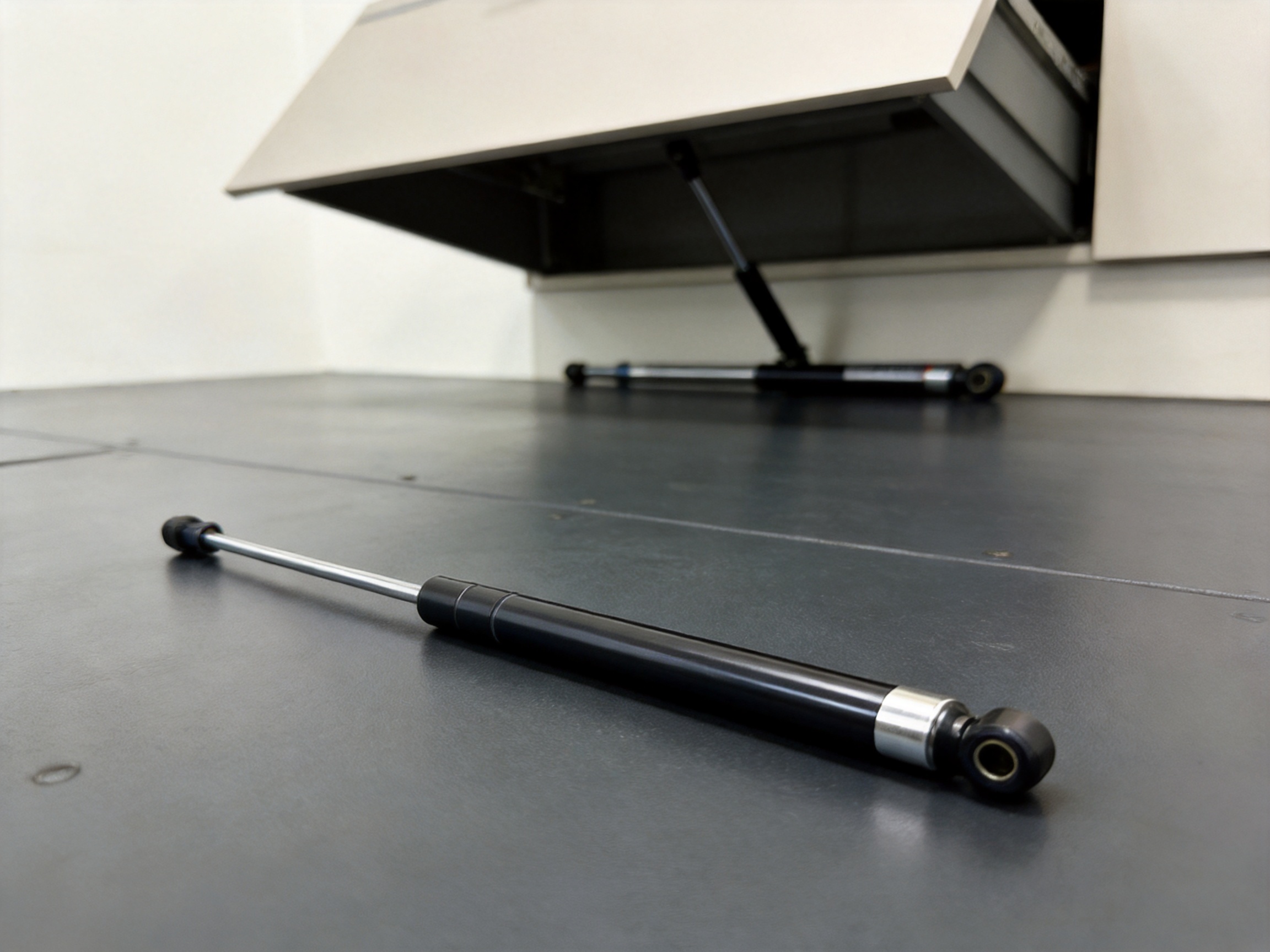
Free-type gas springs are widely used in upward-opening cabinet doors, storage benches, folding tables, lift-top desks, tool chests, and residential storage furniture. They allow a large panel to be opened with less effort and help prevent the panel from falling unexpectedly.
In office furniture, gas springs can support access panels, equipment compartments, monitor covers, and adjustable sections. Their quiet movement is beneficial in shared workspaces, meeting rooms, libraries, and reception areas where excessive mechanical noise is undesirable.
Automotive Applications
Automotive hoods, tailgates, rear windows, and storage compartments frequently use gas springs. The supporting force allows drivers and passengers to open heavy body panels more easily, while damping helps control movement as the panel reaches the end of its travel.
Vehicle applications require careful attention to vibration, temperature changes, corrosion, and repeated cycling. Stainless steel or corrosion-resistant configurations may be appropriate depending on the location and exposure conditions. The mounting structure must also be designed to withstand dynamic loads rather than only the static weight of the panel.
Industrial Equipment
Equipment enclosures, inspection covers, control cabinets, machine guards, and service doors can benefit from gas spring assistance. The support mechanism allows maintenance personnel to open a heavy cover without needing another person to hold it in place.
When used with appropriate external stops and safety procedures, a gas spring can improve access to internal components and reduce the risk of accidental closure. The correct force must be selected so that the cover remains manageable throughout the service process.
Commercial and Public Installations
Bus shelter advertising kiosks, display cabinets, retail fixtures, information terminals, and public storage units may use gas springs to support access panels and service doors. The sealed construction and low maintenance requirement are useful in installations that are accessed frequently or located away from dedicated maintenance personnel.
For public-facing equipment, the movement should be smooth and predictable. A controlled gas spring helps create a more professional appearance and reduces the possibility of sharp impact when a panel is closed.
Home and Recreational Equipment
Gas springs are also suitable for beds with lifting storage bases, recreational vehicle compartments, marine storage lids, barbecue covers, and hobby equipment. These applications often benefit from compact support hardware that can operate repeatedly without complex maintenance.
Where the environment includes moisture, salt, dust, or temperature extremes, material selection and protective treatments should be considered carefully. The basic free-type principle remains suitable, but the complete product specification must match the environment.
Installation Guidelines
Correct installation is essential for achieving the expected performance and service life of a gas spring. Before installation, confirm the extended length, compressed length, stroke, force rating, tube and rod orientation, and end-fitting configuration. The mounting points should be measured accurately rather than estimated from the appearance of the panel.
The gas spring should generally be mounted so that its movement follows the natural opening path of the lid or door. Misalignment can introduce side loads that increase friction and cause premature wear. The spring should not be forced to compensate for a hinge that is bent, loose, or incorrectly positioned.
When two gas springs are used, their mounting positions should be as symmetrical as possible. Unequal mounting can twist the panel and cause one spring to carry more load than the other. Matching force ratings and similar operating conditions are also important for balanced movement.
The gas spring should not be used as a structural stop unless the product has been specifically designed for that purpose. External stops can prevent overextension or overcompression and protect the fittings from impact. The surrounding structure must be strong enough to withstand the reaction forces at the mounting brackets.
During installation, do not scratch, bend, drill, heat, or clamp the exposed piston rod. Damage to the rod can harm the sealing system and lead to premature leakage. Welding near an installed gas spring should be avoided unless the component has been removed and appropriate safety procedures have been followed.
After installation, operate the panel slowly through its complete range. Check for binding, unusual noise, uneven movement, excessive force, and interference with nearby components. Any problem should be corrected before the product is placed into regular service.
How to Select the Correct Model
Selection begins with the weight of the supported panel. However, panel weight alone is not enough. The position of the center of gravity and the distance between the hinge and the gas spring mounting point significantly affect the required force.
The opening angle and desired operating effort must also be considered. A spring that feels appropriate near the closed position may become too strong or too weak near the open position. Application testing is therefore recommended for new designs, particularly when the panel is large, heavy, or used frequently.
Stroke determines how far the piston rod can move. The selected stroke must accommodate the required panel movement without forcing the spring to reach an unsuitable limit. Center distance determines the overall installed length, so both the extended and compressed dimensions must fit inside the available space.
The number of springs is another important factor. A light panel may need only one spring, while a wide or heavy panel may require two. Two springs can improve balance, but they also increase the total supporting force. The design should account for both the spring force and the structural capacity of the mounting points.
Environmental conditions influence material selection. Indoor furniture may use a standard steel cylinder, while outdoor-adjacent, humid, automotive, or marine environments may require stainless steel or additional corrosion protection. Temperature range should also be considered because gas pressure and damping behavior can change with temperature.
Safety and Service Considerations
Gas springs contain pressurized nitrogen and should never be disassembled, punctured, heated, or modified by the user. The internal pressure is part of the product’s operating design, and unauthorized alteration can create a serious hazard.
A gas spring should be replaced if the piston rod is bent, deeply scratched, corroded, or contaminated with damaging substances. Leakage, sudden loss of force, abnormal movement, or unusual noise may also indicate that replacement is necessary. Gas springs are sealed components and are generally not intended to be repaired in the field.
Regular visual checks are useful in demanding applications. Inspect the fittings, mounting brackets, rod surface, tube, and surrounding structure. Confirm that fasteners remain secure and that the panel has not changed alignment. Early detection of wear helps prevent secondary damage to hinges and covers.
Why This Product Is a Strong Choice for OEM and Custom Projects
For original equipment manufacturers, the main value of a standard free-type gas spring lies in the combination of mature design, broad specification coverage, and simple integration. The available diameter, length, stroke, and pressure ranges make it possible to support different product families without creating a completely new mechanism for every project.
The design is also compatible with custom engineering. Customers may need a particular center distance, mounting fitting, tube material, rod finish, or force rating. A manufacturer experienced in product development and intelligent furniture systems can work from application requirements rather than offering only a fixed off-the-shelf solution.
Production in the Suzhou industrial region supports access to manufacturing resources and supply-chain coordination. Combined with research, production, sales, and service capabilities, this creates a practical foundation for customer communication from initial selection through delivery and after-sales support.
The product’s competitiveness is not limited to price. Consistent movement, reliable sealing, controlled damping, appropriate materials, and accurate force selection all contribute to the total value of the finished application. A low-cost component that fails early or causes panel damage may create greater expense than a properly manufactured and correctly selected gas spring.
Frequently Asked Questions
What does “free-type” mean?
Free-type means that the gas spring does not lock at intermediate positions. It assists movement between the compressed and extended positions, but it does not hold a lid or door at every point along its stroke. If intermediate locking is required, a locking gas spring or an external support mechanism should be considered.
Can a free-type gas spring hold a lid open?
Yes, it can assist in opening and support the lid in the fully extended position when the application geometry and force rating are correct. The surrounding structure should still include a suitable mechanical stop when necessary. The gas spring should not be treated as the only safety feature for a large or heavy panel.
How is the required force determined?
The required force depends on panel weight, center of gravity, hinge location, mounting points, opening angle, friction, and desired manual effort. A basic weight estimate is not sufficient for precise selection. Application testing or engineering calculation is recommended for new designs.
What is the difference between stroke and center distance?
Stroke is the distance the piston rod travels between the compressed and extended positions. Center distance is the overall distance between the centers of the end fittings in a specified condition, usually when the gas spring is extended. Both measurements must fit the available installation space.
Can one gas spring be replaced by two smaller gas springs?
In some applications, two smaller gas springs can replace one larger unit, but the total force, mounting geometry, and panel balance must be reviewed. Two springs can distribute the load more evenly across a wide panel, but the brackets and structure must be capable of handling the combined forces.
Are stainless steel gas springs necessary indoors?
Not always. Standard precision steel tubing may be suitable for clean, dry indoor applications. Stainless steel becomes more valuable when the product is exposed to moisture, corrosion, outdoor air, vehicle conditions, or demanding cleaning environments. The choice should be based on actual operating conditions.
Do gas springs require lubrication?
They are designed to operate without routine lubrication. Applying unapproved oil or grease to the piston rod may attract dust or affect the seal. The rod should be kept clean and protected from damage instead of being lubricated by the user.
Why does a gas spring feel different in cold and warm conditions?
Gas pressure and hydraulic damping can vary with temperature. A spring may feel slightly slower or weaker in cold conditions and faster or stronger in warmer conditions. The product should be selected and tested according to the temperature range expected in the application.
Can a gas spring be installed at any angle?
Many gas springs can operate in different orientations, but the preferred position depends on the internal damping design and application requirements. The mounting direction should follow the manufacturer’s technical guidance. In all cases, the spring must remain aligned with the intended movement and should not carry damaging side loads.
What causes premature gas spring failure?
Common causes include an incorrect force rating, side loading, damaged piston rods, overextension, overcompression, poor mounting alignment, corrosion, excessive temperature, and unsupported panel impact. Correct design, careful installation, suitable material selection, and periodic inspection can reduce these risks.
Conclusion
Standard free-type gas springs provide a simple and effective way to improve the usability, safety, and perceived quality of hinged panels. Their high-pressure nitrogen charge supplies lifting assistance, while integrated hydraulic damping supports a smoother and quieter closing motion. The sealed, maintenance-free design and compact dimensions make them suitable for furniture, vehicles, industrial equipment, commercial fixtures, and public installations.
Compared with ordinary hinges, coil springs, counterweights, and unnecessarily complex locking mechanisms, the free-type design offers an attractive balance of performance, reliability, and cost. Its broad range of tube diameters, rod diameters, center distances, strokes, and pressure ratings supports both compact and heavy-duty applications.
Product quality depends on controlled tube processing, accurate rod finishing, reliable sealing, clean assembly, precise nitrogen charging, and functional inspection. SuZhou Skyhone Intelligent Technology Co., Ltd., based in Suzhou’s advanced manufacturing environment, combines research and development, production, sales, and service capabilities with experience in standing desks and intelligent office-space solutions. This background supports a practical approach to component selection, application development, and customer support.
For the best result, the gas spring should be selected according to the complete application rather than by force rating alone. Panel weight, center of gravity, hinge geometry, stroke, center distance, environmental conditions, and mounting strength all influence performance. When these factors are properly evaluated, a standard free-type gas spring can provide dependable assistance and long-term value across a wide variety of products.
References
1. General Principles of Pneumatic Gas Spring Design and Application.
2. Industrial Guidelines for Gas Spring Force Selection, Mounting Geometry, and Damping Performance.
3. Mechanical Design Practices for Hinged Panels, Covers, Doors, and Access Enclosures.
4. Materials and Surface Treatment Considerations for Steel and Stainless Steel Components.
5. Quality Control Methods for Pressurized Cylinders, Sealing Systems, and Functional Movement Components.
6. Ergonomic Design Principles for Assisted Opening and Controlled Closing Mechanisms.
7. Automotive and Furniture Hardware Engineering Practices for Gas-Supported Panels.
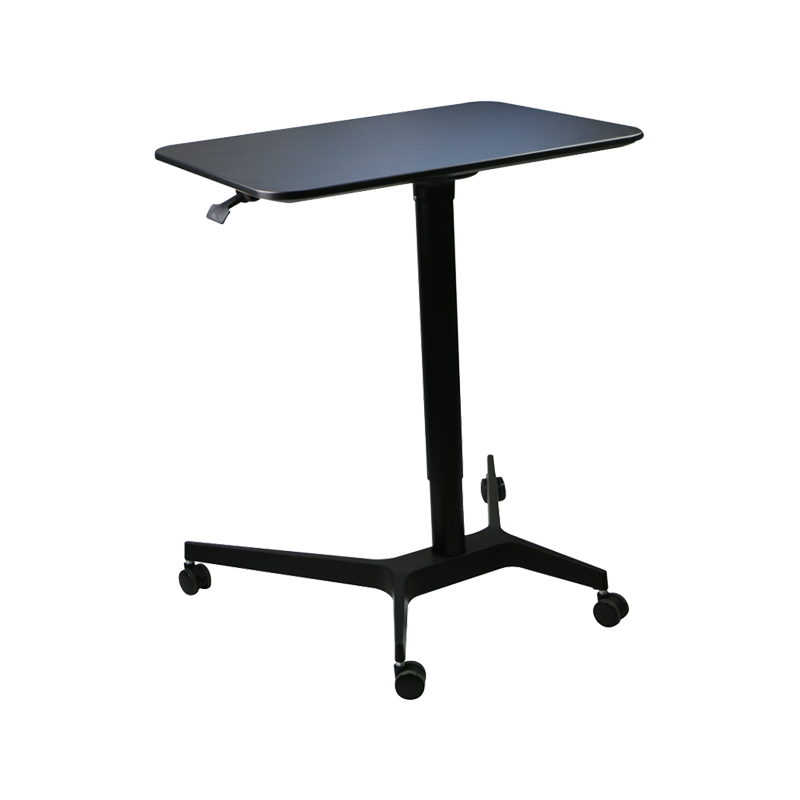
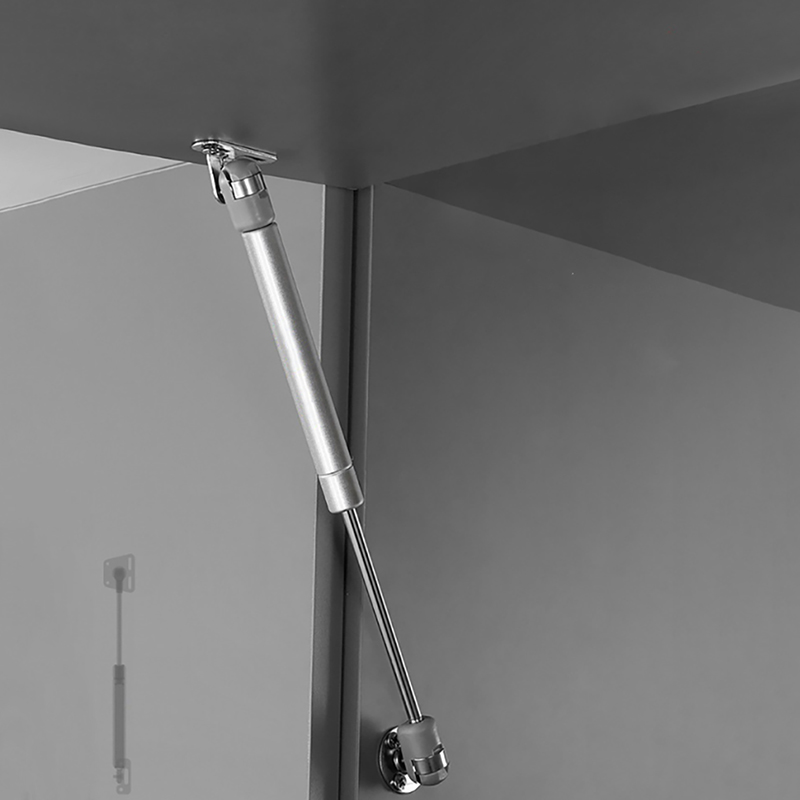
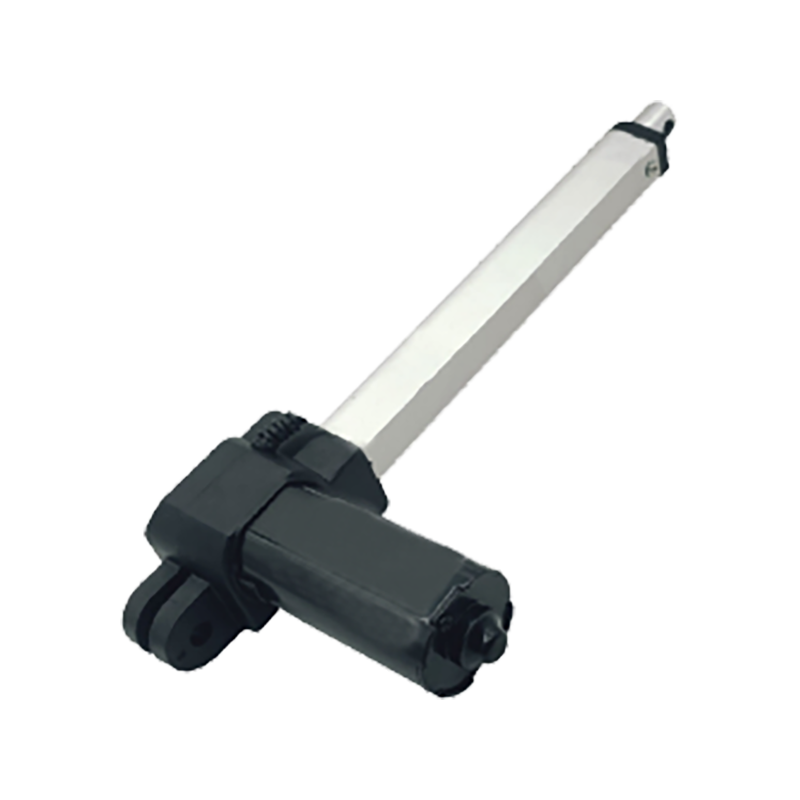
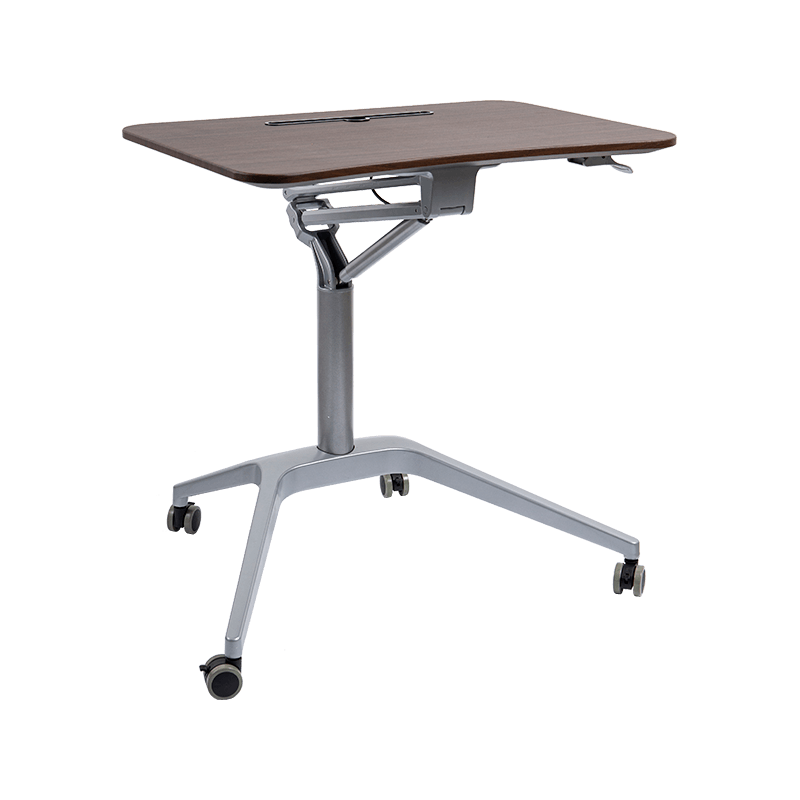
Product: Standard free-type gas spring


- Contact Info
-
-
 Phone+86-15950656125
-
 Email
-
 AddressRoom 1007-1, South Building, Suyue Plaza, Suzhou Industrial Park, Suzhou City, Jiangsu Province, China
-
- Products
- Follow Us
- Need help? Please contact us
Copyright ©
SuZhou Skyhone Intelligent Technology Co., Ltd.
All Rights Reserved.
Privacy
Custom Ergonomic Adjustable Office Tables Manufacturers

