

 English
 русский
 Español
 عربى

Content
- 1 Introduction
- 2 Product Overview
- 3 Two-Way Adjustment for More Productive Work
- 4 Gas Spring–Assisted Height Adjustment
- 5 Tilting Tabletop from 0° to 90°
- 6 Solid Rubberwood Tabletop and Walnut Appearance
- 7 Aluminum Frame and Powder-Coated Surface
- 8 Mobility Through Bidirectional PU Casters
- 9 Advantages over Conventional Fixed Desks
- 10 Advantages over Basic Electric Height-Adjustable Desks
- 11 Advantages over Traditional Drafting Tables
- 12 Applications in Offices and Home Workspaces
- 13 Applications in Design Studios and Architectural Offices
- 14 Applications in Schools and Art Classrooms
- 15 Applications in Healthcare and Rehabilitation Settings
- 16 Manufacturing and Product Development Strengths
- 17 Quality Considerations in Production
- 18 Ergonomic Benefits and Responsible Use
- 19 Load Capacity and Operating Guidance
- 20 Maintenance and Long-Term Care
- 21 Why the SK06 Is Suitable for B2B Projects
- 22 Customization and Cooperation Potential
- 23 Q&A
- 23.1 What type of desk is the SK06?
- 23.2 What is the height range?
- 23.3 Does the desk require electricity?
- 23.4 How far can the tabletop tilt?
- 23.5 What is the tabletop made from?
- 23.6 What are the tabletop dimensions?
- 23.7 What materials are used for the frame?
- 23.8 Can the desk be moved?
- 23.9 What is the load capacity?
- 23.10 Is the SK06 suitable for drawing?
- 23.11 Can it be used as a reading table?
- 23.12 Is it suitable for an office?
- 23.13 What makes it different from a standard electric standing desk?
- 23.14 What makes it different from a traditional drafting table?
- 23.15 How should the wood tabletop be maintained?
- 23.16 Is the desk suitable for heavy equipment?
- 23.17 Where is the manufacturer located?
- 24 Conclusion
- 25 References
- 26 Product: SK06 Solid Wood Walnut Pneumatic Height-Adjustable Tilting Desk
SK06 Solid Wood Walnut Pneumatic Height-Adjustable Tilting Desk: A Flexible Workstation for Modern Spaces
2026-09-27
Introduction
Work environments are becoming more flexible, and the furniture used in those environments must adapt accordingly. A desk is no longer expected to serve only as a fixed surface for seated office work. In homes, studios, schools, clinics, and professional workplaces, users increasingly need a workstation that can change height, support different working postures, accommodate creative activities, and move easily when a room layout changes.
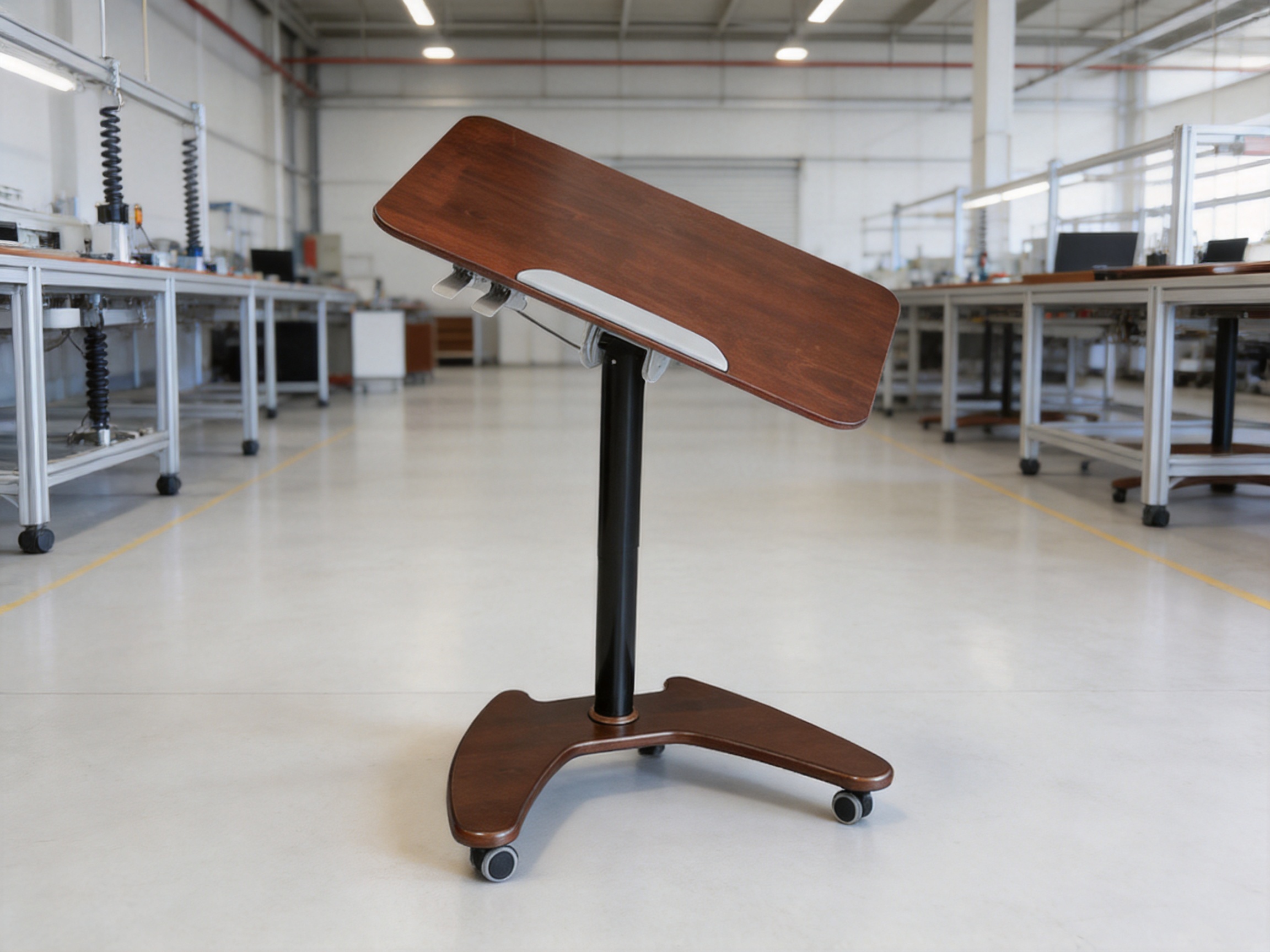
The SK06 Solid Wood Walnut Pneumatic Height-Adjustable Tilting Desk is designed around these requirements. It combines a continuously adjustable height range, a tabletop that tilts from 0° to 90°, gas spring–assisted operation, a solid rubberwood work surface, and bidirectional PU casters. Instead of offering only a height-adjustable frame or only a tilting tabletop, the SK06 integrates both functions into one compact workstation.
With a height range of 750–1170 mm, the desk can support seated work, elevated seated work, and standing activities. Its tabletop measures 715 × 495 × 20 mm and can be locked at any angle up to 90°, making the desk suitable for writing, reading, drafting, drawing, and other tasks that benefit from a sloped work surface. The walnut finish adds a warm, furniture-like appearance, while the aluminum frame provides a lightweight structural foundation.
The product is manufactured and supplied by SuZhou Skyhone Intelligent Technology Co., Ltd., a Suzhou-based enterprise focused on the research, development, production, sales, and service of standing desks and related workspace solutions. Its location in the Yangtze River Delta furniture manufacturing region provides access to a mature industrial ecosystem, while its product development direction emphasizes healthy, efficient, and intelligent office environments.
This article examines the design, performance, applications, manufacturing considerations, and competitive advantages of the SK06 desk. It also explains why the combination of pneumatic height adjustment, tabletop tilting, solid wood styling, and mobility makes this model different from conventional fixed desks and basic height-adjustable tables.
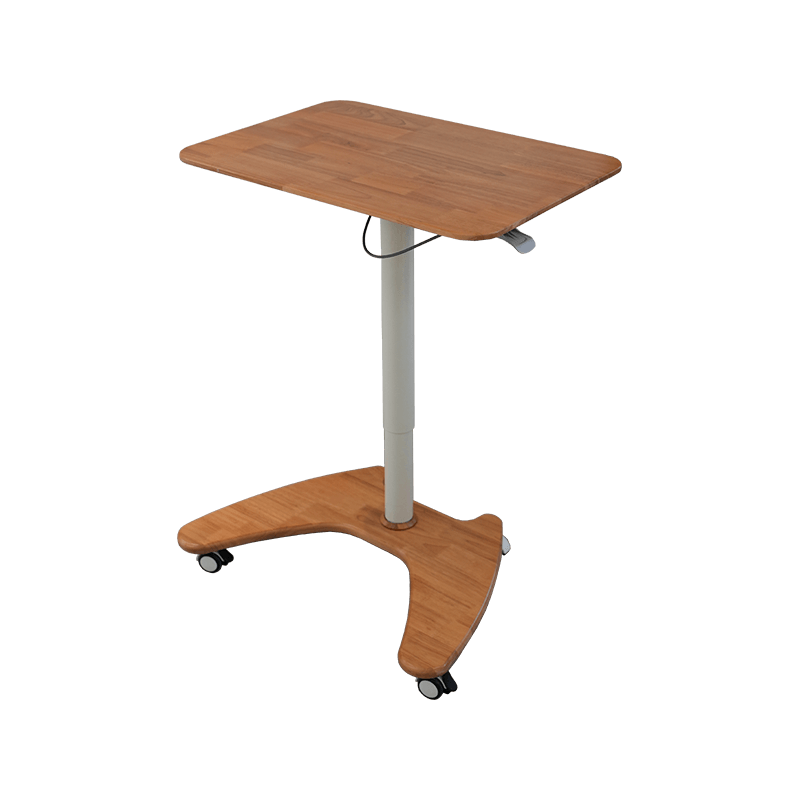
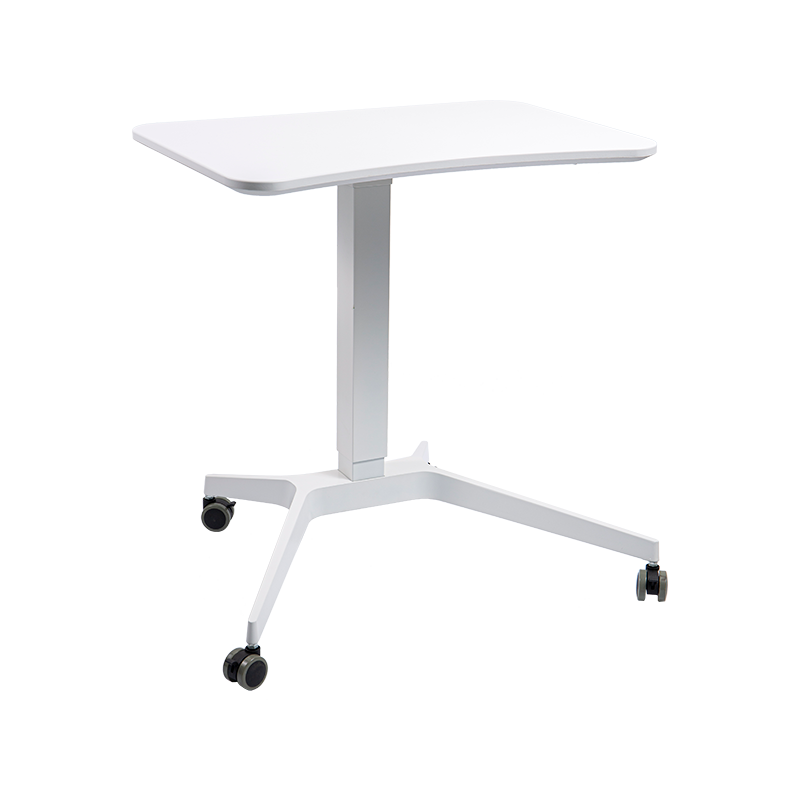
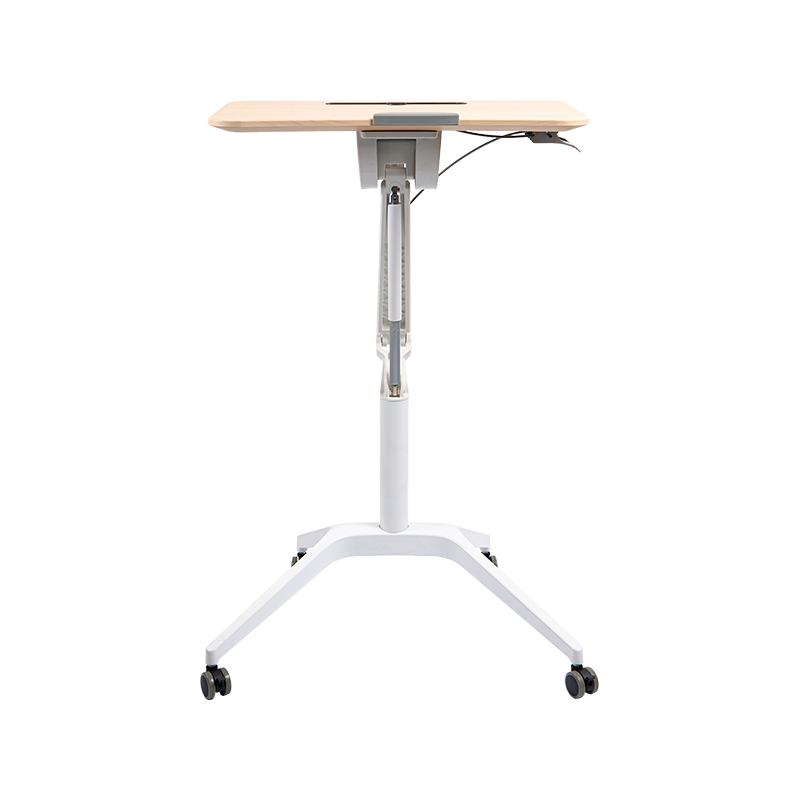
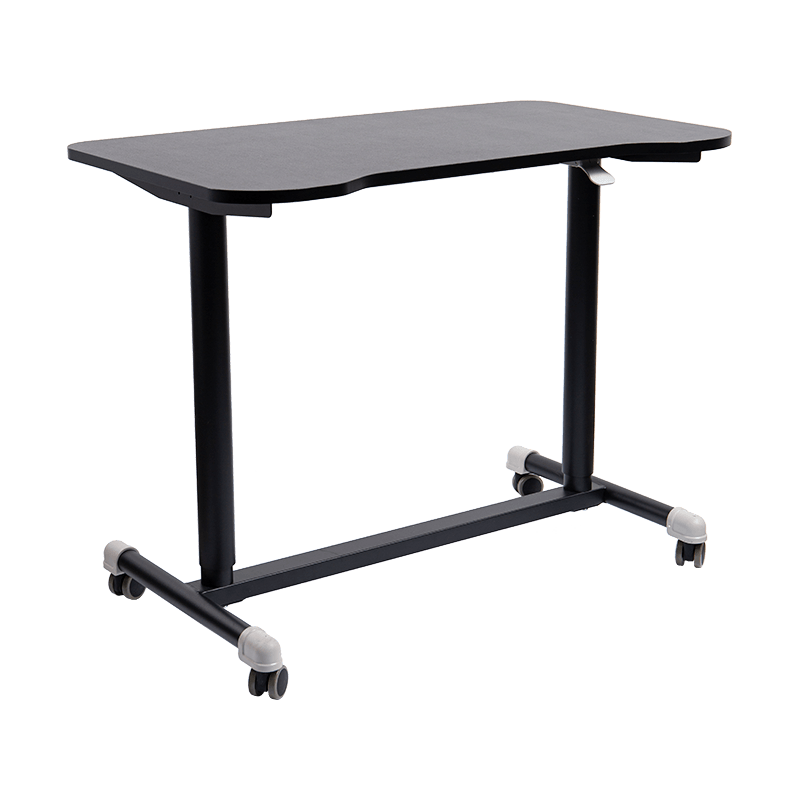
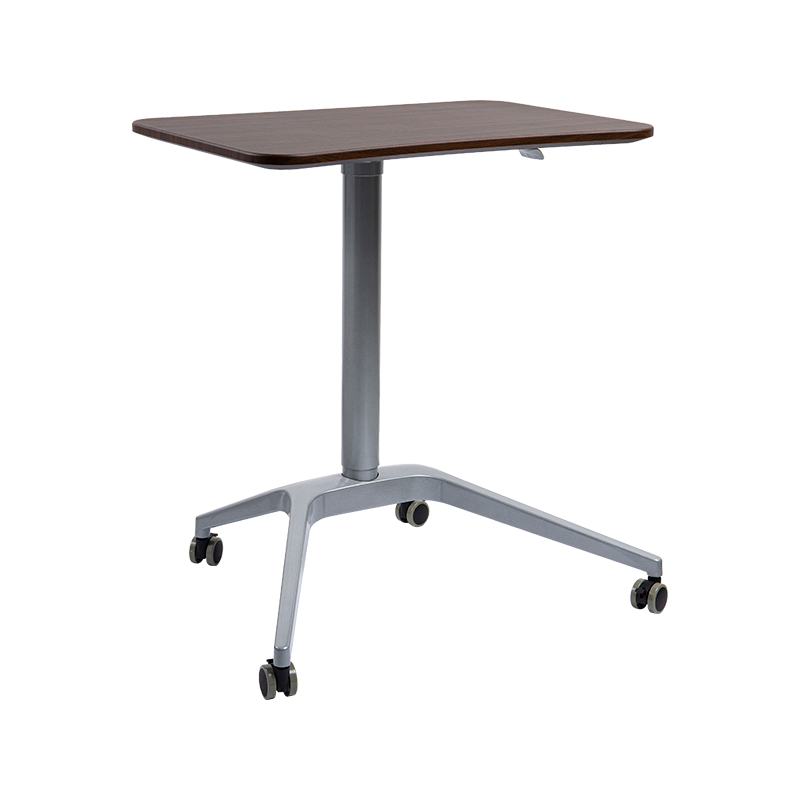
SK06 Solid Wood Walnut Pneumatic Height-Adjustable Tilting Desk
Product Overview
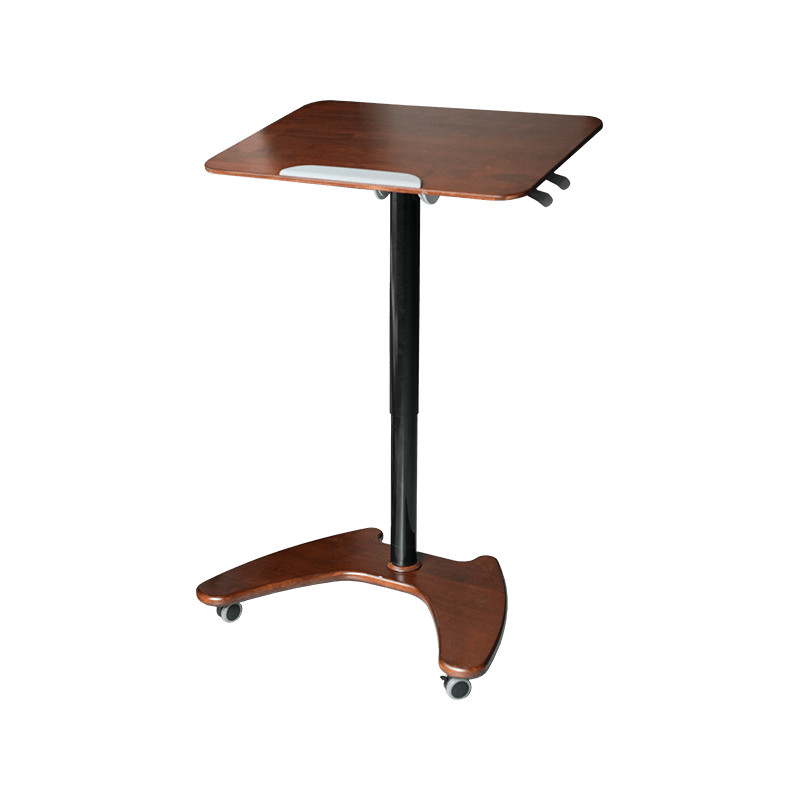
The SK06 is a pneumatic height-adjustable table with a tilting tabletop. It is intended for users who need more than a standard horizontal desk surface. The product brings together four primary functions: adjustable height, adjustable tabletop angle, mobile positioning, and a durable wood-and-aluminum construction.
The desk’s height can be continuously adjusted between 750 mm and 1170 mm. This range accommodates a variety of users and working positions. At its lower settings, the desk can be used for seated writing, reading, study, and office work. At higher settings, it can support standing work or activities performed from a raised position.
The tabletop tilts and locks at any angle from 0° to 90°. A horizontal 0° position provides a familiar desk surface for a computer, notebook, or general office task. A moderate angle may be useful for reading or handwriting, while a steeper angle can support sketching, drafting, painting, or displaying reference materials.
The tabletop is made from 20 mm rubberwood and is offered in Walnut and Natural Wood finishes. The walnut appearance creates a refined and professional visual effect, while the natural wood option emphasizes the material’s organic grain and warmth. The solid wood construction gives the desk a tactile quality that is not typically associated with basic metal-frame office tables.
The supporting frame is made from aluminum with an extruded and powder-coated surface finish. Aluminum helps maintain a balance between structural strength and manageable product weight. The powder-coated finish contributes to resistance against everyday surface wear, oxidation, and fading, while also giving the frame a clean and consistent appearance.
Bidirectional PU casters make it possible to reposition the desk without lifting the complete unit. The casters are intended to move smoothly across common indoor floor surfaces while reducing the risk of floor damage. This mobility is useful in classrooms, studios, offices, and homes where the desk may need to be moved between working areas.
Key Technical Specifications
| Specification | Details |
|---|---|
| Product type | Pneumatic height-adjustable tilting desk |
| Height range | 750–1170 mm |
| Tabletop dimensions | 715 × 495 × 20 mm |
| Tabletop material | 20 mm rubberwood |
| Tabletop finishes | Walnut and Natural Wood |
| Tabletop angle | Adjustable and lockable from 0° to 90° |
| Frame material | Aluminum |
| Frame finish | Extruded aluminum with powder coating |
| Mobility system | Bidirectional PU casters |
| Dynamic load capacity | 5–10 kg |
| Static load capacity | Up to 80 kg |
| Lifting mechanism | Gas spring–assisted height adjustment |
Two-Way Adjustment for More Productive Work
Many adjustable desks focus on only one type of movement. Electric standing desks generally adjust vertically but keep the work surface horizontal. Traditional drafting tables may tilt but remain at a fixed height. The SK06 is different because its height and angle can both be adjusted according to the task.
This two-way adjustability gives users more control over the position of their work. A person reading a large document may prefer a moderate tabletop incline at a seated height. An illustrator may raise the desk and tilt the top to create a more comfortable drawing posture. A student may use the table horizontally for writing and then change the angle for sketching or reviewing visual material.
The ability to alter both height and angle can also help users avoid remaining in one fixed posture for long periods. Changing the desk position encourages movement throughout the day and allows users to place work closer to their preferred visual and physical position. While furniture cannot replace appropriate ergonomic practice, a more adaptable workstation can support healthier working habits.
The adjustment process is controlled by a gas spring system. Gas spring assistance reduces the effort needed to change the desk height and supports a smoother transition than a manually lifted fixed-frame table. The user can make small adjustments rather than being limited to a few predetermined positions.
The tilt function adds another layer of control. Because the tabletop can be locked at any angle between horizontal and vertical, the desk is not restricted to a small number of fixed settings. This is especially valuable for creative and educational tasks, where the preferred angle may vary according to the size of a drawing, the user’s arm position, or the type of material being handled.
Gas Spring–Assisted Height Adjustment
The gas spring is a central component of the SK06 design. It provides assistance during height adjustment and helps make the movement more controlled and accessible. Unlike a purely manual lifting system, the gas spring helps offset part of the load during repositioning. This can make the desk easier to adjust repeatedly during a working session.
Gas spring mechanisms are particularly suitable for compact, user-operated furniture because they do not require an electrical connection. The SK06 can therefore be repositioned and adjusted without a motor, control panel, power cord, or electrical outlet. This simplifies operation and can make the desk more convenient in classrooms, temporary work areas, studios, and mobile office settings.
The pneumatic approach also contributes to a clean appearance. Without an electric motor mounted beneath the tabletop, the underside can remain visually simpler. Users do not need to manage cables associated with height adjustment, and the product can be placed in locations where access to power is limited.
The gas spring system is designed to support smooth height transitions within the specified 750–1170 mm range. Users should observe the product’s dynamic load rating during adjustment. The dynamic capacity is specified as 5–10 kg, while the static capacity is up to 80 kg. This distinction is important: a desk may support a higher stationary load than the load that should be moved while the height is being changed.
For safe and reliable operation, the working load should be distributed reasonably across the tabletop. Users should avoid placing unusually heavy objects at the edge of a tilted surface or using the tabletop as a support for climbing or leaning. Correct use helps preserve the lifting mechanism and tabletop locking function over time.
Tilting Tabletop from 0° to 90°
The SK06 tabletop can be tilted and locked at any angle up to 90°. This is one of the product’s most important differentiating features. A standard office table provides a horizontal plane, but many activities are more comfortable when the surface is angled toward the user.
For writing, a slight incline may bring documents closer to the user’s natural line of sight. For reading, an inclined surface can reduce the need to bend the neck downward. For drawing and drafting, a more pronounced angle can allow the forearm to move across the surface with greater freedom. For display or presentation purposes, a near-vertical angle can help users view papers, illustrations, or reference boards more easily.
The locking mechanism is essential because the tabletop must remain stable after the desired angle is selected. A reliable lock allows users to work confidently without the surface unexpectedly dropping or changing position. The tabletop’s ability to lock at arbitrary angles also provides more precision than systems that offer only two or three preset tilt positions.
Tilting functionality can be especially useful for professional design studios and architectural workspaces. Drafting and sketching often require a relationship between the user, the drawing tool, and the surface that differs from ordinary typing or writing. A flexible tabletop can accommodate those changing requirements without forcing the user to move to another table.
The function also benefits home users. A family member may use the desk horizontally for homework, adjust the tabletop for reading, and then tilt it for art activities. In a compact room, one multifunctional table can serve several purposes without requiring separate furniture for studying, drawing, and reading.
When the tabletop is tilted, users should organize loose objects carefully. Books, tools, and devices should be secured appropriately, particularly at steeper angles. The desk’s tilt capability is intended to improve flexibility, but the work surface should always be used within the load and safety requirements of the product.
Solid Rubberwood Tabletop and Walnut Appearance
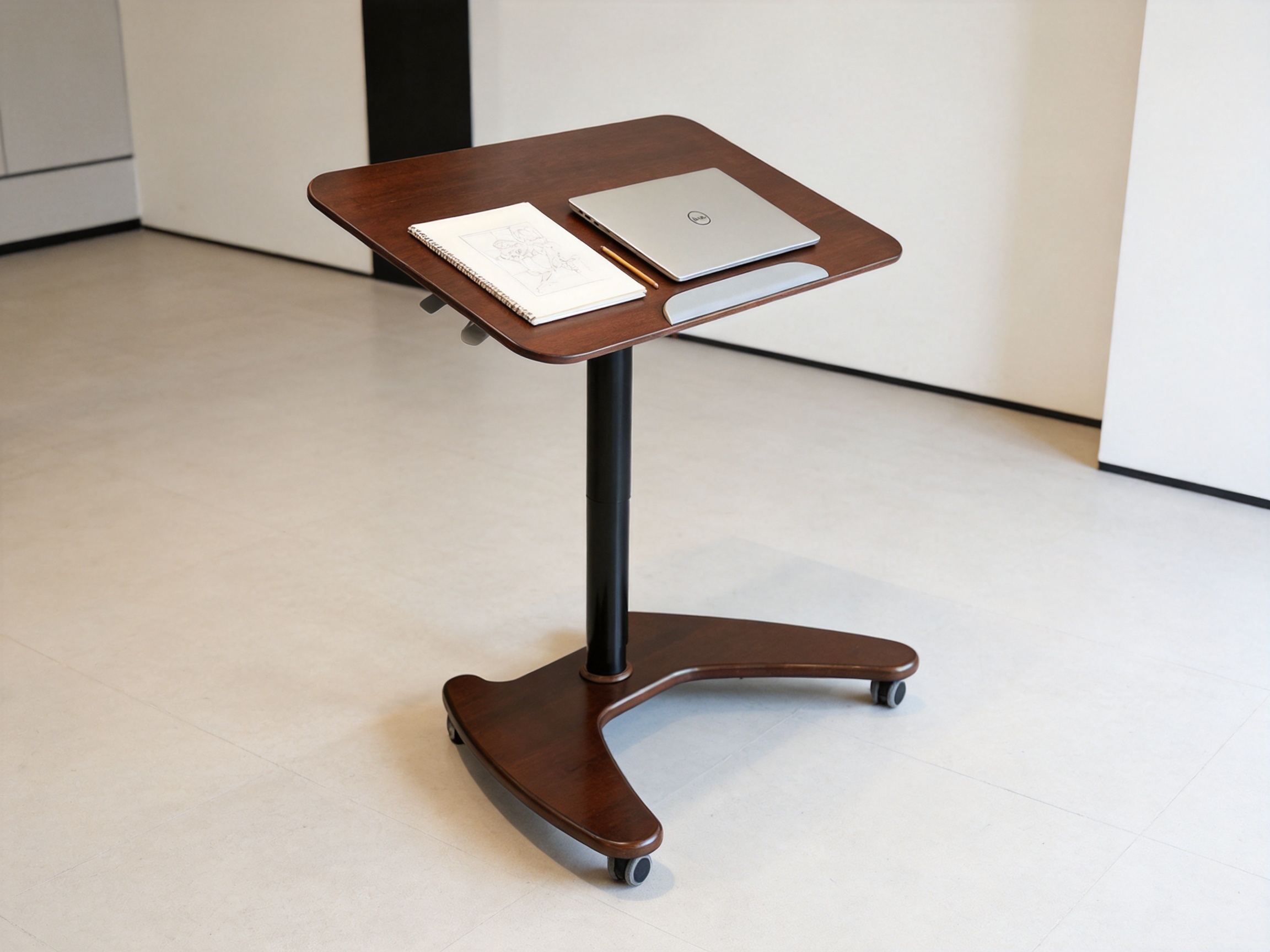
The 20 mm rubberwood tabletop gives the SK06 a distinctive visual and tactile character. Rubberwood is a natural wood material with a recognizable grain pattern and a warm surface feel. The tabletop is available in Walnut and Natural Wood finishes, allowing the product to suit different interior design preferences.
The Walnut finish offers a deeper, more sophisticated appearance. It can complement executive offices, boutique commercial interiors, design studios, libraries, and home offices where furniture is expected to contribute to the overall visual identity of the room. The Natural Wood finish creates a lighter and more casual effect that may suit classrooms, home study areas, and creative spaces.
The use of a wood tabletop provides an advantage over purely industrial-looking workstations. Many height-adjustable products are designed primarily around metal frames and synthetic panels. Although those materials can provide practical performance, they may not deliver the same warmth or furniture appeal as a real wood surface.
The 20 mm thickness offers a substantial appearance while keeping the tabletop suitable for an adjustable mobile product. Its proportions are intended for focused work rather than oversized conference use. The 715 × 495 mm working area can accommodate writing materials, books, drawing tools, and selected office equipment while retaining a relatively compact footprint.
Natural wood surfaces benefit from reasonable care. Users should wipe spills promptly, avoid harsh cleaning chemicals unless approved for the finish, and prevent prolonged exposure to excessive moisture. Protective mats can be used when working with wet media, sharp tools, or materials that may mark the surface.
The tabletop is not merely a decorative element. Its dimensions, thickness, finish, and tilt capability contribute directly to the desk’s usability. The result is a workstation that combines the functional qualities of an adjustable table with the more inviting appearance of residential or premium office furniture.
Aluminum Frame and Powder-Coated Surface
The frame uses aluminum as its primary structural material. Aluminum is well suited to adjustable furniture because it offers a useful strength-to-weight balance. A frame made from aluminum can be easier to move than a comparable heavy steel construction, which is important for a desk equipped with casters.
The frame is produced with an extruded aluminum profile and finished with powder coating. Extrusion allows aluminum to be formed into consistent structural sections, supporting repeatable dimensions during production. Consistency is particularly important for moving parts, because the performance of the lifting mechanism and tabletop support depends on appropriate alignment.
Powder coating creates a durable surface layer on the frame. It contributes to resistance against routine scuffing, oxidation, and color fading and provides a consistent appearance across the visible frame components. The finish also allows the aluminum structure to complement both the walnut and natural wood tabletop options.
The combination of aluminum and wood gives the SK06 a balanced design language. The metal frame communicates modern engineering and adjustability, while the tabletop introduces a warmer, more traditional furniture element. This balance can help the product fit into environments where a purely technical workstation might look out of place.
From a maintenance perspective, the frame can generally be kept clean with a soft cloth and appropriate mild cleaning methods. Users should avoid abrasive tools that may damage the powder-coated surface. Keeping the caster areas free from accumulated dust and debris can also help preserve smooth mobility.
Mobility Through Bidirectional PU Casters
Mobility is another important advantage of the SK06. The desk is fitted with bidirectional PU casters, allowing it to be repositioned when the room layout or work activity changes. This is helpful in multipurpose environments where furniture may need to move between individual workstations, teaching areas, storage positions, or collaborative zones.
Polyurethane casters are commonly selected for indoor furniture because they can provide smooth rolling performance while being gentler on many floor surfaces than hard wheels. The bidirectional design supports movement in more than one direction, making it easier to align the desk with a wall, another table, or a preferred working position.
Mobility is particularly valuable for compact offices and home workspaces. A user may move the desk closer to natural light during creative work, reposition it for a video meeting, or clear floor space for another activity. In a classroom or studio, instructors can reorganize workstations without requiring several people to lift each desk.
The casters also support the multifunctional nature of the desk. A workstation that can change height and tabletop angle but cannot move easily may still be limited by the surrounding room. By adding mobility, the SK06 allows users to adjust not only the desk configuration but also its location.
As with all mobile furniture, the desk should be positioned securely before demanding work begins. Users should avoid applying excessive lateral force to a tilted tabletop and should ensure that the desk is stable on the intended surface. The casters are designed for repositioning, not for uncontrolled movement during intensive tasks.
Advantages over Conventional Fixed Desks
Compared with a conventional fixed desk, the SK06 provides significantly greater adjustability. A fixed desk typically offers one height and one horizontal working plane. If the user’s posture, activity, or physical requirements change, the user must adapt to the desk or move to another piece of furniture.
The SK06 reverses that relationship by allowing the workstation to adapt to the user. Its height can be changed for seated or standing work, and its tabletop can be tilted for activities that benefit from an inclined surface. This makes the desk more versatile for households, offices, educational settings, and professional studios.
A fixed desk may also be difficult to move once installed. The SK06’s casters make repositioning easier, helping users respond to changing room layouts. The desk can be moved when cleaning, reorganizing a work area, or converting a room from one purpose to another.
The wood tabletop is another distinction. Many conventional desks are built with a single-purpose laminate, particleboard, or basic panel. The SK06 uses a 20 mm rubberwood top with Walnut and Natural Wood finishes, offering a more substantial and visually distinctive surface.
Advantages over Basic Electric Height-Adjustable Desks
Electric height-adjustable desks are popular in modern offices, but they are not ideal for every environment. They require a power source, motorized components, control electronics, and cable management. In settings where electrical access is limited or where a simple operating method is preferred, a pneumatic desk can offer practical benefits.
The SK06 does not depend on a powered motor for height adjustment. Its gas spring system supports manual operation without a control panel or power cord. This can simplify installation and reduce the number of electrical components beneath the tabletop.
The SK06 also offers a tilting function that many standard electric standing desks do not provide. Electric desks typically move the entire work surface vertically while keeping it flat. The SK06 allows the user to change the relationship between the tabletop and the user, which is particularly useful for drawing, reading, drafting, and creative work.
Another difference is its furniture-oriented appearance. The walnut solid wood surface may integrate more naturally into a home, studio, or boutique interior than a conventional office-only desk. The product is therefore positioned not only as a sit-stand table but also as a flexible piece of multipurpose furniture.
The SK06 is not intended to replace every type of electric workstation. Users requiring heavy computer equipment, large monitor arms, or high dynamic loads should evaluate the specified capacity carefully. Its advantage lies in compact, flexible, low-complexity adjustment for light-to-medium duty applications.
Advantages over Traditional Drafting Tables
Traditional drafting tables are often designed primarily for angle adjustment. They may provide an excellent inclined surface but lack a broad height range or easy mobility. The SK06 addresses both limitations by combining tabletop tilting with continuous height adjustment and bidirectional casters.
A traditional drafting table may remain at a fixed working height, requiring the user to adjust a chair or stool. With the SK06, the entire desk can be raised or lowered to suit different users and activities. This is valuable in shared studios, schools, and family environments.
The gas spring mechanism also supports faster repositioning than a heavy manual drafting table. Users can change the desk configuration during a project rather than treating the original setup as permanent.
The compact dimensions make the SK06 suitable for locations where a large professional drafting table would be impractical. It can serve as a focused drawing or reading station without occupying the space required by a full-size architectural drafting system.
Applications in Offices and Home Workspaces
In a conventional office, the SK06 can function as an individual workstation, document table, or flexible auxiliary desk. Employees may use it for writing, reviewing printed materials, reading, or short periods of standing work. The walnut finish helps it blend with professional interiors rather than appearing exclusively like workshop equipment.
In a home office, the desk can support multiple daily activities. It may serve as a writing surface in the morning, a reading stand in the afternoon, and a creative workstation in the evening. Its mobile design also allows it to be moved aside when the room is needed for another purpose.
The product can be useful in children’s study areas because its height can be adjusted as the user’s needs change. The tilting tabletop may support drawing, reading, and homework, although responsible adult supervision and proper load management remain important for younger users.
For remote workers, the desk offers an alternative to a fixed computer table. Users who alternate between seated and standing positions can adjust the height during the day. The tilt function may also be useful when the workstation is used for paper-based tasks rather than only keyboard work.
Applications in Design Studios and Architectural Offices
Designers and architects frequently move between sketching, reviewing drawings, reading specifications, and using digital tools. These activities do not always require the same tabletop orientation. A horizontal position may be suitable for a laptop, while an inclined position can be more comfortable for drawing or reviewing plans.
The SK06 can act as a personal sketching station, a reference table, or a supplementary work surface. Its 0°–90° adjustment allows users to select a suitable angle for each stage of a project. The compact tabletop is appropriate for focused work, rapid concept development, and review activities.
Its mobility also supports studio reconfiguration. Designers may move desks closer to display boards, windows, shared tables, or presentation areas. The PU casters make these changes easier than with fixed drafting furniture.
The walnut finish can contribute to a professional studio atmosphere. Creative workplaces often combine practical equipment with an environment that communicates quality and design awareness. The SK06’s combination of solid wood appearance and engineered aluminum structure supports that balance.
Applications in Schools and Art Classrooms
Educational environments benefit from furniture that can support different activities and different users. The SK06 can be used for drawing lessons, reading activities, writing, demonstrations, and individual study. Its height adjustment allows teachers or students to set an appropriate working level, while the tilt feature supports visual and creative tasks.
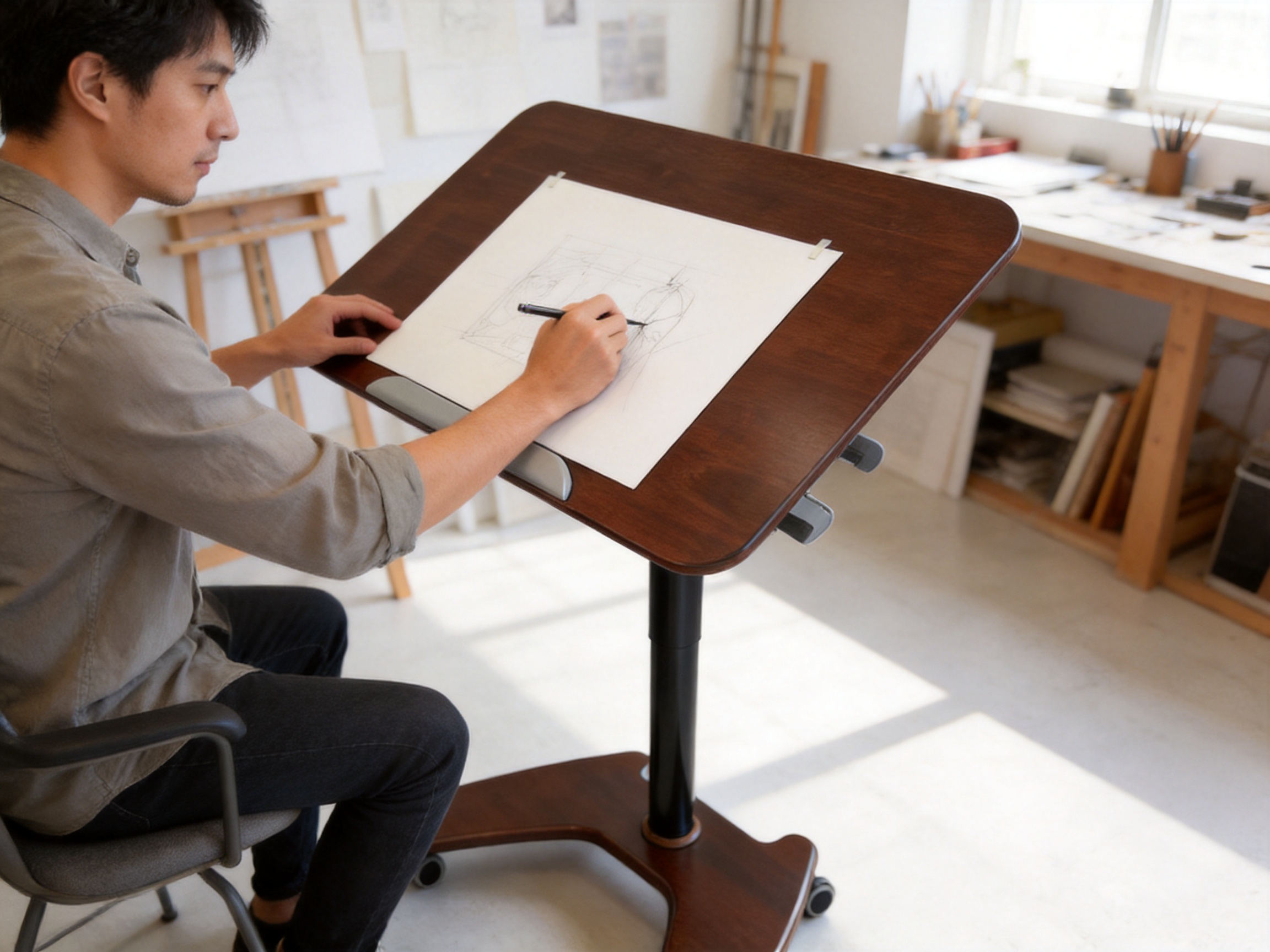
In an art classroom, an inclined surface may be more suitable for drawing than a flat desk. Students can change the tabletop angle according to their activity, and teachers can reposition desks to create different classroom layouts. When floor space needs to be cleared, the mobile design can simplify rearrangement.
The desk’s static capacity of up to 80 kg provides a substantial stationary support rating, but schools should still observe the dynamic rating of 5–10 kg during height adjustment. Heavy equipment should not be moved on the tabletop while the desk is being raised or lowered.
Educational institutions can also benefit from the product’s non-electric operation. A gas spring desk does not need to be connected to classroom power outlets, which helps keep learning spaces less cluttered and reduces dependence on electrical infrastructure.
Applications in Healthcare and Rehabilitation Settings
The combination of adjustable height and tabletop angle may make the SK06 suitable for selected medical, rehabilitation, and reading-support environments. A user who needs a more elevated reading position may benefit from changing the desk height and incline independently.
The product may also serve as a light-duty activity table for rehabilitation exercises, writing, reading, or supervised creative work. Its mobile base allows caregivers or staff to reposition the desk as needed. However, suitability for any clinical application should be evaluated by the responsible facility according to user requirements, safety procedures, and applicable standards.
The ability to bring a tabletop closer to a user’s preferred visual position can help reduce unnecessary bending during reading and writing. The desk should always be adjusted carefully, and users should not rely on furniture adjustment alone to address medical or ergonomic conditions.
Manufacturing and Product Development Strengths
SuZhou Skyhone Intelligent Technology Co., Ltd. is described as a professional manufacturing enterprise engaged in the research and development, production, sales, and service of standing desks. This combination of capabilities is important because adjustable furniture requires coordination between mechanical design, materials, manufacturing, quality control, and customer support.
The company is based in Suzhou, an important manufacturing area within the Yangtze River Delta. The region is known for its broad industrial supply network and strong furniture-related manufacturing capabilities. Access to a developed regional industrial chain can support the sourcing of aluminum components, wood panels, coating services, casters, gas springs, packaging materials, and related hardware.
The SK06 demonstrates a product development approach that combines several engineering systems rather than treating the desk as a simple fixed table. The gas spring, height-adjustable frame, tilt-locking structure, tabletop, and casters must work together as one coordinated product. Dimensional consistency and assembly accuracy are therefore important throughout production.
Extruded aluminum frame components require controlled profiles and consistent finishing. The powder-coated surface must be applied evenly to create a durable and visually uniform result. The tabletop requires appropriate machining, finishing, and inspection to maintain a smooth work surface and accurate mounting points.
The gas spring and tilt-locking mechanism must be installed and checked so that the desk can move smoothly while remaining stable in the selected position. Caster installation also requires attention to alignment, because uneven positioning can affect mobility and balance.
Product development is not limited to selecting individual components. The components must be tested as a system. A well-designed desk must account for the relationship between tabletop dimensions, center of gravity, frame geometry, gas spring assistance, tilt angle, caster placement, and expected loads.
The company’s stated focus on intelligent and healthy office space solutions suggests an approach that goes beyond basic furniture production. By developing products that support movement, posture changes, and flexible work modes, the company addresses broader workplace requirements rather than only producing static tables.
Quality Considerations in Production
Reliable adjustable furniture depends on quality control at multiple stages. For the SK06, relevant inspection areas include aluminum profile dimensions, powder-coating consistency, tabletop thickness, surface quality, gas spring operation, tilt-locking performance, caster movement, and final assembly stability.
The tabletop should be checked for appropriate dimensions and a consistent finish. Because it can tilt to a steep angle, the connection between the tabletop and supporting mechanism must be secure. The locking system should engage reliably and hold the selected position under normal working conditions.
The lifting system should be evaluated across the specified height range. Smooth operation is important because users may adjust the desk frequently. The gas spring should provide balanced assistance without creating abrupt movement when the desk is raised or lowered.
The frame should be inspected for alignment and secure fastening. Aluminum components must be assembled accurately so that the tabletop remains properly supported. Casters should be fitted firmly and checked for smooth bidirectional movement.
Packaging is also an important part of product quality. Adjustable desks contain moving components that can be affected by impact during transportation. Proper internal protection, separation of hardware, and clear assembly instructions can help preserve the product condition from factory shipment to final installation.
A manufacturing enterprise with research, production, sales, and service capabilities can use feedback from different stages to improve future products. Customer questions may identify areas where instructions can be clearer, while production data can reveal opportunities to refine component selection or assembly processes.
Ergonomic Benefits and Responsible Use
The SK06 supports ergonomic flexibility by allowing users to change height and tabletop angle. A seated-to-standing transition can reduce the monotony of remaining seated for long periods, while a tilted surface can bring reading or drawing materials into a more comfortable visual position.
Users should adjust the desk so that the shoulders remain relaxed, the elbows can work comfortably, and the head does not need to remain bent for extended periods. The correct height depends on the user, task, chair, footwear, and equipment. There is no single setting that is suitable for every person or activity.
For computer work, users should consider the position of the monitor, keyboard, and mouse in relation to the tabletop angle. A steeply tilted surface may be better for paper-based work than for a keyboard or unsecured electronic device. Equipment should be placed safely and should not obstruct the adjustment mechanism.
For drawing, the user may select an angle that allows the hand and forearm to move naturally. For reading, a moderate tilt may reduce the need to lean forward. For writing, a small incline can help position documents closer to the user’s line of sight.
Regular posture changes are generally more useful than holding one supposedly perfect posture all day. The SK06 is designed to make these changes easier, but users should still take breaks, vary tasks, and arrange their overall workstation responsibly.
Load Capacity and Operating Guidance
The SK06 has a specified dynamic load capacity of 5–10 kg and a static load capacity of up to 80 kg. These ratings describe different operating conditions. The dynamic rating applies when the desk is being adjusted, while the static rating applies when the desk remains stationary under an appropriate load.
Users should consider the weight of all items placed on the tabletop, including computers, monitors, books, tools, drawing materials, and accessories. During height adjustment, the load should remain within the dynamic range. Heavy objects should not be added to the desk while it is moving.
The tabletop should not be used as a seat, step, ladder, or support for body weight. Such use could place forces on the tilt-locking system and frame that exceed normal operating conditions. The desk should also be kept on a reasonably level indoor surface for best stability.
When the tabletop is inclined, loose objects may slide. Users should use appropriate supports or retainers where necessary, particularly for books, tools, and electronic devices. A tilted surface should be treated as a specialized working position rather than a universal storage platform.
Maintenance and Long-Term Care
Maintaining the SK06 is relatively straightforward when the product is used within its intended conditions. The wood tabletop should be cleaned with a soft cloth and a suitable mild cleaner. Spills should be removed promptly, and abrasive pads should be avoided to protect the finish.
The aluminum frame can be wiped regularly to remove dust and marks. Harsh chemicals and abrasive cleaning materials may affect the powder-coated surface and should not be used unless specifically approved for the finish.
The caster areas should be checked periodically for hair, thread, dust, or other debris that may restrict movement. If the desk becomes difficult to reposition, users should inspect the casters rather than applying excessive force.
The lifting and tilt mechanisms should be observed for unusual noise, stiffness, looseness, or unexpected movement. If a mechanical component does not operate normally, the desk should not be forced. Inspection or service should be performed according to the supplier’s guidance.
Proper maintenance protects not only appearance but also usability. A clean tabletop, unobstructed caster system, aligned frame, and correctly functioning locking mechanism help the desk remain comfortable and dependable over time.
Why the SK06 Is Suitable for B2B Projects
For commercial buyers, the SK06 provides a combination of product differentiation and broad application potential. It can be specified for offices, design studios, schools, art classrooms, libraries, rehabilitation areas, boutique retail interiors, and home-office furniture programs.
Its dual adjustment function allows one model to support several categories of use. Buyers do not need to select one table for standard office work and another for drawing or reading when a single multifunctional model can meet those needs within the specified capacity.
The two finish options also make it easier to coordinate the desk with different interior concepts. Walnut can support premium or executive environments, while Natural Wood may suit educational, residential, or creative settings.
The non-electric pneumatic mechanism can be useful for projects where power access is limited or where buyers prefer to reduce cable clutter. It can also simplify placement in rooms where furniture is frequently moved.
For distributors and furniture brands, the SK06 offers a clear product story: adjustable height, adjustable angle, solid wood appearance, aluminum construction, and mobile operation. These characteristics can help distinguish it from ordinary fixed tables and basic standing desks.
Customization and Cooperation Potential
As an adjustable office table manufacturer and supplier of ergonomic workspace products, SuZhou Skyhone Intelligent Technology Co., Ltd. can support business customers seeking product cooperation. The provided company information emphasizes manufacturing, research and development, sales, and service, all of which are relevant to customized furniture programs.
Potential project discussions may involve tabletop finish selection, application requirements, packaging, product positioning, and order planning. Any customization should be confirmed directly with the supplier because available options, minimum order requirements, technical limitations, and production schedules may vary.
For a successful B2B project, buyers should define the intended application before ordering. Important questions include the expected user group, typical working load, frequency of height adjustment, required tabletop angle, floor type, storage conditions, and preferred appearance.
Buyers should also request current technical documentation and confirm the final specifications before production. This helps ensure that the selected product is appropriate for the intended environment and that all parties share the same understanding of load ratings, dimensions, finishes, and operating requirements.
Q&A
What type of desk is the SK06?
The SK06 is a pneumatic height-adjustable tilting desk. It combines gas spring–assisted height adjustment with a tabletop that can tilt and lock at any angle from 0° to 90°.
What is the height range?
The work surface can be continuously adjusted from 750 mm to 1170 mm. This range supports seated, elevated seated, and standing activities, depending on the user and task.
Does the desk require electricity?
No. The height adjustment uses a gas spring system rather than an electric motor. This allows the desk to be adjusted without a power cord or electrical control panel.
How far can the tabletop tilt?
The tabletop can be tilted and locked at any angle from 0° to 90°. A horizontal setting is suitable for general desk work, while inclined settings can support reading, writing, drawing, and drafting.
What is the tabletop made from?
The tabletop is made from 20 mm rubberwood. It is available in Walnut and Natural Wood finishes.
What are the tabletop dimensions?
The tabletop measures 715 mm wide, 495 mm deep, and 20 mm thick.
What materials are used for the frame?
The frame is made from aluminum. It uses an extruded aluminum construction with a powder-coated surface finish.
Can the desk be moved?
Yes. The desk is equipped with bidirectional PU casters for repositioning across suitable indoor floor surfaces.
What is the load capacity?
The dynamic load capacity is specified as 5–10 kg, and the static load capacity is up to 80 kg. The dynamic rating should be observed while the desk is being adjusted.
Is the SK06 suitable for drawing?
Yes. The adjustable tabletop angle and height make it suitable for drawing, sketching, drafting, and other creative tasks. Users should select a stable angle and keep tools and materials within the appropriate load limits.
Can it be used as a reading table?
Yes. The tabletop can be inclined to bring books and documents into a more comfortable viewing position. The height can also be adjusted according to the user’s chair, posture, and reading environment.
Is it suitable for an office?
Yes. It can be used as a compact office workstation, writing desk, document table, or auxiliary standing desk. Its walnut finish also allows it to fit into professional interiors with a warmer furniture style.
What makes it different from a standard electric standing desk?
The SK06 uses a gas spring rather than an electric motor and adds a tabletop tilting function from 0° to 90°. Many standard electric standing desks adjust height but keep the work surface horizontal.
What makes it different from a traditional drafting table?
In addition to tabletop tilting, the SK06 provides a 750–1170 mm height range and mobile casters. This gives users more control over both the work position and the desk location.
How should the wood tabletop be maintained?
Clean it with a soft cloth and a suitable mild cleaner, remove spills promptly, and avoid abrasive materials or excessive moisture. Users should follow any care instructions supplied with the final product.
Is the desk suitable for heavy equipment?
The desk is intended for daily office tasks and light-to-medium duty applications within its specified ratings. Buyers requiring heavy monitors, industrial tools, or unusually concentrated loads should confirm suitability with the supplier before ordering.
Where is the manufacturer located?
SuZhou Skyhone Intelligent Technology Co., Ltd. is located in Suzhou, Jiangsu Province, China, in the Yangtze River Delta manufacturing region.
Conclusion
The SK06 Solid Wood Walnut Pneumatic Height-Adjustable Tilting Desk offers a practical response to the changing requirements of modern work and study spaces. Its main advantage is the integration of two forms of adjustment that are often separated: height adjustment and tabletop tilting.
The 750–1170 mm height range supports different users and working postures, while the 0°–90° tilting function allows the work surface to adapt to writing, reading, drawing, drafting, and other tasks. The gas spring mechanism enables manual operation without electricity, and the bidirectional PU casters make the desk easier to reposition.
The 20 mm rubberwood tabletop adds natural material appeal, with Walnut and Natural Wood finishes available for different interior styles. The extruded, powder-coated aluminum frame provides a lightweight and durable structural foundation. Together, these features create a workstation that is both technically functional and visually suitable for professional, educational, residential, and creative environments.
Compared with fixed desks, the SK06 offers greater adaptability. Compared with basic electric standing desks, it provides a non-electric operating system and a useful tilt function. Compared with traditional drafting tables, it adds height adjustment and mobility. These distinctions give the product a broad application range while maintaining a focused compact format.
Supported by a Suzhou-based manufacturer engaged in research and development, production, sales, and service, the SK06 also reflects the importance of integrated product manufacturing. Its aluminum frame, gas spring, tilt-locking structure, wood tabletop, and casters must be developed and assembled as a coordinated system.
For organizations seeking a flexible office table, drafting workstation, reading stand, or multipurpose study desk, the SK06 provides a compelling combination of ergonomics, mobility, natural aesthetics, and mechanical simplicity. Its value is not limited to height adjustment; it lies in giving users more control over how, where, and at what angle they work.
References
1. Product technical specification sheet for the SK06 Solid Wood Walnut Pneumatic Height-Adjustable Tilting Desk.
2. Manufacturer-provided product information for pneumatic height-adjustable and tilting workstations.
3. General ergonomic principles for alternating seated and standing work postures.
4. General furniture design practices for adjustable work surfaces and mobile indoor workstations.
5. General material information concerning extruded aluminum, powder-coated finishes, rubberwood panels, gas springs, and polyurethane casters.
6. Company profile information for SuZhou Skyhone Intelligent Technology Co., Ltd., Suzhou, Jiangsu Province, China.
Product: SK06 Solid Wood Walnut Pneumatic Height-Adjustable Tilting Desk


- Contact Info
-
-
 Phone+86-15950656125
-
 Email
-
 AddressRoom 1007-1, South Building, Suyue Plaza, Suzhou Industrial Park, Suzhou City, Jiangsu Province, China
-
- Products
- Follow Us
- Need help? Please contact us
Copyright ©
SuZhou Skyhone Intelligent Technology Co., Ltd.
All Rights Reserved.
Privacy
Custom Ergonomic Adjustable Office Tables Manufacturers

