

 English
  русский
  Español
  عربى
عربى 
Content
- 1 Product Overview
- 2 Ergonomic Value in Professional Workspaces
- 3 Gas Spring Lifting: Smooth, Efficient, and Practical
- 4 Stepless Tilt for Multiple Viewing and Operating Angles
- 5 Durable Tabletop Construction
- 6 Aluminum and Iron Frame for Strength and Stability
- 7 Powder-Coated Surface for Long-Term Use
- 8 Mobility with Secure Positioning
- 9 Advantages Over Common Competitor Solutions
- 10 Application in Electronics Manufacturing and Testing
- 11 Application in Laboratories
- 12 Application in Medical Support Workstations
- 13 Application in Education and Training Facilities
- 14 Application in Interactive Display and Presentation Areas
- 15 Manufacturing Strength Behind the Product
- 16 Process Control and Quality-Oriented Production
- 17 Customization and Market Adaptability
- 18 Why Pneumatic Adjustment Is a Smart Choice
- 19 Design Balance: Compact Size with Professional Function
- 20 Safety and Stability Considerations
- 21 Long-Term Value for Professional Buyers
- 22 Q&A Section
- 22.1 What is the main purpose of the TH01-2 pneumatic height-adjustable desk?
- 22.2 What is the height adjustment range?
- 22.3 How does the height adjustment work?
- 22.4 Can the tabletop angle be adjusted?
- 22.5 What materials are used in the product?
- 22.6 Is the workstation easy to move?
- 22.7 What color options are available?
- 22.8 How is this product different from an ordinary tablet stand?
- 22.9 Why choose pneumatic adjustment instead of electric adjustment?
- 22.10 What types of workplaces can use this product?
- 23 Conclusion
- 24 References
Pneumatic Height-Adjustable iPad Workstation for Flexible Industrial and Professional Use
2026-05-12
Modern work environments are changing quickly. In factories, laboratories, medical support areas, education spaces, inspection stations, and interactive display zones, mobile devices are no longer simply accessories. Tablets such as iPads are now used as control panels, data entry terminals, quality inspection interfaces, presentation screens, and communication hubs. To support these applications effectively, a workstation must do more than hold a device. It must position the device at the correct height, provide a stable working surface, allow comfortable viewing angles, move easily between locations, and remain secure during operation.
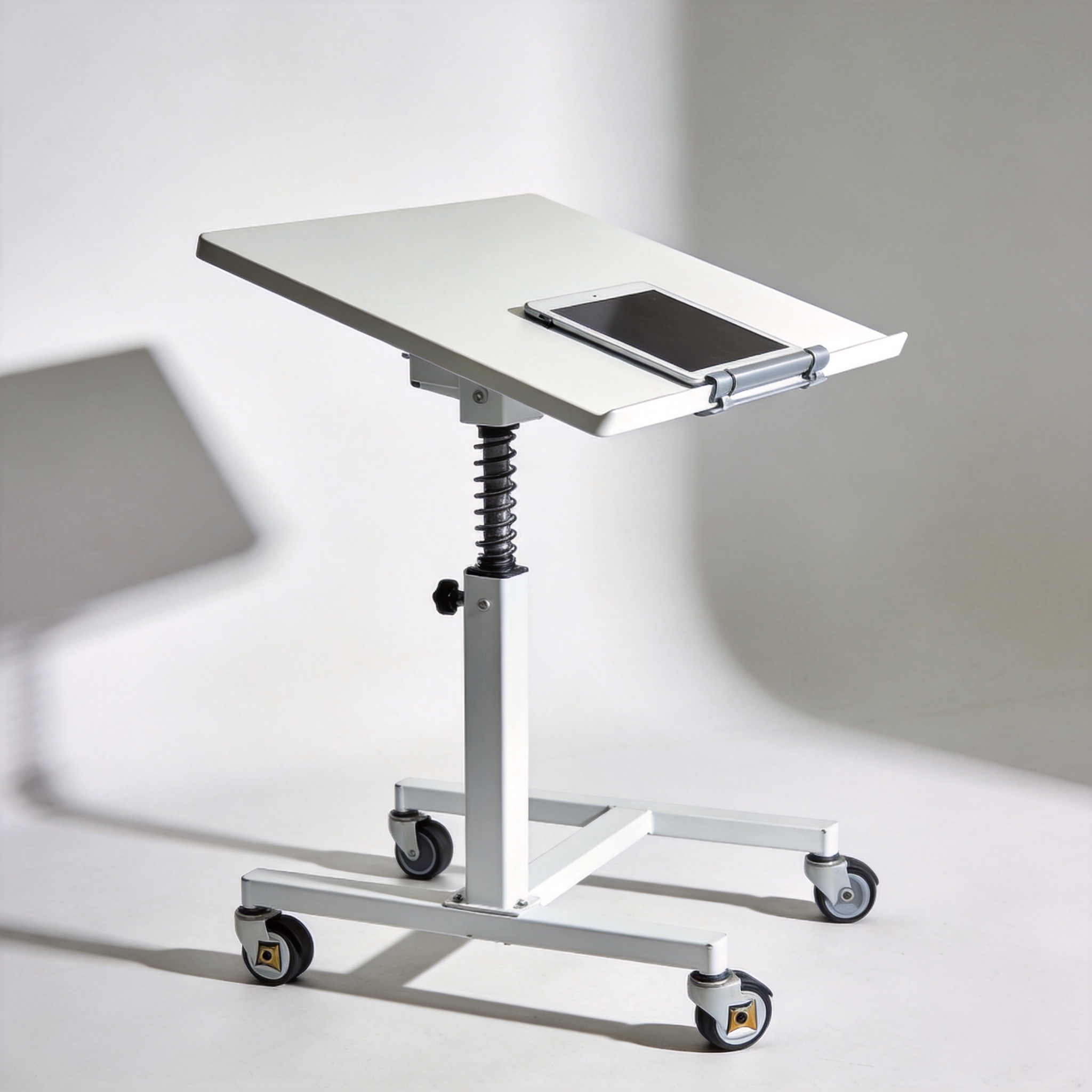
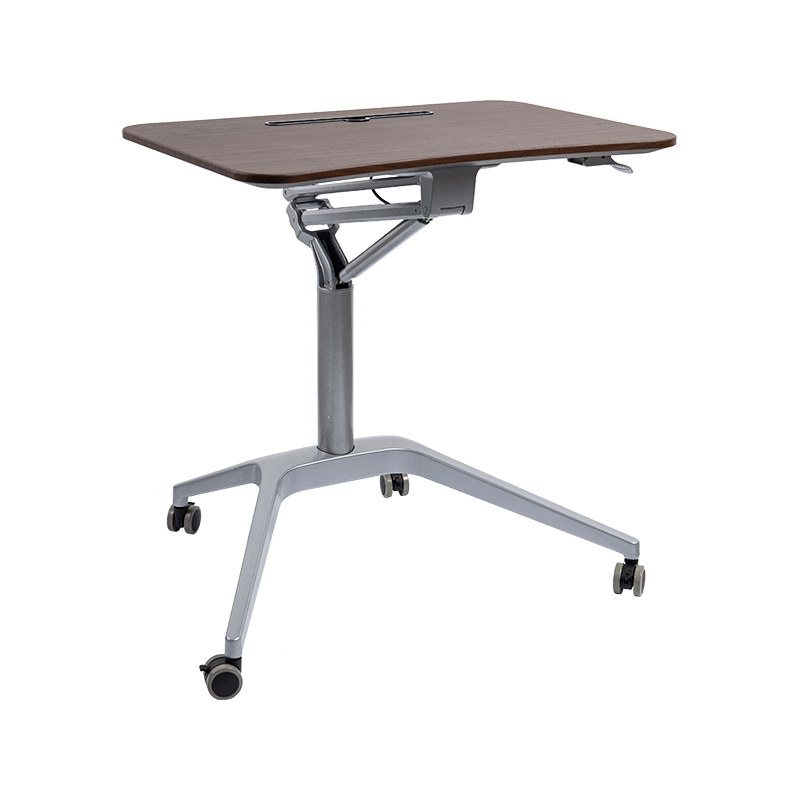
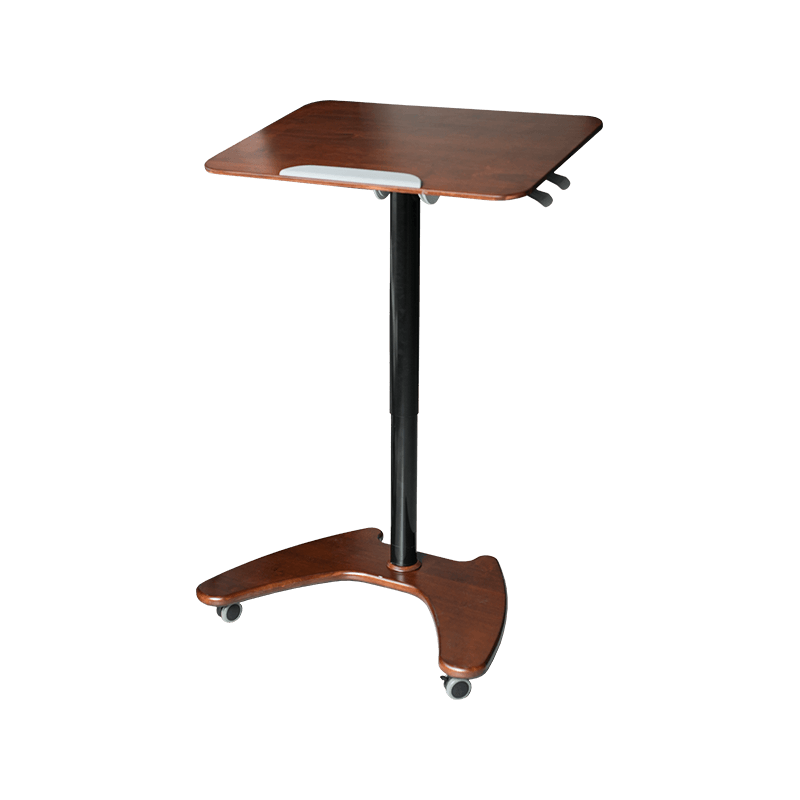
The TH01-2 iPad High-Legged Pneumatic Height-Adjustable Desk is designed for these demands. It is a pneumatic height-adjustable workstation built with a gas spring lifting mechanism, a stepless tabletop tilt system, a durable aluminum and iron frame, and a mobile base with locking casters. With a lifting range from 750 mm to 1060 mm and a tabletop capable of tilting up to 90 degrees, it supports both seated and standing use while enabling users to adjust the operating angle according to task requirements.
This product belongs to the category of pneumatic height-adjustable tables and is especially suitable for professional environments where frequent repositioning and repeated adjustment are part of daily operations. Compared with ordinary fixed stands, simple tablet holders, or unstable mobile carts, this desk offers a more complete solution: ergonomic adjustment, structural strength, durable materials, flexible mobility, and a clean industrial appearance.
At the same time, the product reflects the manufacturing strengths of SuZhou Skyhone Intelligent Technology Co., Ltd., a professional enterprise focused on the research, development, production, sales, and service of standing desks and height-adjustable workstations. Based in Suzhou, an important manufacturing center in the Yangtze River Delta region, the company benefits from a mature industrial chain, advanced processing capabilities, and practical experience in ergonomic furniture and intelligent office solutions.
Product Overview
The TH01-2 is a high-legged pneumatic height-adjustable desk created for iPad operation and similar mobile device applications. Unlike a conventional desk that remains at a fixed height, this product allows the user to raise or lower the tabletop smoothly within a defined working range. The gas spring mechanism provides intuitive adjustment without requiring an electric motor, making the product simple to operate, efficient to maintain, and suitable for places where fast manual repositioning is needed.
The desk is built around a practical combination of height adjustability, tabletop tilt, material durability, and mobility. The user can adjust the height from 750 mm to 1060 mm, which allows the workstation to adapt to different users, different postures, and different task settings. The tabletop measures 715 mm by 475 mm with a thickness of 25 mm, giving enough surface area for an iPad, accessories, documents, small instruments, or operation tools while maintaining a compact footprint for narrow or dynamic working spaces.
The tabletop is manufactured from 25 mm MDF with PVC vacuum forming. This construction provides a smooth surface, reliable dimensional stability, and a neat finish suitable for professional use. The frame combines aluminum and iron, balancing reduced weight, structural support, and long service life. Powder coating is applied to the metal surface, with white and silver options available. This surface treatment improves corrosion resistance, visual consistency, and durability in high-frequency operating environments.
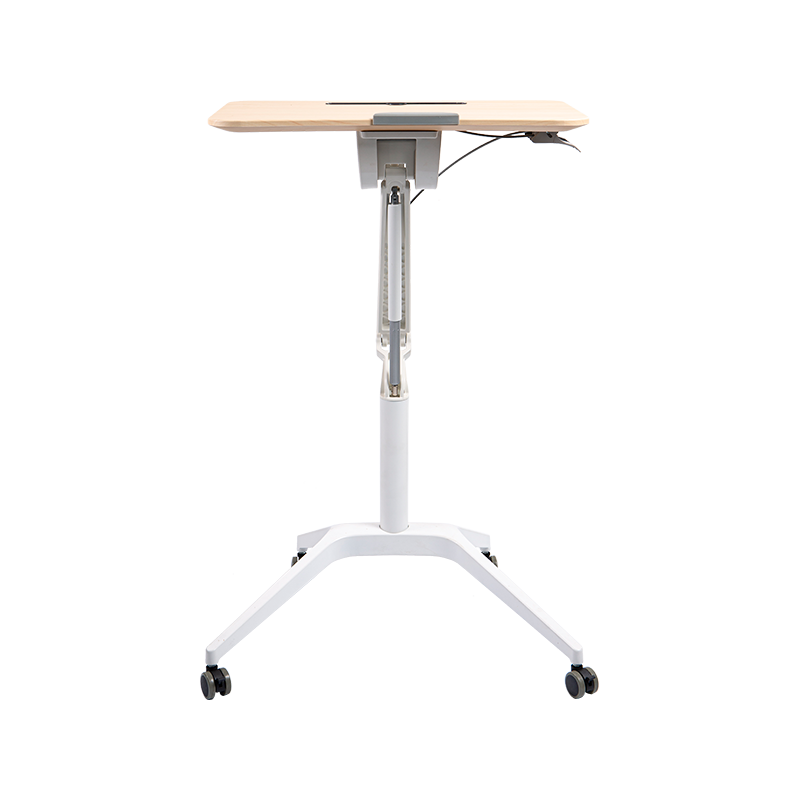
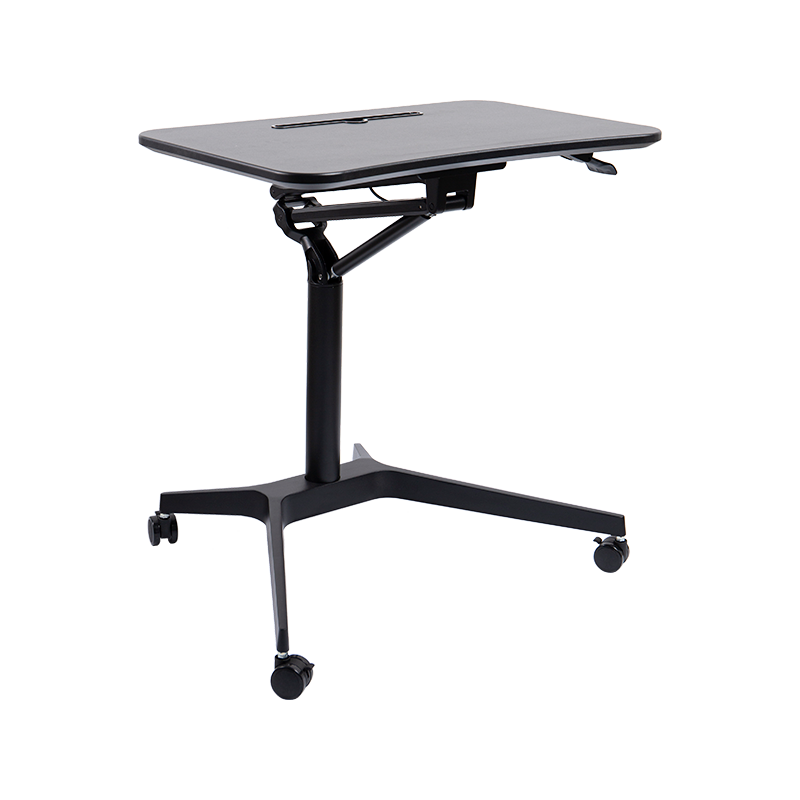
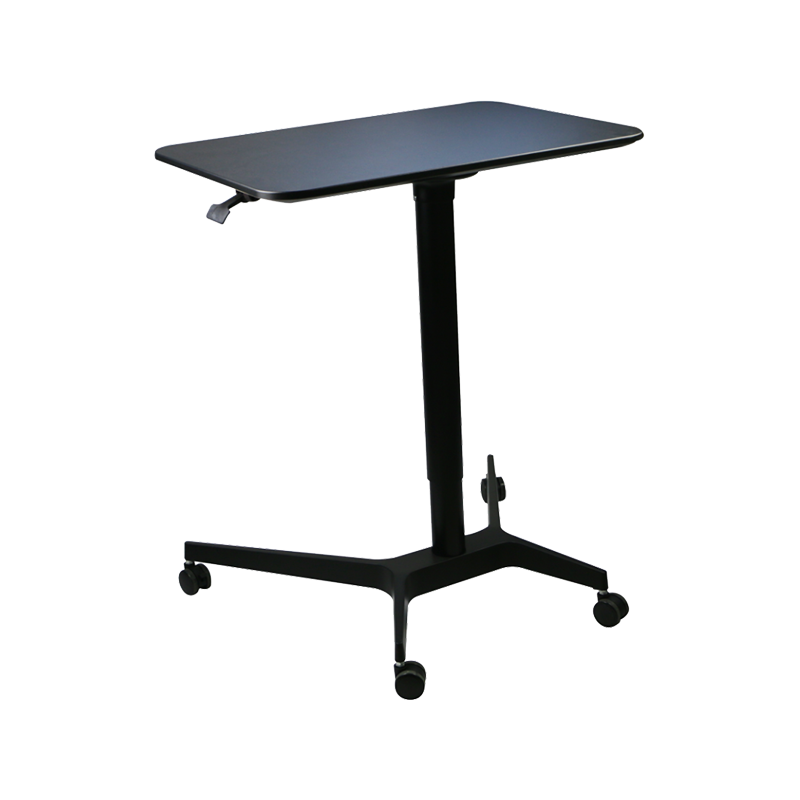
Four casters are installed for mobility. Two casters are equipped with locking functions, while two are non-locking. This arrangement allows the workstation to move easily when relocation is required and remain stable when positioned for work. The panel is available in White, Maple, Walnut, and Black, enabling the product to match different interior styles, from clean laboratories and medical spaces to industrial workshops and training rooms.
Specification |
Details |
Product Type |
Pneumatic Height-Adjustable Table |
Lifting Range |
750 mm to 1060 mm |
Tabletop Dimensions |
715 mm x 475 mm x 25 mm |
Tabletop Material |
25 mm MDF with PVC vacuum forming |
Frame Material |
Aluminum and iron |
Surface Treatment |
Powder coating |
Surface Colors |
White and silver |
Casters |
Two locking casters and two non-locking casters |
Panel Colors |
White, Maple, Walnut, and Black |
Working Principle |
Gas spring lifting with stepless tilt mechanism up to 90 degrees |
Ergonomic Value in Professional Workspaces
Ergonomics is one of the most important reasons to select a height-adjustable workstation. In many professional settings, operators work with tablets for extended periods. If the device is positioned too low, the user may bend the neck and shoulders forward. If it is too high, the arms and wrists may become strained. If the screen angle is wrong, glare and poor visibility can reduce efficiency and increase fatigue. A well-designed adjustable workstation helps reduce these issues by bringing the device closer to the user’s natural working posture.
The TH01-2 supports ergonomic use through both vertical and angular adjustment. The 750 mm to 1060 mm lifting range makes it possible to adapt the desk for different body heights and work modes. A seated operator can lower the tabletop to a comfortable level, while a standing operator can raise it for direct interaction without bending. In a shared workspace, several users can quickly adjust the workstation to fit their own needs. This is especially valuable in production lines, inspection stations, training facilities, and laboratories where multiple employees may use the same device during different shifts.
The stepless tilt mechanism provides another important ergonomic benefit. A tablet used for typing, scanning, monitoring, or presentation may require different angles. A shallow angle may be comfortable for touch input, while a nearly vertical angle may be better for viewing instructions, process data, diagrams, or video communication. With up to 90 degrees of tilt, the tabletop can be positioned for a wide range of visual and operational requirements. Because the tilt is stepless, users are not limited to fixed locking positions; they can find the most practical angle for the task.
Compared with fixed tablet stands or ordinary mobile carts, this level of adjustment provides a significant advantage. Many basic stands only hold a device at one height or rely on small brackets with limited angle control. Such products may be acceptable for occasional use but are often insufficient for industrial or professional applications. The TH01-2 is designed to support repeated daily operation, giving users a more stable and adaptable platform for serious work.
Gas Spring Lifting: Smooth, Efficient, and Practical
The core working principle of the TH01-2 is gas spring lifting. A gas spring is a sealed mechanism that uses compressed gas to provide controlled force during movement. In height-adjustable furniture, it allows the user to raise or lower a surface smoothly without the complexity of electric motors, control boxes, or power cables. This is especially useful in mobile workstations, where freedom of movement and operational simplicity are important.
One key advantage of the gas spring system is immediate response. The user can adjust the height quickly, making the workstation suitable for environments where tasks change throughout the day. For example, a technician may use the desk at a standing height while inspecting equipment, then lower it for seated data entry. A trainer may raise the tablet for a group demonstration and then adjust it downward for individual use. A production line worker may reposition the desk as the process flow changes. Gas spring lifting makes these changes fast and intuitive.
Another benefit is reduced dependence on electricity. Electric height-adjustable desks are excellent for many office settings, but in certain industrial, laboratory, display, or mobile environments, electrical components can add cost, maintenance requirements, and cable management challenges. A pneumatic system avoids these issues. It can be moved across a room without needing access to a socket, and it reduces the risk of power cord obstruction in busy areas.
The lifting movement is also quiet and controlled. In professional environments, especially medical support areas, laboratories, classrooms, and customer-facing display spaces, quiet operation is important. A smooth gas spring movement helps maintain a clean and professional user experience. The adjustment process feels natural and does not interrupt surrounding work.
When compared with competitor products that rely on basic mechanical knobs, fixed holes, or manual clamping systems, the gas spring mechanism offers a more refined experience. Manual systems often require users to loosen a knob, support the tabletop by hand, move it to a new position, and tighten the knob again. This process can be inconvenient and may cause uneven adjustment. The pneumatic system is faster, smoother, and more suitable for frequent use.
Stepless Tilt for Multiple Viewing and Operating Angles
The tabletop of the TH01-2 can tilt up to 90 degrees using a stepless tilt mechanism. This feature is especially valuable for iPad-based workflows because tablets are used in many different ways. A tablet may function as a digital checklist, a machine control interface, a test data input terminal, a presentation screen, or an interactive customer display. Each use case benefits from a different angle.
For touch operation, the user may prefer a moderate angle that allows comfortable finger or stylus input. For monitoring, a more upright angle may provide better visibility from a distance. For collaborative viewing, the tabletop can be tilted toward another person. For storage or temporary repositioning, the near-vertical angle may save space. This wide adjustment range makes the desk suitable for changing tasks without needing multiple stands or support devices.
The stepless nature of the tilt system is important because working angles are highly personal and task-specific. Fixed-angle brackets may provide only three or four positions, which may not match the actual needs of the user. A stepless mechanism allows precise adjustment, improving comfort and reducing frustration. In professional environments, small improvements in positioning can make a meaningful difference over long work periods.
The tilt function also helps reduce glare. In spaces with overhead lighting, large windows, or reflective surfaces, screen visibility can be affected by light direction. By adjusting the tabletop angle, users can find a better viewing position. This is particularly useful in inspection, testing, medical support, and training environments where accurate screen reading is essential.
Competitor products often focus only on height adjustment and ignore the importance of angle control. However, for a tablet workstation, angle adjustment can be just as important as height. The TH01-2 integrates both functions, creating a more complete ergonomic and operational solution.
Durable Tabletop Construction
The tabletop uses 25 mm MDF with PVC vacuum forming. This combination provides a strong, smooth, and visually consistent surface suitable for daily professional use. The 25 mm thickness gives the tabletop a solid feel and supports stable placement of tablets and accessories. MDF offers uniform density and good machining performance, while PVC vacuum forming creates a protective surface layer with clean edges and a neat finish.
In industrial and commercial settings, the tabletop must resist frequent contact, device movement, cleaning, and general wear. A thin or poorly finished tabletop can deform, chip, or appear worn after repeated use. The TH01-2 uses a more substantial tabletop construction to improve durability and user confidence. This is important because a professional workstation must not only function well on the first day but also maintain its performance and appearance after long-term use.
The tabletop size of 715 mm by 475 mm is carefully balanced. It is large enough to support an iPad, a keyboard, a mouse, documents, test forms, barcode scanners, or small tools, yet compact enough to remain mobile and space-efficient. This balance is important in production lines and laboratories, where floor space is valuable and equipment must not obstruct movement.
The available panel colors—White, Maple, Walnut, and Black—allow the product to fit different environments. White may suit laboratories, clean workspaces, and medical areas. Maple and Walnut provide warmer visual options for education, office, and showroom settings. Black can create a technical or professional appearance in industrial and display applications. These options help users select a workstation that matches both function and design requirements.
Aluminum and Iron Frame for Strength and Stability
The frame of the TH01-2 is made from aluminum and iron. This combination is practical because each material contributes different strengths. Aluminum helps reduce overall weight and provides corrosion resistance, while iron contributes structural strength and stability. Together, they create a frame that can support frequent adjustment and movement while remaining suitable for mobile use.
Stability is essential for an iPad workstation. A tablet may not be heavy, but touch operation creates repeated pressure on the tabletop. If the desk shakes, tilts unexpectedly, or feels weak, the user experience is poor and the device may be at risk. The TH01-2 is designed to provide a firm working platform, helping users operate devices confidently.
The high-legged design supports comfortable access and flexible positioning. In many workplaces, the desk may need to stand near machines, benches, hospital equipment, teaching stations, or display areas. A stable frame allows it to be positioned where it is needed without becoming a weak point in the workflow. The combination of height adjustment, tilt adjustment, and frame strength makes the product more versatile than a simple rolling stand.
Compared with competitor models that use light-duty tubing or plastic-heavy structures, the aluminum and iron construction provides better professional durability. Lightweight consumer stands may be easy to move, but they often lack the rigidity required for daily industrial operation. The TH01-2 is intended for users who need a more robust workstation while still maintaining mobility and ease of adjustment.
Powder-Coated Surface for Long-Term Use
The metal frame receives a powder-coated surface treatment, available in white or silver. Powder coating is widely used in professional furniture and industrial equipment because it creates a durable, uniform, and attractive finish. Unlike some liquid coatings, powder coating can provide strong adhesion and good resistance to wear under normal use conditions.
In high-frequency environments, surface treatment is not only an aesthetic concern. A workstation may be moved, touched, adjusted, and cleaned many times each day. The coating must resist scratches, minor impacts, and environmental exposure. Powder coating helps protect the underlying metal and supports a longer service life.
The white and silver color options are practical for professional interiors. White creates a clean and modern appearance, suitable for laboratories, medical areas, and bright offices. Silver provides a technical and industrial look that blends well with equipment, machinery, and production environments. Both colors support a professional image while keeping the design simple and adaptable.
This attention to finish quality is part of the product’s advantage over low-cost alternatives. Some competing stands may focus on basic function but use less durable coatings or inconsistent finishing. Over time, poor surface quality can reduce the perceived value of the product and increase maintenance needs. A well-applied powder coating supports both appearance and performance.
Mobility with Secure Positioning
The TH01-2 is equipped with four casters, including two with locks and two without locks. This design gives the desk mobility when movement is needed and stability when it is in use. Mobility is especially important for tablet workstations because mobile devices are often used across multiple locations. A workstation may need to move from one production cell to another, from a classroom storage area to a teaching location, or from a laboratory bench to an equipment station.
The caster system makes relocation simple. Users can move the desk without carrying the entire unit, reducing effort and improving workflow flexibility. This is useful in dynamic workplaces where layouts change frequently or where equipment must be shared. Instead of installing fixed tablet mounts at every location, one mobile adjustable workstation can serve multiple tasks.
The locking casters provide security during operation. Once the workstation is positioned, the locks help prevent unwanted movement. This is important when the user is touching the screen, typing, scanning, or interacting with equipment. A workstation that rolls away during use can be inconvenient and unsafe. By combining mobility with locking stability, the TH01-2 offers a balanced solution.
Compared with stationary desks, the mobile base provides much greater flexibility. Compared with lightweight rolling carts, the TH01-2 offers more precise height and tilt adjustment. This combination makes it suitable for professional applications where both movement and ergonomic positioning are required.
Advantages Over Common Competitor Solutions
The market includes many products that can hold a tablet, but not all of them are suitable for professional, repeated, and ergonomic use. The TH01-2 stands out because it combines several functions in one structure: pneumatic height adjustment, stepless tabletop tilt, durable material construction, powder-coated finishing, caster mobility, and multiple color options.
Compared with fixed tablet stands, the TH01-2 provides far better height adaptability. Fixed stands may work for a single user in a single location, but they are limited in shared environments. When different operators use the same device, fixed height can cause discomfort and reduce efficiency. The TH01-2 solves this through its 750 mm to 1060 mm lifting range.
Compared with basic mobile carts, this product offers better ergonomic control. Many carts can move easily, but they often have limited height settings and no meaningful tilt control. The TH01-2 is not just a cart; it is an adjustable workstation designed for interaction, viewing, and task support.
Compared with electric adjustable desks, the pneumatic design offers simplicity and independence from power sources. Electric desks are useful in office settings, but they may be less convenient in mobile or equipment-dense environments where cables are undesirable. The TH01-2 avoids power cable management, reduces electrical maintenance concerns, and allows movement without connection limitations.
Compared with light-duty consumer stands, the aluminum and iron frame provides more professional strength. Consumer products may be visually appealing but often lack the durability needed for industrial use. The TH01-2 is designed with a practical material structure, substantial tabletop thickness, and a stable base to support daily operation.
Compared with manually clamped height systems, the gas spring mechanism offers smoother and faster adjustment. Users do not need to repeatedly loosen and tighten mechanical fasteners. This improves convenience and encourages users to actually adjust the workstation when needed, rather than accepting an uncomfortable position because adjustment is inconvenient.
Application in Electronics Manufacturing and Testing
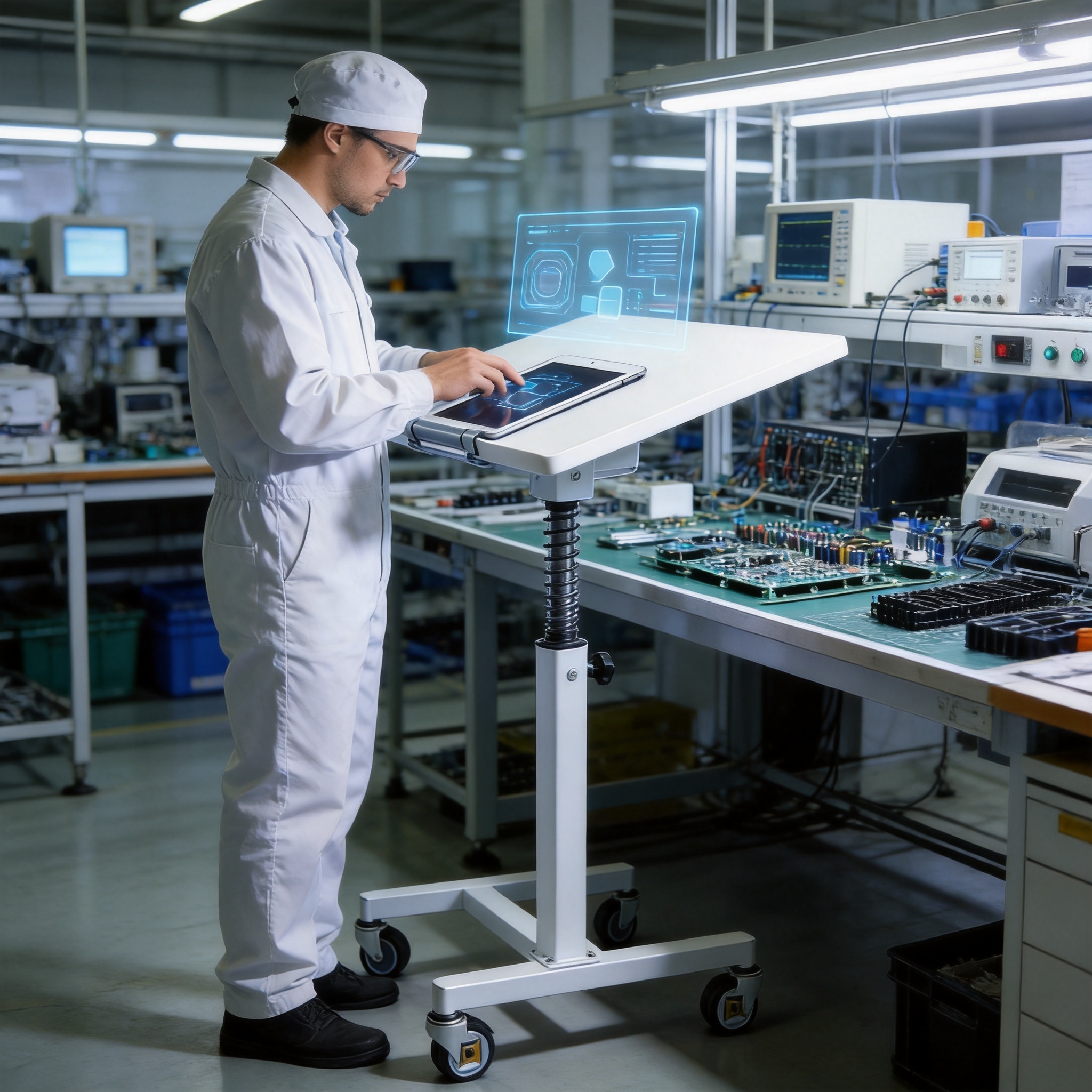
Electronics manufacturing often requires operators to follow digital work instructions, enter inspection data, scan product codes, monitor test results, and communicate with production management systems. Tablets are increasingly used for these tasks because they are compact, flexible, and easy to update. However, a tablet must be positioned correctly to be useful on the production floor.
The TH01-2 is well suited for electronics manufacturing and testing stations. Its height adjustment allows it to align with benches, machines, or standing operators. The tilt adjustment supports comfortable viewing of instructions, schematics, quality checklists, or test software. The mobile casters allow the workstation to be moved between production areas as needed.
In testing environments, operators may need to compare physical components with digital data. A stable and adjustable tabletop improves this process by keeping the screen visible and accessible. If the workstation must be moved to another test bench, the caster base makes relocation efficient. Once in position, the locking casters help stabilize the workstation during data entry and touch operation.
The powder-coated frame and durable tabletop also support the demanding nature of production spaces. Equipment in these environments must tolerate frequent use and maintain a professional appearance. The TH01-2 is designed for this type of practical, high-frequency application.
Application in Laboratories
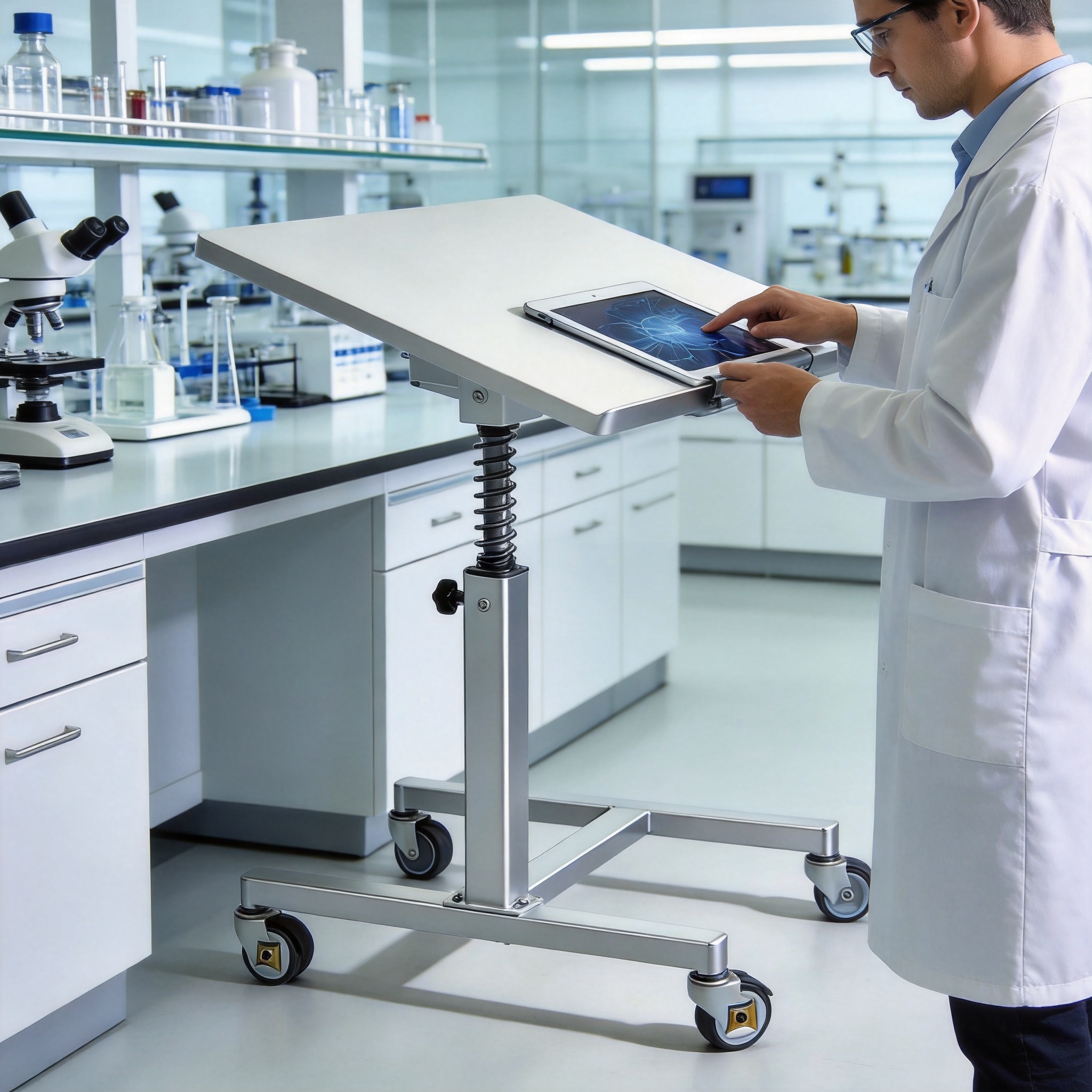
Laboratories require workstations that are flexible, stable, and easy to position. Tablets may be used for recording experiment data, displaying procedures, controlling instruments, checking sample information, or communicating with laboratory management systems. A height-adjustable mobile desk can help place the tablet where it is needed without permanently occupying valuable bench space.
The TH01-2 can be moved between benches, instruments, and preparation areas. Its height range allows it to align with seated or standing lab work. The tabletop tilt can be adjusted to reduce glare from overhead lights and improve readability. The compact tabletop supports tablets and small accessories without taking up excessive space.
In laboratory environments, clean appearance and durability matter. The powder-coated frame and smooth tabletop finish provide a professional look. White and silver surface options can match clean technical settings. The availability of different panel colors also allows facilities to coordinate with interior standards or functional zones.
Because the product does not require electric power for height adjustment, it can be moved freely without adding cables to already equipment-rich areas. This is a practical advantage in laboratories where cable management and floor safety are important.
Application in Medical Support Workstations
In medical support environments, tablets may be used for patient information access, equipment monitoring, digital forms, mobile communication, or presentation of instructions. A workstation used in such areas should be stable, easy to reposition, and comfortable for different users. The TH01-2 provides these qualities through its pneumatic lifting, tilt function, and caster base.
The height range can support different healthcare workers and different working postures. A nurse, technician, therapist, or medical assistant may adjust the table to a comfortable level for viewing or data entry. The tilt mechanism can position the screen for direct interaction or for showing information to another person. The mobile base allows the workstation to be placed near equipment, beds, consultation areas, or training rooms.
The locking casters are particularly important when touch interaction is required. They help keep the workstation stable while users enter data or review information. The durable construction also supports repeated movement in busy environments.
Although each medical facility has its own cleaning and compliance requirements, the smooth tabletop surface and powder-coated frame provide a practical foundation for professional use. The product’s simple mechanical adjustment also reduces operational complexity.
Application in Education and Training Facilities
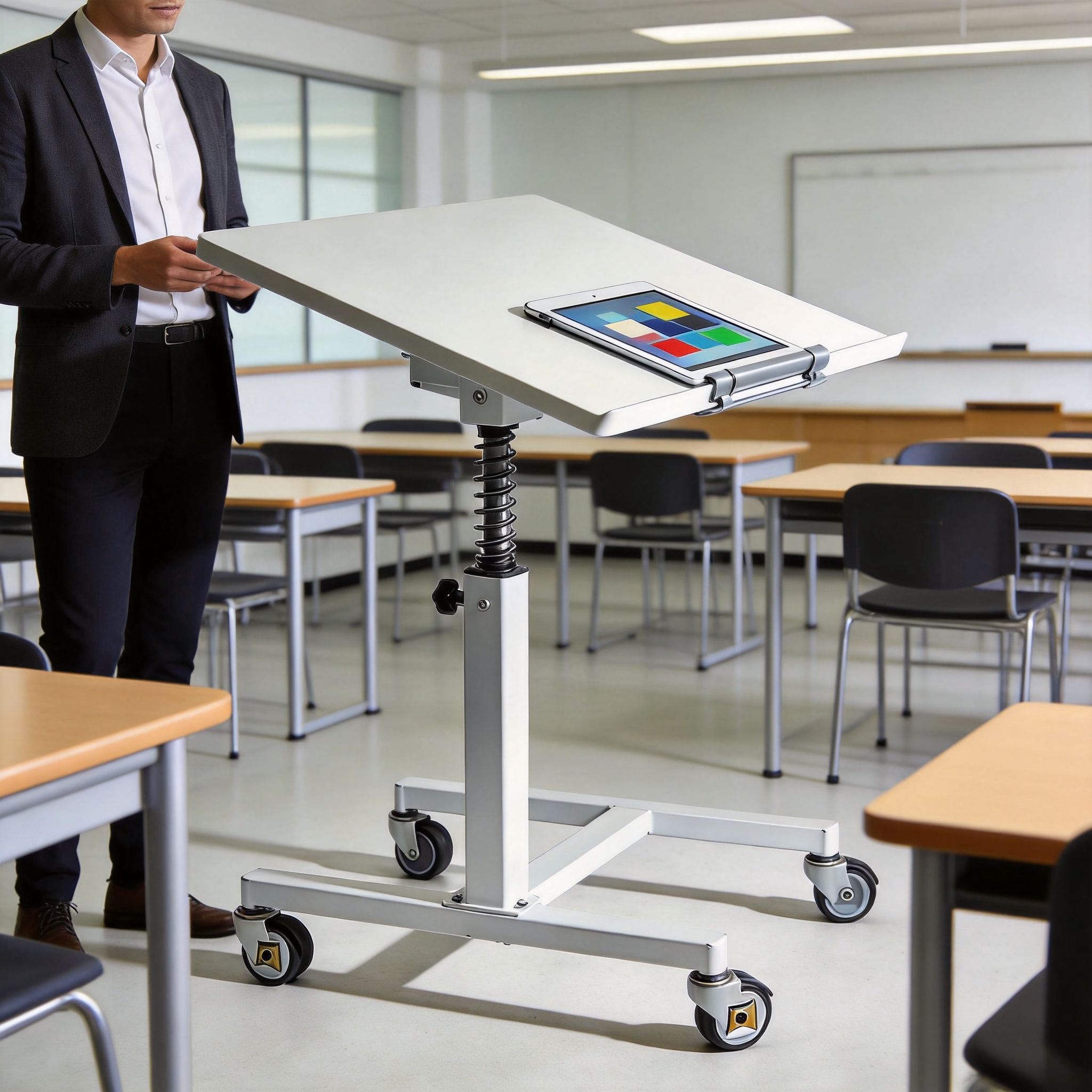
Education and training spaces increasingly use tablets for digital teaching, simulation, attendance, testing, and interactive demonstrations. A mobile iPad workstation can support instructors, trainers, and students by allowing the device to be positioned where it is most effective. The TH01-2 offers this flexibility in classrooms, workshops, laboratories, and training centers.
An instructor can raise the tabletop to present content while standing, tilt it toward the audience, or lower it for individual interaction. In technical training, the workstation can move between demonstration stations. In language, design, engineering, or medical training rooms, it can serve as a portable digital instruction point.
The panel color options help the workstation fit different educational interiors. Maple and Walnut can provide a warmer look for classrooms, while White and Black may suit modern technical training rooms. The compact tabletop size allows the workstation to be stored or moved without difficulty.
Because the adjustment is pneumatic and does not require electricity, the desk can be moved freely around a classroom or training space. This supports active learning environments where the room layout may change frequently.
Application in Interactive Display and Presentation Areas
Retail showrooms, exhibitions, reception spaces, and product demonstration areas often use tablets to display catalogs, videos, forms, or interactive content. In these settings, appearance, stability, and user comfort are all important. The TH01-2 provides a clean professional design with practical adjustability.
The height adjustment allows the device to be positioned for different audiences. The tilt function can create a comfortable viewing angle for customers, visitors, or staff. The mobile base allows the workstation to be moved as the display layout changes. When positioned, the locking casters help keep the desk stable.
Compared with small countertop tablet holders, the TH01-2 creates a more substantial and professional presentation point. It can stand independently and support additional materials on the tabletop. Compared with fixed kiosks, it offers greater flexibility and lower installation complexity. These qualities make it suitable for temporary displays, trade show preparation, product demonstrations, and customer interaction zones.
Manufacturing Strength Behind the Product
The performance of a height-adjustable workstation depends not only on design but also on manufacturing quality. SuZhou Skyhone Intelligent Technology Co., Ltd. is deeply engaged in the development and production of standing desks and adjustable workstation solutions. The company is located in Suzhou, within the Yangtze River Delta region, an area known for its strong manufacturing ecosystem, mature supply chains, skilled labor resources, and advanced industrial support.
This location provides important advantages. A complete industrial chain allows efficient sourcing of metal components, surface treatment services, tabletop materials, hardware, and packaging solutions. Close cooperation with suppliers helps improve production coordination and quality control. For products such as the TH01-2, which combine metal structures, pneumatic mechanisms, tabletop processing, and caster assemblies, supply chain integration is a major benefit.
The company’s focus on standing desks gives it practical experience in height-adjustment systems, ergonomic design, frame stability, production consistency, and user-centered product development. This experience supports the creation of specialized products like the TH01-2, which applies height-adjustable technology to iPad and mobile device workstations.
Advanced manufacturing strength can be seen in multiple aspects of the product. The metal frame requires accurate forming, cutting, welding or fastening, surface preparation, and powder coating. The tabletop requires precise sizing, surface finishing, and edge quality. The gas spring lifting system must be integrated correctly to provide smooth movement. The tilt mechanism must support stable angular adjustment. The caster base must be assembled to balance mobility and safety. Each of these steps requires process control and manufacturing discipline.
Because the company provides research, development, production, sales, and service, it can respond to customer needs more effectively. Feedback from users can guide product improvement, while production experience can support customization and quality optimization. This integrated capability is an important advantage over suppliers that only trade standard products without deep manufacturing involvement.
Process Control and Quality-Oriented Production
A reliable adjustable workstation requires consistent process control. If the frame is not aligned correctly, the product may wobble. If the surface treatment is uneven, durability and appearance may suffer. If the gas spring is not matched properly, lifting may feel too heavy or too light. If the tabletop finish is inconsistent, the product may not meet professional expectations. Quality must be built into each stage of production.
For the TH01-2, manufacturing quality begins with material selection. Aluminum and iron components must meet structural requirements. The MDF tabletop must provide suitable thickness and uniformity. PVC vacuum forming must create a smooth and durable surface. Casters must provide reliable rolling and locking performance. Hardware must support repeated adjustment and daily use.
During metal processing, accurate dimensions are important for assembly fit and stability. Cutting, forming, drilling, and connection points must be controlled to ensure that the frame supports the designed lifting and tilting functions. Surface preparation before powder coating affects coating adhesion and final appearance. Powder coating must be applied evenly and cured properly to create a durable finish.
Assembly quality is equally important. The gas spring must be installed to provide controlled lifting within the 750 mm to 1060 mm range. The tilt mechanism must allow stepless adjustment up to 90 degrees while maintaining stability. Casters must be securely mounted and tested for movement and locking. The tabletop must be firmly connected and aligned.
These manufacturing steps show why professional production capability matters. A product may look simple from the outside, but the user experience depends on many small details. Smooth lifting, stable tilting, firm rolling, and clean finishing all come from disciplined production and quality inspection.
Customization and Market Adaptability
Work environments are diverse, and a successful workstation must adapt to different visual and functional requirements. The TH01-2 already provides multiple panel colors and surface color options. These choices allow customers to select a configuration that matches their environment, whether it is a clean white laboratory, a silver industrial workshop, a warm educational setting, or a black technical display space.
The company’s manufacturing background also supports broader custom ergonomic adjustable table solutions. Customers may require specific color matching, packaging arrangements, quantity planning, project-based supply, or integration with existing workspace systems. A manufacturer with research, production, and service capabilities is better positioned to support these needs than a simple reseller.
Adaptability is especially important for international customers. Different markets may emphasize different features, such as ergonomic comfort, mobility, durability, design appearance, or cost efficiency. The TH01-2 addresses these requirements through a balanced design. It is not overly complex, but it provides the key functions professional users need. It is mobile, but not flimsy. It is adjustable, but not dependent on electricity. It is compact, but still offers a useful tabletop area.
Why Pneumatic Adjustment Is a Smart Choice
Pneumatic adjustment occupies an important position between fixed furniture and electric lifting systems. It gives users the ability to change height quickly while keeping the product mechanically simple. For many iPad workstation applications, this is the ideal balance.
A fixed stand is simple but inflexible. An electric desk is powerful but may be more complex than necessary for a mobile tablet station. A manually clamped stand may be adjustable but inconvenient. Pneumatic lifting solves many of these problems. It allows frequent repositioning without power cables, heavy motors, or complicated controls.
For a mobile workstation, this matters greatly. Mobility and cable independence go together. If a desk is intended to move between spaces, requiring electrical connection for adjustment can reduce convenience. The TH01-2 can be adjusted and moved without connection to a power source, which makes it practical in factories, laboratories, classrooms, and display zones.
The gas spring mechanism also encourages better ergonomic behavior. Users are more likely to adjust a workstation when adjustment is easy. If adjustment requires tools, repeated knob tightening, or effort, users may ignore ergonomic positioning. The smooth pneumatic system supports quick changes, helping users maintain better posture throughout the day.
Design Balance: Compact Size with Professional Function
The TH01-2 is designed with a tabletop size of 715 mm by 475 mm. This size reflects a balance between working capacity and mobility. A larger desk could provide more surface space but would be harder to move and less suitable for narrow areas. A smaller stand could be more compact but might not support accessories or stable operation. The chosen size provides enough room for an iPad-focused workflow while maintaining flexibility.
The 25 mm thickness contributes to a firm and substantial feel. This is important because users often judge the quality of a workstation by how it feels during use. A thin or flexible surface may create uncertainty, especially when touch pressure is applied to a tablet. A thicker tabletop improves confidence and supports a more professional experience.
The height range is also practical. The lower position of 750 mm can support seated tasks or lower bench alignment, while the upper position of 1060 mm supports standing operation and high-view applications. This range makes the product useful across many environments without making the structure unnecessarily tall or bulky.
Safety and Stability Considerations
Safety in adjustable furniture includes more than avoiding mechanical failure. It also includes stable positioning, predictable movement, user confidence, and reduced clutter. The TH01-2 supports safety through its stable frame, controlled gas spring movement, locking casters, and cable-free height adjustment.
The locking casters reduce unwanted rolling during use. This is important when a user interacts with a touchscreen or places accessories on the tabletop. The sturdy aluminum and iron structure helps resist wobbling. The controlled lifting mechanism helps prevent sudden or uncontrolled height movement when used properly.
Because the lifting function does not require electrical power, the workstation avoids power cords for adjustment. This can reduce trip hazards and simplify placement in busy spaces. In environments where many devices and machines already require cables, reducing unnecessary cords is a practical advantage.
The tilt system also supports safer and more comfortable viewing. By adjusting the screen angle, users can reduce awkward neck positions and improve visibility. Better visibility can reduce operational mistakes in data entry, inspection, and control tasks.
Long-Term Value for Professional Buyers
Professional buyers often evaluate products based on total value rather than only initial price. A low-cost stand may appear attractive at first, but if it lacks stability, breaks quickly, or does not support user comfort, the long-term cost can be higher. The TH01-2 provides value through durable materials, ergonomic adjustment, mobility, and practical design.
The aluminum and iron frame supports longer service life. The powder-coated surface helps maintain appearance and resist wear. The 25 mm tabletop provides a stable platform. The gas spring system allows frequent adjustment without electrical complexity. The caster base increases utilization because the workstation can serve multiple locations.
For organizations, one flexible workstation may replace several less adaptable stands. It can be used in production today, training tomorrow, and display support later. This flexibility improves return on investment. The product’s professional appearance also supports a better working environment and reflects attention to operational quality.
Q&A Section
What is the main purpose of the TH01-2 pneumatic height-adjustable desk?
The main purpose is to provide a stable, mobile, and ergonomic workstation for iPads and other mobile devices. It is suitable for control, inspection, data entry, presentation, training, and display applications in professional environments.
What is the height adjustment range?
The lifting range is from 750 mm to 1060 mm. This range supports different users, seated or standing operation, and alignment with various workstations or equipment areas.
How does the height adjustment work?
The desk uses a gas spring lifting mechanism. This pneumatic system allows smooth and controlled height adjustment without electric power, making the product easy to move and convenient to use.
Can the tabletop angle be adjusted?
Yes. The tabletop uses a stepless tilt mechanism and can tilt up to 90 degrees. This allows users to choose a suitable angle for touch operation, viewing, presentation, or reducing screen glare.
What materials are used in the product?
The tabletop is made from 25 mm MDF with PVC vacuum forming. The frame is made from aluminum and iron. The metal surface is powder coated for durability and appearance.
Is the workstation easy to move?
Yes. It is equipped with four casters, including two locking casters and two non-locking casters. The desk can be moved easily and then locked in place for stable use.
What color options are available?
The metal surface is available in white or silver. The tabletop panel is available in White, Maple, Walnut, and Black, allowing the workstation to match different professional environments.
How is this product different from an ordinary tablet stand?
An ordinary tablet stand usually offers limited height and angle adjustment. The TH01-2 provides pneumatic height adjustment, stepless tilt, a durable tabletop, a strong aluminum and iron frame, and mobile caster support, making it more suitable for professional and repeated use.
Why choose pneumatic adjustment instead of electric adjustment?
Pneumatic adjustment is smooth, simple, quiet, and independent from power sources. It avoids cable management issues and is especially useful for mobile workstations that need to move between locations.
What types of workplaces can use this product?
It can be used in electronics manufacturing, testing stations, laboratories, medical support areas, educational training facilities, interactive display zones, offices, and other environments where tablets are used for professional tasks.
Conclusion
The TH01-2 iPad High-Legged Pneumatic Height-Adjustable Desk is a practical and professional solution for modern tablet-based workflows. It combines pneumatic height adjustment, stepless 90-degree tabletop tilt, a durable 25 mm MDF tabletop with PVC vacuum forming, an aluminum and iron frame, powder-coated finishing, caster mobility, and multiple color choices. This combination makes it more capable than ordinary fixed stands, basic carts, or light-duty tablet holders.
Its greatest strengths are flexibility, stability, and ease of use. The height range from 750 mm to 1060 mm supports different users and work postures. The stepless tilt mechanism improves viewing and operation. The gas spring lifting system provides smooth adjustment without electrical complexity. The caster base allows easy movement while locking functions help stabilize the workstation during use.
Behind the product is the manufacturing capability of SuZhou Skyhone Intelligent Technology Co., Ltd., a professional enterprise focused on standing desks and adjustable workspace solutions. With a location in Suzhou and access to the strong industrial resources of the Yangtze River Delta, the company is positioned to provide reliable production, consistent quality, and customer-oriented ergonomic solutions.
For professional buyers seeking a mobile iPad workstation that balances ergonomic function, durable construction, practical mobility, and clean design, the TH01-2 offers a strong and competitive choice. It is suitable for the real conditions of industrial, laboratory, medical, educational, and display environments, where equipment must be easy to adjust, easy to move, and reliable in daily use.
References
Grandjean, E. Fitting the Task to the Man: An Ergonomic Approach. Taylor & Francis.
Kroemer, K. H. E., and Grandjean, E. Fitting the Task to the Human: A Textbook of Occupational Ergonomics. CRC Press.
Pheasant, S., and Haslegrave, C. M. Bodyspace: Anthropometry, Ergonomics and the Design of Work. CRC Press.
Bridger, R. S. Introduction to Ergonomics. CRC Press.
Dul, J., and Weerdmeester, B. Ergonomics for Beginners: A Quick Reference Guide. CRC Press.
Sanders, M. S., and McCormick, E. J. Human Factors in Engineering and Design. McGraw-Hill.


- Contact Info
-
-
 Phone+86-15950656125
 -
 Email
Email -
 AddressRoom 1007-1, South Building, Suyue Plaza, Suzhou Industrial Park, Suzhou City, Jiangsu Province, China
-
- Products
- Follow Us
- Need help? Please contact us
Copyright ©
SuZhou Skyhone Intelligent Technology Co., Ltd.
All Rights Reserved.
Privacy
Custom Ergonomic Adjustable Office Tables Manufacturers

