

 English
  русский
  Español
  عربى
عربى 
Content
- 1 Introduction: A Practical Desk for Modern Adjustable Work Environments
- 2 Product Overview and Core Specifications
- 3 Gas Spring Lifting: Smooth Adjustment Without Electrical Dependence
- 4 Ergonomic Value for Sitting, Standing, and Task-Specific Work
- 5 Tabletop Construction: Strength, Surface Quality, and Everyday Usability
- 6 Frame Design: Aluminum and Iron for a Balanced Structure
- 7 Powder Coating and Surface Durability
- 8 Mobility and Stability: Concealed Wheels and Leveling Feet
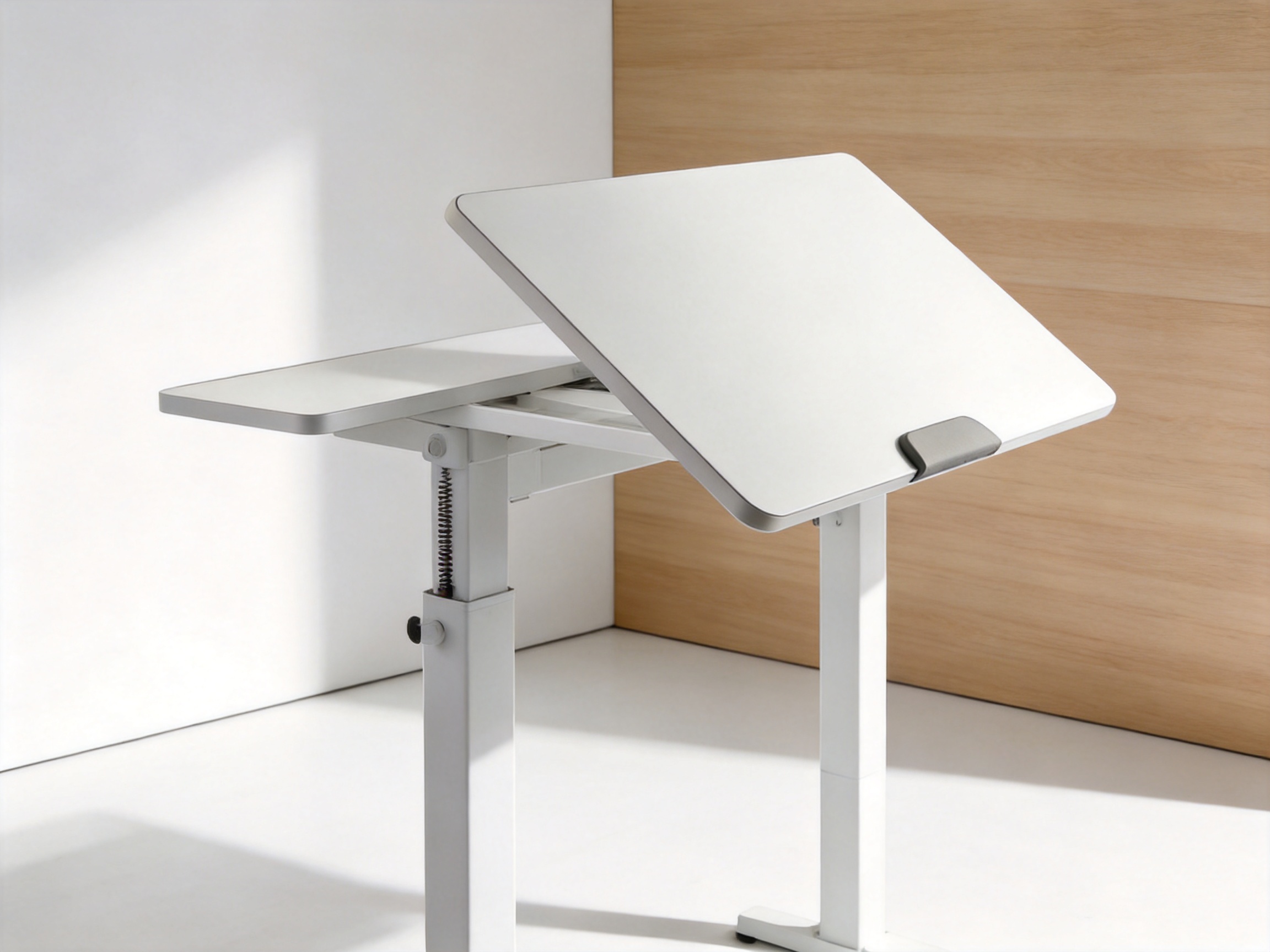
- 9 Tilt Function: Beyond Ordinary Height Adjustment
- 10 Advantages Over Electric Height-Adjustable Desks
- 11 Advantages Over Manual Crank and Fixed-Height Desks
- 12 Applications in Home Offices
- 13 Applications in Offices and Shared Workspaces
- 14 Applications in Education and Training
- 15 Applications in Laboratories, Studios, and Industrial Workstations
- 16 Manufacturing Strength: From Design Concept to Finished Product
- 17 Material Preparation and Metal Processing
- 18 Powder Coating Process and Finish Control
- 19 Tabletop Production and PVC Vacuum Forming
- 20 Gas Spring Matching and Assembly Precision
- 21 Customization and OEM-Oriented Manufacturing Capability
- 22 Quality Control and Long-Term Reliability
- 23 Environmental and Operational Efficiency
- 24 Why the TH11 Stands Out in a Competitive Market
- 25 Purchasing Considerations for Distributors and Project Buyers
- 26 Q&A Section
- 26.1 What is the height adjustment range of the TH11 Pneumatic Height-Adjustable Desk?
- 26.2 Does the desk require electricity?
- 26.3 What is the main advantage of a pneumatic desk compared with an electric desk?
- 26.4 Does the tabletop tilt?
- 26.5 What materials are used in the desk?
- 26.6 Is the desk easy to move?
- 26.7 Where can the TH11 be used?
- 26.8 Why is powder coating important?
- 26.9 What panel colors are available?
- 26.10 What makes the TH11 different from a basic mobile table?
- 27 Conclusion: A Compact Pneumatic Desk Built for Flexible Work
- 28 References
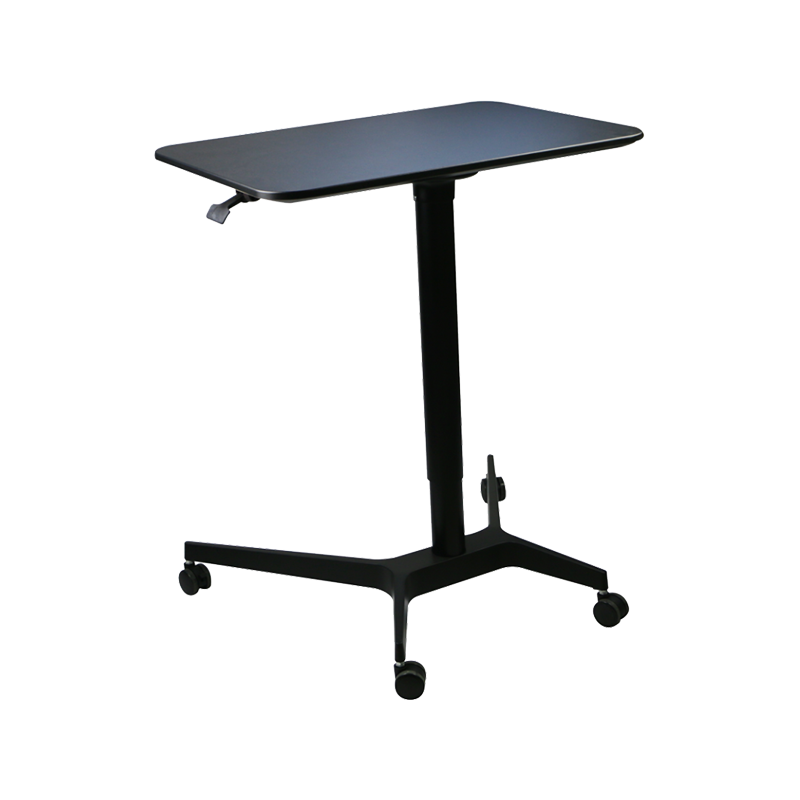
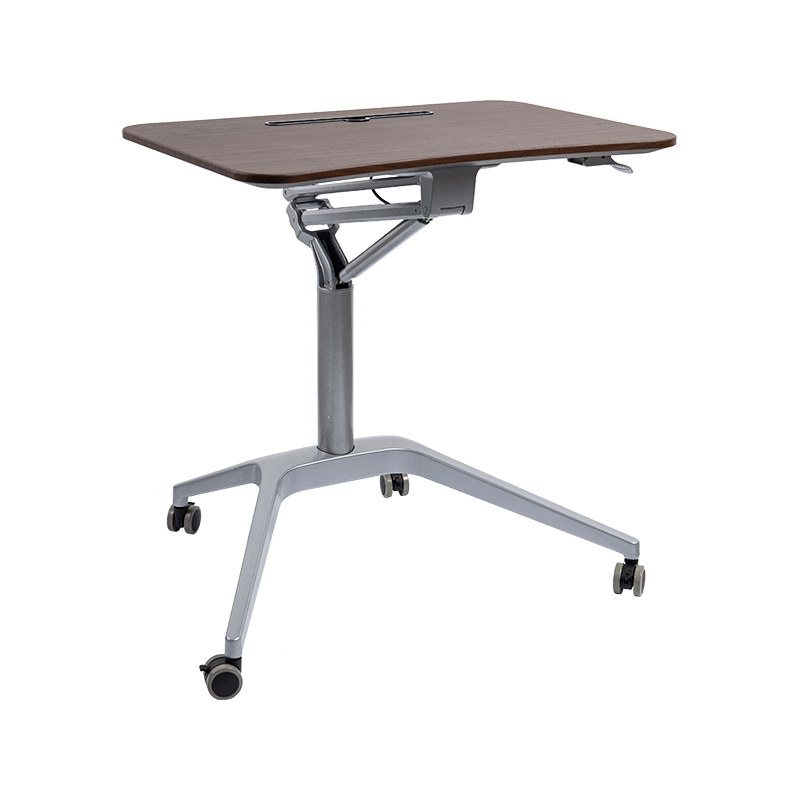
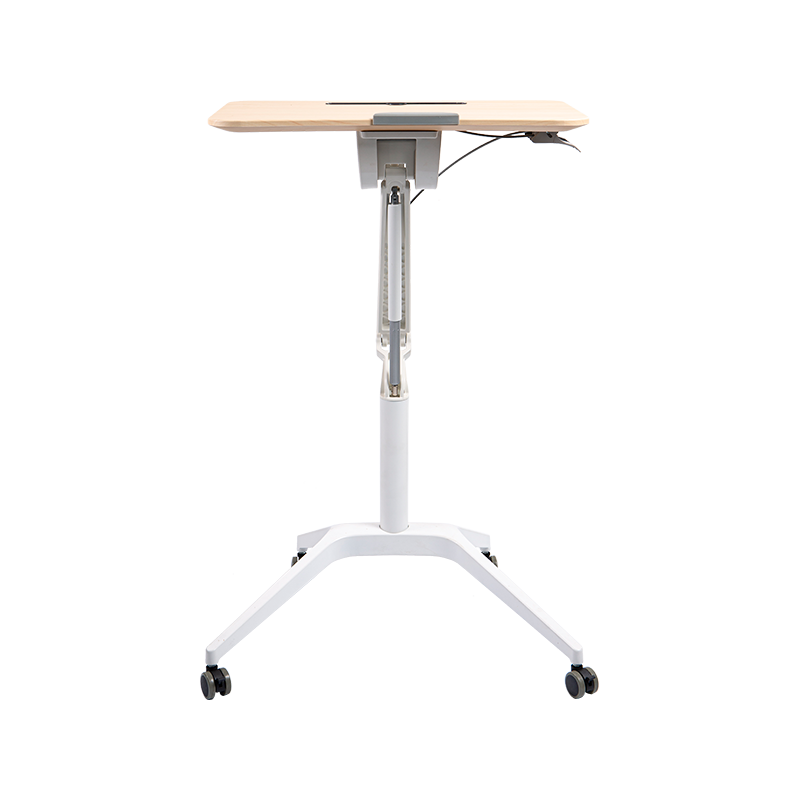
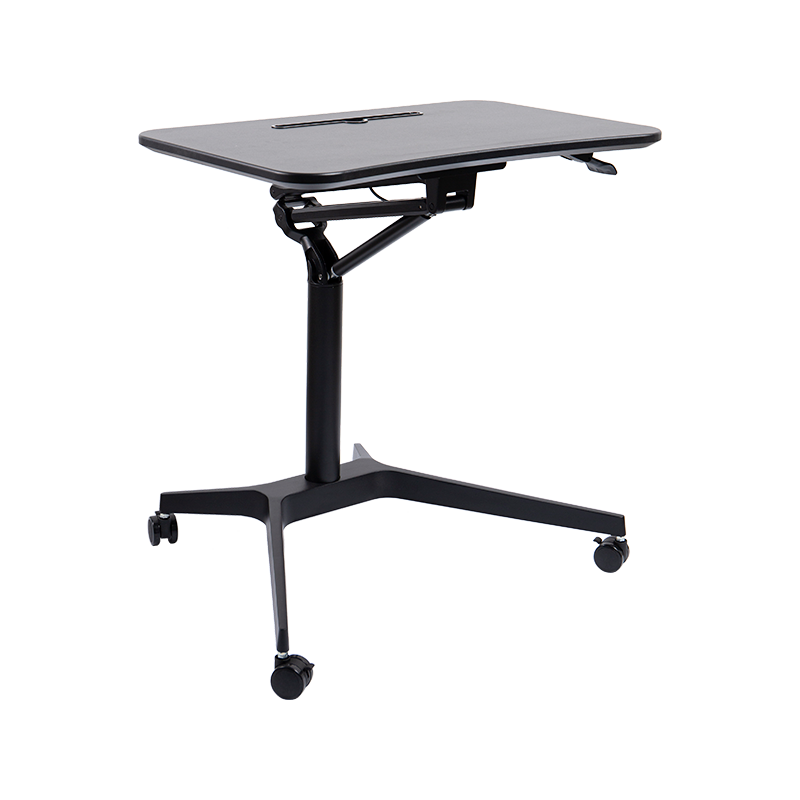
- 29 Product: TH11 (Cat Head Leg) Pneumatic Height-Adjustable Desk
Pneumatic Height-Adjustable Desk for Flexible, Ergonomic, and Mobile Workspaces
2026-06-09
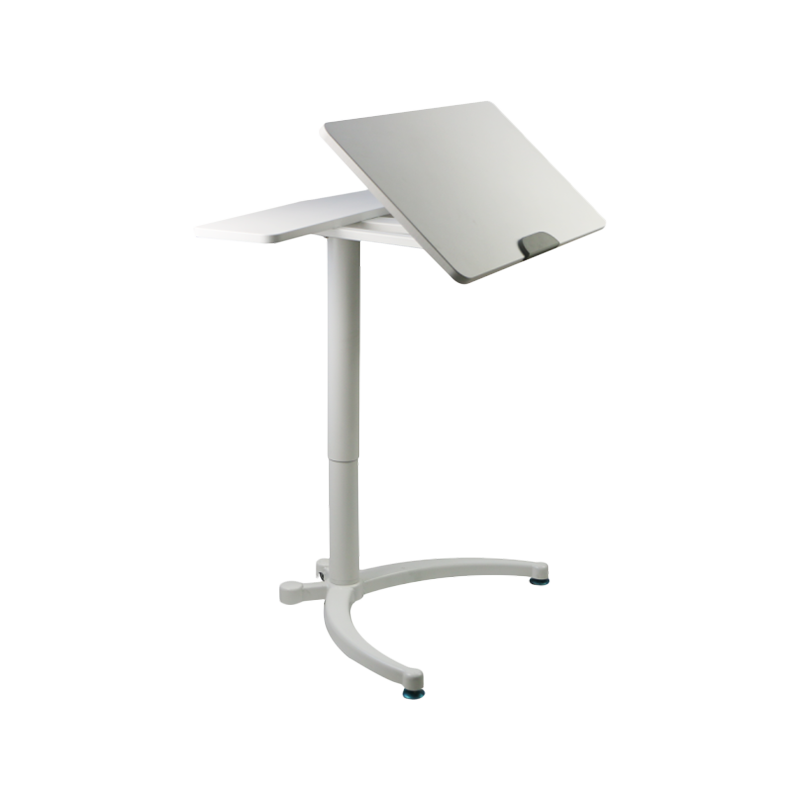
TH11 (Cat Head Leg) Pneumatic Height-Adjustable Desk
Introduction: A Practical Desk for Modern Adjustable Work Environments
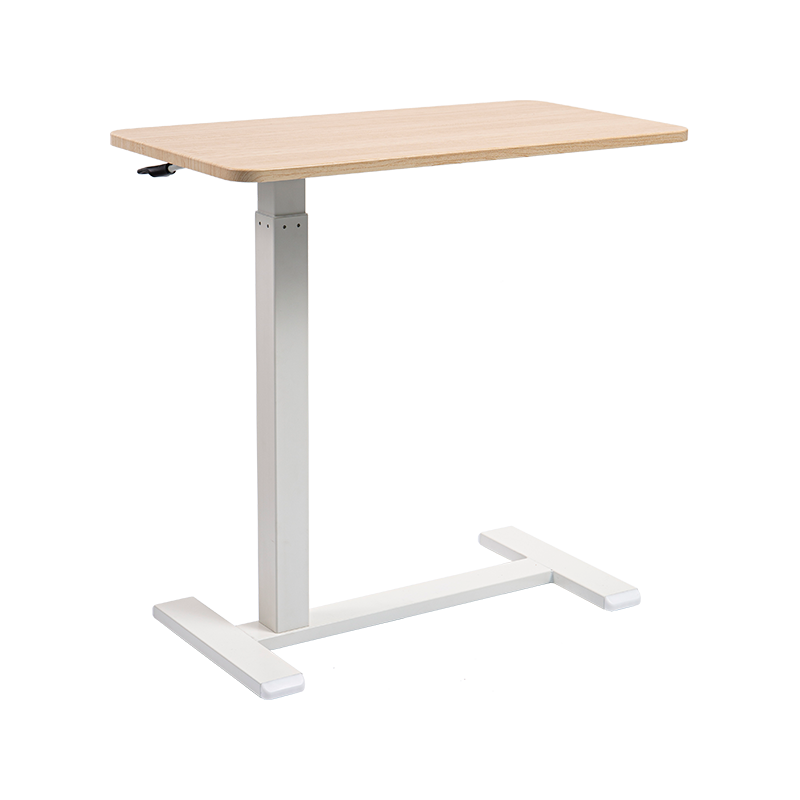
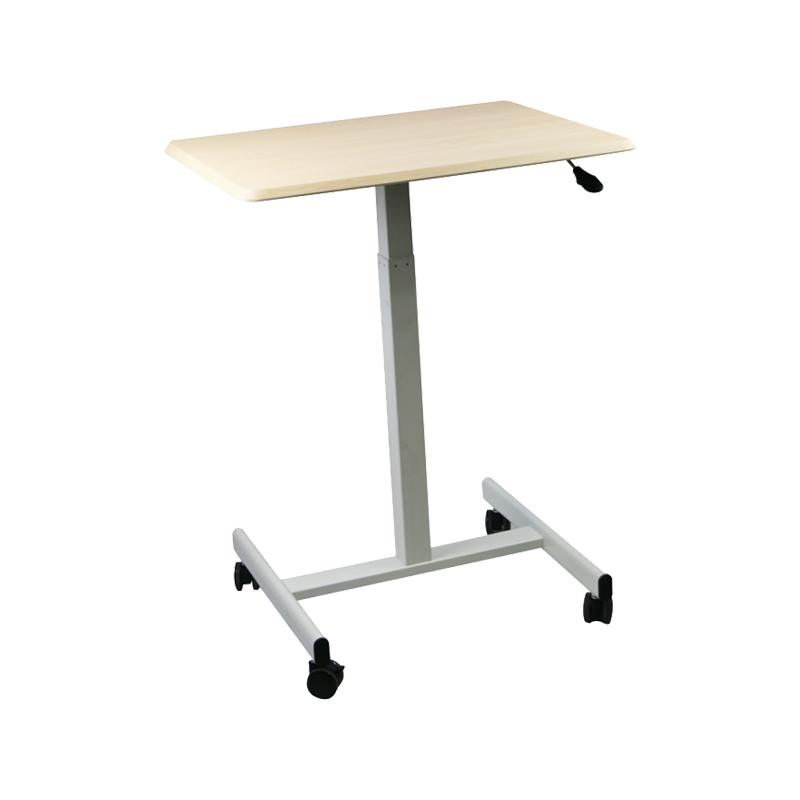
The TH11 Cat Head Leg Pneumatic Height-Adjustable Desk is designed for users who need a compact, mobile, stable, and power-free height-adjustable workstation. It responds to a growing demand in offices, schools, studios, laboratories, medical-adjacent spaces, and light industrial environments where work surfaces must adapt quickly to different people, postures, and tasks. Instead of relying on electric motors or fixed-height frames, this desk uses a gas spring lifting mechanism that allows smooth height movement from 700 mm to 1100 mm. This range supports seated work, standing tasks, presentation use, equipment support, and flexible multi-user operation.
The product combines a 25 mm MDF tabletop with a PVC vacuum-formed surface, an aluminum and iron frame, a white powder-coated finish, concealed wheels, and leveling feet. These features give the desk a balance of ergonomic adjustability, structural support, mobility, and clean appearance. The main panel also includes a tilt function, which expands the use cases beyond ordinary flat-surface work. Users can adjust the angle for reading, drawing, teaching, equipment operation, or document review. This makes the TH11 not merely a small desk, but a flexible workstation platform for active and changing environments.
Compared with many conventional adjustable desks, the TH11 emphasizes simplicity and reliability. Electric height-adjustable desks offer excellent performance for office environments, but they require power access, motor control systems, cables, and electronic maintenance. Manual crank desks remove electricity from the equation but may be slower and less convenient. The pneumatic gas spring system used in the TH11 offers a different advantage: smooth lifting without electricity and without complex control boxes. For organizations that need many mobile workstations in different rooms, this can reduce installation complexity and improve daily usability.
Behind the product is SuZhou Skyhone Intelligent Technology Co., Ltd., a professional manufacturing enterprise focused on the research, development, production, sales, and service of standing desks and ergonomic office solutions. Located in Suzhou, within the Yangtze River Delta furniture and manufacturing ecosystem, the company benefits from a mature supply chain, skilled technical resources, and intelligent manufacturing capabilities. This industrial foundation supports consistent quality, customization potential, and efficient production for global users who require healthy, efficient, and intelligent workspace products.
Product Overview and Core Specifications
The TH11 is categorized as a pneumatic height-adjustable table and is suitable for applications where flexible height control, space efficiency, and mobility are essential. The product has a lifting range of 700 mm to 1100 mm, allowing users to move between lower seated positions and higher standing or operational positions. This range is especially valuable in shared spaces where users of different heights use the same workstation throughout the day.
The tabletop dimensions are 760 mm × 400 mm × 25 mm, with an additional 760 mm × 20 mm panel element. The tabletop material is 25 mm density board finished with PVC vacuum forming. This construction provides a strong and smooth work surface that is suitable for common office tasks, educational use, light equipment placement, and writing or reading. The PVC surface also contributes to easier cleaning and a refined appearance compared with unfinished board materials.
The frame material combines aluminum and iron. This combination is important because aluminum contributes lightness, corrosion resistance, and a modern visual quality, while iron contributes strength and rigidity. The surface is finished in white powder coating, which improves durability, appearance, and resistance to everyday wear. The desk is equipped with two concealed wheels and two leveling feet, allowing it to be moved when needed and stabilized when placed in position.
Specification |
TH11 Pneumatic Height-Adjustable Desk |
Lifting Range |
700 mm to 1100 mm |
Tabletop Dimensions |
760 mm × 400 mm × 25 mm plus 760 mm × 20 mm |
Tabletop Material |
25 mm MDF with PVC vacuum-formed surface |
Frame Material |
Aluminum and iron |
Surface Color |
White |
Surface Treatment |
Powder coating |
Mobility and Stability |
Two concealed wheels and two leveling feet |
Panel Color Options |
White and maple wood |
Working Principle |
Gas spring lifting with tilt function on the main panel |
These specifications show that the TH11 is built for practical flexibility rather than unnecessary complexity. Its compact desktop, height range, and wheel-and-leveling-foot design make it suitable for dynamic settings where large fixed desks are inefficient or where electrical height-adjustable desks may be too complicated for the intended use.
Gas Spring Lifting: Smooth Adjustment Without Electrical Dependence
The most important functional feature of the TH11 is its gas spring lifting system. Gas springs are widely used in ergonomic products because they can provide controlled movement, counterbalance weight, and reduce the effort required to adjust position. In the TH11, the gas spring mechanism allows the desktop to move smoothly between 700 mm and 1100 mm. Users can adjust the height without plugging the desk into a power source, without operating a motor, and without waiting for an electric column to travel.
This provides an advantage in environments where power outlets are limited or where cable management creates problems. In classrooms, training rooms, laboratories, temporary work zones, exhibition spaces, and flexible office areas, furniture is often moved and rearranged. A desk that does not depend on electricity is easier to deploy. It can be placed where it is needed rather than where a power outlet is available. This makes the TH11 a practical alternative to electric standing desks in spaces that require mobility and quick reconfiguration.
The quiet nature of gas spring movement is another advantage. Electric desks can be quiet, but they still involve motor noise and mechanical transmission sound. A pneumatic system can provide a more discreet adjustment experience, which is useful in classrooms, libraries, consultation rooms, shared offices, and studios where noise should be minimized. The smooth movement also encourages users to adjust height more frequently because the action feels simple and immediate.
Compared with manual crank desks, the TH11 offers faster and more intuitive adjustment. A crank mechanism requires repeated turning, which may discourage users from changing posture often. The pneumatic lifting system supports ergonomic behavior by making adjustment easier. This matters because an adjustable desk only delivers value if users actually adjust it. By reducing the physical effort and time required, the TH11 helps make sit-stand movement part of normal daily workflow.
Ergonomic Value for Sitting, Standing, and Task-Specific Work
The 700 mm to 1100 mm lifting range supports a broad variety of working postures. At the lower end, the desk can serve as a seated writing, laptop, or reading surface. At higher positions, it can support standing work, presentation tasks, equipment access, or active collaboration. Because the adjustment is pneumatic and easy to operate, users can change the height during the day rather than staying in one posture for long periods.
Modern ergonomic research consistently emphasizes that the best workstation is not simply a standing desk or a sitting desk, but a workstation that enables movement and variation. Prolonged static posture, whether seated or standing, can create discomfort. A height-adjustable surface encourages users to shift between positions, reducing continuous strain on one set of muscles. The TH11 supports this principle by making height adjustment accessible and natural.
The main panel’s tilt function adds another ergonomic layer. A tilting work surface can help reduce neck flexion during reading, drawing, annotation, or tablet use. Instead of bending over a flat desktop, users can bring the work surface closer to a comfortable viewing angle. This is especially useful in educational environments, design studios, drafting tasks, and training situations where documents or devices must be viewed for extended periods.
The compact tabletop also helps support focused work. Large desks can be useful in permanent office setups, but smaller adjustable desks are often better for flexible spaces. The TH11 provides enough surface area for essential tools while remaining easy to move and position. It can function as a laptop stand, presenter’s table, mobile teaching desk, personal workstation, inspection table, or auxiliary work surface.
Tabletop Construction: Strength, Surface Quality, and Everyday Usability
The TH11 uses a 25 mm MDF tabletop with a PVC vacuum-formed finish. MDF is a common material in furniture manufacturing because it offers dimensional stability, a smooth surface, and consistent density. The 25 mm thickness provides a solid feel and helps the desktop resist deformation during normal use. For an adjustable desk, tabletop stability is important because the surface must remain reliable at different heights and angles.
The PVC vacuum-forming process gives the tabletop a clean and integrated surface. Vacuum forming helps wrap the surface material around the board, improving appearance and usability. Compared with simple laminated surfaces that may have visible seams or edges, vacuum forming can create a more refined finish. It also helps protect the board from minor surface wear and makes cleaning easier in daily use.
The available panel color options, white and maple wood, make the desk adaptable to different interior styles. White offers a clean, modern, and professional look suitable for medical-style spaces, laboratories, offices, and classrooms. Maple wood adds warmth and a more natural visual effect, making it suitable for home offices, studios, and educational settings. These options allow purchasers to match the desk with existing furniture systems or brand-neutral interior designs.
The tabletop dimensions reflect a practical balance. A 760 mm by 400 mm surface is large enough for a laptop, notebook, small monitor, teaching material, or equipment interface, while remaining compact enough for mobility. The additional 760 mm by 20 mm element enhances functional structure and gives the product a distinctive layout. In settings where space is limited, compact furniture often performs better than oversized furniture because it can be stored, moved, and repositioned quickly.
Frame Design: Aluminum and Iron for a Balanced Structure
The frame of the TH11 combines aluminum and iron, two materials that serve different structural purposes. Aluminum is valued for its lightness, corrosion resistance, and modern appearance. Iron is valued for strength, rigidity, and load-bearing reliability. By combining these materials, the desk achieves a balance between maneuverability and stability.
In adjustable furniture, frame performance is critical. A height-adjustable desk must resist shaking, twisting, and uneven movement at both low and high positions. A frame that is too light may feel unstable, while a frame that is too heavy may be difficult to move. The TH11’s material strategy is designed to avoid both extremes. It supports everyday use while remaining suitable for flexible environments where users may need to reposition the desk frequently.
The cat head leg concept gives the product a distinctive base configuration. The base is designed to support the desktop while maintaining a compact footprint. This matters in classrooms, laboratories, and office corners where floor space is valuable. A stable yet compact base reduces interference with chairs, feet, storage items, or nearby equipment.
The structure also supports the gas spring lifting mechanism. The lifting system and frame must work together so that movement is smooth and controlled. If the frame is poorly manufactured, even a good gas spring cannot deliver satisfying performance. The TH11 benefits from precise production, suitable material selection, and controlled assembly, resulting in a more consistent height-adjustment experience.
Powder Coating and Surface Durability
The white powder-coated surface treatment is an important feature for durability and appearance. Powder coating is a dry finishing process in which charged powder particles are applied to a metal surface and then cured. The result is a hard, even, and attractive coating that can resist chipping, scratching, and corrosion better than many basic paint finishes.
For furniture used in offices, schools, laboratories, and workshops, surface treatment affects long-term value. Desks are moved, touched, cleaned, and exposed to daily wear. A durable finish helps the product maintain its appearance and reduces the need for replacement or refurbishment. The white powder coating on the TH11 provides a clean look while contributing to practical resistance against ordinary environmental stress.
Powder coating is also associated with efficient industrial production. A mature powder-coating process requires surface preparation, coating thickness control, curing temperature management, and visual inspection. When performed correctly, it produces consistent color and adhesion. This reflects the manufacturing capability behind the product, because a desk’s visible finish often reveals the quality discipline of the factory.
The white surface color supports broad application. It coordinates well with modern office furniture, educational furniture, clean-room-inspired spaces, and minimalist interiors. White also makes the desk visually lighter, which is beneficial for compact mobile furniture. In combination with white or maple panel options, the desk can suit both professional and warmer interior environments.
Mobility and Stability: Concealed Wheels and Leveling Feet
One of the TH11’s most practical advantages is its combination of two concealed wheels and two leveling feet. Many mobile desks focus on wheels, but too many wheels can reduce stability during use. Many fixed desks offer stability but are inconvenient to relocate. The TH11 uses a hybrid approach: concealed wheels support movement, while leveling feet help secure the desk when positioned.
This design is especially valuable in multi-purpose spaces. In a classroom, the desk can be moved to the front for teaching, then shifted aside for group activities. In a home office, it can be rolled near a window, moved beside a sofa, or stored along a wall. In a laboratory or workshop, it can serve as a movable support surface for instruments, records, or inspection tasks. In an office, it can become a temporary workstation or meeting support table.
The concealed wheel design helps preserve a clean appearance. Visible casters can make furniture look industrial or temporary. Concealed wheels create mobility without sacrificing visual refinement. This is a competitive advantage over many basic mobile desks that look less integrated or less professional.
The leveling feet improve user confidence. When a desk is adjusted to a standing height, stability becomes more important because any wobble is more noticeable. Leveling feet help compensate for uneven floors and reduce unwanted movement. This makes the desk suitable not only for casual laptop use but also for focused tasks requiring a stable writing or operating surface.
Tilt Function: Beyond Ordinary Height Adjustment
The main panel’s tilt function distinguishes the TH11 from many simple sit-stand tables. Height adjustment changes the vertical position of the work surface, while tilt adjustment changes the viewing and working angle. The combination allows the desk to adapt to the user’s posture and the task itself.
For reading, a tilted surface can reduce the need to bend the neck downward. For writing or sketching, it can help position the arm and wrist more naturally. For tablet use, it can create a more comfortable viewing angle. For teaching or presenting, it can support documents in a more visible and accessible position. This flexibility makes the TH11 useful in environments where work is not limited to typing.
Compared with fixed flat desks, a tilting main panel creates a more active relationship between the user and the work surface. It helps transform the product into a workstation for learning, reviewing, designing, training, and demonstrating. This makes it more versatile than many competitor products that provide height adjustment but do not offer angle adaptation.
The tilt function also supports accessibility. Different users may have different reach, vision, or posture needs. A work surface that can adjust in both height and angle may be easier to use for a wider range of people. In shared spaces, this can increase the practical value of each workstation because the same desk can serve multiple user profiles.
Advantages Over Electric Height-Adjustable Desks
Electric standing desks are popular in many offices, but they are not always the best solution for every environment. The TH11 offers several advantages over electric desks in specific use cases. First, it does not require electrical power. This eliminates the need for nearby outlets, power strips, control cables, or cable routing. In flexible spaces, this is a major benefit.
Second, the gas spring system reduces electronic maintenance concerns. Electric desks contain motors, controllers, buttons, wires, and sometimes sensors. These components can perform well, but they also introduce potential failure points. A pneumatic desk has a simpler operating system, which can be attractive for schools, training centers, laboratories, and organizations that want low-maintenance furniture.
Third, the TH11 is easy to relocate. Electric desks are often larger and heavier, and their cable systems can discourage frequent movement. The TH11, with its compact size and concealed wheels, can be repositioned quickly. This makes it better suited to environments that change layout regularly.
Fourth, the TH11 offers quiet, direct adjustment. Electric desks may require the user to hold a button while the motor moves. The pneumatic system can feel more immediate and mechanical, giving users direct control over the position. In many task-based settings, this quick responsiveness improves workflow.
Finally, the TH11 may be more suitable for power-sensitive environments. In some laboratories, classrooms, medical-adjacent areas, or temporary installations, reducing power cords can improve safety and reduce clutter. A power-free height-adjustable desk supports a cleaner and more flexible room layout.
Advantages Over Manual Crank and Fixed-Height Desks
Manual crank desks are valued for their simplicity, but they require physical effort and time to adjust. Users may avoid adjustment if the process feels inconvenient. The TH11’s gas spring lifting system makes height change easier and faster, encouraging users to adjust more often. This improves the real ergonomic value of the desk.
Fixed-height desks are the least flexible option. They may work for one user or one task, but they cannot adapt effectively to different body heights, chair heights, standing postures, or task angles. In shared environments, fixed desks often create compromises. A surface that is comfortable for one user may be too high or too low for another. The TH11 solves this by offering a wide height range.
Compared with simple mobile tables, the TH11 provides a more professional and ergonomic solution. Many mobile tables are designed only to hold items, not to support healthy work posture. The TH11 combines mobility with height adjustment, tilt function, and stabilizing feet. This makes it more capable than a basic rolling cart or laptop table.
In competitive terms, the product’s strongest value lies in its combination of functions. A competitor may offer a mobile desk, but without tilt. Another may offer tilt, but without strong height range. Another may offer height adjustment, but require power. The TH11 integrates these features into a compact and practical design.
Applications in Home Offices
In home offices, space is often limited and furniture must serve multiple purposes. The TH11 can act as a primary workstation for laptop users, a secondary standing desk, a reading table, or a movable work surface that can be used in different rooms. Its compact size makes it suitable for apartments, bedrooms, study corners, and shared living spaces.
Because the desk does not require electricity, it can be placed near a window, beside a lounge chair, next to a bookshelf, or in a temporary work area. Users working from home often need flexibility throughout the day. They may start seated at a main desk, then move to standing work, online meetings, or reading. The TH11 supports this variation without requiring a permanent installation.
The white and maple wood panel options also make it appropriate for residential interiors. It does not have to look like industrial equipment. The clean finish allows it to blend with modern home décor, while the maple option adds warmth. For users who want ergonomic benefits without installing a large electric standing desk, the TH11 is a practical solution.
The tilt function is particularly useful at home for reading, tablet use, studying, drawing, or writing. It can support students, remote workers, designers, and hobby users. A single compact desk can therefore serve work, education, and leisure activities.
Modern offices increasingly rely on flexible workstations, shared desks, temporary collaboration zones, and wellness-oriented furniture. The TH11 fits into this trend by offering a movable and adjustable surface that can be deployed where needed. It can be used as a hot-desk station, a temporary standing desk, a meeting-room support table, a presenter desk, or an auxiliary workstation.
In shared offices, different users may use the same desk on different days or even during the same day. Height adjustability improves comfort for multiple users. The gas spring system makes adjustment quick, so users do not need technical instructions or electrical controls. This is important in shared environments where furniture must be intuitive.
The product can also support workplace wellness programs. Organizations that want to encourage posture variation may not be ready to replace every desk with a large electric standing desk. Compact pneumatic desks can be introduced as flexible ergonomic stations. Employees can use them for standing work, focused tasks, or temporary posture changes.
The mobility system makes facility management easier. Office layouts change frequently, and mobile adjustable furniture helps teams adapt without professional installation. The TH11 can be repositioned for team projects, training sessions, reception tasks, or temporary equipment support.
Applications in Education and Training
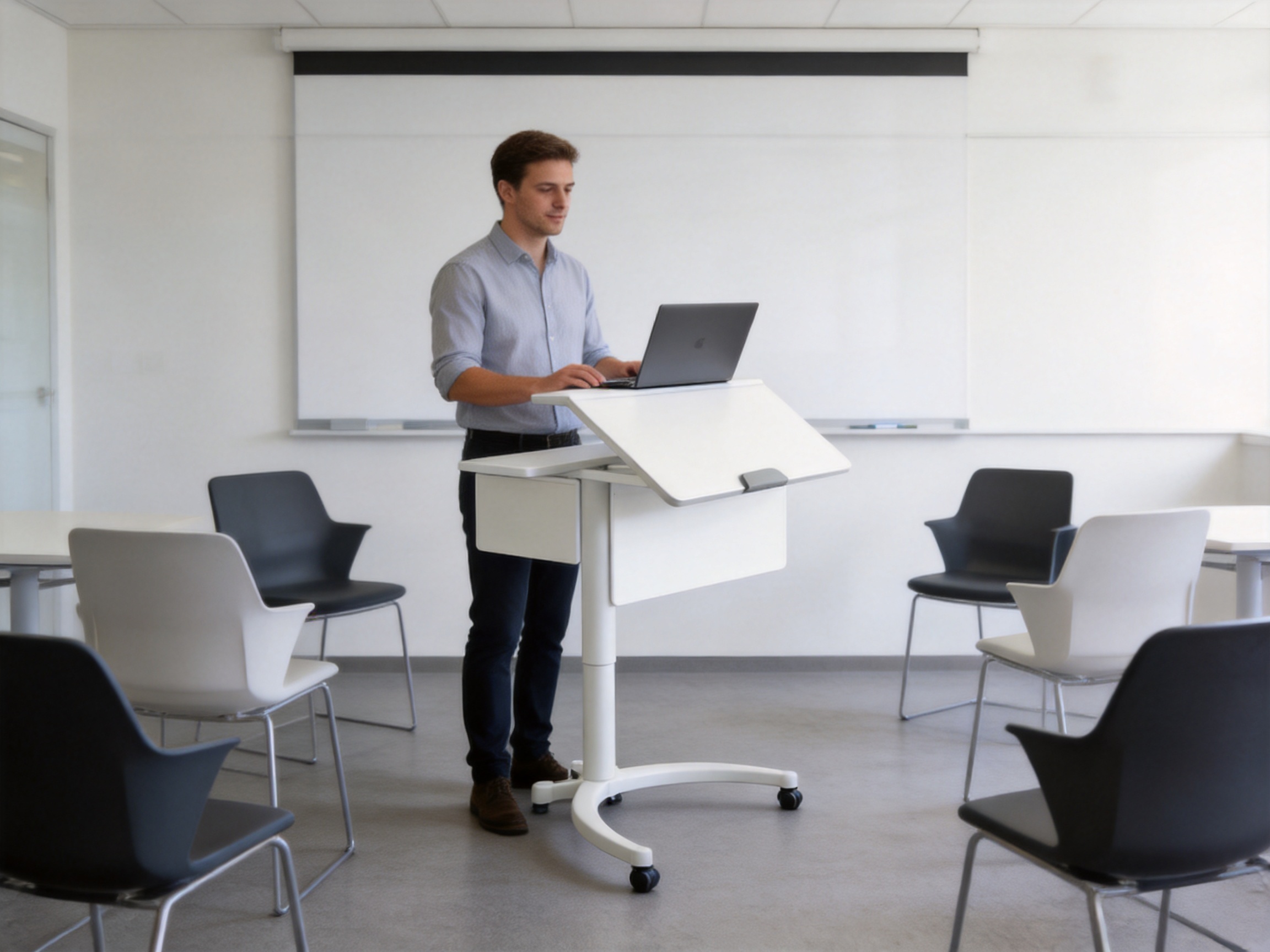
Educational institutions require furniture that can adapt to different teaching formats. The TH11 is suitable for classrooms, training rooms, libraries, lecture spaces, and learning labs. Teachers can use it as a mobile lectern, document support table, laptop station, or demonstration surface. Students can use it as an adjustable study desk or project table.
The height range supports both seated and standing teaching. Instructors may prefer to stand during lectures, then lower the surface for seated grading or discussion. The tilt panel supports reading from notes, displaying materials, or working with tablets. Because the desk is compact, it does not dominate the classroom and can be moved aside when space is needed.
In training centers, furniture may need to be rearranged for lectures, workshops, group exercises, and demonstrations. A pneumatic, mobile desk is ideal for such settings. It reduces dependence on fixed furniture and allows instructors to create the room layout that best supports the session.
For students, adjustable furniture supports different body sizes and learning activities. A fixed desk may not suit every learner, especially in mixed-age or adult education environments. The TH11 provides a more inclusive surface that can be adjusted according to user needs.
Applications in Laboratories, Studios, and Industrial Workstations
Laboratories, studios, and light industrial spaces often require work surfaces that can be positioned according to task height. A technician may need a higher surface for inspection, a lower surface for writing, or a tilted surface for viewing documents. The TH11’s height and tilt adjustment make it useful as an auxiliary workstation in these environments.
Because it does not rely on electric power, it can be used where reducing cables is desirable. In laboratories, loose cables can interfere with equipment, cleaning, and movement. In studios, cables can create visual clutter or trip hazards. In light industrial workstations, a power-free adjustable table can be easier to position near equipment without adding electrical complexity.
The powder-coated metal frame and PVC-surfaced tabletop support routine cleaning and everyday durability. While the desk is not a specialized chemical bench, its materials are suitable for many general-purpose indoor tasks. It can hold documents, laptops, small tools, inspection items, teaching equipment, or control devices.
Studios can benefit from the tilt function for drawing, sketching, reviewing plans, or using tablets. Industrial training areas can use the desk as a mobile instruction platform. Laboratories can use it as a mobile documentation station. This broad applicability makes the TH11 a versatile investment.
Manufacturing Strength: From Design Concept to Finished Product
The performance of an adjustable desk depends not only on the visible design but also on the manufacturing processes behind it. SuZhou Skyhone Intelligent Technology Co., Ltd. operates as a professional enterprise engaged in research, development, production, sales, and service of standing desks. This integrated capability allows the company to manage product quality from concept through delivery.
The company’s location in Suzhou provides access to the advanced furniture and intelligent manufacturing ecosystem of the Yangtze River Delta. This region is known for its mature supply chains, skilled labor, machining resources, surface finishing capabilities, packaging suppliers, and export logistics. For buyers, this industrial setting means the company can respond efficiently to production requirements, customization needs, and quality expectations.
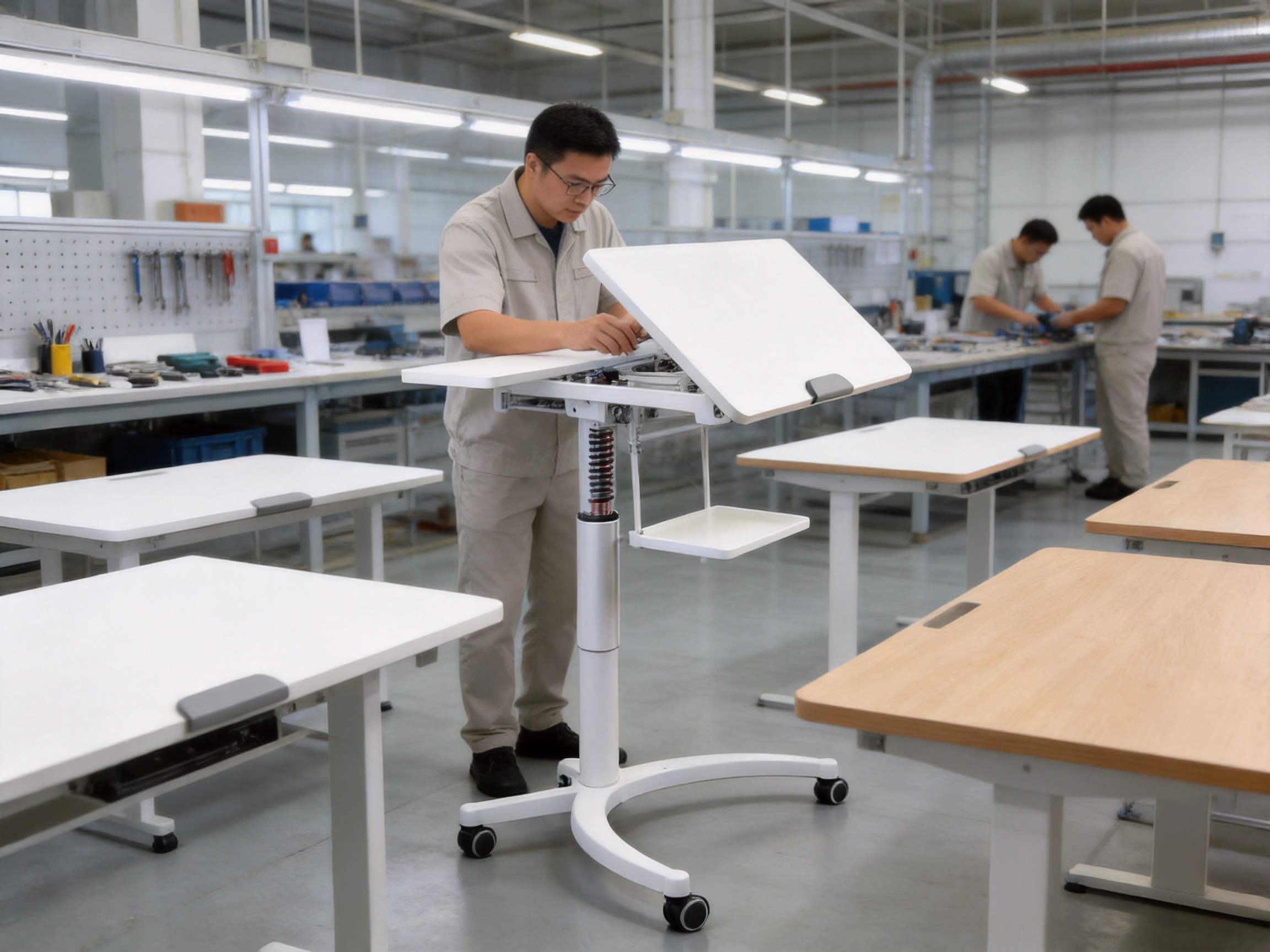
Manufacturing a pneumatic height-adjustable desk requires coordination between multiple components: tabletop panels, metal structures, gas spring systems, pivot or tilt mechanisms, wheels, feet, fasteners, coatings, and packaging. Each part must meet dimensional and functional requirements. If one component is inconsistent, the user experience can suffer. Advanced manufacturing processes help ensure that the final desk operates smoothly and remains stable.
The company’s focus on intelligent office space solutions also influences product development. The TH11 is not simply a metal frame and tabletop; it is designed around user posture, mobility, space efficiency, and task adaptability. This user-oriented design approach is essential for competing in the ergonomic furniture market.
Material Preparation and Metal Processing
The production process begins with material selection and preparation. Aluminum and iron components must be sourced according to structural requirements. Material quality affects strength, surface finish, machining accuracy, and coating performance. Consistent raw materials help maintain product reliability across production batches.
Metal processing may include cutting, forming, drilling, welding, grinding, and machining. Precision is especially important for adjustable furniture because the moving parts must align correctly. If holes are misaligned or frame components are distorted, assembly becomes difficult and the lifting mechanism may not work smoothly. Controlled metal processing helps ensure that the product performs as designed.
Welding quality is another important factor. Welded joints must be strong and clean, especially in load-bearing sections. Poor welding can cause weak points, uneven surfaces, and visual defects. A disciplined manufacturing process includes weld inspection, surface finishing, and dimensional checks to ensure that the frame is both strong and attractive.
After metal processing, parts must be prepared for powder coating. Surface preparation may include cleaning, degreasing, and treatment to improve coating adhesion. Good coating depends heavily on preparation. Even the best powder coating material will not perform well if the metal surface is contaminated or poorly treated.
Powder Coating Process and Finish Control
The powder coating process contributes significantly to the desk’s long-term durability. Parts must be coated evenly and cured properly. If coating thickness is too thin, corrosion resistance and visual coverage may be insufficient. If too thick, fit and assembly may be affected. A controlled coating process balances protection, appearance, and dimensional compatibility.
White powder coating requires careful color management because inconsistencies are easy to see. Surface defects such as pinholes, orange peel, scratches, or uneven gloss can reduce perceived quality. A manufacturer with strong finish control can produce a cleaner and more consistent appearance.
Curing temperature and time are also important. Under-curing can reduce coating strength, while over-curing may affect color or surface properties. Proper oven control and inspection procedures help produce a finish that can withstand everyday use.
This attention to finish is one of the ways the TH11 competes against lower-quality alternatives. Many inexpensive mobile desks may look acceptable initially but show wear quickly. A properly powder-coated frame helps the product maintain professional appearance over time.
Tabletop Production and PVC Vacuum Forming
The tabletop production process begins with MDF board preparation. The board must be cut to accurate dimensions and finished with clean edges. The 25 mm thickness provides substance, but accurate cutting and edge preparation are still essential for a refined final product.
PVC vacuum forming requires controlled temperature, pressure, and material handling. The PVC surface must bond properly to the board and conform smoothly to the shape. Poor vacuum forming can cause wrinkles, bubbles, weak adhesion, or uneven corners. A reliable process produces a smooth and durable surface that improves both appearance and usability.
Tabletop quality affects the user’s daily experience more directly than almost any other part of the desk. Users touch the tabletop constantly, place devices on it, write on it, and clean it. A smooth and stable surface creates confidence. A poorly finished surface quickly becomes frustrating. The TH11’s tabletop construction reflects practical attention to everyday use.
Color options also require process consistency. White panels should match the overall clean look of the frame, while maple wood panels should present a natural and uniform decorative effect. Managing these finishes at production scale requires supplier coordination and quality control.
Gas Spring Matching and Assembly Precision
The gas spring is central to the TH11’s performance. It must be properly matched to the weight of the tabletop, frame geometry, and expected adjustment behavior. If the gas spring force is too weak, height adjustment may feel difficult or unstable. If too strong, the desktop may rise too aggressively. Correct matching produces smooth, controlled movement.
Assembly precision ensures that the gas spring, frame, and tabletop work as a system. The lifting path should remain stable, and the tilt function should operate reliably. Fasteners must be tightened to proper specifications, and moving points must be checked for smoothness. Small assembly errors can cause noise, looseness, or uneven movement.
Quality production includes functional testing. Each desk should be checked for lifting operation, height range, tilt performance, wheel movement, leveling foot stability, and visual finish. Functional testing helps ensure that the product delivered to users performs according to design expectations.
Packaging is also part of manufacturing quality. Adjustable desks include shaped metal parts, panels, and mechanisms that must be protected during transport. Good packaging reduces damage risk and supports efficient installation. For global customers, packaging quality is especially important because products may travel long distances before reaching the final user.
Customization and OEM-Oriented Manufacturing Capability
Buyers in the ergonomic furniture market often need customization. Requirements may include panel colors, surface finishes, packaging styles, branding arrangements, dimensional adjustments, and project-specific configurations. SuZhou Skyhone Intelligent Technology Co., Ltd. is positioned as a manufacturer capable of supporting custom ergonomic adjustable office table solutions, which is valuable for distributors, project contractors, office furniture brands, and institutional buyers.
Customization requires more than willingness. It requires engineering support, supply chain management, sample development, process control, and production planning. A manufacturer must understand which changes are practical and how they affect cost, lead time, durability, and certification requirements. The company’s experience in standing desk development supports this capability.
For customers, working with a manufacturing enterprise that integrates research, production, sales, and service can simplify communication. Instead of dealing with disconnected suppliers, buyers can coordinate product requirements with a specialized team. This helps reduce misunderstandings and supports better project outcomes.
The TH11 can serve as a strong base product for organizations seeking a pneumatic height-adjustable desk with mobility and tilt. Its design can be adapted to different market needs while preserving the core advantages of gas spring adjustment, compact structure, and stable operation.
Quality Control and Long-Term Reliability
Quality control is essential for adjustable furniture because users expect movement, stability, and durability. A fixed table mainly needs to stand firm, but an adjustable table must move repeatedly while remaining safe and stable. This requires testing and inspection at multiple stages.
Incoming material inspection helps verify that metal, MDF, PVC, gas springs, wheels, and fasteners meet requirements. In-process inspection checks dimensions, welding quality, surface preparation, coating, and assembly. Final inspection confirms visual appearance and functional operation. These steps reduce defects and improve consistency.
Long-term reliability also depends on design discipline. The TH11 avoids unnecessary electronic complexity, which can improve durability in certain environments. By using a gas spring system rather than motors and control boxes, the product reduces dependence on electronic components. This does not mean electric desks are inferior; rather, it means the TH11 is optimized for settings where simplicity, mobility, and low maintenance are priorities.
Stability testing is particularly important for a desk with a height range up to 1100 mm. Higher positions can amplify wobble if the structure is weak. The combination of frame design, leveling feet, material selection, and assembly precision contributes to stable performance.
Environmental and Operational Efficiency
The TH11’s power-free operation offers operational efficiency. It does not consume electricity during adjustment and does not require standby power. For individual use, the energy savings may be small, but for large institutions using many desks, reducing electrical dependence can simplify facility planning.
The absence of power cords also improves spatial flexibility and may reduce clutter. In active environments, cable management can be a real operational issue. Cords can interfere with cleaning, create trip hazards, or limit furniture placement. A pneumatic desk removes these concerns.
The durable powder-coated frame and PVC-finished tabletop support longer service life, which is an important aspect of sustainable purchasing. Products that last longer reduce replacement frequency and waste. A desk that can serve multiple roles also reduces the need for separate furniture items.
The compact design supports efficient logistics and space use. Smaller furniture can be transported, stored, and deployed more easily. For organizations managing multiple classrooms, offices, or training rooms, this can be a meaningful practical advantage.
Why the TH11 Stands Out in a Competitive Market
The adjustable desk market includes electric standing desks, converter platforms, manual crank tables, mobile laptop carts, and fixed ergonomic workstations. The TH11 stands out because it combines features that are often separated in competing products. It offers height adjustment, tilt functionality, mobility, leveling stability, power-free operation, and a refined white powder-coated frame in one compact product.
Its greatest competitive strength is not a single specification, but the balance of specifications. The 700 mm to 1100 mm range is practical for many users. The gas spring mechanism is simple and smooth. The tilt panel expands task use. The concealed wheels make movement easier without making the desk look like a utility cart. The leveling feet improve stability. The aluminum and iron frame balances strength and maneuverability. The MDF and PVC tabletop provides a usable and clean surface.
Many competing products compromise in one of these areas. Some are mobile but unstable. Some are stable but difficult to move. Some adjust in height but require electricity. Some are power-free but slow to adjust. Some offer a tilting surface but limited height range. The TH11 addresses these issues through an integrated design.
The manufacturing background also strengthens competitiveness. A product supported by a specialized standing desk manufacturer with regional supply chain advantages is more reliable for business buyers than a generic product from an unknown assembly source. Buyers need consistency, after-sales communication, customization support, and scalable production. These strengths are part of the value behind the TH11.
Purchasing Considerations for Distributors and Project Buyers
Distributors and project buyers should evaluate adjustable desks based on more than price. Important factors include ergonomic function, mechanical reliability, packaging quality, supplier communication, customization capability, and long-term product consistency. The TH11 is suitable for buyers who need a compact pneumatic adjustable desk for office, education, training, home, or light technical environments.
The product’s power-free design can reduce installation work. This may be valuable for project buyers furnishing multiple rooms. Without power planning, desks can be placed quickly and rearranged later. The concealed wheels and leveling feet further support flexible deployment.
For distributors, the TH11 has a clear selling proposition. It can be marketed as a pneumatic height-adjustable desk that supports sit-stand work, tilt-angle tasks, and mobile use. Its compact size makes it easier to present to home office users, schools, studios, and businesses that need practical ergonomic furniture.
For institutional buyers, durability and maintenance are key. The gas spring system, powder-coated frame, and simple mechanical design can help reduce maintenance complexity compared with more electronic products. The clean surface finish also supports professional environments.
Q&A Section
What is the height adjustment range of the TH11 Pneumatic Height-Adjustable Desk?
The desk adjusts from 700 mm to 1100 mm. This range supports seated work, standing work, presentations, equipment operation, reading, and shared use by people of different heights.
Does the desk require electricity?
No. The TH11 uses a gas spring lifting mechanism, so it does not require electrical power, motors, control boxes, or power cables. This makes it easy to place and move in different environments.
What is the main advantage of a pneumatic desk compared with an electric desk?
A pneumatic desk offers smooth height adjustment without electricity. It reduces cable clutter, simplifies installation, and lowers dependence on electronic components. It is especially useful in flexible spaces such as classrooms, studios, laboratories, home offices, and training rooms.
Does the tabletop tilt?
Yes. The main panel includes a tilt function, allowing users to adjust the angle for reading, writing, drawing, tablet use, teaching, and document review.
What materials are used in the desk?
The tabletop is made from 25 mm MDF with a PVC vacuum-formed surface. The frame combines aluminum and iron, finished with white powder coating for durability and a clean appearance.
Is the desk easy to move?
Yes. The desk includes two concealed wheels for mobility. It also includes two leveling feet to help stabilize the desk after it is positioned.
Where can the TH11 be used?
It is suitable for home offices, corporate offices, classrooms, training rooms, libraries, studios, laboratories, and light industrial workstations. It is especially useful where frequent height or angle adjustment is needed.
Why is powder coating important?
Powder coating provides a durable and attractive surface finish. It improves resistance to everyday wear and helps the frame maintain a clean professional appearance over time.
What panel colors are available?
The panel options include white and maple wood. White provides a clean modern look, while maple wood offers a warmer and more natural style.
What makes the TH11 different from a basic mobile table?
A basic mobile table usually provides only a movable surface. The TH11 combines mobility with pneumatic height adjustment, tilt function, concealed wheels, leveling feet, and a stronger ergonomic purpose.
Conclusion: A Compact Pneumatic Desk Built for Flexible Work
The TH11 Cat Head Leg Pneumatic Height-Adjustable Desk is a strong solution for modern work environments that require flexibility, mobility, ergonomic adjustment, and dependable construction. Its 700 mm to 1100 mm height range supports posture variation and multi-user operation. Its gas spring lifting system provides smooth adjustment without electricity. Its tilt function expands usability beyond ordinary desks. Its concealed wheels and leveling feet balance mobility and stability. Its aluminum and iron frame, powder-coated finish, and PVC vacuum-formed tabletop contribute to durability and professional appearance.
The product stands out against competitors because it avoids the limitations of fixed desks, reduces the complexity of electric desks, improves convenience compared with manual crank designs, and offers more ergonomic flexibility than ordinary mobile tables. It is suitable for homes, offices, schools, training centers, laboratories, studios, and light workstations.
Just as important, the product is supported by the manufacturing strengths of SuZhou Skyhone Intelligent Technology Co., Ltd. The company’s focus on standing desk research and production, its location in the advanced Yangtze River Delta manufacturing region, and its integrated capabilities in development, production, sales, and service help ensure stable quality and customization potential. For buyers seeking a practical ergonomic adjustable office table, the TH11 offers a compelling combination of design intelligence, manufacturing reliability, and everyday usability.
References
Bridger, R. S. Introduction to Human Factors and Ergonomics. CRC Press.
Kroemer, K. H. E., and Grandjean, E. Fitting the Task to the Human: A Textbook of Occupational Ergonomics. Taylor & Francis.
Pheasant, S., and Haslegrave, C. Bodyspace: Anthropometry, Ergonomics and the Design of Work. CRC Press.
Hedge, A. Ergonomic Workplace Design for Health, Wellness, and Productivity. CRC Press.
Salvendy, G. Handbook of Human Factors and Ergonomics. Wiley.
Product: TH11 (Cat Head Leg) Pneumatic Height-Adjustable Desk


- Contact Info
-
-
 Phone+86-15950656125
 -
 Email
Email -
 AddressRoom 1007-1, South Building, Suyue Plaza, Suzhou Industrial Park, Suzhou City, Jiangsu Province, China
-
- Products
- Follow Us
- Need help? Please contact us
Copyright ©
SuZhou Skyhone Intelligent Technology Co., Ltd.
All Rights Reserved.
Privacy
Custom Ergonomic Adjustable Office Tables Manufacturers

