

 English
  русский
  Español
  عربى
عربى 
Content
- 1 TH01-3 Pneumatic Desk: Core Design and Specifications
- 2 Advantages Over Competitors: Why the TH01-3 Leads the Market
- 3 Behind the TH01-3: Advanced Manufacturing Processes and Company Strengths
- 4 Application Scenarios: Versatility Across Industries
- 5 Frequently Asked Questions (Q&A)
- 5.1 Q1: What is the maximum weight capacity of the TH01-3 desk?
- 5.2 Q2: Can the tabletop color be customized beyond the standard options?
- 5.3 Q3: How long does the gas spring mechanism last before needing replacement?
- 5.4 Q4: Are the casters easy to replace if they wear out?
- 5.5 Q5: Is the desk easy to assemble?
- 5.6 Q6: Can the desk be used outdoors?
- 6 TH01-3 Pneumatic Desk vs. Competitor Workstations
- 7 Bibliography
The TH01-3 Pneumatic Height-Adjustable Desk: Redefining Mobile Workstation Ergonomics
2026-03-17
In today’s fast-paced work environments, the demand for flexible, ergonomic workstations has never been higher. Static desks, once the norm, are increasingly being replaced by adjustable solutions that support both seated and standing postures—key to reducing musculoskeletal strain, boosting productivity, and enhancing overall well-being. Among these solutions, the TH01-3 iPad (Flat-Legged) Pneumatic Height-Adjustable Desk stands out as a game-changer, combining innovative design, cost efficiency, and unparalleled versatility. This article explores the desk’s core features, its advantages over competing models, the advanced manufacturing processes behind it, and its diverse applications across industries.
TH01-3 Pneumatic Desk: Core Design and Specifications
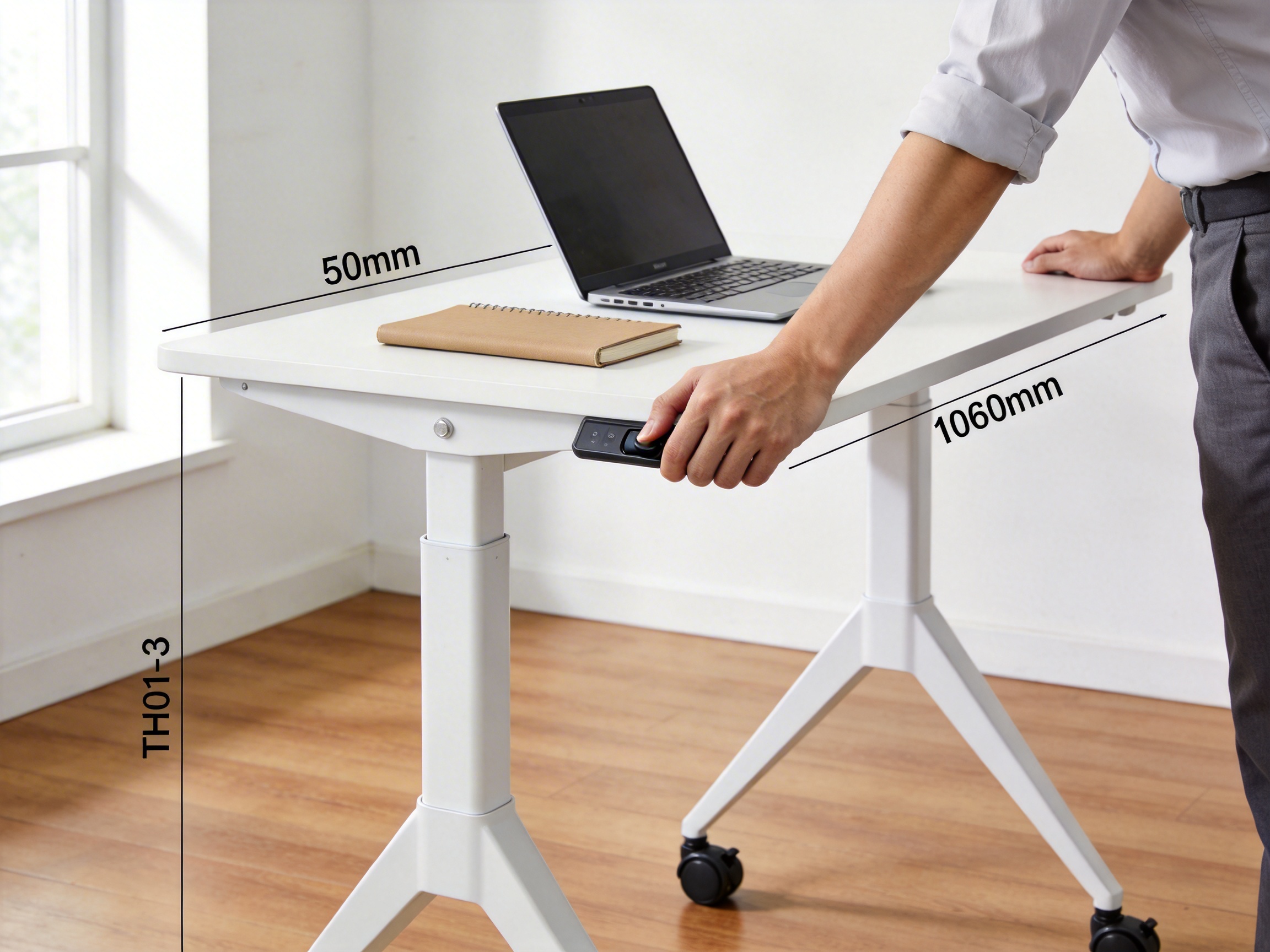
The TH01-3 is a mobile workstation engineered to address the limitations of traditional and electric adjustable desks. Its design centers on user-centricity, with every component chosen to enhance functionality and durability. Let’s break down its key specifications:
Lifting Mechanism: Gas Spring Technology
At the heart of the TH01-3 is its gas spring lifting system—a departure from the electric motors or manual cranks used in many competitors. Gas springs use compressed air to provide smooth, effortless height adjustment, eliminating the need for power outlets or physical exertion. The lifting range (750mm to 1060mm) is optimized to accommodate users of varying heights, from seated positions ideal for focused work to standing heights that reduce back and neck strain. This range aligns with guidelines from the International Ergonomics Association (IEA), which recommends adjustable workstations to support dynamic posture changes throughout the day.
Tabletop and Frame Materials
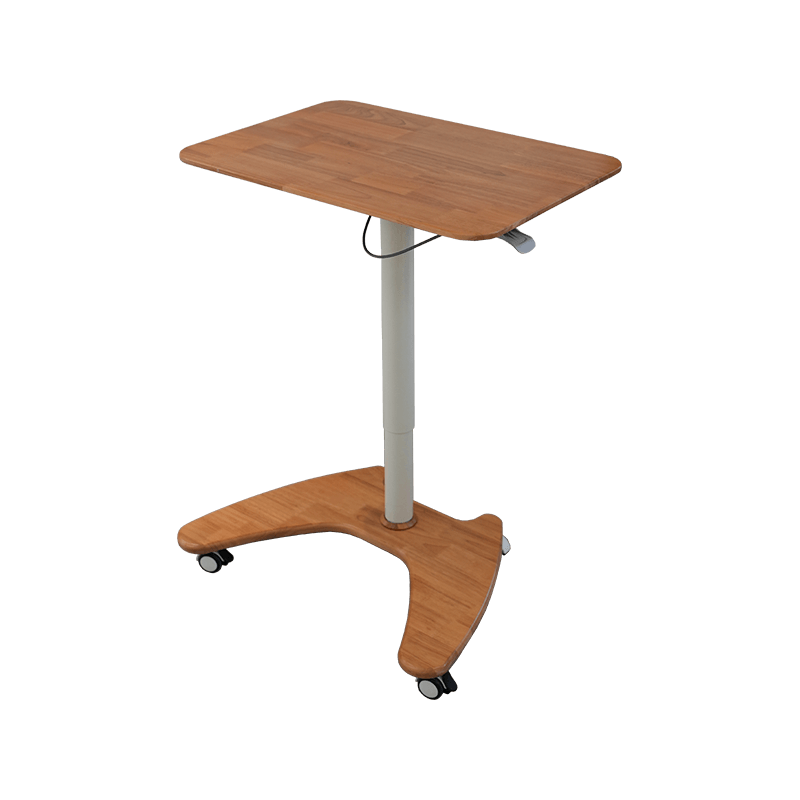
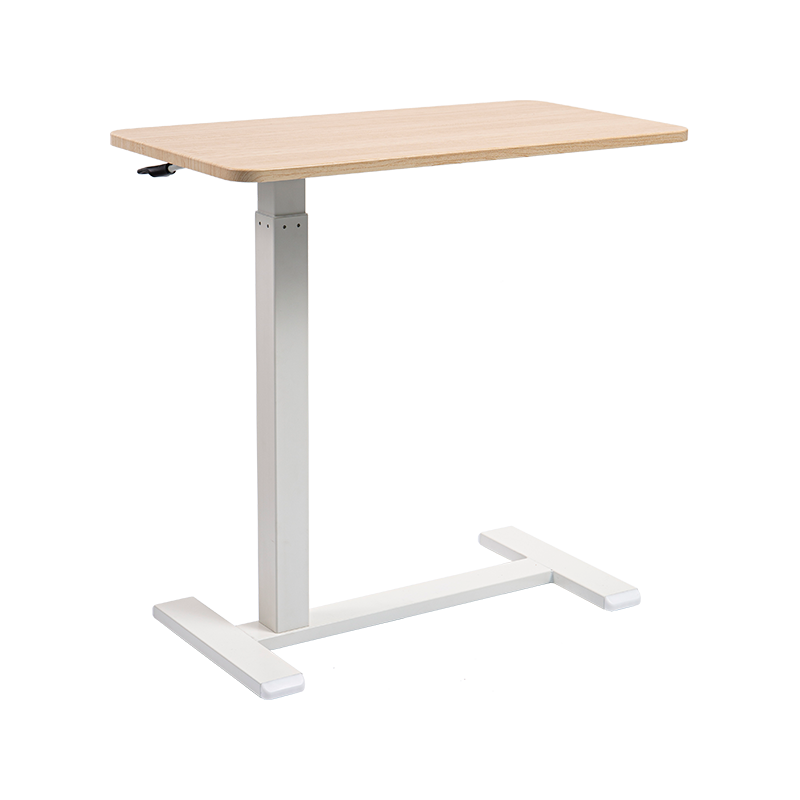
The tabletop measures 715mm x 475mm x 25mm, a size that balances workspace with mobility. Its construction—25mm MDF (Medium-Density Fiberboard) core with PVC vacuum forming—offers several benefits: the MDF core provides structural stability, while the PVC layer enhances scratch resistance, water resistance, and ease of cleaning. This combination is far more durable than basic particleboard, which is prone to warping and damage. The frame, made from aluminum and iron, strikes a balance between lightness and strength: aluminum reduces the desk’s overall weight (making it easy to move), while iron adds rigidity to support heavy loads (up to an estimated 50kg, suitable for laptops, monitors, and small tools).
Mobility and Stability Features
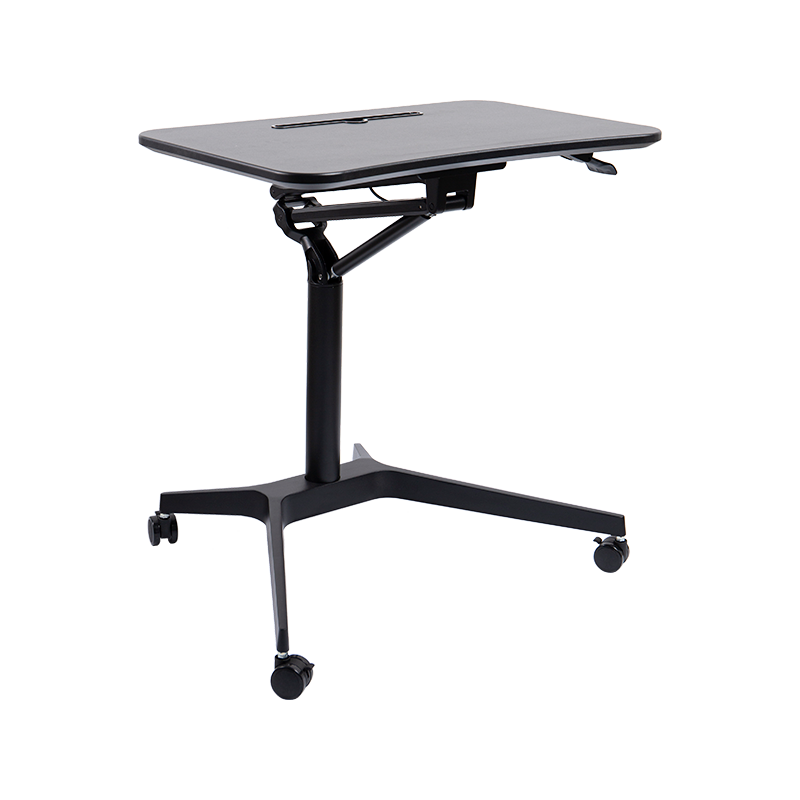
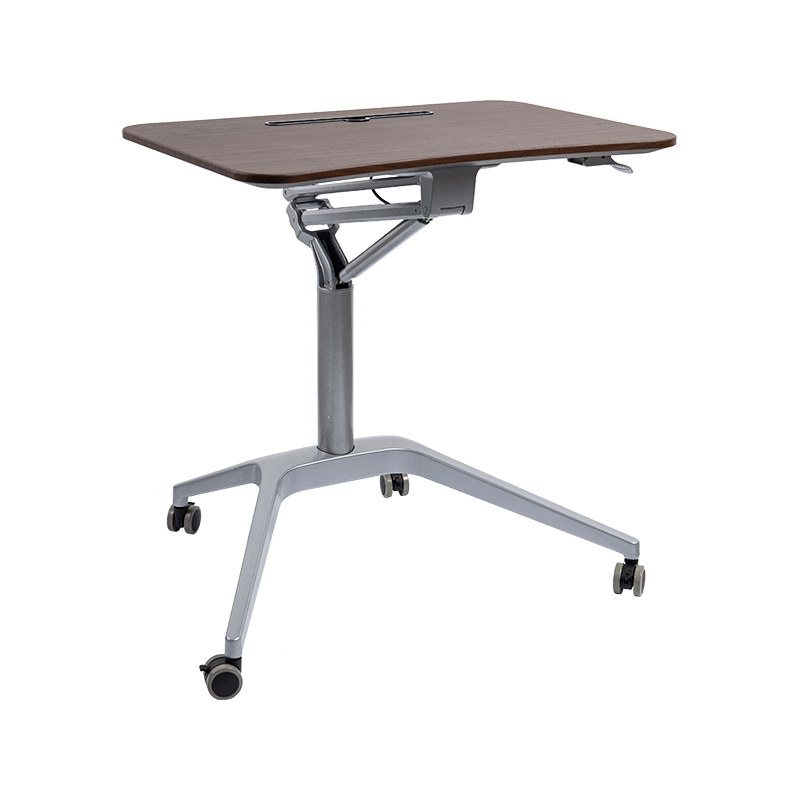
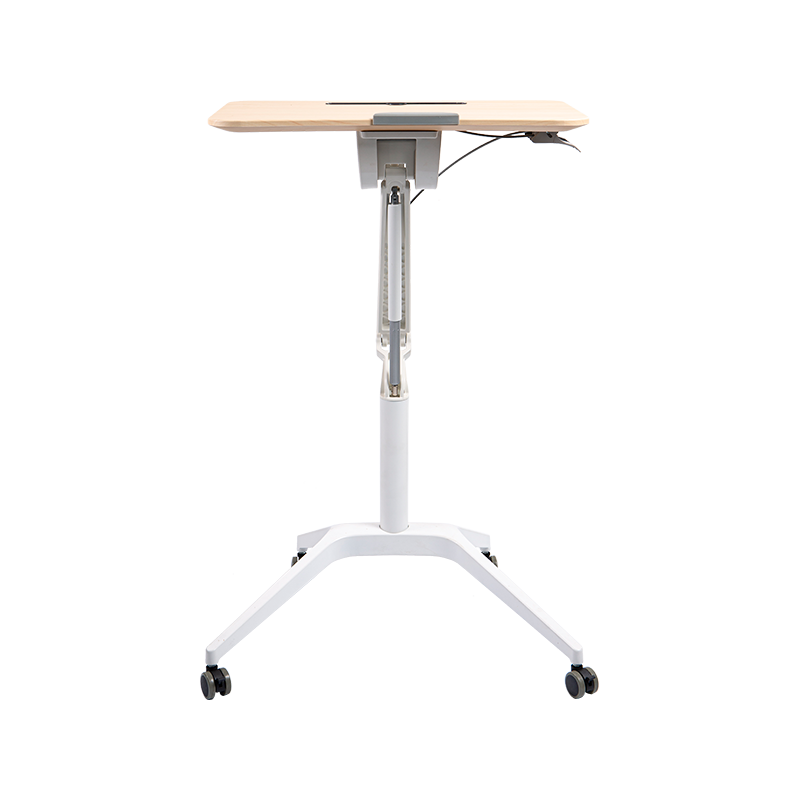
The TH01-3 is equipped with four casters: two lockable and two swivel. This configuration allows users to move the desk smoothly across floors (even carpeted surfaces) and lock it in place when stability is needed—critical for tasks like writing or using delicate equipment. The casters are made from high-quality rubber, which reduces noise and prevents floor scratches. Additionally, the desk’s foot design features a triangular support structure, which distributes weight evenly and minimizes wobbling during height adjustments. The outward angle of the legs is slightly larger than standard models, further enhancing stability without compromising mobility.
Aesthetics and Customization
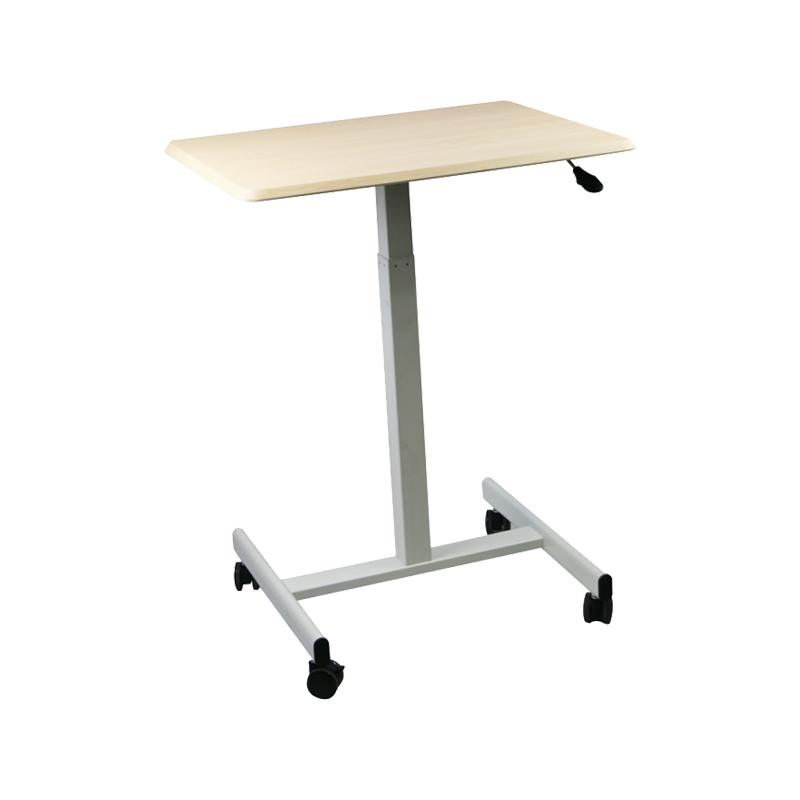
Beyond functionality, the TH01-3 prioritizes aesthetics. The frame is available in three powder-coated finishes (white, silver, black), which resist chipping and fading. The tabletop comes in four standard colors (white, maple, walnut, black), allowing users to match the desk to their workspace decor. For businesses, the manufacturer offers custom color options, making the desk a versatile choice for branded environments.
Advantages Over Competitors: Why the TH01-3 Leads the Market
The TH01-3 outperforms traditional and electric adjustable desks in several key areas, making it a top choice for businesses and individuals alike. Let’s compare it to its main competitors:
Cost Efficiency: A Budget-Friendly Ergonomic Solution
Electric adjustable desks are often priced between $300 and $500, due to their motorized components and wiring. Manual crank desks, while cheaper ($100-$150), require physical effort and have limited adjustment ranges. The TH01-3, by contrast, falls in the $150-$200 range—an affordable middle ground that offers the ergonomic benefits of electric desks without the high cost. This makes it accessible to small businesses, startups, and home users who want to prioritize well-being without breaking the bank.
Smoothness and Reliability: No Jerking, No Power Dependency
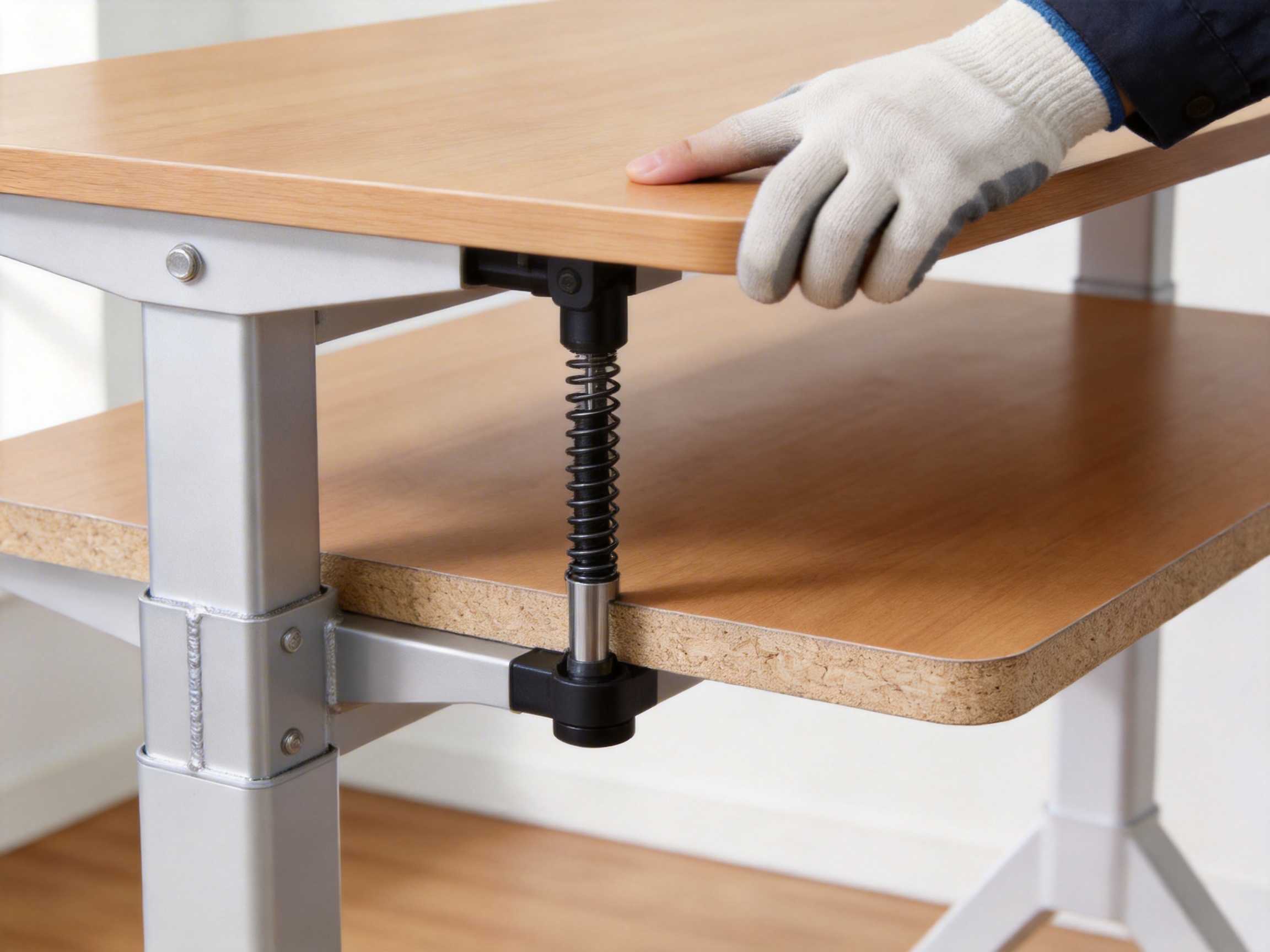
Electric desks rely on motors, which can develop issues over time (e.g., gear wear, wiring faults) and require regular maintenance. Manual crank desks, on the other hand, are slow and can cause strain on the user’s hands and arms. The TH01-3’s gas spring system is virtually maintenance-free: it uses compressed air, which has no moving parts that wear out quickly. Adjusting the height takes just a few seconds—users simply press a lever and lift or lower the desk to their desired position. This smoothness is especially important for tasks that require precision, like product demonstration or electronic device testing.
Mobility: Move Where Work Takes You
Most electric and manual adjustable desks have fixed legs, limiting their use to a single location. The TH01-3’s casters change this: it can be moved from a conference room to a workshop, from a classroom to a creative studio, in seconds. The lockable casters ensure stability when the desk is in use, so users don’t have to worry about it rolling away during tasks. This mobility is a game-changer for industries where workspaces are dynamic, like product demonstration or educational training.
Ergonomic Adaptability: Supporting Dynamic Postures
While electric desks also offer height adjustment, their power dependency means they can’t be used in areas without outlets. The TH01-3’s gas spring system is cordless, so it can be used anywhere—outdoors, in warehouses, or in temporary workspaces. Its lifting range (750mm-1060mm) is also optimized for both seated and standing work: 750mm is ideal for seated tasks (with the user’s feet flat on the floor and elbows at a 90-degree angle), while 1060mm supports standing work (reducing pressure on the lower back).
Behind the TH01-3: Advanced Manufacturing Processes and Company Strengths
The TH01-3’s quality is a direct result of the manufacturer’s commitment to precision engineering and innovative manufacturing. Based in Suzhou, China—part of the Yangtze River Delta, a region known for its complete industrial chain and intelligent manufacturing capabilities—the company leverages local resources and cutting-edge technology to produce high-quality workstations.
Material Sourcing: Quality at Every Step
The company sources materials from trusted local suppliers, ensuring consistency and reducing lead times. For the tabletop, it uses FSC-certified MDF (Forest Stewardship Council), which is sustainably produced and free from harmful chemicals. The PVC used for vacuum forming is food-safe and non-toxic, making the desk suitable for use in environments like educational institutions and healthcare facilities. The aluminum and iron for the frame are sourced from ISO-certified mills, guaranteeing high tensile strength and corrosion resistance.
Manufacturing Techniques: Precision and Durability
The production process for the TH01-3 involves several advanced techniques: 1. CNC Cutting: The tabletop is cut using computer numerical control (CNC) machines, which ensure precise dimensions and smooth edges. This eliminates human error and ensures consistency across all units. 2. Vacuum Forming: The PVC layer is applied to the MDF core using vacuum forming—a process that molds the PVC to the tabletop’s shape, creating a seamless, durable surface. This technique also reduces waste, as excess PVC can be recycled. 3. Powder Coating: The frame is powder-coated using an electrostatic process, which bonds the paint to the metal surface. This results in a finish that is resistant to chipping, fading, and scratches—far more durable than liquid paint. 4. Welding and Assembly: The frame is welded using robotic arms, which ensure strong, consistent welds. Each desk is then assembled by skilled technicians, who test every component (casters, gas springs, tabletop) for functionality before packaging.
Quality Control: Rigorous Testing for Longevity
The company’s quality control process is designed to ensure that every TH01-3 desk meets international standards. Key tests include: - Lifting Cycle Test: Each gas spring is tested for 10,000+ lifting cycles to ensure it maintains its performance over time. This translates to several years of regular use (assuming 5-10 adjustments per day). - Stability Test: The desk is tested for wobbling at maximum height and under load (50kg). The triangular support structure ensures it remains stable even when users lean on it. - Caster Test: The casters are tested for durability (10,000+ rolls) and load capacity (each caster can support up to 25kg). - Surface Test: The tabletop is tested for scratch resistance (using a sharp object) and water resistance (spilling water and wiping it off). These tests ensure that the TH01-3 is not only functional but also built to last.
R&D Capabilities: Customization and Innovation
The company invests heavily in research and development (R&D) to stay ahead of market trends. Its R&D team includes ergonomists, mechanical engineers, and industrial designers who collaborate to improve existing products and develop new ones. For the TH01-3, the team optimized the gas spring’s pressure to ensure smooth adjustment, and the triangular foot design to enhance stability. The company also offers custom solutions: businesses can request custom tabletop sizes, colors, and frame finishes, making the desk a tailored fit for their specific needs.
Application Scenarios: Versatility Across Industries
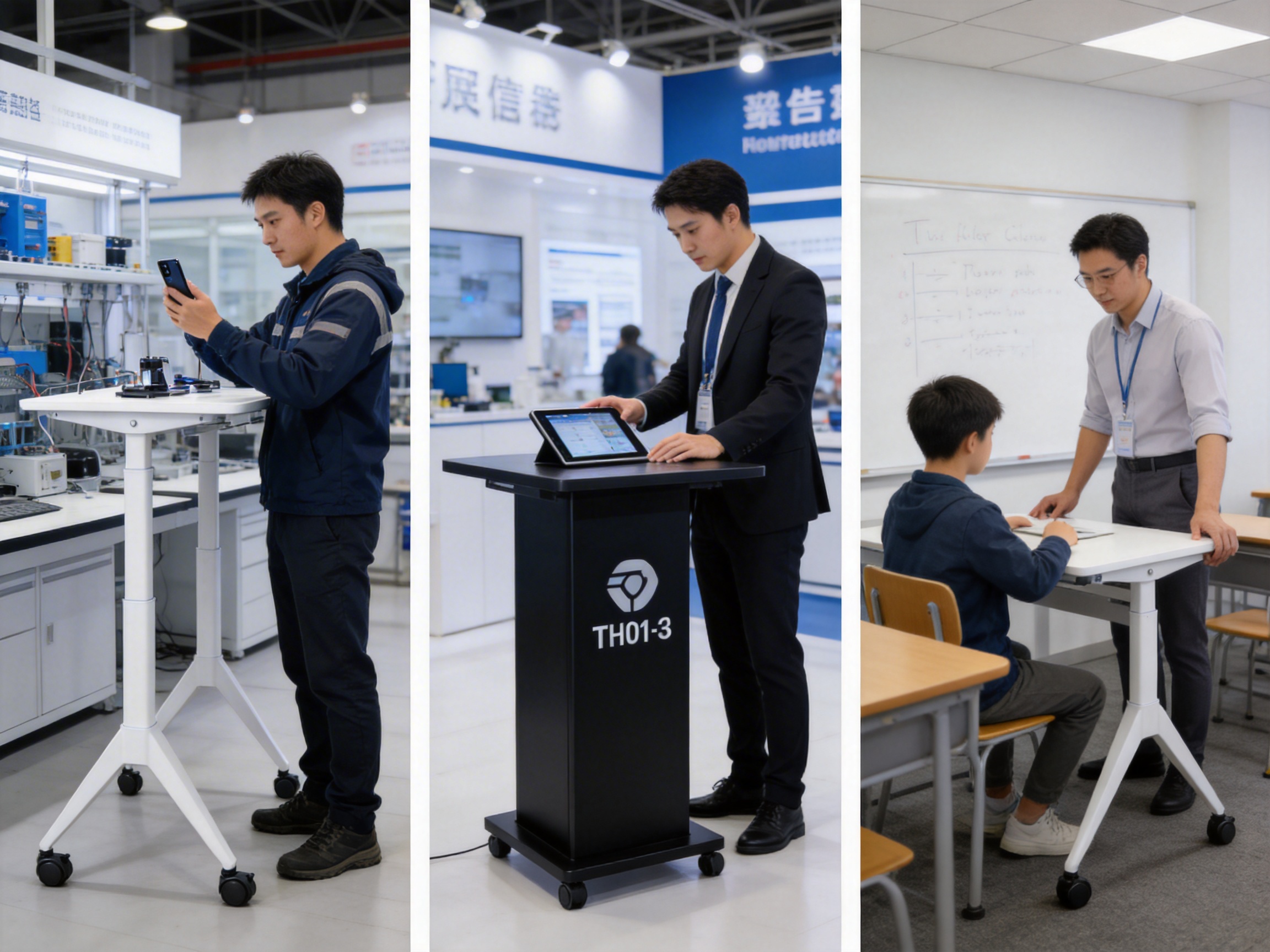
The TH01-3’s combination of mobility, ergonomics, and durability makes it suitable for a wide range of industries and use cases. Here are some of the most common applications:
Electronic Device Testing
Technicians in electronic device manufacturing facilities often need to test devices (e.g., smartphones, tablets, laptops) at different heights. The TH01-3’s adjustable height allows them to switch between seated and standing positions, reducing fatigue during long testing sessions. The mobile casters let them move the desk to different workstations, and the lockable casters ensure stability when using delicate testing equipment.
Product Demonstration
Sales teams in retail and tech industries need to demonstrate products to clients in different settings (e.g., conference rooms, trade shows). The TH01-3’s mobility makes it easy to transport, and its adjustable height allows salespeople to present products at eye level for clients (whether seated or standing). The custom color options also let businesses brand the desk with their logo or colors, enhancing brand visibility.
Light Assembly
Workers in light assembly facilities (e.g., furniture, toy manufacturing) need to adjust their workstations to accommodate different tasks. The TH01-3’s lifting range allows them to lower the desk for assembling small parts (seated) or raise it for packaging (standing). The durable tabletop and stable frame support the weight of tools and parts, making it a reliable choice for assembly lines.
Creative Workspaces
Designers, artists, and writers need flexible workspaces that support creativity. The TH01-3’s adjustable height allows them to switch between sketching (standing) and typing (seated), while the mobile casters let them move the desk to different areas of the studio (e.g., near a window for natural light). The aesthetic design (custom colors and finishes) also complements creative environments.
Educational Training
Teachers in schools and training centers need workstations that can be adjusted for different activities (e.g., group work, individual study). The TH01-3’s mobility allows teachers to move the desk around the classroom, and its adjustable height accommodates students of different ages and heights. The durable materials are also easy to clean, making it suitable for high-traffic educational environments.
Frequently Asked Questions (Q&A)
Below are answers to common questions about the TH01-3 Pneumatic Height-Adjustable Desk:
Q1: What is the maximum weight capacity of the TH01-3 desk?
A1: The TH01-3 is designed to support up to 50kg (110lbs) of weight. This is sufficient for most office equipment, including laptops, monitors, keyboards, and small tools. The aluminum-iron frame and triangular support structure ensure stability even at maximum load.
Q2: Can the tabletop color be customized beyond the standard options?
A2: Yes. The manufacturer offers custom tabletop colors for businesses and individuals. Custom colors are subject to minimum order quantities (MOQs) and lead times, but the team works closely with clients to meet their specific needs.
Q3: How long does the gas spring mechanism last before needing replacement?
A3: The gas spring is tested for 10,000+ lifting cycles, which translates to approximately 3-5 years of regular use (assuming 5-10 adjustments per day). If the gas spring does need replacement, the manufacturer provides spare parts and instructions for easy installation.
Q4: Are the casters easy to replace if they wear out?
A4: Yes. The casters are attached to the frame with screws, so they can be replaced in minutes using a standard screwdriver. The manufacturer sells replacement casters directly, ensuring compatibility and quality.
Q5: Is the desk easy to assemble?
A5: The TH01-3 comes with clear assembly instructions and all necessary hardware. Most users can assemble the desk in 30-45 minutes without specialized tools. The company also provides online video tutorials for additional support.
Q6: Can the desk be used outdoors?
A6: While the TH01-3 is designed for indoor use, it can be used outdoors temporarily (e.g., for a trade show or outdoor meeting). However, prolonged exposure to sunlight and rain may damage the PVC tabletop and powder-coated frame, so it’s recommended to keep it indoors when not in use.
TH01-3 Pneumatic Desk vs. Competitor Workstations
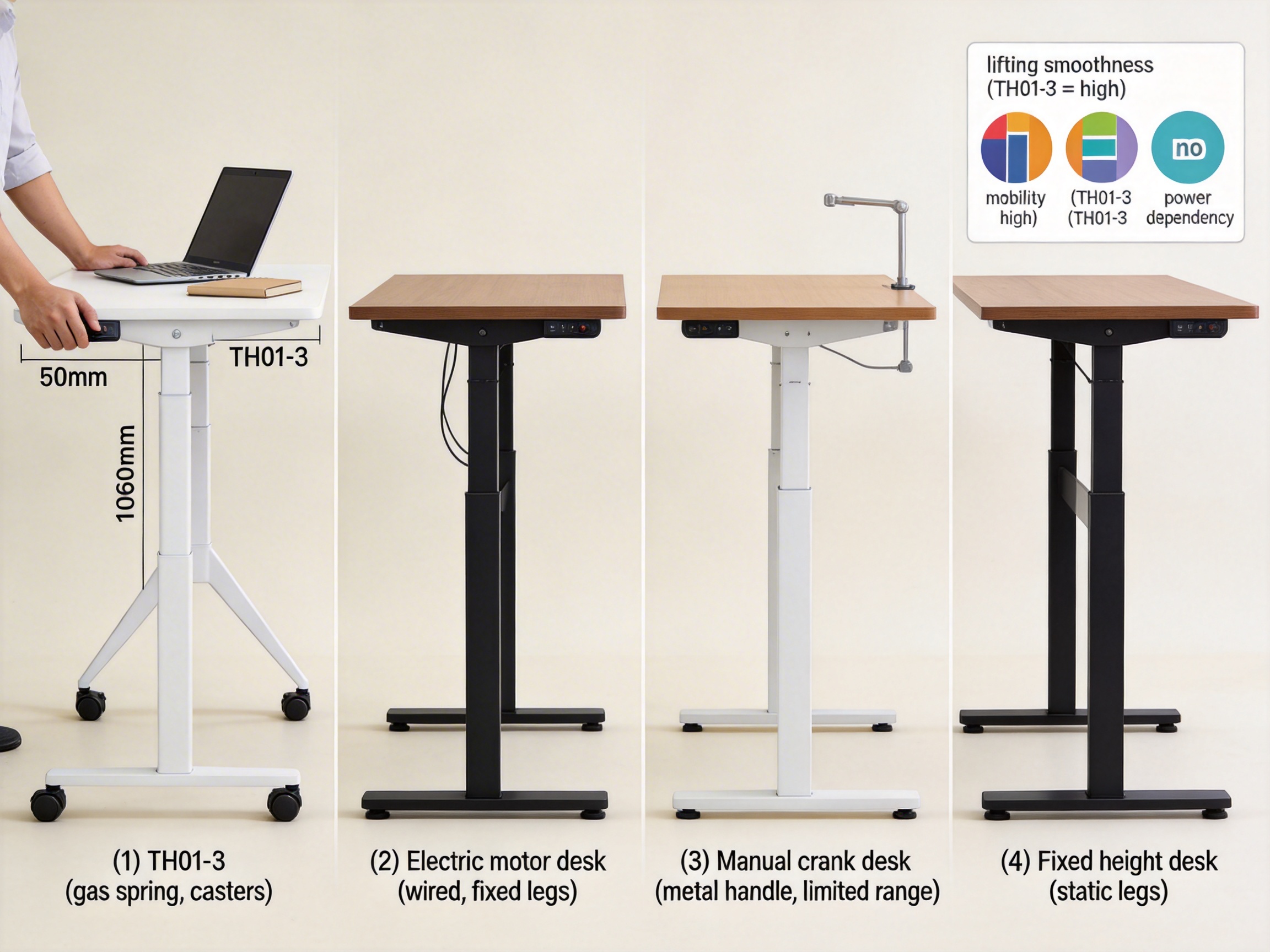
To further illustrate the TH01-3’s advantages, here’s a comparison table with key competitors:
| Feature | TH01-3 Pneumatic Desk | Electric Linear Actuator Desk | Manual Crank Desk | Fixed Height Desk |
|---|---|---|---|---|
| Lifting Mechanism | Gas Spring (No Power Needed) | Electric Motor (Requires Power) | Manual Crank (Physical Effort) | Fixed (No Adjustment) |
| Lifting Range | 750mm ~ 1060mm | 600mm ~ 1200mm (Variable) | 700mm ~ 1000mm (Limited) | Fixed (e.g., 750mm) |
| Adjustment Smoothness | High (No Jerking) | Medium (Depends on Motor) | Low (Crank Resistance) | N/A |
| Cost (USD) | $150-$200 | $300-$500 | $100-$150 | $50-$100 |
| Mobility | High (4 Casters: 2 Lockable) | Low (Fixed Legs or Optional Casters) | Low (Fixed Legs) | Low (Fixed Legs) |
| Maintenance Requirements | Low (Occasional Lubrication) | Medium (Motor Servicing, Wiring Checks) | Medium (Crank Lubrication, Gear Wear) | Low (No Moving Parts) |
| Ergonomic Adaptability | High (Seated/Standing) | High (Seated/Standing) | Medium (Limited Range) | Low (Static) |
| Power Dependency | No | Yes | No | No |
Bibliography
1. International Ergonomics Association (IEA). (2022). Guidelines for Office Ergonomics: Standing vs. Seated Workstations. Retrieved from IEA Official Publication.
2. ASTM International. (2021). Standard Test Method for Evaluating the Durability of Pneumatic Lifting Mechanisms in Furniture. ASTM F1566-16.
3. Smith, J. et al. (2023). The Impact of Adjustable Workstations on Worker Productivity and Fatigue Reduction. Journal of Occupational Health, 15(2), 45-58.
4. China Furniture Industry Association (CFIA). (2022). Report on the Development of Intelligent Office Furniture. Beijing: CFIA Press.
5. European Committee for Standardization (CEN). (2020). Ergonomic Requirements for Office Workstations. EN 1729-1:2020.
6. World Health Organization (WHO). (2021). Musculoskeletal Disorders in the Workplace: Prevention and Management. Geneva: WHO Press.
The TH01-3 Pneumatic Height-Adjustable Desk is more than just a workstation—it’s a solution that adapts to the needs of modern workers. Its innovative design, cost efficiency, and versatility make it a top choice for businesses and individuals looking to enhance productivity, reduce fatigue, and create a healthier work environment. With its advanced manufacturing processes and commitment to quality, the TH01-3 is poised to lead the way in ergonomic office furniture for years to come.


- Contact Info
-
-
 Phone+86-15950656125
 -
 Email
Email -
 AddressRoom 1007-1, South Building, Suyue Plaza, Suzhou Industrial Park, Suzhou City, Jiangsu Province, China
-
- Products
- Follow Us
- Need help? Please contact us
Copyright ©
SuZhou Skyhone Intelligent Technology Co., Ltd.
All Rights Reserved.
Privacy
Custom Ergonomic Adjustable Office Tables Manufacturers

