

 English
  русский
  Español
  عربى
عربى 
Content
- 1 Product Overview
- 2 Key Product Specifications
- 3 Ergonomic Value of Height Adjustment
- 4 Gas Spring Lifting: Smooth, Practical, and Power-Free
- 5 Compact Desktop for Modern Work Tasks
- 6 Aluminum and Iron Structure for Strength and Balance
- 7 Mobility with Lockable Casters
- 8 Distinctive Design for Practical Spaces
- 9 Advantages Over Competitor Products
- 10 Manufacturing Strength and Industrial Capability
- 11 Powder Coating and Surface Quality
- 12 Tabletop Production and PVC Vacuum Forming
- 13 Applications in Home Offices
- 14 Applications in Educational and Training Environments
- 15 Applications in Studios and Creative Spaces
- 16 Applications in Offices and Shared Work Areas
- 17 User Experience and Daily Operation
- 18 Health-Oriented Office Furniture Design
- 19 Quality Control Considerations
- 20 Why the TH12 Fits Current Market Needs
- 21 Design Balance: Simplicity, Function, and Durability
- 22 Purchasing Considerations
- 23 Sustainability and Long-Term Use
- 24 Q&A Section
- 24.1 What type of height-adjustable desk is the TH12?
- 24.2 What is the height adjustment range?
- 24.3 Does the desk need to be plugged into an electrical outlet?
- 24.4 What is the tabletop made of?
- 24.5 Is the desk easy to move?
- 24.6 Where can the TH12 be used?
- 24.7 How does the TH12 compare with electric standing desks?
- 24.8 How does the TH12 compare with simple rolling side tables?
- 24.9 What color options are available for the panel?
- 24.10 Why is powder coating important?
- 25 Conclusion
- 26 References
- 27 Product: TH12 (Cat Head Leg Column + Cat Head Panel Column) Pneumatic Height-Adjustable Desk
Pneumatic Height-Adjustable Desk for Flexible Seated and Standing Work
2026-07-15
The modern workspace is no longer defined by a single fixed posture, a single fixed room, or a single fixed task. People work, study, read, teach, design, and collaborate in environments that must change quickly throughout the day. A compact height-adjustable desk with reliable movement, practical mobility, and stable construction can make that change easier. The TH12 pneumatic height-adjustable desk is designed for exactly this type of flexible indoor use, combining gas spring lifting, a compact desktop, mobile caster support, and a distinctive column-and-panel structure for seated and standing applications.
This article introduces the TH12 pneumatic height-adjustable desk in detail, explaining its structure, performance, materials, user benefits, manufacturing background, and competitive advantages. The product belongs to the broader category of adjustable height desks and uses a gas spring lifting principle instead of an electric motor. This makes it especially suitable for users who want smooth height adjustment without relying on power cords, electrical controls, or complicated installation. With a lifting range from 715 mm to 1130 mm, the desk supports common seated work positions and standing work positions in one compact form.
As workplaces continue to emphasize ergonomic health, efficient space use, and adaptable furniture, products like the TH12 provide a practical answer. The desk is suitable for home offices, studios, educational environments, training rooms, reception areas, reading spaces, device stations, and other indoor environments where flexible working height is valuable. It is not only a piece of furniture but also a functional workstation designed around movement, convenience, and daily durability.
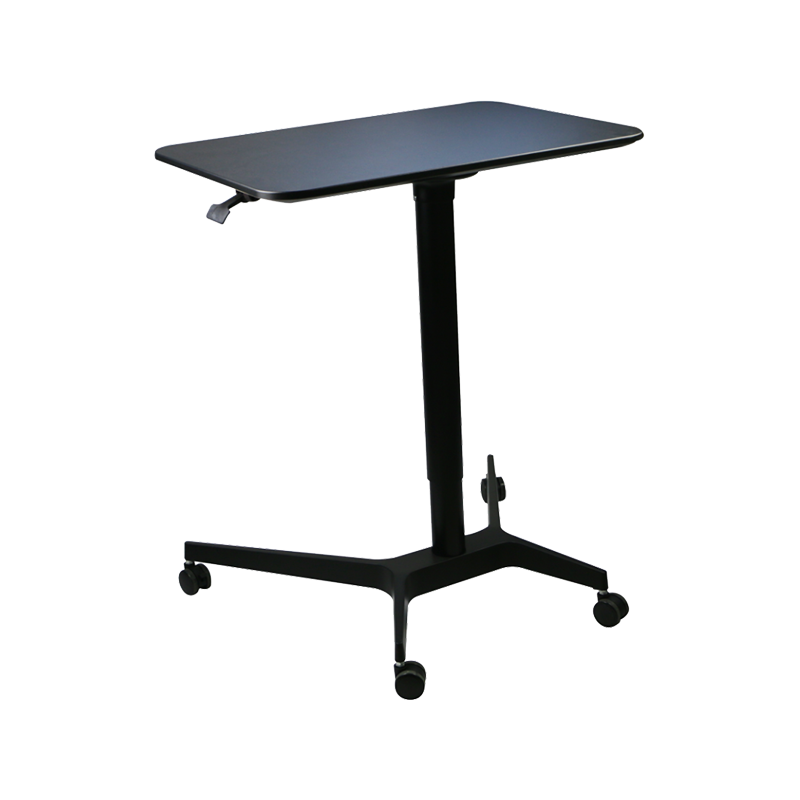
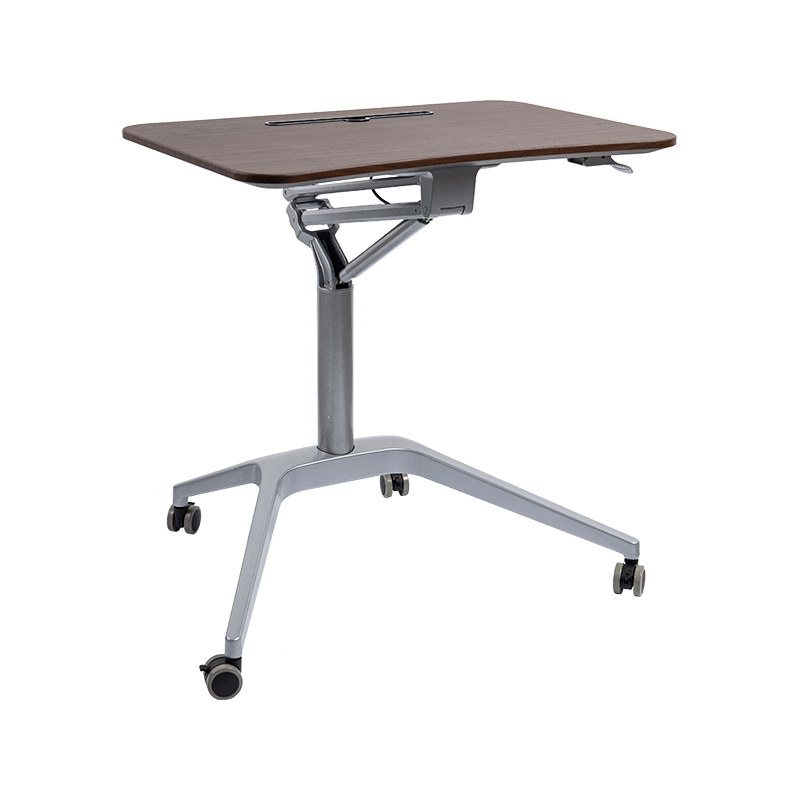
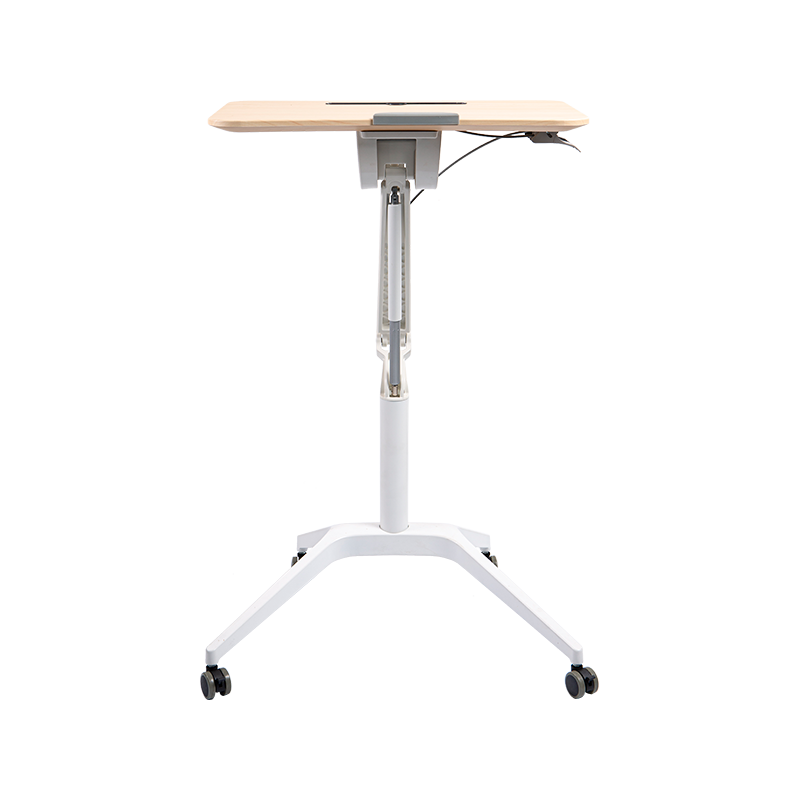
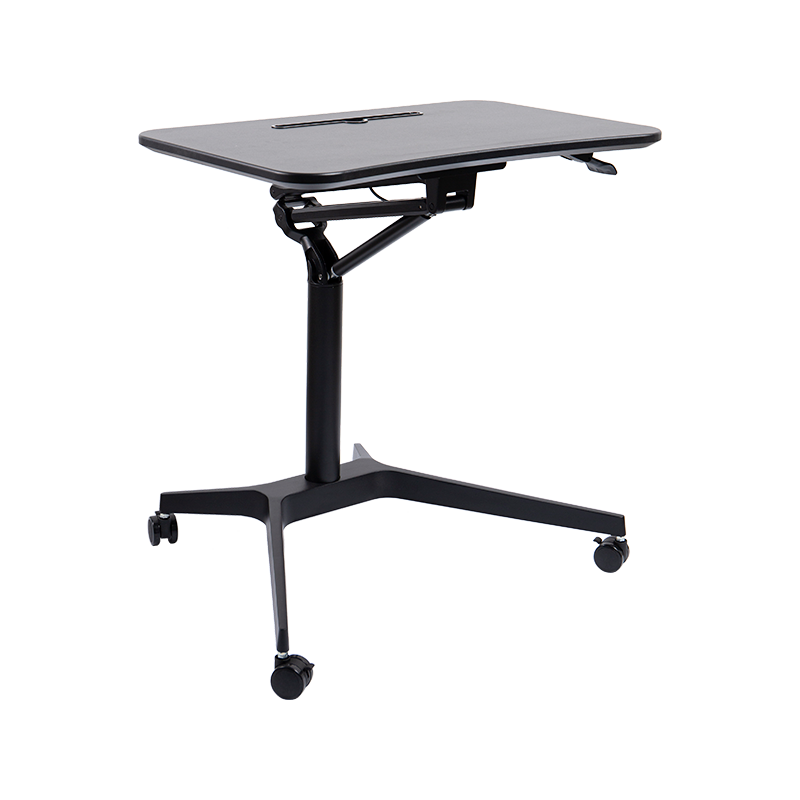
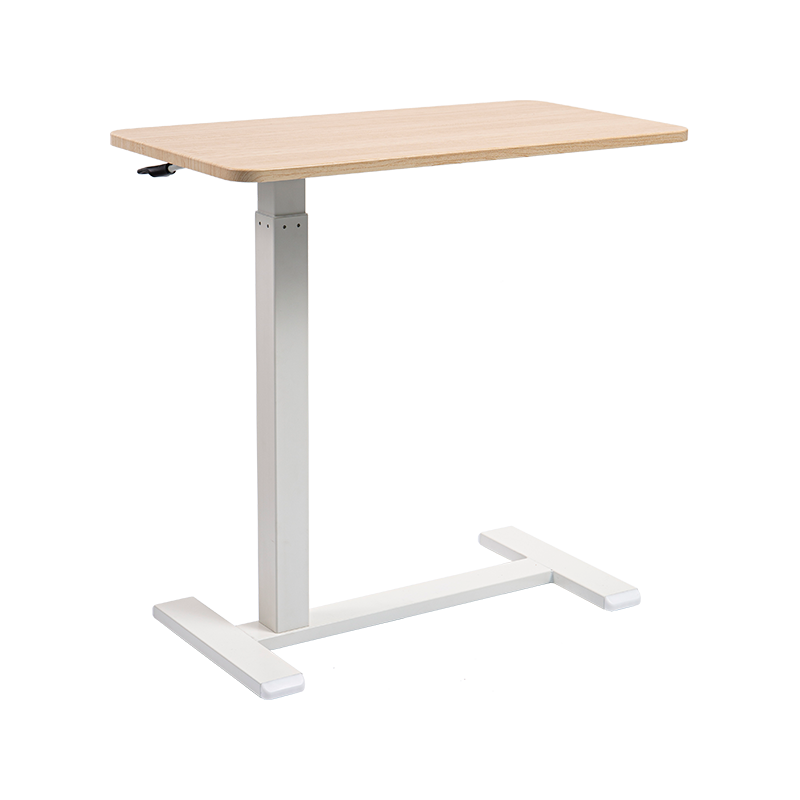
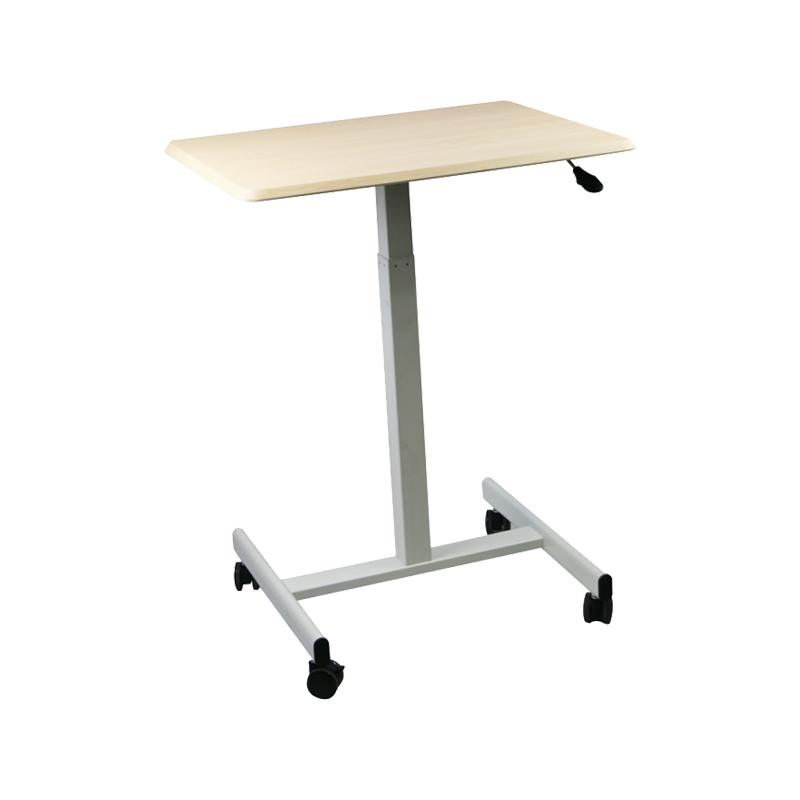
TH12 (Cat Head Leg Column + Cat Head Panel Column) Pneumatic Height-Adjustable Desk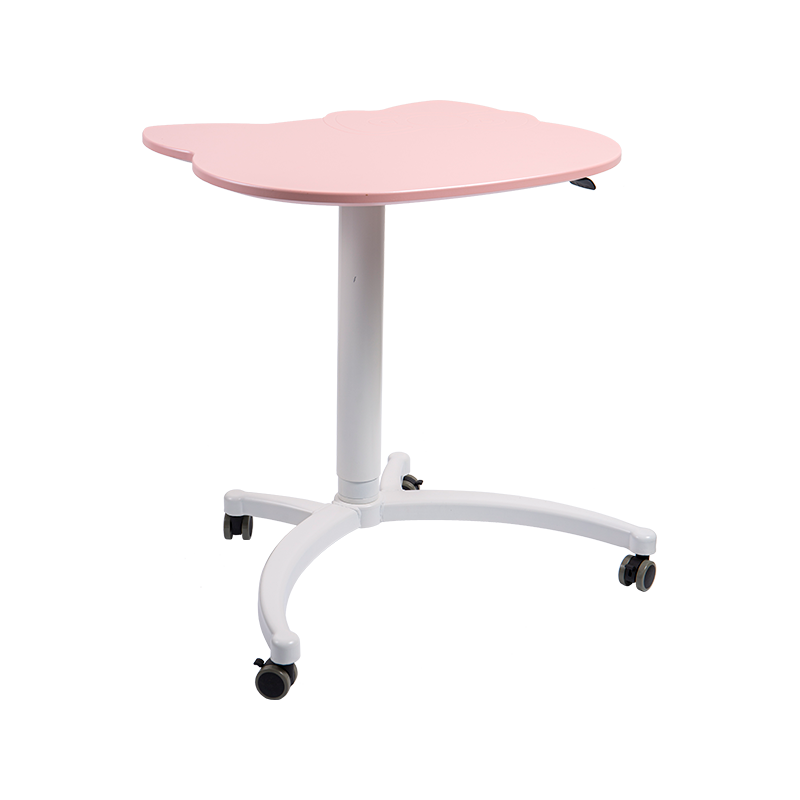
Product Overview
The TH12 is a pneumatic height-adjustable table featuring a gas spring lifting system, an aluminum and iron structural frame, a powder-coated white surface, and a 25 mm tabletop made from MDF with PVC vacuum forming. Its tabletop measures 680 mm by 560 mm, giving users enough working area for a laptop, documents, books, tablet devices, teaching materials, or light office accessories while keeping the overall footprint compact and easy to move.
The desk uses a distinctive columnar base and panel design. The form provides visual character while also supporting practical mobility. It is equipped with three caster wheels, including two with locking mechanisms and one without a lock. This wheel configuration allows the user to move the desk between rooms or positions and then secure it for work. The panel color options include white and maple wood, enabling the product to match different interior styles, from simple modern offices to warm home study areas.
Unlike electric height-adjustable desks that require a motor, control box, power supply, and cable management, this model uses gas spring lifting. The gas spring mechanism allows users to adjust height smoothly and conveniently. This helps reduce mechanical complexity and makes the desk suitable for environments where electrical outlets are limited or where a cordless workstation is preferred. For users who need frequent movement or flexible placement, this is a major practical advantage.
Key Product Specifications
Item |
Specification |
Product Type |
Pneumatic height-adjustable desk |
Lifting Range |
715 mm to 1130 mm |
Tabletop Dimensions |
680 mm by 560 mm by 25 mm |
Tabletop Material |
25 mm MDF with PVC vacuum forming |
Frame Material |
Aluminum and iron |
Surface Color |
White |
Surface Treatment |
Powder coating |
Caster Wheels |
Two locking casters and one non-locking caster |
Panel Color Options |
White and maple wood |
Working Principle |
Gas spring lifting |
Ergonomic Value of Height Adjustment
One of the most important benefits of the TH12 desk is its ability to support changes in working posture. Long periods of sitting are associated with discomfort in the back, neck, shoulders, and legs. Long periods of standing without rest can also create fatigue. The most effective approach for many users is not to sit all day or stand all day, but to alternate between seated and standing positions. A height-adjustable desk makes this easier by allowing the work surface to follow the user’s posture instead of forcing the user to adapt to a fixed desk.
The lifting range from 715 mm to 1130 mm gives the TH12 enough vertical travel for many everyday tasks. At the lower end, it can be used as a seated desk for writing, reading, laptop operation, or study. At the higher end, it can function as a standing workstation for presentations, quick tasks, remote meetings, or active office work. This range helps accommodate users of different heights and supports multiple indoor scenarios.
The ability to change height is also useful in shared spaces. In classrooms, training rooms, libraries, studios, and collaborative offices, furniture may be used by different people throughout the day. A fixed desk may be comfortable for one person and inconvenient for another. The TH12 helps solve this problem by offering adjustable height in a compact and mobile format. This is especially valuable in environments where furniture must serve changing users and tasks.
Gas Spring Lifting: Smooth, Practical, and Power-Free
The TH12 uses a gas spring lifting mechanism, which is one of the defining features of the product. A gas spring stores energy in compressed gas and assists movement when the desk height is adjusted. Compared with purely manual lifting systems, gas spring support helps make adjustment smoother and easier. Compared with electric lifting systems, it removes the need for motors, electronic controls, cables, and power connection.
This power-free design offers several advantages. First, the desk can be placed wherever it is needed without considering outlet location. This is useful in flexible classrooms, hospital support areas, home interiors, temporary office spaces, and conference zones. Second, the absence of electrical components can simplify maintenance. There are fewer electronic parts that can fail, and users do not need to manage control panels, adapters, or wiring. Third, a pneumatic desk can often feel more immediate for short adjustments because the user can change height directly and naturally.
Competitor products in the adjustable desk market often emphasize electric motors and digital memory controls. Those features are beneficial in some permanent office installations, but they are not always necessary. For compact mobile use, electrical systems can add weight, cost, cable clutter, and dependence on power. The TH12 takes a different approach. It focuses on mechanical convenience, mobility, and daily practicality. For users who need a reliable adjustable work surface that can move from place to place, this gas spring solution is highly competitive.
Compact Desktop for Modern Work Tasks
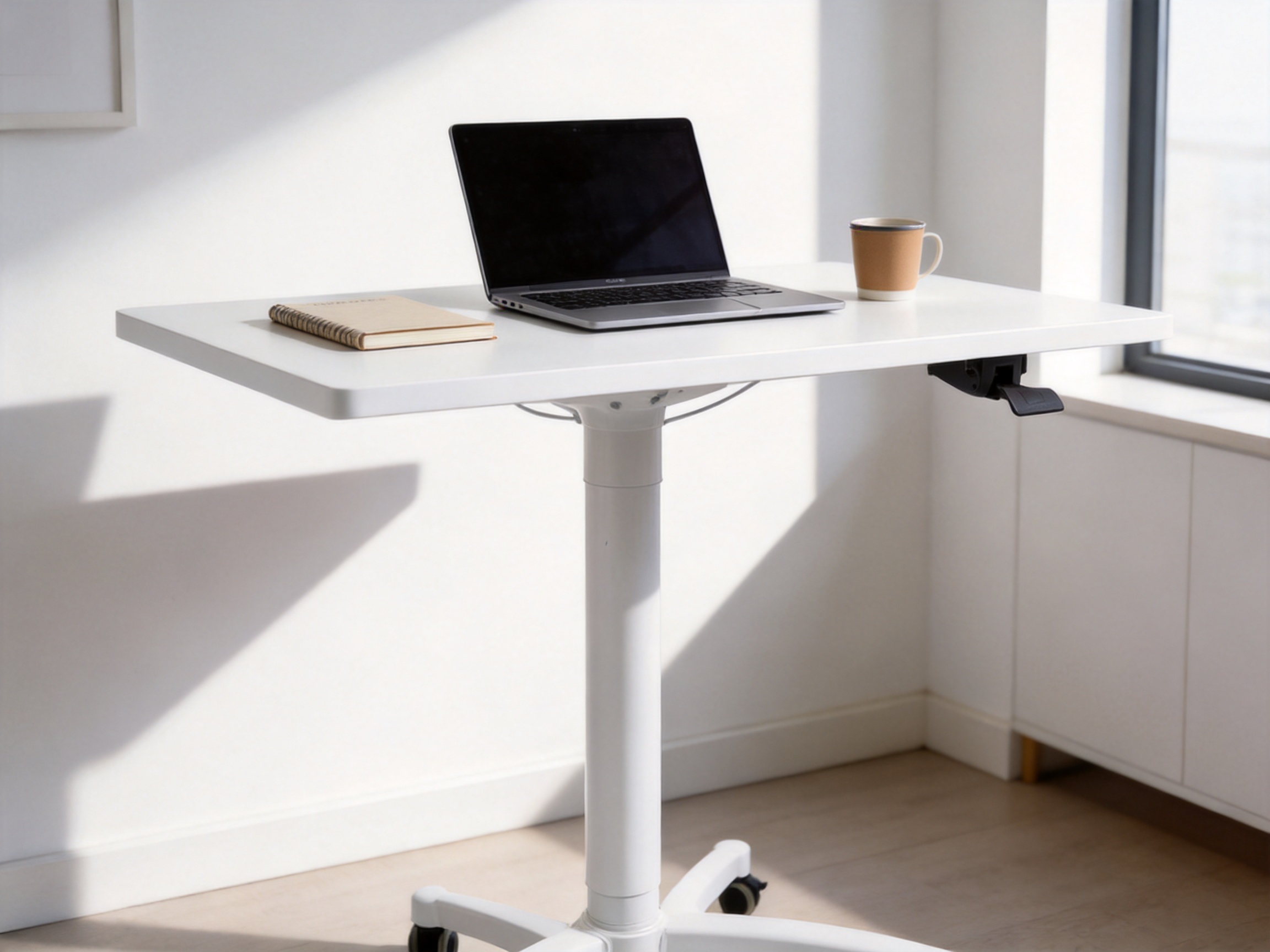
The tabletop measures 680 mm by 560 mm with a thickness of 25 mm. This size is carefully suited to mobile and flexible work. It is large enough for common tasks such as laptop use, notebook writing, reading, online meetings, tablet operation, document review, and small-device support. At the same time, it remains compact enough to move through rooms, store in limited spaces, and fit beside sofas, beds, classroom chairs, training seats, or office stations.
The desktop is made from MDF with PVC vacuum forming. MDF provides a flat and consistent core suitable for furniture surfaces. The PVC vacuum-formed layer helps create a smooth exterior that is easy to clean and maintain. This combination is practical for daily use because it balances stability, appearance, and maintenance convenience. In offices and educational spaces, surfaces must resist frequent contact with hands, books, electronic devices, and writing materials. A cleanable surface helps the desk remain presentable over time.
The 25 mm thickness adds a sense of solidity. Thin desktops can feel weak or unstable, especially when used at standing height. A thicker work surface provides better user confidence and improves the overall quality impression of the desk. The maple wood and white panel color options also help the product suit different interior preferences. White supports a clean and modern atmosphere, while maple wood brings a warmer and more natural visual effect.
Aluminum and Iron Structure for Strength and Balance
The TH12 is constructed from aluminum and iron, combining lightness, strength, and structural support. Aluminum is valued for its corrosion resistance and relatively low weight, while iron provides rigidity and load-bearing capability. In a mobile height-adjustable desk, this material combination is especially meaningful because the product must be strong enough for daily work yet not so heavy that it becomes difficult to move.
Many competing compact desks rely heavily on low-cost materials that may reduce stability at higher positions. When a desk is extended upward, the structural column and base become more important because any looseness or weak connection is more noticeable. The TH12 addresses this through its metal construction and controlled manufacturing process. The use of aluminum and iron gives the frame the mechanical foundation needed for repeated height adjustment and daily movement.
The powder-coated surface further protects the metal structure. Powder coating creates a durable finish that improves resistance to wear and corrosion. It also gives the product a clean white appearance suitable for offices, homes, classrooms, and professional environments. A well-finished frame is more than an aesthetic detail. It supports long-term use by reducing the risk of surface degradation caused by handling, movement, cleaning, and general indoor exposure.
Mobility with Lockable Casters
Mobility is one of the strongest advantages of the TH12. The desk is equipped with three caster wheels, two with locking mechanisms and one without a lock. This configuration makes it easy to move the desk to a new location and then secure it in place. For users who frequently rearrange rooms or need a workstation that follows them throughout the day, this feature is extremely practical.
In a home office, the desk can be moved from a study area to a living room, bedroom, or window-side location. In an educational setting, it can serve as a mobile teaching table, student workstation, or device platform. In a studio, it can support a laptop, sketching materials, audio equipment, or tools as the user moves between zones. In an office, it can become a temporary workstation, presentation stand, reception support desk, or collaborative surface.
Lockable casters give the product a useful balance between mobility and stability. A desk that moves easily but cannot be secured may feel unreliable. A desk that is stable but difficult to move may not meet the needs of modern flexible spaces. The TH12 combines both functions. Users can reposition it quickly and then lock the casters to create a more stable working condition.
Distinctive Design for Practical Spaces
The TH12 features a distinctive columnar base and panel design, giving the product a recognizable visual identity while maintaining functional simplicity. A mobile adjustable desk does not need to be visually complicated, but it should look intentional and suitable for professional and domestic spaces. The white powder-coated frame and optional white or maple wood tabletop allow the product to blend into a variety of environments.
The compact form is particularly helpful in spaces where large standing desks are impractical. Not every user has room for a full-sized electric standing desk. Apartments, dormitories, classrooms, studios, reception areas, and small offices often require furniture that can provide ergonomic benefits without occupying too much floor space. The TH12 answers this need by offering height adjustment in a smaller footprint.
Compared with large rectangular sit-stand desks, the TH12 is easier to reposition, easier to share, and easier to use as a secondary workstation. It can supplement an existing desk rather than replace it. For example, a user may keep a traditional desk for desktop computer work and use the TH12 for standing laptop sessions, reading, video calls, or note-taking. This flexibility gives the product an advantage in modern mixed-use environments.
Advantages Over Competitor Products
The adjustable desk market includes electric standing desks, crank-adjustable desks, fixed laptop carts, rolling side tables, and simple manual risers. Each product type has advantages, but the TH12 occupies a strong middle position. It offers true height adjustment, smooth pneumatic movement, compact mobility, durable materials, and a practical tabletop without the complexity of electric systems.
Compared with electric height-adjustable desks, the TH12 is more flexible in placement because it does not need power. Electric desks are excellent for permanent workstations, but they may be less convenient when users need to move frequently. Power cords can restrict layout and create tripping concerns. Motors and control systems may also increase product weight and maintenance complexity. The TH12 avoids these concerns with a gas spring lifting principle.
Compared with hand-crank adjustable desks, the TH12 is easier and faster to adjust. Crank systems require repeated turning, which can discourage users from changing posture often. If adjustment is inconvenient, the ergonomic benefit of an adjustable desk is reduced because people are less likely to use the feature. Gas spring lifting encourages more frequent height changes by making the process smoother and more intuitive.
Compared with basic rolling side tables, the TH12 provides a wider ergonomic range and a more purpose-built structure. Simple side tables may be mobile, but they often lack proper height adjustment or stability at standing height. The TH12 is designed specifically as a pneumatic height-adjustable workstation, making it more suitable for active office, study, and teaching applications.
Compared with desktop risers, the TH12 provides independent mobility and does not require placement on an existing desk. A riser depends on another table surface, which may not always be available or properly positioned. The TH12 functions as a complete mobile workstation. It can be placed wherever the user needs a height-adjustable surface.
Manufacturing Strength and Industrial Capability
SuZhou Skyhone Intelligent Technology Co., Ltd. is a professional manufacturing enterprise focused on the research and development, production, sales, and service of standing desks. Located in Suzhou, within the Yangtze River Delta furniture industry region, the company benefits from a strong industrial chain, skilled manufacturing resources, and an advanced supply environment. This regional advantage supports efficient production, stable material sourcing, and continuous product improvement.
The company’s manufacturing strength is reflected in its ability to combine mechanical structure, ergonomic function, surface treatment, and user-oriented design. Adjustable desks require more than simple assembly. They involve metal processing, lifting system integration, tabletop production, surface finishing, quality inspection, packaging design, and product testing. A manufacturer with experience in standing desks is better positioned to control these details and deliver consistent quality.
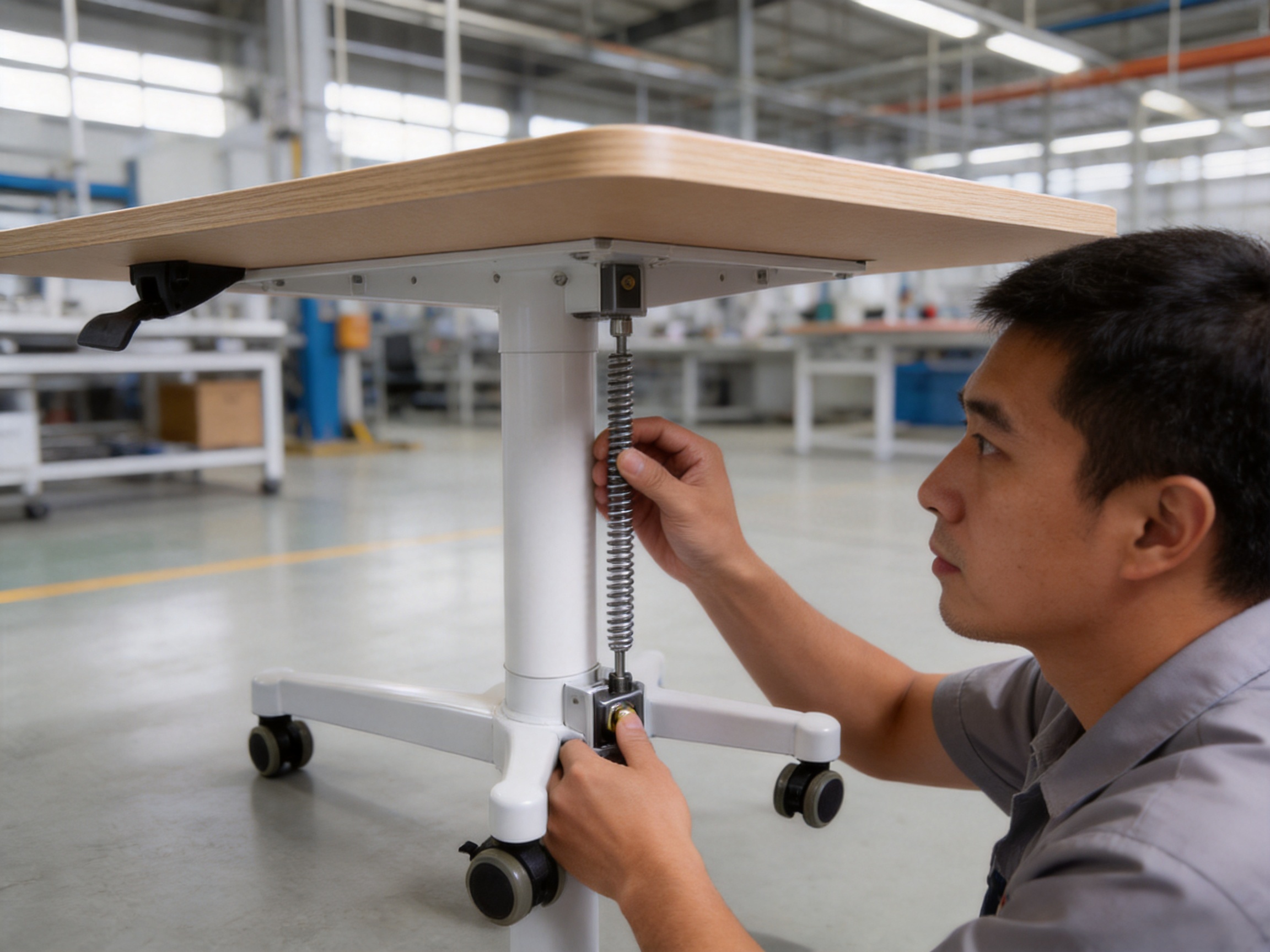
For the TH12, production involves multiple technical considerations. The metal frame must be formed and treated accurately so the lifting column operates reliably. The gas spring must be matched to the desk structure and expected operating force. The caster installation must support smooth movement and safe locking. The tabletop must be processed to maintain flatness, edge quality, surface appearance, and long-term usability. Powder coating must be applied evenly to protect the metal surface and maintain a clean finish.
Advanced manufacturing is not only about machines; it is also about process control. From raw material selection to final packaging, each stage influences the finished product. The company’s emphasis on intelligent office space solutions supports a development philosophy centered on health, efficiency, and reliability. This means the TH12 is not treated as a generic table, but as part of a broader ergonomic product system.
Powder Coating and Surface Quality
Surface treatment plays an important role in the durability and appearance of adjustable furniture. The TH12 uses powder coating on its metal structure. Powder coating is widely used in quality furniture manufacturing because it creates a uniform, durable finish without relying on traditional liquid paint application. The powder is applied to the metal surface and cured to form a protective coating.
This finish helps resist daily wear, minor abrasion, and corrosion in indoor environments. For a mobile desk, surface durability matters because the product may be touched, moved, cleaned, and repositioned frequently. A weak finish can quickly show scratches or discoloration. A powder-coated frame better maintains its appearance and helps preserve the professional look of the product.
The white surface color also supports broad interior compatibility. White furniture is common in modern offices, medical support areas, educational spaces, creative studios, and home interiors because it creates a clean and bright appearance. When paired with a white or maple wood panel, the TH12 can suit both minimalist and warmer design themes.
Tabletop Production and PVC Vacuum Forming
The tabletop is made from 25 mm MDF with PVC vacuum forming. This manufacturing method helps create a smooth, continuous surface layer around the board. PVC vacuum forming is often selected for furniture components because it can provide a clean appearance, practical surface protection, and easier maintenance. For users, the result is a work surface that feels stable and is simple to wipe clean.
The MDF core contributes to surface flatness and dimensional consistency. A stable desktop is essential for writing, typing, reading, and device operation. If the surface is uneven or overly thin, the desk may feel less professional. The 25 mm thickness gives the TH12 a more substantial feel than many lightweight mobile tables, improving user confidence during daily work.
Quality tabletop production requires attention to cutting accuracy, surface adhesion, edge formation, and final inspection. A well-made tabletop should not only look good at first glance but also perform reliably after repeated use. By combining MDF with PVC vacuum forming, the TH12 provides a practical balance of appearance, usability, and manufacturing efficiency.
Applications in Home Offices
Home offices are one of the most suitable environments for the TH12. Many people now work from home in spaces not originally designed as offices. A bedroom corner, dining area, living room, or small study may need to become a functional workspace. Large office furniture may not fit, and fixed desks may not provide enough flexibility. The TH12 offers a compact solution that can be adjusted and moved as needed.
For laptop users, the desk can serve as a primary or secondary workstation. A user may lower it for seated typing and raise it for standing calls or reading. Because it is mobile, it can be moved closer to natural light during the day or stored aside when not in use. The lockable casters help secure the desk during work and release it when the space needs to change.
The power-free gas spring system is particularly convenient at home. Users do not need to find an outlet or manage cables just to adjust the desk height. This makes the product suitable for rooms where electrical access is limited or where a clean, uncluttered appearance is desired. For small apartments and multi-purpose rooms, this is a valuable advantage.
Applications in Educational and Training Environments
Schools, training centers, libraries, and learning spaces increasingly require furniture that can support different teaching and study methods. The TH12 can be used as a mobile instructor table, student workstation, laptop stand, reading desk, or equipment support surface. Its adjustable height allows it to adapt to seated instruction, standing presentation, or collaborative activity.
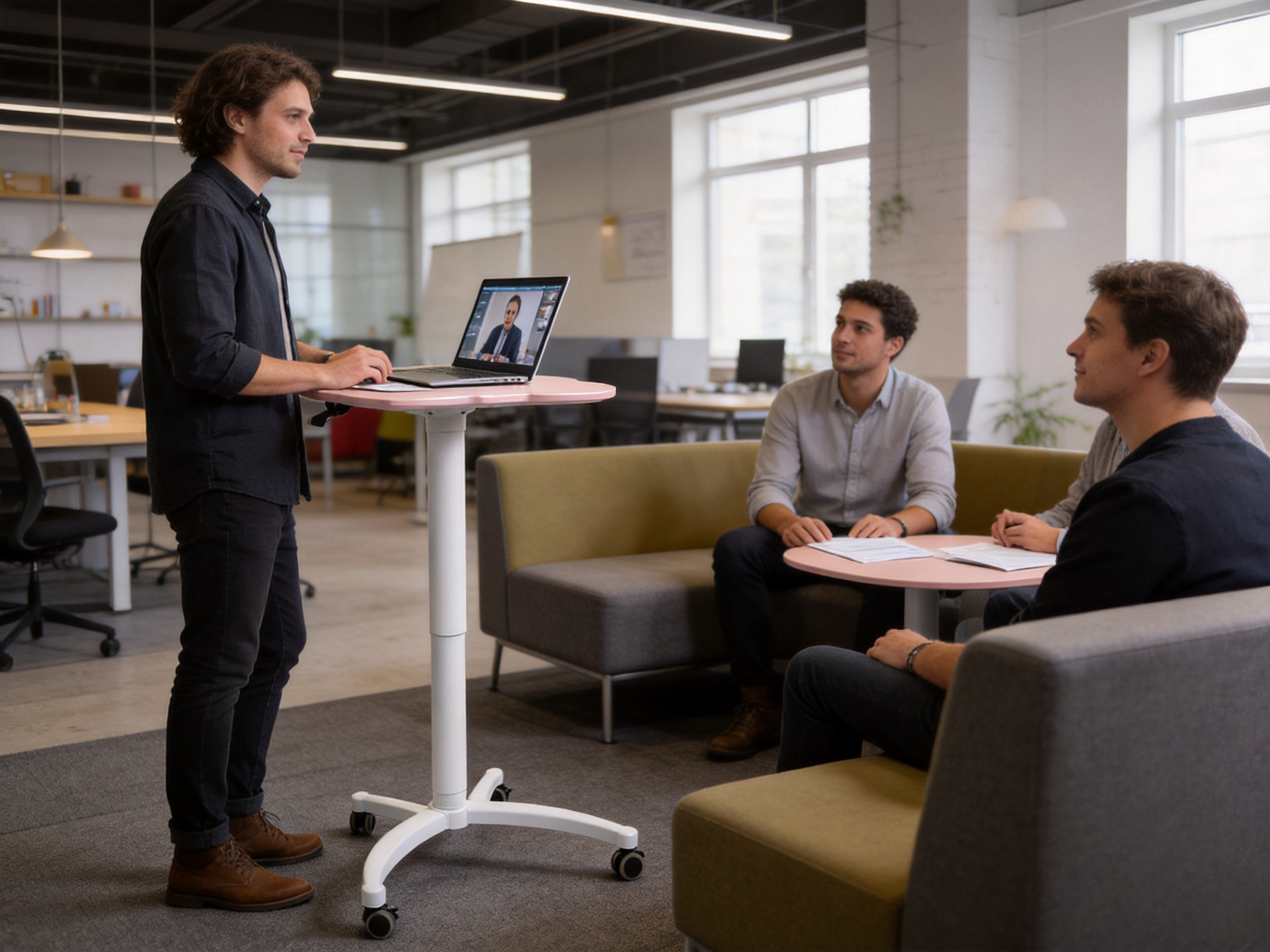
In classrooms, furniture is often rearranged for group work, lectures, demonstrations, and individual study. A mobile adjustable desk helps educators change the room layout quickly. The caster wheels make movement easy, and the locking function provides stability once the desk is positioned. The compact tabletop can hold a laptop, teaching materials, projector accessories, or documents without occupying excessive floor space.
For training rooms and seminar spaces, the TH12 can support presenters who prefer a standing platform for notes or devices. It can also serve as a flexible check-in station or temporary workstation. Since the gas spring system does not require electricity, multiple units can be used in a room without adding cable management problems.
Applications in Studios and Creative Spaces
Creative professionals often move between tasks, tools, and work zones. Designers, photographers, musicians, illustrators, craft workers, and content creators may need a compact surface that can follow them. The TH12 is well suited for such environments because it is mobile, adjustable, and easy to position.
At a lower height, it can support sketching, editing, writing, or seated laptop work. At a higher height, it can become a standing reference table, equipment platform, or review surface. The tabletop size is suitable for devices, notebooks, samples, and small tools. The lockable casters help keep the workstation stable during focused activity.
Studios often contain specialized equipment and limited open space. A full-sized desk may be too large, while a fixed side table may be too limited. The TH12 provides a flexible middle option. It can be placed beside a main workstation, moved near production equipment, or stored when not needed. This makes it a useful accessory for dynamic creative workflows.
In office environments, the TH12 can function as a supplemental ergonomic workstation. Not every office can immediately replace all fixed desks with electric standing desks. A pneumatic mobile desk allows companies to introduce posture flexibility in a cost-effective and space-efficient way. Employees can use it for standing laptop work, quick meetings, document review, or temporary project tasks.
Shared work areas often need furniture that can adapt quickly. A desk may be used in the morning as a reception support surface, at midday as a collaboration station, and in the afternoon as a standing workstation. The TH12 supports this kind of shifting use. Its clean white frame and optional panel colors help it fit into professional environments without appearing out of place.
The desk can also support hot-desking and agile office strategies. As organizations adopt flexible seating and multi-purpose spaces, mobile adjustable furniture becomes more valuable. The TH12 provides height adjustment without the infrastructure requirements of electric desks, making it easier to deploy in different office zones.
User Experience and Daily Operation
A good adjustable desk must be easy to use. If adjustment requires too much effort, users may leave the desk at one height and lose the ergonomic benefit. The TH12 uses gas spring lifting to support smooth height changes. This encourages users to adjust the desk more frequently according to their posture and task.
Daily operation is straightforward. The user can position the desk, lock the casters, adjust the height, and begin working. When the task changes, the user can unlock the casters and move the desk to another location. This simple workflow supports productivity because the furniture does not interfere with the user’s activity. Instead, it adapts to the user.
The compact tabletop also reduces clutter. A smaller work surface encourages users to keep essential items nearby without overloading the desk. This can improve focus for tasks such as reading, writing, online meetings, or device operation. The desk is not intended to replace every large workstation, but it provides a highly practical surface for flexible work.
Health-Oriented Office Furniture Design
The growing demand for standing desks reflects a broader shift toward health-oriented office design. People increasingly understand that furniture influences posture, movement, comfort, and work efficiency. A height-adjustable desk gives users more control over their bodies during the day. The TH12 supports this trend with a practical pneumatic structure that makes posture change accessible.
Ergonomic design does not always require complex electronics. Sometimes the most effective solution is a simple, reliable mechanism that users can operate easily. The gas spring lifting system, compact tabletop, and mobile base work together to create a desk that supports movement without unnecessary complexity. This makes the TH12 attractive to users who value both function and simplicity.
The product also supports a more active work rhythm. Users can sit for focused writing, stand for calls, move the desk for collaboration, and reposition it for different lighting or room needs. These small changes can make daily work feel less static. In this way, the desk contributes to a more dynamic and comfortable working environment.
Quality Control Considerations
Quality control for a pneumatic height-adjustable desk must address structure, movement, surface, and usability. The lifting system should move smoothly through the specified height range. The frame should remain stable under normal use. The tabletop should be flat, clean, and properly finished. The caster wheels should roll smoothly and lock securely. The powder coating should be even and resistant to common indoor wear.
A manufacturer experienced in adjustable desks can better manage these quality factors. SuZhou Skyhone Intelligent Technology Co., Ltd. focuses on standing desk research, production, sales, and service, allowing it to build process knowledge across different product categories, including adjustable height desks, electric linear actuator solutions, and gas spring applications. This technical background supports the development of products such as the TH12.
Inspection is important at multiple stages. Raw materials must meet requirements. Metal components must be processed accurately. The gas spring must be assembled correctly. The tabletop must be checked for surface quality. Finished desks must be evaluated for appearance and function. This layered approach helps reduce defects and improve customer satisfaction.
Why the TH12 Fits Current Market Needs
The current furniture market values flexibility, ergonomics, clean design, and practical cost performance. The TH12 aligns with these needs by offering a mobile pneumatic height-adjustable solution. It does not require a permanent office installation, and it does not depend on electrical infrastructure. It can serve homes, schools, studios, offices, and other indoor environments.
Many users want ergonomic furniture but may not have enough space or budget for a large electric standing desk. Others may need a mobile workstation rather than a fixed one. The TH12 meets these users where they are. It provides the core benefit of height adjustment in a compact, movable, and user-friendly format.
For distributors and project buyers, the product also offers clear positioning. It can be promoted as an ergonomic mobile workstation, a home office desk, an educational support table, a standing laptop desk, or a flexible indoor work surface. Its specifications are easy to understand, and its benefits are visible in everyday use.
Design Balance: Simplicity, Function, and Durability
The strength of the TH12 lies in balance. It is not overloaded with unnecessary features, but it includes the functions that matter most for flexible work: adjustable height, stable structure, practical tabletop, caster mobility, lockable positioning, durable surface treatment, and clean appearance. This balance helps it compete effectively against products that may be either too basic or too complex.
A simple rolling table may be cheaper, but it usually lacks ergonomic height range and lifting support. A full electric desk may offer advanced control, but it may be too large, too heavy, or too dependent on power for many flexible environments. The TH12 provides a practical alternative between these extremes.
The product also reflects thoughtful material selection. Aluminum and iron support strength and usability. MDF with PVC vacuum forming supports a flat and easy-to-maintain work surface. Powder coating supports durability and appearance. Locking casters support mobility and stability. Each element contributes to the overall user experience.
Purchasing Considerations
When evaluating a pneumatic height-adjustable desk, buyers should consider height range, tabletop size, lifting method, frame material, mobility, surface treatment, and intended application. The TH12 performs strongly in these areas. Its 715 mm to 1130 mm range supports both sitting and standing use. Its 680 mm by 560 mm tabletop is compact but functional. Its gas spring lifting system provides power-free adjustment. Its aluminum and iron frame supports durability. Its casters allow easy movement and secure positioning.
Buyers should also consider whether the desk will be used as a primary workstation or a flexible auxiliary surface. The TH12 is especially strong as a flexible workstation for laptops, documents, reading, teaching, and mobile tasks. For users who need multiple monitors and large equipment, a larger fixed desk may be more suitable. However, for users seeking adaptable height and easy movement, the TH12 offers excellent practicality.
In commercial purchasing, consistency and manufacturing support are also important. Working with a manufacturer that has experience in standing desk production can improve product reliability and service confidence. SuZhou Skyhone Intelligent Technology Co., Ltd. provides manufacturing experience in ergonomic adjustable office furniture and related lifting technologies, supporting buyers who require practical and customizable solutions.
Sustainability and Long-Term Use
Durability is an important part of responsible furniture selection. A product that performs reliably over time reduces replacement frequency and supports better resource use. The TH12 contributes to long-term use through its metal frame, powder-coated surface, stable tabletop construction, and mechanically practical gas spring system.
The power-free lifting mechanism may also appeal to users who want to reduce electrical dependence in certain furniture applications. While electric standing desks have their place, a pneumatic desk provides height adjustment without energy consumption during operation. For mobile and occasional-use workstations, this is a sensible and efficient approach.
Maintenance is also simplified. The surface can be cleaned easily, the frame is protected by powder coating, and the absence of motors and control electronics reduces certain service concerns. Proper daily use, reasonable loading, and careful movement will help the desk maintain performance and appearance.
Q&A Section
What type of height-adjustable desk is the TH12?
The TH12 is a pneumatic height-adjustable desk. It uses a gas spring lifting principle to adjust the work surface between seated and standing heights without requiring electric power.
What is the height adjustment range?
The lifting range is from 715 mm to 1130 mm. This range supports common seated work and standing work scenarios for many users.
Does the desk need to be plugged into an electrical outlet?
No. The TH12 uses gas spring lifting rather than an electric motor. This allows users to place and move the desk more freely without power cables.
What is the tabletop made of?
The tabletop is made from 25 mm MDF with PVC vacuum forming. This structure provides a flat work surface, practical durability, and easy cleaning.
Is the desk easy to move?
Yes. The desk includes three caster wheels. Two casters have locking mechanisms, and one caster is non-locking. This allows convenient movement and secure positioning.
Where can the TH12 be used?
It is suitable for home offices, studios, educational institutions, training spaces, shared offices, reading areas, and other indoor environments that require flexible work height adjustment.
How does the TH12 compare with electric standing desks?
Electric standing desks are suitable for permanent workstations, but they require power and often include motors, controls, and cables. The TH12 provides power-free adjustment, easier mobility, and simpler operation, making it especially suitable for flexible spaces.
How does the TH12 compare with simple rolling side tables?
Simple rolling side tables may be mobile, but many do not offer a proper seated-to-standing height range. The TH12 is designed specifically as a height-adjustable ergonomic workstation with gas spring lifting and lockable caster support.
What color options are available for the panel?
The panel is available in white and maple wood. These options help the desk match different office, education, studio, and home interiors.
Why is powder coating important?
Powder coating improves the durability and appearance of the metal frame. It helps resist wear and corrosion while providing a clean white finish suitable for professional and residential environments.
Conclusion
The TH12 pneumatic height-adjustable desk is a practical solution for modern flexible work. It combines gas spring lifting, a seated-to-standing height range, a compact 25 mm tabletop, aluminum and iron construction, powder-coated surface treatment, and mobile caster support. These features make it suitable for users who need an adaptable workstation without the complexity or power dependence of an electric desk.
Its advantages over competitors are clear. Compared with electric desks, it offers power-free mobility and simpler operation. Compared with crank desks, it provides easier adjustment. Compared with basic rolling tables, it delivers true ergonomic height flexibility. Compared with desktop risers, it functions as an independent mobile workstation. This combination gives the TH12 a strong place in homes, offices, schools, studios, and shared spaces.
Behind the product is the manufacturing capability of SuZhou Skyhone Intelligent Technology Co., Ltd., a company engaged in the research, development, production, sales, and service of standing desks. Supported by the industrial strengths of Suzhou and the Yangtze River Delta region, the company focuses on healthy, efficient, and intelligent office space solutions. Through material selection, lifting system integration, surface treatment, and quality control, the TH12 reflects a practical approach to ergonomic furniture manufacturing.
For users seeking a compact, mobile, durable, and easy-to-use height-adjustable desk, the TH12 provides a compelling choice. It supports posture change, improves spatial flexibility, and adapts to multiple indoor scenarios. In a world where workspaces must be healthier and more adaptable, this pneumatic height-adjustable desk offers a smart and efficient answer.
References
Bridger, R. S. Introduction to Ergonomics. CRC Press.
Kroemer, K. H. E., Kroemer, H. B., and Kroemer-Elbert, K. E. Ergonomics: How to Design for Ease and Efficiency. Academic Press.
Pheasant, S., and Haslegrave, C. M. Bodyspace: Anthropometry, Ergonomics and the Design of Work. CRC Press.
Helander, M. A Guide to Human Factors and Ergonomics. CRC Press.
Manufacturing Engineering Handbook. McGraw-Hill Education.
Powder Coating: The Complete Finisher’s Handbook. Powder Coating Institute.
Product: TH12 (Cat Head Leg Column + Cat Head Panel Column) Pneumatic Height-Adjustable Desk


- Contact Info
-
-
 Phone+86-15950656125
 -
 Email
Email -
 AddressRoom 1007-1, South Building, Suyue Plaza, Suzhou Industrial Park, Suzhou City, Jiangsu Province, China
-
- Products
- Follow Us
- Need help? Please contact us
Copyright ©
SuZhou Skyhone Intelligent Technology Co., Ltd.
All Rights Reserved.
Privacy
Custom Ergonomic Adjustable Office Tables Manufacturers

