

 English
  русский
  Español
  عربى
عربى 
Content
- 1 What Is a Free-Stop Gas Spring?
- 2 How the Free-Stop Mechanism Works
- 3 Main Advantages Over Conventional Alternatives
- 4 Comparison with Other Gas Spring Types
- 5 Applications in Furniture and Cabinetry
- 6 Applications in AV, Office, and Display Equipment
- 7 Construction and Material Options
- 8 Advanced Manufacturing and Engineering Strengths
- 9 Quality Factors That Affect Service Life
- 10 How to Select the Correct Free-Stop Gas Spring
- 11 Design Considerations for Manufacturers
- 12 Why This Product Is Valuable for Intelligent Office Solutions
- 13 Application Examples
- 14 Testing and Validation
- 15 Packaging, Delivery, and Customer Support
- 16 Frequently Asked Questions
- 16.1 What is the main difference between a free-stop gas spring and a standard gas spring?
- 16.2 Does a free-stop gas spring require a release lever?
- 16.3 Can it lock at every angle?
- 16.4 Is a free-stop gas spring suitable for heavy doors?
- 16.5 Can it be used with glass-front furniture?
- 16.6 Which cylinder material should be selected?
- 16.7 How should the force rating be calculated?
- 16.8 Can one free-stop gas spring be used on a wide panel?
- 16.9 What causes a gas spring to feel too hard or too loose?
- 16.10 Are free-stop gas springs maintenance-free?
- 16.11 Can the product be customized?
- 16.12 How can manufacturers improve product reliability?
- 17 Conclusion
- 18 References
- 19 Product: Free-stop gas spring (friction-type free-stop gas strut)
Free-Stop Gas Springs: Precision Positioning, Smooth Support, and Flexible Design for Modern Furniture
2026-08-14
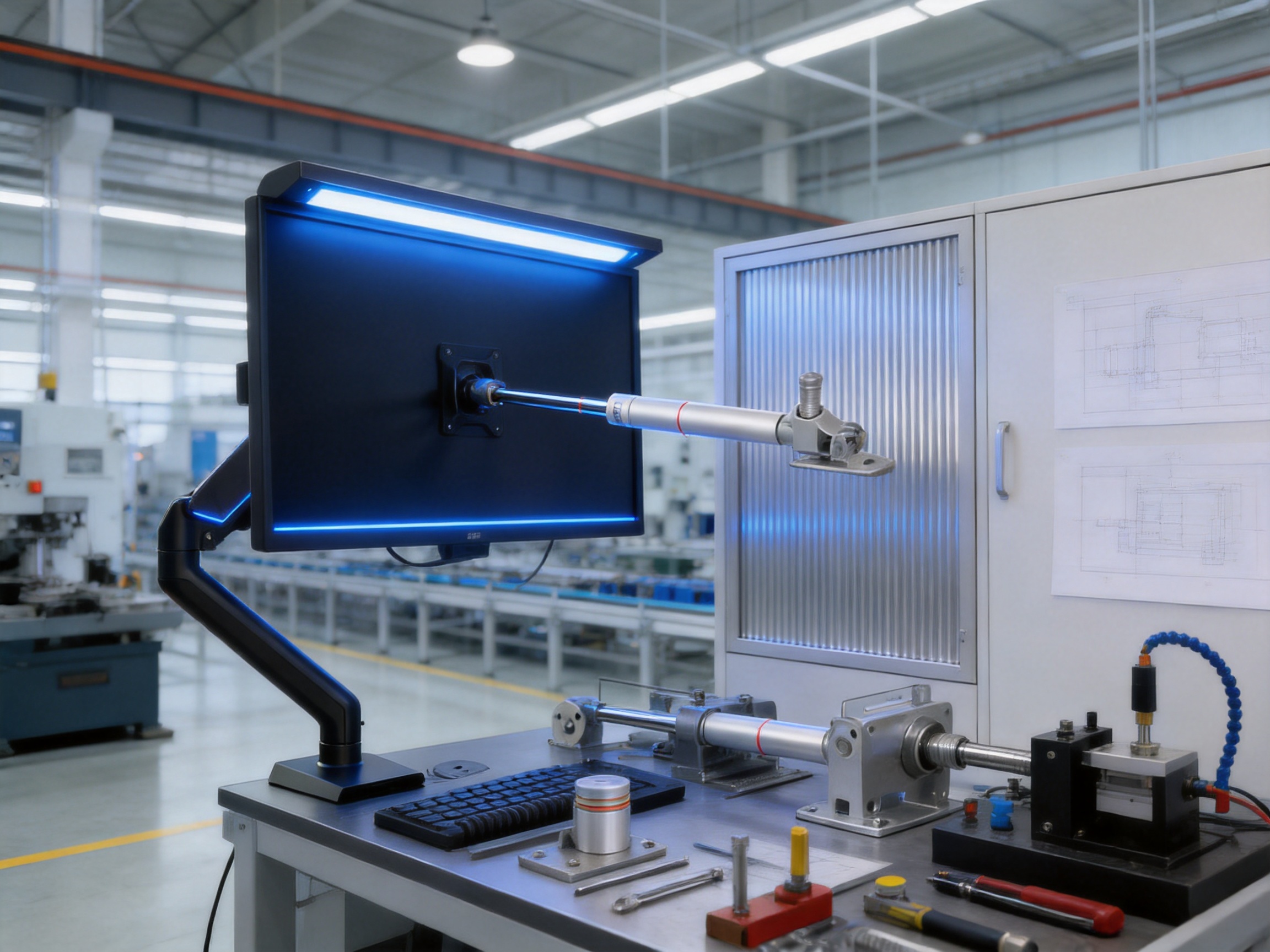
Free-stop gas springs, also called friction-type gas springs or arbitrary-stop support struts, are designed for applications in which a panel, lid, screen, door, or platform must remain in any manually selected position. Unlike a conventional gas spring that extends automatically to a predetermined position, a free-stop gas spring allows the user to push or pull the supported component and stop it wherever convenient. The component then remains suspended at the selected position through a combination of gas force and internal friction.
This operating principle makes the free-stop gas spring an effective solution for lightweight flip-up furniture, overhead cabinets, adjustable display equipment, monitor platforms, laptop risers, and other products that require frequent and fine-tuned adjustment. It combines lifting assistance, controlled motion, silent operation, and a clean appearance without requiring a lever, cable, release button, or external locking handle.
For manufacturers, designers, and equipment developers, the product offers more than simple support. It can help improve the user experience, simplify product styling, reduce the number of exposed operating components, and provide a practical alternative to both standard free-extension gas springs and controllable self-locking gas springs. When correctly specified and manufactured, a free-stop gas spring delivers convenient manual positioning while helping protect the supported structure from sudden movement.
What Is a Free-Stop Gas Spring?
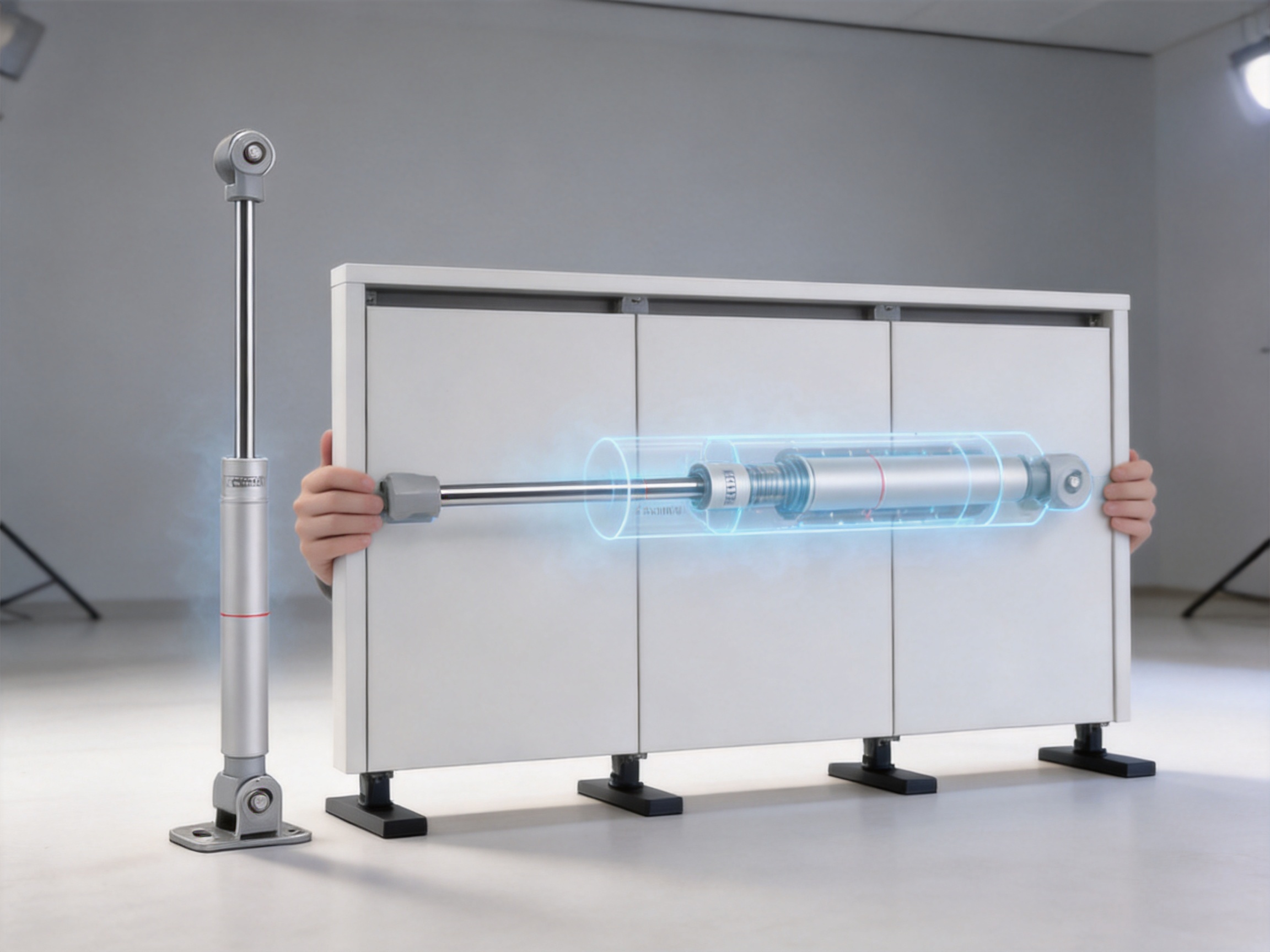
A free-stop gas spring is a mechanical support device that uses compressed nitrogen and an internal friction mechanism to assist movement and hold a load at an intermediate position. The gas charge produces a supporting force, while the friction system creates resistance against unwanted movement. When the user applies sufficient manual force, the component moves. When the user releases it, friction helps maintain the selected position.
The term “free-stop” refers to the ability to stop at freely selected points throughout the working stroke. It does not mean that the gas spring moves without resistance. Instead, the product is engineered to provide a balanced level of resistance. The resistance must be strong enough to hold the supported part in place but controlled enough to permit practical manual adjustment.
The product is positioned between two common alternatives. A standard free-extension gas spring normally pushes the rod outward with a defined force and guides the connected component toward an open or extended position. It can assist lifting, but it generally does not hold at every intermediate point. A controllable self-locking gas spring, by contrast, can lock or unlock through a release pin, cable, lever, or button. It provides positive locking but adds control components and may require the user to operate a release mechanism before every adjustment.
A free-stop gas spring provides a different balance. It offers an adjustable intermediate position without an external release system. This makes it especially suitable where the user wants direct, intuitive operation and where a clean product appearance is important.
How the Free-Stop Mechanism Works
The operating system normally includes a precision cylinder, a piston rod, pressurized nitrogen, seals, guiding elements, and a friction or braking assembly. The cylinder contains the gas charge and internal components. The piston rod transfers the supporting force to the connected panel or mechanism.
When a panel is lifted, the compressed nitrogen pushes against the piston assembly and assists the movement. The user therefore does not need to carry the entire weight of the panel. At the same time, the friction system resists motion along the rod travel. If the user stops applying force, the friction generated inside the gas spring helps prevent the panel from continuing to rise or fall.
When the user pushes the panel downward, the external force overcomes the internal friction and gas support. When the user pulls the panel upward, the same principle works in the opposite direction. The result is a controlled and repeatable manual adjustment experience across the useful stroke.
The performance of a free-stop gas spring depends on the relationship between gas pressure, friction force, load weight, installation geometry, stroke length, and the position of the mounting points. It is therefore important to select the correct force rating and define the installation conditions before production. A spring that is too weak may allow the panel to drop. A spring that is too strong may make the panel difficult to close or adjust. Excessive friction may create an unpleasant operating feel, while insufficient friction may reduce holding stability.
Gas Support and Friction Resistance
Gas pressure provides the lifting or supporting force. It can reduce the amount of manual effort required to open a lid, raise a display, or position an overhead cabinet door. Friction resistance provides the holding effect. These two forces must be coordinated rather than considered separately.
In practical applications, the apparent performance of the gas spring is also influenced by leverage. A gas spring installed near the hinge may produce a different result from one installed farther away, even if both springs have the same nominal force. The angle of the panel, the distance between the mounting points, and the direction of movement all affect the actual torque available to the user.
For this reason, product developers should assess the complete mechanism rather than selecting a gas spring only by its force value. A qualified supplier can help evaluate the weight of the panel, its center of gravity, the desired opening angle, the installation space, and the expected operating cycle.
Main Advantages Over Conventional Alternatives
Continuous Position Adjustment
The most important advantage is continuous positioning. A standard hinge or ordinary gas spring may offer only open and closed positions or may require the user to hold the component manually at an intermediate point. A free-stop gas spring allows the panel to remain at many positions throughout its stroke.
This is valuable for overhead cabinet doors because users can set the door at a comfortable height rather than opening it fully every time. It is also useful for monitor stands, laptop platforms, and display panels, where users may have different eye levels, seating positions, or working preferences.
No External Release Handle
Controllable self-locking gas springs often require a release lever, cable, button, or control pin. These components can increase assembly complexity and may affect the appearance of the finished product. They may also require additional holes, brackets, or routing space.
A free-stop gas spring operates through direct manual force. The user simply pushes or pulls the supported part. This reduces the need for exposed operating hardware and helps designers create a cleaner exterior. The absence of an external control handle can be especially beneficial in minimalist furniture, glass-front cabinets, and professional AV equipment.
Smoother User Interaction
Compared with a basic hinge, a properly selected free-stop gas spring can make opening and closing feel lighter and more controlled. The gas support reduces the perceived weight, while internal friction helps prevent sudden movement. This can reduce the risk of a panel falling rapidly or rising too aggressively.
The controlled motion is particularly useful for overhead applications. A user can raise a door, adjust it to a preferred height, and leave it in place without maintaining continuous hand pressure. When the door is closed, the support system can also help moderate the movement near the end of travel.
Clean and Flexible Product Design
Because the mechanism does not require an external unlocking system, it can be integrated into compact and visually sensitive products. The cylinder may be concealed inside a cabinet side, positioned behind a monitor platform, or installed within a furniture frame. Stainless steel options can also support designs where corrosion resistance and a more refined appearance are important.
The product is suitable for steel, aluminum, wood-based, composite, and glass-framed assemblies when the mounting structure is properly engineered. This flexibility allows manufacturers to use one general operating concept across multiple product families.
Useful Support for Frequent Adjustment
A free-stop gas spring is well suited to products that are adjusted many times during normal use. A monitor lift stand may be repositioned throughout a workday. A laptop riser may be changed for typing, reading, or video conferencing. A display panel may be set to different viewing angles depending on the audience.
In these applications, manually inserting a pin or operating a locking lever every time can be inconvenient. The free-stop principle makes the adjustment process direct and quick, which can improve perceived product quality.
Comparison with Other Gas Spring Types
| Product Type | Typical Operating Method | Positioning Capability | External Controls | Common Application Strength |
|---|---|---|---|---|
| Standard free-extension gas spring | Gas pressure extends the rod and assists opening | Usually favors defined open or closed positions | Not normally required | General lids, hatches, covers, and lifting assistance |
| Free-stop gas spring | Gas support combined with internal friction | Can hold at manually selected positions within the stroke | Not required | Adjustable panels, flip-up furniture, monitors, and display equipment |
| Controllable self-locking gas spring | Gas support with a release and locking mechanism | Locks when the control is released and unlocks when operated | Usually includes a lever, cable, or button | Applications requiring positive controlled locking |
| Mechanical hinge or friction hinge | Mechanical pivot resistance | Depends on hinge design and friction level | Usually not required | Compact doors, lids, and lower-load positioning systems |
The table illustrates why free-stop gas springs occupy a useful middle position. They provide more positioning flexibility than a conventional free-extension gas spring, while offering simpler operation than a controllable self-locking design. They can also provide more lifting assistance than a basic friction hinge, especially when the supported panel is relatively large or mounted overhead.
Applications in Furniture and Cabinetry
Overhead Kitchen Cabinet Doors
Overhead kitchen cabinets often require doors to open upward without obstructing the user. A free-stop gas spring can assist the lifting motion and allow the door to remain at a convenient opening height. This may be useful when the user needs access to the cabinet while standing directly in front of it.
The friction-based holding function can help prevent the door from closing unexpectedly when the user is retrieving items. The absence of a visible release lever also supports a clean cabinet appearance, which is important in modern kitchens that use flat surfaces, concealed hardware, aluminum frames, or glass panels.
Aluminum-Framed Glass Doors
Glass-front furniture often benefits from hardware that is visually discreet. A free-stop gas spring can be installed with suitable brackets so that the support mechanism is integrated into the frame or side structure. Because the user adjusts the door directly, the design can avoid adding a prominent handle solely for the gas spring release function.
When used with glass, the surrounding frame and mounting hardware must be designed to distribute loads correctly. The gas spring should not place concentrated stress on unsupported glass edges. Proper brackets, reinforced profiles, and controlled end movement are essential.
Wardrobe Flip-Up Panels
Flip-up panels in wardrobes, storage units, and custom furniture may be opened repeatedly and held at different heights. A free-stop gas spring can reduce the manual effort required to raise the panel while helping it stay in the selected position.
This is especially valuable where users have different heights or where the panel is installed above a work surface. The same furniture unit can be used comfortably by multiple people without requiring a fixed stop or a separate locking pin.
Balcony and Compact Storage Units
Balcony storage units and compact utility cabinets often have limited space for external hardware. A free-stop gas spring can support a lid or upward-opening door while maintaining a relatively clean interior and exterior. Stainless steel cylinder options may be considered where the product may experience humid air or changing environmental conditions.
Environmental suitability should always be reviewed with the supplier. Material selection, surface treatment, sealing, and installation orientation may affect long-term performance in outdoor or semi-outdoor conditions.
Applications in AV, Office, and Display Equipment
Monitor Lift Stands
Monitor stands increasingly require height adjustment to support ergonomic working positions. A free-stop gas spring can provide assistance as the monitor platform is raised or lowered. The user can stop the screen at a preferred eye level without operating a separate locking control.
For shared workstations, training rooms, reception areas, and collaborative environments, the ability to make quick adjustments is a significant advantage. The friction mechanism can help prevent unwanted drift when the monitor is left at a selected height, provided that the spring force and mounting geometry are correctly matched to the equipment.
Flip-Up TV Mounts
Flip-up TV mounts and concealed display systems may need to move through a range of angles or positions. A free-stop gas spring can help counterbalance the display and make manual operation more manageable. It may also help maintain a cleaner design by avoiding an external locking release.
Because televisions and display assemblies vary considerably in weight and center of gravity, the complete mounting arrangement must be assessed. Two gas springs may be required for wider screens or heavier platforms in order to maintain balanced movement and reduce twisting loads.
Laptop Risers
Laptop risers benefit from compact positioning hardware that is easy to operate. A free-stop gas spring can assist height and angle adjustment, allowing the user to position the laptop for typing, reading, or presentation use. The support action can reduce fatigue during repeated adjustments and improve the stability of the working platform.
Adjustable Display Panels
In retail, education, exhibitions, and professional presentation environments, display panels may need to be positioned differently for different viewers. A free-stop gas spring provides a practical method for creating adjustable panels without adding a complex electric drive system or a visible mechanical lock.
For lightweight panels, the system can deliver a simple manual solution with minimal maintenance requirements. For larger or heavier panels, multiple gas springs and reinforced mounting structures may be used after a detailed load review.
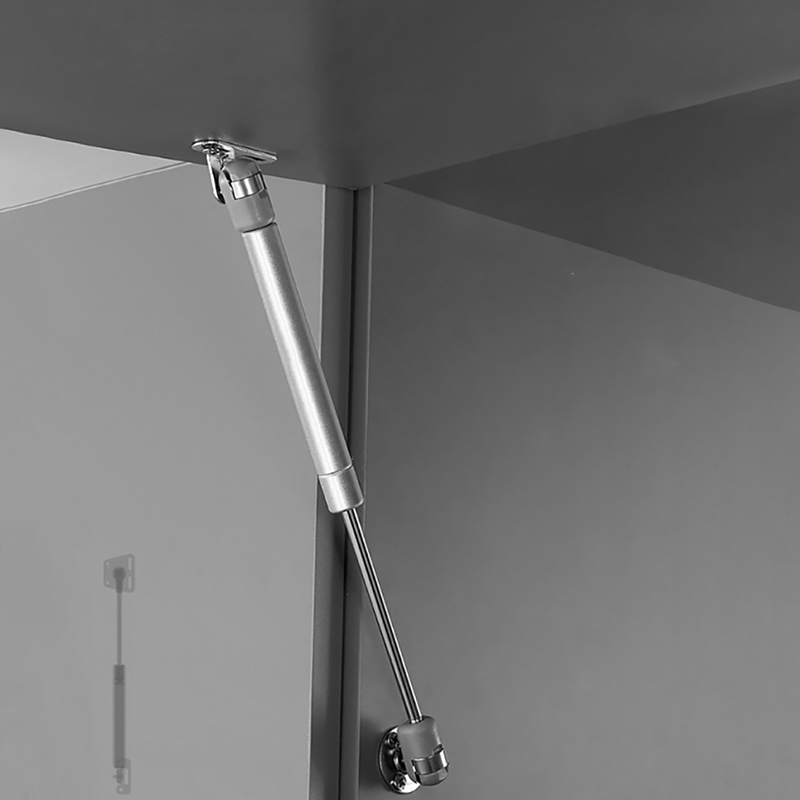
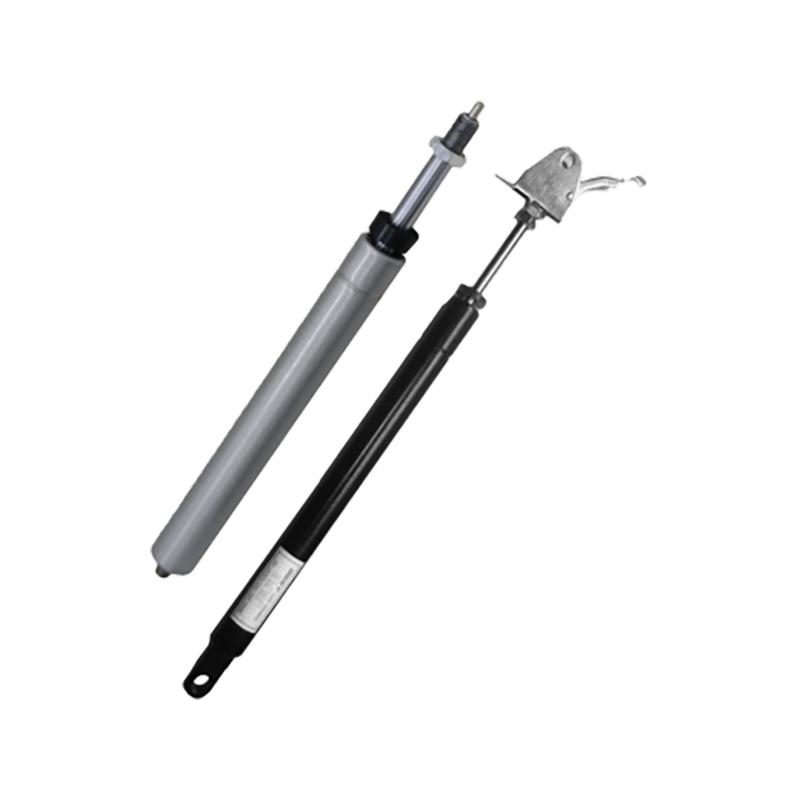
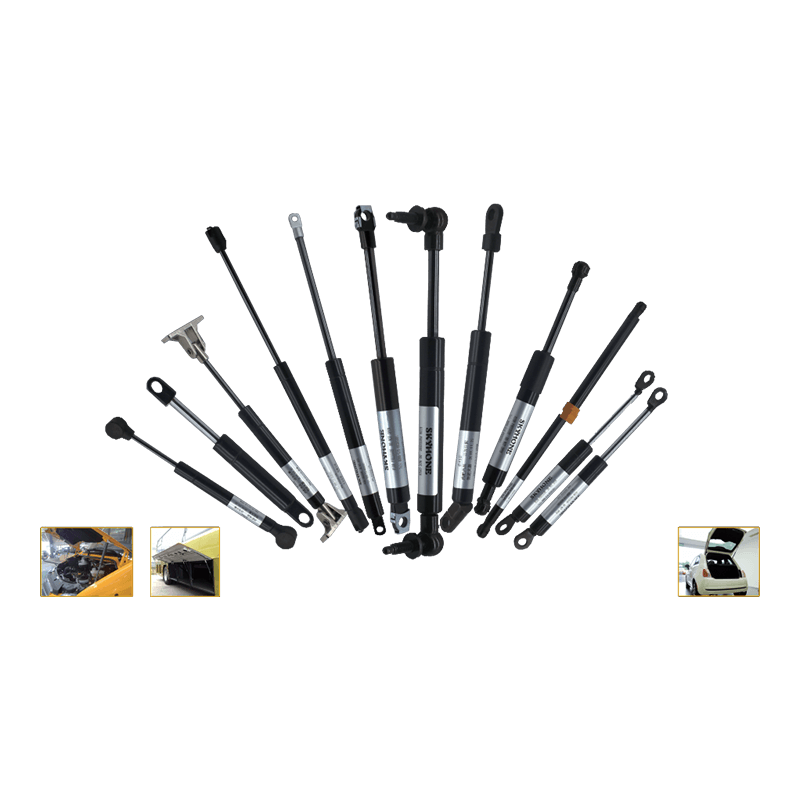
Free-stop gas spring (friction-type free-stop gas strut)
Construction and Material Options
Precision Steel Cylinders
Seamless precision steel tubing is a common cylinder option for free-stop gas springs. It provides a stable housing for the pressurized gas and internal friction components. Precision tubing supports consistent dimensional control, which is important for seal performance, rod guidance, and smooth movement.
Steel cylinders can be finished or treated according to the application. The required surface protection depends on the indoor or outdoor environment, expected humidity, appearance requirements, and customer specifications. Consistent surface preparation and coating control contribute to both visual quality and corrosion resistance.
Stainless Steel Cylinders
Stainless steel is an option for applications that require higher corrosion resistance or a particular appearance. It may be appropriate for humid environments, premium furniture, exposed hardware, or equipment where cleaning and surface durability are important.
Stainless steel does not eliminate the need for correct design. The seals, rod, brackets, fasteners, and surrounding structure should also be evaluated for environmental compatibility. A complete system approach helps prevent weak points caused by using corrosion-resistant tubing with unsuitable accessories.
Piston Rod and Sealing Components
The piston rod is exposed to movement and transfers force between the cylinder and the connected component. Its surface quality influences seal life, friction stability, and resistance to wear. A well-controlled rod finish can help maintain consistent operation over repeated cycles.
Seals help retain the nitrogen charge and protect internal components from contamination. Seal selection should consider temperature range, movement frequency, storage conditions, and the expected service life. In a free-stop gas spring, seal performance is particularly important because changes in gas pressure or friction can affect the user’s ability to hold a position.
Advanced Manufacturing and Engineering Strengths
SuZhou Skyhone Intelligent Technology Co., Ltd. is a professional manufacturing enterprise engaged in research and development, production, sales, and service. Based in Suzhou, a major manufacturing area in the Yangtze River Delta, the company benefits from access to a broad industrial supply chain, engineering resources, processing capabilities, and furniture-industry support.
This location provides a practical foundation for developing support components for adjustable furniture and intelligent office products. The surrounding manufacturing ecosystem can support material sourcing, metal processing, surface treatment, assembly, tooling, and product integration. For international customers, this can help create a more coordinated path from concept development to finished component supply.
Research and Development Integration
Free-stop gas springs should not be treated as generic parts when the final application has unusual dimensions, load conditions, or appearance requirements. Product development may involve selecting the cylinder material, defining the stroke, adjusting the force, evaluating the friction level, choosing end fittings, and confirming the installation geometry.
An integrated research and development process allows the supplier to consider these factors together. Instead of focusing only on nominal gas force, engineering teams can review the complete movement behavior and the practical experience expected by the end user.
This is particularly important for furniture manufacturers that are developing a new cabinet, monitor stand, or display product. The gas spring must fit the available space while also supporting the required movement. A component that performs well in isolation may not perform properly if installed at an unsuitable angle or connected to a flexible panel.
Precision-Oriented Production
The performance of a free-stop gas spring is closely related to dimensional consistency. Cylinder dimensions, piston rod alignment, seal placement, friction component tolerances, and end fitting positions can all influence the finished result.
A precision-oriented production process helps reduce variation between units. Controlled tube processing, accurate machining, consistent internal assembly, and carefully managed gas charging can support more predictable force and movement. These controls are valuable for manufacturers that need multiple gas springs to behave similarly within one furniture product or across a production batch.
For products using two or more gas springs, consistency becomes even more important. If the force or friction level differs significantly from one side to the other, the supported panel may twist, move unevenly, or feel unbalanced. Batch control and product matching can help improve the overall assembly experience.
Material and Configuration Flexibility
The company’s product capabilities include cylinder options such as seamless precision steel tubing and stainless steel. This gives customers a choice between different performance, appearance, and environmental requirements. It also supports the development of different product families for standard indoor furniture, premium cabinetry, humid environments, and exposed equipment.
Configuration flexibility may include different stroke lengths, force ratings, mounting ends, cylinder finishes, rod specifications, and installation orientations. The exact available range should be confirmed during technical discussions, but the general benefit is clear: a component supplier with configuration capability can better support custom furniture and equipment designs than a supplier limited to a small number of fixed catalog dimensions.
Production and Service Coordination
Manufacturing quality depends not only on machinery but also on coordination between engineering, production, inspection, packaging, and customer service. When these functions work together, technical requirements can be communicated more accurately from the initial inquiry through production and delivery.
For overseas customers, communication is particularly important. Drawings, sample approvals, force requirements, packaging details, and installation instructions should be confirmed clearly. A supplier that provides sales and service support alongside manufacturing can help reduce misunderstandings and shorten the development cycle.
Quality Factors That Affect Service Life
A free-stop gas spring is a precision support component, and several factors influence its useful life. Correct force selection is the first requirement. If the product is overloaded or repeatedly operated outside its intended range, the friction components, seals, mounting points, and surrounding furniture may experience unnecessary stress.
Installation alignment is also important. The cylinder and rod should move along the intended path without excessive side loading. Side forces can increase wear and create a rough or inconsistent operating feel. Brackets should be rigid enough to maintain alignment throughout the stroke.
Mounting hardware should be tightened according to the design requirements but should not restrict the joint from moving as intended. If a ball joint or pivot connection is used, it should be installed without binding. The supporting panel should also be sufficiently rigid so that it does not flex excessively during adjustment.
Environmental conditions must be considered. Dust, moisture, chemicals, salt air, and temperature changes may affect external surfaces, seals, or friction behavior. Material and surface choices should match the intended operating environment.
Routine inspection is generally straightforward. Users or maintenance personnel can check for unusual noise, visible damage, loose brackets, gas spring deformation, oil leakage, or a noticeable change in holding performance. If any of these conditions appears, the component should be inspected and replaced when necessary rather than forced to continue operating.
How to Select the Correct Free-Stop Gas Spring
Determine the Supported Load
Begin by identifying the weight of the panel, lid, display, platform, or other moving component. Include attached hardware, handles, screens, accessories, and any items that may remain on the platform during operation.
The center of gravity should also be considered. A large panel with a weight concentrated far from the hinge may require more supporting torque than a compact panel with the same total mass. The supplier may request the panel dimensions and hinge location to calculate an appropriate force range.
Define the Stroke and Opening Range
The stroke determines how far the rod can travel. It should be selected according to the required movement while allowing sufficient clearance at both ends. The opening angle and desired intermediate positions should be reviewed together with the stroke length.
A longer stroke is not automatically better. An unnecessarily long gas spring may occupy valuable internal space, interfere with adjacent parts, or create an unsuitable movement path. The component should be long enough for the application but compact enough to fit the structure safely.
Review Installation Geometry
The locations of the hinge and mounting points affect the leverage and the force required from the user. A gas spring installed at a favorable angle can support the panel more effectively than one installed in a less suitable position.
Designers should check the closed length, extended length, mounting angle, bracket clearance, and possible interference throughout the movement. A three-dimensional installation review is preferable for complex assemblies.
Select the Cylinder Material
Precision steel tubing may be suitable for many indoor applications, while stainless steel may be preferred for humid environments, visible premium products, or designs requiring additional corrosion resistance. Surface finish and color may also affect the visual integration of the component.
Choose the Desired Operating Feel
Users may prefer a lighter adjustment force for a laptop riser or a stronger holding effect for an overhead cabinet door. The desired balance between lifting assistance and manual resistance should be discussed before finalizing the specification.
The product should not be selected solely by asking whether it can hold the panel. It should also be evaluated for how it feels during opening, closing, stopping, and repeated adjustment. Samples and prototype testing can help confirm whether the selected configuration matches the intended user experience.
Design Considerations for Manufacturers
When integrating a free-stop gas spring into a finished product, manufacturers should reserve adequate space for the cylinder, rod travel, brackets, and pivot movement. The component must not collide with shelves, wiring, glass, hinges, cables, or adjacent panels as the product moves through its complete range.
The mounting structure should be strong enough to transfer the gas force and friction resistance without cracking, loosening, or deforming. Thin sheet metal or lightweight furniture board may need reinforcement around the bracket location. In glass-front products, the load should be distributed through an appropriate frame rather than applied directly to unsupported glass.
Designers should also consider the appearance of the gas spring when the product is open. Some installations conceal the component, while others leave it visible. If visible, cylinder material, finish, rod appearance, and end fitting style can contribute to the overall product aesthetic.
For products sold internationally, documentation should identify the recommended installation orientation, operating limits, storage conditions, and maintenance guidance. Clear instructions can reduce incorrect installation and improve customer satisfaction after delivery.
Why This Product Is Valuable for Intelligent Office Solutions
Modern office furniture increasingly emphasizes adaptability. A workstation may need to support sitting and standing, shared use, compact storage, video conferencing, and changing display requirements. Electric linear actuators are suitable for powered movement, but not every adjustable component requires a motor, control panel, or electrical connection.
A free-stop gas spring provides a mechanical alternative for smaller and lighter moving parts. It can be used in monitor platforms, laptop risers, flip-up work surfaces, and adjustable display panels where manual operation is acceptable. This may reduce system complexity while still providing flexible positioning.
Because it does not require a power supply, the product can be used in areas where wiring is inconvenient or where a silent, low-maintenance mechanism is preferred. It can also complement electric standing desks and other powered furniture by handling secondary adjustment functions such as storage doors, monitor supports, or accessory platforms.
The combination of manual control and assisted movement supports a natural user experience. The user remains in direct control of the position, while the gas spring reduces the effort needed to move the component.
Application Examples
Adjustable Overhead Work Cabinet
An overhead cabinet used above a workbench can be fitted with two free-stop gas springs. When the door is lifted, the gas force assists the movement. The friction mechanism allows the user to stop the door at a convenient height, which can be helpful when the user is standing close to the cabinet or when the door must remain partially open.
The design should include rigid side panels, balanced left and right mounting, and sufficient clearance around the hinges. For a wide door, the use of two matched gas springs can help maintain even movement.
Height-Adjustable Monitor Platform
A monitor platform can use a free-stop gas spring to provide manual height adjustment. The platform may be raised for standing work, lowered for seated work, or positioned between these levels. The free-stop mechanism helps maintain the selected position without a separate lock.
The platform should be tested with the complete monitor weight and any accessories. Cable routing must be arranged so that cables do not restrict movement or apply side loads to the platform.
Flip-Up Presentation Panel
A presentation panel in a conference room or training environment may need to move between a stored position and an angled viewing position. A free-stop gas spring can assist the panel while allowing the presenter to adjust it manually according to room layout and audience position.
If the panel is used frequently, cycle testing should be performed to evaluate friction stability, mounting durability, and the consistency of the operating force.
Testing and Validation
Before mass production, manufacturers should validate the gas spring in the actual product structure. Prototype testing should include the complete panel, hinge, brackets, fasteners, cables, and accessories. Testing only the gas spring on a workbench may not reveal problems caused by installation geometry or structural flexibility.
Functional checks should confirm that the panel can be lifted, lowered, and stopped at the required positions. The user should be able to operate it without excessive force. The panel should not drift noticeably after release under normal conditions.
Repeated-cycle testing can help assess the durability of the assembly. The number of cycles should reflect the expected application. A cabinet used several times per day has different requirements from a monitor stand adjusted dozens of times each day.
Environmental testing may be considered for products exposed to humidity, temperature changes, dust, or cleaning agents. The appropriate test plan depends on the intended market and installation environment. Material selection, surface treatment, sealing, and packaging should be reviewed as part of the complete validation process.
Packaging, Delivery, and Customer Support
Gas springs should be protected from impact, bending, contamination, and uncontrolled movement during transportation. Packaging should keep components separated where necessary and protect mounting ends and exposed rods. Correct labeling helps customers identify force ratings, dimensions, configurations, and installation batches.
For custom projects, technical documents may include product drawings, dimensional specifications, installation recommendations, sample information, and inspection requirements. Clear documentation supports communication between the component supplier, furniture manufacturer, assembly team, and final customer.
SuZhou Skyhone Intelligent Technology Co., Ltd. provides manufacturing, sales, and service support for standing desk and adjustable furniture solutions. Its position in Suzhou’s manufacturing environment, combined with product development and production capabilities, makes it suitable for customers seeking coordinated support for customized furniture hardware and office equipment components.
Customers can discuss product dimensions, material options, force requirements, installation details, and application conditions directly with the company before placing a production order. This technical communication is important because free-stop performance depends on the relationship between the gas spring and the finished structure.
Frequently Asked Questions
What is the main difference between a free-stop gas spring and a standard gas spring?
A standard gas spring generally provides extension assistance and tends to move toward a designed open or extended position. A free-stop gas spring combines gas support with internal friction so that the user can stop the connected component at different positions throughout the stroke.
Does a free-stop gas spring require a release lever?
No. Its intended operation is direct manual adjustment. The user pushes or pulls the supported panel to change its position. No external lever, cable, unlocking switch, or release button is required.
Can it lock at every angle?
It is designed to hold at manually selected positions within its effective stroke, subject to the load, installation geometry, friction setting, and application conditions. The exact holding behavior should be confirmed through application testing and correct specification.
Is a free-stop gas spring suitable for heavy doors?
It may be suitable for certain doors, but the product must be matched to the door weight, dimensions, center of gravity, hinge position, and required operating force. Heavy or wide doors may require two or more gas springs and reinforced mounting structures.
Can it be used with glass-front furniture?
Yes, it can be integrated into aluminum-framed or other supported glass-front furniture. The gas spring should be connected to a suitable structural frame or reinforced bracket. Loads should not be concentrated directly on unsupported glass.
Which cylinder material should be selected?
Seamless precision steel tubing can be suitable for many indoor furniture and office applications. Stainless steel may be preferred where additional corrosion resistance, a premium appearance, or greater environmental protection is required. The complete hardware system should be reviewed before final selection.
How should the force rating be calculated?
The calculation should consider the moving weight, center of gravity, hinge location, mounting points, opening angle, and desired operating feel. A supplier can help determine the appropriate force by reviewing drawings or application data. Selecting only by total weight may produce an unsatisfactory result.
Can one free-stop gas spring be used on a wide panel?
Sometimes, but a wide panel may move unevenly or twist if the support is positioned on only one side. Two matched gas springs are often considered for wider or heavier panels. The final design depends on the structure, load distribution, and mounting arrangement.
What causes a gas spring to feel too hard or too loose?
Possible causes include an incorrect force rating, unsuitable friction level, unfavorable mounting geometry, side loading, misalignment, structural flexing, temperature conditions, or wear. The complete installation should be evaluated rather than changing the gas spring without checking the surrounding mechanism.
Are free-stop gas springs maintenance-free?
They are generally designed for low-maintenance use, but the installation should still be inspected periodically. Check mounting hardware, brackets, visible damage, leakage, unusual noise, and changes in movement or holding performance. Damaged components should be replaced.
Can the product be customized?
Customization may involve cylinder material, stroke, force, mounting ends, finish, and other configuration requirements. Availability depends on the project. Customers should provide drawings, sample dimensions, load information, and expected operating conditions for technical evaluation.
How can manufacturers improve product reliability?
Manufacturers should select the gas spring according to the complete mechanism, maintain accurate mounting alignment, reinforce attachment points, prevent side loading, test the product through its full range of movement, and conduct repeated-cycle validation before mass production.
Conclusion
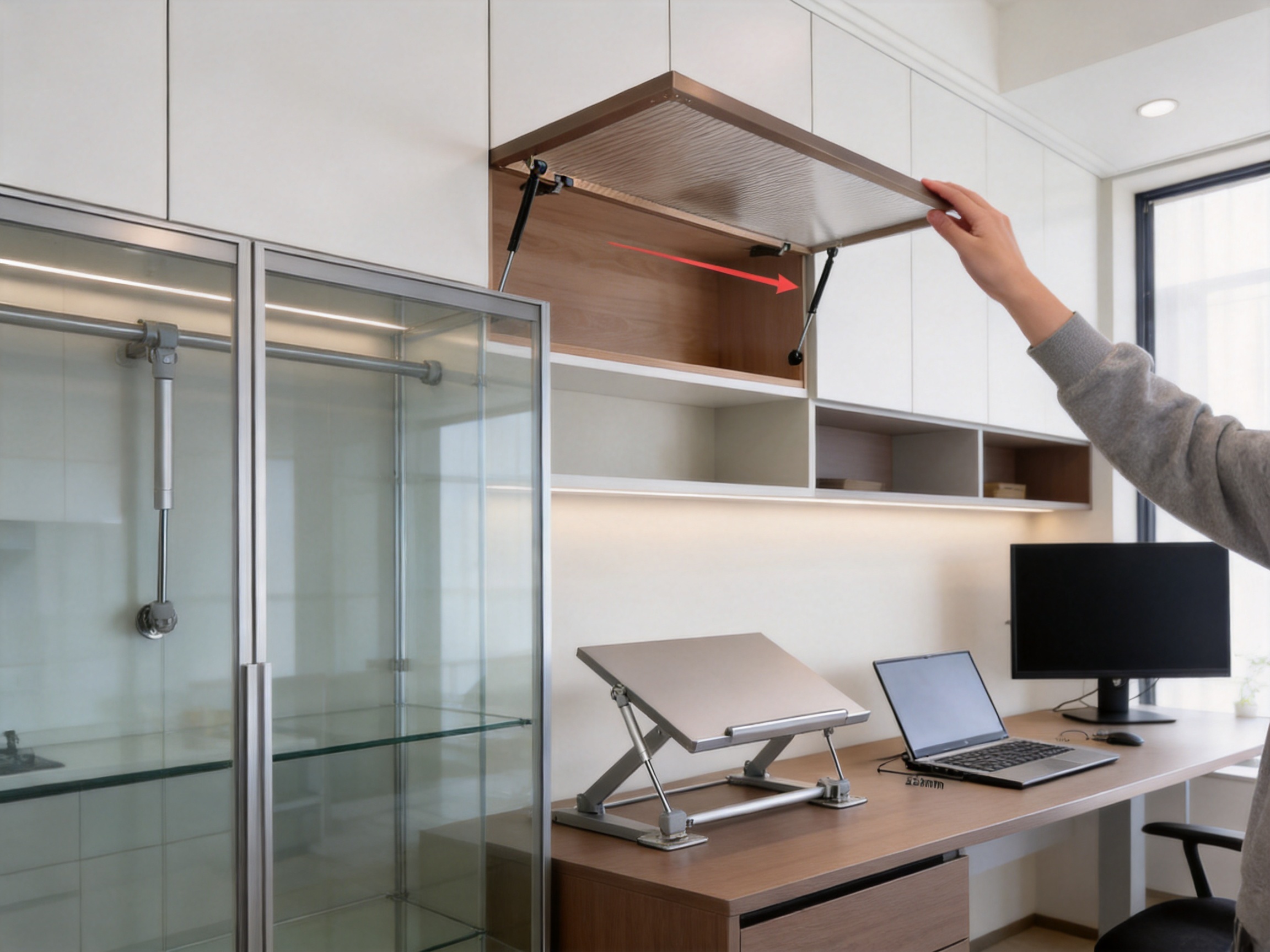
Free-stop gas springs provide a practical combination of lifting assistance, friction-based holding, smooth manual adjustment, and clean product integration. Their ability to remain at a user-selected position makes them especially valuable for overhead cabinet doors, flip-up furniture panels, monitor lift stands, laptop risers, flip-up TV mounts, and adjustable display equipment.
Compared with standard free-extension gas springs, they offer greater positioning flexibility. Compared with controllable self-locking gas springs, they eliminate the need for external release controls. Compared with basic friction hinges, they can provide useful gas-assisted lifting for appropriately sized panels and platforms.
The quality of the final result depends on more than the gas spring itself. Force selection, friction behavior, stroke, installation geometry, mounting strength, material choice, environmental conditions, and repeated-cycle requirements must all be considered. A supplier with research and development, production, sales, and service capabilities can help manufacturers coordinate these factors more effectively.
With its manufacturing base in Suzhou and its focus on adjustable furniture and intelligent office solutions, SuZhou Skyhone Intelligent Technology Co., Ltd. can support customers seeking free-stop gas springs for custom furniture and equipment projects. Precision steel tubing, stainless steel options, application-oriented configuration, and coordinated technical service provide a foundation for developing reliable and user-friendly products.
References
1. General principles of compressed-gas support struts and furniture positioning hardware.
2. Engineering guidance for gas spring force selection, hinge torque, and installation geometry.
3. Design practices for adjustable office furniture, monitor platforms, and ergonomic workstation accessories.
4. Manufacturing considerations for precision steel tubing, stainless steel components, seals, piston rods, and friction mechanisms.
5. General recommendations for mechanical product validation, repeated-cycle testing, mounting safety, and environmental suitability.
6. Product information supplied for free-stop gas springs, friction-type gas springs, and arbitrary-stop support struts.
7. Company information supplied for SuZhou Skyhone Intelligent Technology Co., Ltd. and its adjustable furniture manufacturing capabilities.
Product: Free-stop gas spring (friction-type free-stop gas strut)


- Contact Info
-
-
 Phone+86-15950656125
 -
 Email
Email -
 AddressRoom 1007-1, South Building, Suyue Plaza, Suzhou Industrial Park, Suzhou City, Jiangsu Province, China
-
- Products
- Follow Us
- Need help? Please contact us
Copyright ©
SuZhou Skyhone Intelligent Technology Co., Ltd.
All Rights Reserved.
Privacy
Custom Ergonomic Adjustable Office Tables Manufacturers

