

 English
  русский
  Español
  عربى
عربى 
Content
- 1 Product Overview
- 2 Core Specifications
- 3 Ergonomic Value in Daily Work
- 4 Gas Spring Lifting: Smooth, Simple, and Power-Free
- 5 Double-Leg Structure and Stability
- 6 Compact Tabletop for Efficient Space Use
- 7 Black Powder-Coated Finish
- 8 Mobility with Lockable Casters
- 9 Advantages Over Many Competing Desk Solutions
- 10 Manufacturing Strength and Process Quality
- 11 Research and Development Orientation
- 12 Production Advantages from a Strong Industrial Region
- 13 Quality Control for User Confidence
- 14 Application Scenarios
- 15 User Experience and Daily Operation
- 16 Maintenance Benefits
- 17 Sustainability and Efficient Use
- 18 Procurement Considerations
- 19 Why This Desk Represents a Strong Market Choice
- 20 Q&A Section
- 20.1 What is the height adjustment range of the TH-14 desk?
- 20.2 Does the desk require electricity?
- 20.3 Why is pneumatic adjustment useful?
- 20.4 Is the desk suitable for shared workspaces?
- 20.5 How does the double-leg design help?
- 20.6 What is the tabletop size?
- 20.7 What material is used for the frame?
- 20.8 What type of surface finish does the frame have?
- 20.9 Can the desk be moved easily?
- 20.10 Where can the TH-14 be used?
- 20.11 How does it compare with an electric height-adjustable desk?
- 20.12 Is the desk suitable for home offices?
- 21 References
- 22 Product: TH-14 Double-Leg Pneumatic Height-Adjustable Desk
Double-Leg Pneumatic Height-Adjustable Desk for Flexible Workspaces
2026-06-27
Modern work environments are changing quickly. Offices, laboratories, studios, training rooms, and home work areas now need furniture that can adapt to different tasks, users, and layouts without requiring complicated installation or permanent placement. The TH-14 Double-Leg Pneumatic Height-Adjustable Desk is designed for this exact type of flexible environment. With a gas spring lifting system, a 760 mm to 1100 mm height adjustment range, a compact 980 mm by 560 mm tabletop, a strong iron structure, a black powder-coated finish, and mobile caster wheels, it provides a practical balance of ergonomics, mobility, durability, and simple daily operation.
This desk belongs to the pneumatic height-adjustable table category, offering a non-electric alternative to motorized sit-stand desks. Instead of relying on power cables, control boxes, or motors, it uses a gas spring mechanism to support smooth height movement. This makes it suitable for users who want an adjustable workstation with fewer electrical components, lower maintenance complexity, and easier relocation. The dual-leg frame improves stability compared with many single-column mobile desks, while the caster base allows the workstation to be moved wherever it is needed.
For buyers comparing adjustable desks, the TH-14 stands out because it combines the most requested functions into a compact and efficient format: stepless height adjustment, sit-to-stand usability, lockable mobility, a stable metal frame, and a clean black finish. It is especially valuable in spaces where workstations must frequently shift between individual work, team collaboration, equipment support, and temporary task surfaces. Instead of being limited to one fixed position, the desk can support different workflows throughout the day.
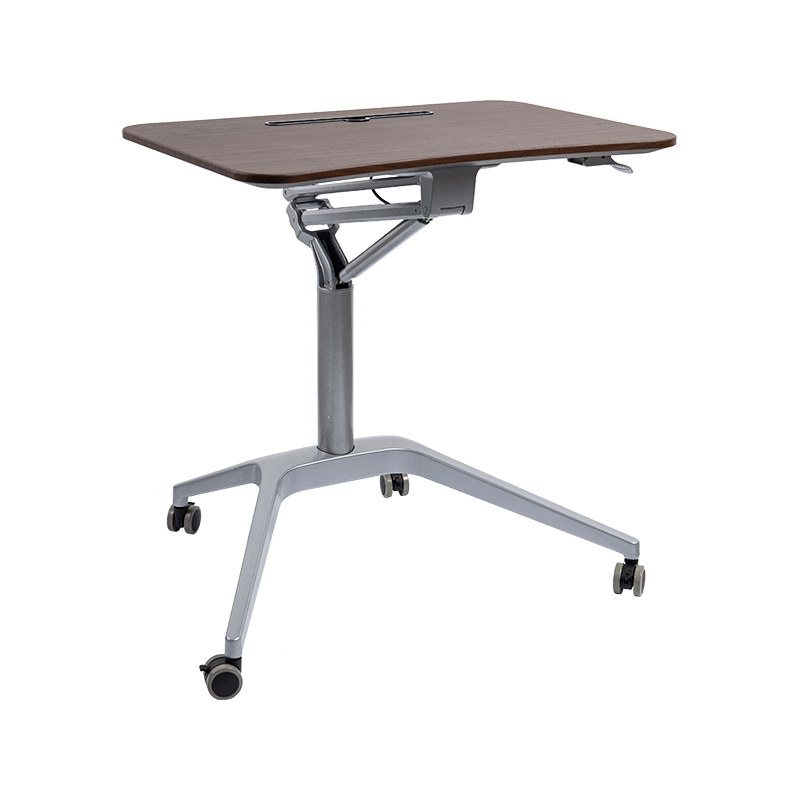
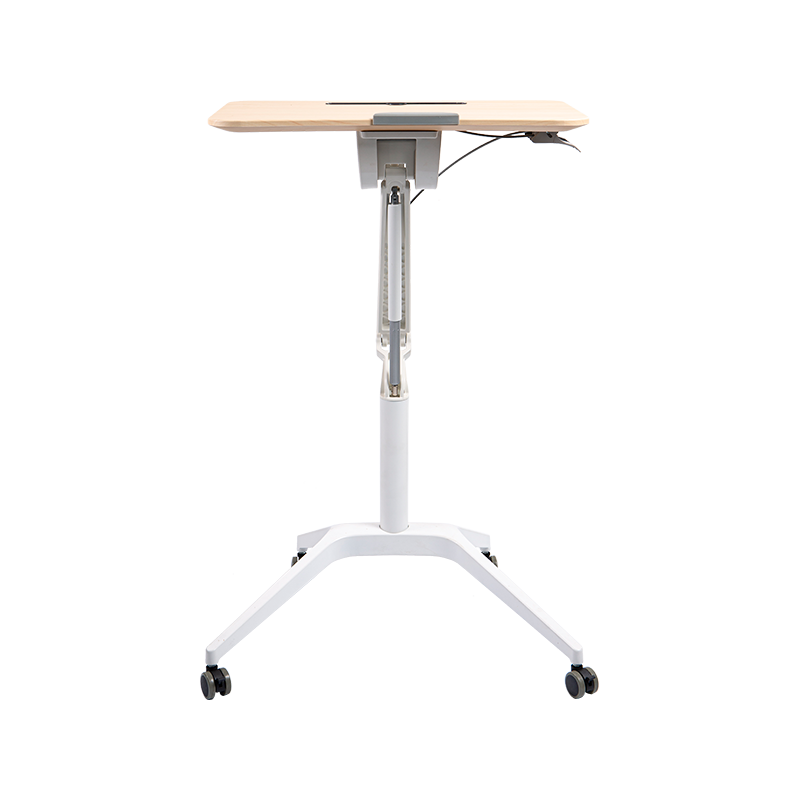
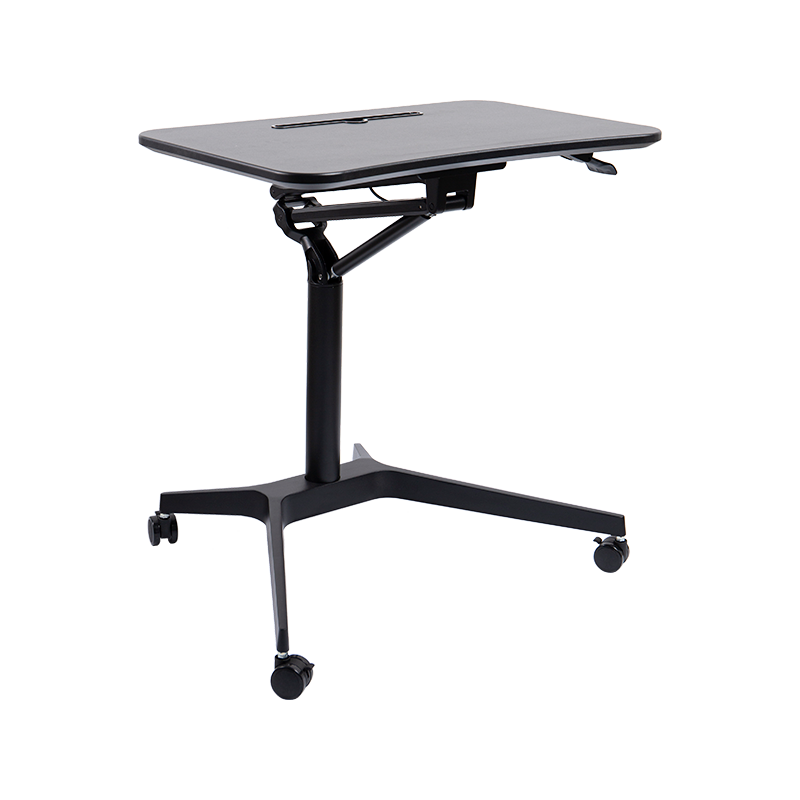
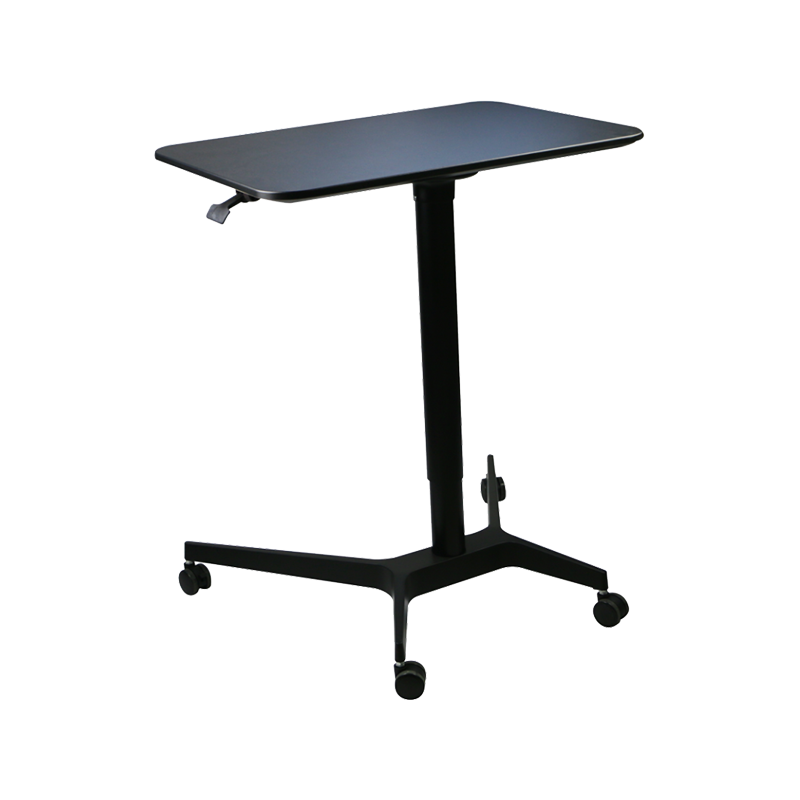
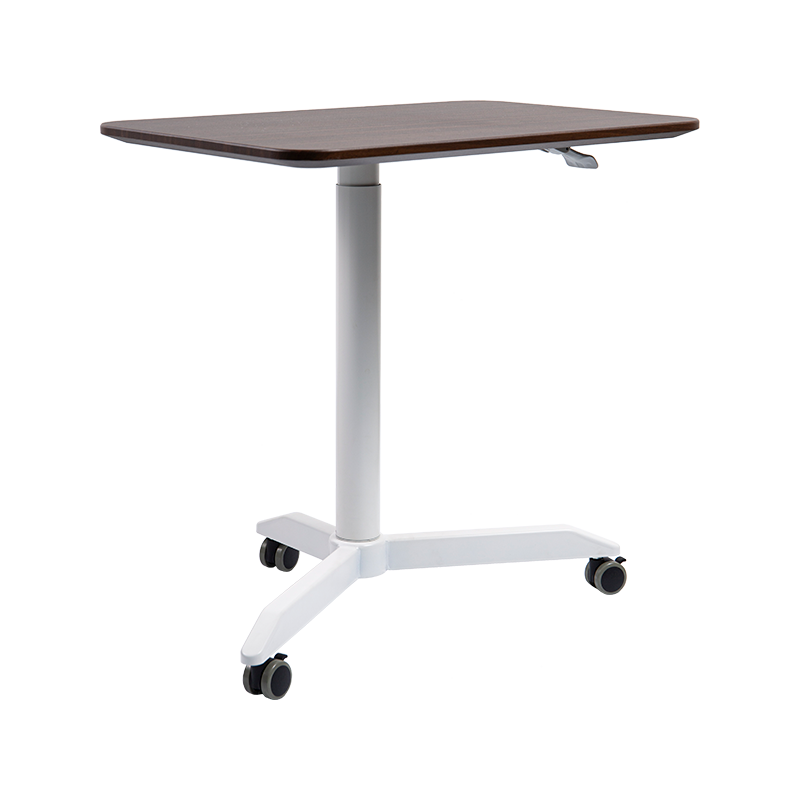
TH-14 Double-Leg Pneumatic Height-Adjustable Desk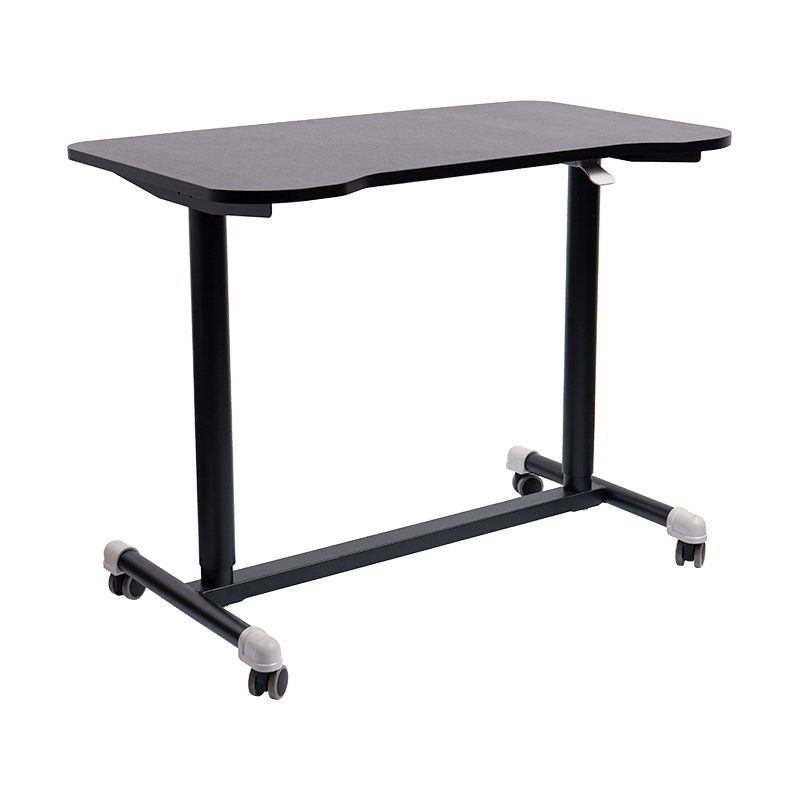
Product Overview
The TH-14 Double-Leg Pneumatic Height-Adjustable Desk is designed as a practical work surface for active work routines. Its lifting range of 760 mm to 1100 mm enables users to work from a seated posture, a semi-standing posture, or a standing posture depending on task requirements and personal comfort. Unlike desks with fixed height settings, the pneumatic system allows continuous adjustment within the range, helping users choose the most suitable working height rather than being limited to preset steps.
The 980 mm by 560 mm tabletop offers enough space for a laptop, monitor, documents, small tools, writing materials, measuring instruments, or lightweight workstation accessories. At the same time, it remains compact enough for offices with limited floor area, laboratory aisles, temporary meeting zones, classrooms, and home study corners. This balance between usable surface area and space-saving dimensions is an important advantage for customers who need efficient furniture rather than oversized installations.
The desk frame is made of iron, which provides structural strength and reliable support for daily use. The surface is treated with black powder coating, a finishing process commonly chosen for metal furniture because it creates a uniform protective layer. This finish contributes to wear resistance, corrosion resistance, and an orderly appearance suitable for professional interiors.
The base is equipped with four swivel casters. Two casters include locking mechanisms, while two remain unlocked for easy rolling movement. This combination allows users to move the desk when needed and secure it when the desk is in position. In dynamic environments, this mobility is more than a convenience; it allows a room to transform quickly from individual workstations to collaborative layouts, training arrangements, equipment support zones, or temporary project areas.
Core Specifications
Product Type |
Double-leg pneumatic height-adjustable desk |
Height Adjustment Range |
760 mm to 1100 mm |
Tabletop Size |
980 mm by 560 mm |
Main Material |
Iron |
Surface Color |
Black |
Surface Treatment |
Powder coating |
Caster Configuration |
Two casters with locks and two casters without locks |
Lifting Principle |
Gas spring lifting |
Primary Applications |
Offices, laboratories, studios, home study areas, training rooms, and mobile workstations |
Ergonomic Value in Daily Work
One of the strongest advantages of the TH-14 is its contribution to ergonomic flexibility. Prolonged sitting has become a major concern in modern work routines, and many organizations now encourage employees to alternate between sitting and standing during the day. A height-adjustable desk supports this habit by allowing the user to change posture without changing work location or moving equipment to another station.
The 760 mm lower position is suitable for many seated tasks, including writing, keyboard use, reading, inspection, and small equipment operation. The 1100 mm upper position supports standing work for users who need to review documents, hold short discussions, use a laptop, conduct demonstrations, or perform light technical tasks. Because the adjustment is stepless, users can fine-tune the height based on their body dimensions, chair height, footwear, working tools, or task type.
Compared with fixed desks, the TH-14 reduces the need to compromise. A fixed desk may be too low for one user and too high for another. In shared workspaces, this creates discomfort and inefficiency. The TH-14 solves this issue by giving each user control over the working height. In offices, this makes hot-desking and flexible seating more comfortable. In laboratories, it helps technicians adjust the work surface for different instruments or working postures. In studios, it allows designers, makers, and creators to shift between focused sitting and hands-on standing activity.
Another ergonomic benefit is movement encouragement. Because the desk height can be changed quickly and without electrical power, users are more likely to make posture changes throughout the day. An adjustable desk only improves ergonomics when people actually use its adjustment function. The simple pneumatic operation makes adjustment accessible and intuitive, which supports more frequent use.
Gas Spring Lifting: Smooth, Simple, and Power-Free
The TH-14 uses a gas spring lifting mechanism. Gas spring technology is widely used in adjustable furniture and equipment because it provides controlled support during movement. In a desk application, the gas spring helps the tabletop move up and down smoothly under manual operation. This design is especially attractive when users want the benefits of height adjustment without the complexity of electric motors.
Compared with electric height-adjustable desks, a pneumatic desk has several practical advantages. It does not require a power outlet, which means it can be placed anywhere in a room without cable planning. It does not need a control box, power adapter, or motor wiring, which reduces component complexity. It can be moved between rooms without disconnecting cables. It also avoids the risk of electrical malfunction caused by unstable power conditions, cable damage, or liquid exposure in certain work environments.
The power-free design is particularly useful for mobile workstations. A desk with casters should be easy to relocate, but an electric desk often remains tied to a power source. Users may need to unplug it, manage cables, and find another outlet. The TH-14 avoids this issue. When the casters are unlocked, the desk can be moved freely. When the new location is selected, the locking casters secure the workstation in place. Height adjustment remains available at all times.
Gas spring lifting also contributes to quiet operation. Electric desks can produce motor noise during movement, while pneumatic adjustment is generally quieter. In shared offices, libraries, medical support spaces, training rooms, and studios, quiet adjustment can be an important comfort factor. It allows the user to change desk height without disrupting nearby colleagues.
Double-Leg Structure and Stability
Many mobile height-adjustable desks use a single-column design to save cost and reduce weight. While single-column desks can be useful for very small surfaces, they may provide less stability when the desktop is wider or when users apply side pressure during work. The TH-14 uses a double-leg structure, which improves balance and support across the tabletop. This is a key competitive advantage for users who want a mobile desk that still feels reliable during daily tasks.
The dual-leg layout helps distribute load more evenly. When a user types, writes, places equipment on the desk, or leans lightly on the work surface, the two-leg frame provides better resistance to wobbling than many narrow single-support alternatives. For office workers, this creates a more comfortable typing and writing experience. For laboratory and studio users, stability helps when handling tools, samples, or devices that require careful positioning.
The iron construction further supports stability. Iron is valued in furniture frames because it can provide strength and rigidity when properly formed and treated. In the TH-14, the metal frame creates a solid foundation for repeated height adjustments and daily movement. The combination of dual legs, metal construction, and lockable casters gives the desk a dependable physical presence without sacrificing mobility.
Stability is also influenced by the desk footprint and caster placement. Four swivel casters allow the base to support movement from different directions. Once two casters are locked, the desk resists unwanted rolling during work. This is important in environments with smooth floors, where non-locking mobile furniture may drift under small forces. With locking casters, users can enjoy both mobility and security.
Compact Tabletop for Efficient Space Use
The tabletop size of 980 mm by 560 mm is one of the TH-14’s most practical features. It is large enough for common work tasks yet compact enough to fit into tight spaces. This matters because many modern workplaces do not have unlimited floor area. Businesses need furniture that supports productivity without making rooms feel crowded or difficult to reorganize.
In an office, the tabletop can support a laptop, a compact monitor, keyboard, mouse, notebook, phone, and essential documents. In a home study area, it can function as a primary desk for remote work or as a secondary adjustable station for reading and video calls. In laboratories, it can hold small instruments, testing materials, inspection devices, or documentation. In studios, it can serve as a mobile surface for sketching, craft work, digital devices, or project materials.
The compact depth of 560 mm is especially useful in narrow rooms, near walls, or beside existing workstations. The desk can be positioned as a side table, temporary standing station, presentation surface, or mobile equipment platform. Unlike larger sit-stand desks that require dedicated installation space, the TH-14 can complement existing furniture layouts.
Space efficiency also supports cost efficiency. Instead of purchasing several fixed tables for different uses, organizations can use mobile height-adjustable desks to create adaptable work areas. A single desk can serve different users and tasks during the same day. This makes the TH-14 a practical choice for offices, education spaces, healthcare support zones, product development rooms, and multipurpose work environments.
Black Powder-Coated Finish
The black powder-coated finish gives the TH-14 a professional appearance while also protecting the metal surface. Powder coating is a manufacturing process in which dry powder is applied to metal and cured to form a durable surface layer. Compared with many liquid coating methods, powder coating can provide good coverage, uniform thickness, and strong adhesion when properly processed.
For daily users, the benefits are easy to understand. A powder-coated surface resists common wear better than untreated metal and helps reduce corrosion risk in normal indoor conditions. The black color is also versatile. It can match office interiors, laboratory equipment, industrial-style studios, and modern home workspaces. It presents a clean and neutral look without drawing unnecessary attention.
From a competitive perspective, the finish matters because furniture in shared environments experiences frequent contact. Desks may be moved, touched, cleaned, and adjusted repeatedly. A durable surface helps preserve appearance and reduces the need for early replacement. For facility managers and procurement teams, long-lasting finish quality contributes to total value over the product’s life cycle.
Mobility with Lockable Casters
The caster system is one of the most important reasons to choose the TH-14. Four swivel casters allow the desk to be moved easily across suitable indoor floors. Two casters include locks, enabling the desk to remain stable when positioned. This design supports quick reconfiguration and improves the desk’s usefulness in dynamic spaces.
In a traditional office, desks often stay in one place for years. However, many organizations now use flexible layouts, temporary project zones, shared workstations, and activity-based working. Mobile desks allow teams to change the room arrangement without calling maintenance staff or using tools. A manager can create a temporary standing meeting area, a trainer can set up a teaching station, or an employee can move the desk closer to natural light or a collaboration area.
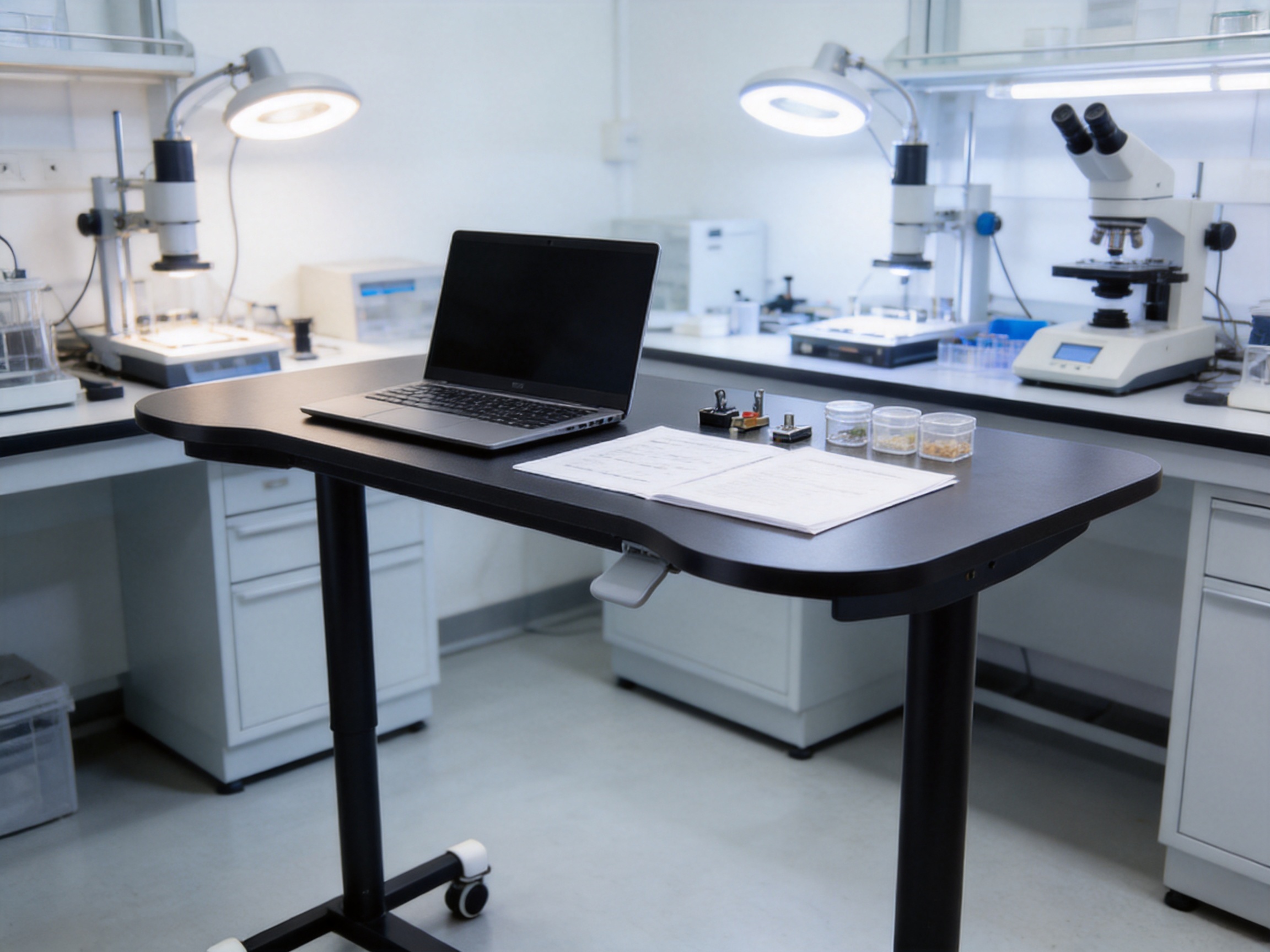
In laboratories, mobility can be even more valuable. A work surface may be needed near different instruments at different times. A technician can move the desk to support documentation, inspection, sample preparation, or temporary equipment placement. When the task is complete, the desk can be moved away to keep aisles clear.
In studios and maker spaces, work changes constantly. A mobile desk can follow the project. It can function as a laptop station during digital design, a standing surface during assembly, or a movable support table during photography, prototyping, or review. The lockable casters help secure the desk during detail work.
Advantages Over Many Competing Desk Solutions
The TH-14 competes with several types of workstation products, including fixed-height desks, electric sit-stand desks, single-column mobile desks, folding tables, and basic utility carts. Its advantage is not based on one feature alone but on the combination of pneumatic height adjustment, dual-leg stability, mobility, compact dimensions, durable metal construction, and a clean finish.
Compared with Fixed-Height Desks
Fixed-height desks are simple and familiar, but they cannot adapt to different users or postures. If the height does not fit the user, discomfort may occur during long working periods. Fixed desks also do not support easy transitions between sitting and standing. The TH-14 offers a more flexible solution because users can set the height according to posture and task. This makes it more suitable for shared workspaces, flexible offices, laboratories, and home users who want healthier working habits.
Compared with Electric Sit-Stand Desks
Electric desks are popular, but they depend on power, cables, control systems, and motors. These components can increase cost, weight, maintenance concerns, and placement limitations. The TH-14 provides height adjustment without electricity. It is easier to move, simpler to maintain, and less dependent on surrounding infrastructure. For users who do not need programmable height memory or heavy-duty electric lifting, the pneumatic system can be a more practical and efficient choice.
Compared with Single-Column Mobile Desks
Single-column desks may be lightweight, but they often provide less lateral stability. This can be noticeable during typing, writing, or equipment use. The TH-14’s double-leg design offers improved support and a more reliable working feel. For users who value both mobility and stability, the dual-leg construction is a strong advantage.
Compared with Folding Tables
Folding tables are easy to store, but they usually lack ergonomic adjustment and may not feel stable during focused work. They are often used for temporary events rather than daily productivity. The TH-14 provides a more professional and ergonomic alternative. It can be moved when needed, locked in place, and adjusted to a comfortable height.
Compared with Basic Utility Carts
Utility carts are mobile but are not designed primarily for ergonomic work. Their surface heights are usually fixed, and their appearance may not suit offices or professional interiors. The TH-14 offers mobility while remaining a true work desk, with a suitable tabletop, adjustable height, and clean visual design.
Manufacturing Strength and Process Quality
The value of a height-adjustable desk depends not only on its design but also on how consistently it is manufactured. SuZhou Skyhone Intelligent Technology Co., Ltd. is deeply engaged in the research, development, production, sales, and service of standing desks. Located in Suzhou, within the Yangtze River Delta manufacturing region, the company benefits from a strong furniture industry base, mature supply chain resources, and intelligent manufacturing capability.
The company’s manufacturing strengths are especially relevant for products such as the TH-14, where frame accuracy, lifting performance, surface treatment, assembly consistency, and caster reliability all affect user experience. A pneumatic height-adjustable desk must move smoothly, remain stable at different heights, and withstand repeated adjustment. These requirements demand careful control over material selection, component processing, finishing, and final inspection.
Advanced manufacturing begins with product engineering. The TH-14’s double-leg structure, caster configuration, and gas spring lifting principle must be matched to achieve smooth motion and stable support. Engineering teams evaluate frame geometry, connection points, lifting balance, desktop size, surface treatment needs, and user operation. This design-centered approach helps the product meet practical usage expectations rather than simply meeting basic appearance requirements.
Material processing is also important. Iron frame components must be cut, shaped, drilled, welded, and finished with accuracy. If the frame geometry is inconsistent, the desk may feel unstable or difficult to assemble. If holes and connection points are not properly aligned, installation efficiency and product reliability may suffer. A professional manufacturer uses controlled production methods to improve repeatability and reduce variation between batches.
Surface treatment is another critical process. Powder coating requires preparation, application, and curing. Before coating, metal surfaces typically need cleaning and pretreatment to support adhesion. During coating, the powder must be applied evenly. During curing, temperature and time must be managed to create a strong protective layer. A reliable powder-coated finish improves both appearance and durability.
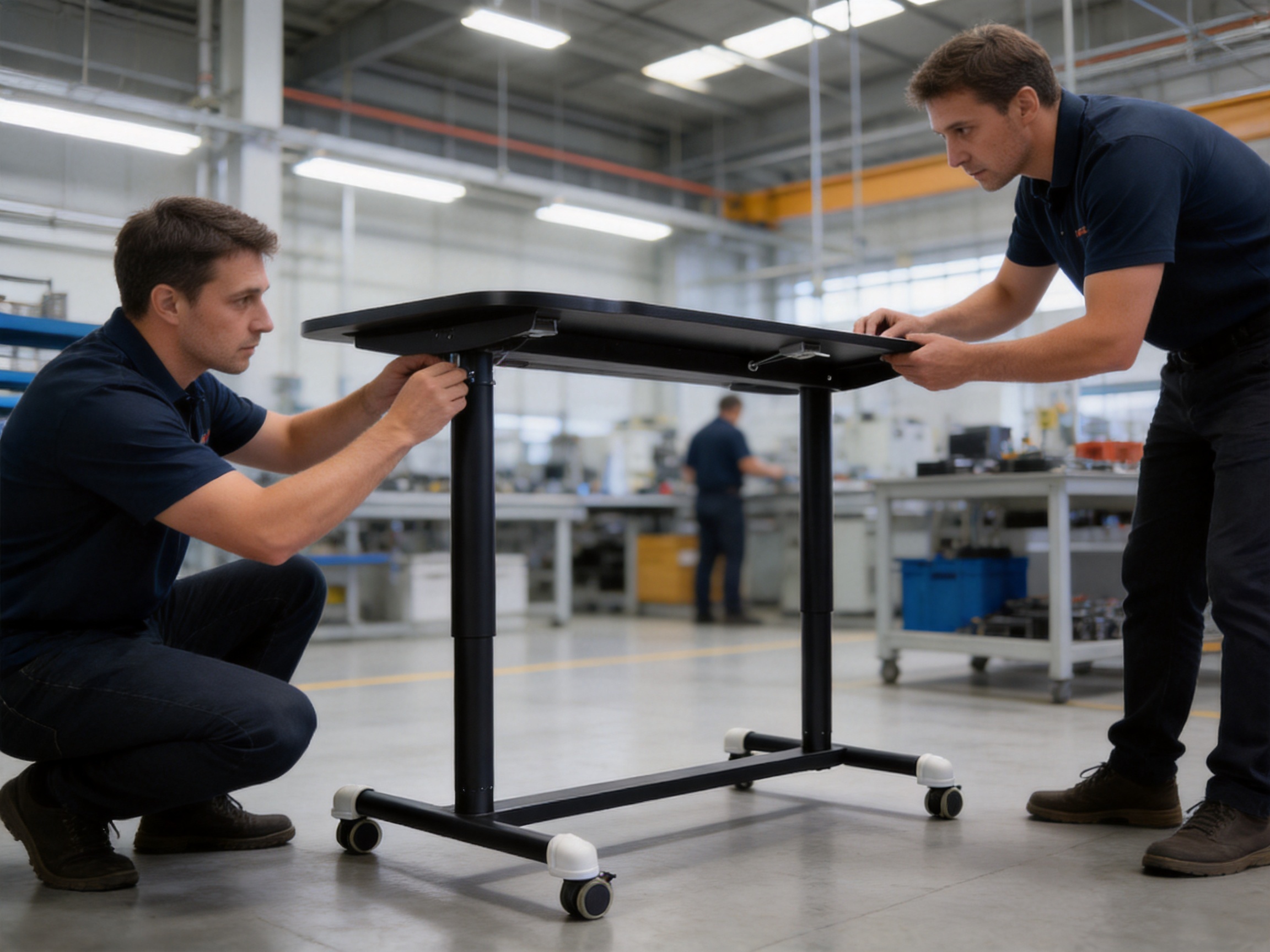
Assembly and inspection complete the process. The gas spring system must be installed correctly so that height movement is smooth and controlled. Casters must roll and lock properly. Frame joints must be secure. The tabletop must be properly fitted to the support structure. Final inspection helps ensure that customers receive a desk that performs as intended.
Research and Development Orientation
A strong adjustable desk manufacturer does more than produce existing designs. It continuously studies user habits, workplace changes, ergonomic expectations, and market needs. The TH-14 reflects several important trends: the need for sit-stand flexibility, demand for power-free adjustment, increasing use of mobile furniture, and preference for compact workstations that fit multifunctional spaces.
Research and development in this category includes gas spring selection, lifting balance, frame stability, handle operation, caster performance, coating durability, packaging efficiency, and product appearance. Each detail affects daily use. For example, if the lifting force is poorly matched, the desk may be difficult to raise or lower. If the caster quality is insufficient, mobility and locking performance may decline. If the desktop is too large for the base, stability may be compromised. R&D helps balance these factors.
The company’s focus on standing desk solutions allows it to develop products that match real ergonomic and operational needs. In a competitive market, specialization is important. Manufacturers with specific experience in adjustable desks better understand the relationship between lifting mechanisms, frame design, stability, user safety, and long-term reliability.
Production Advantages from a Strong Industrial Region
Suzhou and the surrounding Yangtze River Delta region are known for developed manufacturing networks, skilled labor resources, logistics access, and strong component supply chains. For adjustable desk manufacturing, this environment offers practical advantages. Metal processing, surface treatment, hardware sourcing, packaging materials, and product assembly resources can be coordinated efficiently. This helps improve lead times, consistency, and responsiveness to customer requirements.
A mature industrial chain also supports customization. Customers may require changes in color, tabletop configuration, packaging, branding, or application-specific details. A manufacturer located within a strong supply ecosystem can respond more effectively to such requests. For international buyers, this can be important when developing product lines for offices, educational institutions, laboratories, distributors, or project-based procurement.
The company’s manufacturing model is aligned with global demand for healthier and more efficient office space solutions. By combining regional industrial support with its own product development and service capabilities, it can provide adjustable desk products that serve both standard and customized needs.
Quality Control for User Confidence
Quality control is essential for every height-adjustable desk. Users interact with the product repeatedly: raising it, lowering it, rolling it, locking it, writing on it, and placing equipment on it. If any component fails to perform, the user experience declines. The TH-14’s value depends on the consistent performance of its gas spring, frame, surface finish, tabletop, and casters.
Professional quality control may include incoming material inspection, dimensional checks, welding inspection, coating inspection, assembly verification, movement testing, and packaging review. For the gas spring lifting function, smooth movement and stable stopping behavior are especially important. For caster wheels, rolling performance and lock effectiveness must be confirmed. For powder coating, the surface should be visually consistent and protective.
Packaging quality should not be overlooked. Adjustable desks contain metal components, desktop panels, and moving parts that need protection during transportation. Proper packaging reduces damage risk and supports better customer satisfaction. For export-oriented business, packaging must be suitable for long-distance shipping and handling.
Application Scenarios
Office Workstations
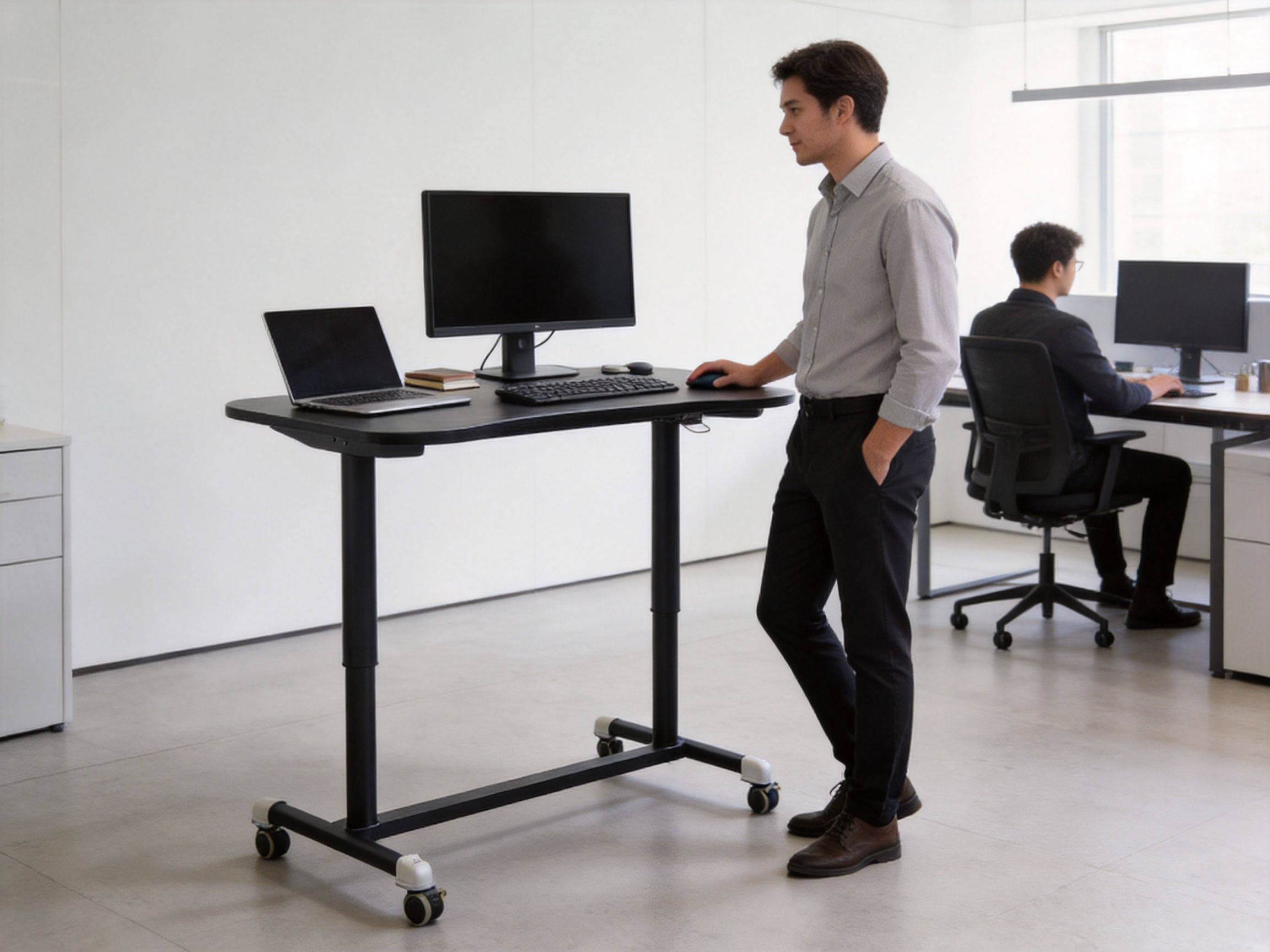
In office environments, the TH-14 can serve as a compact sit-stand workstation for employees who want flexibility without a large electric desk. It is useful for hot-desking areas, shared work zones, temporary project rooms, and individual workstations. The black finish fits modern office interiors, and the mobile base supports quick layout changes.
Laboratory Benches and Technical Areas
Laboratories often require adaptable work surfaces. The TH-14 can support documentation, device operation, sample review, or light technical tasks. Since it does not require electrical power for lifting, it can be placed according to workflow rather than outlet location. The lockable casters help keep the desk steady during use.
Studio and Creative Work
Designers, artists, photographers, content creators, and makers often work in changing layouts. A mobile height-adjustable desk can function as a digital workstation, review table, standing sketch surface, or support platform. The stepless height range allows users to adapt the surface to creative tasks.
Home Study and Remote Work
Many home offices are limited in space. The TH-14’s compact tabletop makes it suitable for apartments, study rooms, bedrooms, or shared living areas. Users can move it when necessary and adjust between sitting and standing during remote work, online meetings, reading, or writing.
Training Rooms and Education Spaces
Training rooms often need furniture that can be rearranged quickly. The TH-14 can serve as an instructor station, demonstration desk, mobile laptop table, or flexible participant workstation. Its lockable casters are useful when the room layout changes frequently.
User Experience and Daily Operation
The TH-14 is designed for straightforward daily use. To reposition the desk, the user unlocks the locking casters, rolls the desk to the desired location, and locks the casters again. To change height, the user operates the pneumatic lifting mechanism manually. Because no electricity is required, the desk remains functional in any suitable indoor location.
This simplicity is important. In workplaces, furniture should support productivity rather than create extra steps. If a desk is too complicated, users may ignore its adjustable features. The TH-14’s manual pneumatic operation encourages frequent height changes because the process is direct and accessible.
The desk is also easy to integrate with existing office equipment. It can be used with laptops, compact monitors, keyboards, mice, document holders, lamps, or small devices. In shared environments, the adjustable height helps different users quickly set up a comfortable position.
Maintenance Benefits
Because the TH-14 uses a gas spring lifting system rather than an electric motor system, maintenance complexity is reduced. There are no motor cables, control panels, or electrical lifting columns to manage. Routine care mainly involves keeping the desk clean, checking caster operation, ensuring fasteners remain secure, and using the height adjustment mechanism properly.
The powder-coated frame can be cleaned with suitable soft cloth methods in normal indoor environments. The caster wheels should be kept free from debris that may affect rolling. The locking mechanisms should be used correctly to prevent unwanted movement during work. These simple maintenance practices help extend service life and preserve user experience.
For organizations managing many workstations, simplified maintenance can create significant operational value. Fewer electrical components mean fewer power-related service issues. Mobility without cables also reduces cable damage and trip hazards related to frequent relocation.
Sustainability and Efficient Use
A power-free height-adjustable desk can support sustainability goals in several ways. It does not consume electricity during adjustment, and it avoids electronic components that may require special handling at end of life. Its durable metal structure and protective coating support longer use, which can reduce replacement frequency. Its mobility and adaptability also mean one desk can serve multiple roles, reducing the need for duplicate furniture.
In sustainable workplace planning, flexible furniture is valuable because it extends the usefulness of a space. Instead of replacing furniture when workflows change, organizations can reconfigure mobile adjustable desks to match new needs. The TH-14 supports this approach by combining movement, height adjustment, and compact size.
Procurement Considerations
When purchasing adjustable desks, buyers should evaluate more than the initial price. Important factors include stability, adjustment range, ease of operation, durability, finish quality, mobility, supplier reliability, customization options, and after-sales support. The TH-14 performs strongly across these practical criteria.
Its 760 mm to 1100 mm lifting range covers common seated and standing work needs. Its double-leg construction improves stability compared with many small mobile desks. Its gas spring mechanism eliminates dependence on electricity. Its caster base enables movement and locking. Its powder-coated iron frame supports durability and professional appearance. Its compact tabletop makes it useful in multiple environments.
For distributors and project buyers, the manufacturer’s standing desk specialization and regional supply chain advantages are also important. A capable manufacturer can provide more consistent products, support customization, and respond to project needs. This reduces procurement risk and helps build long-term value.
Why This Desk Represents a Strong Market Choice
The TH-14 Double-Leg Pneumatic Height-Adjustable Desk is not simply a small table with wheels. It is a purpose-built flexible workstation. Its design answers several key problems found in modern workspaces: fixed desks do not support posture changes, electric desks limit mobility, single-column mobile desks may lack stability, and basic carts do not provide ergonomic work height control. The TH-14 combines the strengths of these categories while reducing many of their limitations.
The desk’s strongest market value comes from its balanced design. It is adjustable but not electrically complex. It is mobile but still stable. It is compact but still practical. It is professional in appearance but suitable for many different environments. These characteristics make it useful for offices, laboratories, studios, homes, and training facilities.
Its manufacturing background further strengthens the product. A manufacturer focused on standing desk solutions, located in a mature industrial region, can support product consistency, process control, and customization. For buyers seeking reliable ergonomic furniture, this combination of product design and manufacturing capability is highly important.
Q&A Section
What is the height adjustment range of the TH-14 desk?
The TH-14 adjusts from 760 mm to 1100 mm. This range supports both seated and standing work postures and allows users to fine-tune the desk height for different tasks.
Does the desk require electricity?
No. The desk uses a gas spring lifting system, so height adjustment is achieved manually without electric motors, control boxes, or power cables.
Why is pneumatic adjustment useful?
Pneumatic adjustment is smooth, quiet, and power-free. It makes the desk easier to move and place in different areas because users do not need to consider nearby electrical outlets.
Yes. The stepless height adjustment allows different users to set the desk to a comfortable working height. Its caster base also makes it easy to relocate in shared or flexible office layouts.
How does the double-leg design help?
The double-leg structure improves stability compared with many single-column mobile desks. It supports a more reliable working surface for typing, writing, reviewing documents, and using small equipment.
What is the tabletop size?
The tabletop measures 980 mm by 560 mm. This size provides a practical work surface while remaining compact enough for smaller rooms and flexible layouts.
What material is used for the frame?
The main structure uses iron, providing strength and stable load-bearing performance for daily use.
What type of surface finish does the frame have?
The surface is treated with black powder coating. This finish gives the desk a clean professional appearance and improves resistance to wear and corrosion in normal indoor use.
Can the desk be moved easily?
Yes. The desk includes four swivel casters. Two casters have locking mechanisms, allowing the desk to be moved when unlocked and secured when positioned.
Where can the TH-14 be used?
It can be used in office workstations, laboratory benches, studio work areas, home study spaces, training rooms, and other flexible indoor environments.
How does it compare with an electric height-adjustable desk?
An electric desk may offer powered lifting and memory functions, but it depends on power and contains more electrical components. The TH-14 offers simpler, power-free adjustment, easier mobility, and reduced maintenance complexity.
Is the desk suitable for home offices?
Yes. Its compact size, quiet pneumatic adjustment, and mobile base make it practical for home study rooms, remote work areas, and multipurpose living spaces.
References
Bridger, R. S. Introduction to Human Factors and Ergonomics. CRC Press.
Kroemer, K. H. E., and Grandjean, E. Fitting the Task to the Human: A Textbook of Occupational Ergonomics. Taylor and Francis.
Pheasant, S., and Haslegrave, C. M. Bodyspace: Anthropometry, Ergonomics and the Design of Work. CRC Press.
Helander, M. A Guide to Human Factors and Ergonomics. CRC Press.
International Organization for Standardization. Ergonomic Principles in the Design of Work Systems.
Sanders, M. S., and McCormick, E. J. Human Factors in Engineering and Design. McGraw-Hill.
Product: TH-14 Double-Leg Pneumatic Height-Adjustable Desk


- Contact Info
-
-
 Phone+86-15950656125
 -
 Email
Email -
 AddressRoom 1007-1, South Building, Suyue Plaza, Suzhou Industrial Park, Suzhou City, Jiangsu Province, China
-
- Products
- Follow Us
- Need help? Please contact us
Copyright ©
SuZhou Skyhone Intelligent Technology Co., Ltd.
All Rights Reserved.
Privacy
Custom Ergonomic Adjustable Office Tables Manufacturers

