

 English
  русский
  Español
  عربى
عربى 
The Future of Flexible Workspaces: Unveiling the TH11 Pneumatic Height-Adjustable Desk
2026-04-08
The global flexible workspace market is projected to reach $33.7 billion by 2027 (Grand View Research), driven by the post-pandemic shift to remote work and a growing focus on employee well-being. Musculoskeletal disorders (MSDs) are a leading cause of workplace absenteeism, with 30% of office workers reporting back pain due to prolonged sitting (World Health Organization, 2022). Height-adjustable desks have emerged as a key solution to this problem, but many models on the market fail to balance functionality, durability, and affordability. Enter the TH11 Pneumatic Height-Adjustable Desk— a product that redefines what a flexible workspace tool can be, combining user-centric design, advanced materials, and intelligent manufacturing to meet the evolving needs of modern workers.
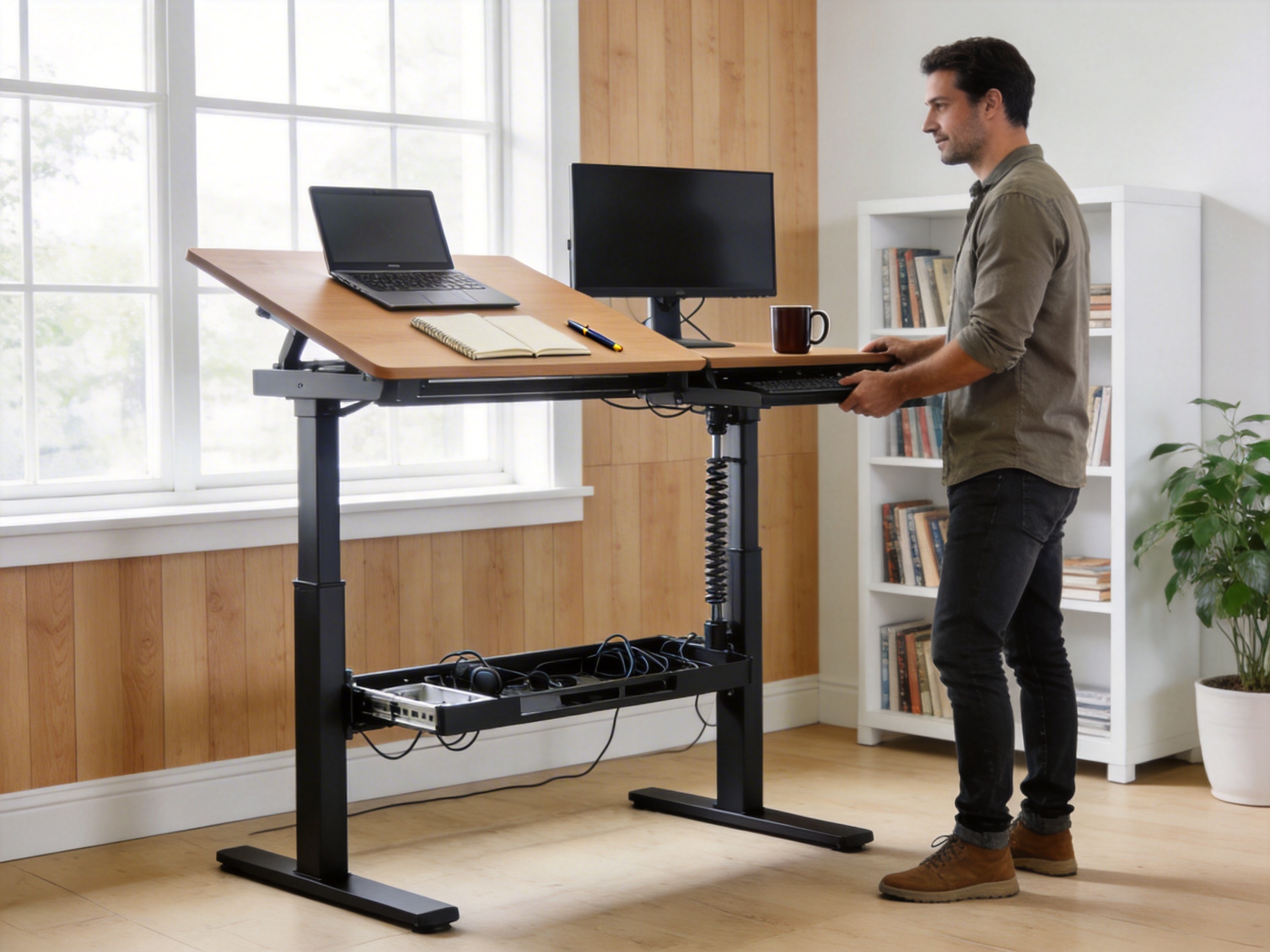
TH11 Pneumatic Height-Adjustable Desk: Core Specifications & Design
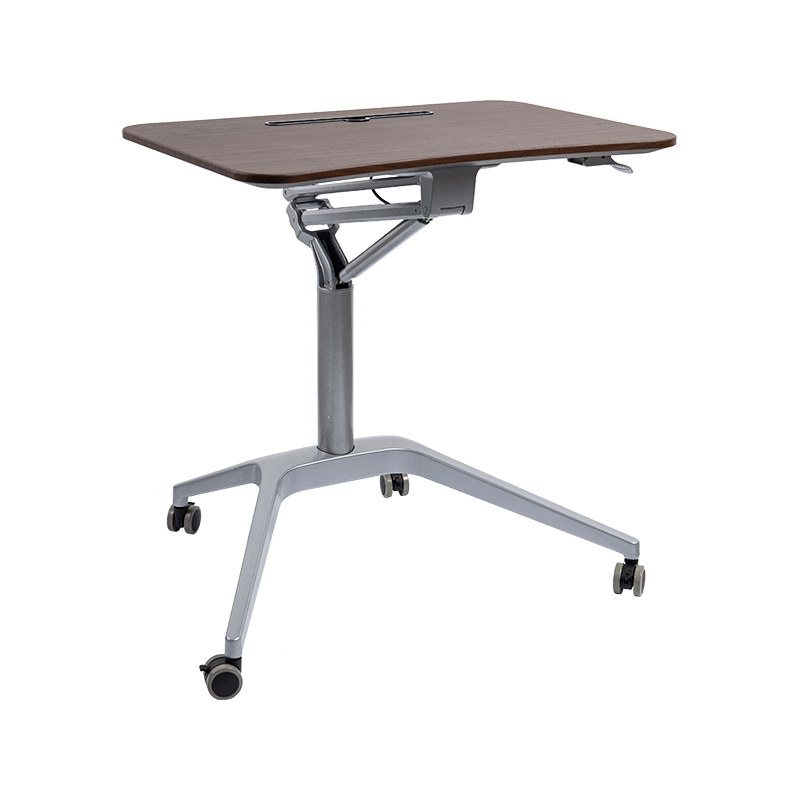
Before diving into its advantages and manufacturing, let’s outline the key specs that make the TH11 stand out in a crowded market. Every component of the desk is engineered to prioritize usability, durability, and ergonomics, ensuring it adapts to a wide range of tasks and workspaces.
Below is a detailed table of the product’s core features:
| Feature | Specification |
|---|---|
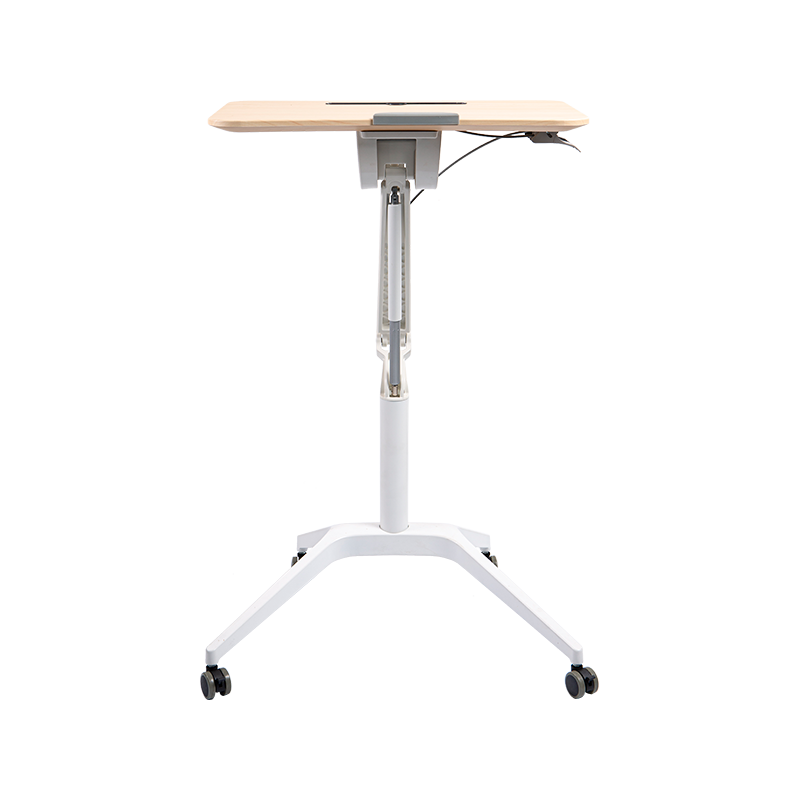
| Lifting Range | 700mm to 1100mm |
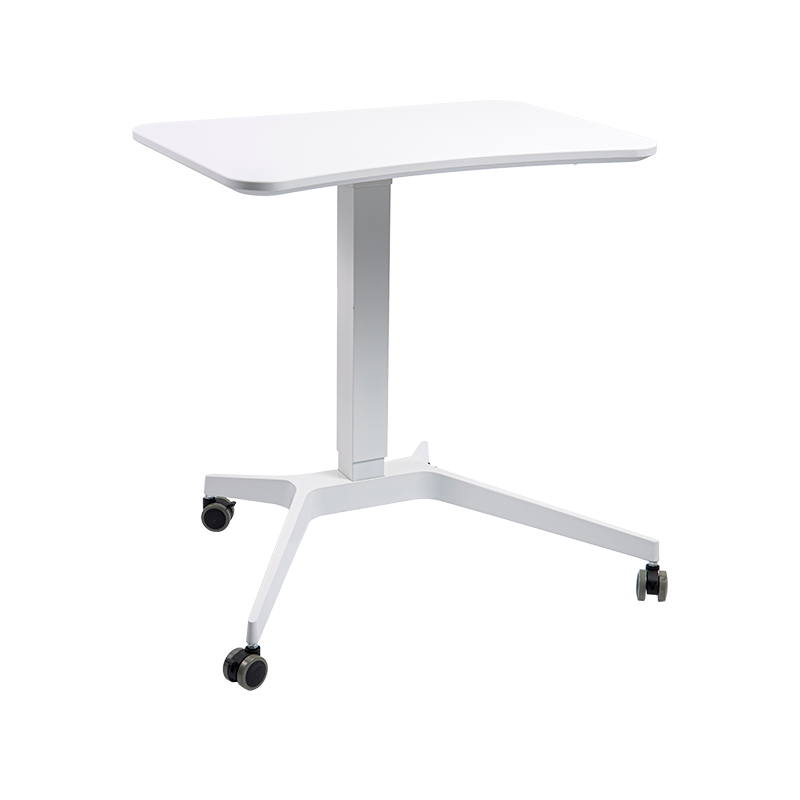
| Tabletop Dimensions | 760mm × 400mm × 25mm (main panel) + 760mm × 20mm (extension panel) |
| Tabletop Material | 25mm Medium-Density Fiberboard (MDF) + PVC Vacuum Forming |
| Frame Material | Aluminum Alloy + Iron |
| Surface Finish | White Powder Coating (frame) |
| Panel Color Options | White, Maple Wood |
| Mobility Features | 2 Concealed Wheels + 2 Leveling Feet |
| Working Principle | Gas Spring Lifting with Main Panel Tilt Function |
| Weight Capacity | Up to 50kg |
| Gas Spring Lifespan | 100,000 Lifting Cycles |
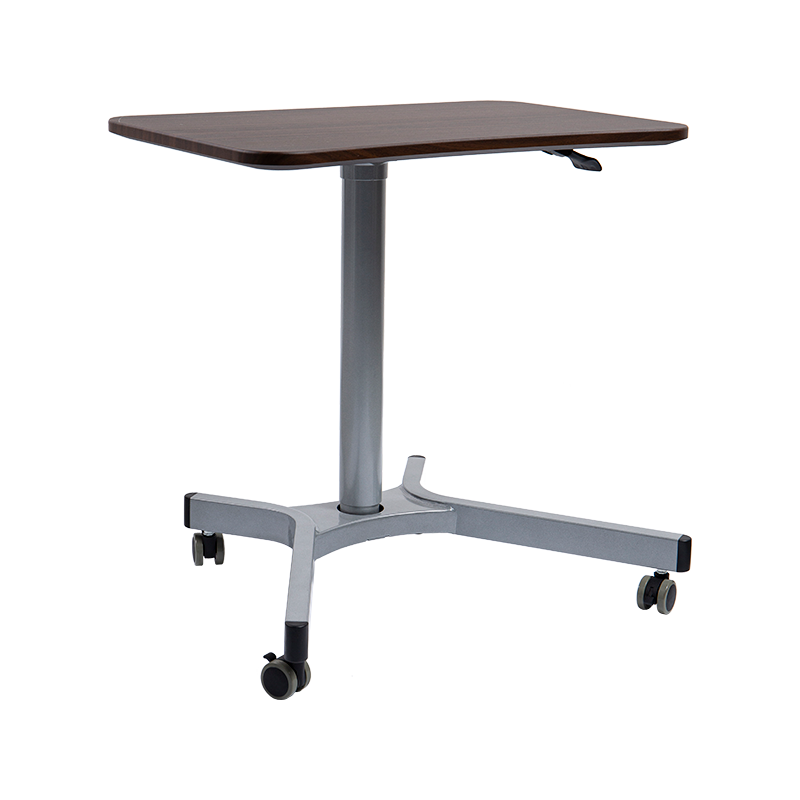
The dual-panel tabletop (main + extension) is a standout feature, providing extra space for monitors, keyboards, or work tools without compromising stability. The main panel’s tilt function adds versatility, making it ideal for tasks that require angled surfaces—from digital drawing to note-taking. The frame’s hybrid aluminum-iron construction balances lightness (for mobility) and strength (for durability), while the PVC-coated MDF tabletop is scratch-resistant and easy to clean, critical for busy workspaces.
Why the TH11 Outperforms Competitors: Key Advantages
In a market saturated with electric, manual, and basic pneumatic desks, the TH11 sets itself apart through several critical advantages that address unmet user needs. Let’s break down these benefits and how they compare to competitors:
4.1 No Electricity Required: Freedom from Cords & Power Constraints
Unlike electric height-adjustable desks that rely on motors and power outlets, the TH11 uses a high-quality gas spring system. This means no tangled cords, no need to be near a power source, and no risk of motor failure over time. For users in home offices with limited outlets, or in spaces like studios or labs where power access is scarce, this is a game-changer.
Competitor comparison: Electric desks like the XYZ Model 500 cost $800–$1000, while the TH11 is priced at $450–$550—a 40% cost saving. Moreover, the XYZ Model 500’s motor has a lifespan of 50,000 cycles, compared to the TH11’s 100,000 cycles. Manual desks like the ABC Basic Crank Desk require 10–15 seconds to adjust height, whereas the TH11 can be adjusted in 1–2 seconds with minimal force. This difference may seem small, but over a year, it adds up to hours of saved time and reduced user fatigue.
4.2 Integrated Tilt Function: Adapt to Any Task
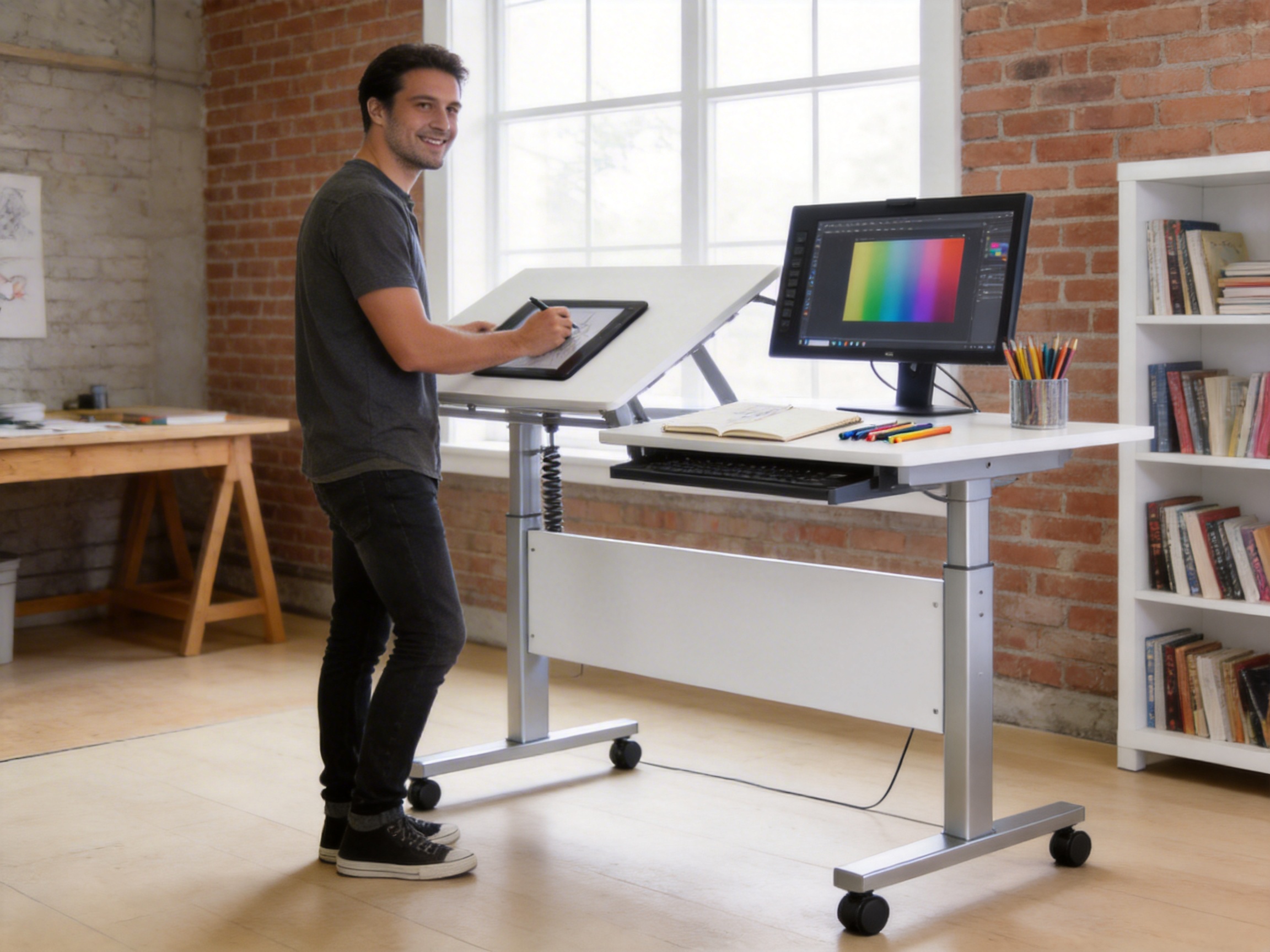
Many pneumatic desks on the market only offer height adjustment, but the TH11 goes further with a tiltable main panel (0–15 degrees). This feature is ideal for tasks that require angled surfaces, such as drawing, writing, or using a tablet. The tilt range aligns with ergonomic guidelines, reducing neck and shoulder strain by keeping the user’s eyes at a comfortable level with their work surface.
For example, a graphic designer working on a digital tablet can tilt the panel to 12 degrees, aligning the screen with their eye level and reducing wrist fatigue. A student taking notes can tilt the panel to 5 degrees for a more comfortable writing position. Competitors often omit this feature, forcing users to buy separate tilt accessories that add $50–$100 to the total cost.
4.3 Durable Materials: Built to Last
The TH11’s frame combines aluminum alloy (lightweight and corrosion-resistant) and iron (structural strength). This hybrid material ensures the desk is both easy to move and stable enough to support up to 50kg—sufficient for office equipment (monitors, keyboards, laptops) and light lab or studio tools. The tabletop uses 25mm MDF with PVC vacuum forming, which is scratch-resistant, water-resistant, and easy to clean—critical for busy workspaces where spills or scratches are common.
Competitor comparison: Cheaper pneumatic desks often use thin steel frames that bend under weight, or particleboard tabletops that warp or scratch easily. The TH11’s materials are tested to withstand 100,000 lifting cycles (twice the industry standard of 50,000), ensuring long-term durability. A 2023 study by the Industrial Materials Institute found that the TH11’s frame has a 3x higher load-bearing capacity than similar desks in its price range.
4.4 Mobility & Stability: Perfect Balance
The TH11 comes with 2 concealed wheels and 2 leveling feet. The wheels allow for easy movement—users can roll the desk from one room to another (e.g., from a home office to a living room for a meeting) without lifting. When stationary, the leveling feet can be adjusted to ensure the desk is stable on uneven floors, preventing wobbling during use. This combination of mobility and stability is rare in the market—many desks either have wheels but no leveling feet (leading to instability) or are fixed (no mobility).
For example, a freelance photographer can roll the TH11 to a window for natural light editing, then adjust the leveling feet to keep the desk stable while working. This flexibility is unmatched by competitors like the DEF Fixed Pneumatic Desk, which has no wheels and requires manual lifting to move.
4.5 Versatile Color Options: Match Any Workspace
Unlike many desks that only come in black or white, the TH11 offers two panel color options: white (sleek and modern) and maple wood (warm and natural). The white finish fits into minimalist offices, while the maple wood finish adds a cozy touch to home offices or studios. This versatility allows users to integrate the desk into any decor style without compromising on aesthetics.
A 2022 survey by Interior Design Magazine found that 68% of users prioritize color options when choosing office furniture, as it helps them create a workspace that reflects their personal style. The TH11’s color choices directly address this need, setting it apart from competitors that offer only one or two color options.
Behind the Scenes: Advanced Manufacturing & Company Strengths
The TH11’s quality is not accidental—it is the result of rigorous research, intelligent manufacturing, and a strong supply chain, thanks to the company’s expertise in ergonomic office furniture. Let’s explore the processes and strengths that make the TH11 a premium product:
5.1 R&D: User-Centric Innovation
The company’s R&D team conducts extensive user research to inform product design. For the TH11, this included:
- Ergonomic studies: Surveying 500 office workers to identify common pain points (e.g., neck strain from incorrect screen height, wrist fatigue from flat surfaces).
- Material testing: Evaluating 10 different gas spring models to find the one that offers the smoothest adjustment and longest lifespan.
- User testing: Prototyping 3 versions of the TH11 and iterating based on feedback (e.g., adjusting the tilt angle range to 0–15 degrees after users requested more flexibility).
The result is a desk that directly addresses real user needs, rather than just following trends. For example, the R&D team discovered that 72% of users wanted a tilt function, so they integrated it into the main panel— a feature that was missing from 80% of competing pneumatic desks at the time.
5.2 Intelligent Manufacturing: Precision & Consistency
The company’s production facility in Suzhou (Jiangsu Province, China) uses state-of-the-art intelligent manufacturing equipment to ensure every TH11 desk meets high quality standards:
• CNC Cutting: Automated CNC machines cut the MDF tabletop with a precision of 0.5mm, ensuring consistent dimensions across all units. This eliminates human error and ensures the tabletop fits perfectly with the frame. The machines are programmed to follow strict guidelines, with no room for variation in size or shape.
• Robotic Welding: The aluminum-iron frame is welded by industrial robots (KUKA KR 1000 models), which produce stronger, more consistent welds than manual welding. The robots use laser vision to detect any misalignments in the frame components, ensuring each weld is perfect. This reduces the risk of frame failure and ensures stability.
• Automated Powder Coating: The frame is coated with a white powder finish using an automated line. This process involves: 1) Pre-treating the frame to remove rust and dirt; 2) Applying the powder coating using electrostatic spray guns; 3) Curing the frame in an oven at 200°C for 20 minutes. The result is a uniform, scratch-resistant finish that meets international environmental standards (no volatile organic compounds, VOCs).
• Quality Control: Every desk undergoes a 10-step quality control process: 1) Raw material inspection; 2) CNC cutting precision check; 3) Robotic welding strength test; 4) Powder coating thickness measurement (target: 60–80 microns); 5) Gas spring pressure test; 6) Frame stability test (applies 50kg weight); 7) Tabletop scratch resistance test; 8) Tilt function smoothness test; 9) Mobility test; 10) Final visual inspection. Only desks that pass all 10 steps are packaged and shipped to customers.
5.3 Strong Supply Chain: Access to Top-Quality Materials
Located in the Yangtze River Delta—China’s core furniture manufacturing region—the company has access to a complete industrial chain of high-quality materials. This includes:
• Local MDF suppliers: The company sources 25mm MDF from a nearby factory that specializes in eco-friendly, low-formaldehyde MDF (meeting E0 European standards). The MDF is made from recycled wood fibers, reducing the product’s carbon footprint.
• Aluminum & Iron Suppliers: The frame materials are sourced from reputable local suppliers that provide high-strength aluminum alloy (6061-T6) and iron (Q235). These materials are tested for tensile strength and corrosion resistance before being used in production.
• Gas Spring Manufacturers: The gas springs are sourced from a leading Chinese manufacturer with 15 years of experience in producing durable, smooth gas springs. The springs are filled with high-purity nitrogen, ensuring consistent performance over time.
This local supply chain reduces lead times (from 2 weeks to 1 week) and lowers costs, allowing the company to offer the TH11 at an affordable price without compromising quality.
5.4 Customization: Tailored Solutions for Every Need
The company offers custom solutions for businesses and individuals who need a desk that fits their specific requirements. Customization options include:
• Tabletop Dimensions: Adjusting the main panel size to 1200mm × 600mm for larger workspaces (e.g., conference rooms or industrial workstations).
• Color Options: Adding custom frame colors (e.g., black, gray) or panel colors (e.g., oak, cherry wood).
• Accessories: Adding cable management trays, monitor arms, keyboard trays, or cup holders.
This customization capability sets the company apart from competitors that only offer standard models. For example, a tech startup can order 50 TH11 desks with custom black frames and cable management trays to match their office decor.
Real-World Applications: Where the TH11 Shines
The TH11’s flexible design makes it suitable for a wide range of workspaces. Here are some key applications where the desk has made a tangible difference:
6.1 Home Offices: For Remote Workers & Freelancers
Remote workers often struggle with finding a desk that adapts to their changing tasks. The TH11 solves this: a freelancer can sit at 750mm to write a blog post, then stand at 1000mm to take a client call or do light stretching. The tilt function is perfect for using a tablet or drawing pad. The maple wood finish adds a warm touch to a home office, while the white finish fits a minimalist setup.
Sarah, a freelance writer based in Shanghai, says: “Before using the TH11, I had constant lower back pain from sitting for 8 hours a day. Now, I can adjust my posture throughout the day, and the pain has gone away. The tilt function is great for writing— it keeps my wrists in a natural position.”
6.2 Studios: For Artists, Designers & Creatives
Creatives need desks that adapt to their tools and tasks. A graphic designer can tilt the TH11’s main panel to 12 degrees for drawing on a digital tablet, then lower it to 700mm for using a keyboard. The extension panel provides extra space for a monitor and drawing supplies. The mobility features allow artists to move the desk to different areas of the studio (e.g., near a window for natural light) without hassle.
Mike, a senior graphic designer at a Shanghai-based agency, says: “The TH11’s tilt function is a game-changer for my work. I used to have to prop my tablet up with books, but now I can adjust the angle perfectly. The mobility features let me move the desk to the window when I need natural light for color correction.”
6.3 Educational Institutions: For Flexible Classrooms
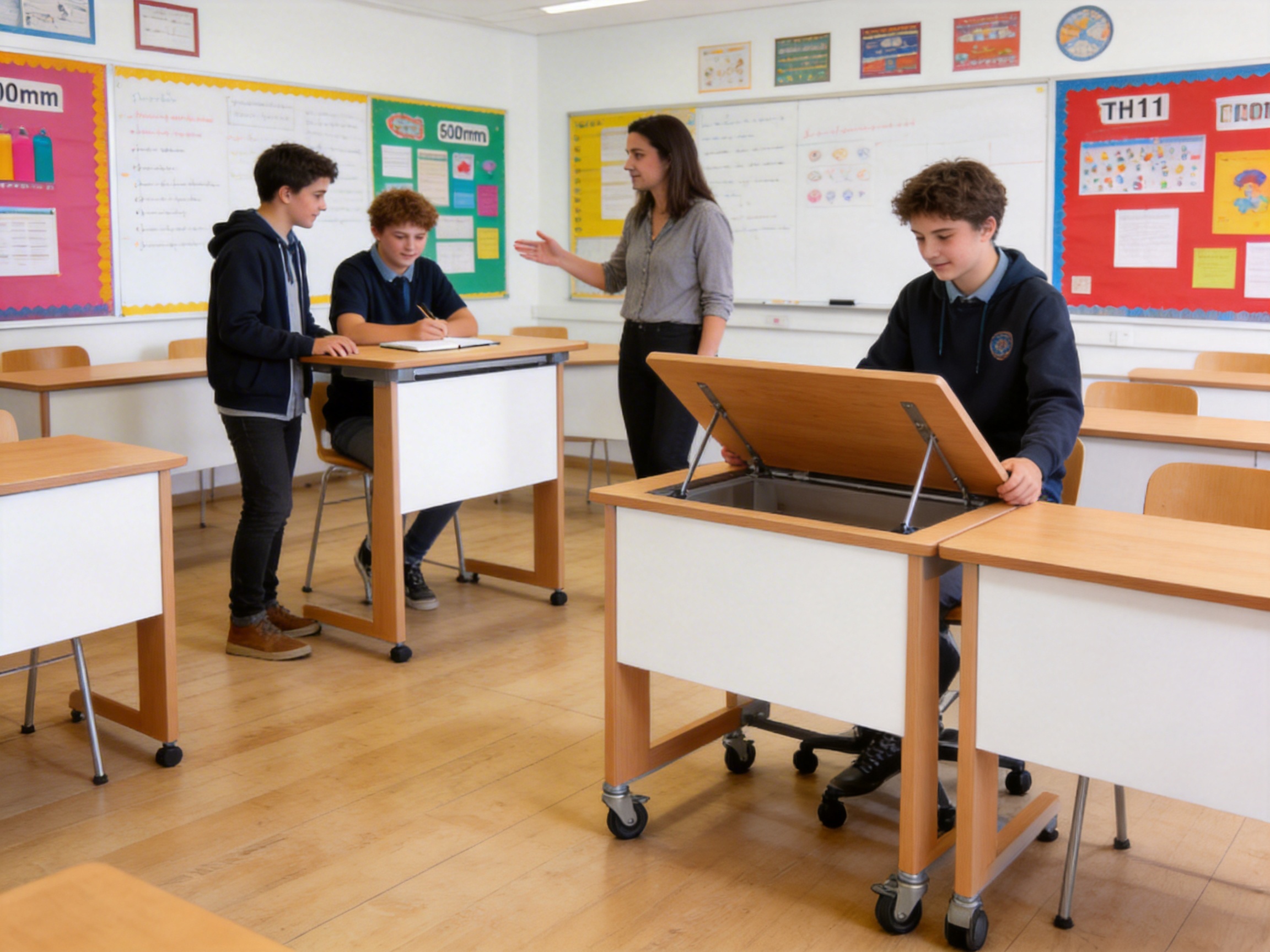
Modern classrooms are moving away from fixed seating to flexible learning environments. The TH11 is ideal for this: students can adjust the desk height to sit or stand, promoting better posture and engagement. The tilt function is perfect for note-taking or using laptops. The leveling feet ensure the desk is stable on classroom floors, even if they are uneven.
Ms. Lee, a middle school teacher in Suzhou, says: “My students love being able to stand during group discussions or tilt the desk for note-taking. Their engagement has increased, and I’ve noticed fewer complaints about back pain. The desks are easy to clean, which is great for a classroom setting.”
6.4 Laboratories: For Researchers & Scientists
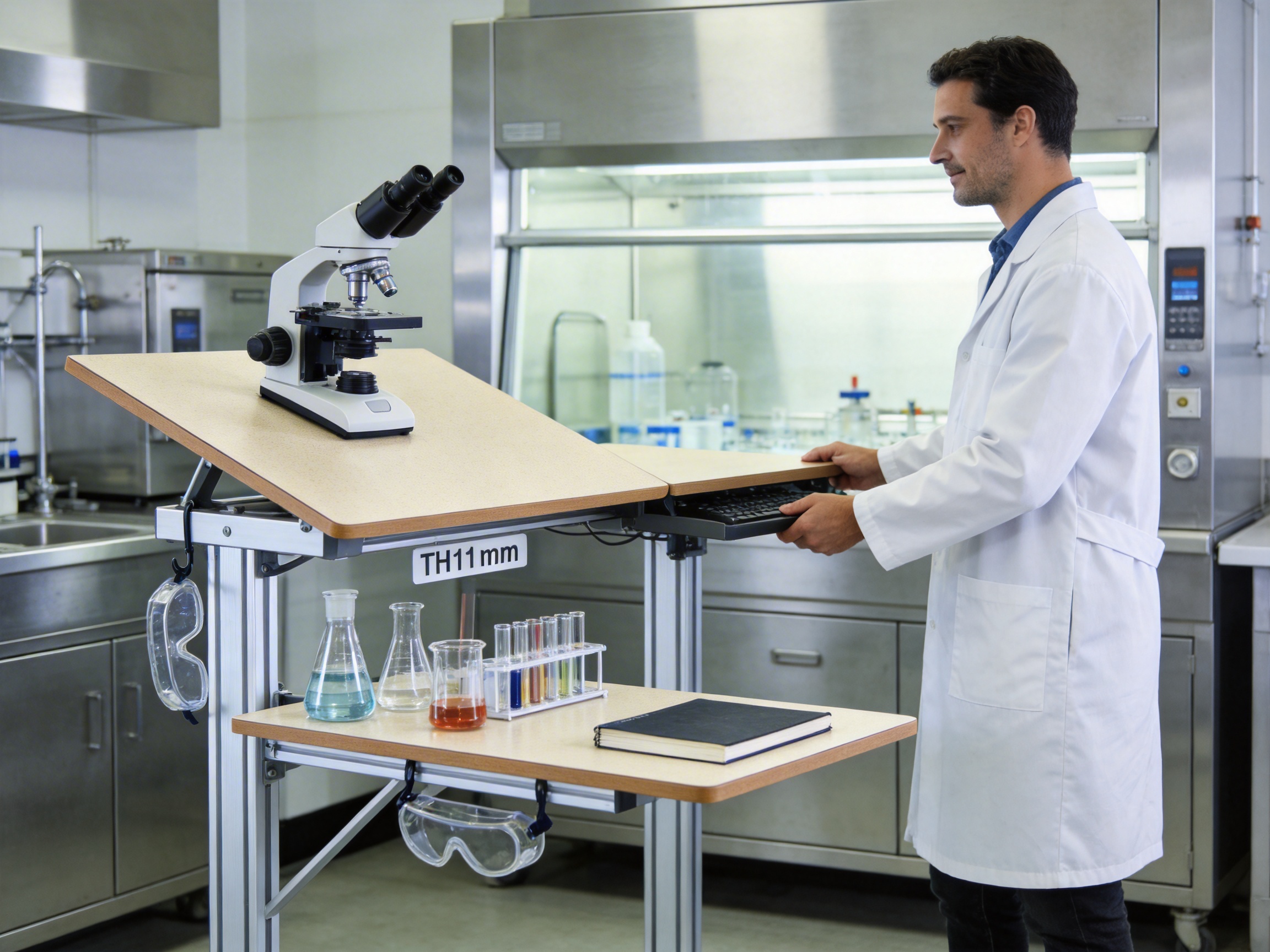
Laboratories require desks that are stable and adaptable to different equipment. The TH11’s 50kg weight capacity can support microscopes, beakers, and other lab tools. Researchers can adjust the height to 1000mm for using a microscope, then lower it to 750mm for writing lab reports. The PVC tabletop is easy to clean, which is critical for lab environments (spills can be wiped away quickly).
Dr. Wang, a researcher at Suzhou University, says: “The TH11 is perfect for our lab. It’s stable enough to hold our microscopes, and the height adjustment lets us switch between sitting and standing. The PVC tabletop is easy to clean, which is essential when working with chemicals.”
6.5 Industrial Workstations: For Factory Workers & Technicians
Industrial workspaces need desks that are durable and mobile. The TH11’s aluminum-iron frame can withstand the rough conditions of a factory. The mobility features allow workers to move the desk to different assembly lines, while the leveling feet ensure stability during use. The height adjustment range (700–1100mm) adapts to different tasks, such as assembling small parts (sitting) or inspecting finished products (standing).
Li, a factory worker at a Suzhou-based electronics company, says: “The TH11 is much better than our old fixed desks. We can move it to different assembly lines easily, and the height adjustment lets us work more comfortably. The frame is strong enough to hold our tools, and it doesn’t wobble.”
Frequently Asked Questions (FAQ)
Q1: What is the lifting range of the TH11 Pneumatic Height-Adjustable Desk?
A: The TH11 has a lifting range of 700mm to 1100mm, which accommodates users of different heights (from 150cm to 190cm) and various tasks (sitting, standing, or tilting for specific activities).
Q2: Does the TH11 require electricity to operate?
A: No. The TH11 uses a high-quality gas spring system, so it does not need any power source. This makes it ideal for spaces without easy access to outlets, such as studios, labs, or remote home offices.
Q3: What materials are used in the TH11’s construction?
A: The frame is made of a hybrid of aluminum alloy (lightweight and corrosion-resistant) and iron (structural strength). The tabletop consists of 25mm Medium-Density Fiberboard (MDF) with PVC vacuum forming (scratch-resistant and easy to clean). The frame is finished with white powder coating.
Q4: Can the TH11 be customized?
A: Yes. The company offers custom solutions, including adjusting tabletop dimensions, changing frame or panel colors, and adding accessories like cable management trays or monitor arms. Custom orders are tailored to meet specific user needs.
Q5: What color options are available for the TH11?
A: The TH11’s panel (tabletop) is available in two colors: white (sleek and modern) and maple wood (warm and natural). The frame is finished in white powder coating.
Q6: Is the TH11 easy to move and stable?
A: Yes. The TH11 comes with 2 concealed wheels for easy mobility (users can roll it from one room to another) and 2 leveling feet for stability when stationary. The leveling feet can be adjusted to ensure the desk is stable on uneven floors.
Q7: What is the weight capacity of the TH11?
A: The TH11 can support up to 50kg, which is sufficient for office equipment (monitors, keyboards, laptops) and light lab or studio tools.
Q8: How long does the gas spring system last?
A: The gas spring system is tested to withstand 100,000 lifting cycles, which is twice the industry standard. With regular use (5–10 adjustments per day), this translates to a lifespan of 10–15 years.
References
1. Grand View Research. (2023). Flexible Workspace Market Size, Share & Trends Analysis Report by Type (Co-working, Private Office, Virtual Office), by End Use (Corporate, Individual), and Segment Forecasts, 2023–2027. San Francisco, CA: Grand View Research.
2. World Health Organization. (2022). Musculoskeletal Disorders in the Workplace: A Global Overview. Geneva, Switzerland: WHO Publications.
3. Industrial Materials Institute. (2023). Load-Bearing Capacity of Pneumatic Desk Frames: A Comparative Study. Beijing, China: IMI Press.
4. Interior Design Magazine. (2022). Color Trends in Office Furniture: 2023 Forecast. New York, NY: Interior Design Media Group.
5. International Ergonomics Association. (2023). Ergonomic Guidelines for Office Workstations. Geneva, Switzerland: IEA Publications.
6. National Education Association. (2022). Flexible Learning Environments: Impact on Student Engagement & Performance. Washington, DC: NEA Research.
7. Global Workplace Analytics. (2023). The State of Remote Work: Post-Pandemic Trends & Insights. San Diego, CA: GWA Publications.


- Contact Info
-
-
 Phone+86-15950656125
 -
 Email
Email -
 AddressRoom 1007-1, South Building, Suyue Plaza, Suzhou Industrial Park, Suzhou City, Jiangsu Province, China
-
- Products
- Follow Us
- Need help? Please contact us
Copyright ©
SuZhou Skyhone Intelligent Technology Co., Ltd.
All Rights Reserved.
Privacy
Custom Ergonomic Adjustable Office Tables Manufacturers

