

 English
 русский
 Español
 عربى

Content
- 1 Understanding the Role of a Heavy-Duty Electric Linear Actuator
- 2 Core Technical Specifications
- 3 Heavy-Duty Construction for Demanding Applications
- 4 Powerful Motor and Reliable Transmission System
- 5 Trapezoidal Lead Screw and Self-Locking Performance
- 6 Integrated Electronic Limit Switches
- 7 Full-Range Overload Protection
- 8 Advantages Compared with Pneumatic and Hydraulic Alternatives
- 9 Application in Adjustable Equipment and Workstations
- 10 Applications in Medical and Care Equipment
- 11 Applications in Greenhouses and Agricultural Structures
- 12 Applications in Sanitation Vehicles and Mobile Equipment
- 13 Applications in Industrial Assembly Lines
- 14 Manufacturing Strengths and Product Development Approach
- 15 Quality, Certification, and Environmental Considerations
- 16 Installation Principles for Best Performance
- 17 Duty Cycle and Maintenance Requirements
- 18 Why the TH-06 Is a Strong Alternative to Lighter Actuators
- 19 Customization for Different Equipment Requirements
- 20 Selection Checklist for Equipment Designers
- 21 Q&A: Frequently Asked Questions
- 21.1 What is the main purpose of the TH-06 actuator?
- 21.2 How much force can the TH-06 provide?
- 21.3 What power supply does the actuator use?
- 21.4 Does the actuator hold its position when power is removed?
- 21.5 Does the actuator include end-of-stroke protection?
- 21.6 What happens if the actuator encounters excessive resistance?
- 21.7 Is the TH-06 suitable for outdoor use?
- 21.8 Can the actuator replace a pneumatic or hydraulic cylinder?
- 21.9 What is the duty cycle of the TH-06?
- 21.10 Can the actuator be customized?
- 21.11 What certifications does the product have?
- 21.12 What is the most important installation precaution?
- 22 Conclusion
- 23 References
- 24 Product: TH-06 Heavy-Duty Electric Linear Actuator for Universal Applications
TH-06 Heavy-Duty Electric Linear Actuator: A Versatile Solution for Modern Automation
2026-09-15
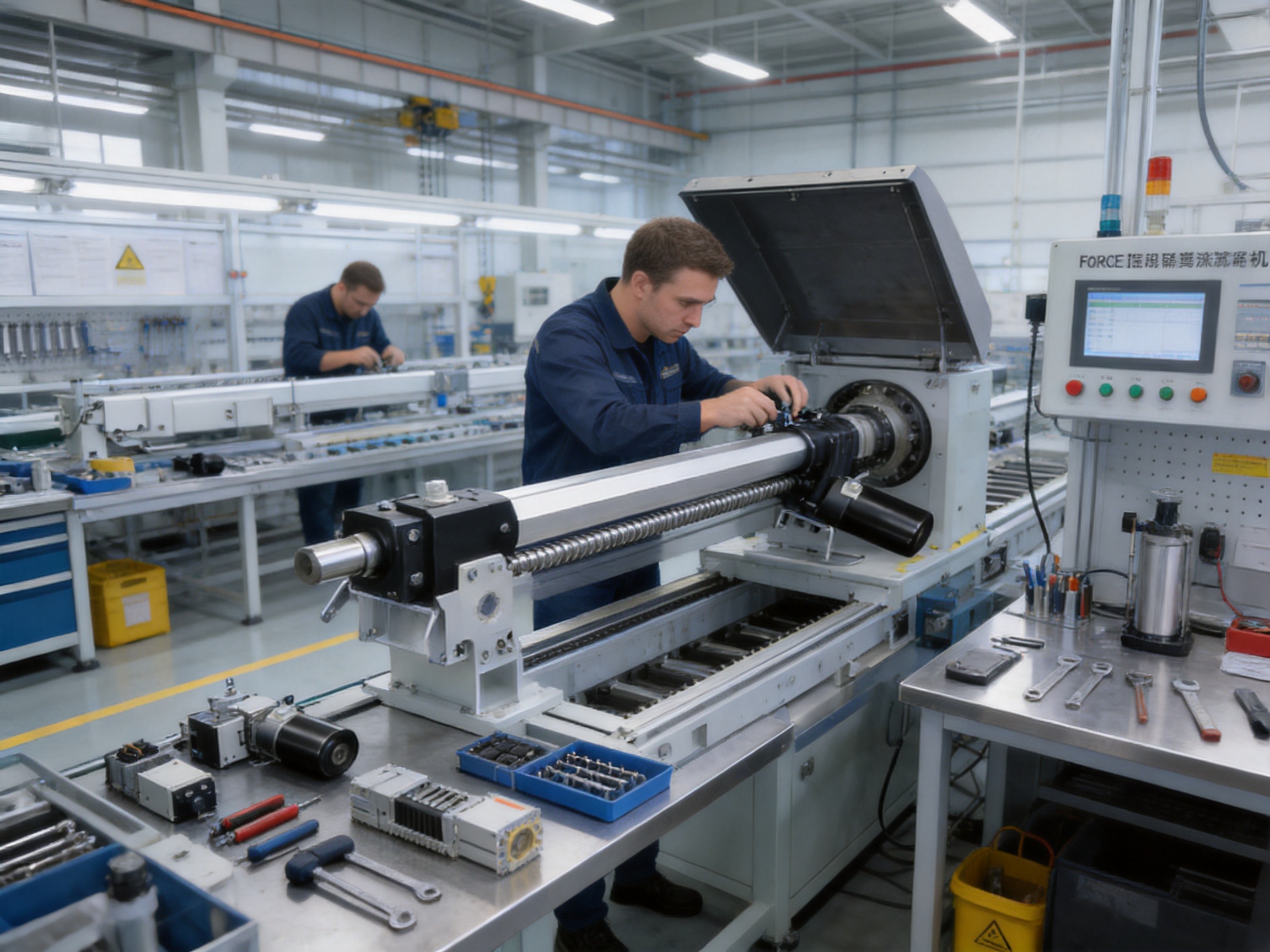
Industrial equipment designers increasingly need motion solutions that are powerful, dependable, clean, and simple to integrate. In many applications, a linear actuator must lift, push, pull, adjust, open, close, or position a mechanical component repeatedly under demanding conditions. Traditional pneumatic and hydraulic cylinders can perform these functions, but they often require additional infrastructure, including compressors, pumps, valves, hoses, oil tanks, and regular maintenance. A well-designed electric linear actuator can provide a more compact and efficient alternative while offering accurate, controllable, and repeatable linear movement.
The TH-06 Heavy-Duty Electric Linear Actuator is designed for this broad range of requirements. It combines a strong aluminum alloy housing, a high-power brushed DC motor, a metal reduction gearbox, a trapezoidal lead screw, electronic limit switches, overload protection, and standardized mounting features in one integrated unit. With a 6000N push force, 4000N pull force, 4000N self-locking force, 24VDC input, and 5mm/s no-load speed, it is positioned as a general-purpose actuator for medium- to heavy-duty applications.
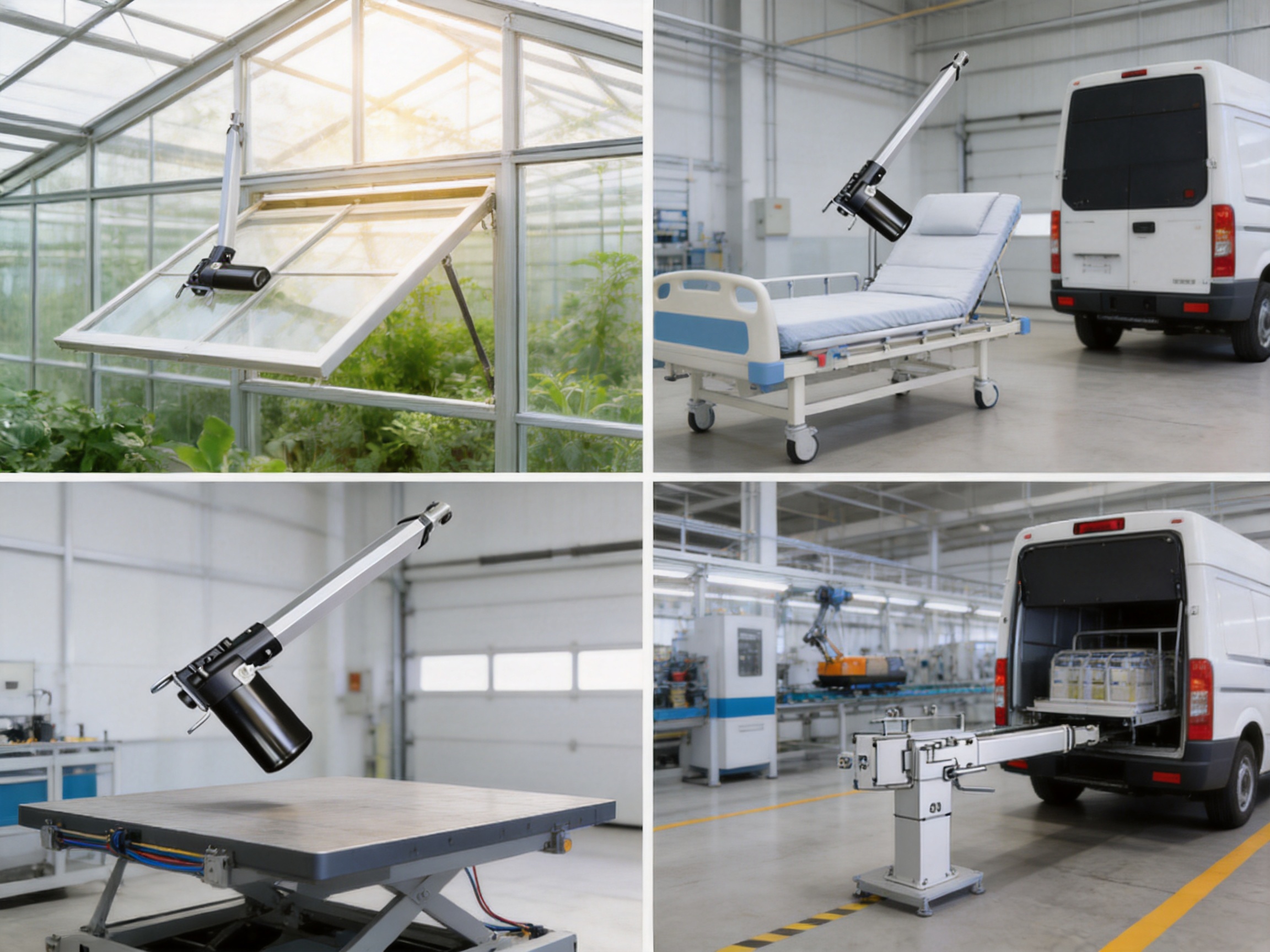
Its value is not limited to a single market. The actuator can support automation equipment, medical care beds, greenhouse systems, sanitation vehicles, industrial covers, assembly-line pushers, and other machinery that needs controlled linear movement. Its universal design also gives equipment manufacturers greater freedom when developing new products or replacing hydraulic and pneumatic components.
Understanding the Role of a Heavy-Duty Electric Linear Actuator
An electric linear actuator converts rotary motor movement into linear motion. The motor turns a gearbox and lead screw, while the screw mechanism extends or retracts a moving tube or rod. This basic operating principle allows the actuator to create a controlled pushing or pulling force without the need for compressed air or hydraulic fluid.
In practical terms, an actuator acts as a compact mechanical muscle. It can raise an adjustable platform, open a greenhouse window, position a machine guard, tilt a care bed, move a sanitation vehicle cover, or push products along an industrial process. The actuator receives electrical power and, when combined with an appropriate controller, can be operated by switches, sensors, timers, control systems, or programmable automation equipment.
The TH-06 has been developed around the needs of users who require more than light-duty positioning. Its 6000N push capacity makes it suitable for substantial upward or forward loads, while its 4000N pull capacity supports controlled retraction and closing operations. The 4000N self-locking force helps the actuator hold a supported load when the motor is not running, reducing the risk of unwanted movement in applications where position stability is important.
Although specifications must always be assessed against the actual load direction, stroke length, mounting geometry, duty cycle, and operating environment, the TH-06 offers a strong basic platform for equipment designers. It provides a combination of force, mechanical stability, electrical simplicity, and installation flexibility that is difficult to achieve with lighter consumer-grade actuators.
Core Technical Specifications
The performance of an actuator is determined by more than its maximum force. Engineers must consider power supply, current draw, travel speed, self-locking behavior, protection level, duty cycle, overload protection, mounting method, and expected operating conditions. The TH-06 provides a balanced specification set for general industrial and equipment applications.
| Parameter | TH-06 Specification | Practical Significance |
|---|---|---|
| Product type | Heavy-duty electric linear actuator | Designed for medium- to heavy-load linear push-pull applications |
| Push force | 6000N | Supports substantial extending or lifting loads when correctly installed |
| Pull force | 4000N | Provides strong retraction and closing capability |
| Self-locking force | 4000N | Helps hold a load in position after power is removed |
| Input voltage | 24VDC | Suitable for many industrial, vehicle, automation, and equipment power systems |
| Full-load working current | 4A | Helps designers size the power supply, wiring, and control components |
| No-load telescopic speed | 5mm/s | Provides steady, controlled movement for positioning and adjustment |
| Protection rating | IP54 | Provides protection against limited dust ingress and water splashing |
| Duty cycle | 10% intermittent operation | Suitable for repeated start-stop use with appropriate rest periods |
| Housing material | Thickened aluminum alloy | Offers a rigid, durable, and relatively lightweight enclosure |
| Limit protection | Built-in electronic limit switches | Stops the actuator at the ends of its designed travel |
| Overload protection | Full-range overload protection | Helps reduce damage caused by excessive mechanical resistance |
The stated 5mm/s no-load speed is intentionally moderate. In heavy-duty applications, a controlled speed can be advantageous because it reduces sudden movement, limits mechanical shock, and supports safer positioning. A slower actuator may also generate higher mechanical force through the screw and gearbox system than a high-speed unit designed primarily for light loads.
The 24VDC electrical design is another practical advantage. Twenty-four-volt systems are widely used in industrial automation, mobile equipment, medical equipment, control panels, and battery-supported machinery. This voltage level offers a useful balance between electrical safety, motor performance, wiring practicality, and compatibility with common control hardware.
Heavy-Duty Construction for Demanding Applications
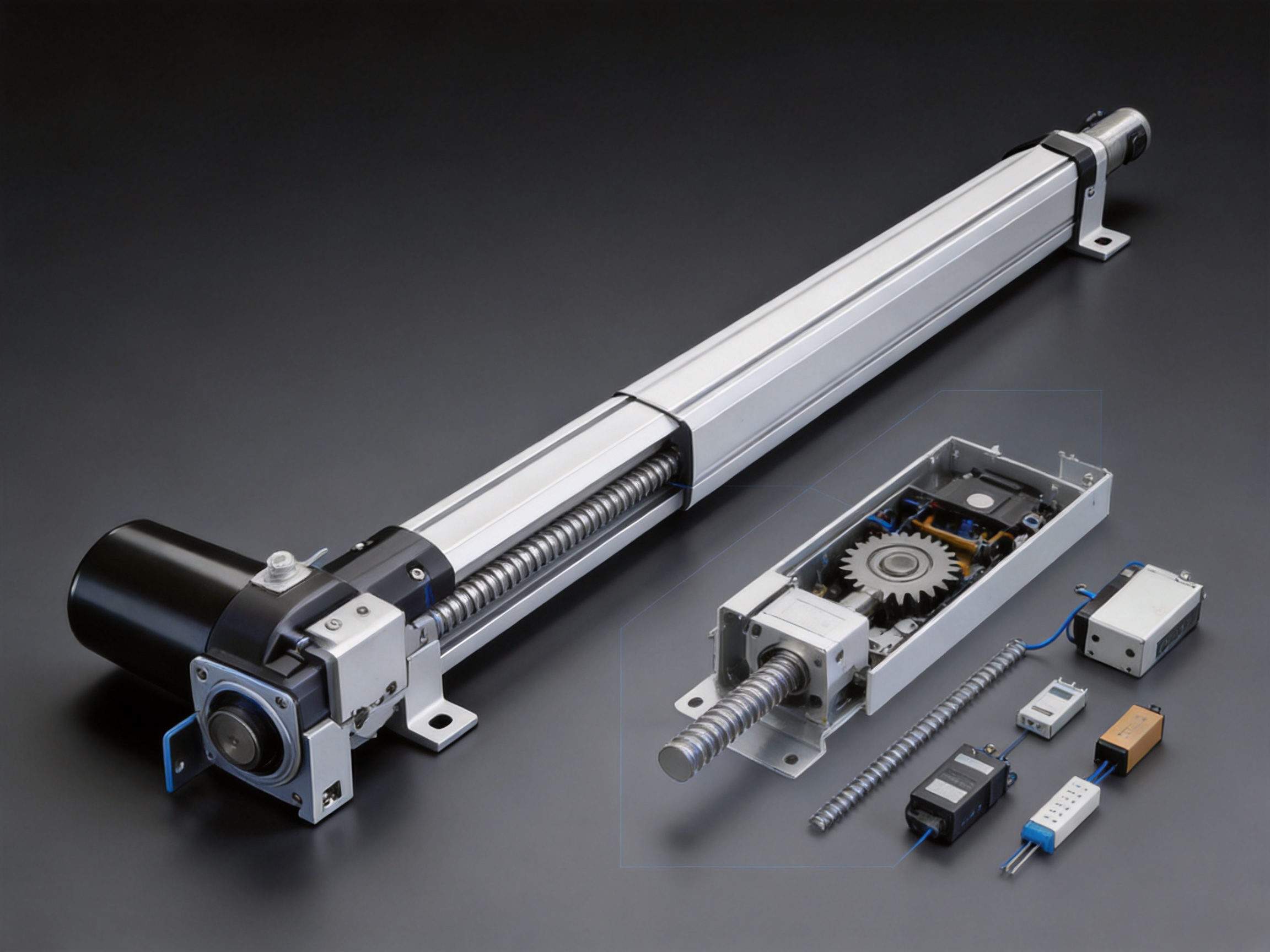
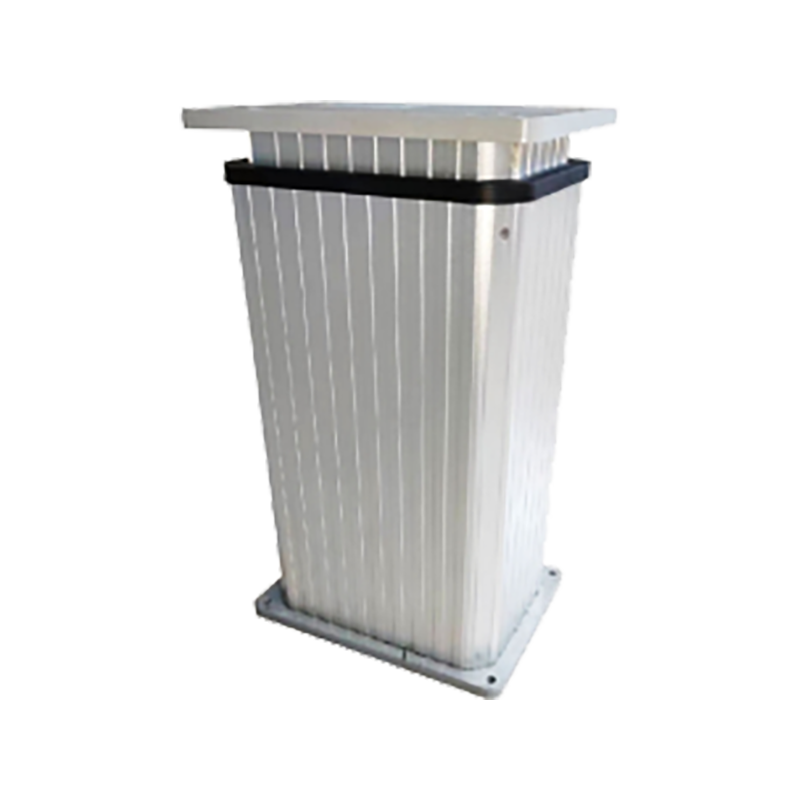
The actuator uses a thickened full aluminum alloy casing body. This construction provides a firm external structure for the motor, gearbox, screw mechanism, and electrical components. A robust casing helps protect internal components from accidental impact, vibration, and the mechanical stresses commonly associated with repeated industrial operation.
Aluminum alloy is also useful when designers must balance strength and weight. Compared with a heavily built steel enclosure, an aluminum housing can help reduce the total equipment mass while maintaining a rigid protective shell. This is valuable in applications such as adjustable equipment, mobile machinery, medical beds, and movable covers, where excessive actuator weight could increase the load on hinges, support frames, or lifting structures.
The silver-black industrial color combination gives the product a professional appearance while also supporting visual integration into machinery. More importantly, the external construction reflects the actuator’s intended role as a functional industrial component rather than a lightweight office accessory. Its design communicates durability, stability, and suitability for continuous equipment integration.
Housing design must always be matched with the actual installation environment. The IP54 rating makes the actuator appropriate for many indoor and sheltered industrial conditions, as well as applications exposed to limited dust and splashing water. However, IP54 should not be interpreted as complete waterproofing or as protection for submersion, high-pressure washing, or severe outdoor exposure without additional system-level protection.
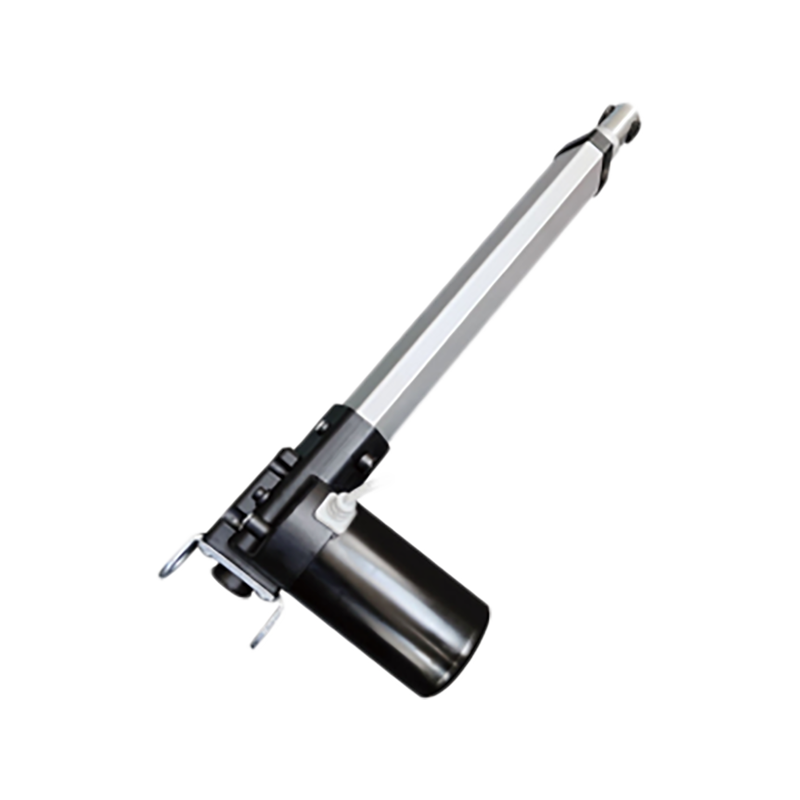
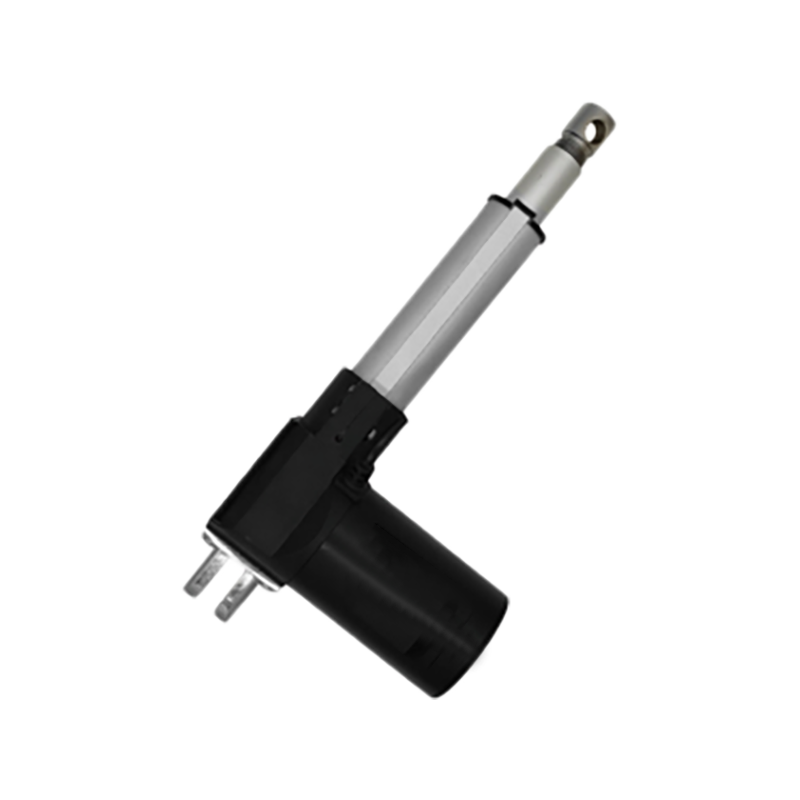
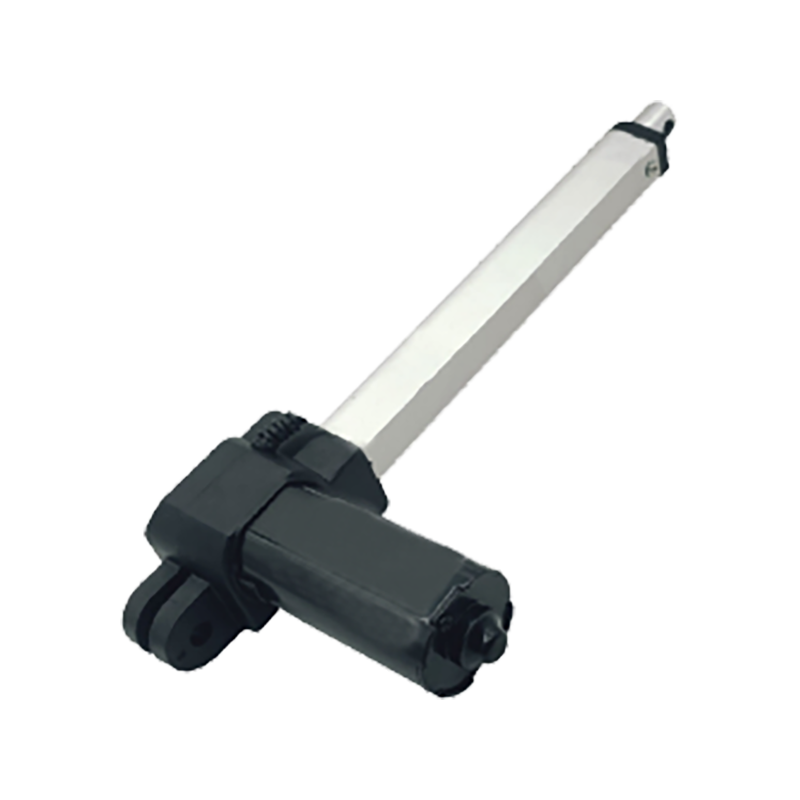
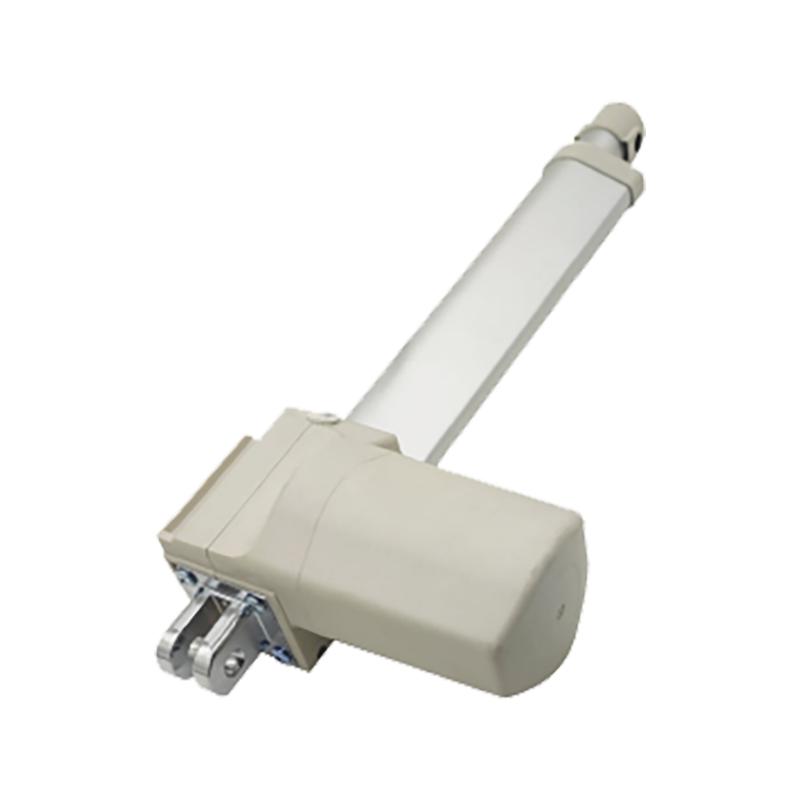
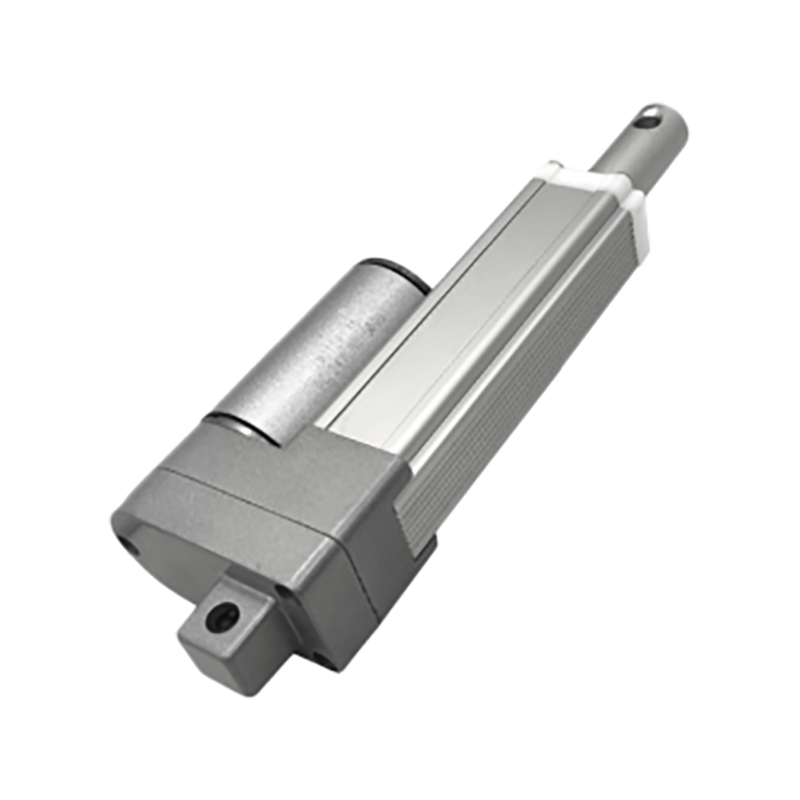
TH-06 Heavy-Duty Electric Linear Actuator for Universal Applications
Powerful Motor and Reliable Transmission System
At the center of the TH-06 is a high-power DC brushed motor. Brushed DC motors remain widely used in linear actuator systems because they provide strong starting torque, straightforward control, dependable performance, and compatibility with reversing circuits. By changing the polarity of the DC input, the actuator can extend or retract according to the requirements of the control system.
The motor is paired with a thickened metal reduction gearbox. The gearbox reduces the motor’s rotational speed while increasing the torque delivered to the lead screw. This conversion is essential for heavy-duty linear actuation, because a motor that spins rapidly is not automatically capable of directly producing the force required to push or pull a substantial load.
A metal reduction gearbox provides a durable transmission path for repeated mechanical loading. When a machine starts, stops, reverses, or encounters resistance, the gearbox must transfer torque without excessive deformation or instability. The combination of a powerful motor and a reinforced reduction system gives the TH-06 the mechanical foundation needed for industrial push-pull duties.
The transmission system is designed for stable operation rather than uncontrolled speed. In heavy equipment, smooth force delivery is often more important than rapid travel. A controlled actuator can reduce vibration, protect connected structures, and make the overall machine easier to operate. This is especially important when the actuator is moving a bed, window, cover, guard, platform, or other component that could be damaged by sudden acceleration.
Trapezoidal Lead Screw and Self-Locking Performance
The TH-06 uses a trapezoidal lead screw to transform rotary movement into linear extension and retraction. The trapezoidal thread profile is widely used in mechanical power transmission because it can carry substantial axial loads and maintain stable engagement between the screw and nut.
One of the most important advantages of this mechanism is its self-locking behavior. When the motor stops and electrical power is removed, the load is less likely to drive the screw backward. This helps the actuator hold its position without requiring continuous motor power. The specified 4000N self-locking force is particularly useful for equipment that must remain in a raised, extended, closed, or adjusted position during a pause in operation.
Self-locking can provide several system-level benefits. It may reduce energy consumption during stationary periods, lower motor heat generation, simplify control logic, and improve the stability of the supported component. It can also reduce the need for separate mechanical locking devices in some designs, although the final safety concept should always be evaluated according to the application and applicable regulations.
Self-locking does not mean that every load can be held in every installation position. The actual holding performance depends on load direction, screw condition, mounting alignment, vibration, wear, mechanical leverage, and the condition of the actuator. Engineers should also consider whether an independent safety support is required in applications involving people, elevated platforms, medical positioning, or potentially hazardous loads.
Integrated Electronic Limit Switches
Linear actuators must know when they have reached the end of their available travel. Without limit protection, continued motor operation could force the screw, nut, housing, or connected structure beyond its intended position. The TH-06 includes built-in electronic limit switches designed to cut power at both ends of the stroke.
This feature simplifies equipment integration because the actuator does not necessarily require separate external end-stop sensors for basic extension and retraction control. The internal limits help prevent impact damage and reduce the risk of the motor continuing to operate after the actuator has reached the end of its movement.
Electronic limit switches also support more consistent operation across repeated cycles. In a production machine, for example, the actuator can extend to its defined limit, stop, reverse when commanded, and retract to the opposite limit. This repeatable behavior is useful for covers, pushers, adjustable mechanisms, and automated positioning systems.
Limit switches are not a replacement for good mechanical design. The connected structure should include suitable stops, alignment, clearance, and load paths. The actuator should not be forced to absorb side loads or function as a structural guide unless the application has been specifically designed for that purpose. Proper mounting helps the limit system operate under the conditions for which it was intended.
Full-Range Overload Protection
Mechanical systems can experience overloads for many reasons. A component may become jammed, a product may be misaligned, a cover may freeze in cold weather, a hinge may develop excessive friction, or an operator may place an unintended load on the mechanism. If the motor continues to run against this resistance, the gearbox, screw, mounting brackets, and connected structure may be damaged.
The TH-06 incorporates full-range overload protection to help cut power when excessive resistance is detected. This protective function supports longer service life and helps protect the actuator from abnormal operating conditions. It also adds a valuable layer of resilience to equipment that may not always operate under perfectly controlled circumstances.
Overload protection should be considered part of a broader protection strategy. System designers should still provide suitable mechanical alignment, properly sized brackets, correct wiring, appropriate fusing, and control logic that prevents unnecessary repeated activation. The actuator’s overload function is a safeguard, not an invitation to operate continuously beyond the rated conditions.
By integrating overload protection into the actuator, the product reduces the number of external protective components required for a basic installation. This can simplify the bill of materials and shorten assembly time. It can also make maintenance easier because key protection functions are contained within the actuator rather than distributed across several separate devices.
Advantages Compared with Pneumatic and Hydraulic Alternatives
Pneumatic and hydraulic cylinders remain useful technologies, especially in applications that demand very high speed, very high force, or specialized environmental performance. However, they also require supporting systems. Pneumatic equipment normally depends on a compressor, air preparation units, valves, hoses, and fittings. Hydraulic equipment typically requires a pump, reservoir, oil lines, valves, seals, and fluid management procedures.
An electric actuator can reduce this infrastructure. The TH-06 requires a 24VDC power connection and a suitable control method, without the need for an air compressor or hydraulic power unit. This can make the complete machine more compact and easier to install, especially where space, noise, cleanliness, or maintenance access is limited.
| Consideration | TH-06 Electric Actuator | Typical Pneumatic System | Typical Hydraulic System |
|---|---|---|---|
| Primary energy source | 24VDC electrical power | Compressed air | Hydraulic fluid under pressure |
| Required supporting equipment | Power supply and controller | Compressor, valves, air preparation, hoses | Pump, reservoir, valves, hoses, fluid system |
| Clean operation | No oil pollution from the actuator system | Generally clean, although air and lubricant management may be required | Potential for oil leakage and fluid contamination |
| Installation complexity | Compact electrical and mechanical installation | Requires air distribution and pneumatic components | Requires fluid power infrastructure and leak management |
| Holding position | Supported by trapezoidal screw self-locking | Often requires valves or additional locking solutions | Often requires valves or hydraulic locking components |
| Maintenance focus | Electrical connections, mounting, and mechanical condition | Leaks, air quality, compressor, valves, and hoses | Fluid condition, leaks, seals, pump, and valves |
The TH-06 does not universally replace every pneumatic or hydraulic cylinder. High-speed applications, extremely high-force systems, or harsh environments may still favor fluid power. However, for general heavy automation and medium- to heavy-duty adjustment, the electric actuator can offer a cleaner and more straightforward architecture.
The absence of oil pollution is particularly meaningful in medical care equipment, food-adjacent machinery, indoor automation, and installations where fluid leakage would create a significant housekeeping or safety concern. Electric actuation can also support more modular product designs because the actuator can be connected directly to an electrical control panel rather than to a separate fluid-power network.
Application in Adjustable Equipment and Workstations
Adjustable equipment requires controlled movement that users can operate repeatedly and safely. An actuator can raise or lower a platform, alter the angle of a support, open a panel, or position a working surface. The TH-06 is suitable for designers developing adjustable structures that need a strong mechanical drive rather than a light-duty office adjustment mechanism.
In an adjustable table or industrial workstation, the actuator may be used to change the height or inclination of a heavy surface. The self-locking screw helps maintain the selected position after the control input is released. The 24VDC input is compatible with many low-voltage control systems, and the built-in limits help define the upper and lower travel boundaries.
Multiple-actuator systems require additional design attention. When two or more actuators move the same platform, their movement must be synchronized to prevent tilting, binding, or uneven loading. Synchronization may be achieved through suitable controllers, position feedback, mechanical balancing, or carefully selected operating procedures. The TH-06 can serve as a powerful drive element in such systems, but synchronization requirements must be evaluated by the equipment designer.
Correct mounting is equally important. The actuator should be aligned with the direction of movement, and the mounting points should be designed to avoid side loading. Brackets need adequate strength, and pivoting connections may be required when the actuator changes angle during operation. A strong actuator cannot compensate for weak brackets or poor geometry.
Applications in Medical and Care Equipment
Medical care beds and related support equipment often require quiet, controlled, and reliable adjustment. Backrest elevation, leg support movement, height adjustment, and equipment positioning can all involve linear actuation. The TH-06’s moderate no-load speed, self-locking capability, 24VDC input, and overload protection make it a potential solution for heavy-duty medical-care mechanisms.
In this type of application, safety and qualification requirements are especially important. The actuator must be selected according to the complete bed design, expected patient weight, movement geometry, emergency procedures, cleaning conditions, and relevant medical equipment standards. The IP54 rating can support many protected indoor environments, but the equipment designer must assess exposure to cleaning fluids, disinfectants, moisture, and repeated sanitation procedures.
The absence of hydraulic oil can simplify cleanliness management. There is no actuator oil reservoir or hydraulic hose network to inspect for leakage. The integrated limit and overload functions can also support controlled movement when combined with suitable control electronics and independent safety measures.
For patient-support equipment, self-locking should be treated as one element of the safety design rather than the only holding method. Mechanical safety structures, emergency lowering arrangements, electrical protection, and risk assessment remain essential. The actuator’s performance should always be validated in the finished product, not assumed solely from the individual component specification.
Applications in Greenhouses and Agricultural Structures
Greenhouse ventilation and shading systems often require the opening and closing of windows, vents, louvers, or covers. These components may be distributed across a roof or sidewall and may be exposed to dust, humidity, temperature changes, and occasional water splashes. A compact electric actuator can provide a practical method for automating these movements.
The TH-06 can support greenhouse window opening systems where substantial force is required because of window weight, friction, wind resistance, or linkage geometry. Its 6000N push capability provides a useful margin for heavy mechanisms when the actuator is correctly selected and installed. The self-locking screw may help keep a vent in position when the motor is not energized.
Environmental assessment is essential for greenhouse use. IP54 protection provides a defined level of resistance but does not guarantee protection against direct high-pressure spray, condensation inside the enclosure, or prolonged exposure to severe weather. Designers may need protective covers, drainage provisions, shielded connectors, and maintenance plans depending on the installation.
Automatic greenhouse systems can connect the actuator to temperature, humidity, wind, or climate-control sensors. The actuator can then respond to changing conditions by opening or closing vents according to programmed thresholds. Because the actuator works from 24VDC, it can be integrated into many low-voltage control architectures used in agricultural automation.
Applications in Sanitation Vehicles and Mobile Equipment
Sanitation vehicles frequently use powered covers, doors, hatches, and loading components. These parts may be heavy, awkward to handle manually, or exposed to dirt and vibration. A heavy-duty actuator can improve convenience and reduce the physical effort required from operators.
The TH-06 is suited to selected sanitation vehicle cover applications because it combines strong linear force, a compact integrated structure, and 24VDC operation. Vehicle electrical systems commonly use DC power, making the actuator conceptually compatible with mobile equipment. However, vehicle designers must confirm voltage stability, current capacity, wiring protection, vibration resistance, mounting strength, and environmental exposure before final integration.
A vehicle-mounted actuator should not be installed where road debris, direct water jets, corrosive materials, or impacts exceed the protection provided by IP54. Additional guarding may be necessary. The actuator should also be protected from side impacts and should not be used as a substitute for a mechanical latch when the cover must remain securely closed during transportation.
When properly integrated, an actuator can improve operational efficiency. A powered cover can be opened and closed from a control station, reducing manual handling and allowing the vehicle to perform repetitive tasks more consistently. The overload function may help protect the mechanism if debris obstructs the cover or if the linkage experiences abnormal resistance.
Applications in Industrial Assembly Lines
Assembly-line equipment often requires repeatable pushing, positioning, clamping, guiding, or diverting. An actuator can be used to move a product from one location to another, position a fixture, open a machine guard, adjust a stop, or operate a pusher mechanism.
The TH-06 is particularly relevant to industrial systems that value strong force and simple integration over high-speed motion. Its 5mm/s no-load speed provides controlled travel for applications where a steady movement is preferable to a rapid stroke. For a pusher mechanism, the designer must confirm that the available speed meets production-cycle requirements and that the load is supported by suitable guides.
Industrial equipment benefits from repeatable end positions. The built-in electronic limit switches can stop the actuator at the designed extension and retraction limits. In combination with external sensors or a programmable controller, the actuator can become part of a broader sequence involving product detection, movement confirmation, and machine interlocking.
The 10% intermittent duty cycle is appropriate for repeated start-stop operation with defined rest periods. It is not intended to mean continuous operation without thermal consideration. Equipment designers should calculate the expected cycle time, travel distance, load, frequency of operation, and ambient temperature. If the actuator is activated more frequently than its rated duty cycle, heat accumulation may reduce service life or trigger protective functions.
Manufacturing Strengths and Product Development Approach
The manufacturer behind the actuator is a professional enterprise engaged in research and development, production, sales, and service. Its location in Suzhou places it within the Yangtze River Delta, a region known for a broad industrial base, developed supply chains, and strong manufacturing support. This regional environment can help a product manufacturer coordinate mechanical processing, electrical components, assembly, testing, and customer service more efficiently.
The TH-06 reflects a product development approach centered on practical integration. Instead of offering only a motor or screw mechanism, the design combines the principal functions required by an equipment builder: power transmission, protective casing, end-of-travel control, overload protection, self-locking, and standardized mounting. An integrated product can reduce the amount of engineering work required during machine development.
Manufacturing quality begins with material and structural choices. The thickened aluminum alloy casing must provide sufficient rigidity and consistent dimensional accuracy so that internal components remain properly supported. The metal reduction gearbox must be assembled with suitable alignment and engagement. The lead screw and nut must work smoothly under load, while the electrical components must be positioned and connected to support reliable limit and overload operation.
A disciplined production process can include incoming material inspection, component preparation, mechanical assembly, motor and gearbox installation, lead-screw integration, electrical connection, housing closure, and functional testing. Although the exact internal production procedures are determined by the manufacturer, the product’s specification indicates that mechanical and electrical functions are designed as one coordinated system rather than as unrelated parts.
Testing is especially important for an actuator because its performance depends on the interaction of several components. A motor may operate correctly by itself, but the completed actuator must also deliver the required force through the gearbox and screw. The limit switches must stop movement at the correct points. The overload protection must respond to abnormal resistance. The casing must protect the assembly, and the mounting interfaces must remain stable under load.
The manufacturer’s involvement in research and development, production, sales, and service also supports customization. The TH-06 can be adapted in thrust, stroke, and mounting connectors according to different application requirements. Customization allows equipment builders to select a more appropriate actuator configuration instead of redesigning the whole machine around an off-the-shelf dimension that may not fit.
Customization should be managed through clear technical communication. Important information includes required push and pull forces, stroke length, retracted length, operating frequency, load direction, mounting angle, ambient conditions, connector type, voltage, control method, and required safety functions. Providing this information early helps the manufacturer evaluate whether a customized actuator can meet the actual duty requirements.
Quality, Certification, and Environmental Considerations
The TH-06 has passed CE and RoHS environmental safety certifications. These certifications are important indicators for customers who distribute equipment in regulated markets or who need components aligned with environmental and safety expectations.
CE marking relates to applicable European conformity requirements for products placed on relevant markets. RoHS addresses restrictions on certain hazardous substances in electrical and electronic equipment. The specific conformity documentation applicable to a final machine may depend on the machine’s complete design, not only on the actuator. Therefore, equipment manufacturers should maintain the appropriate technical files, declarations, risk assessments, and system-level compliance records.
Environmental responsibility also involves the operating architecture. The actuator does not require hydraulic oil or an oil pump, which can reduce the risk of fluid leakage and eliminate certain supporting consumables. A cleaner system can be beneficial in indoor workplaces, care environments, and applications where contamination is undesirable.
At the end of the product’s service life, the aluminum housing and metal components may offer material recovery potential through appropriate recycling channels. Electrical and electronic components should be handled according to applicable waste-management requirements. Responsible product use includes correct installation, maintenance, replacement, and disposal.
Installation Principles for Best Performance
Proper installation is essential for obtaining the expected performance from any linear actuator. The TH-06 should be mounted so that the direction of actuator movement corresponds with the intended movement of the connected component. The actuator should not be forced to absorb lateral or twisting loads that are better handled by external guide rails, hinges, or structural supports.
Mounting brackets should be strong enough to resist the maximum expected force, including dynamic loads and accidental resistance. Fasteners should be selected according to the structure and vibration conditions. Pivoting connections may be appropriate where the actuator angle changes during the stroke, provided that the pivot design allows smooth movement without binding.
The power supply must be capable of delivering the required 24VDC input and full-load current. Wiring should be sized for the operating current and installation distance, with suitable protection against short circuits, abrasion, vibration, and accidental disconnection. The control circuit should allow extension and retraction while preventing commands that could create mechanical conflict.
Before regular operation, the complete mechanism should be tested without the final load and then under controlled load conditions. The installer should verify extension direction, retraction direction, limit stopping, overload response, mounting stability, clearance, and emergency procedures. Any unusual noise, vibration, uneven movement, overheating, or repeated overload activation should be investigated before the equipment enters service.
Duty Cycle and Maintenance Requirements
The TH-06 is specified for a 10% intermittent duty cycle. Duty cycle describes the proportion of operating time compared with the total operating and rest period. A 10% duty cycle means that the actuator should operate for a limited portion of the overall cycle and then receive sufficient rest to dissipate heat.
For example, an actuator that runs for a short movement and then remains inactive for a relatively long period may fit an intermittent application. A mechanism that requires continuous extension and retraction throughout an entire production shift may not. The actual suitability depends on load, ambient temperature, stroke, speed, cycle frequency, and the thermal behavior of the completed installation.
Routine maintenance should include visual inspection of the casing, mounting points, wiring, connectors, and moving interfaces. Operators should look for loose fasteners, bent brackets, abnormal noise, slower movement, overheating, visible contamination, or signs of mechanical binding. Keeping the external mechanism clean can help prevent debris from increasing resistance.
Because the actuator uses a screw-driven transmission, alignment and load conditions are important to long-term performance. The actuator should not be repeatedly operated against a blocked mechanism. If the overload protection activates, the cause should be identified rather than repeatedly resetting the system without correction.
Why the TH-06 Is a Strong Alternative to Lighter Actuators
Many compact electric actuators are designed for light adjustment functions, such as small furniture mechanisms, consumer equipment, or low-load positioning. They may not provide enough force, housing strength, self-locking performance, or overload protection for industrial machinery. The TH-06 is differentiated by its heavy-duty orientation.
Its 6000N push force provides a substantial capacity range for general equipment construction. The thickened aluminum housing supports a more robust mechanical package. The metal reduction gearbox is intended to transmit meaningful torque, while the trapezoidal lead screw supports load holding and stable movement. The built-in limits and overload protection further reduce the need for separate basic protective components.
Compared with a light actuator, the TH-06 may offer equipment manufacturers a more durable foundation for product development. Compared with a pneumatic or hydraulic system, it can reduce infrastructure and eliminate oil-based power transmission. Compared with a custom-built actuator assembly, it can shorten development time by combining essential functions in a standardized product.
These advantages do not mean that one actuator is suitable for every project. Selection should always be based on a complete load and duty analysis. However, the TH-06 offers a particularly useful balance for applications where force, simplicity, clean operation, and installation flexibility are more important than very high speed or continuous duty.
Customization for Different Equipment Requirements
Standard products help manufacturers control cost and simplify procurement, but different machines often require different dimensions and interfaces. The TH-06 supports customization of thrust, stroke, and mounting connectors. These options allow the actuator to be adapted to equipment with different travel distances, force requirements, and installation spaces.
Stroke customization is important when the actuator must fit within a compact enclosure or reach a specific operating position. A stroke that is too short may prevent the mechanism from completing its task, while an unnecessarily long stroke may increase retracted length, reduce structural efficiency, or create interference.
Thrust customization allows the product to be matched more closely to the application. Selecting the right force can improve efficiency and avoid oversizing. Designers should consider both the normal working load and unexpected resistance, while also accounting for the angle between the actuator and the driven component. Mechanical leverage can significantly change the force required at the actuator.
Mounting connector customization can simplify installation and improve alignment. A connector should fit the equipment’s bracket geometry and allow the required pivot or fixed connection. A well-matched mounting interface can reduce additional adapters, lower the risk of misalignment, and make future replacement easier.
Selection Checklist for Equipment Designers
Before selecting the TH-06 for a project, engineers should define the full operating profile. The following questions help determine whether the actuator is appropriate:
What is the maximum push load and pull load during normal operation?
Does the load change throughout the stroke or because of the mechanism’s angle?
What stroke length and retracted length are required?
What speed is necessary to meet the equipment cycle time?
How frequently will the actuator operate during an hour, shift, or day?
Will the actuator operate indoors, outdoors, in a greenhouse, in a vehicle, or in a cleaning environment?
Does the application require additional guarding beyond IP54 protection?
What 24VDC power supply and control system will be used?
Will one actuator be used, or must several actuators move in synchronization?
What independent safety supports or emergency procedures are required?
Are custom thrust, stroke, or mounting connectors needed?
Answering these questions before ordering can reduce installation problems and help the manufacturer recommend an appropriate configuration. It also ensures that the actuator is evaluated as part of the complete machine rather than as an isolated component.
Q&A: Frequently Asked Questions
What is the main purpose of the TH-06 actuator?
The TH-06 is a heavy-duty electric linear actuator designed to provide controlled linear pushing and pulling. It can be used in automation equipment, adjustable mechanisms, medical care beds, greenhouse window systems, sanitation vehicle covers, and industrial assembly-line equipment.
How much force can the TH-06 provide?
The actuator provides a rated push force of 6000N and a pull force of 4000N. Its specified self-locking force is 4000N. Actual application performance depends on mounting geometry, load direction, duty cycle, stroke, and operating conditions.
What power supply does the actuator use?
The TH-06 uses a 24VDC input. Its full-load working current is specified as 4A. The power supply, wiring, fusing, and control components should be selected according to the complete installation requirements.
Does the actuator hold its position when power is removed?
The trapezoidal lead screw provides self-locking behavior, and the specified self-locking force is 4000N. This helps the actuator hold a load when stopped. Applications involving people, elevated loads, or safety-critical positioning may still require independent mechanical safety measures.
Does the actuator include end-of-stroke protection?
Yes. The TH-06 includes built-in electronic limit switches that cut power at both ends of the designed stroke. These switches help prevent continued operation after the actuator reaches its travel limits.
What happens if the actuator encounters excessive resistance?
The actuator includes full-range overload protection. This function helps cut power when excessive resistance is detected, reducing the possibility of damage to the motor, gearbox, screw, or connected equipment. The cause of the overload should still be identified before operation resumes.
Is the TH-06 suitable for outdoor use?
The actuator has an IP54 protection rating, which supports protection against limited dust ingress and water splashing. Suitability for outdoor use depends on the actual exposure. Direct high-pressure water, immersion, severe condensation, corrosive materials, and extreme weather may require additional protection.
Can the actuator replace a pneumatic or hydraulic cylinder?
It can replace many traditional pneumatic or hydraulic cylinders in general heavy-duty push-pull applications, especially where moderate speed, clean operation, compact installation, and 24VDC control are advantageous. It should not automatically be considered a replacement for every high-speed, ultra-high-force, or specialized fluid-power application.
What is the duty cycle of the TH-06?
The specified duty cycle is 10% intermittent operation. The actuator should operate with suitable rest periods to control heat buildup. The correct cycle depends on load, stroke, frequency, ambient temperature, and the complete equipment design.
Can the actuator be customized?
Yes. The product supports customization of thrust, stroke, and mounting connectors. Customers should provide detailed application information so that the actuator configuration can be matched to the equipment.
What certifications does the product have?
The TH-06 has passed CE and RoHS environmental safety certifications. Final equipment manufacturers should also evaluate the compliance requirements of the completed machine and maintain the documentation required for their target market.
What is the most important installation precaution?
The most important precaution is to prevent side loading and misalignment. The actuator should push or pull along its intended axis, while external guides, hinges, and structural supports handle lateral forces and movement control.
Conclusion
The TH-06 Heavy-Duty Electric Linear Actuator is designed as a versatile motion component for equipment manufacturers seeking a strong and practical alternative to conventional fluid-power systems. Its 6000N push force, 4000N pull force, 4000N self-locking force, 24VDC input, 5mm/s no-load speed, and 10% intermittent duty cycle provide a balanced platform for many medium- to heavy-duty applications.
The product’s thickened aluminum alloy casing, high-power DC brushed motor, metal reduction gearbox, trapezoidal lead screw, electronic limit switches, and overload protection work together to support reliable operation. The actuator is clean in operation, does not require oil pumps or compressed-air infrastructure, and can be installed in a wide variety of mechanical systems.
Its suitability for automation, medical care equipment, greenhouse windows, sanitation vehicle covers, adjustable structures, and industrial pushers demonstrates the value of a universal design. At the same time, customization of thrust, stroke, and mounting connectors allows the actuator to be adapted to specific customer requirements.
The manufacturer’s strengths in research and development, production, sales, service, and Suzhou-based intelligent manufacturing support provide a foundation for ongoing product improvement and application support. By combining integrated protection features with a heavy-duty mechanical structure, the TH-06 gives designers a reliable starting point for developing cleaner, simpler, and more efficient linear motion equipment.
References
1. Product technical information for the TH-06 Heavy-Duty Electric Linear Actuator, including force, voltage, current, speed, protection, duty cycle, and customization data.
2. General principles of electric linear actuator construction, including DC motor operation, reduction gearing, lead-screw transmission, self-locking, and limit-switch protection.
3. General guidance for IP protection ratings and enclosure protection against solid particles and water ingress.
4. General engineering practices for selecting linear actuators according to force, speed, stroke, duty cycle, alignment, and environmental conditions.
5. General conformity principles associated with CE marking and restriction-of-hazardous-substances requirements for electrical and electronic products.
Product: TH-06 Heavy-Duty Electric Linear Actuator for Universal Applications


- Contact Info
-
-
 Phone+86-15950656125
-
 Email
-
 AddressRoom 1007-1, South Building, Suyue Plaza, Suzhou Industrial Park, Suzhou City, Jiangsu Province, China
-
- Products
- Follow Us
- Need help? Please contact us
Copyright ©
SuZhou Skyhone Intelligent Technology Co., Ltd.
All Rights Reserved.
Privacy
Custom Ergonomic Adjustable Office Tables Manufacturers

