

 English
 русский
 Español
 عربى

Content
- 1 1. The Product Concept Behind the SK12
- 2 2. Main Technical Specifications
- 3 3. How the Pneumatic Height-Adjustment System Works
- 4 4. Tabletop Construction and Everyday Usability
- 5 5. Mobility, Positioning, and Stability
- 6 6. Structural Materials and Powder-Coated Finish
- 7 7. Design Advantages Over Conventional Competitors
- 8 8. Manufacturing Strengths and Product Development Capabilities
- 9 9. Application Scenarios
- 10 10. Ergonomic Value of Height Variation
- 11 11. Installation, Use, and Maintenance Considerations
- 12 12. Why the SK12 Is Suitable for Buyers Seeking Custom Furniture Solutions
- 13 13. Frequently Asked Questions
- 13.1 Q1: What type of desk is the SK12?
- 13.2 Q2: Can the desk be used for both sitting and standing?
- 13.3 Q3: Does the SK12 require electricity?
- 13.4 Q4: What are the tabletop dimensions?
- 13.5 Q5: What is the tabletop made from?
- 13.6 Q6: What colors are available?
- 13.7 Q7: How many casters does the desk have?
- 13.8 Q8: Can the desk be moved between rooms?
- 13.9 Q9: What materials are used in the frame?
- 13.10 Q10: What is the purpose of the powder coating?
- 13.11 Q11: Where can the SK12 be used?
- 13.12 Q12: How is the product different from a standard fixed-height table?
- 13.13 Q13: How is it different from an electric standing desk?
- 13.14 Q14: Who manufactures the SK12?
- 13.15 Q15: What should users check during maintenance?
- 14 14. Conclusion
- 15 References
- 16 Product: SK12 (Cat Head Leg Column + Cat Head Panel Column) Pneumatic Height-Adjustable Desk
SK12 Pneumatic Height-Adjustable Desk: A Mobile, Stable, and Flexible Solution for Modern Workspaces
2026-10-09
Work habits are changing rapidly. Many people now divide their day between seated computer work, standing tasks, reading, meetings, creative activities, and short periods of movement. A fixed-height desk can make these transitions uncomfortable because it forces the user to adapt to the furniture instead of allowing the furniture to adapt to the user. A height-adjustable desk addresses this problem by offering a more flexible working position, helping users alternate between sitting and standing while making better use of limited indoor space.
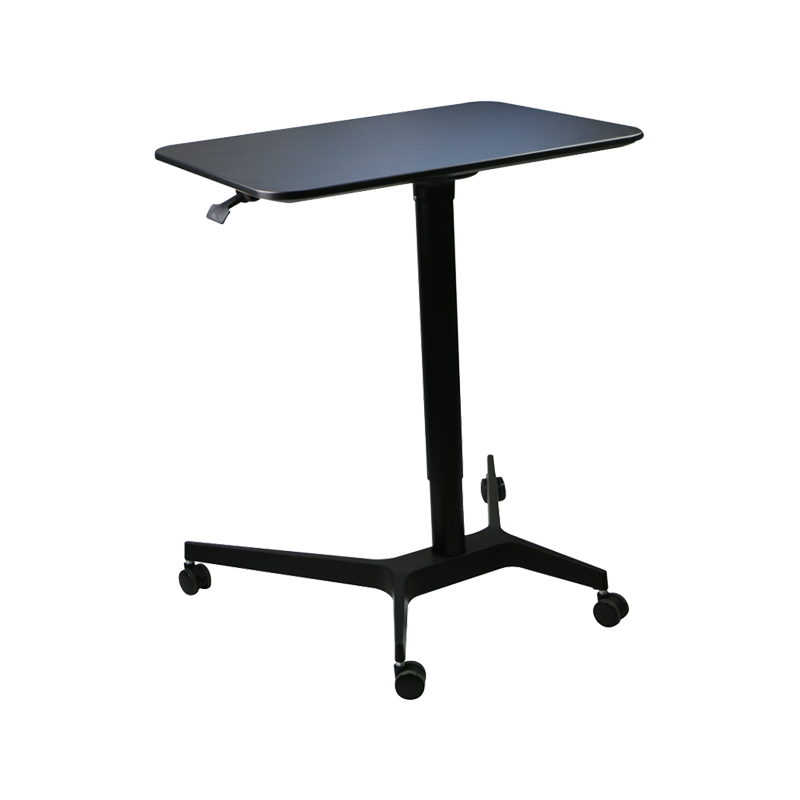
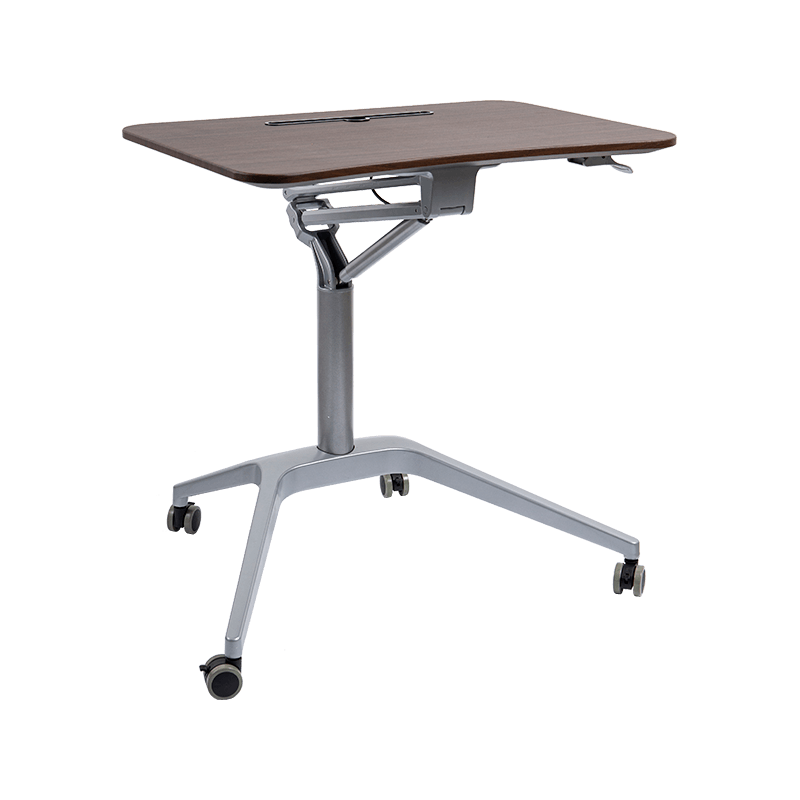
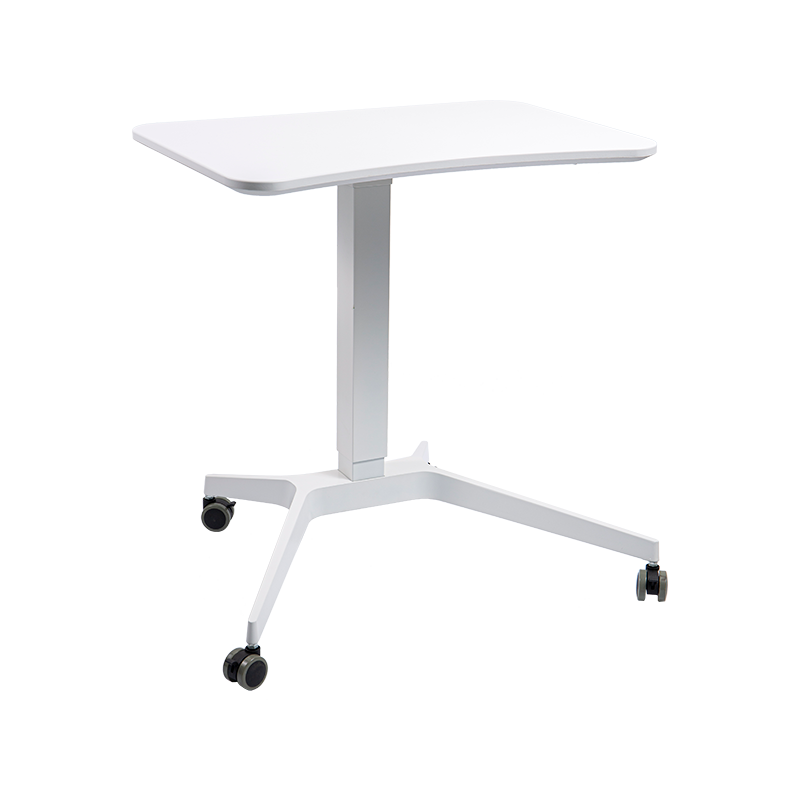
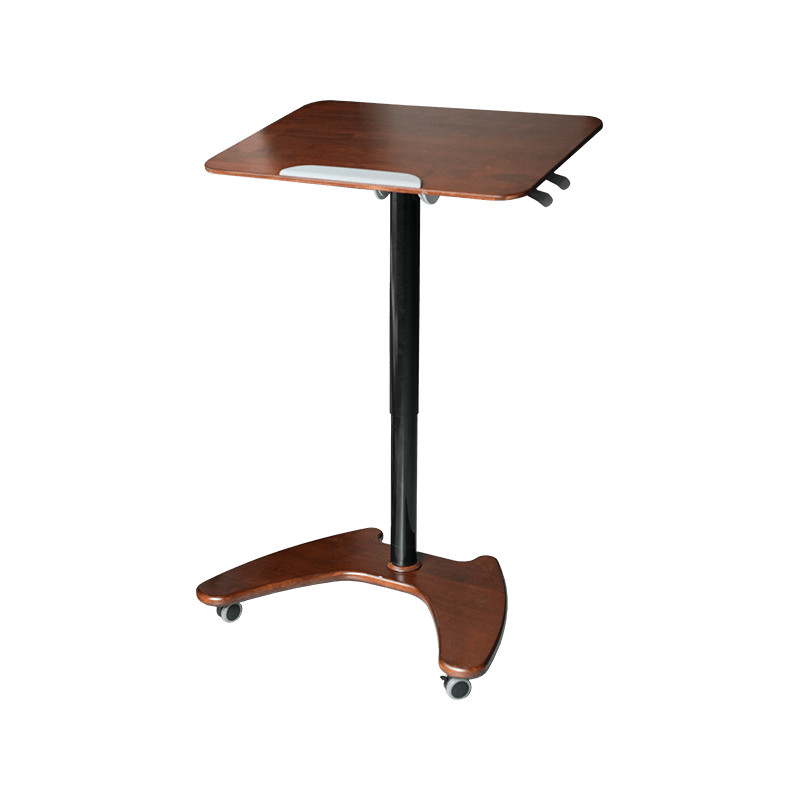
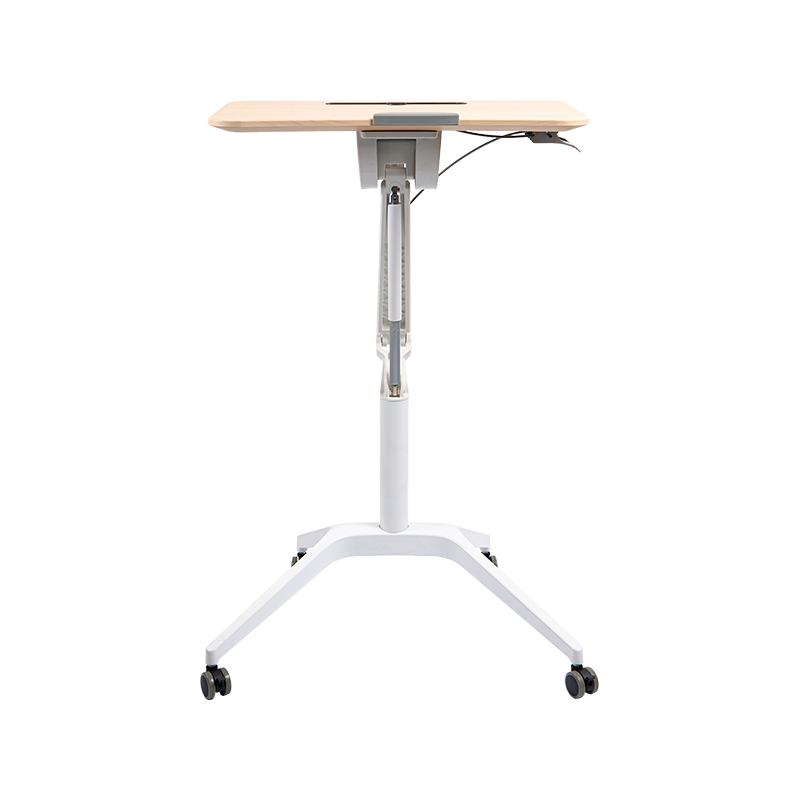
The SK12 Pneumatic Height-Adjustable Desk is designed for users who need height flexibility, compact dimensions, convenient mobility, and a visually distinctive appearance. Its gas spring lifting system provides adjustment from 715 mm to 1130 mm. The desk combines an aluminum and iron frame, a 25 mm MDF tabletop with PVC vacuum forming, and three casters, including two lockable wheels. Its cat-head panel and cat-paw-style column structure give it a recognizable appearance while also supporting practical use in homes, offices, studios, classrooms, and other indoor environments.
Unlike many conventional electric standing desks, the SK12 does not require a motor, control box, handset, or permanent electrical connection for height adjustment. Instead, it uses a pneumatic gas spring mechanism. This approach offers a quiet and straightforward method of adjustment while supporting mobile use. For workspaces where simplicity, low visual clutter, and easy repositioning are priorities, the product provides a valuable alternative to electrically powered desks.
Manufactured by SuZhou Skyhone Intelligent Technology Co., Ltd., the SK12 reflects a product-development approach focused on standing desks and flexible office solutions. The company is engaged in research and development, production, sales, and service, and operates in Suzhou, an important manufacturing center in China’s Yangtze River Delta. By drawing on regional industrial support and intelligent manufacturing capabilities, the company serves customers seeking practical adjustable furniture for modern work environments.
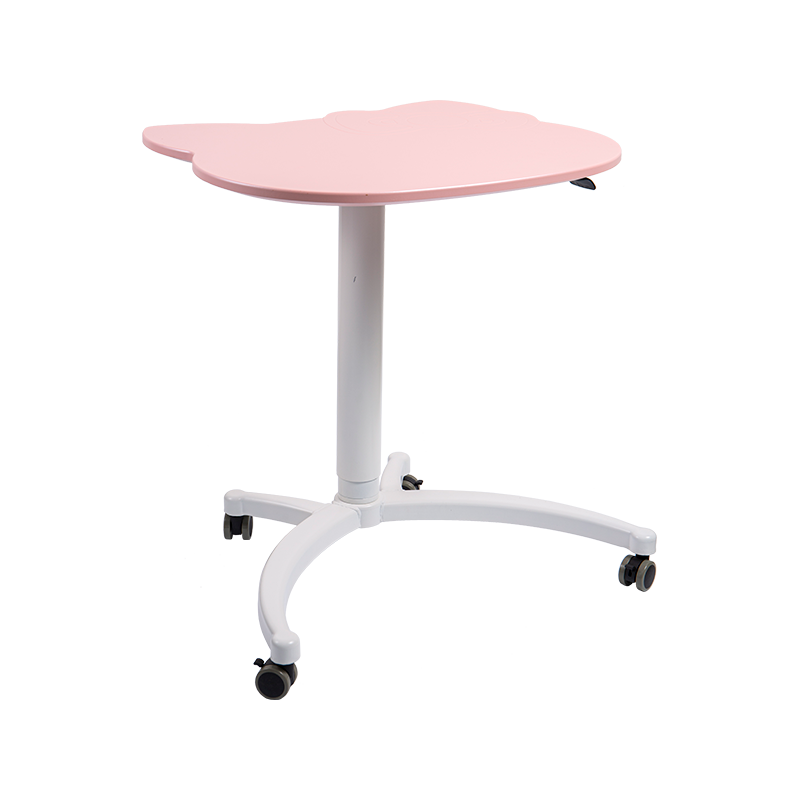
SK12 (Cat Head Leg Column + Cat Head Panel Column) Pneumatic Height-Adjustable Desk
1. The Product Concept Behind the SK12
The SK12 is not simply a desk with a moving tabletop. It is a compact workstation designed around three connected requirements: adjustable height, controlled mobility, and efficient use of space. These requirements are increasingly important in contemporary offices, residential work areas, learning spaces, and professional studios.
Its lifting range extends from 715 mm to 1130 mm. The lower setting is appropriate for seated activities, while the upper setting can support standing work for many users. The height range also allows the desk to be adapted to different chairs, user preferences, and work styles. Instead of relying on one fixed height, the desk can be repositioned throughout the day according to the task being performed.
The tabletop measures 680 mm by 560 mm and has a thickness of 25 mm. This compact footprint is especially useful where a full-size office desk would occupy too much floor area. It can serve as a personal computer workstation, a reading table, a presentation surface, a mobile teaching station, or a temporary work surface in a multipurpose room.
The product’s design language is based on a cat-head panel and cat-paw-inspired supporting structure. This gives the desk a softer and more expressive visual identity than a purely industrial workstation. The appearance may be particularly suitable for creative rooms, children’s learning spaces, educational environments, home offices, and commercial interiors that benefit from furniture with a distinctive character.
2. Main Technical Specifications
| Specification | Product Detail |
|---|---|
| Product model | SK12 |
| Product category | Pneumatic height-adjustable table |
| Lifting range | 715 mm to 1130 mm |
| Tabletop dimensions | 680 mm × 560 mm × 25 mm |
| Tabletop construction | 25 mm MDF with PVC vacuum forming |
| Main structure material | Aluminum and iron |
| Surface color | White |
| Surface treatment | Powder coating |
| Casters | Three casters: two with locks and one without a lock |
| Panel color options | White and maple wood |
| Lifting principle | Gas spring lifting |
These specifications show how the SK12 balances functionality and compactness. The tabletop is large enough for common daily tasks while remaining easier to move and place than a large executive desk. The aluminum and iron structure combines two commonly used furniture materials, allowing the product to integrate lightweight structural elements with durable metal support components.
The white powder-coated frame creates a clean appearance and supports easier coordination with modern interiors. Users can select a white or maple wood panel appearance depending on whether they prefer a minimalist style or a warmer furniture aesthetic. This choice allows the same basic desk structure to be used in different design environments.
3. How the Pneumatic Height-Adjustment System Works
The SK12 uses a gas spring to support height adjustment. A gas spring is a sealed mechanical component that uses compressed gas to assist movement. In a height-adjustable desk, the gas spring helps counterbalance part of the tabletop and structural load, making it easier for the user to move the desk between lower and higher positions.
This type of mechanism has several practical characteristics. First, it does not require an electric motor or an external power supply. This makes the desk suitable for locations where a power outlet is inconvenient, unavailable, or intentionally avoided. Second, the system avoids the motor noise associated with some powered desks. Third, the control concept is relatively simple, which can help reduce the number of electronic components integrated into the product.
A pneumatic mechanism also supports quick changes between work positions. A user can lower the desk for seated work, raise it for standing work, and reposition it again as required. The exact adjustment process depends on the final operating control and product configuration, but the underlying principle is based on gas-assisted movement rather than motor-driven lifting.
For organizations managing multiple work areas, the absence of electrical controls can also simplify placement. The desk can be installed in rooms where cables must be minimized, where furniture is regularly rearranged, or where a clean and uncluttered appearance is desired.
3.1 Advantages Compared with Fixed-Height Desks
A fixed-height desk offers limited ergonomic flexibility. If its height is not suitable for a particular chair, user, or activity, the user may compensate by changing posture, raising the shoulders, bending the neck, or working at an uncomfortable angle. These issues can become more noticeable during long periods of computer use or reading.
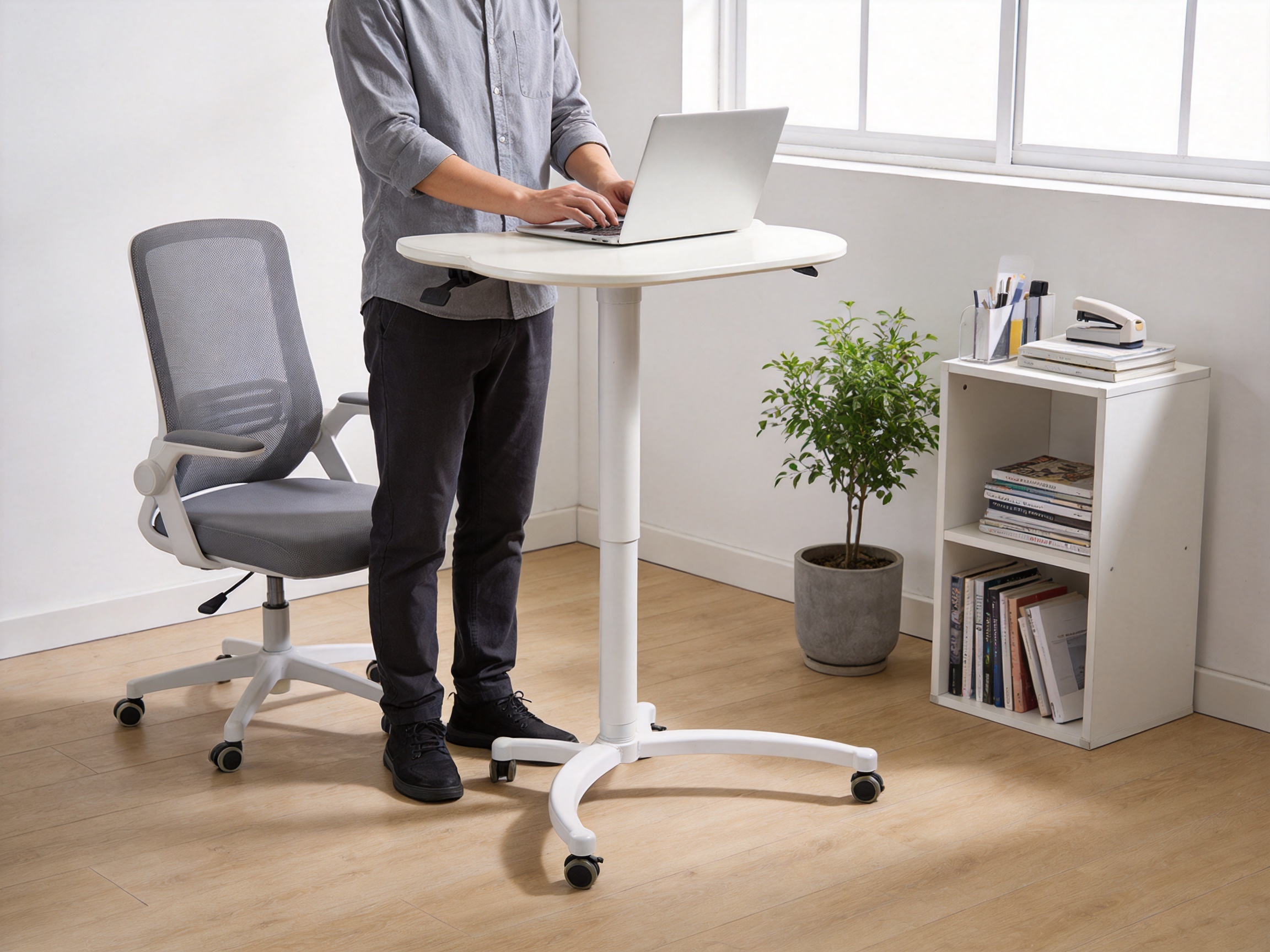
The SK12 allows the working surface to be adjusted to the activity. A lower position can support seated work, while a higher position can support standing activities. The ability to change position may encourage users to vary their posture during the day rather than remaining in one position continuously.
The adjustable range is also useful when the desk is shared. Different users may have different body proportions and preferences. A mobile pneumatic desk can be configured for one person and then adjusted for another without replacing the furniture or adding permanent accessories.
3.2 Advantages Compared with Electric Adjustable Desks
Electric desks remain popular for larger workstations and frequent powered adjustment, but they can require motors, wiring, power supplies, control panels, and additional cable management. These components may increase product complexity and may limit placement in rooms without convenient electrical access.
The SK12 offers a different set of priorities. Its pneumatic system is independent of electrical power, which can make installation and relocation easier. It also avoids the need to route a power cord across a floor or around a mobile workstation. For compact desks and short-distance repositioning, this simplicity can be a meaningful advantage.
The product is particularly suitable for users who value direct mechanical operation, quiet movement, and reduced dependence on electrical components. It can complement, rather than replace, electric desks in a broader furniture portfolio. Electric models may be preferred for large desktops and heavy equipment, while a pneumatic mobile model may be better suited to compact, flexible, or frequently reconfigured spaces.
4. Tabletop Construction and Everyday Usability
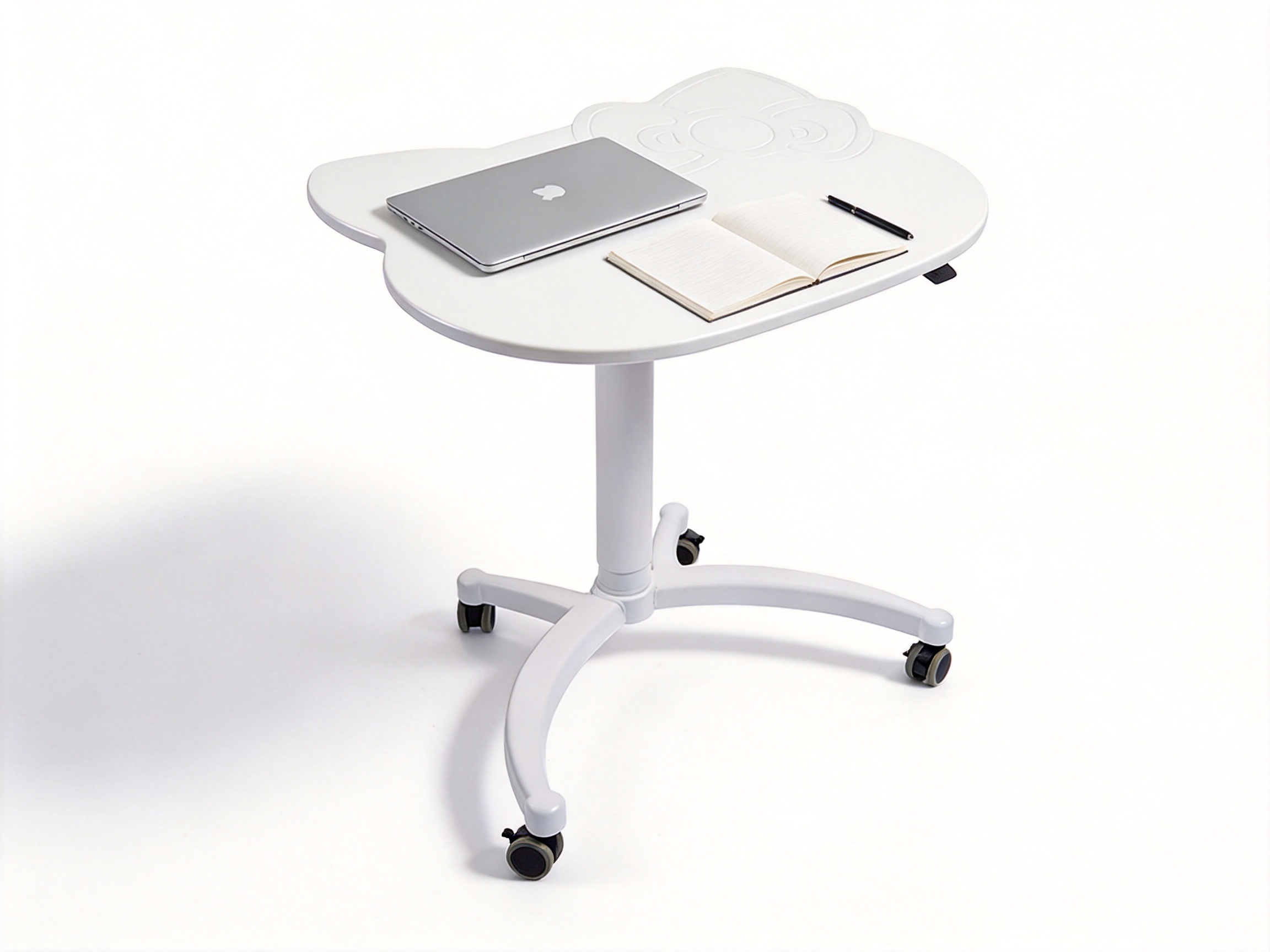
The SK12 tabletop is made from 25 mm MDF with PVC vacuum forming. MDF, or medium-density fiberboard, is commonly used in furniture because it provides a relatively uniform and smooth panel structure. The 25 mm thickness gives the tabletop a substantial appearance and supports a stable working surface for normal office, study, reading, and device-related activities.
The PVC vacuum-formed layer contributes to the tabletop’s finished appearance and can simplify routine cleaning. A smooth surface is useful in environments where the desk may be used for writing, computer work, classroom activities, or creative projects. Users can generally remove ordinary dust and light surface marks more easily from a finished panel than from a rough or untreated board.
Vacuum forming also makes it possible to create a continuous-looking panel surface around shaped areas. In a product with a distinctive cat-head design, this manufacturing approach can support the visual integration of the panel shape and its surface finish. The result is a desk that is functional but also designed to contribute to the character of the room.
The 680 mm by 560 mm desktop footprint is compact enough for space-efficient use. It can fit into a home office corner, beside a sofa or bed for occasional work, in a small studio, or within a classroom where several workstations are arranged together. At the same time, the surface provides useful room for a laptop, keyboard, notebook, and everyday office accessories.
4.1 White and Maple Wood Appearance Options
The SK12 is available with white and maple wood panel colors. White offers a clean, light, and contemporary appearance. It can help a small room feel visually open and can coordinate with white walls, light flooring, and minimalist furniture.
The maple wood option provides a warmer visual effect. It may be appropriate for residential interiors, libraries, educational spaces, studios, and offices that combine modern metal structures with natural-looking surfaces. By offering both options, the product can serve customers with different interior-design preferences without changing its essential functional platform.
5. Mobility, Positioning, and Stability
Mobility is one of the defining elements of the SK12. The desk is equipped with three casters, two of which include locking mechanisms and one of which does not. This configuration allows the desk to be moved when necessary and secured when it reaches the desired location.
A mobile desk is useful in rooms that serve multiple purposes. For example, a home office may become a guest room, a classroom may be rearranged for group activities, and a studio may require different layouts for different projects. Instead of lifting the complete desk or leaving it in a permanent position, users can reposition the product as the room changes.
Lockable casters are important because mobility should not eliminate control. Once the desk has been placed, the locking wheels can help limit unwanted movement during writing, keyboard use, reading, or standing activities. This creates a practical distinction between mobile mode and working mode.
The three-caster configuration also supports a compact base layout. It is important for users to position the desk on a suitable indoor floor and apply the wheel locks when stability is required. As with all mobile furniture, the working surface should not be overloaded beyond the intended use, and the desk should be moved carefully over uneven thresholds or floor transitions.
5.1 Mobile Use in Professional Environments
In offices, the SK12 can function as a flexible touchdown station, a temporary meeting desk, or an auxiliary workstation. It can be moved between work zones when teams change projects or when a room is used for multiple purposes. Its compact size is helpful in offices where floor space must be used efficiently.
In educational settings, the desk can support individual reading, device use, demonstrations, or flexible classroom layouts. Teachers and students may benefit from a work surface that can be adjusted and repositioned without being permanently fixed to one location.
In studios and creative spaces, the desk can serve as an adaptable support table. Artists, designers, photographers, and makers often change their working posture and room arrangement. A mobile height-adjustable platform can be placed near equipment, storage, or another worktable as required.
6. Structural Materials and Powder-Coated Finish
The primary structural materials are aluminum and iron. Each material brings different practical characteristics to the overall construction. Aluminum is commonly valued in furniture structures for its relatively low weight and corrosion resistance. Iron is frequently used where a strong and rigid metal component is required.
Combining aluminum and iron allows the design to use materials according to the needs of different structural areas. The result is intended to balance manageable product weight with the support required for a height-adjustable workstation. This combination also contributes to the product’s contemporary appearance.
The structure receives a powder-coated surface treatment. Powder coating is a dry finishing process in which a powdered coating material is applied to a prepared metal surface and then cured. The process creates a continuous finish that can improve resistance to ordinary wear and environmental exposure compared with an untreated metal surface.
For an office or residential product, surface durability is important because the desk may be touched, moved, cleaned, and exposed to everyday friction. A powder-coated finish also supports consistent color and provides a smooth visual appearance across the metal components.
The white surface color contributes to the SK12’s clean appearance. It can be paired with the white tabletop for a coordinated monochrome look or combined with the maple wood panel for contrast between the warm surface and the light-colored frame.
6.1 Maintenance Benefits
Routine maintenance should focus on keeping the tabletop clean, checking the caster locks, and inspecting visible structural connections. The PVC-finished tabletop can generally be wiped with a soft cloth and a suitable mild cleaning solution. Abrasive tools and harsh chemicals should be avoided unless specifically approved for the surface material.
The metal structure should be kept dry and should not be exposed unnecessarily to standing water or corrosive substances. Periodic inspection can help users identify loose hardware, unusual movement, or caster problems at an early stage. Proper maintenance supports the product’s appearance and helps preserve its intended operation.
7. Design Advantages Over Conventional Competitors
The SK12 competes in a broad market that includes fixed-height desks, electric standing desks, manually adjustable desks, and compact rolling tables. Its advantages are most evident when the buyer values pneumatic adjustment, mobile operation, compact dimensions, and distinctive design.
7.1 A More Flexible Alternative to Fixed Tables
Compared with a conventional fixed table, the SK12 offers a wider range of usable positions. The user is not restricted to one height selected during installation. This flexibility can improve the usefulness of the furniture for different activities and different users.
The height range from 715 mm to 1130 mm is also broad enough to support both seated and standing work scenarios. While the ideal position depends on user height and task requirements, the adjustment range provides significantly more choice than a standard non-adjustable table.
7.2 A Simpler Alternative to Powered Systems
Compared with an electric standing desk, the SK12 eliminates the need for a motorized lifting system and power connection. This can reduce cable clutter and make the desk easier to place in rooms where electrical access is limited.
The pneumatic concept may also be attractive to buyers seeking a quieter and more mechanically direct experience. Instead of activating an electric drive, the user operates a gas-assisted adjustment system. This is especially relevant for quiet study areas, shared rooms, classrooms, and spaces where unnecessary electrical noise is undesirable.
7.3 A More Distinctive Alternative to Generic Mobile Tables
Many mobile tables prioritize basic functionality but offer little visual identity. The SK12 takes a different approach through its cat-head panel and cat-paw-inspired column design. This can help the desk stand out in hospitality interiors, education spaces, creative environments, and residential rooms.
Its visual character does not replace practical performance. The design is combined with an adjustable height range, a powder-coated metal structure, a finished tabletop, and lockable casters. This combination makes the product more than a decorative table; it is a functional mobile workstation with a recognizable design concept.
7.4 Efficient Use of Limited Floor Space
The compact tabletop dimensions provide an advantage in smaller rooms. A large desk may be unnecessary for laptop work, reading, or short-term standing tasks. The SK12 can provide the essential working surface without occupying the same amount of floor area as a full-size workstation.
This makes it relevant for apartments, dormitory-style rooms, compact offices, learning corners, clinics, studios, and shared work areas. It can also be used as a supplementary desk where the primary workstation is already occupied.
8. Manufacturing Strengths and Product Development Capabilities
SuZhou Skyhone Intelligent Technology Co., Ltd. is focused on the research and development, production, sales, and service of standing desks. This integrated involvement across the product life cycle provides a foundation for understanding the needs of customers from design through delivery and after-sales support.
The company is based in Suzhou, Jiangsu Province, within the Yangtze River Delta. This region is recognized as an important manufacturing and industrial area with extensive supplier networks, engineering resources, logistics infrastructure, and production capabilities. Such an environment can support efficient coordination between design, material sourcing, fabrication, finishing, assembly, and distribution.
The company describes its manufacturing approach as supported by regional industrial-chain resources and intelligent manufacturing advantages. In practical terms, this provides a basis for developing products that combine mechanical function, furniture construction, metal processing, surface finishing, and market-oriented design.
8.1 Research and Development Orientation
Height-adjustable desks require more than a tabletop and a frame. The design must consider lifting range, structural alignment, movement control, material compatibility, visual proportion, user interaction, and long-term daily use. A company engaged in product research and development can evaluate these elements as an integrated system.
For the SK12, the development concept includes a pneumatic mechanism, a compact panel, a specialized visual form, and a mobile caster base. These features need to work together. The desk must be visually distinctive without compromising practical use, and it must be compact without losing the stability expected from a working surface.
Product development also involves adapting designs for different application environments. A desk used in a home office may require a different appearance from one used in a classroom or a studio. Offering white and maple wood panel options is one way to make the platform more adaptable to different customer requirements.
8.2 Production and Process Coordination
The SK12 includes multiple manufacturing stages. The tabletop requires panel preparation and PVC vacuum forming. The metal structure requires material cutting, shaping, joining, surface preparation, and powder coating. The gas spring and caster components must be incorporated into the complete assembly. Each stage affects the final fit, appearance, and operating experience.
Coordinating these processes is important for consistent production. The tabletop dimensions must match the frame. The lifting components must be aligned with the columns. The caster mounting points must support the intended mobile configuration. The powder-coated components must be handled carefully during assembly to help reduce visible damage.
A manufacturing enterprise with experience in adjustable desk products can use process coordination to improve repeatability. Consistent specifications allow customers to receive products with predictable dimensions, appearance, and functional characteristics across production batches.
8.3 Intelligent Manufacturing Advantages
Modern furniture production increasingly benefits from digital planning, structured process control, and efficient production organization. Intelligent manufacturing does not mean that every operation is fully automated. It can also include better production scheduling, traceable material management, standardized assembly procedures, and more consistent quality inspection.
For an adjustable desk, process discipline is especially important because the product contains moving parts. A small error in alignment can influence the smoothness of adjustment, the fit between components, or the stability of the completed structure. Organized manufacturing practices help reduce variation and support reliable assembly.
The company’s location within a developed industrial region can also support access to specialized suppliers and production services. This is valuable when a product combines furniture panels, metal components, gas springs, casters, coatings, and packaging in one finished unit.
8.4 Sales and Service Integration
Standing desk buyers may include distributors, furniture brands, office-equipment suppliers, educational purchasers, project contractors, and end users. These customers can have different priorities regarding product specifications, packaging, customization, delivery, and technical communication.
Because the company is involved in sales and service as well as manufacturing, it can coordinate product information across these stages. Clear communication regarding tabletop dimensions, materials, height range, surface colors, and caster configuration helps buyers select the correct model for their intended application.
For business customers, the ability to discuss product requirements with a manufacturer is also useful when planning larger projects. The SK12 can be evaluated as part of a broader portfolio of adjustable office tables, electric linear actuator products, gas springs, and related ergonomic furniture solutions.
9. Application Scenarios
9.1 Home Offices
In a home office, space is often limited and rooms may serve more than one purpose. The SK12 can be placed in a study, bedroom, living area, or multipurpose room. Its compact surface supports essential computer and writing tasks, while the casters allow the desk to be moved when the room needs to be rearranged.
The pneumatic height range allows users to vary their working position during the day. A user may sit for concentrated computer work, raise the surface for standing calls, and lower it again for reading or writing. The white or maple wood panel option can also be selected to match the room’s interior design.
9.2 Educational Institutions
Schools, training centers, libraries, and educational institutions increasingly use flexible furniture to support different teaching methods. A mobile adjustable desk can be used for individual study, small-group activities, presentations, or device-based learning.
The lockable casters allow the desk to be moved between activities and then secured in position. The compact dimensions can make it easier to arrange multiple workstations while preserving circulation space. The distinctive appearance may also be suitable for children’s learning areas and creative classrooms.
9.3 Studios and Creative Workspaces
Creative professionals often change tasks throughout the day. Sketching, editing, reviewing materials, using a laptop, and discussing concepts may require different working positions. The SK12 can function as a flexible supplementary surface that moves with the workflow.
Its maple wood panel option may coordinate with warm studio interiors, while the white finish may suit modern design rooms. Because the desk does not depend on an electrical lifting motor, it can be positioned near other equipment without adding another power cable to the workspace.
In offices, the product can be used as a compact touchdown desk, reception support table, mobile meeting surface, or temporary workstation. Shared work areas benefit from furniture that can be adjusted for different users and repositioned according to changing space requirements.
The desk may also serve as an auxiliary surface beside a main workstation. For example, a user can keep documents, a second device, or meeting materials on the SK12 and move it when the task is complete. Its small footprint allows it to supplement larger desks without completely reorganizing the room.
9.5 Residential and Care-Related Indoor Environments
The adjustable height and mobile design may also be useful in residential settings where users need a flexible surface for reading, writing, device use, or light indoor activities. The desk should always be used according to its intended purpose and within suitable load and floor conditions.
Its ability to move between rooms can be useful when a single desk is shared by multiple family members. The height adjustment allows the surface to be adapted to different users, while the locking casters help keep it in place during use.
10. Ergonomic Value of Height Variation
Ergonomics is not determined by the desk alone. Chair height, monitor position, keyboard placement, lighting, user posture, and work habits all influence comfort. However, a height-adjustable desk provides an important foundation for creating a more adaptable workstation.
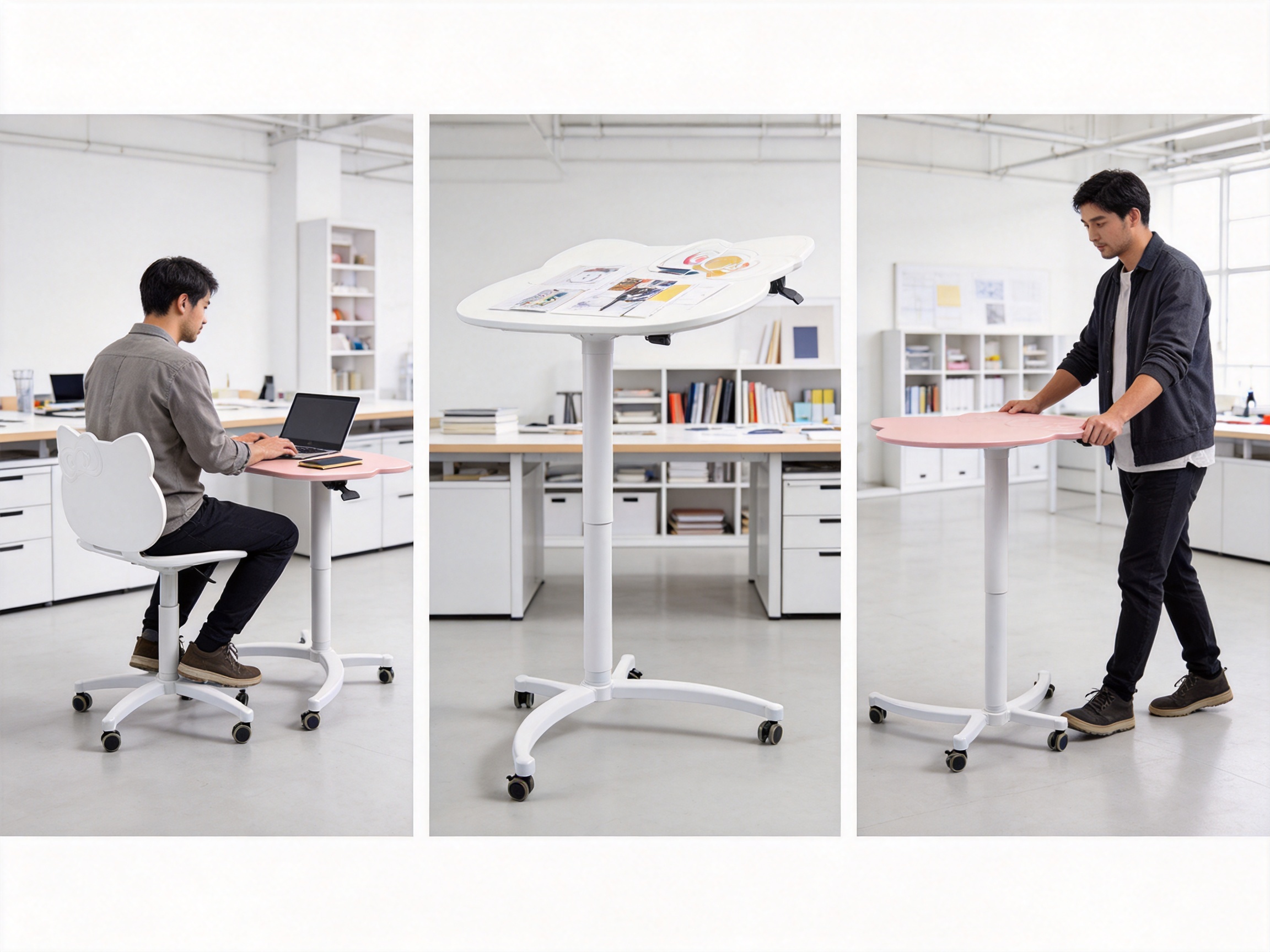
At a suitable seated height, the user can aim to keep the shoulders relaxed and the forearms reasonably supported during computer work. At a suitable standing height, the user can maintain a more natural upper-body position while avoiding excessive bending toward the work surface. The appropriate height varies according to the individual and the task, so the benefit of adjustability lies in the ability to make these changes.
Alternating between sitting and standing may also help users avoid remaining in one posture for excessively long periods. Short periods of movement and position changes can make the workday feel more dynamic. The SK12 supports this behavior through its 715 mm to 1130 mm pneumatic adjustment range.
Users should still follow good workstation practices. Frequently used items should remain within comfortable reach, screens should be placed at an appropriate viewing position, and the desk should not be overloaded. Height adjustment is most effective when combined with sensible posture and regular breaks.
11. Installation, Use, and Maintenance Considerations
Before using the SK12, the desk should be assembled according to the manufacturer’s instructions. The tabletop, columns, casters, and gas spring components should be checked for correct connection and alignment. All visible fasteners should be tightened appropriately without damaging the panel or metal components.
The desk should be placed on a stable indoor floor. When the desired position has been reached, the two lockable casters should be engaged as appropriate. Users should avoid pushing or pulling the desk aggressively while the locks are engaged. When moving the product, it is advisable to remove loose objects from the tabletop and guide the desk carefully.
The height-adjustment function should operate smoothly. If unusual resistance, noise, tilting, or instability appears, the desk should be inspected before continued use. Users should not disassemble the gas spring unless they are qualified and authorized to do so, because gas springs are pressurized components.
The tabletop can be cleaned with a soft cloth and a mild solution suitable for PVC-finished furniture surfaces. The powder-coated structure can also be wiped gently. Strong solvents, abrasive pads, excessive water, and sharp objects may damage the surface finish.
Regular checks of the casters, column connections, tabletop attachment points, and visible hardware can help maintain safe and reliable operation. Proper use and maintenance are particularly important in schools, offices, and shared spaces where the desk may be moved or adjusted frequently by different users.
12. Why the SK12 Is Suitable for Buyers Seeking Custom Furniture Solutions
Furniture purchasers often need more than a standard product. They may be selecting items for a particular interior project, distribution channel, office program, educational installation, or ergonomic furniture range. The SK12 provides a defined product platform with clear specifications and a distinctive design direction.
The combination of a pneumatic lift, compact tabletop, white or maple wood panel options, aluminum and iron construction, powder coating, and lockable casters gives buyers several functional and visual selling points. It can be presented as a compact ergonomic table, a mobile standing desk, a pneumatic workstation, or a flexible educational table depending on the target market.
For distributors, the product can complement electrically powered height-adjustable desks and other office furniture. Offering both pneumatic and electric models allows a supplier to address different budgets, room layouts, and user preferences. Some customers may want a large motorized desk, while others may prioritize a compact and cable-free design.
For project customers, the product’s appearance may help create a consistent visual theme. White frames can support a bright and modern interior, while maple wood panels can add warmth. The recognizable cat-head and cat-paw concept may be especially useful in themed environments or spaces that aim to create a friendly and memorable atmosphere.
13. Frequently Asked Questions
Q1: What type of desk is the SK12?
The SK12 is a pneumatic height-adjustable desk. It uses a gas spring lifting system rather than an electric motor to support adjustment between 715 mm and 1130 mm.
Q2: Can the desk be used for both sitting and standing?
Yes. Its height range is designed to support seated and standing work positions. The correct height depends on the user’s body dimensions, chair, task, and preferred posture.
Q3: Does the SK12 require electricity?
The height-adjustment principle is pneumatic and gas spring based, so the desk does not require an electric lifting motor or a permanent electrical connection for adjustment.
Q4: What are the tabletop dimensions?
The tabletop measures 680 mm by 560 mm and has a thickness of 25 mm.
Q5: What is the tabletop made from?
The tabletop consists of 25 mm MDF with PVC vacuum forming. This construction provides a finished surface suitable for routine office, study, reading, and device-related activities.
Q6: What colors are available?
The structure has a white powder-coated finish. The panel is available in white and maple wood color options.
Q7: How many casters does the desk have?
The desk has three casters. Two casters include locking mechanisms, while one caster does not include a lock.
Q8: Can the desk be moved between rooms?
Yes. The caster configuration is intended to support indoor mobility. Users should clear loose objects from the tabletop, move the desk carefully, and engage the locks when the desk is in the desired working position.
Q9: What materials are used in the frame?
The main structural materials are aluminum and iron. These materials are combined within the desk structure to support a balance of manageable weight, metal strength, and contemporary appearance.
Q10: What is the purpose of the powder coating?
Powder coating provides a finished surface for the metal structure. It supports the product’s white appearance and helps improve resistance to ordinary wear and environmental exposure.
Q11: Where can the SK12 be used?
The desk is suitable for home offices, studios, educational institutions, shared offices, reading areas, and other indoor environments that require flexible work height and convenient repositioning.
Q12: How is the product different from a standard fixed-height table?
A fixed-height table offers one permanent working level. The SK12 allows the user to change the height for different tasks, users, and postures. It also provides mobile positioning through its casters.
Q13: How is it different from an electric standing desk?
The SK12 uses a gas spring lifting system and does not depend on an electric motor or power cable for height adjustment. It is therefore suited to customers who prefer mechanical simplicity, quiet adjustment, and mobile use.
Q14: Who manufactures the SK12?
The SK12 is manufactured by SuZhou Skyhone Intelligent Technology Co., Ltd., a company focused on the research and development, production, sales, and service of standing desks and related adjustable furniture solutions.
Q15: What should users check during maintenance?
Users should periodically check the caster locks, visible fasteners, tabletop connections, columns, and general operating condition. The tabletop and powder-coated frame should be cleaned with suitable non-abrasive materials.
14. Conclusion
The SK12 Pneumatic Height-Adjustable Desk combines flexible height adjustment, compact dimensions, mobility, and distinctive visual design in one practical workstation. Its 715 mm to 1130 mm lifting range supports seated and standing activities, while the gas spring mechanism avoids the need for an electric lifting system. The 680 mm by 560 mm tabletop provides a useful surface for daily work without demanding the floor area of a large office desk.
The 25 mm MDF tabletop with PVC vacuum forming offers a finished and easy-to-maintain working surface. The aluminum and iron structure provides a combination of lightweight and durable metal components, while the white powder-coated finish supports a clean appearance and everyday surface protection. White and maple wood panel choices allow the desk to fit different interior styles.
Its three-caster configuration, including two lockable wheels, makes the desk suitable for rooms that require flexible layouts. It can be repositioned for home working, classroom activities, studio projects, shared offices, and other indoor applications. Once positioned, the locks help provide greater control during use.
Compared with fixed-height tables, the SK12 offers greater ergonomic flexibility. Compared with many electric standing desks, it provides a simpler pneumatic alternative with reduced dependence on electrical infrastructure. Compared with generic mobile tables, it offers a more recognizable cat-head and cat-paw-inspired design while retaining practical workstation functions.
The product also reflects the manufacturing capabilities of SuZhou Skyhone Intelligent Technology Co., Ltd. The company’s involvement in research and development, production, sales, and service, together with its location in Suzhou’s developed manufacturing environment, supports an integrated approach to adjustable office furniture. Through coordinated material selection, tabletop processing, metal fabrication, powder coating, assembly, and product service, the company is positioned to provide flexible furniture solutions for customers in multiple markets.
For buyers looking for a compact, mobile, and power-independent adjustable desk, the SK12 offers a balanced solution. It is especially appropriate where workspace flexibility, visual appeal, simple operation, and efficient use of space are more important than large desktop capacity or motorized adjustment.
References
1. Product specification sheet for the SK12 Pneumatic Height-Adjustable Desk.
2. Product information concerning gas spring lifting mechanisms and adjustable workstation applications.
3. General manufacturing principles for MDF furniture panels and PVC vacuum forming.
4. General technical references concerning powder-coated metal furniture structures.
5. General ergonomic guidance for alternating seated and standing work positions.
6. Company information concerning research and development, production, sales, and service of standing desks.
7. General furniture maintenance practices for PVC-finished panels, powder-coated metal, and caster-equipped products.
Product: SK12 (Cat Head Leg Column + Cat Head Panel Column) Pneumatic Height-Adjustable Desk


- Contact Info
-
-
 Phone+86-15950656125
-
 Email
-
 AddressRoom 1007-1, South Building, Suyue Plaza, Suzhou Industrial Park, Suzhou City, Jiangsu Province, China
-
- Products
- Follow Us
- Need help? Please contact us
Copyright ©
SuZhou Skyhone Intelligent Technology Co., Ltd.
All Rights Reserved.
Privacy
Custom Ergonomic Adjustable Office Tables Manufacturers

