

 English
  русский
  Español
  عربى
عربى 
Content
- 1 Product Overview: A Compact Desk Built for Dynamic Work
- 2 Key Specifications
- 3 Ergonomic Value of Pneumatic Height Adjustment
- 4 Advantages Over Conventional Fixed-Height Desks
- 5 Advantages Over Electric Height-Adjustable Desks
- 6 Advantages Over Manual Crank and Pin-Adjustment Desks
- 7 Materials and Construction Quality
- 8 Design for Modern Offices
- 9 Applications in Training Rooms and Education
- 10 Applications in Laboratory and Technical Workstations
- 11 Applications in Home Offices
- 12 Manufacturing Strengths Behind the Product
- 13 Research and Development Orientation
- 14 Quality Control and Production Consistency
- 15 Why the Aluminum Tube Column Matters
- 16 Surface Finish and Cleanability
- 17 Mobility and Stability in Real Use
- 18 Procurement Benefits for Business Buyers
- 19 User Experience: Simple, Flexible, and Practical
- 20 Environmental and Operational Efficiency
- 21 Comparison with Common Competitor Solutions
- 22 Recommended Use Scenarios
- 23 Care and Maintenance Suggestions
- 24 Q&A Section
- 24.1 What is the main advantage of this pneumatic height-adjustable desk?
- 24.2 How does the gas spring lifting system differ from an electric lifting system?
- 24.3 Is the desk suitable for both sitting and standing work?
- 24.4 What materials are used in the tabletop?
- 24.5 What tabletop colors are available?
- 24.6 Why does the desk use an aluminum and iron structure?
- 24.7 Can the desk be moved easily?
- 24.8 Where can this desk be used?
- 24.9 How does this product compare with manual crank desks?
- 24.10 What manufacturing strengths support the product?
- 25 Conclusion
- 26 References
Pneumatic Height-Adjustable Desk with Aluminum Tube Column for Flexible Workspaces
2026-05-14
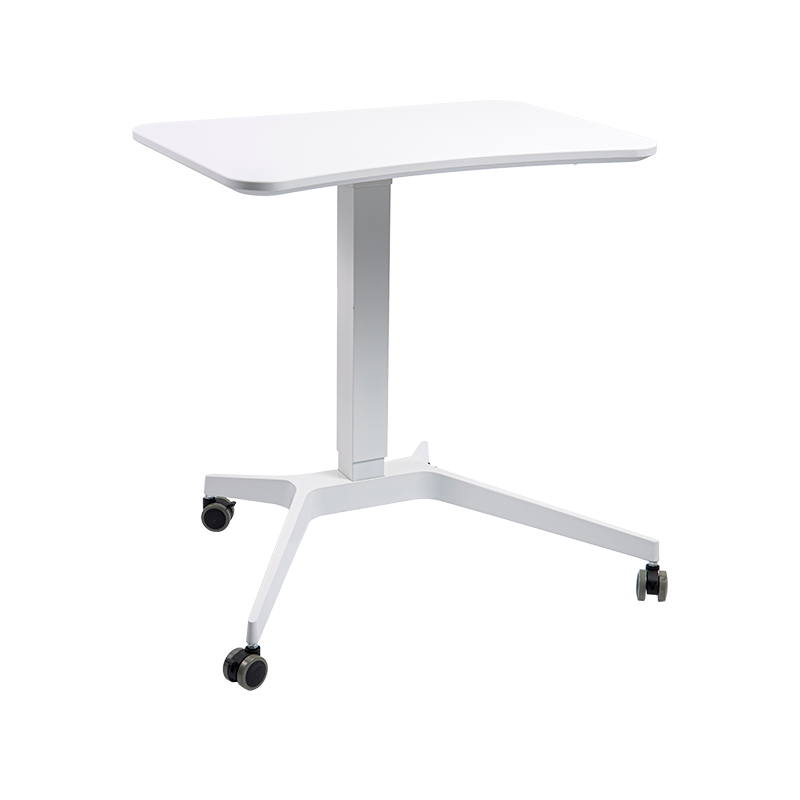
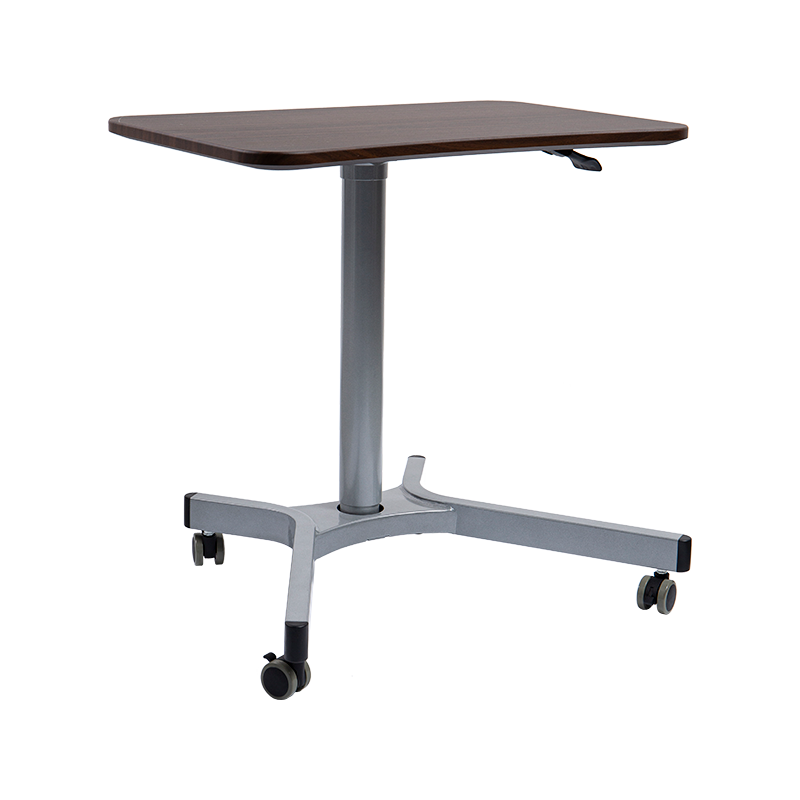
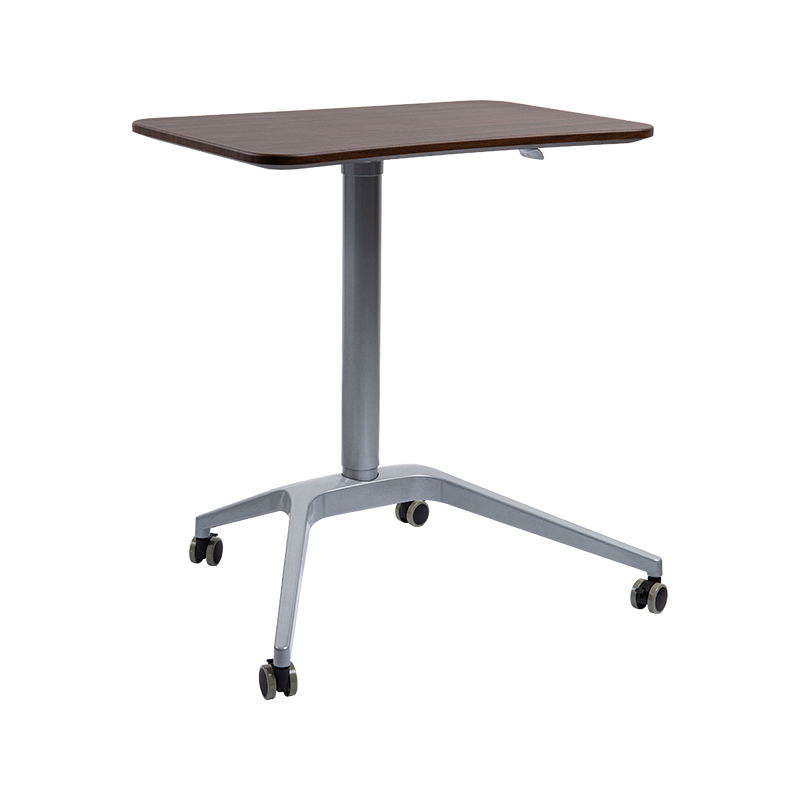
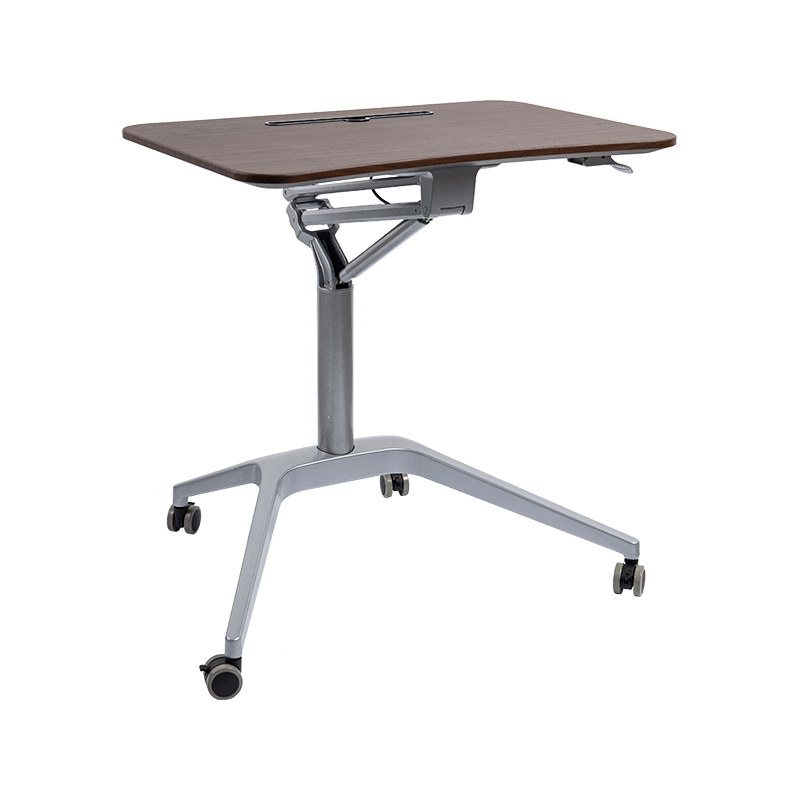
Modern work environments increasingly demand furniture that can adapt to changing tasks, body types, space layouts, and ergonomic preferences. A desk is no longer expected to be a static platform that simply holds a laptop, documents, or tools. It must support movement, help reduce sedentary habits, improve the efficiency of shared spaces, and remain durable under frequent adjustment. The TH08 pneumatic height-adjustable desk answers these needs with a compact desktop, a stand-alone aluminum tube column, gas spring lifting, and mobile caster support. Designed for offices, training rooms, laboratory workstations, home offices, and flexible collaborative areas, it provides a practical balance of mobility, stability, simple operation, and clean industrial design.
The core value of this desk lies in its pneumatic lifting mechanism. Unlike many conventional desks that depend on fixed legs, manual pin adjustment, or motor-driven systems, this model uses gas spring lifting to provide stepless height adjustment from 700mm to 1120mm. This range allows users to alternate between seated and standing work, supporting healthier posture variation throughout the day. The adjustment process is manual, smooth, and does not require electrical power, making the desk especially useful in areas where outlets are limited, cables must be minimized, or quick repositioning is required.
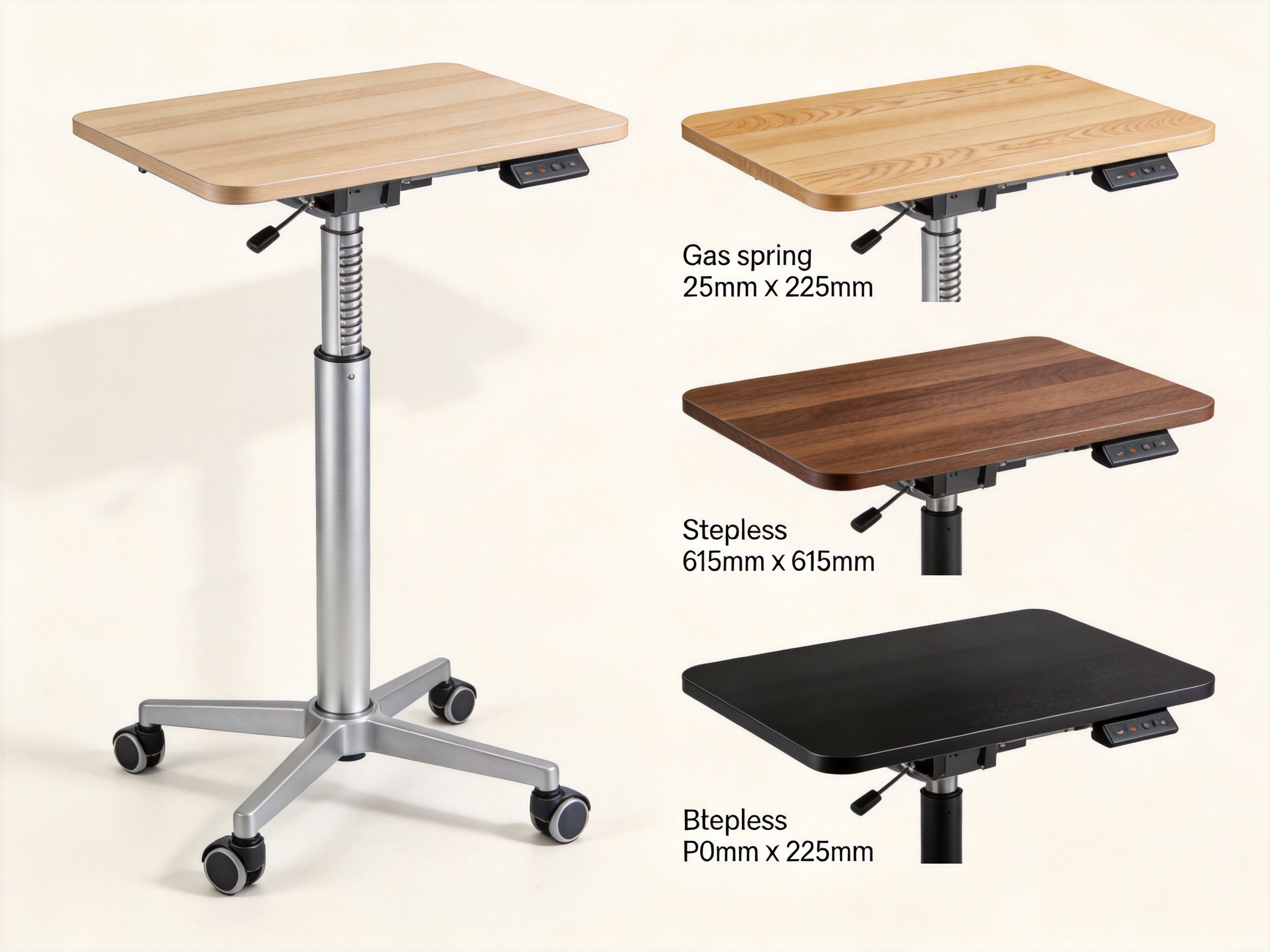
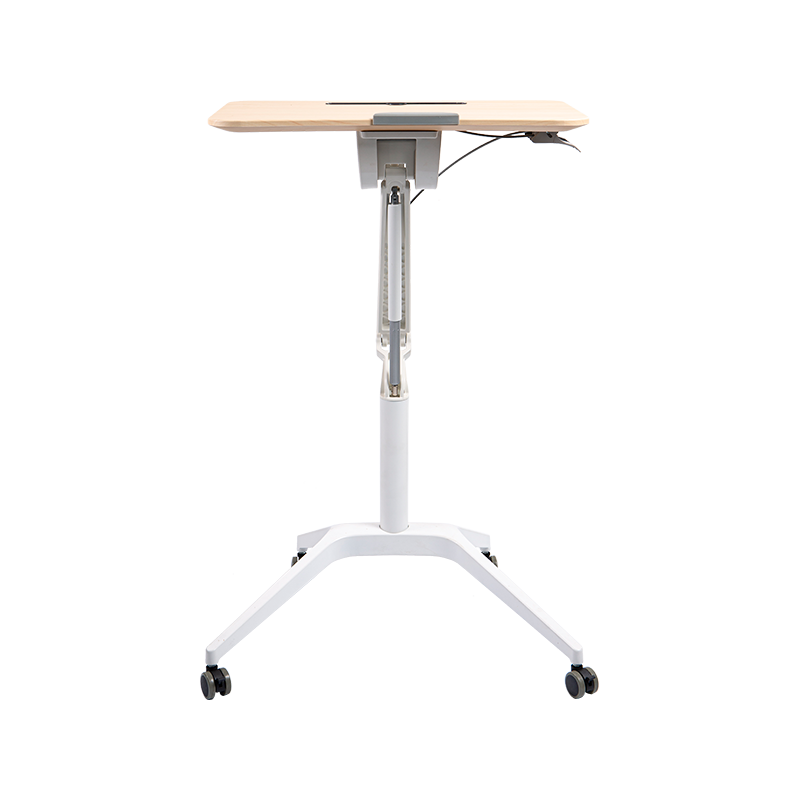
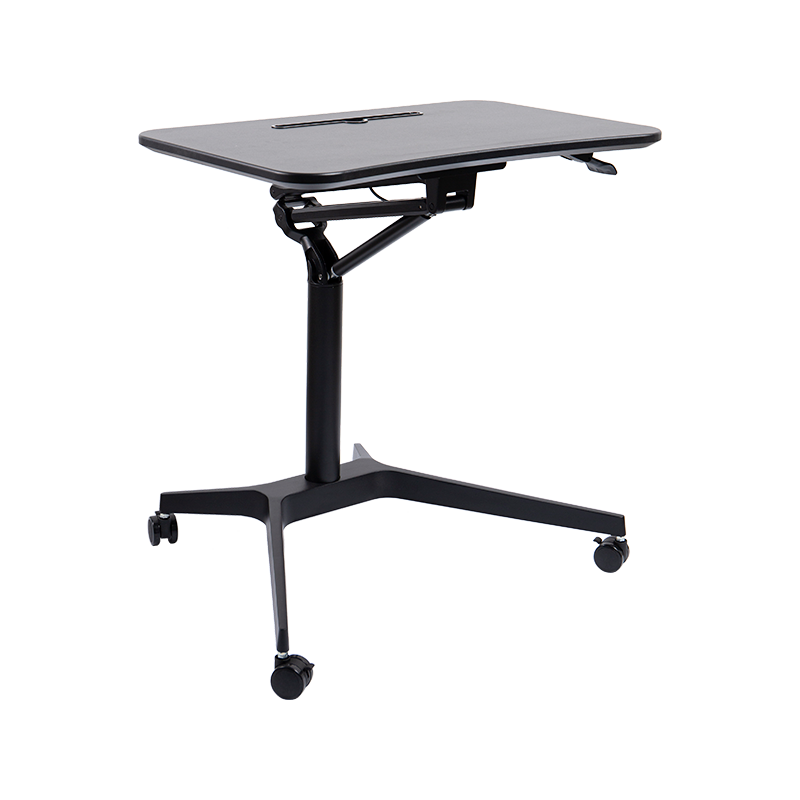
Another defining feature is the aluminum tube column design. The main supporting structure combines aluminum and iron, creating a sturdy yet visually refined frame. The surface is finished in silver powder coating, offering a consistent appearance that suits modern office interiors and helps protect the metal components. The desktop measures 715mm by 475mm with a 25mm thickness, offering a compact yet functional work surface for laptops, writing materials, tablets, instruments, or training equipment. The tabletop is made from 25mm MDF with PVC vacuum forming, available in Maple, Walnut, and Black finishes.
For buyers seeking ergonomic office tables, adjustable workstations, or movable standing desk solutions, this product offers a compelling combination of structural quality, efficient manufacturing, and user-centered design. It is particularly suitable for organizations that require furniture capable of supporting multi-user environments, fast workspace reconfiguration, and long-term daily use. Manufactured by SuZhou Skyhone Intelligent Technology Co., Ltd., a professional enterprise focused on the research, development, production, sales, and service of standing desks, the TH08 reflects the strengths of a company based in the Yangtze River Delta furniture industry cluster, where intelligent manufacturing and supply chain integration provide strong advantages.
Product Overview: A Compact Desk Built for Dynamic Work
The TH08 pneumatic height-adjustable desk is designed around a simple principle: a work surface should adapt to the user rather than forcing the user to adapt to a fixed height. With a lifting range of 700mm to 1120mm, the desk can serve users in seated positions, standing positions, and intermediate postures. This adaptability makes it suitable for concentrated desk work, short-term collaboration, teaching demonstrations, equipment operation, testing tasks, reception areas, and temporary workstations.
The desk has a stand-alone structure supported by an aluminum tube column. This central column design gives the product a clean and space-saving profile. Compared with wider dual-leg desk frames, the single-column configuration occupies less floor space and is easier to move between rooms. At the same time, the use of aluminum and iron provides the structural strength required for regular lifting and repositioning. The frame is finished with silver powder coating, which helps maintain a professional appearance while improving surface durability.
The desktop dimensions of 715mm by 475mm make the table compact enough for tight environments but large enough for common daily work. A laptop, mouse, notepad, and small accessories can fit comfortably on the surface. In training rooms, it can act as a personal learning table. In laboratories, it can serve as a height-adjustable support surface for lightweight instruments, documentation, or inspection tasks. In home offices, it can function as a flexible workstation that can be moved away when not needed.
The tabletop construction combines MDF substrate and PVC vacuum forming. MDF provides a stable and uniform base, while the PVC surface film gives the desk a clean finish and supports straightforward maintenance. The available panel colors—Maple, Walnut, and Black—allow the product to match various interior styles. Maple creates a brighter and lighter appearance, Walnut offers a warmer and more traditional furniture look, and Black supports a minimal and professional visual effect.
The base is equipped with four caster wheels, two with locking functions and two without. This configuration allows the desk to move easily while still providing stationary support when required. Users can roll the desk between rooms, adjust its position beside another workstation, or lock it in place during focused work. This combination of height adjustability and mobility is one of the main reasons the product stands apart from static desks or heavy electric standing desks that are difficult to relocate.
Key Specifications
Specification |
Details |
Product Type |
Pneumatic height-adjustable desk |
Lifting Range |
700mm to 1120mm |
Tabletop Dimensions |
715mm x 475mm x 25mm |
Tabletop Material |
25mm MDF with PVC vacuum forming |
Frame Material |
Aluminum and iron |
Surface Color |
Silver |
Surface Treatment |
Powder coating |
Caster Configuration |
Two casters with locks and two casters without locks |
Panel Color Options |
Maple, Walnut, Black |
Working Principle |
Gas spring lifting |
Ergonomic Value of Pneumatic Height Adjustment
Ergonomics is not only about buying a chair with lumbar support or placing a monitor at eye level. It is also about creating a workstation that encourages healthy movement and allows users to work in positions that suit different activities. A fixed-height desk may be acceptable for short periods, but over a full working day, it can contribute to fatigue, shoulder tension, wrist discomfort, and reduced concentration if the height does not match the user’s body or task.
The TH08 helps address this challenge by supporting height adjustment across a broad range. At 700mm, the desk can serve typical seated work needs. At 1120mm, it can support standing work for many users. Between these two points, the stepless adjustment allows the user to stop at a preferred height rather than being limited to preset positions. This is especially important in shared workspaces where different users may need different desk heights throughout the day.
Gas spring lifting offers a direct and intuitive adjustment experience. The user can raise or lower the desktop manually, guided by the pneumatic mechanism. This differs from crank desks, which require repeated turning, and from pin-adjustable desks, which often require lifting the desktop to a fixed notch. It also differs from electric desks because it does not require a motor, control box, keypad, power cable, or nearby electrical outlet. For many applications, this simplicity is a significant advantage.
Movement between sitting and standing can help users remain more alert during long work sessions. While standing all day is not necessarily ideal, alternating between postures can reduce the discomfort associated with remaining static for long periods. The TH08 is suitable for this alternating work pattern. A user may sit while writing detailed reports, stand during video calls, lower the desk for reading, or raise it for demonstration work. The same table can support multiple modes without complicated controls.
In training and educational spaces, ergonomic flexibility is particularly valuable because users change frequently. A table that works for one participant may be too high or too low for another. With pneumatic height adjustment, instructors and facility managers can provide a more inclusive environment. The desk can also be adapted for temporary standing presentations, equipment demonstrations, or collaborative discussions without requiring separate furniture.
Advantages Over Conventional Fixed-Height Desks
Compared with traditional fixed-height desks, the TH08 offers greater functional flexibility. A fixed-height table is limited by its original design. If the height does not match the user, the only solution is usually to change the chair height, add accessories, or replace the table. This can create ergonomic compromises, especially when the table is shared by multiple users. The pneumatic height-adjustable design reduces these compromises by allowing the working surface to move directly to the user’s preferred level.
Another advantage is mobility. Many standard desks are heavy, wide, and difficult to move once installed. They may be suitable for permanent offices but less useful in dynamic environments. The TH08 includes four casters, allowing it to be repositioned quickly. Two locking casters help stabilize the desk when it is in use. This makes it suitable for organizations that frequently rearrange rooms, host training sessions, operate temporary project areas, or require adaptable workstations.
Space efficiency is also important. The compact desktop and single-column base allow the desk to fit into areas where a larger workstation would be impractical. In small home offices, it can provide an adjustable work surface without occupying an entire room. In open-plan offices, several units can be deployed as temporary touchdown stations. In laboratories or workshops, the desk can be moved beside equipment and then relocated after the task is complete.
Fixed-height desks may also encourage prolonged sitting because changing posture requires leaving the workstation. With the TH08, the work surface follows the user. This supports smoother transitions between tasks and postures. Over time, this can contribute to a more active and responsive work routine. For companies trying to promote wellness without requiring complex infrastructure, pneumatic adjustable desks provide a practical path.
Advantages Over Electric Height-Adjustable Desks
Electric standing desks are popular in many offices, but they are not always the best choice for every application. The TH08 provides several advantages over electric models in specific environments. The first is independence from power. Because gas spring lifting does not require electricity, the desk can be used anywhere: near a window, in a hallway collaboration area, beside laboratory equipment, in a training room, or in a temporary workspace. There is no need to plan cable routing, install power strips, or worry about users tripping over cords.
The second advantage is simplified maintenance. Electric desks typically include motors, controllers, cables, sensors, and keypads. These components are useful but can increase complexity. If a motor or control unit fails, repairs may require specialized parts or service. A pneumatic desk has a more straightforward operating principle, reducing electrical failure points. For institutions managing many movable desks, this simplicity can lower maintenance effort.
The third advantage is mobility. Electric desks are often heavier because of dual motors, steel frames, and larger tabletops. They are usually designed to stay in one place. The TH08 is more suited to mobile deployment. With its casters and compact size, it can be moved by one person in many settings. This is valuable for spaces that must transform from classroom to meeting room, from individual work zone to group activity area, or from storage to operational setup.
The fourth advantage is clean installation. Electric desks often require cable management solutions to maintain a tidy appearance. The TH08 eliminates power cables for lifting. This results in a cleaner look and fewer obstacles under or around the desk. In public-facing environments, training centers, and medical or laboratory spaces, this cable-free adjustment can improve both appearance and safety.
Electric desks remain a good solution for large permanent workstations with heavy loads and frequent automated height changes. However, for compact, mobile, flexible, and power-free applications, the TH08 delivers a more efficient and practical approach. Its strength is not to imitate a full-size electric workstation, but to provide a different category of ergonomic mobility.
Advantages Over Manual Crank and Pin-Adjustment Desks
Manual crank desks and pin-adjustable desks are often chosen because they avoid electrical complexity, but they can be inconvenient in daily use. A crank system requires the user to rotate a handle repeatedly to change height. This may be acceptable occasionally, but frequent adjustment can become slow and frustrating. Pin-adjustable systems typically require the user to align holes or notches, and height options are limited to preset intervals.
The TH08 offers a smoother alternative through gas spring lifting. Adjustment is stepless, meaning users can select the exact height they prefer within the available range. There is no need to count rotations, remove pins, align holes, or choose between imperfect preset positions. This is especially helpful when the desk is used by different people or for different activities during the same day.
Another advantage is speed. Pneumatic adjustment can be performed quickly, encouraging users to change posture more often. If adjustment is too slow or inconvenient, users may stop using the feature. The TH08 reduces this barrier by making movement natural and accessible. In ergonomic design, usability is essential; a feature only creates value when people actually use it.
Pin-adjustable desks can also create sudden movements if not handled carefully, especially when loaded. The integrated gas spring mechanism is intended to assist lifting and lowering, creating a more controlled feel. This contributes to a better user experience and supports the desk’s role as a daily workstation rather than an occasional adjustable platform.
Materials and Construction Quality
The material choices of the TH08 support both functionality and appearance. The desktop uses a 25mm MDF substrate. MDF is widely used in furniture manufacturing because it provides a consistent structure and smooth surface suitable for finishing. In this desk, the MDF is combined with PVC vacuum forming, which allows the surface film to closely cover the board and create a clean, uniform exterior.
PVC vacuum forming offers practical benefits for office and training environments. The laminated surface helps resist common scratches and stains associated with everyday use. It is also easy to clean, which is important in shared workspaces where multiple users may occupy the same desk throughout the day. Compared with untreated surfaces, the PVC film provides a more durable and manageable finish.
The frame combines aluminum and iron. Aluminum contributes a modern appearance and favorable strength-to-weight characteristics, while iron provides structural support where higher rigidity may be required. This combination helps the desk maintain stability without becoming unnecessarily bulky. The silver powder-coated surface further enhances durability by forming a protective finish over the metal parts.
Powder coating is a widely respected finishing method in metal furniture manufacturing. Unlike some liquid coatings, powder coating creates a uniform layer that can improve resistance to wear and corrosion. It also produces a clean and consistent appearance. For a mobile desk that may be moved between rooms, contact with other furniture, or experience frequent handling, a durable coated finish is important.
The caster design also contributes to product practicality. Two locking casters help the desk remain in position while in use, while two non-locking casters allow smooth movement. This configuration balances user convenience with station stability. In real-world settings, furniture must be easy to move but not unstable during operation. The TH08 addresses both requirements.
Design for Modern Offices
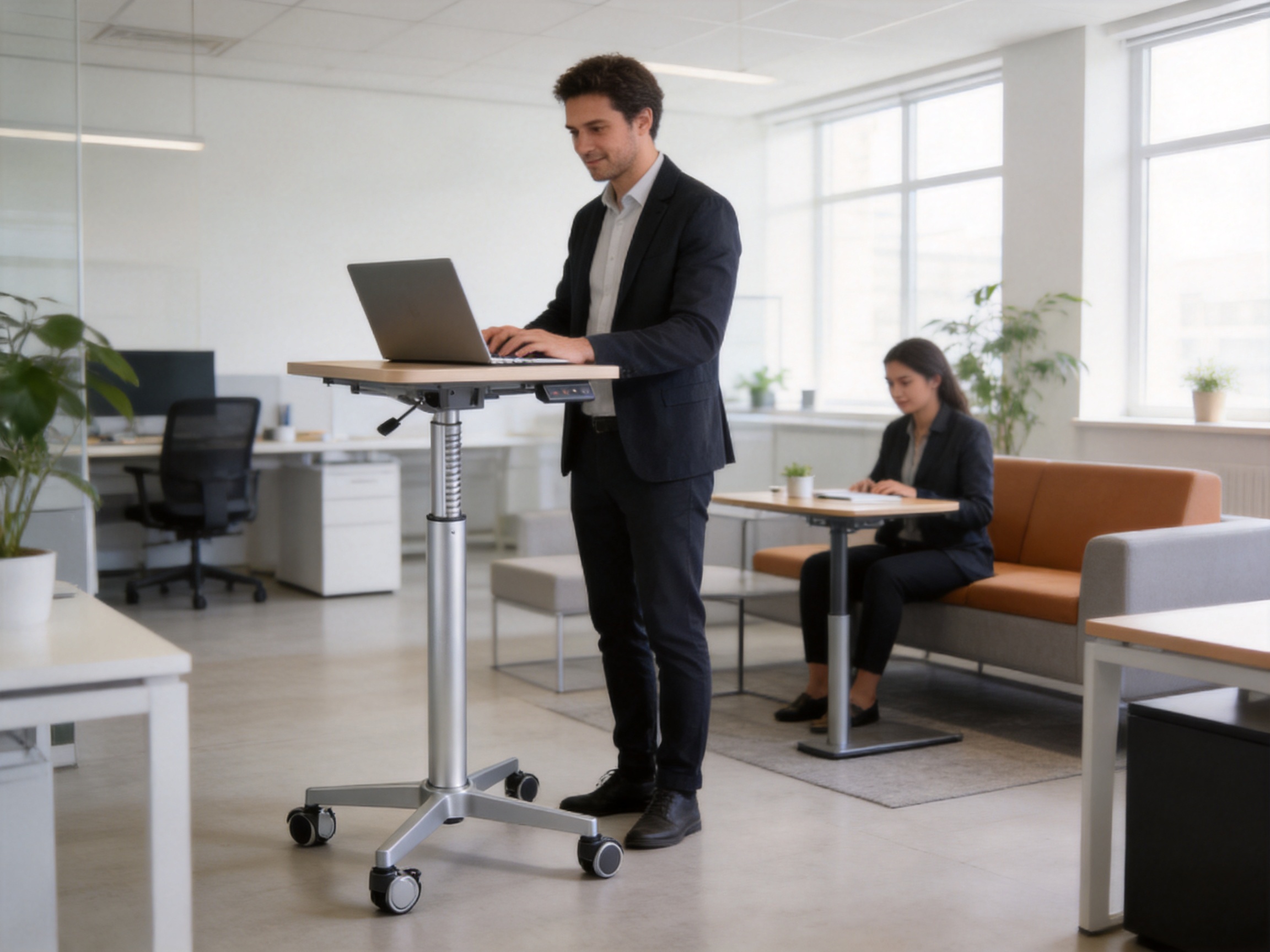
In open-plan offices, furniture flexibility is a major advantage. Teams expand, contract, and reorganize around projects. Meeting areas become temporary work zones. Employees may need touchdown desks for short periods rather than permanent assigned workstations. The TH08 fits well into this environment because it can be moved, adjusted, and redeployed quickly.
The compact desktop size supports focused tasks without consuming excessive floor space. It can serve as a laptop station, side table, standing meeting support, or temporary desk for visiting staff. When not needed, several units can be moved aside or stored more efficiently than larger desks. This makes the product suitable for companies that value adaptable office planning.
The visual design is also office-friendly. The silver frame and clean tabletop color options can match a range of interiors. Maple may suit bright collaborative spaces, Walnut may complement executive or hospitality-style environments, and Black may fit minimalist or technical settings. Because the desk avoids visible electrical controls and power cables, it maintains a simple and uncluttered appearance.
For employees, the ability to adjust height can improve comfort and reduce the monotony of remaining in one posture. For facility managers, the mobility and low infrastructure requirements simplify deployment. For procurement teams, the product represents a balanced option between low-cost static desks and more complex electric systems.
Applications in Training Rooms and Education
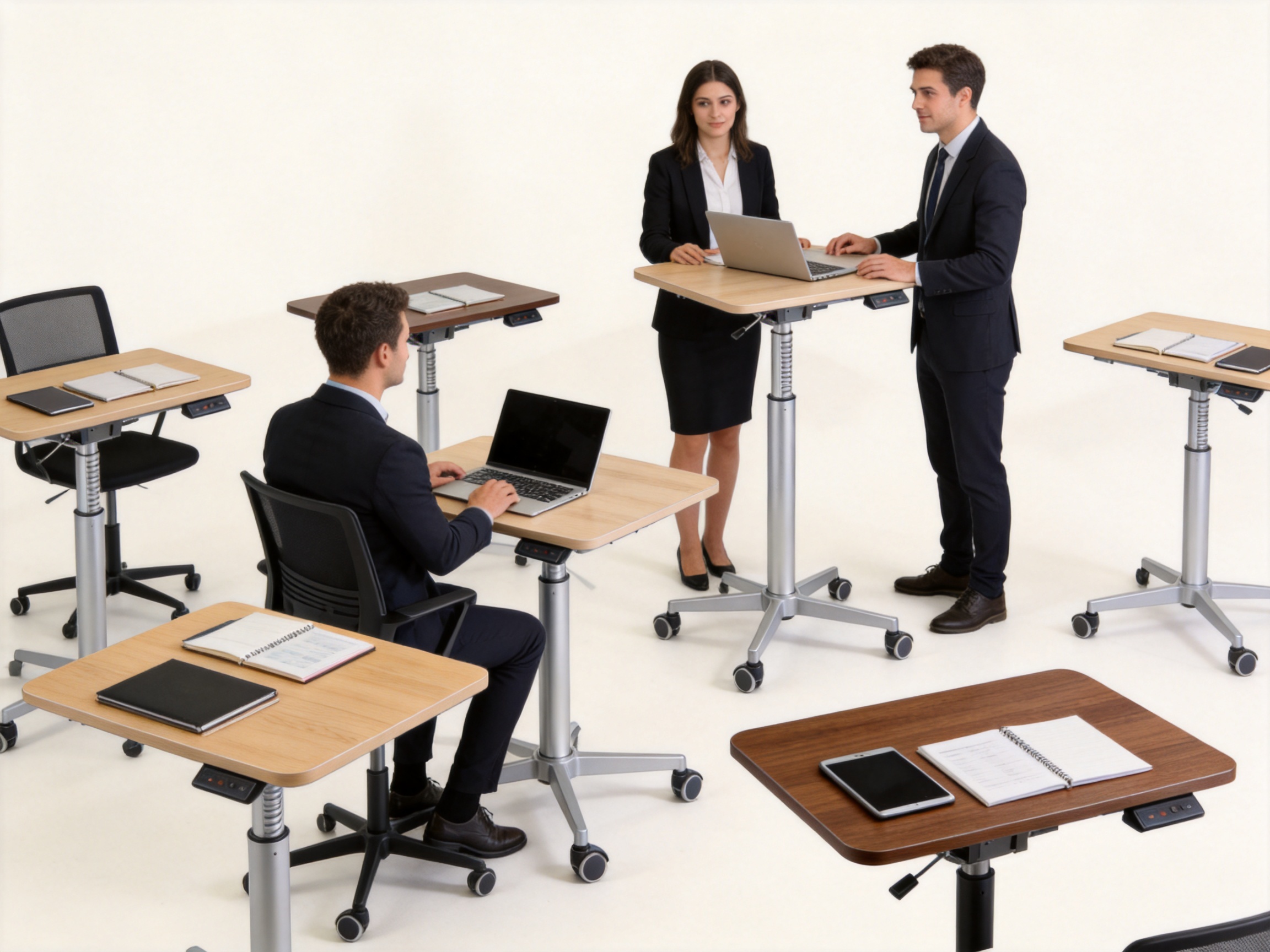
Training rooms often need to support different layouts: lecture mode, group discussion, examination setup, product demonstration, and workshop activities. Traditional tables may be difficult to move and do not easily accommodate standing activities. The TH08 can be rolled into place, locked, adjusted, and reused for different purposes.
In a training session, participants may use the desk for note-taking or laptop work while seated. During interactive exercises, the desk can be raised for standing collaboration. Instructors can use it as a mobile teaching station or demonstration platform. Because it does not require electricity for height adjustment, it can be placed wherever the session requires without being limited by wall outlets.
Educational institutions can also benefit from desks that support different user heights. Students, instructors, and guest presenters may all use the same equipment. Stepless height adjustment makes it easier to achieve comfortable positioning. The caster base supports rapid room reconfiguration between classes or activities.
The laminated surface is useful in training spaces because it can be cleaned quickly. Shared furniture often faces spills, pen marks, and frequent handling. A practical surface finish helps reduce maintenance burdens and preserve a professional appearance over time.
Applications in Laboratory and Technical Workstations
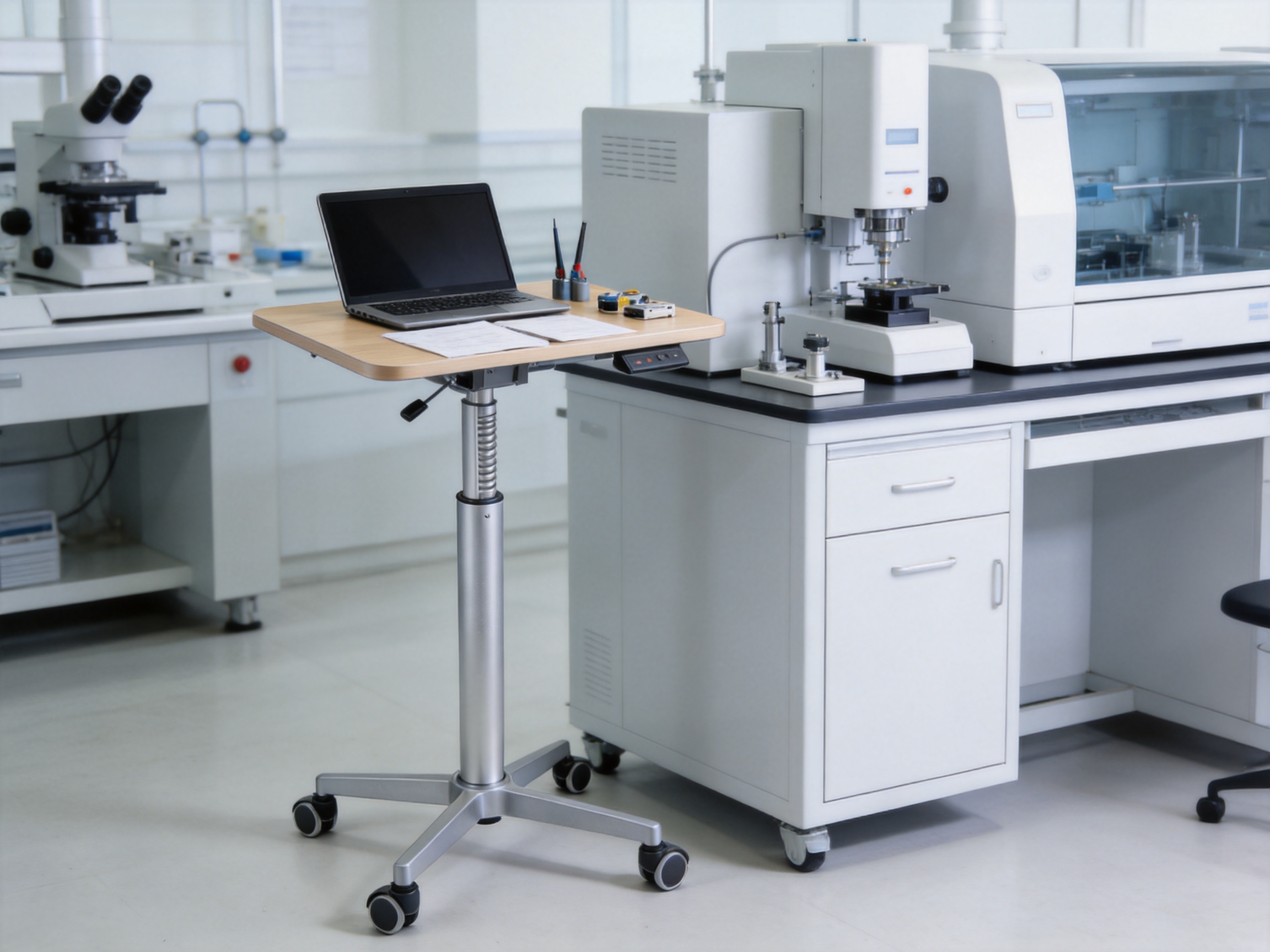
Laboratories and technical workspaces often require work surfaces that can be positioned near instruments, testing areas, or inspection stations. A mobile height-adjustable desk can serve as a support table for documentation, laptops, measuring tools, or lightweight devices. The TH08’s compact size and casters make it suitable for such auxiliary workstation roles.
The ability to change height is valuable because laboratory tasks vary. Some work is performed while seated, some while standing, and some beside equipment of different heights. A static table may not align well with all these situations. The TH08 can be adjusted to match the task more closely, improving user comfort and workflow efficiency.
The powder-coated metal structure and PVC-laminated tabletop support easy cleaning, which is important in environments where cleanliness and order matter. While the desk should be selected according to the specific requirements of each laboratory, its general construction makes it a useful option for many non-specialized technical support tasks.
Because the lifting mechanism is pneumatic rather than electric, the desk reduces reliance on power cords. In technical rooms where outlets are already occupied by equipment, this can be a significant benefit. It also reduces cable clutter, which can improve safety and organization.
Applications in Home Offices
Many home offices are small, shared, or temporary. A user may work in a bedroom, living room, study corner, or multipurpose room. A large electric standing desk may be too expensive, too heavy, or too space-consuming for such environments. The TH08 offers a compact alternative that still provides height adjustment and ergonomic flexibility.
The desk can support a laptop-based work setup, reading, writing, online meetings, or light creative tasks. When the workday ends, it can be moved to the side or repositioned for other household uses. The caster wheels make this flexibility practical, while the locking function helps keep the desk stable during use.
For remote workers, posture variation is especially important. Home furniture is often not designed for long work hours. A kitchen table or sofa setup may create discomfort over time. A height-adjustable desk allows the user to create a more intentional workstation. The TH08’s stepless pneumatic adjustment makes it possible to move between sitting and standing without requiring a dedicated office room.
The available tabletop colors allow users to choose a finish that matches home décor. Maple can brighten small spaces, Walnut can coordinate with traditional furniture, and Black can create a modern home office look. The compact footprint helps the desk integrate into residential environments without overwhelming the room.
Manufacturing Strengths Behind the Product
A desk’s performance depends not only on design but also on manufacturing discipline. SuZhou Skyhone Intelligent Technology Co., Ltd. is located in Suzhou, a key area within the Yangtze River Delta furniture industry region. This location provides access to a mature supply chain, experienced technical talent, advanced processing resources, and efficient logistics. These regional advantages support stable production and product development for adjustable desk solutions.
The company is deeply engaged in the research and development, production, sales, and service of standing desks. This specialization matters because height-adjustable furniture requires more than general furniture assembly. It requires understanding of lifting mechanisms, structural stability, material compatibility, surface finishing, packaging, and user safety. By focusing on standing desk solutions, the company can refine product details that directly influence customer satisfaction.
Advanced manufacturing processes begin with material selection. Aluminum and iron components must meet dimensional and strength requirements. Desktop boards must be processed accurately to maintain a clean edge and consistent surface. PVC vacuum forming requires control over temperature, pressure, surface preparation, and film adhesion. Powder coating requires proper pretreatment and curing to create a durable finish. Each step influences the final product.
For the metal frame, precision processing helps ensure that components fit properly and the lifting system operates smoothly. The aluminum tube column must be manufactured with attention to alignment and surface consistency. If a column is poorly made, adjustment may feel unstable or uneven. By applying controlled manufacturing processes, the product can deliver a more reliable user experience.
The gas spring mechanism also requires careful integration. A pneumatic lifting system must be matched to the desk structure and expected use conditions. The goal is to provide assistance during height changes while maintaining stable positioning. Proper assembly and testing help ensure that the desk moves smoothly through its lifting range and remains practical for daily operation.
Surface treatment is another sign of manufacturing quality. Powder coating must be even, visually consistent, and well bonded to the metal surface. Poor coating can chip, peel, or vary in color. A uniform silver finish supports both durability and appearance. For commercial buyers, consistent finish quality is important because multiple units may be installed together in the same room.
Packaging and final inspection are also essential. Mobile adjustable desks include moving parts, coated surfaces, and tabletop finishes that must arrive in good condition. A professional manufacturing enterprise typically considers protective packaging, component organization, and assembly convenience. These factors reduce damage risk and improve the buyer’s installation experience.
Research and Development Orientation
The development of adjustable office furniture requires continuous attention to how people actually work. Work habits change, office layouts evolve, and users increasingly expect furniture to support health and productivity. A company engaged in research and development can respond to these changes by improving lifting systems, refining dimensions, selecting better materials, and creating models for different use scenarios.
The TH08 reflects a design orientation toward flexible and compact workspaces. Rather than focusing only on large executive desks, it addresses the need for movable ergonomic tables that can be used in shared environments. This product direction matches current trends in hybrid work, multipurpose rooms, active learning spaces, and agile office design.
Research and development also involves balancing competing requirements. A mobile desk should not be too heavy, but it must be stable. A compact desktop should save space, but it must still be useful. A lifting system should be easy to operate, but it must also be reliable. A surface should look attractive, but it must be practical for cleaning and maintenance. The TH08 brings these requirements together in a balanced product.
Quality Control and Production Consistency
For business buyers, consistency is often as important as innovation. A single sample may look good, but large projects require every unit to meet the same expectations. Quality control helps ensure that dimensions, color, surface finish, lifting performance, caster installation, and packaging remain stable across production batches.
In a pneumatic height-adjustable desk, several checkpoints are especially important. The lifting range should meet specification. The desktop should be securely attached. The column should remain stable during height changes. The casters should roll smoothly and lock effectively. The powder-coated frame should be free of obvious defects. The PVC surface should be smooth and properly bonded. Each of these details influences the user experience.
Manufacturing strength also appears in the ability to support customization and customer requirements. As an ergonomic adjustable office table manufacturer and factory, SuZhou Skyhone Intelligent Technology Co., Ltd. can provide solutions for buyers seeking custom ergonomic adjustable office tables. Customization may involve finish preferences, packaging requirements, order quantities, or product adaptation for particular markets. The company’s location and supply chain support make such service more practical.
Why the Aluminum Tube Column Matters
The aluminum tube column is not only a visual feature; it is central to the desk’s structure and usability. A central column creates a clean vertical support that allows the desktop to rise and fall without the bulk of a wide frame. This makes the desk more compact and easier to integrate into different spaces.
Aluminum also contributes to the product’s modern appearance. Its use in office furniture often communicates lightness, precision, and contemporary design. When combined with steel or iron components where additional support is needed, the result is a balanced structure that is both functional and visually appealing.
The column design also supports user access around the desk. With no wide front crossbar or side frame obstructing the user, the desk can be approached from different angles. This is useful in collaborative and mobile settings where the desk may not always be placed against a wall. Users can position it beside a chair, near a whiteboard, next to equipment, or in the center of a room.
Surface Finish and Cleanability
A desk used in busy environments must be easy to maintain. The TH08’s PVC vacuum-formed tabletop helps address this need. The surface is designed for daily office use and supports straightforward cleaning. In shared spaces, this is a practical advantage because furniture may be used by different people within short time periods.
The resistance to scratches and stains helps preserve the desk’s appearance. While no furniture surface is immune to all damage, a laminated PVC finish is more suitable for frequent handling than many untreated or delicate materials. This makes the desk appropriate for training rooms, public work areas, home offices, and light technical environments.
The powder-coated frame also supports maintenance. A smooth coated metal surface is easier to wipe than unfinished metal and helps protect the frame from everyday wear. The silver color is neutral and professional, reducing the visual impact of minor dust compared with very dark glossy finishes.
Mobility and Stability in Real Use
Mobility is only useful if it does not compromise stability. The TH08 uses four casters, with two locking and two non-locking wheels. This arrangement allows users to move the desk where it is needed, then secure it for work. In practice, this supports many use cases: moving a desk from storage to a training room, repositioning it beside a conference table, creating temporary workstations for visitors, or using it as a mobile laptop stand.
Locking casters are especially important when the desk is raised. A higher work surface can feel less secure if the base moves unexpectedly. By locking two wheels, the user can reduce unwanted movement during typing, writing, or presentation work. The desk still remains easy to unlock and relocate when required.
Compared with non-mobile standing desks, the TH08 allows a facility to do more with fewer furniture assets. Instead of dedicating separate desks to each room, a company may move units according to daily needs. This can improve space utilization and reduce unnecessary furniture purchases.
Procurement Benefits for Business Buyers
When organizations purchase office furniture, they evaluate more than appearance. They consider cost of ownership, installation requirements, maintenance, flexibility, user acceptance, durability, and supplier capability. The TH08 offers advantages in several of these areas.
Because the lifting system does not require power, installation is simple. The desk can be placed wherever needed without electrical planning. This reduces setup time and makes the product useful in temporary or changing layouts. The lack of electronic lifting components also simplifies long-term maintenance compared with electric systems.
The compact size supports efficient shipping, storage, and deployment. For buyers equipping training centers, laboratories, or shared office zones, this can be valuable. The product can be integrated into existing spaces without major renovation. Its neutral appearance allows it to match different furniture environments.
Supplier strength is another important factor. SuZhou Skyhone Intelligent Technology Co., Ltd. combines manufacturing experience, R&D focus, and service capability in the standing desk field. Its position in Suzhou provides access to a complete industrial chain, helping support stable production and responsive order handling. For international buyers seeking ergonomic adjustable office table solutions, this combination of product specialization and regional manufacturing advantage is meaningful.
User Experience: Simple, Flexible, and Practical
The best ergonomic products are those that users can understand immediately. The TH08 does not require a complex control panel or training. Users can adjust the desk height manually through the gas spring lifting system and set the surface at a comfortable level. This simplicity increases the likelihood that users will actually change posture during the day.
The compact surface encourages focused work. It is large enough for essential tools but not so large that it encourages clutter. For laptop users, it creates an efficient personal workstation. For instructors, it can hold a notebook, tablet, or teaching materials. For technical users, it can support documents or small devices near the task area.
The mobility of the desk adds to its convenience. Users can reposition the table to improve lighting, reduce glare, join a group, or create temporary workspace. In a home office, it can move from one room to another. In an office, it can be shared by teams. In a laboratory, it can follow the workflow.
The surface color options also support user preference. A lighter Maple finish may feel open and energetic. Walnut can create a warm and comfortable atmosphere. Black can help reduce visual distraction and coordinate with modern equipment. These choices allow the same product structure to suit different interiors.
Environmental and Operational Efficiency
A pneumatic height-adjustable desk can contribute to operational efficiency by reducing dependence on electrical systems. Since height adjustment does not consume power, the desk can be used in spaces where energy access is limited or where cable-free layouts are preferred. Although the energy savings of a single desk may be small, the operational simplicity becomes more significant when many units are deployed.
The ability to reuse and relocate the desk also supports efficient space management. Instead of purchasing specialized furniture for each room, organizations can deploy mobile adjustable desks where demand is highest. This adaptability can reduce furniture redundancy and support more sustainable planning.
Durable finishes also matter. Furniture that maintains its function and appearance over time is less likely to require early replacement. The PVC vacuum-formed tabletop and powder-coated frame are practical choices for daily use, helping extend the service value of the product.
Comparison with Common Competitor Solutions
In the market for adjustable office tables, competitor products often fall into several categories: fixed-height compact desks, electric standing desks, manual crank desks, laptop carts, and basic mobile tables. Each has its own strengths, but the TH08 combines several advantages in one product.
Compared with fixed-height compact desks, it offers ergonomic height adjustment. Compared with large electric desks, it offers mobility, power-free operation, and reduced complexity. Compared with manual crank desks, it offers faster and smoother height changes. Compared with basic laptop carts, it provides a more desk-like work surface with a robust aluminum and iron structure. Compared with pin-adjustment tables, it offers stepless positioning rather than limited height intervals.
This balanced feature set makes the TH08 especially useful for buyers who do not want to over-invest in heavy electric workstations but still need more than a simple rolling table. It fills the gap between static furniture and fully powered sit-stand systems. For many flexible workspace applications, this middle position is exactly what users need.
Recommended Use Scenarios
The TH08 is suitable for open-plan offices where employees need temporary or shared workstations. It can be placed near collaboration zones, moved beside meeting tables, or used as a touchdown desk for visitors. Its height adjustment supports different users, and its casters support fast layout changes.
It is suitable for training rooms where furniture must be rearranged frequently. Participants can sit or stand, instructors can use the desk as a mobile platform, and the room can be reset quickly after a session.
It is suitable for laboratory workstations or technical support areas where a compact mobile surface is needed near equipment. Users can adjust the desk to match task height and move it away when not required.
It is suitable for home offices where space is limited and users want a practical sit-stand option without installing a large electric desk. The desk can be moved, stored, and adjusted according to daily needs.
It is also suitable for reception areas, healthcare administration zones, libraries, project rooms, and temporary work areas where users need a flexible surface that can adapt quickly.
Care and Maintenance Suggestions
To maintain the desk’s appearance and performance, users should clean the tabletop regularly with a soft cloth and mild cleaning solution appropriate for laminated surfaces. Harsh abrasives should be avoided because they may damage the PVC finish. Spills should be wiped promptly to preserve the surface.
The powder-coated frame can be cleaned with a soft damp cloth. Users should avoid scraping the coated surface with sharp objects. If the desk is moved frequently, the casters should be checked periodically to ensure they roll smoothly and lock properly.
The gas spring lifting mechanism should be used within the intended operating conditions. Users should avoid overloading the desktop or applying sudden excessive force. Smooth, controlled adjustment helps preserve the lifting experience. If the desk is used in a commercial setting, periodic inspection can help identify loose fasteners or caster wear before they affect performance.
Q&A Section
What is the main advantage of this pneumatic height-adjustable desk?
The main advantage is its combination of stepless height adjustment, compact design, and mobility. The gas spring lifting system allows users to adjust the desk from 700mm to 1120mm without electricity, while the caster base makes it easy to reposition in offices, training rooms, laboratories, or home workspaces.
How does the gas spring lifting system differ from an electric lifting system?
A gas spring lifting system operates manually and does not require motors, control boxes, keypads, or power cables. This makes the desk easier to deploy in flexible spaces and reduces dependence on electrical outlets. Electric systems are useful for larger permanent desks, but pneumatic adjustment is often more practical for mobile and compact workstations.
Is the desk suitable for both sitting and standing work?
Yes. The lifting range from 700mm to 1120mm supports seated work, standing work, and intermediate positions. Users can change posture throughout the day, which helps create a more dynamic and ergonomic working routine.
What materials are used in the tabletop?
The tabletop is made from 25mm MDF with PVC vacuum forming. This construction provides a stable work surface with a laminated finish that supports resistance to common scratches and stains and allows straightforward cleaning.
What tabletop colors are available?
The available panel colors are Maple, Walnut, and Black. These options allow the desk to coordinate with different office, education, laboratory, or home interiors.
Why does the desk use an aluminum and iron structure?
The combination of aluminum and iron balances appearance, strength, and practicality. Aluminum supports a clean modern design and favorable weight characteristics, while iron contributes structural support where rigidity is important.
Can the desk be moved easily?
Yes. The desk includes four casters. Two casters have locking functions, while two do not. This allows the desk to move easily when needed and remain more stable when locked in place for work.
Where can this desk be used?
It can be used in open-plan offices, training rooms, laboratory workstations, home offices, education spaces, temporary project rooms, and other environments that require flexible work surface height and mobility.
How does this product compare with manual crank desks?
Manual crank desks require repeated handle turning to change height. The TH08 uses pneumatic gas spring lifting, which provides quicker and smoother stepless adjustment. This makes it more convenient for users who change posture often.
What manufacturing strengths support the product?
The product is supported by a manufacturer specializing in standing desk research, development, production, sales, and service. Located in Suzhou within the Yangtze River Delta furniture industry region, the company benefits from a complete industrial chain, intelligent manufacturing resources, and experience in ergonomic office furniture production.
Conclusion
The TH08 pneumatic height-adjustable desk is a practical response to the growing demand for ergonomic, mobile, and adaptable work furniture. Its gas spring lifting system provides stepless height adjustment from 700mm to 1120mm without electricity. Its aluminum tube column design gives it a clean, compact, and modern structure. Its 715mm by 475mm tabletop provides useful workspace while preserving mobility and space efficiency. Its PVC vacuum-formed surface, powder-coated metal frame, and caster base make it suitable for everyday use in a wide range of environments.
Compared with fixed desks, it offers ergonomic adjustability. Compared with electric standing desks, it offers power-free mobility and simpler maintenance. Compared with crank or pin-adjustment desks, it offers smoother and more convenient operation. These advantages make it a strong choice for open offices, training rooms, laboratories, home offices, and flexible work areas.
Behind the product is the manufacturing strength of SuZhou Skyhone Intelligent Technology Co., Ltd., a professional standing desk enterprise located in a major furniture industry region. With capabilities in research and development, production, sales, and service, the company is positioned to provide ergonomic adjustable office table solutions for customers seeking reliable design, practical function, and manufacturing consistency.
As workspaces continue to evolve, furniture must become more responsive. The TH08 demonstrates how a compact pneumatic desk can support healthier posture variation, efficient space use, and flexible daily workflows. For buyers seeking a balanced adjustable office table that is mobile, easy to operate, and built with practical materials, this product offers a well-rounded solution.
References
Bridger, R. S. Introduction to Human Factors and Ergonomics. CRC Press.
Kroemer, K. H. E., and Grandjean, E. Fitting the Task to the Human: A Textbook of Occupational Ergonomics. Taylor & Francis.
Pheasant, S., and Haslegrave, C. M. Bodyspace: Anthropometry, Ergonomics and the Design of Work. CRC Press.
Karwowski, W. International Encyclopedia of Ergonomics and Human Factors. CRC Press.
Dul, J., and Weerdmeester, B. Ergonomics for Beginners: A Quick Reference Guide. CRC Press.
Helander, M. A Guide to Human Factors and Ergonomics. CRC Press.


- Contact Info
-
-
 Phone+86-15950656125
 -
 Email
Email -
 AddressRoom 1007-1, South Building, Suyue Plaza, Suzhou Industrial Park, Suzhou City, Jiangsu Province, China
-
- Products
- Follow Us
- Need help? Please contact us
Copyright ©
SuZhou Skyhone Intelligent Technology Co., Ltd.
All Rights Reserved.
Privacy
Custom Ergonomic Adjustable Office Tables Manufacturers

