

 English
  русский
  Español
  عربى
عربى 
Content
- 1 Product Overview and Core Design Concept
- 2 Main Specifications
- 3 Ergonomic Value of Pneumatic Height Adjustment
- 4 Advantages Over Conventional Fixed Desks
- 5 Advantages Over Electric Height-Adjustable Desks
- 6 Advantages Over Basic Mobile Tables
- 7 Frame Structure and Material Strength
- 8 Gas Spring Lifting Principle
- 9 Mobility for Flexible Work Environments
- 10 Application Scenarios
- 11 Manufacturing Strength Behind the Product
- 12 Metal Fabrication and Structural Precision
- 13 Powder Coating and Surface Quality
- 14 Assembly Process and Functional Testing
- 15 Quality Control and Reliability Considerations
- 16 Why the TH-14 Is Well Suited to Modern Procurement
- 17 Customization and Market Support
- 18 User Experience in Daily Operation
- 19 Maintenance and Care
- 20 Comparison Summary
- 21 Frequently Asked Questions
- 21.1 What is the height adjustment range of the TH-14?
- 21.2 Does the desk require electricity?
- 21.3 What is the tabletop size?
- 21.4 Is the desk easy to move?
- 21.5 What material is used for the frame?
- 21.6 What surface treatment does the desk use?
- 21.7 How does the gas spring lifting system benefit users?
- 21.8 Where can the TH-14 be used?
- 21.9 How does it compare with an electric standing desk?
- 21.10 Why is the double-leg design important?
- 22 Conclusion
- 23 References
- 24 Product: TH-14 Double-Leg Pneumatic Height-Adjustable Desk
Double-Leg Pneumatic Height-Adjustable Desk for Flexible Workspaces
2026-07-05
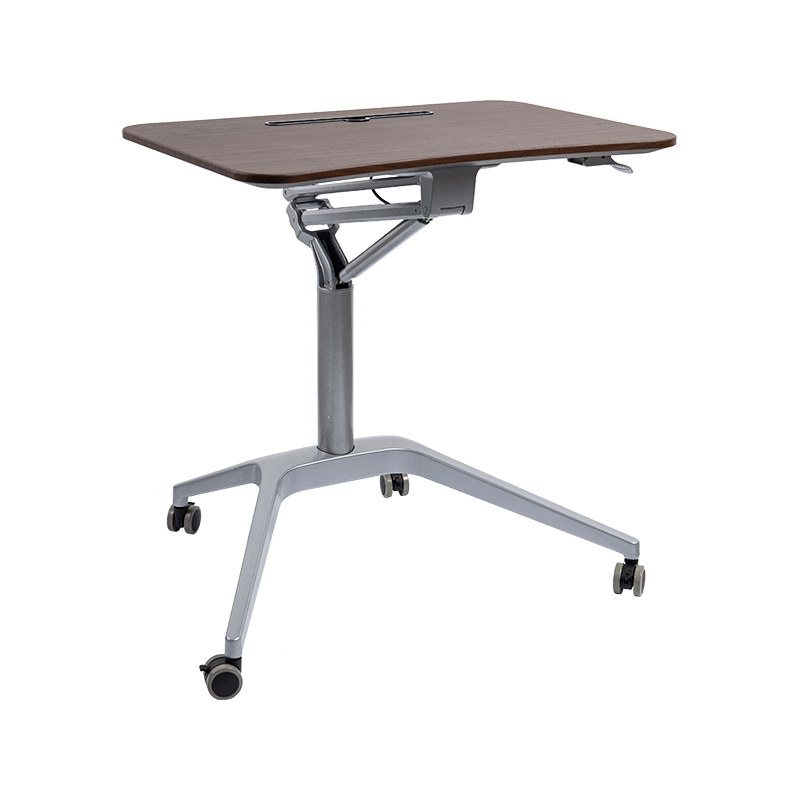
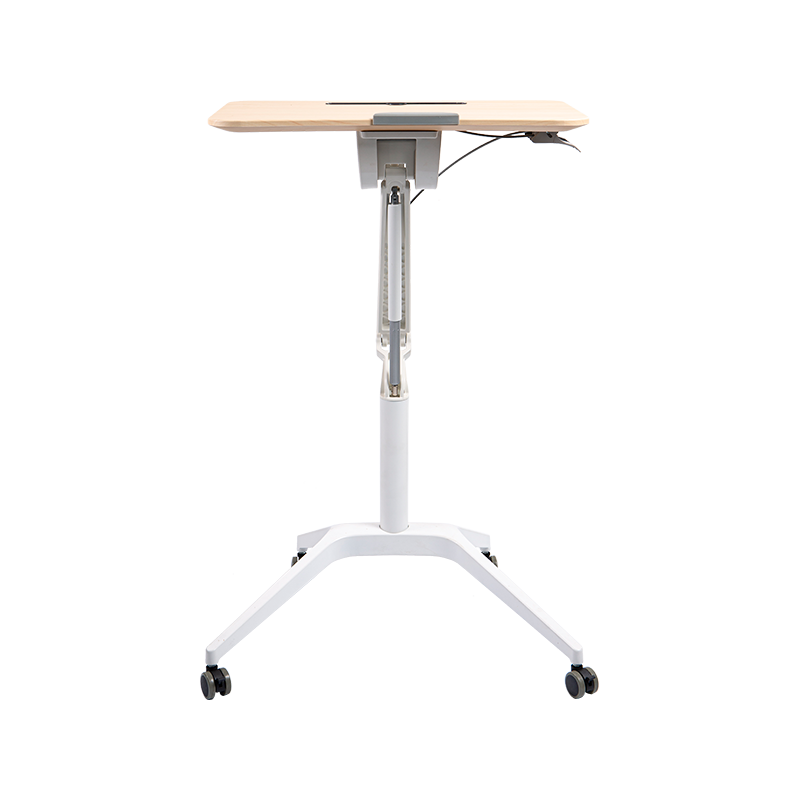
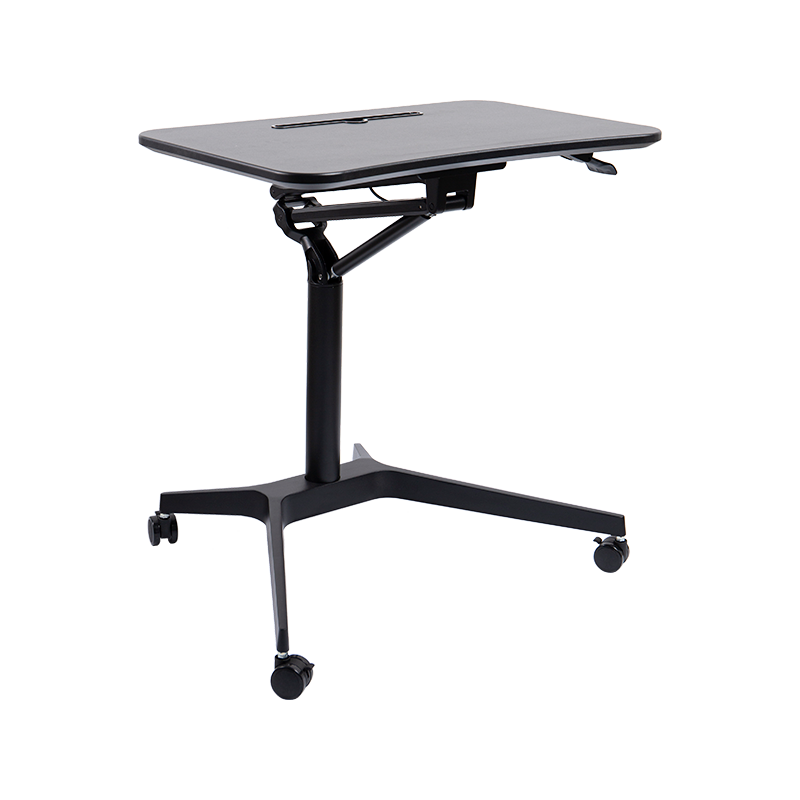
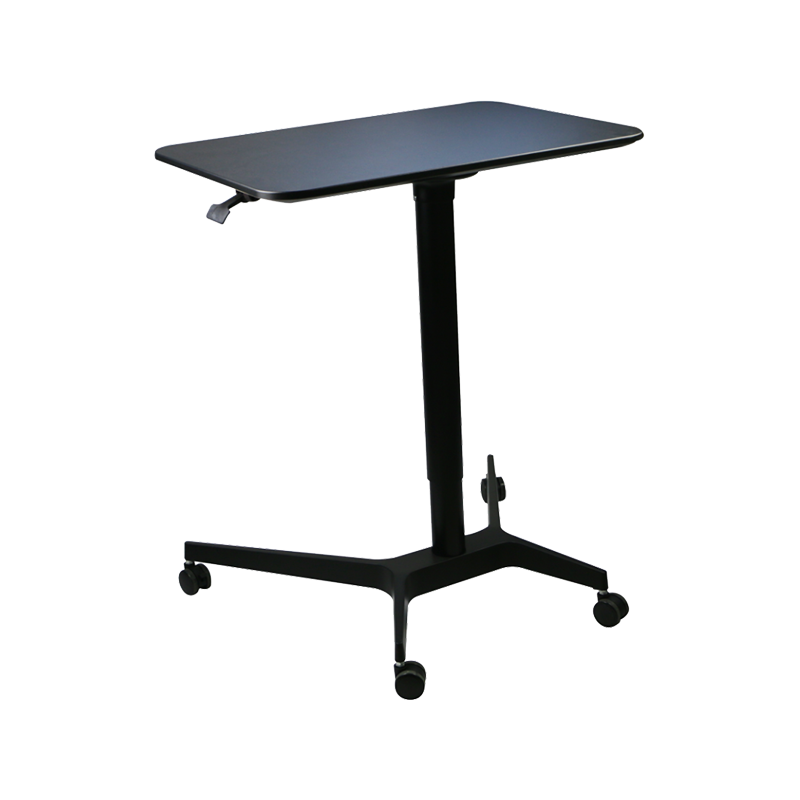
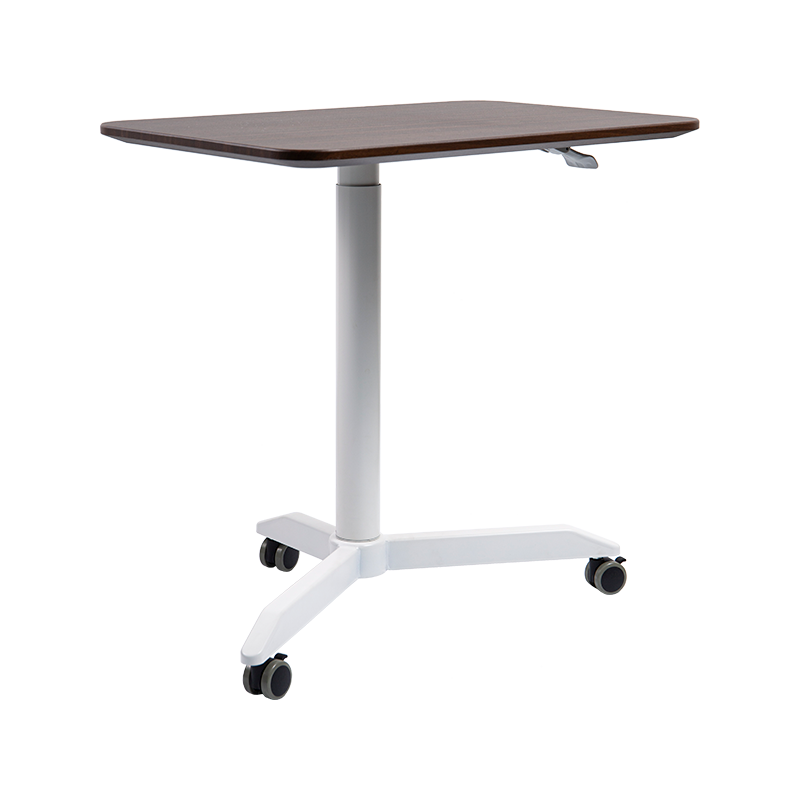
The TH-14 Double-Leg Pneumatic Height-Adjustable Desk is designed for modern work environments that require mobility, ergonomic flexibility, and dependable mechanical performance without relying on electrical power. As offices, laboratories, studios, educational spaces, and home work areas continue to change, the demand for compact, stable, and easy-to-adjust furniture has increased significantly. This desk responds to that demand with a dual-leg structure, gas spring lifting system, powder-coated iron frame, practical tabletop size, and mobile caster base.
Unlike traditional fixed-height desks, the TH-14 supports both seated and standing work postures through a stepless height adjustment range from 760 mm to 1100 mm. This range allows users to adapt the desk to different tasks, body heights, and working habits. The pneumatic lifting mechanism uses gas spring assistance, enabling smooth manual height changes without motors, control boxes, cables, or power outlets. This makes the desk especially suitable for flexible workspaces where simplicity, reliability, and quick relocation are important.
The desk is built around a compact 980 mm by 560 mm tabletop, which provides enough working area for a laptop, monitor, documents, testing equipment, or creative tools while maintaining a small footprint. Its black powder-coated iron frame gives it a professional appearance and improves resistance to wear and corrosion. Four swivel casters, including two with locking mechanisms, allow the desk to be moved easily and secured during use. This combination of adjustability, mobility, and mechanical stability makes the TH-14 a practical solution for many environments.
Beyond the product itself, its value is also supported by the manufacturing capabilities of SuZhou Skyhone Intelligent Technology Co., Ltd. The company focuses on standing desks and ergonomic office solutions, combining research and development, production, sales, and service. Located in Suzhou, within the Yangtze River Delta industrial region, the company benefits from a mature furniture supply chain, metal processing resources, precision manufacturing support, and intelligent production methods. These strengths help ensure consistency, product reliability, and the ability to support customized ergonomic desk solutions.
TH-14 Double-Leg Pneumatic Height-Adjustable Desk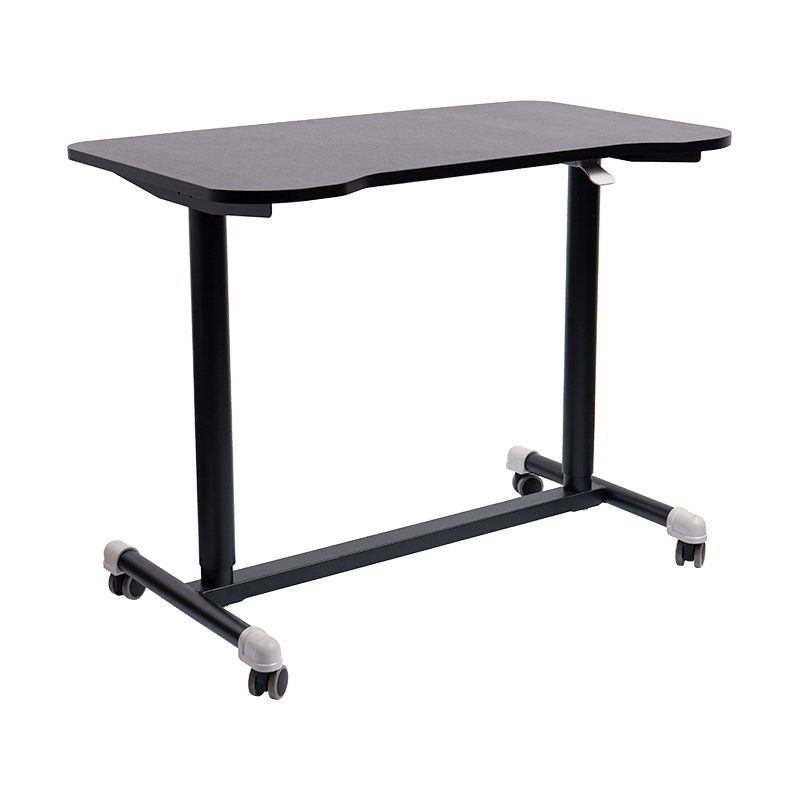
Product Overview and Core Design Concept
The TH-14 is a pneumatic height-adjustable table with a double-leg frame design. Its purpose is to provide users with an ergonomic platform that can be raised or lowered according to the needs of the moment. The user can transition between sitting and standing positions without replacing the desk, moving to another workstation, or depending on an electric lifting system. This gives the desk a practical role in dynamic office and professional environments.
The double-leg configuration is a key part of the product’s stability. Single-column mobile desks are often compact but may feel less stable when loaded unevenly or when used for writing, typing, or light equipment handling. By using two legs, the TH-14 distributes support more evenly across the tabletop. This enhances confidence during daily use and helps the desk remain suitable for a wider range of tasks.
The pneumatic lifting principle is another central design feature. Gas spring lifting is widely used in ergonomic furniture because it offers a balanced combination of convenience, reliability, and low maintenance. The system assists the user in moving the tabletop upward and downward, reducing the effort required for adjustment. Because it is not dependent on electricity, the desk can be positioned anywhere in a room and used immediately.
The product’s mobility is equally important. The base includes four casters: two with locks and two without locks. This arrangement allows the desk to roll smoothly when relocation is needed, while still giving users the ability to lock the desk in place when stability is required. In offices that frequently reorganize layouts, laboratories that change testing arrangements, or studios that need portable surfaces, this mobility creates a major advantage over fixed workstations.
Main Specifications
The following table summarizes the key product specifications of the TH-14 Double-Leg Pneumatic Height-Adjustable Desk.
Specification |
Details |
Product Type |
Double-leg pneumatic height-adjustable desk |
Lifting Range |
760 mm to 1100 mm |
Tabletop Size |
980 mm by 560 mm |
Main Material |
Iron |
Surface Color |
Black |
Surface Treatment |
Powder coating |
Caster Configuration |
Two casters with locks and two casters without locks |
Working Principle |
Gas spring lifting |
Power Requirement |
No electrical power required |
Typical Applications |
Office workstations, laboratories, studios, home study areas, training rooms, flexible workspaces |
Ergonomic Value of Pneumatic Height Adjustment
Ergonomics is no longer considered a luxury in workplace planning. It has become a practical concern connected to comfort, productivity, and long-term well-being. A desk that remains fixed at one height can force users into unsuitable postures, especially when several people share the same workstation. The TH-14 addresses this issue with a lifting range that supports different working modes and user preferences.
The 760 mm minimum height can support seated tasks such as typing, writing, reading, or equipment monitoring. The 1100 mm maximum height allows many users to stand comfortably while working. Because the adjustment is stepless, the user is not limited to preset positions. Instead, the desk can be placed at the exact height that feels most suitable for the task.
Standing work is often associated with improved posture variation. While standing all day is not ideal, alternating between sitting and standing can reduce the static load caused by remaining in one position for long periods. A pneumatic adjustable desk encourages this movement because the transition is quick and does not require a complicated control process.
The gas spring mechanism supports smooth motion, which makes height adjustment feel natural. Users do not need to wait for a motor to complete the movement or search for a power source. This immediacy is important in shared workspaces, meeting areas, classrooms, and laboratories, where different people may adjust the desk many times during the day.
Compared with some manually cranked desks, the TH-14 is faster and easier to adjust. Crank systems can be durable, but they often require repeated turning and may discourage frequent height changes. Compared with electric desks, the TH-14 avoids electrical dependence, motor noise, cables, and control systems. This gives it a strong advantage where simplicity and mobility matter more than programmable height memory.
Advantages Over Conventional Fixed Desks
The most obvious advantage of the TH-14 over a fixed desk is adaptability. A fixed desk is usually designed around a single assumed sitting height. If the user is taller, shorter, working with specialized equipment, or switching between seated and standing tasks, a fixed desk may become inconvenient. The TH-14 provides a broader range of use from the same compact platform.
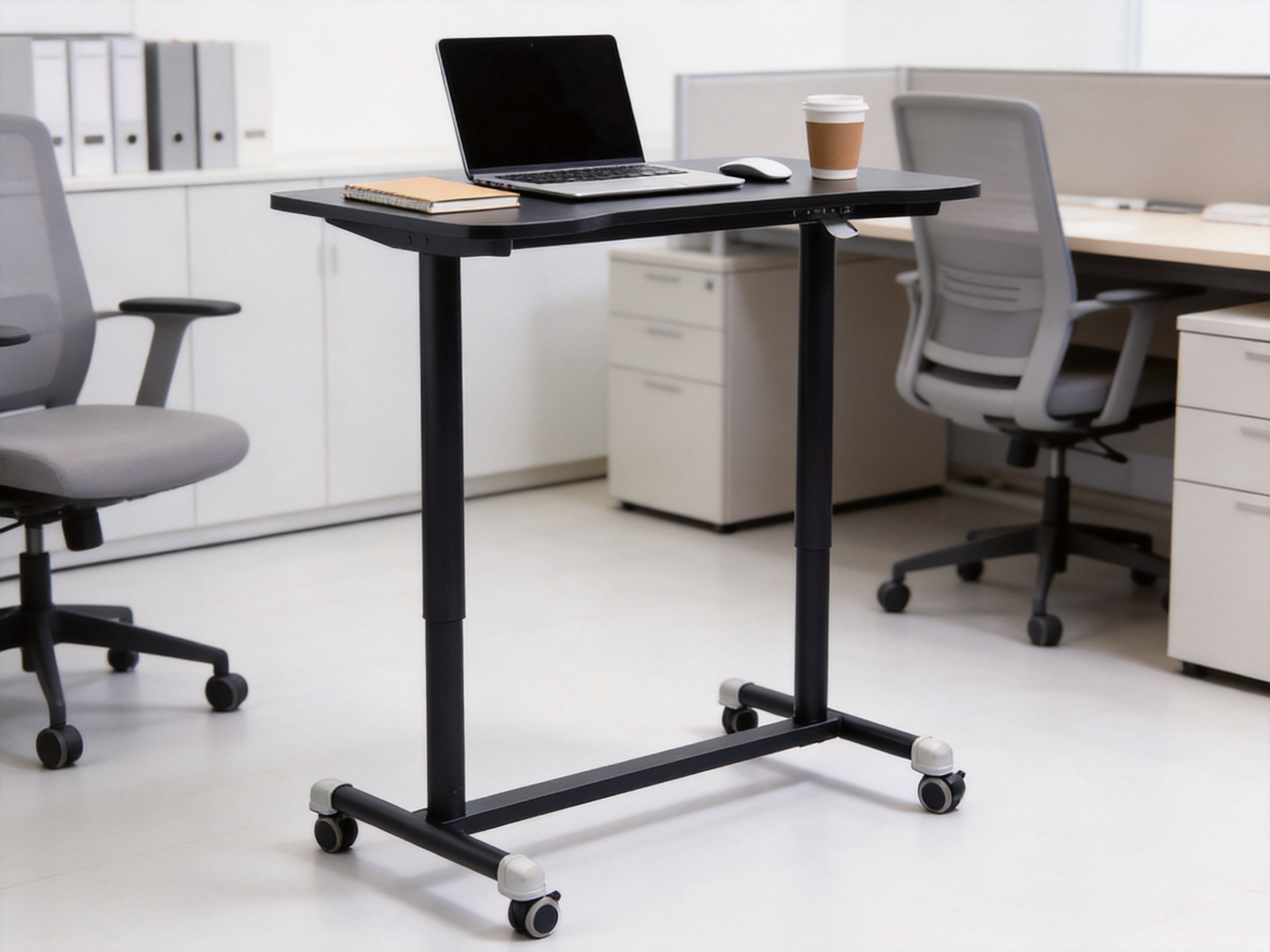
Another advantage is space flexibility. Fixed desks are often heavy, stationary, and difficult to reposition without tools or multiple people. The TH-14 can be rolled from one area to another, making it suitable for changing layouts. In a collaborative office, it can function as a personal desk, a temporary project station, or a mobile presentation surface. In a laboratory, it can move between instruments or testing zones. In a home, it can shift between rooms as needed.
The lockable caster design gives the desk both mobility and control. Some mobile tables are easy to move but unstable during use. By including two locking casters, the TH-14 allows users to secure the desk when typing, writing, or performing detailed work. This makes it more practical than basic rolling carts and more versatile than stationary desks.
The powder-coated iron structure provides another practical advantage. Work furniture often experiences repeated contact, surface abrasion, and environmental exposure. Powder coating creates a durable surface layer that can maintain a clean appearance while resisting wear better than some basic painted finishes. The black finish also integrates easily with office, studio, industrial, and home interiors.
Advantages Over Electric Height-Adjustable Desks
Electric height-adjustable desks are popular in many office environments, but they are not always the best solution for every application. The TH-14 offers a different set of advantages based on mechanical simplicity. Because it uses gas spring lifting, it does not require a motor, control box, power cable, or electrical connection. This makes installation and daily use straightforward.
One major advantage is independence from power outlets. Electric desks must be placed near power sources or connected through cable management systems. In open offices, training rooms, workshops, and temporary project spaces, this can limit layout options. The TH-14 can be positioned freely, moved quickly, and used immediately after relocation.
Another advantage is reduced maintenance complexity. Electric lifting systems include electronic components that may require diagnosis or replacement if a fault occurs. The pneumatic system is mechanically simple and avoids many common electrical issues such as controller failure, cable damage, or motor malfunction. This can reduce long-term service concerns, especially in environments where many desks are used by different people.
The TH-14 can also offer a quieter and more immediate adjustment experience. Electric systems produce motor sound and require the user to hold a button while the desk travels. A gas spring desk is manually guided by the user and can be repositioned quickly. For environments such as libraries, laboratories, clinics, classrooms, or shared offices, this quiet mechanical operation can be beneficial.
Cost efficiency may also be an advantage in certain procurement plans. While exact pricing depends on configuration and order requirements, pneumatic desks generally avoid the cost of electronic lifting columns and control systems. For buyers seeking ergonomic functionality without unnecessary electrical complexity, the TH-14 provides a practical balance.
Advantages Over Basic Mobile Tables
Many mobile tables are designed primarily for movement, not ergonomics. They may have wheels and a work surface but lack height adjustability or sufficient stability. The TH-14 improves on this category by combining a mobile base with a pneumatic lifting system and a dual-leg frame. This gives it a stronger identity as an ergonomic mobile workstation rather than a simple rolling table.
The height range allows the desk to serve multiple roles. At lower positions, it can be used as a seated workstation or equipment table. At higher positions, it can support standing work, presentations, inspection tasks, or collaborative discussion. This multifunctional capability reduces the need for separate furniture pieces.
The tabletop size of 980 mm by 560 mm is compact but functional. It is large enough for many everyday tasks while remaining narrow enough for easy movement through common interior spaces. Oversized mobile tables can become difficult to maneuver, while very small carts may not support practical work. The TH-14 strikes a useful balance between surface area and mobility.
The lockable caster arrangement also makes the desk more reliable than ordinary rolling tables. Once positioned, the user can lock two wheels to limit unwanted movement. This is especially important when the table is used for computer work, note-taking, measuring, or handling lightweight tools. The desk is intended to move when needed and remain stable when work begins.
Frame Structure and Material Strength
The TH-14 uses iron as its main structural material. Iron and steel-based materials are widely valued in office furniture and industrial furniture because they provide strong load-bearing capacity, formability, and durability. In a height-adjustable desk, the frame must support vertical movement while resisting wobble, bending, and repeated operational stress.
The double-leg structure helps distribute load and improve the user experience. When a tabletop is supported by two legs instead of a single central column, forces are spread across a wider base. This is useful for tasks where the user places equipment to one side, leans lightly on the tabletop, or performs repeated hand movements. The frame design contributes to stable working conditions across the lifting range.
Surface treatment is also important for long-term performance. The black powder coating gives the metal frame a uniform protective layer. Powder coating is commonly selected for metal furniture because it can create a durable finish with good resistance to chipping, scratching, and corrosion when properly applied. It also supports consistent color appearance for professional environments.
The visual design is practical and understated. The black finish does not distract from the workspace and can match many interior styles. In offices, it pairs well with monitors, chairs, storage units, and other equipment. In laboratories or studios, it gives the desk a clean and functional appearance.
Gas Spring Lifting Principle
The gas spring lifting principle is central to the desk’s performance. A gas spring uses compressed gas within a sealed cylinder to provide controlled force. In furniture applications, this force helps support the weight of the moving component, making adjustment easier for the user. The system is commonly used in chairs, monitor arms, medical carts, and adjustable tables.
For the TH-14, the gas spring assists the raising and lowering of the tabletop. The user controls the motion manually, while the gas spring reduces the effort needed to change height. The result is a smooth adjustment experience without electric power. This principle supports frequent posture changes and quick adaptation to different users.
Gas spring systems are valued for their compactness and simplicity. They do not require external wiring, control programming, or complex electronic synchronization. This is particularly suitable for a double-leg pneumatic desk intended for mobile use. The desk can be moved, locked, adjusted, and used with minimal preparation.
Compared with step-adjustable furniture, the gas spring system offers continuous height selection. Step-adjustable desks require the user to choose from limited holes or preset positions, and adjustment may require tools or manual lifting. The TH-14 allows stepless positioning within its range, which provides a more personalized ergonomic experience.
Mobility for Flexible Work Environments
Modern workspaces increasingly emphasize adaptability. Teams may need to reconfigure layouts for meetings, training, project work, or independent focus. Laboratories may need to move support surfaces near different instruments. Studios may need a table that can follow the creative process. Home users may need one desk that can serve multiple rooms. The TH-14 is designed for these flexible requirements.
The four-caster base allows the desk to roll smoothly across appropriate floor surfaces. This reduces the physical effort required to relocate a workstation. When the desk reaches the desired position, two locking casters help keep it in place. This combination supports both mobility and work stability.
In office environments, the desk can be used as a mobile standing station, a temporary workstation, a hot-desking solution, or a collaborative support table. It can be rolled beside a seated desk to create an additional surface or moved into a meeting area for laptop-based presentations. Because it does not require electricity for height adjustment, there are fewer restrictions on placement.
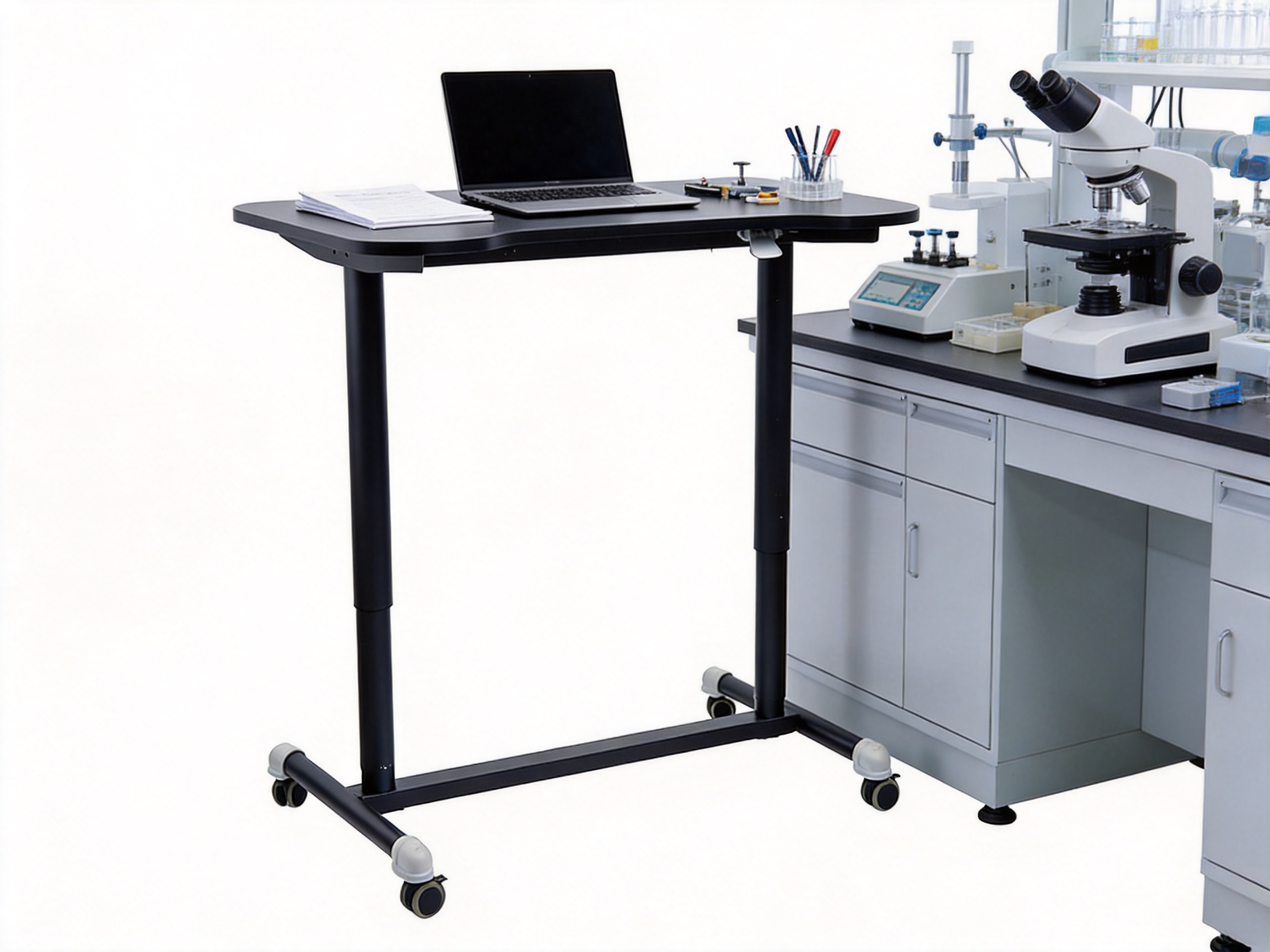
In laboratory and technical environments, the desk can serve as a movable workbench for documents, laptops, sample organization, or light instruments. Its height adjustability allows technicians to set the surface to a comfortable level for standing observation or seated recording. The compact tabletop reduces obstruction in spaces where equipment layout may already be dense.
In home study areas, the TH-14 can support remote work, online learning, reading, writing, and creative hobbies. Its mobility allows users to move it away when not needed, while the height adjustment supports different family members. The black powder-coated frame also provides a simple appearance that fits many home interiors.
Application Scenarios
Office Workstations
In offices, the TH-14 can support employees who need ergonomic variation without a large electric desk. It is especially useful in shared workspaces, flexible seating arrangements, and temporary project zones. Users can adjust the desk for seated laptop work, standing calls, document review, or short collaborative sessions.
Laboratory Benches
Laboratory work often involves alternating between observation, data entry, and equipment preparation. A mobile height-adjustable desk can provide a flexible auxiliary surface. The TH-14 is suitable for supporting laptops, notebooks, measuring accessories, and lightweight tools in areas where a fixed bench may not be convenient.
Studio Worktables
Studios for design, photography, content creation, and craft work often require surfaces that can move around the room. The TH-14 can function as a mobile table for equipment, sketches, laptops, or small props. Its height adjustment helps creators work while seated or standing, depending on the activity.
Home Study Areas
For home users, the TH-14 provides a practical ergonomic desk without the installation requirements of electric systems. It can be placed in a study room, bedroom, living room, or temporary work corner. The casters allow it to be repositioned, and the locks help stabilize it during use.
Training Rooms and Educational Spaces
Training rooms need furniture that can be rearranged quickly. The TH-14 can support instructors, students, or presenters. It can be used as a mobile lectern, laptop station, or demonstration table. The pneumatic adjustment allows it to fit different users without needing electrical access.
Manufacturing Strength Behind the Product
The performance of an adjustable desk depends not only on its design but also on the quality of manufacturing. SuZhou Skyhone Intelligent Technology Co., Ltd. is a professional enterprise engaged in the research and development, production, sales, and service of standing desks and ergonomic office solutions. This focused business direction allows the company to refine product structures, improve lifting mechanisms, and respond to market requirements with practical designs.
The company is based in Suzhou, an important manufacturing center in the Yangtze River Delta. This location provides access to a complete industrial chain, including metal processing, surface finishing, precision components, packaging resources, and logistics support. For height-adjustable furniture, a strong supply chain is valuable because product quality depends on the coordination of many parts, from frame tubes and gas springs to casters, fasteners, and tabletop components.
Advanced manufacturing for a product like the TH-14 involves multiple process stages. Metal components must be cut accurately, formed consistently, welded or assembled precisely, finished properly, and inspected before shipment. Each step affects the desk’s stability, appearance, and service life. A manufacturer with specialized experience in standing desks can better control these details than a general furniture supplier.
Research and development capability is another strength. Ergonomic products require practical understanding of user behavior, workplace trends, and mechanical performance. A desk may appear simple, but its usability depends on height range, lift balance, caster placement, frame geometry, surface durability, and assembly convenience. Continuous product development helps improve these factors over time.
The company’s service capability also supports buyers who require customization. Different markets and projects may need changes in color, tabletop material, packaging, branding, or specifications. A manufacturer with integrated production and engineering resources can respond more effectively to custom ergonomic adjustable desk requirements.
Metal Fabrication and Structural Precision
For the TH-14, the iron frame is a core component. Metal fabrication begins with material selection and dimensional control. Tubes, plates, brackets, and support parts must meet design requirements so that the final structure aligns correctly and provides stable performance. Inconsistent metal parts can cause assembly problems, uneven lifting, or reduced stability.
Cutting accuracy helps ensure that components fit together as intended. If frame elements are too long, too short, or improperly angled, the final desk may not align well. Precision processing reduces the need for correction during assembly and improves product consistency across batches.
Forming and bending processes must also be controlled carefully. Height-adjustable furniture often uses shaped metal components to balance strength, appearance, and compactness. Proper forming reduces stress concentration and supports a clean final appearance. In a mobile desk, the base geometry must support both movement and stability.
Welding and fastening processes are essential for frame integrity. Where welding is used, fixtures can help maintain correct positioning and reduce variation. Where fasteners are used, hole alignment and thread quality are important for assembly strength. A well-controlled production process helps the desk feel solid during daily use.
After fabrication, components require surface preparation before powder coating. Cleaning, degreasing, and pretreatment help the coating adhere properly. Poor preparation can lead to finish defects, reduced corrosion resistance, or inconsistent appearance. A manufacturer experienced in metal furniture production understands the importance of these preparation steps.
Powder Coating and Surface Quality
The TH-14 uses a black powder-coated surface treatment. Powder coating is a widely used finishing method for metal furniture because it can provide a strong, uniform, and attractive surface. The process involves applying dry powder to prepared metal parts, then curing it to form a continuous protective layer.
A good powder-coated finish depends on several production factors. The metal must be clean, the coating thickness must be controlled, and curing conditions must be appropriate. If the coating is too thin, protection may be reduced. If it is too thick or uneven, the appearance and fit of assembled parts may be affected. Proper curing helps ensure the coating develops its intended hardness and adhesion.
For a mobile height-adjustable desk, surface durability is important. The frame may be touched frequently, moved through different rooms, or exposed to minor impacts during relocation. Powder coating helps resist everyday wear while maintaining a professional look. The black color also hides minor marks better than some lighter finishes and gives the product a versatile visual identity.
Surface quality is also related to brand trust. Buyers often judge manufacturing quality by visible finish consistency. A smooth and uniform coating suggests careful process control. For projects involving multiple desks, consistent color and finish across units help create a coordinated workspace appearance.
Assembly Process and Functional Testing
Assembly is where individual components become a functional ergonomic product. For the TH-14, correct assembly affects lifting smoothness, caster performance, frame alignment, and overall stability. A professional manufacturer must ensure that each part is installed according to specification and that the completed desk performs as intended.
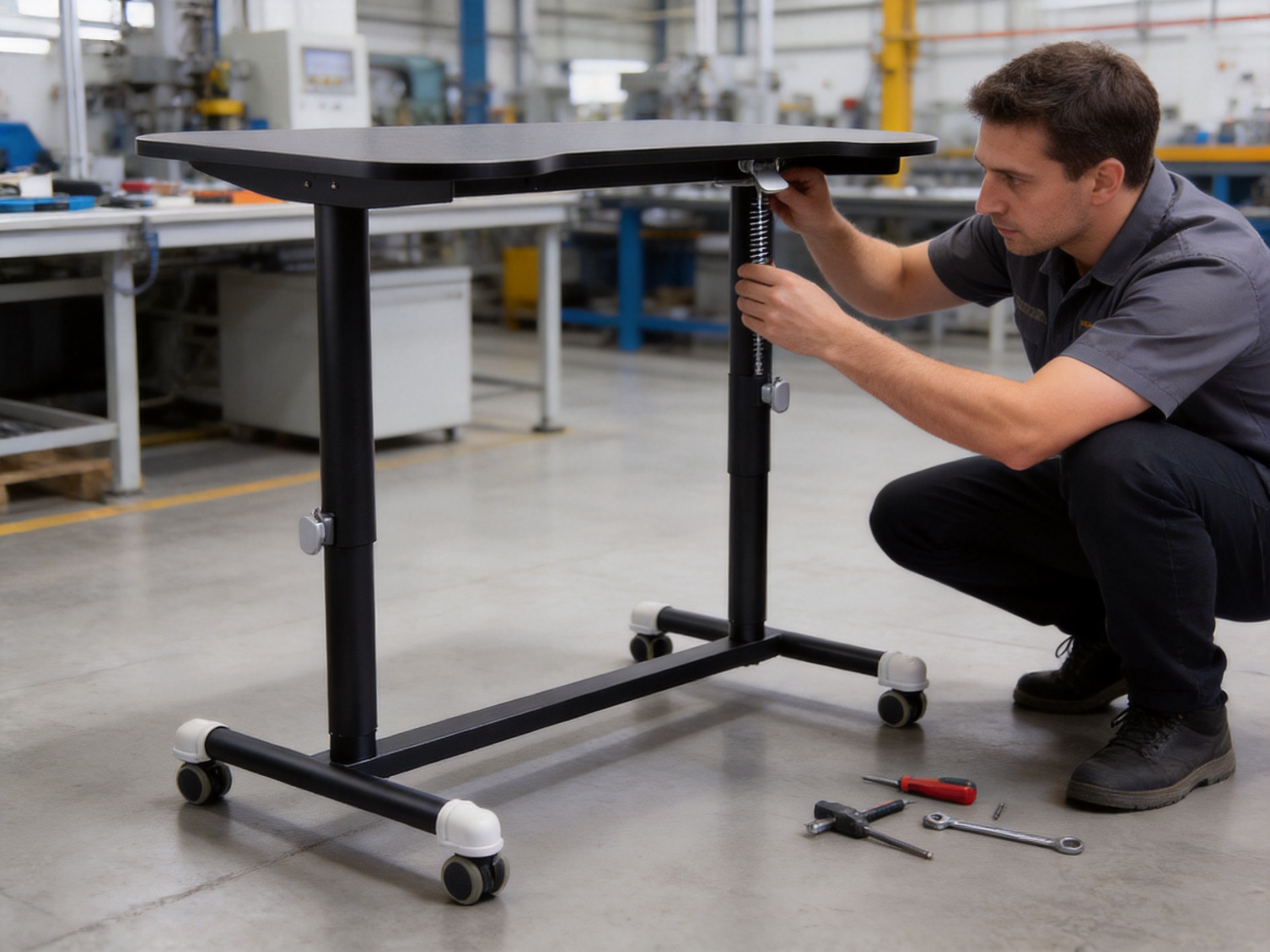
The gas spring system requires careful integration. It must provide appropriate lifting assistance and controlled motion within the designed height range. If the system is not correctly matched to the moving structure, adjustment may feel too heavy, too light, or inconsistent. Proper selection and installation of the gas spring are therefore essential to the user experience.
Caster installation also matters. The desk includes two locking casters and two non-locking casters. The locks must engage securely, release smoothly, and support stable positioning. Swivel movement should be smooth enough for relocation without making the desk difficult to control. Testing caster function helps prevent user frustration after delivery.
Height adjustment testing can verify that the desk travels from 760 mm to 1100 mm smoothly and safely. The tabletop should remain controlled throughout the movement. Functional inspection may include checking vertical movement, frame stability, surface finish, fastener tightness, caster lock operation, and packaging completeness.
Quality control is especially important for products intended for repeated daily use. A desk may be adjusted many times over its service life. Consistent production standards help ensure that each unit delivers the same performance promised by the design.
Quality Control and Reliability Considerations
Reliable ergonomic furniture requires attention to both visible and hidden quality factors. Visible factors include coating finish, tabletop appearance, frame alignment, and overall cleanliness. Hidden factors include component strength, gas spring performance, fastener reliability, and structural balance. The TH-14 benefits from a design that keeps the mechanism simple while still requiring disciplined quality control.
Dimensional inspection helps confirm that the tabletop size, frame geometry, and lifting range match specification. This is important for buyers who plan workspace layouts or need consistency across multiple units. A desk that differs from its stated dimensions may create planning problems.
Stability inspection helps confirm that the double-leg structure and caster base provide dependable support. While the desk is mobile, it must still feel secure when locked and used for normal tasks. Testing helps identify issues such as uneven caster contact or frame imbalance.
Surface inspection confirms that the powder coating is consistent and free from significant defects. Since the frame is black, uniform finish is important for appearance. Coating quality also contributes to corrosion and wear resistance.
Packaging inspection is another important manufacturing step. Mobile adjustable desks include components that must be protected during transport. Proper packaging reduces the risk of scratches, dents, missing parts, or assembly issues. For international buyers, packaging strength and clarity can significantly affect customer satisfaction.
Why the TH-14 Is Well Suited to Modern Procurement
Organizations purchasing office furniture increasingly look for products that can serve multiple purposes. A single-purpose fixed desk may not be ideal when teams change, work styles evolve, or space must be shared. The TH-14 supports modern procurement by combining ergonomic adjustability, mobility, and mechanical simplicity.
Its no-power design can reduce installation planning. Facility teams do not need to add outlets, manage power strips, or route cables for the lifting mechanism. This can simplify deployment in existing rooms and temporary spaces. For large organizations, reducing installation complexity can save time and coordination effort.
The compact tabletop is suitable for dense environments where full-size desks may not fit. At the same time, it remains large enough for many practical tasks. This balance makes it useful as a personal workstation, auxiliary work surface, or mobile support table.
The product’s broad application range also supports purchasing efficiency. Instead of buying separate tables for training rooms, office corners, laboratories, and temporary work areas, buyers can use one adaptable model in several departments. This can simplify inventory management and maintenance planning.
From a sustainability perspective, mechanically simple products can offer long service potential when well manufactured. Avoiding unnecessary electrical components may reduce electronic waste and simplify end-of-life handling. The durable metal structure and powder-coated finish further support long-term use.
Customization and Market Support
As a manufacturer focused on ergonomic adjustable office furniture, SuZhou Skyhone Intelligent Technology Co., Ltd. is positioned to support custom requirements. Buyers in different markets may request specific tabletop finishes, packaging styles, color options, labeling, or order configurations. The company’s manufacturing background and supply chain location make it possible to respond to such needs with greater flexibility.
Customization is important because ergonomic furniture is used in many environments. A corporate office may prioritize a professional appearance and consistent finish. A school may require durable surfaces and easy mobility. A laboratory may focus on compact size and stable positioning. A home office distributor may need consumer-friendly packaging. Manufacturing flexibility allows one core product concept to serve several channels.
Product support also includes communication before and after purchase. Buyers may need specification confirmation, sample evaluation, assembly guidance, production scheduling, and quality documentation. A company that combines production and service can provide more direct responses than a trading-only supplier.
The company’s experience in standing desks gives it insight into international ergonomic trends. Demand continues to grow for sit-stand solutions, mobile workstations, and compact adjustable furniture. Products like the TH-14 reflect this trend by offering a practical alternative to large electric desks and basic fixed tables.
User Experience in Daily Operation
Daily use of the TH-14 is intended to be straightforward. The user positions the desk, locks the casters if stability is needed, and adjusts the height manually with the assistance of the gas spring. There is no control panel to program, no cable to connect, and no motor to activate. This simplicity reduces the learning curve and makes the desk suitable for shared spaces.
The stepless adjustment range allows users to fine-tune the height rather than accept a limited setting. This is particularly valuable when the desk is used by different people throughout the day. A tall user may raise the desk for standing laptop work, while a shorter user may lower it for seated writing. The same desk can support both needs.
The tabletop dimensions provide a practical balance between work area and movement. A laptop, mouse, notebook, and small accessories can fit comfortably. For standing meetings, the tabletop can hold presentation materials or a compact display device. For laboratory support, it can hold documentation or small instruments while remaining easy to move.
The mobility feature can also improve workflow. Instead of carrying materials from one fixed table to another, the user can move the work surface to the task location. This is useful in environments where work does not happen at a single desk. The desk becomes part of the workflow rather than a fixed point that users must adapt to.
Maintenance and Care
The TH-14 is designed with minimal maintenance requirements. Because it does not use electric motors or control electronics, routine care focuses mainly on keeping the frame clean, checking fasteners when necessary, and ensuring caster movement and locks remain functional. This makes it practical for offices and shared environments where maintenance resources may be limited.
The powder-coated surface can be wiped with a soft cloth to remove dust or light marks. Harsh abrasive cleaners should generally be avoided because they may affect the finish. Keeping the surface clean helps preserve the desk’s appearance and supports a professional workspace.
Casters should be checked periodically, especially in environments with dust, threads, or debris on the floor. Clean caster wheels roll more smoothly and reduce strain during movement. Locking mechanisms should also be tested occasionally to ensure that they engage and release correctly.
Fasteners may be inspected after relocation or extended use. As with many furniture products, periodic tightening can help maintain stability. The gas spring mechanism should be operated according to normal use expectations and protected from improper force or modification.
By following basic care practices, users can help maintain smooth operation and appearance over time. The desk’s simple mechanical design makes this maintenance practical and easy to understand.
Comparison Summary
The TH-14 occupies a useful position between fixed desks, electric sit-stand desks, and basic mobile tables. It provides more ergonomic flexibility than a fixed desk, more mobility and simplicity than many electric desks, and more functional height control than ordinary rolling tables. This combination makes it particularly attractive for buyers who need adaptable furniture without unnecessary complexity.
Compared with fixed desks, the TH-14 supports posture variation and multi-user use. Compared with electric desks, it avoids power dependence and electronic maintenance. Compared with crank desks, it adjusts more quickly and naturally. Compared with simple mobile carts, it provides a more stable and ergonomic work surface. These advantages make it a competitive solution in the adjustable office table category.
The product is also strengthened by the manufacturer’s dedicated focus on standing desks and ergonomic solutions. A specialized manufacturer can better understand the relationship between structure, adjustment, stability, and user comfort. The result is a product that is not merely movable or adjustable, but designed around practical workplace needs.
Frequently Asked Questions
What is the height adjustment range of the TH-14?
The TH-14 adjusts from 760 mm to 1100 mm. This range supports seated and standing work postures for many users and tasks.
Does the desk require electricity?
No. The desk uses a gas spring lifting mechanism and does not require electrical power, motors, control boxes, or power cables.
What is the tabletop size?
The tabletop measures 980 mm by 560 mm, providing a compact but practical surface for laptops, documents, small equipment, and daily work accessories.
Is the desk easy to move?
Yes. The base includes four swivel casters. Two casters have locking mechanisms, allowing the desk to be moved when needed and secured during use.
What material is used for the frame?
The main structure is made of iron, offering stable load-bearing performance and durability for regular work use.
What surface treatment does the desk use?
The frame has a black powder-coated finish. This treatment helps improve wear resistance, corrosion resistance, and appearance consistency.
How does the gas spring lifting system benefit users?
The gas spring assists manual height adjustment, making movement smoother and easier than many purely mechanical systems. It also avoids the complexity of electric lifting components.
Where can the TH-14 be used?
It is suitable for office workstations, laboratory benches, studio worktables, home study areas, educational spaces, training rooms, and flexible work environments.
How does it compare with an electric standing desk?
An electric desk may offer programmable controls, but it requires power and includes electronic components. The TH-14 offers simpler operation, easier mobility, lower electrical complexity, and flexible placement.
Why is the double-leg design important?
The double-leg structure distributes support across the tabletop more evenly than many single-column designs, improving stability during typing, writing, and general work tasks.
Conclusion
The TH-14 Double-Leg Pneumatic Height-Adjustable Desk is a practical answer to the needs of modern flexible workspaces. It combines stepless pneumatic height adjustment, a stable double-leg iron frame, a compact 980 mm by 560 mm tabletop, black powder-coated surface protection, and a caster base with two locking wheels. Its lifting range of 760 mm to 1100 mm supports both seated and standing work, helping users adapt their posture and workspace to different tasks.
Its advantages are especially clear when compared with competing furniture types. It is more adaptable than fixed desks, simpler and more mobile than electric height-adjustable desks, easier to adjust than crank-based models, and more ergonomic than basic rolling tables. Because it requires no electrical power, it can be placed freely in offices, laboratories, studios, classrooms, and homes.
The product’s value is further supported by the manufacturing strengths of SuZhou Skyhone Intelligent Technology Co., Ltd. With professional focus on standing desks, a strong industrial base in Suzhou, integrated research and development, metal fabrication knowledge, powder coating control, assembly capability, and service support, the company is positioned to deliver dependable ergonomic furniture for global users.
For buyers seeking a compact, mobile, reliable, and power-free adjustable office table, the TH-14 offers a balanced combination of function, durability, and user-centered design. It reflects the direction of contemporary work furniture: flexible, ergonomic, efficient, and suitable for changing spaces.
References
International Ergonomics Association. General Principles of Ergonomics and Human-Centered Design.
Bridger, R. S. Introduction to Human Factors and Ergonomics. CRC Press.
Kroemer, K. H. E., and Grandjean, E. Fitting the Task to the Human: A Textbook of Occupational Ergonomics. Taylor & Francis.
Karwowski, W., and Marras, W. S. The Occupational Ergonomics Handbook. CRC Press.
Sanders, M. S., and McCormick, E. J. Human Factors in Engineering and Design. McGraw-Hill.
Powder Coating Institute. Powder Coating: The Complete Finisher’s Handbook.
ISO 9241. Ergonomics of Human-System Interaction.
Product: TH-14 Double-Leg Pneumatic Height-Adjustable Desk


- Contact Info
-
-
 Phone+86-15950656125
 -
 Email
Email -
 AddressRoom 1007-1, South Building, Suyue Plaza, Suzhou Industrial Park, Suzhou City, Jiangsu Province, China
-
- Products
- Follow Us
- Need help? Please contact us
Copyright ©
SuZhou Skyhone Intelligent Technology Co., Ltd.
All Rights Reserved.
Privacy
Custom Ergonomic Adjustable Office Tables Manufacturers

