

 English
  русский
  Español
  عربى
عربى 
Content
- 1 1. Product Overview
- 2 2. How the Pneumatic Height-Adjustment System Works
- 3 3. Structural Design and Stability
- 4 4. Ergonomic Benefits for Seated and Standing Work
- 5 5. Compact Tabletop Design for Efficient Space Use
- 6 6. Material Selection and Powder-Coated Finish
- 7 7. Manufacturing Strengths and Production Capabilities
- 8 8. Competitive Advantages Compared with Conventional Fixed Desks
- 9 9. Competitive Advantages Compared with Electric Adjustable Desks
- 10 10. Application Areas
- 11 11. Installation, Operation, and Everyday Use
- 12 12. Why Manufacturing and Service Matter to Buyers
- 13 13. Selecting the TH-14 for Different Procurement Needs
- 14 14. Frequently Asked Questions
- 14.1 Q1: What type of desk is the TH-14?
- 14.2 Q2: What is the height range?
- 14.3 Q3: Does the desk require electricity?
- 14.4 Q4: Is the height adjustment stepless?
- 14.5 Q5: How large is the tabletop?
- 14.6 Q6: What material is used for the desk frame?
- 14.7 Q7: Can the desk be moved easily?
- 14.8 Q8: Is the TH-14 suitable for shared workspaces?
- 14.9 Q9: What environments can use this desk?
- 14.10 Q10: What should buyers consider before ordering?
- 14.11 Q11: How does the desk compare with an electric adjustable desk?
- 14.12 Q12: How should the casters be used?
- 15 15. Conclusion
- 16 References
- 17 Product: TH-14 Double-Leg Pneumatic Height-Adjustable Desk
TH-14 Double-Leg Pneumatic Height-Adjustable Desk: A Practical Solution for Flexible Workspaces
2026-08-04
Modern workspaces are becoming more flexible, compact, and user-focused. Offices, laboratories, studios, training rooms, and home study areas increasingly require furniture that can adapt to different people, tasks, and room layouts. A fixed-height desk may be adequate for a single purpose, but it can limit posture changes, restrict spatial planning, and make it more difficult to create a comfortable working environment. Height-adjustable furniture addresses these challenges by allowing users to change the working height according to their needs.
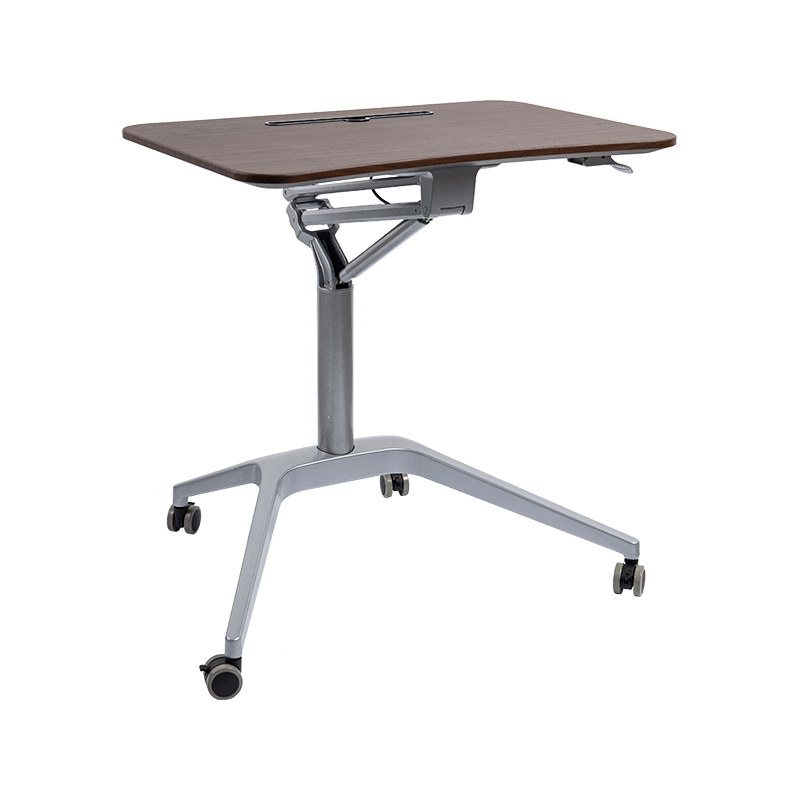
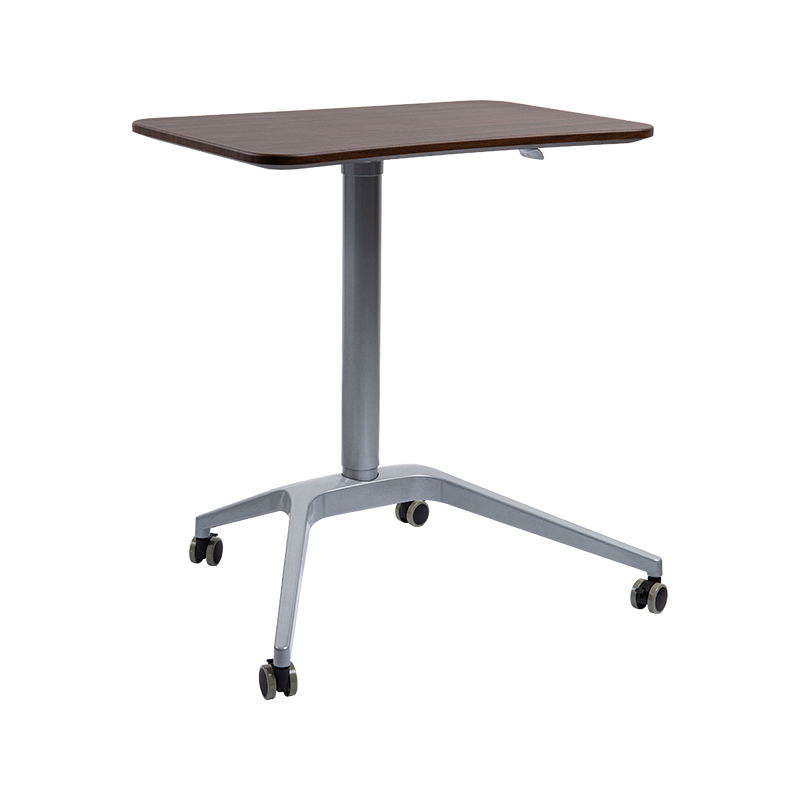
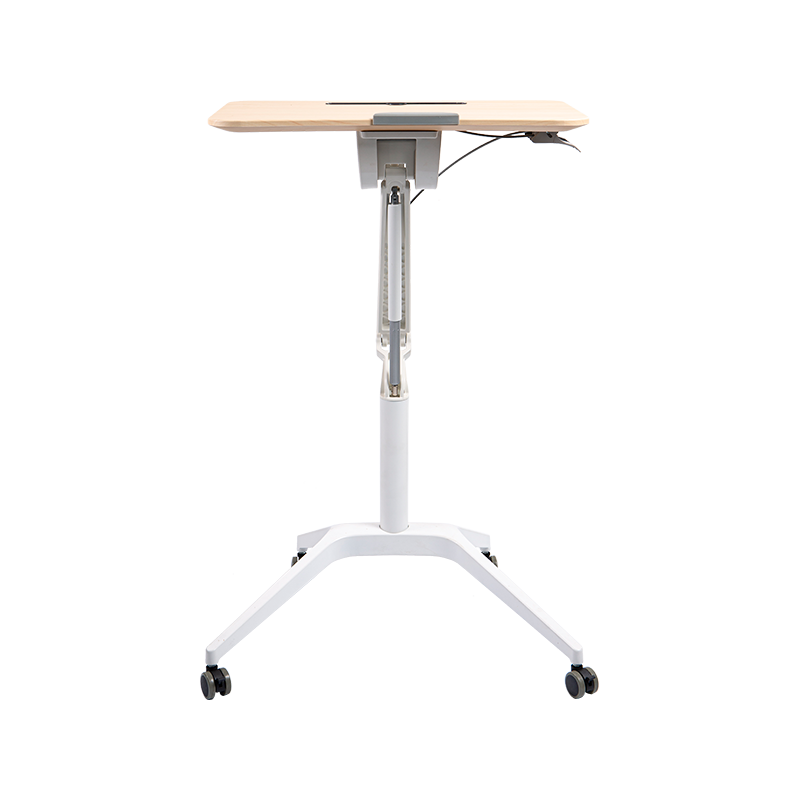
The TH-14 Double-Leg Pneumatic Height-Adjustable Desk is designed for users who need practical height adjustment, reliable mobility, and a compact footprint without depending on electrical power. Its dual-leg structure, gas spring lifting system, powder-coated iron frame, and four-wheel base provide a balanced combination of adjustability and flexibility. The desk can be used for seated or standing work, moved between areas when necessary, and secured in position with two locking casters.
With a lifting range of 760 mm to 1100 mm and a tabletop measuring 980 mm by 560 mm, the TH-14 is positioned as a versatile workstation for applications where efficient use of space matters. It is large enough for everyday office materials, a laptop or monitor setup, documents, laboratory instruments, or creative tools, while remaining compact enough for rooms that cannot accommodate a full-size executive workstation.
This article examines the desk’s structure, operating principle, material selection, mobility, ergonomic value, application range, manufacturing considerations, and competitive advantages. It also explains why a pneumatic height-adjustable desk can be an effective alternative to conventional fixed desks and electrically powered adjustable tables in suitable environments.
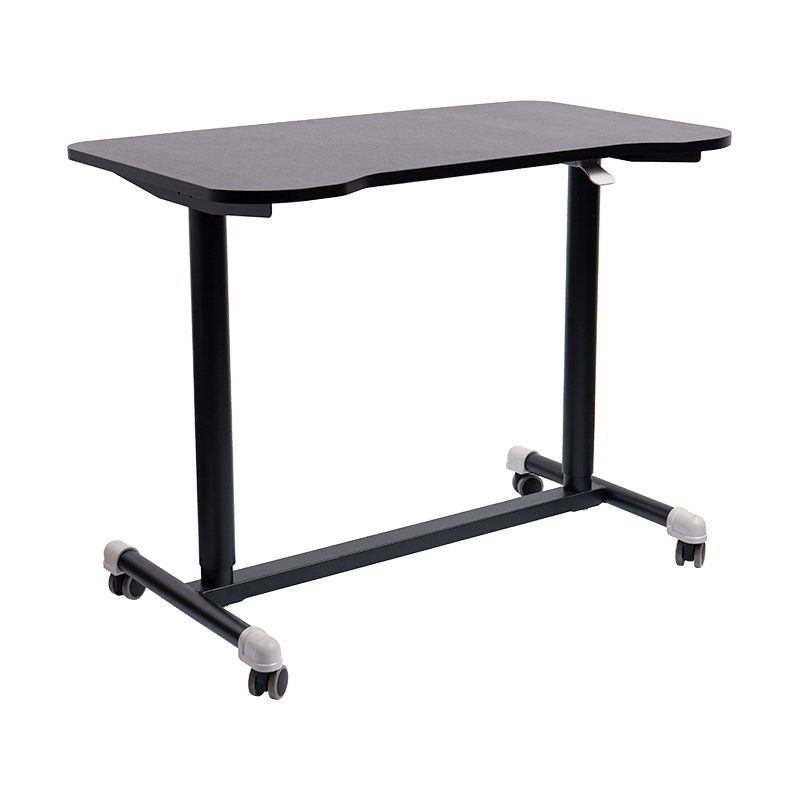
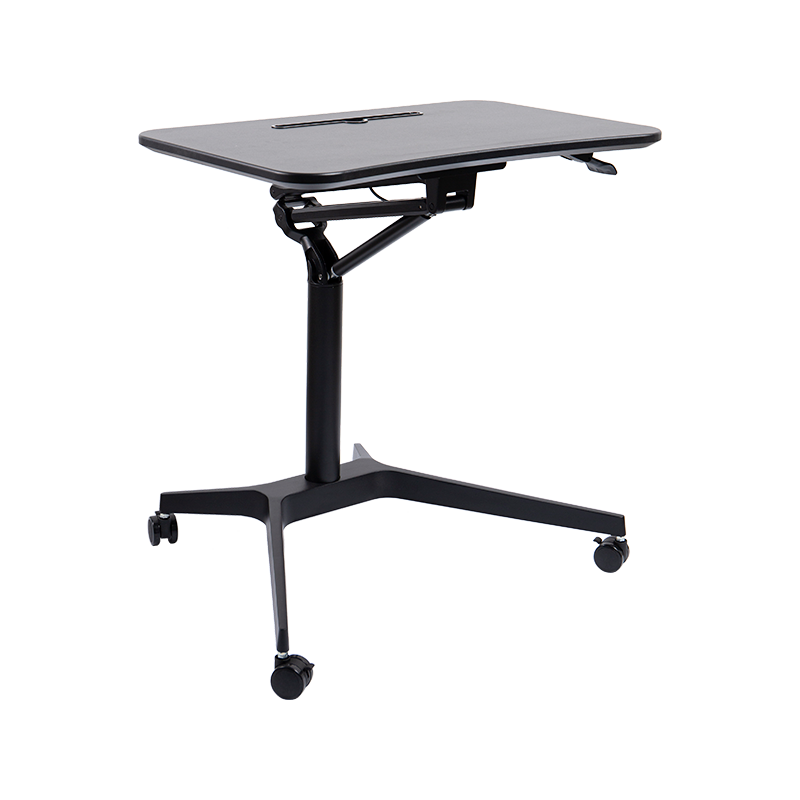
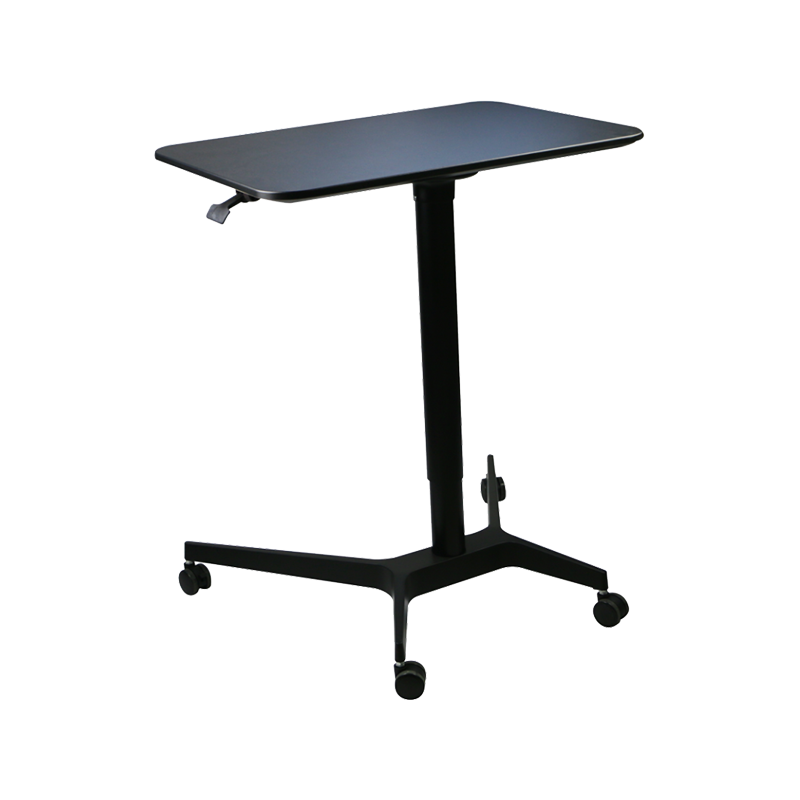
TH-14 Double-Leg Pneumatic Height-Adjustable Desk
1. Product Overview
The TH-14 is a dual-leg pneumatic height-adjustable table intended for flexible work environments. Its central feature is a gas spring lifting mechanism that allows the user to adjust the tabletop height manually. The adjustment is stepless within the available range, meaning the user is not restricted to a limited number of preset positions.
The desk adjusts from 760 mm to 1100 mm. This range supports conventional seated work while also allowing the tabletop to be raised for standing tasks, short-duration collaboration, demonstrations, inspections, or other activities that benefit from a higher working position. The exact ergonomic position can be selected according to the user’s body height, chair height, task requirements, and preferred posture.
The product uses an iron structure with a black powder-coated surface. Iron is widely used in workstation frames because it provides a strong foundation and supports a stable structural design. Powder coating adds a consistent finish and helps protect the metal surface against normal wear and environmental exposure during regular indoor use.
Four swivel casters are integrated into the base. Two casters include locking mechanisms, while the other two remain non-locking. This arrangement creates a practical balance between mobility and stability. When relocation is required, the desk can be moved by releasing the locked wheels. When the desk reaches its working position, the two locking casters can be engaged to reduce unwanted movement.
The tabletop measures 980 mm in width and 560 mm in depth. This compact rectangular format is appropriate for individual workstations, small offices, laboratories, studios, reception areas, and home offices. It can support a focused work setup while preserving circulation space around the desk.
Product Feature | Specification | Practical Value |
Product type | Double-leg pneumatic height-adjustable desk | Supports flexible seated and standing work |
Lifting range | 760 mm to 1100 mm | Allows adjustment for different postures and tasks |
Tabletop size | 980 mm by 560 mm | Provides a compact and practical work surface |
Main material | Iron | Creates a robust supporting frame |
Surface color | Black | Offers a neutral appearance suitable for many interiors |
Surface treatment | Powder coating | Helps improve surface durability and finish consistency |
Casters | Two locking and two non-locking casters | Combines repositioning convenience with location stability |
Lifting principle | Gas spring lifting | Provides manual adjustment without electrical power |
2. How the Pneumatic Height-Adjustment System Works
The TH-14 uses a gas spring as the driving component for height adjustment. A gas spring is a sealed mechanical device containing compressed gas and a piston assembly. When the adjustment control is activated, the gas spring assists movement in the required direction. The user applies a controlled force to raise or lower the tabletop, while the gas spring helps make the movement smoother and more manageable.
This operating principle is different from an electric lifting column. An electric desk requires a motor, control panel, wiring, and a power source. The pneumatic design of the TH-14 does not require a motor or electrical connection for routine height adjustment. This makes the operating system straightforward and useful in locations where power outlets are limited, where cables could interfere with movement, or where a simple mechanical solution is preferred.
Manual pneumatic adjustment also offers flexibility in placement. The desk can be moved to a different area without needing to remain near a wall socket. It can be used in temporary work areas, training rooms, laboratories, studios, and shared spaces where furniture arrangements frequently change.
The stepless nature of gas spring adjustment is another important benefit. Users can select a height between the lower and upper limits rather than choosing only from several fixed settings. This helps accommodate differences in user height and work style. For example, one user may prefer the tabletop slightly above seated elbow level, while another may need a higher setting for standing inspection or presentation work.
A pneumatic system also has a relatively direct operating logic. There are fewer user controls than on a motorized desk, and there is no need to interpret electronic displays or manage control presets. This can be particularly useful in shared environments where multiple users need to make quick, intuitive adjustments.
Advantages of Manual Pneumatic Adjustment
The primary advantage is energy independence. Since height adjustment does not rely on a power supply, the desk does not consume electricity during routine adjustment. This can simplify room planning and reduce dependence on cable management.
The second advantage is mechanical simplicity. A gas spring lifting system avoids the motor, control box, and electrical components found in many powered desks. A simpler system can be easier to understand and may reduce the number of components that require operational attention. It also allows the product to maintain a clean and uncluttered appearance.
The third advantage is operational flexibility. A manually adjustable desk can be repositioned and used in more locations because its core lifting function is not tied to an electrical connection. This is valuable for facilities that rearrange rooms or use workstations for different activities throughout the day.
The fourth advantage is suitability for compact workstations. Because the tabletop is sized for focused individual use, the pneumatic adjustment system complements the product’s efficient footprint. The desk delivers posture flexibility without requiring a large, heavy, or highly complex workstation structure.
3. Structural Design and Stability
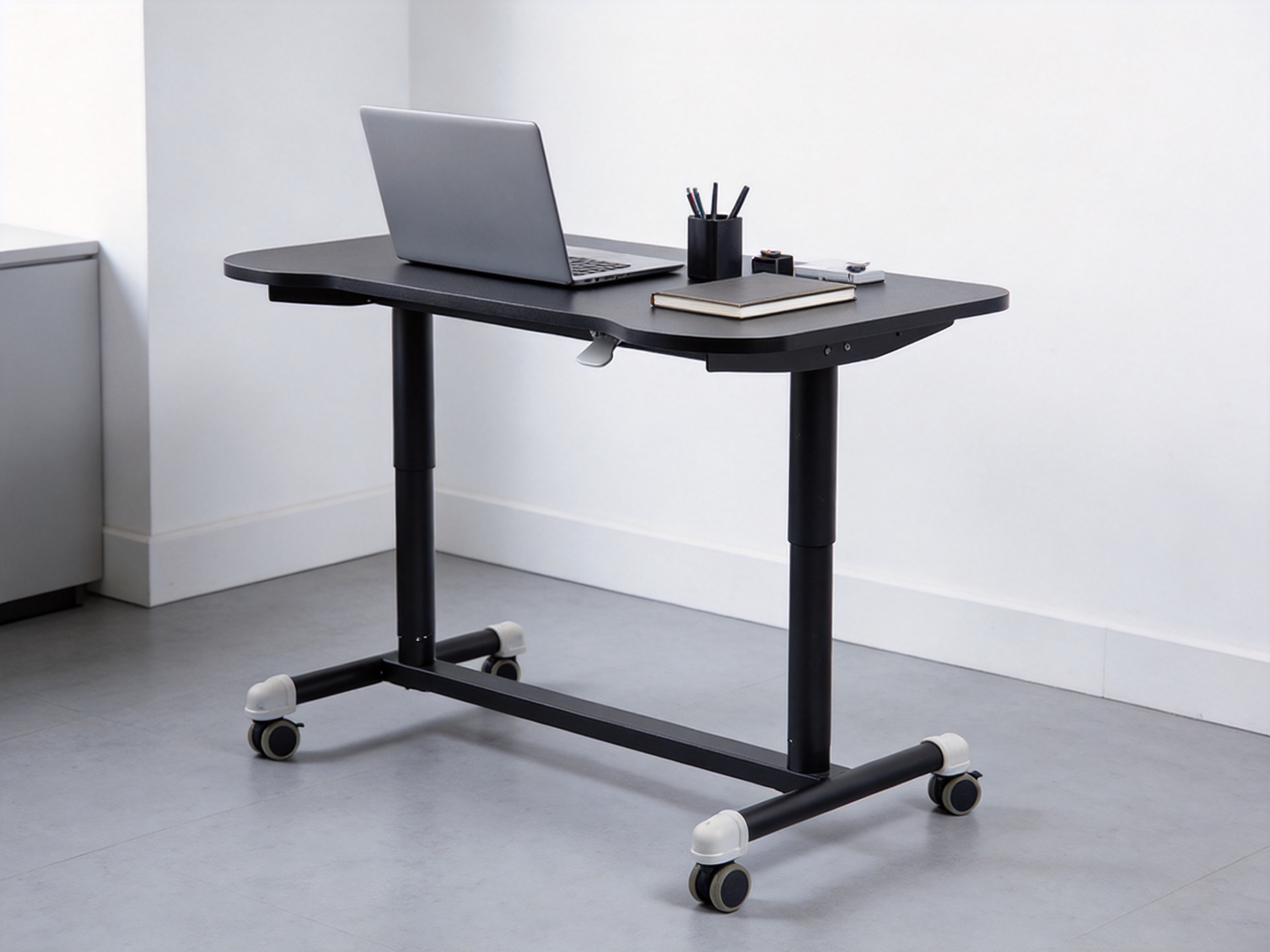
The TH-14 uses a dual-leg configuration. Two supporting legs distribute the tabletop load across the base and help create a balanced visual and structural design. A dual-leg frame is particularly appropriate for a compact desk because it provides support across the width of the working surface without requiring the larger footprint associated with some broader workstation systems.
Structural stability depends on several elements working together rather than on the legs alone. The frame material, connection points, base geometry, caster arrangement, tabletop dimensions, and operating position all contribute to the user’s experience. The iron frame provides the primary supporting structure, while the four-wheel base enables movement and the two locking casters help secure the desk after relocation.
The compact tabletop also contributes to practical stability. A 980 mm by 560 mm surface is designed for concentrated work rather than excessive loading or oversized equipment. Keeping the working area proportionate to the supporting frame helps maintain a balanced product profile and makes the desk easier to position in confined areas.
The two locking casters are especially important in a mobile workstation. A desk that is easy to move should also be capable of remaining in place during normal work. Locking mechanisms provide a simple way to resist rolling once the preferred position has been selected. The two non-locking casters continue to support smooth directional movement when the desk is being repositioned.
Mobility Without Losing Practical Control
Many fixed desks offer stability but are inconvenient to move. Conversely, some lightweight mobile tables are easy to relocate but may not provide sufficient control during use. The TH-14 addresses both needs through its four-caster arrangement. It can be transported across a room, moved between work zones, or repositioned during a layout change. Once the destination is reached, the locking casters can be engaged.
This feature is valuable in office environments with flexible seating, laboratories that require equipment reorganization, studios where projects change location, and educational spaces used for different activities. It can also help home users adapt a room between work, study, and other functions.
Mobility can reduce the need for multiple fixed desks in different areas. A single adjustable workstation may serve as a laptop station in the morning, a project table in the afternoon, and a temporary presentation or review surface later in the day. This multifunctional use can improve the efficiency of limited floor space.
4. Ergonomic Benefits for Seated and Standing Work
Ergonomics is not limited to choosing a comfortable chair. The relationship between the user, tabletop, monitor, keyboard, documents, and working posture also matters. A desk that is too low can encourage forward bending, while a desk that is too high can cause shoulder elevation and wrist discomfort. Because users vary in height and body proportions, one fixed tabletop height cannot suit everyone equally.
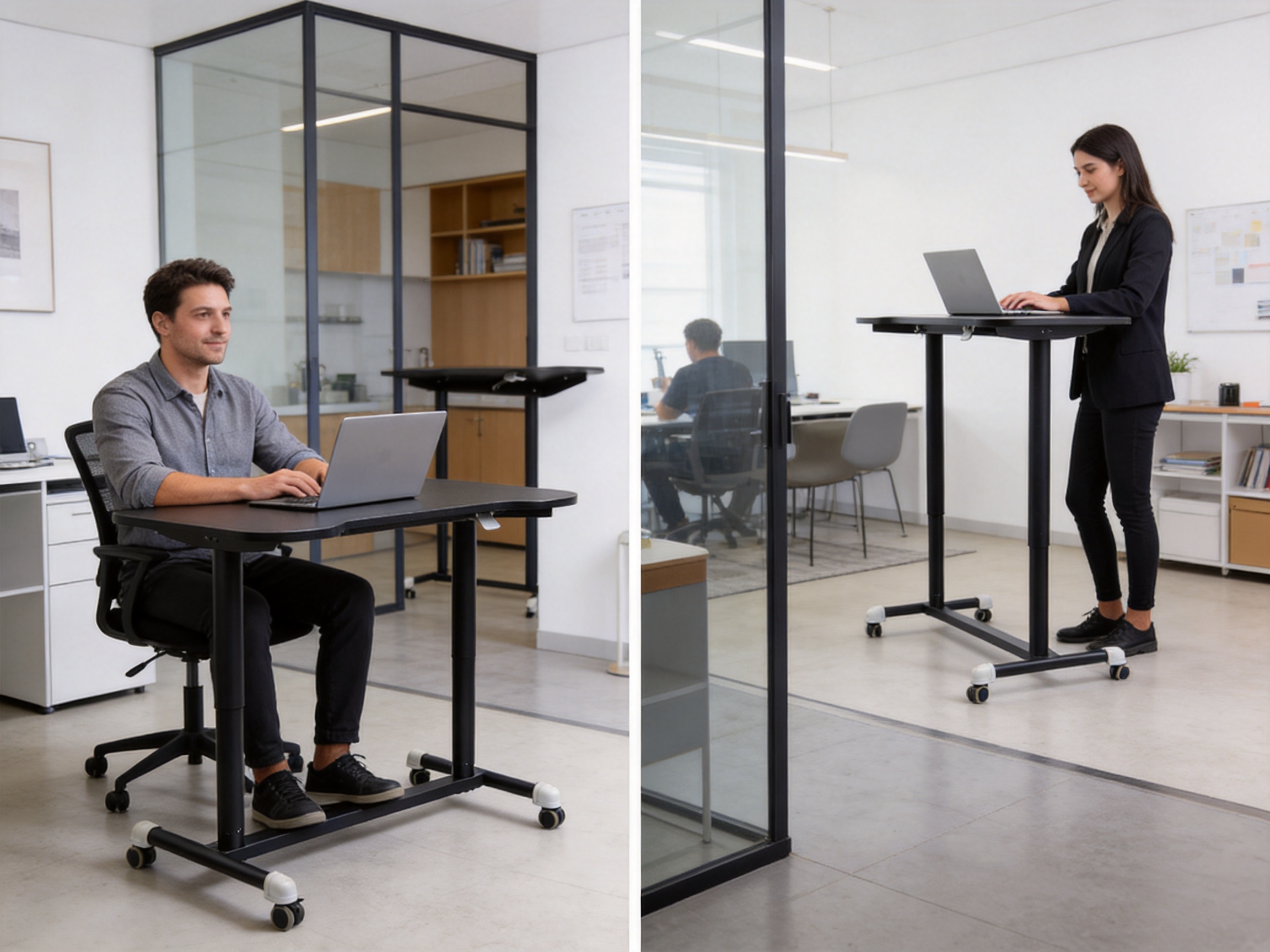
The TH-14’s adjustment range enables the user to modify the work surface according to individual needs. At the lower end of the range, the desk can support conventional seated work. At higher positions, it can support standing work or tasks that require a raised surface. The ability to alternate between positions can make the workday more dynamic.
Changing posture does not mean that standing continuously is required. A practical height-adjustable workstation allows the user to alternate between sitting and standing according to the task, schedule, and personal comfort. Seated work may be suitable for typing, reading, or detailed computer tasks. Standing may be useful during short meetings, document review, demonstrations, sorting, or tasks that benefit from greater freedom of movement.
The stepless adjustment mechanism also helps users fine-tune their position. Rather than accepting a height that is merely close to suitable, the user can make smaller changes until the tabletop is aligned with the preferred elbow, wrist, and monitor position.
Supporting Different Users
A shared desk must accommodate more than one person. In an office or educational setting, people may have different body heights, chairs, work habits, and equipment. A fixed desk often requires users to adapt themselves to the furniture. An adjustable desk allows the furniture to adapt more closely to each user.
The TH-14 is suitable for individual use and shared environments because its adjustment process is manual and direct. Users do not need an administrator to change the height or a special tool to modify the frame. This can make transitions between users faster and reduce the inconvenience associated with fixed-height workstations.
For home study areas, the same benefit applies as children, teenagers, and adults may use the same room or furniture at different times. An adjustable table can support changing requirements without requiring a complete replacement as the user’s needs develop.
Practical Ergonomic Setup
To use the desk effectively, the chair and tabletop should be adjusted together. During seated work, the user should aim for relaxed shoulders, a comfortable elbow angle, and a keyboard and mouse position that does not require excessive wrist extension. The monitor should be positioned to minimize prolonged neck bending. During standing work, the tabletop should be high enough to support relaxed shoulders but not so high that the user must lift the arms.
The desk itself cannot replace good posture, appropriate screen placement, or regular breaks. However, its adjustable design gives the user more control over these factors than a fixed-height table. The product is best understood as a tool that supports better workspace configuration rather than as a complete solution to every ergonomic concern.
5. Compact Tabletop Design for Efficient Space Use
The 980 mm by 560 mm tabletop provides a balanced amount of surface area for focused tasks. It is large enough for a computer, keyboard, mouse, documents, stationery, and everyday accessories. At the same time, it avoids the excessive depth and width that can make a small room feel crowded.
A compact desk is especially useful in modern offices where floor space is expensive, in home offices created within bedrooms or living areas, and in laboratories where multiple workstations must fit into a defined room. It can also serve as a supplementary desk beside a larger workstation, a temporary project table, or a mobile station for specific equipment.
The tabletop dimensions support straightforward zoning. The central area can be reserved for the main work device, while the sides can hold documents or tools. When a standing position is selected, the surface can be used for short-duration tasks without requiring users to occupy a large fixed workstation.
The compact format can also improve circulation. In shared facilities, desks that extend too far into walkways can create congestion. A smaller footprint makes it easier to preserve passageways and reconfigure the room. When combined with casters, the desk can be moved away from walls, grouped with other tables, or placed in a temporary work zone.
6. Material Selection and Powder-Coated Finish
The product’s principal frame material is iron. In furniture manufacturing, iron is valued for its structural performance, forming flexibility, and compatibility with surface treatments. It can be processed into legs, support members, brackets, and base components that create a cohesive frame.
The black powder-coated finish provides a uniform appearance and a practical protective layer. Powder coating is a dry finishing process in which powdered coating material is applied to a prepared metal surface and cured to form a continuous finish. Compared with an untreated metal surface, a properly applied coating can provide improved resistance to routine scuffing, handling, and general indoor exposure.
The black finish is also easy to coordinate with different interiors. It can complement modern offices, industrial-style studios, laboratory spaces, educational facilities, and home work areas. A neutral dark color allows the desk to function as part of a broader furniture system without visually dominating the room.
Surface Quality and Manufacturing Consistency
A high-quality powder-coated product depends on more than the coating material itself. Surface preparation, cleaning, coating coverage, curing control, and inspection all affect the finished result. In a professional manufacturing environment, these stages should be integrated into a controlled production process.
Consistent preparation helps the coating bond properly to the metal. Even coverage supports a uniform appearance across legs, frame members, and base components. Curing control helps the coating develop the expected hardness and finish. Inspection can identify visible defects, uneven areas, contamination, or handling marks before products are packaged.
For buyers, a consistent surface finish is important because it affects both appearance and long-term user perception. Office furniture is seen and handled every day. A clean, even coating helps the desk maintain a professional appearance while protecting the underlying metal during normal use.
7. Manufacturing Strengths and Production Capabilities
The manufacturer behind the TH-14 is a professional enterprise engaged in the research and development, production, sales, and service of standing desks. Its location in Suzhou places the company within the Yangtze River Delta furniture industry, a region recognized for extensive industrial resources, manufacturing cooperation, supply-chain support, and access to technical services.
These regional conditions can support an integrated approach to product development. A standing desk is not created through one process alone. It requires mechanical design, material selection, component sourcing, metal fabrication, surface treatment, assembly, quality inspection, packaging, and customer service. A manufacturing base with access to a broad industrial network can help coordinate these stages more efficiently.
The company’s focus on research and development is particularly relevant to adjustable desk production. A height-adjustable product must balance lifting performance, structural stability, user operation, tabletop dimensions, mobility, finish quality, and cost. Product development therefore involves evaluating the relationship between individual components rather than treating each part separately.
The TH-14 demonstrates a product-development approach centered on practical function. Its dual-leg structure provides a recognizable support system, its gas spring mechanism avoids dependence on electrical power, its casters support mobility, and its compact tabletop fits flexible environments. Each feature contributes to a specific use case rather than adding unnecessary complexity.
From Design Concept to Finished Product
A responsible manufacturing process generally begins with product requirements. For the TH-14, these requirements include a usable adjustment range, a compact work surface, a stable metal structure, a mobile base, and a finish suitable for everyday indoor use. Engineers can then translate these requirements into frame geometry, component specifications, connection details, and assembly procedures.
Metal components must be prepared with attention to dimensional consistency. Accurate components make assembly more efficient and help the completed frame maintain alignment. The gas spring and related lifting components must be integrated into the structure so that the user can operate the desk smoothly. Caster placement must be coordinated with the base to support movement and provide a reliable stance when the locks are engaged.
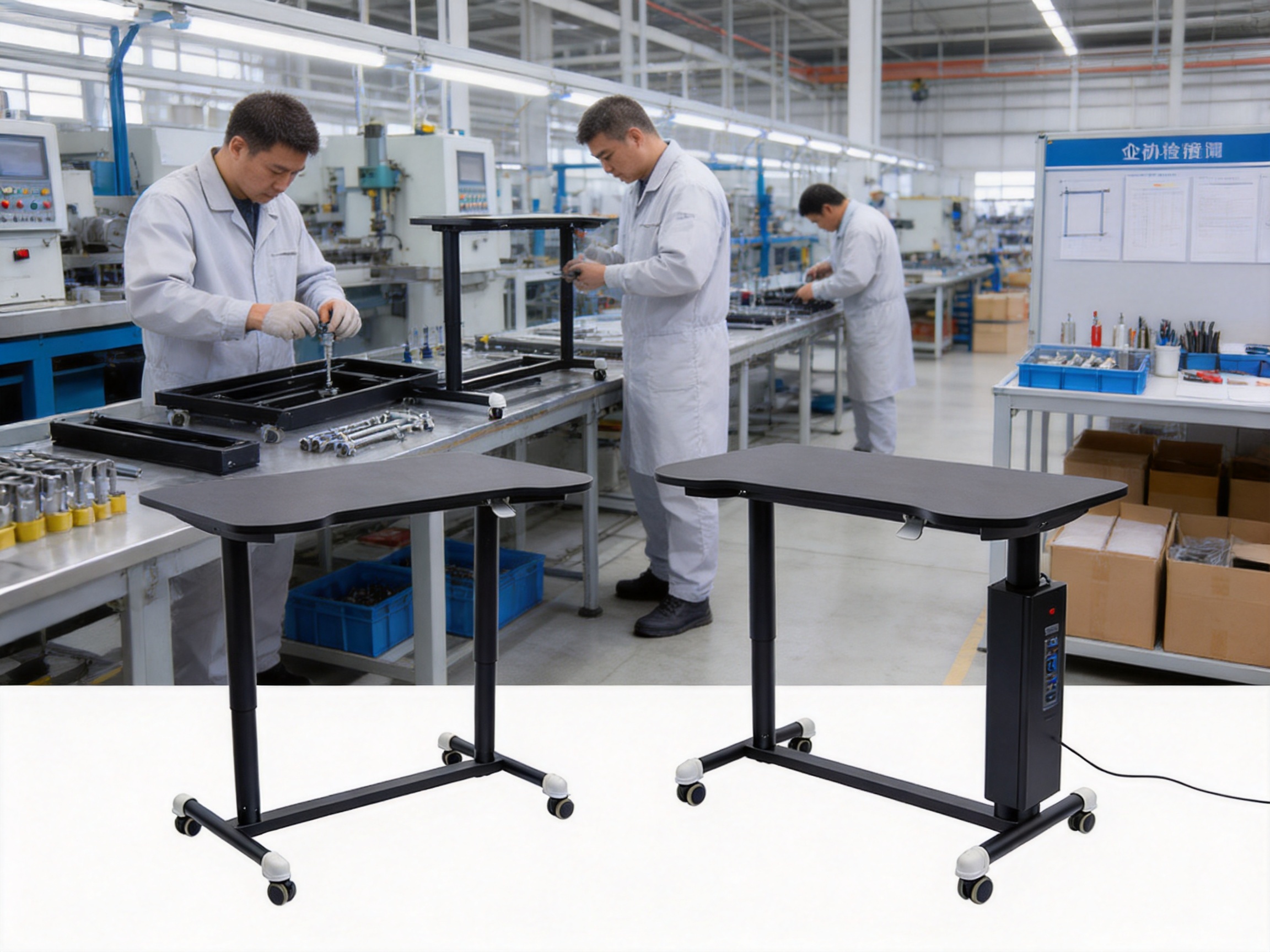
After fabrication, surface treatment becomes an important stage. The metal frame is prepared and powder coated to produce the specified black finish. The coated components are then checked before assembly. Assembly teams or production operators install the lifting mechanism, tabletop, legs, base elements, and casters according to defined procedures.
Quality inspection can take place at several points. Incoming materials may be checked before production. Components can be reviewed after fabrication and surface treatment. Completed desks can be inspected for assembly condition, visible finish quality, movement, caster operation, and basic height-adjustment performance. This staged approach helps identify issues earlier and supports more consistent final products.
Intelligent Manufacturing Orientation
The company describes its business as relying on intelligent manufacturing advantages and regional industrial support. In practical terms, an intelligent manufacturing orientation may include structured production planning, standardized work instructions, process monitoring, data-supported quality management, and organized supply-chain coordination.
For adjustable furniture, process organization is important because the product combines mechanical and furniture-related elements. The frame must be assembled accurately, the gas spring must function as intended, the tabletop must be securely connected, and the casters must operate correctly. A coordinated production system helps ensure that these parts work together as one finished product.
Manufacturing strength also includes the ability to support different customer requirements. Buyers may need products for offices, laboratories, educational settings, studios, or residential applications. Their priorities may differ in terms of quantity, packaging, color, tabletop configuration, delivery schedule, and service. An experienced manufacturer with research, production, sales, and service capabilities is better positioned to communicate across these stages.
8. Competitive Advantages Compared with Conventional Fixed Desks
The clearest advantage over a conventional fixed desk is adjustability. A fixed desk provides one working height, which may be acceptable for a specific user but less suitable for shared spaces or changing tasks. The TH-14 allows users to modify the tabletop position within a broad practical range, supporting more varied working styles.
The second advantage is mobility. Traditional desks are often difficult to move once assembled. The TH-14’s four casters allow relocation without lifting the entire structure. This is useful when cleaning, reorganizing a room, changing team layouts, or moving a workstation between work areas.
The third advantage is the combination of mobility and locking control. A fully mobile table may roll when a user applies pressure. The TH-14 includes two locking casters to help hold the desk in place. This makes it more adaptable than a fixed desk while still offering a way to establish a stable working position.
The fourth advantage is space efficiency. The compact tabletop can fit into smaller areas where a larger fixed desk would be impractical. It can support a focused workstation without consuming unnecessary floor area.
The fifth advantage is the possibility of posture variation. A fixed desk generally encourages one position for long periods. The adjustable range of the TH-14 allows the user to alternate between seated and standing work when appropriate, creating a more dynamic working routine.
9. Competitive Advantages Compared with Electric Adjustable Desks
Electric desks are valuable in many applications, especially where frequent powered adjustment, memory presets, or heavy lifting performance is required. However, they also require electrical components, a power connection, control hardware, and cable management. The TH-14 offers a different value proposition by using a pneumatic lifting system.
Its first advantage over an electric model is independence from mains power during height adjustment. This can simplify placement in rooms where outlets are scarce or where cords could create clutter. A mobile desk can be moved without planning around an attached power cable.
Its second advantage is operational simplicity. The gas spring system uses manual adjustment rather than a motorized control panel. Users can make a direct change without waiting for a motor to operate or managing electronic settings. This may be suitable for organizations that value straightforward furniture operation.
Its third advantage is reduced electrical complexity. The product does not require the same type of motor, control box, or power cable arrangement associated with electric lifting desks. This can make the product attractive for locations where a mechanical design is preferred.
Its fourth advantage is suitability for temporary or changing work areas. A pneumatic desk can be used in a training room, project space, studio, or laboratory without requiring a dedicated electrical installation at every intended position.
However, the choice between pneumatic and electric adjustment should be based on application requirements. Users who need frequent automated changes, programmable height memory, or powered operation may prefer an electric desk. Users who prioritize mobility, mechanical simplicity, manual control, and no routine electrical connection may find the TH-14 more appropriate.
Comparison Factor | TH-14 Pneumatic Desk | Conventional Fixed Desk | Typical Electric Adjustable Desk |
Height adjustment | Manual, stepless gas spring adjustment | Generally fixed | Motorized adjustment |
Power requirement | No electrical power for lifting | None | Usually requires an electrical connection |
Mobility | Four casters, including two locking casters | Often limited after placement | Varies by model; many are less mobile |
Space profile | Compact 980 mm by 560 mm tabletop | Available in many sizes | Often designed as a larger workstation |
Control style | Direct manual operation | No adjustment control | Electronic control |
Best suited for | Flexible, mobile, compact work areas | Stable single-height applications | Frequent powered height changes |
10. Application Areas
Office Workstations
In offices, the TH-14 can serve as an individual workstation, a supplementary desk, or a flexible project table. Its height range supports sitting and standing tasks, while its casters allow it to move as teams and room layouts change. It can be used beside a conventional desk, in a shared office, or in a small personal workspace.
The compact tabletop is suitable for a laptop, monitor, keyboard, documents, and basic office accessories. Its black metal structure can coordinate with contemporary office interiors and provide a professional appearance without taking up excessive room.
Laboratory Benches
Laboratories often require work surfaces that can be repositioned or adapted to different tasks. The TH-14 can serve as a mobile support table for instruments, documentation, sample preparation, or temporary workflow arrangements, provided that the intended load and environmental conditions are appropriate for the product.
The absence of an electrical lifting system can be useful where cable management is important. The powder-coated iron structure also offers a practical finish for ordinary indoor laboratory environments. Specific laboratory applications should always be evaluated according to chemical exposure, cleaning methods, load requirements, and relevant facility standards.
Studio Worktables
Artists, designers, photographers, makers, and other creative professionals often change between seated detail work and standing preparation or review. The TH-14 can support these transitions while remaining easy to reposition within a studio.
Its compact size makes it useful as a secondary table for tools, sketching, equipment preparation, or project review. The locking casters help keep the desk in the selected location during focused tasks, while the unlocked position makes it easier to reorganize the studio as projects develop.
Home Study Areas
In a home office or study area, space must often serve multiple purposes. The TH-14 can be used as a computer desk, reading surface, homework station, or temporary work table. Its height adjustment helps accommodate different users, while its mobility allows the desk to be moved when the room is needed for another activity.
The lack of a required electrical connection for height adjustment can also help maintain a cleaner arrangement. Users can place the desk where it is most convenient rather than where a power outlet is located, although any computer or lighting equipment placed on the desk will still require appropriate power management.
Training and Collaborative Areas
Training rooms, meeting spaces, and multipurpose facilities benefit from furniture that can be rearranged quickly. A mobile height-adjustable desk can function as an instructor station, demonstration table, participant workstation, or temporary presentation surface.
When several desks are used together, their compact dimensions can support different layouts. They may be arranged individually, placed in rows, grouped into collaborative clusters, or moved aside to create open floor space. This flexibility can increase the usefulness of a room without requiring permanent remodeling.
11. Installation, Operation, and Everyday Use
As with any adjustable furniture, correct assembly is important for safe and satisfactory operation. The frame, tabletop, gas spring components, base, and casters should be assembled according to the manufacturer’s instructions. Fasteners should be installed and tightened correctly, and the lifting system should be checked before regular use.
Once assembled, the desk should be placed on a reasonably level indoor surface. Before moving it, users should remove or secure loose objects from the tabletop. The casters should be unlocked for relocation and locked after the desk reaches its intended position. Moving the desk slowly can help protect both the furniture and the surrounding floor or equipment.
Height adjustment should be performed with the tabletop load within the product’s intended operating requirements. Users should keep fingers, cables, and other objects away from moving structural areas. The desk should be raised or lowered in a controlled manner, and the tabletop should not be forced beyond the specified lifting range.
Regular care is straightforward. The tabletop and frame can be cleaned with suitable materials for the application. Abrasive tools, harsh chemicals, and excessive moisture should be avoided unless they are specifically compatible with the surface and environment. Casters should be kept free of accumulated debris so that they can continue to roll smoothly.
Maintenance Considerations
The gas spring is a mechanical component and should be treated as an integrated part of the lifting system. Users should not disassemble or modify it without professional guidance. If adjustment becomes difficult, movement becomes uneven, or unusual noise appears, the desk should be inspected before continued intensive use.
The casters and locking mechanisms should also be checked periodically. A lock that does not engage fully may reduce stability. A caster that does not roll correctly may make relocation more difficult. Routine inspection can help identify these issues before they affect daily operation.
Surface care is equally important. Although powder coating provides a durable finish, it is not immune to impact or misuse. Avoid dragging sharp or excessively heavy objects across the frame. If the coating is damaged, the exposed area should be evaluated and repaired appropriately to reduce the possibility of corrosion in demanding conditions.
12. Why Manufacturing and Service Matter to Buyers
For commercial purchasers, product selection involves more than the visible appearance of a desk. Buyers often need reliable communication, consistent specifications, coordinated delivery, and after-sales support. A manufacturer that manages research and development, production, sales, and service can provide a more connected purchasing experience.
Research and development capability helps the manufacturer understand how users interact with adjustable furniture. It supports improvements in mechanical design, product proportions, surface treatment, mobility, and application suitability. Production capability converts these designs into repeatable products. Sales teams communicate requirements and coordinate orders. Service teams support installation, usage questions, and product follow-up.
This complete business structure can be especially important for project buyers. Offices, laboratories, schools, and commercial facilities may need multiple units that match one another in appearance and function. Consistency across a batch depends on controlled component specifications, organized production, and quality review.
The company’s Suzhou location also offers access to the broader furniture manufacturing ecosystem in the Yangtze River Delta. Regional industrial support can assist with raw materials, metal processing, coating services, component supply, packaging, logistics, and technical cooperation. These connections may help a manufacturer coordinate complex production requirements more effectively than a small isolated operation.
For international customers, communication and service are also important. Product information should be clear, specifications should be confirmed before production or shipment, and application requirements should be discussed when the desk will be used in a specialized environment. A professional supplier should help buyers understand the product’s intended use and limitations rather than treating every order as identical.
13. Selecting the TH-14 for Different Procurement Needs
The TH-14 is particularly suitable when a buyer needs a compact, manually adjustable, mobile workstation. It is a strong candidate for projects where power-free height adjustment is preferred, where desks must be moved regularly, or where the available room is limited.
It can be considered for single-unit purchases, departmental furnishing, shared workstation programs, laboratory support areas, studio equipment stations, educational facilities, and home office projects. Before ordering, buyers should assess the available floor space, the intended equipment, expected user frequency, movement requirements, and surface environment.
Purchasers should also confirm whether the tabletop dimensions meet their equipment needs. The 980 mm by 560 mm surface is practical for focused work, but users who require multiple large monitors, extensive paperwork, or bulky machinery may need a larger workstation. The desk’s compact design is an advantage in space-limited applications, but product selection should always match the actual work process.
Where the desk will be used in a demanding laboratory, industrial, or outdoor environment, buyers should discuss conditions such as chemical exposure, humidity, cleaning agents, temperature, and load. The product information identifies an iron frame and powder-coated surface, while specialized environments may require additional specifications or a different product configuration.
14. Frequently Asked Questions
Q1: What type of desk is the TH-14?
The TH-14 is a double-leg pneumatic height-adjustable desk. It uses a gas spring lifting mechanism for manual, stepless height adjustment and includes four casters for mobility.
Q2: What is the height range?
The lifting range is 760 mm to 1100 mm. This range is intended to support seated work and raised working positions, including standing tasks for suitable users.
Q3: Does the desk require electricity?
No electrical power is required for the gas spring height-adjustment function. The desk is manually adjusted. Any computer, monitor, lamp, or other equipment placed on the tabletop may still require its own power connection.
Q4: Is the height adjustment stepless?
Yes. The pneumatic mechanism allows the user to select a position within the specified 760 mm to 1100 mm range rather than being limited to a small number of preset heights.
Q5: How large is the tabletop?
The tabletop measures 980 mm in width and 560 mm in depth. It is designed as a compact and practical work surface for individual tasks and focused equipment setups.
Q6: What material is used for the desk frame?
The main structure is made of iron. The surface is finished with black powder coating, which provides a consistent appearance and helps protect the metal during normal indoor use.
Q7: Can the desk be moved easily?
Yes. The base has four swivel casters. Two casters are equipped with locks, while two are non-locking. The locks can be engaged after the desk is positioned to help reduce unwanted movement.
Yes. Its adjustable height allows different users to select a more suitable working position, and its casters make it easier to move the desk when room arrangements change.
Q9: What environments can use this desk?
The desk is suitable for office workstations, laboratory benches, studio worktables, home study areas, training rooms, and other indoor applications that require compact, mobile, height-adjustable furniture.
Q10: What should buyers consider before ordering?
Buyers should review the tabletop size, height range, intended load, floor conditions, frequency of movement, equipment requirements, and environmental exposure. Specialized applications should be discussed with the supplier before purchase.
Q11: How does the desk compare with an electric adjustable desk?
The TH-14 uses manual gas spring lifting rather than an electric motor. Its main advantages are freedom from a lifting power connection, straightforward operation, and suitability for mobile or temporary work areas. Electric desks may be preferable when users require powered adjustment, memory presets, or frequent automated changes.
Q12: How should the casters be used?
The casters should be unlocked when the desk needs to be relocated and locked after the desk reaches its intended working position. Users should move the desk carefully and avoid placing loose or unstable items on the tabletop during relocation.
15. Conclusion
The TH-14 Double-Leg Pneumatic Height-Adjustable Desk combines manual height flexibility, compact dimensions, structural practicality, and mobile operation. Its 760 mm to 1100 mm lifting range supports seated and standing work, while the gas spring mechanism eliminates the need for electrical power during adjustment. The dual-leg iron frame provides a stable foundation, and the black powder-coated surface offers a clean, professional finish suitable for a range of interiors.
The four-caster base is one of the product’s most practical features. Two locking casters help secure the desk during work, while the two non-locking casters support relocation. This allows the desk to adapt to changing room layouts, shared workstations, laboratory workflows, studio projects, and home study requirements.
Compared with fixed desks, the TH-14 provides greater flexibility in height, posture, and location. Compared with electric adjustable desks, it offers a simpler mechanical operating principle and does not require electrical power for lifting. These advantages make it a strong option for buyers who value mobility, straightforward operation, compact space use, and practical adjustability.
The manufacturer’s emphasis on research and development, production, sales, service, and intelligent manufacturing provides an important foundation for product consistency and customer support. Its location in Suzhou and connection to the Yangtze River Delta furniture industry further support access to manufacturing resources and supply-chain cooperation.
For organizations and individuals seeking a versatile workstation without the complexity of a motorized system, the TH-14 offers a balanced solution. Its greatest strength is not a single feature, but the way its pneumatic lift, dual-leg structure, compact tabletop, powder-coated frame, and mobile base work together to support adaptable modern workspaces.
References
1. Product specification materials for the TH-14 Double-Leg Pneumatic Height-Adjustable Desk.
2. Manufacturer-provided information concerning product structure, gas spring operation, materials, surface treatment, and application areas.
3. General principles of ergonomic workstation adjustment for seated and standing work.
4. General technical information on gas spring lifting mechanisms used in adjustable furniture.
5. General manufacturing principles for metal furniture fabrication, powder coating, assembly, and quality inspection.
6. General workspace planning principles for mobile, compact, and multifunctional office furniture.
Product: TH-14 Double-Leg Pneumatic Height-Adjustable Desk


- Contact Info
-
-
 Phone+86-15950656125
 -
 Email
Email -
 AddressRoom 1007-1, South Building, Suyue Plaza, Suzhou Industrial Park, Suzhou City, Jiangsu Province, China
-
- Products
- Follow Us
- Need help? Please contact us
Copyright ©
SuZhou Skyhone Intelligent Technology Co., Ltd.
All Rights Reserved.
Privacy
Custom Ergonomic Adjustable Office Tables Manufacturers

