

 English
 русский
 Español
 عربى

Content
- 1 Purpose-Built for Vertical Lifting
- 2 Multi-Stage Telescopic Column Architecture
- 3 Material and Surface Advantages
- 4 Drive System and Controlled Motion
- 5 Safety and Protection Features
- 6 Advantages Over Conventional Single-Section Actuators
- 7 Applications in Adjustable Desks
- 8 Industrial Inspection and Equipment Platforms
- 9 Medical and Laboratory Equipment
- 10 Heavy Equipment and Automated Warehouse Systems
- 11 Manufacturing Strengths and Production Approach
- 12 Customization and System Integration
- 13 Installation and Design Considerations
- 14 Duty Cycle and Long-Term Reliability
- 15 Why Choose a Specialist Manufacturing Partner?
- 16 Selection Guide for Buyers
- 17 Frequently Asked Questions
- 17.1 What is the TH-10 Multi-Stage Electric Lifting Column used for?
- 17.2 How is the TH-10 different from a standard linear actuator?
- 17.3 What is the maximum push force?
- 17.4 What is the pull force?
- 17.5 Can the column hold a load after power is removed?
- 17.6 What power supply does the TH-10 require?
- 17.7 How fast does the TH-10 move?
- 17.8 Can multiple TH-10 columns work together?
- 17.9 What does the IP54 rating mean?
- 17.10 What protections are included?
- 17.11 Can the product be customized?
- 17.12 Is the TH-10 suitable for continuous operation?
- 17.13 What certifications does the product have?
- 17.14 How should the column be installed?
- 18 Conclusion
- 19 References
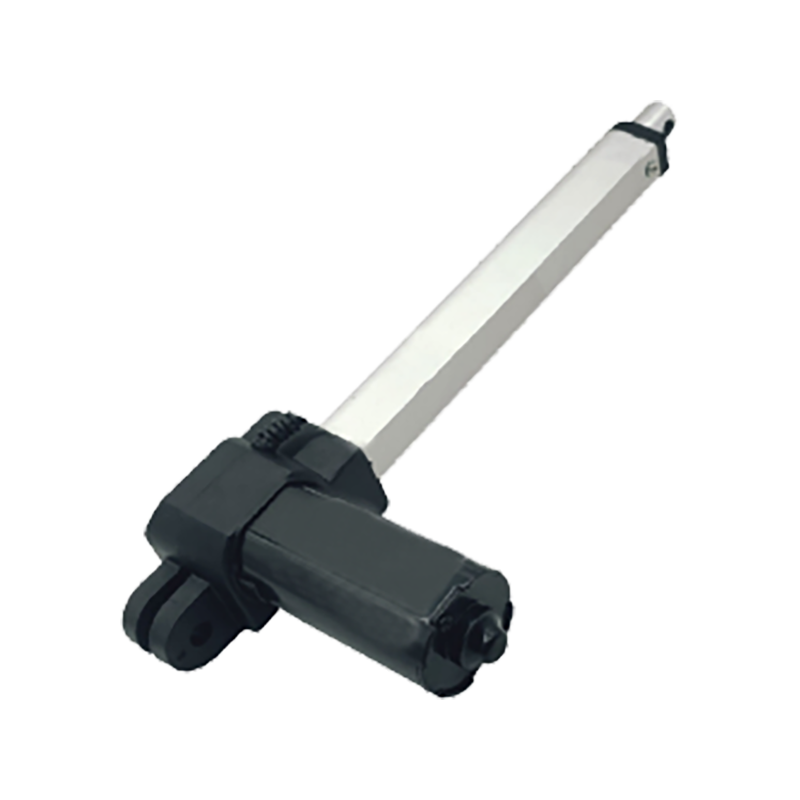
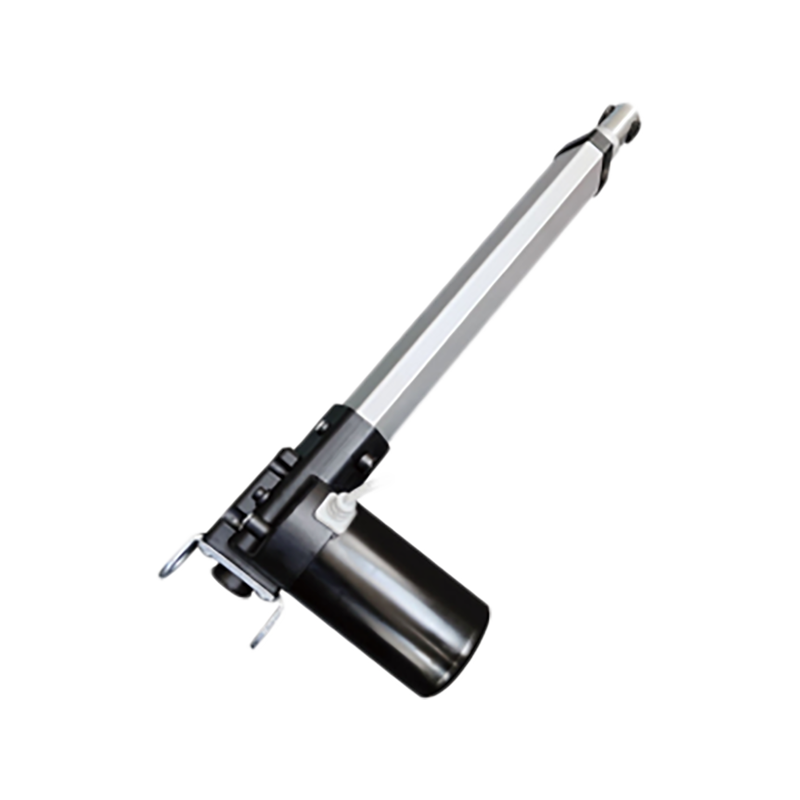
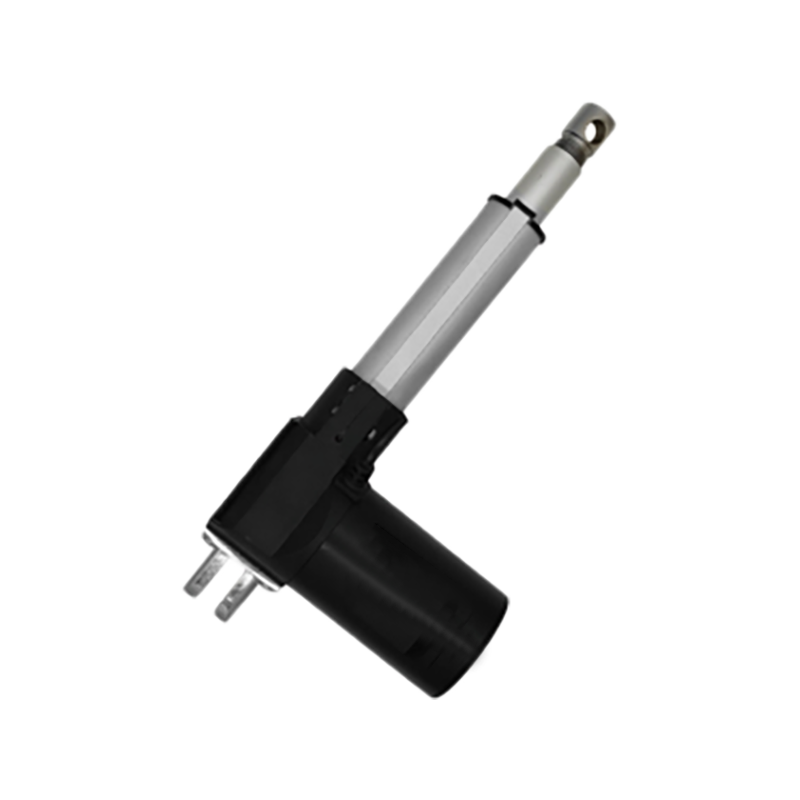
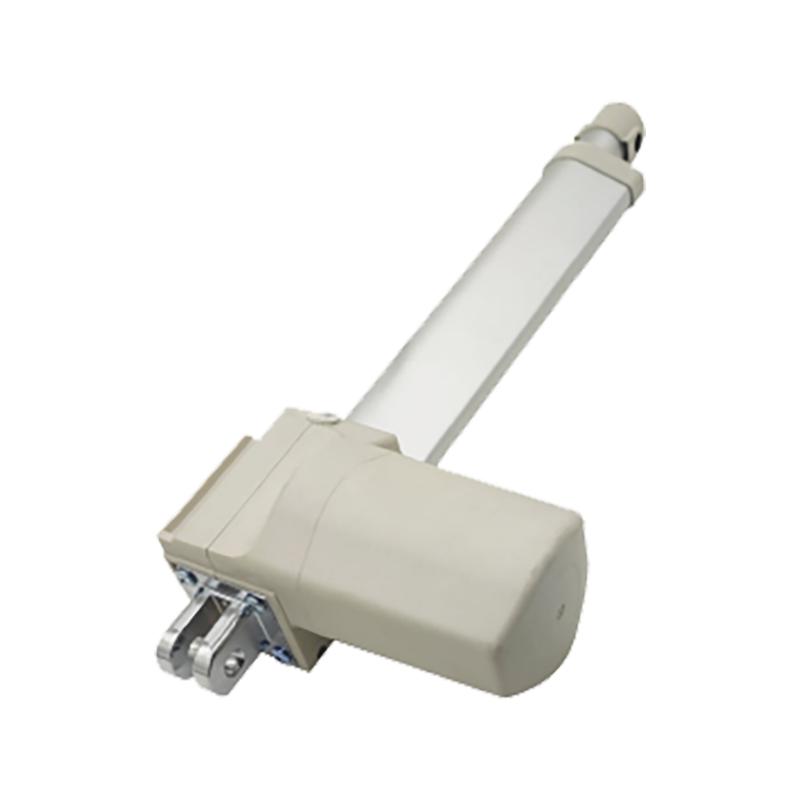
- 20 Product: TH-10 Multi-Stage Electric Lifting Column
TH-10 Multi-Stage Electric Lifting Column: Stable, Powerful, and Precise Vertical Motion
2026-10-21
Modern workspaces, industrial equipment, medical systems, and automated production environments increasingly require controlled vertical movement. A lifting mechanism must do more than extend and retract. It must support substantial loads, maintain alignment, resist unwanted movement, operate safely, and provide reliable performance over an extended service life. The TH-10 Multi-Stage Electric Lifting Column is designed specifically for these requirements.
Unlike a conventional single-section linear actuator, the TH-10 uses a multi-stage telescopic column structure developed for vertical lifting applications. This design provides improved load stability, better resistance to compression, and more controlled movement when the actuator is installed in a standing orientation. It is suitable for smart standing desks, industrial inspection platforms, medical examination beds, heavy equipment jacking systems, automated warehouse lifts, and other vertical positioning applications.
The product combines a strong aerospace-grade integrated aluminum profile tube, precision internal wear-resistant bushings, a trapezoidal lead screw, electronic limit switches, and dual overload protection. It operates from a 24VDC power supply and provides a push force of up to 5000N, a pull force of up to 4000N, and a self-locking force of up to 4000N. With a no-load telescopic speed of 5mm/s, it delivers steady, controlled motion rather than abrupt or unstable movement.
This article examines the TH-10’s construction, operating characteristics, safety features, application advantages, manufacturing strengths, installation considerations, and customization potential. It also compares the product’s multi-stage column architecture with more basic actuator designs and explains why vertical lifting applications often require a purpose-built solution.
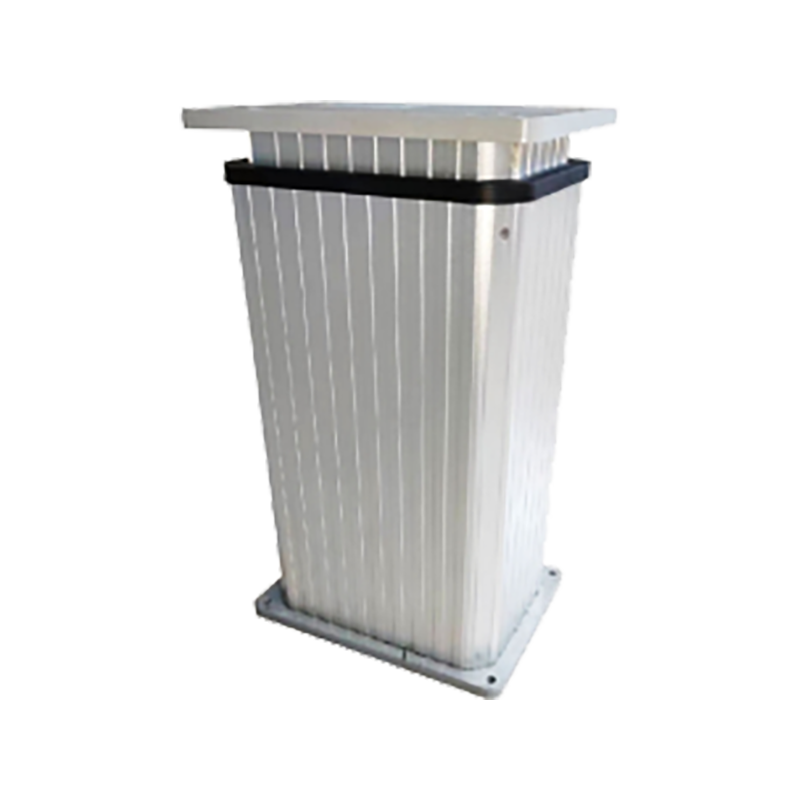
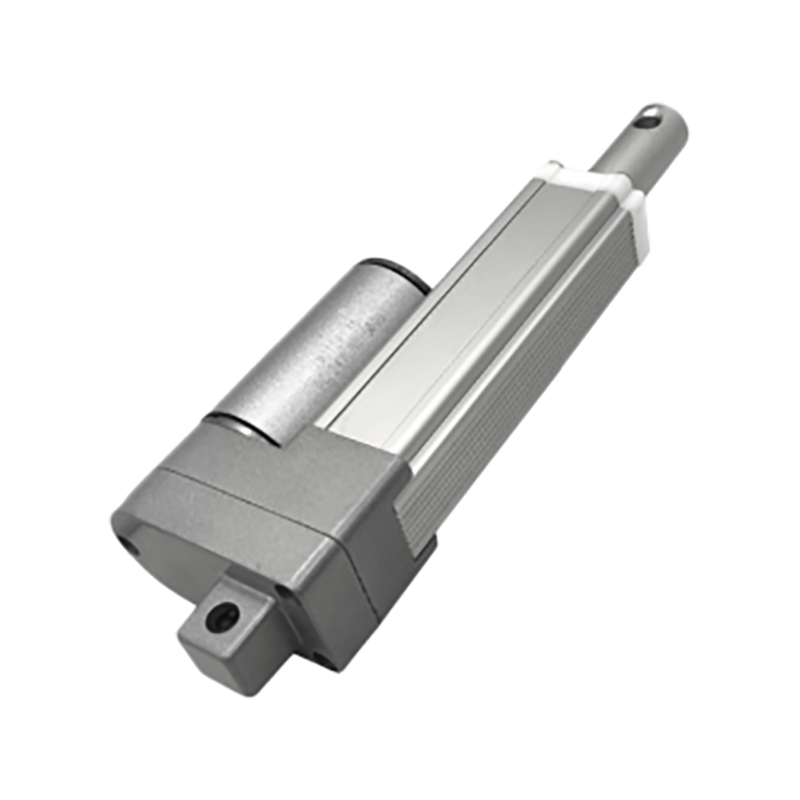
TH-10 Multi-Stage Electric Lifting Column
Purpose-Built for Vertical Lifting
Vertical lifting places special demands on an actuator. When an actuator moves horizontally, the supported load may rest on a guide system, platform, or surrounding structure. In a vertical application, the actuator must usually carry the load while also resisting gravity, vibration, offset forces, and possible side loading. Any looseness in the internal structure can become visible as shaking, tilting, or inconsistent positioning.
The TH-10 is developed as a dedicated vertical lifting column rather than as a general-purpose actuator adapted for upright use. Its column-style architecture supports a more stable relationship between the moving sections and the surrounding structure. The result is a product that is better suited to applications where straight, repeatable, and stable vertical travel is important.
Typical applications include height-adjustable workstations, inspection platforms, laboratory equipment, medical furniture, equipment access systems, material-handling devices, and compact lifting structures. In these situations, the actuator may need to raise a tabletop, inspection surface, instrument, machine component, or heavy platform while keeping the lifted object aligned.
A purpose-built lifting column can also simplify system design. Instead of combining a basic actuator with multiple external guide rails, support brackets, and stabilization components, an equipment designer may be able to integrate the TH-10 directly into the lifting structure. Depending on the load arrangement, multiple columns can also be used together with a controller for synchronized movement.
Multi-Stage Telescopic Column Architecture
The most important structural distinction of the TH-10 is its multi-stage telescopic column. A single-section actuator normally contains one moving rod or tube extending from a fixed body. This arrangement can be practical for many applications, but it may offer limited extension, reduced stability at longer travel lengths, or greater sensitivity to side loads when used vertically.
The multi-stage design allows the column to extend through several nested sections. Each section contributes to the total lifting stroke while remaining supported by the surrounding column structure. This creates a compact retracted form and a practical extended height without requiring an excessively long single moving rod.
Multi-stage construction is especially beneficial for furniture and equipment that must provide a wide height adjustment range while maintaining a relatively compact base. A standing desk, for example, may need to move between seated and standing positions but still fit within a restricted under-desk space. An industrial platform may require substantial vertical travel while maintaining a robust, enclosed appearance.
The nested column sections also help distribute structural forces. Instead of concentrating all compression and bending resistance in one narrow rod, the column provides a broader load-bearing form. This can contribute to better resistance against deformation and improved stability during extension.
Another advantage is the clean integration of the lifting mechanism. The electric motor, transmission components, lead screw, and internal guidance elements are housed within the column assembly. This reduces exposure to dust, accidental contact, and external interference compared with open or loosely protected mechanisms.
Improved Compression Resistance
Compression resistance is a major consideration in vertical applications. When a raised platform or tabletop carries a load, the lifting column experiences compressive force from above. If the column is not sufficiently rigid, the structure may deflect, vibrate, or develop an unstable feel during operation.
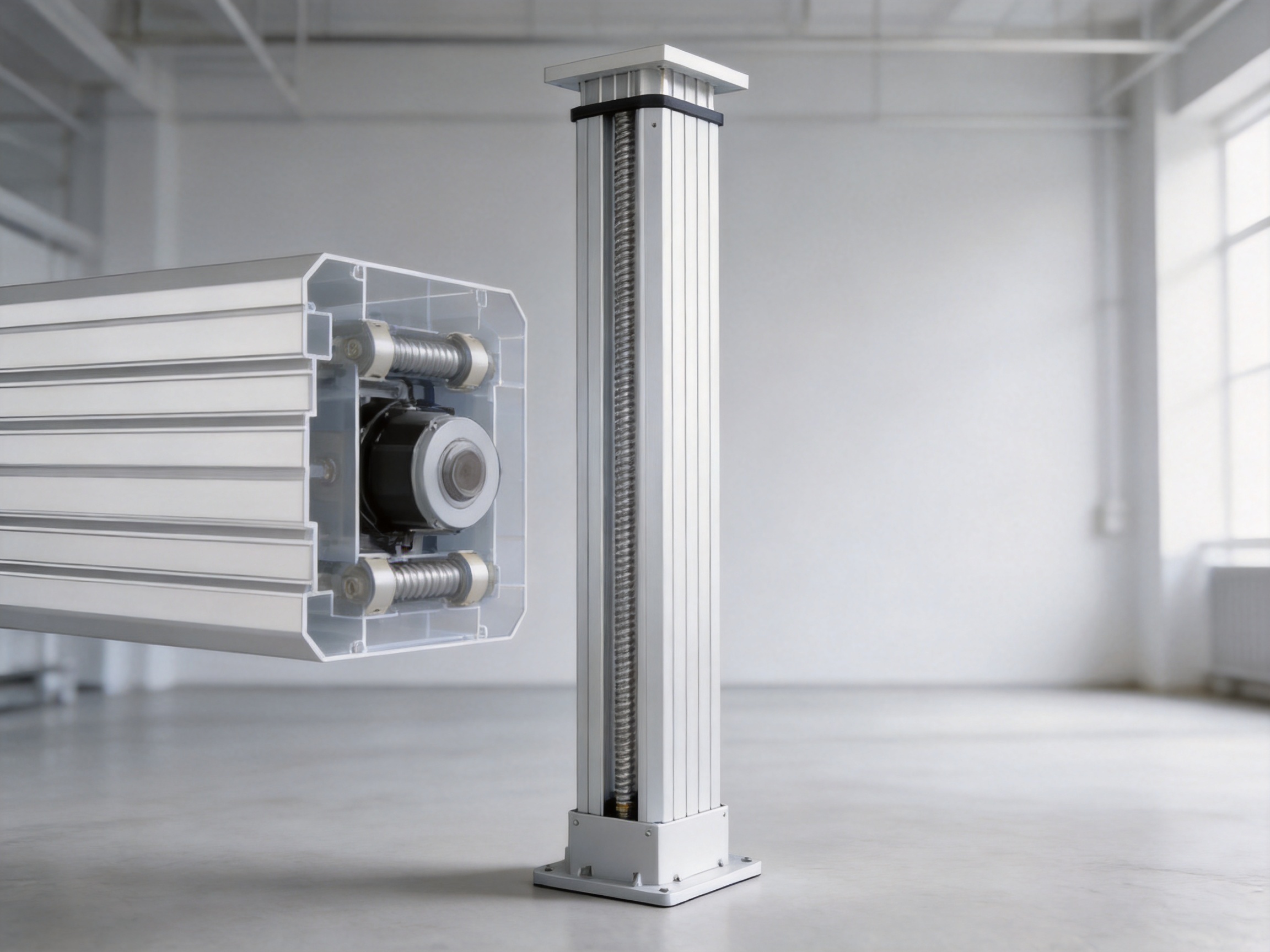
The TH-10 uses a thick integrated aluminum profile tube designed to provide a strong structural enclosure. Aluminum offers a useful combination of low weight, corrosion resistance, and structural efficiency. The integrated profile design supports a neat external appearance while helping the column resist compression loads.
With a push force rated at 5000N, the TH-10 is designed for demanding vertical lifting tasks. The actual usable load in a complete system depends on factors such as load distribution, mounting orientation, stroke length, column configuration, duty cycle, and external side forces. Nevertheless, the rated force demonstrates that the product is intended for more than light-duty positioning.
Reduced Shaking During Movement
Unwanted shaking is a common concern in height-adjustable furniture and vertical equipment. Movement may become unstable when internal clearances are excessive, when the moving sections are poorly guided, or when the load is unevenly distributed. Shaking can reduce user confidence and may affect the accuracy of inspections, measurements, or automated processes.
The TH-10 incorporates precision internal wear-resistant bushings to guide the telescopic sections. These components help control the relationship between the nested parts and reduce unnecessary play. By supporting smoother movement and minimizing internal looseness, the bushings help the column lift vertically without significant offset.
Wear-resistant guidance is also important for long-term consistency. As the product is used repeatedly, the internal support elements must continue to maintain controlled motion. Proper material selection, machining precision, assembly control, and lubrication practices all influence the final performance of the lifting column.
Material and Surface Advantages
The TH-10 is constructed with a thick aerospace-grade integrated aluminum profile tube. The material choice supports the product’s requirements for strength, weight control, corrosion resistance, and appearance. Aluminum is widely used in advanced equipment because it can provide substantial rigidity without the mass associated with heavier steel structures.
The integrated profile tube gives the column a clean and uniform exterior. The matte silver-white finish creates a professional appearance suitable for office furniture, medical equipment, laboratories, and industrial systems. The surface also contributes to a consistent product image when several columns are installed together in a coordinated design.
Corrosion resistance is valuable in both commercial and industrial environments. Office furniture may be exposed to moisture from cleaning processes, while medical and laboratory equipment may require frequent surface sanitation. Industrial equipment can operate in areas where humidity, dust, or temperature changes place additional stress on exposed materials.
The column’s protective design helps shield the internal transmission and guidance components from ordinary environmental contact. It is important to note that an IP54 rating does not make the product waterproof or suitable for immersion. Instead, it indicates protection against limited dust ingress and water splashing from specified directions. System designers should evaluate the complete operating environment before selecting the product.
Drive System and Controlled Motion
The TH-10 uses a 24VDC electrical supply, a common and practical voltage for adjustable furniture, industrial control systems, mobile equipment, and low-voltage automation. A 24VDC architecture makes it easier to connect the column to control panels, desk controllers, programmable systems, and synchronized lifting modules.
The unit has a full-load current of 4A. Electrical system designers should provide a suitable power supply with sufficient capacity and appropriate protection. Wiring, connectors, control modules, and power distribution should be selected according to the number of columns, operating frequency, cable length, and expected environmental conditions.
The no-load telescopic speed is 5mm/s. This speed is intentionally focused on stable and manageable lifting rather than high-speed motion. In a standing desk, moderate speed allows a user to adjust the working height without sudden movement. In an inspection platform or medical bed, controlled motion can make positioning safer and more comfortable. In an industrial system, a measured speed can support repeatable sequences and reduce shock during stopping.
Actual speed may vary according to the applied load, power supply condition, friction, temperature, controller settings, and mechanical installation. As with most electric lifting systems, the highest rated speed is generally associated with no-load operation, while heavier loads may result in slower movement.
Trapezoidal Lead Screw Transmission
The internal trapezoidal lead screw is a key feature of the TH-10. This type of screw transmission is commonly selected for lifting mechanisms because it can provide reliable force transmission and strong resistance to back-driving. When power is removed, the screw geometry helps hold the load in position.
The self-locking force is rated at 4000N. This means the mechanism is designed to resist movement under a substantial load after power is cut, subject to the specific installation and operating conditions. Self-locking can reduce the need for continuous motor power while the column remains stationary. It can also contribute to safer behavior during a power interruption.
Self-locking does not replace proper mechanical safety design. Applications involving people, suspended loads, or significant risk should include appropriate secondary safety measures, structural support, emergency procedures, and risk assessment. The complete machine—not only the actuator—must meet the relevant safety requirements.
Safety and Protection Features
Vertical lifting equipment must be designed with protection against overtravel, overload, unexpected obstruction, and electrical faults. The TH-10 includes electronic limit switches and dual overload protection to support safe and reliable operation.
Electronic Limit Switches
Electronic limit switches define the permitted travel range of the column. When the column reaches its designed upper or lower limit, the control system can stop the motor and prevent continued operation in the same direction. This protects the internal mechanism and helps prevent the moving structure from exceeding its intended range.
Limit settings must be respected during installation and system integration. External mechanical interference, incorrect wiring, unsuitable controllers, or unauthorized modifications may affect the effectiveness of the limit system. Equipment manufacturers should verify the full movement range after assembly and before placing the product into service.
Dual Overload Protection
Overload protection helps respond to conditions in which the lifting force exceeds the normal operating level. Such conditions may occur when a platform is overloaded, a moving component is blocked, or the mechanism experiences abnormal friction. Dual protection adds an additional layer of defense against damage caused by excessive force or current.
Overload protection is particularly valuable in adjustable desks and multi-column systems. Uneven loading can cause one side of a desk or platform to experience greater resistance than the other. A suitable controller should monitor the system and respond appropriately when abnormal resistance is detected.
CE and RoHS Certifications
The TH-10 has official CE and RoHS certifications. CE conformity indicates that the product is designed to meet applicable European requirements within the scope of the relevant directives and standards. RoHS compliance addresses restrictions on certain hazardous substances in electrical and electronic products.
Certification documentation should be reviewed for the specific product configuration and intended market. System integrators remain responsible for evaluating the finished machine, including the power supply, controller, wiring, enclosure, and other components incorporated into the final product.
| Parameter | TH-10 Specification | Practical Significance |
|---|---|---|
| Product type | Multi-stage electric lifting column | Designed for stable vertical lifting and height adjustment |
| Power supply | 24VDC | Compatible with many furniture and industrial control systems |
| Push force | 5000N | Supports demanding upward lifting applications |
| Pull force | 4000N | Provides controlled downward or retracting force |
| Self-locking force | 4000N | Helps resist back-driving after power interruption |
| Full-load current | 4A | Provides a reference for power supply and controller selection |
| No-load speed | 5mm/s | Offers controlled, steady telescopic movement |
| Protection rating | IP54 | Helps protect against limited dust and water splash exposure |
| Protection systems | Electronic limits and dual overload protection | Helps prevent overtravel and abnormal load damage |
| Certifications | CE and RoHS | Supports international product integration and compliance planning |
Advantages Over Conventional Single-Section Actuators
The TH-10’s strongest competitive advantage is its specialization. A conventional single-section actuator may be suitable for pushing a flap, adjusting a mechanism, or moving a component along a short path. However, it may not provide the same vertical stability, structural enclosure, or extended lifting capability required by a column-based system.
Single-section actuators often depend on external guides when they are used to raise broad or offset loads. Without sufficient guidance, the actuator rod may experience side loading, bending stress, or accelerated wear. The TH-10’s column architecture provides a more appropriate foundation for vertical loads and can reduce the need for additional stabilization components in suitable applications.
Another difference is the relationship between retracted length and usable height. A multi-stage column can achieve a substantial lifting range while remaining compact when retracted. This is highly valuable in office furniture, medical equipment, and industrial systems where installation space is limited.
The enclosed column also offers a cleaner appearance and greater protection for internal components. Open mechanisms can collect dust or expose moving parts to accidental contact. The TH-10’s integrated housing supports a professional exterior and contributes to easier product integration.
Self-locking performance is another important advantage. While all actuator systems must be evaluated according to their specific load and safety conditions, the trapezoidal lead screw allows the TH-10 to hold a load more securely when power is removed than many freely back-drivable mechanisms.
| Comparison Area | Conventional Single-Section Actuator | TH-10 Multi-Stage Lifting Column |
|---|---|---|
| Primary design purpose | General linear pushing or pulling | Dedicated vertical lifting |
| Guidance approach | May require external guides for stable lifting | Integrated telescopic column guidance |
| Extended structure | Single rod or tube | Multiple nested sections |
| Vertical stability | Depends strongly on external support | Designed for improved column stability |
| Space efficiency | May require a long retracted body | Multi-stage structure supports compact retraction |
| Load holding | Depends on transmission type | Trapezoidal lead screw with self-locking capability |
| Application suitability | Broad range of linear motion tasks | Standing desks, platforms, beds, lifts, and vertical systems |
Applications in Adjustable Desks
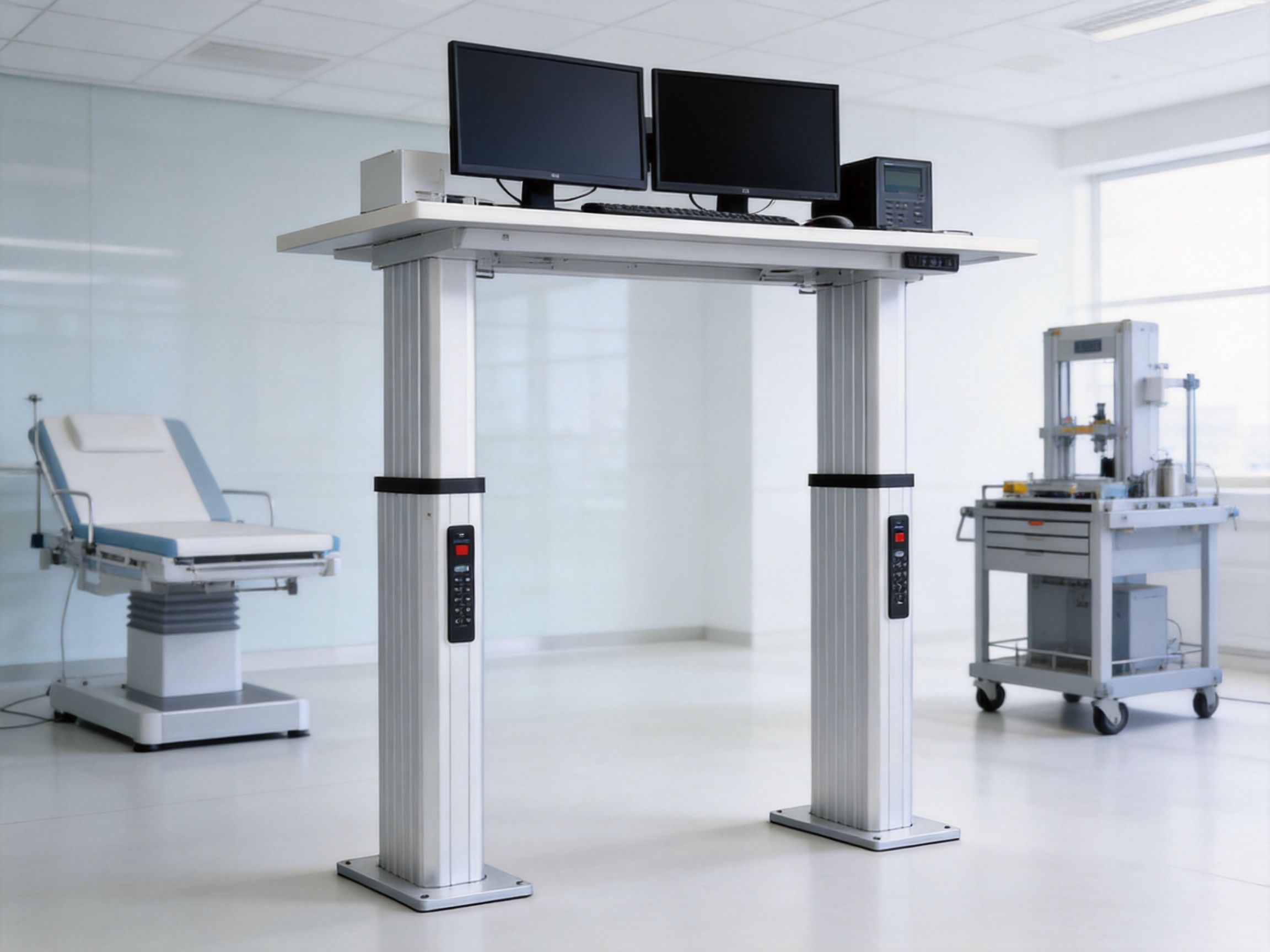
Standing desks are one of the most visible applications for electric lifting columns. Users expect a desk to move smoothly between sitting and standing heights, support monitors and equipment, remain stable during typing, and operate quietly and safely in an office environment.
The TH-10 is suitable for desk designs that require strong vertical support and a clean external appearance. Its matte silver-white aluminum column can be integrated into modern office furniture, while its 24VDC power system can connect to a desk control panel. For larger desktops or heavier loads, multiple columns may be combined in a synchronized lifting system.
Synchronization is important when a desk uses two or more columns. If one column moves faster than another, the desktop may tilt or bind. A suitable controller can coordinate the columns, regulate speed, and monitor overload conditions. The TH-10 supports synchronous control schemes when correctly configured with an appropriate control system.
The 10% standard duty cycle is suitable for applications involving intermittent height adjustment and extended static load-bearing. In an office, a desk may be adjusted several times a day and then remain stationary for long periods. The actuator should not be operated continuously beyond its specified duty cycle, and the complete desk design should account for the expected user behavior and load pattern.
Industrial Inspection and Equipment Platforms
Industrial inspection platforms often need to raise cameras, sensors, instruments, workpieces, or operators’ access points to a specific height. The lifting mechanism must provide repeatable positioning and resist vibration so that inspection results are not affected by platform movement.
The TH-10’s multi-stage structure can support vertical adjustment in compact spaces around production lines. Its enclosed design helps protect the internal mechanism from ordinary workplace contamination, while the IP54 rating provides a defined level of environmental protection for suitable conditions.
The controlled 5mm/s no-load speed is beneficial where an operator needs to position an inspection device accurately. A slower, steady motion can make it easier to stop at a target height and reduce movement-induced errors. The column may also be linked to a programmable controller for preset positions or coordinated movement with other equipment.
Industrial users should assess the application for vibration, shock, side loading, temperature, dust concentration, cleaning chemicals, and continuous operating frequency. The lifting column should be mounted so that external forces are transferred through the intended structural supports rather than through the telescopic sections in an unsuitable direction.
Medical and Laboratory Equipment
Medical examination beds, diagnostic platforms, treatment tables, laboratory instruments, and equipment carts often require height adjustment to improve accessibility and ergonomic performance. In these applications, smooth motion and load stability are particularly important.
The TH-10 can provide a compact electric lifting solution for equipment that must move vertically while maintaining a controlled position. The self-locking transmission helps resist unwanted descent when power is removed, while electronic limits and overload protection support safer operation.
Medical and laboratory designers must consider additional requirements beyond actuator performance. These may include cleaning procedures, electrical safety, biocompatibility of exposed materials, noise limitations, emergency lowering, infection control, and applicable regional regulations. The TH-10 should therefore be evaluated as part of the complete medical or laboratory device rather than as an isolated component.
The corrosion-resistant aluminum profile and enclosed construction can be helpful where surfaces are cleaned regularly. However, cleaning agents, disinfectants, and liquid exposure must be compatible with the product’s materials and IP54 protection level. Direct spraying into joints, openings, connectors, or control components should be avoided unless the finished system is specifically designed for that procedure.
Heavy Equipment and Automated Warehouse Systems
Heavy equipment vertical jacking structures require force, stability, and dependable load holding. The TH-10’s 5000N push force and 4000N self-locking force make it suitable for selected compact lifting systems within its rated operating conditions.
Automated warehouse lifts may use electric columns to adjust shelves, platforms, transfer mechanisms, or access equipment. The 24VDC electrical architecture can integrate with automation controls, sensors, and programmable logic systems. The multi-stage design can help save space where the lifting mechanism must fit inside a machine frame or compact storage bay.
Automation engineers should account for acceleration, deceleration, cycle frequency, emergency stops, synchronization, mechanical clearances, and load center. A lifting column should not be selected only by comparing its maximum force with the nominal load. Dynamic effects, off-center loads, friction, and repeated cycling can significantly affect the required capacity.
When a platform is supported by multiple columns, the columns should be installed with accurate alignment and connected to a controller capable of maintaining synchronization. Mechanical stops, anti-tilt features, and redundant safety systems may be required depending on the risk level of the equipment.
Manufacturing Strengths and Production Approach
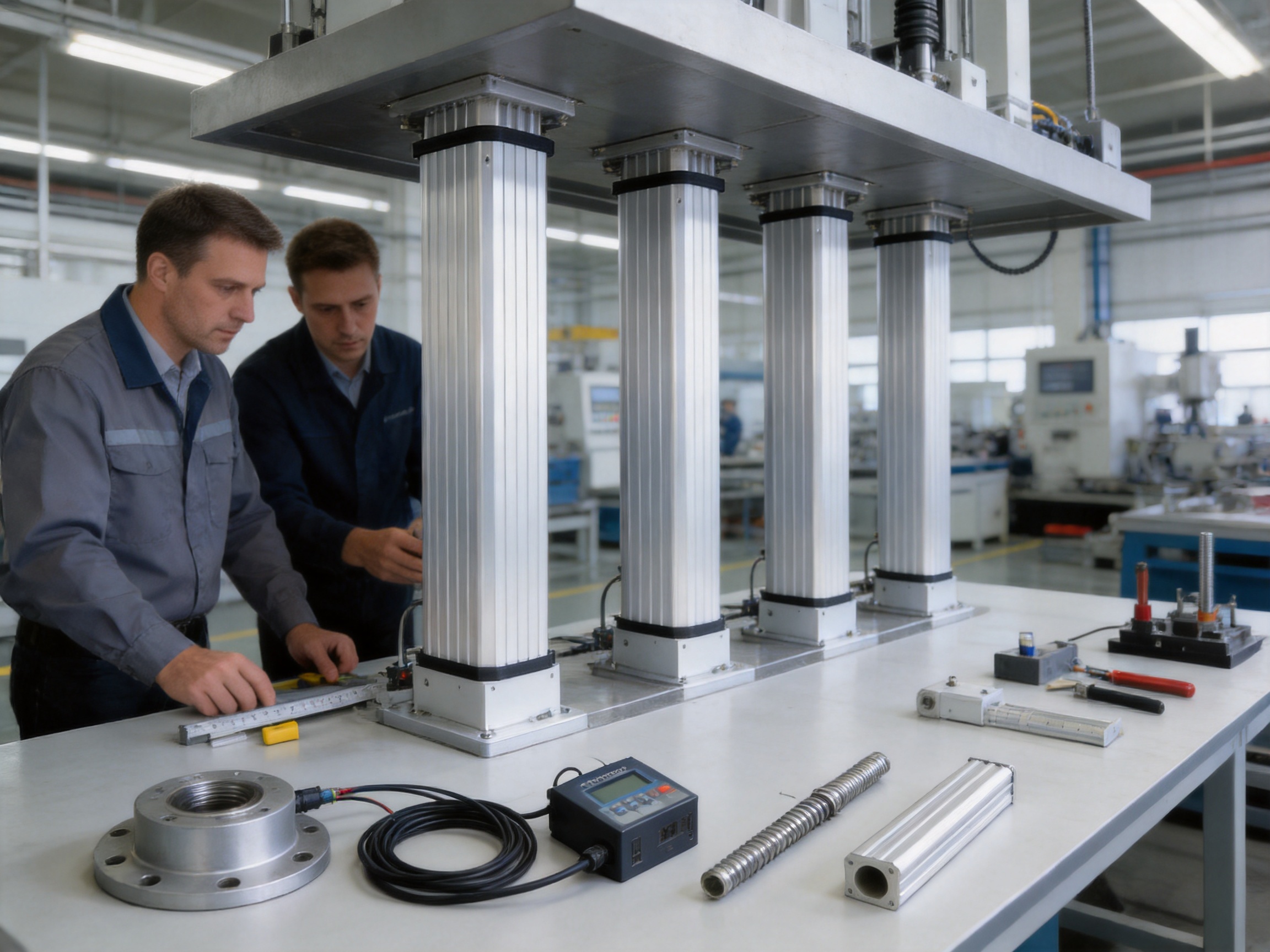
The product is supplied by SuZhou Skyhone Intelligent Technology Co., Ltd., a professional manufacturing enterprise focused on the research and development, production, sales, and service of standing desk and intelligent lifting solutions. Its location in Suzhou places the company within the Yangtze River Delta, a region known for strong manufacturing infrastructure, industrial supply chains, engineering talent, and access to component suppliers.
A complete regional industrial chain can support efficient sourcing of aluminum profiles, motors, transmission parts, electronics, machining services, surface treatments, packaging materials, and related components. For customers, this type of manufacturing environment can improve development coordination and make it easier to manage product customization and volume production.
The company’s focus on research and development is important because lifting columns require coordinated design across mechanical, electrical, and control disciplines. A reliable product is not created by selecting a motor alone. The profile structure, telescopic guidance, screw transmission, limit system, overload protection, power input, controller interface, and installation hardware must work together as one system.
Integrated Aluminum Profile Processing
The TH-10’s integrated aluminum profile tube requires controlled forming, cutting, machining, finishing, and assembly. Dimensional accuracy is important because the nested column sections must maintain an appropriate relationship throughout the travel range. Excessive clearance can cause shaking, while insufficient clearance can increase friction and reduce efficiency.
Surface consistency is also important for commercial furniture and visible equipment. A controlled matte silver-white finish helps create a uniform appearance across multiple products. Proper surface treatment contributes not only to visual quality but also to resistance against ordinary corrosion and wear.
Precision Assembly and Internal Guidance
The internal wear-resistant bushings must be correctly positioned and assembled to guide the telescopic sections. Assembly quality influences the smoothness of movement, noise, load distribution, and long-term durability. Manufacturing control should include attention to alignment, fastener security, transmission engagement, cable routing, and end-of-travel function.
Precision assembly is particularly important when multiple lifting columns are used together. Small differences in friction, travel, or mechanical alignment can produce synchronization problems. Consistent production processes help reduce variation between individual columns and support better performance in coordinated systems.
Electrical and Functional Testing
Electric lifting products require functional testing in addition to visual inspection. Testing may include no-load operation, limit switch response, overload behavior, current measurement, movement direction, abnormal noise, and load performance. The exact test program depends on the product configuration and applicable quality procedures.
Verification of the 24VDC input, full-load current behavior, electronic limits, and overload protection helps identify defects before shipment. Testing can also confirm that the column moves in a controlled manner throughout the telescopic range and that the structure does not show unacceptable offset or instability.
A manufacturing company that combines product development with production and service can respond more effectively to customer feedback. Application information from standing desks, industrial platforms, and other systems can be used to improve future designs, installation recommendations, controller compatibility, and customization options.
Customization and System Integration
The TH-10 supports customization of total stroke, flange base, and synchronous control schemes. These options allow equipment manufacturers to adapt the lifting column to specific dimensional and operational requirements.
Total Stroke Customization
Different applications require different height ranges. A desk may need a moderate transition between seated and standing positions, while an industrial platform may require a longer vertical travel. Stroke customization allows the actuator to fit the intended movement range without forcing the designer to use an unnecessarily large or inefficient structure.
When specifying stroke, customers should provide the required retracted height, extended height, load, operating frequency, installation orientation, and available space. The target stroke should also be evaluated alongside stability. Longer extension can increase the effect of side loads and may require additional structural guidance or a wider support arrangement.
Flange Base Customization
The flange base connects the lifting column to the surrounding frame, desk leg, platform, or equipment structure. A customized flange can simplify installation and improve force transfer. Correct mounting is essential because an otherwise capable actuator may perform poorly if the base is flexible, misaligned, or unable to distribute the load.
Customers should consider bolt patterns, mounting surface dimensions, access for tools, cable routing, structural thickness, and the direction of applied forces. The flange and the supporting frame must be strong enough for both static and dynamic loads.
Synchronous Control Schemes
Multi-column applications require careful control. Synchronous operation helps maintain a level work surface or platform as it moves. The control scheme may include position feedback, current monitoring, overload detection, limit management, and automatic stopping when a column encounters abnormal resistance.
When requesting a synchronous configuration, customers should identify the number of columns, desired movement speed, load distribution, control interface, operating frequency, emergency stop requirements, and preferred adjustment method. A properly matched controller can convert several individual lifting columns into a coordinated vertical motion system.
Installation and Design Considerations
Correct installation has a direct effect on the performance and service life of a lifting column. The TH-10 should be mounted on a rigid, level structure capable of supporting the expected load. The mounting surfaces should be aligned so that the column is not forced to operate at an angle.
Loads should be centered as much as possible over the lifting structure. Excessive offset or side loading may increase friction, accelerate wear, and reduce stability. If the application necessarily involves an offset load, the designer should evaluate the bending moment and provide suitable external guides or structural supports.
The power supply should provide stable 24VDC power with adequate current capacity. For systems with multiple columns, the total current demand and startup behavior should be calculated carefully. Connectors and cables should be protected from movement, crushing, abrasion, excessive bending, and heat.
The control system should be compatible with the electronic limit and overload functions. Before normal operation, the installer should test upward and downward movement, stopping behavior, travel limits, load response, emergency procedures, and synchronization if multiple columns are installed.
Routine inspection should include the mounting hardware, column alignment, unusual noise, movement smoothness, visible damage, cable condition, and changes in load behavior. The operating environment should also be reviewed periodically to ensure that dust, moisture, cleaning chemicals, or temperature remain within acceptable limits.
Duty Cycle and Long-Term Reliability
The TH-10 has a 10% standard duty cycle. Duty cycle describes the proportion of time the actuator may operate within a defined period. A 10% duty cycle is generally appropriate for intermittent adjustment followed by rest periods, rather than continuous back-and-forth operation.
Respecting the duty cycle helps manage motor temperature, transmission heat, electrical stress, and mechanical wear. If an application requires frequent cycling, the customer should discuss the operating profile before selecting the product. The number of movements per hour, total travel per cycle, load, ambient temperature, and rest interval all influence thermal behavior.
The actuator is also designed to support long-term static load-bearing tasks. This makes it suitable for systems that adjust position occasionally and then remain in a fixed position for extended periods. Static support requirements should still be reviewed carefully, especially when people or valuable equipment are positioned on the raised structure.
Reliability is the result of product design, component quality, manufacturing consistency, proper installation, and appropriate use. The TH-10’s robust column, wear-resistant guidance, lead screw transmission, electronic limits, and overload protection create a strong foundation, but system-level design remains essential.
Why Choose a Specialist Manufacturing Partner?
Choosing a lifting column supplier involves more than comparing force and speed figures. A specialist manufacturer can provide support across product selection, mechanical integration, control matching, customization, sample evaluation, and production planning.
A company experienced in standing desks and intelligent lifting systems understands the practical requirements of height-adjustable products. These include low visual impact, stable motion, synchronized columns, controller compatibility, compact installation, ergonomic positioning, and repeatable operation.
Manufacturing in Suzhou provides access to a mature industrial ecosystem and an extensive supplier network. This can support efficient development and responsive production while maintaining close coordination between design, procurement, assembly, testing, and customer service.
For original equipment manufacturers, cooperation with a focused supplier can also shorten the path from concept to finished product. Customized stroke lengths, flange bases, control schemes, and product configurations can be discussed directly with a team familiar with the internal structure and intended application.
The supplier’s product and service approach is particularly relevant for global customers seeking stable sourcing. International buyers often require technical documentation, consistent specifications, certification support, packaging coordination, communication across time zones, and assistance with integration. A manufacturing partner with export-oriented service capabilities can help reduce project uncertainty.
Selection Guide for Buyers
Before ordering the TH-10, buyers should define the complete application rather than relying only on the maximum force rating. The following questions can help establish whether the product is appropriate.
What total lifting stroke is required?
What is the maximum static load and expected dynamic load?
Is the load centered or significantly offset?
How many lifting columns will be used?
What level of synchronization is required?
How often will the system cycle each day?
What are the ambient temperature, humidity, dust, and cleaning conditions?
Does the application require additional external guidance?
What controller, power supply, and interface are available?
Are customized flanges, stroke lengths, or control schemes needed?
Providing complete application information allows the manufacturer to recommend a more appropriate configuration. It also helps prevent issues caused by selecting a column based solely on a single specification such as push force.
Frequently Asked Questions
What is the TH-10 Multi-Stage Electric Lifting Column used for?
The TH-10 is designed for vertical lifting applications. Typical uses include adjustable desks, inspection platforms, medical examination beds, heavy equipment jacking structures, automated warehouse lifts, and other equipment that requires controlled vertical movement.
How is the TH-10 different from a standard linear actuator?
The TH-10 uses a multi-stage telescopic column specifically designed for vertical lifting. Compared with a basic single-section actuator, it offers a more column-like structure, improved compression resistance, integrated guidance, compact retraction, and better suitability for supporting upright loads.
What is the maximum push force?
The rated push force is 5000N. The actual allowable system load depends on installation conditions, load distribution, stroke, duty cycle, external forces, and the design of the complete equipment.
What is the pull force?
The rated pull force is 4000N. The required pull force should be evaluated according to the application, especially where the actuator must control downward movement or retract against resistance.
Can the column hold a load after power is removed?
The TH-10 uses a trapezoidal lead screw and has a rated self-locking force of 4000N. This helps resist back-driving after power interruption. Applications involving people or hazardous loads should still include suitable secondary safety measures and a complete risk assessment.
What power supply does the TH-10 require?
The product uses a 24VDC power supply. The full-load current is 4A. The power supply, controller, cables, and connectors should be selected according to the number of columns and the complete operating profile.
How fast does the TH-10 move?
The no-load telescopic speed is 5mm/s. Actual speed may vary with load, power supply conditions, temperature, friction, controller settings, and installation.
Can multiple TH-10 columns work together?
Yes. The product can be used independently or in a multi-column synchronous lifting system. A compatible controller and properly designed mechanical structure are necessary to maintain coordinated movement.
What does the IP54 rating mean?
IP54 indicates protection against limited dust ingress and water splashes from specified directions. It does not mean the product is waterproof or suitable for immersion. The complete application must be designed for its environmental conditions.
What protections are included?
The TH-10 includes electronic limit switches and dual overload protection. These features help control the travel range and protect the mechanism during abnormal resistance or excessive load conditions.
Can the product be customized?
Customization is available for total stroke, flange base, and synchronous control schemes. Customers should provide detailed application requirements so the appropriate configuration can be evaluated.
Is the TH-10 suitable for continuous operation?
The standard duty cycle is 10%, making the product suitable for intermittent movement and long periods of static load-bearing. Continuous or high-frequency applications should be reviewed with the manufacturer before selection.
What certifications does the product have?
The TH-10 has CE and RoHS certifications. Buyers should confirm the applicable documentation and evaluate the compliance requirements of the complete finished machine in its target market.
How should the column be installed?
The column should be mounted to a rigid, aligned structure with suitable fasteners and sufficient load capacity. Loads should be centered where possible, and the system should be tested for travel limits, synchronization, overload response, and safe stopping before normal use.
Conclusion
The TH-10 Multi-Stage Electric Lifting Column is a specialized solution for applications that require reliable, stable, and controlled vertical movement. Its multi-stage telescopic architecture provides advantages over conventional single-section actuators by improving compactness, structural support, and suitability for upright lifting.
The thick aerospace-grade integrated aluminum profile tube gives the column a strong and professional structure. Precision internal wear-resistant bushings help minimize shaking and maintain vertical alignment. The trapezoidal lead screw supports reliable force transmission and self-locking behavior, while electronic limit switches and dual overload protection contribute to safer operation.
With a 5000N push force, 4000N pull force, 4000N self-locking force, 24VDC input, 5mm/s no-load speed, IP54 protection rating, and 10% standard duty cycle, the TH-10 is suited to a wide range of intermittent vertical lifting tasks. Its applications extend from ergonomic office furniture to industrial platforms, medical equipment, warehouse systems, and specialized machinery.
Customization of stroke, flange base, and synchronous control schemes further improves its value for original equipment manufacturers and system integrators. Supported by research and development, integrated production capabilities, regional supply-chain advantages, and application-focused service, the product provides a practical foundation for developing intelligent lifting equipment.
For designers seeking a compact vertical actuator with strong load capability, stable telescopic guidance, and flexible system integration, the TH-10 represents a well-rounded option. The best results will be achieved when its specifications are matched carefully to the complete mechanical structure, electrical system, duty cycle, environmental conditions, and safety requirements of the intended application.
References
1. Product technical information for the TH-10 Multi-Stage Electric Lifting Column.
2. General principles of electric linear actuator selection, load calculation, and duty-cycle management.
3. Guidance on ingress protection classifications for electrical equipment.
4. General requirements for low-voltage electrical equipment and machinery integration.
5. Principles of telescopic column design, screw transmission, mechanical self-locking, and vertical load support.
6. General guidelines for ergonomic height-adjustable workstation design.
7. General engineering practices for synchronized multi-column lifting systems.
8. General compliance principles related to CE marking and restriction of hazardous substances in electrical and electronic equipment.
Product: TH-10 Multi-Stage Electric Lifting Column


- Contact Info
-
-
 Phone+86-15950656125
-
 Email
-
 AddressRoom 1007-1, South Building, Suyue Plaza, Suzhou Industrial Park, Suzhou City, Jiangsu Province, China
-
- Products
- Follow Us
- Need help? Please contact us
Copyright ©
SuZhou Skyhone Intelligent Technology Co., Ltd.
All Rights Reserved.
Privacy
Custom Ergonomic Adjustable Office Tables Manufacturers

