

 English
  русский
  Español
  عربى
عربى 
Content
- 1 Product Overview
- 2 Key Specifications
- 3 Ergonomic Value of Pneumatic Height Adjustment
- 4 Advantages Over Traditional Fixed-Height Desks
- 5 Advantages Over Electric Height-Adjustable Desks
- 6 Advantages Over Lightweight Mobile Laptop Carts
- 7 Material and Structural Design
- 8 Gas Spring Lifting Principle
- 9 Mobility and Space Efficiency
- 10 Applications in Office Environments
- 11 Applications in Education and Training
- 12 Applications in Laboratories and Light-Duty Industrial Settings
- 13 Manufacturing Strength Behind the Product
- 14 Advanced Production Processes
- 15 Quality Control and Reliability
- 16 Design Balance: Compact Yet Functional
- 17 Purchasing Considerations for Distributors and Project Buyers
- 18 Competitive Positioning
- 19 Sustainability and Long-Term Use
- 20 Recommended Use Practices
- 21 Why This Desk Fits the Future of Work
- 22 Q&A Section
- 22.1 What is the lifting range of the TH-13 Pneumatic Height-Adjustable Desk?
- 22.2 Does the desk require electricity?
- 22.3 What is the tabletop size?
- 22.4 What materials are used in the desk?
- 22.5 What colors are available?
- 22.6 Is the desk easy to move?
- 22.7 How does it compare with an electric standing desk?
- 22.8 Where can this desk be used?
- 22.9 Why is the gas spring system useful?
- 22.10 What makes the product competitive?
- 23 Conclusion
- 24 References
- 25 Product: TH-13 (Cat Head Leg Column with Square Panel Column) Pneumatic Height-Adjustable Desk
Pneumatic Height-Adjustable Work Desk for Flexible Sit-Stand Productivity
2026-06-03
Modern work environments demand furniture that can adapt quickly to changing tasks, changing users, and changing spaces. The TH-13 Pneumatic Height-Adjustable Desk answers that demand with a compact, mobile, and electricity-free height adjustment structure designed for offices, classrooms, laboratories, studios, home work areas, and light-duty operational stations. Built with an aluminum and iron frame, a powder-coated surface, a square tabletop, and a gas spring lifting system, this desk provides a practical balance of ergonomic flexibility, stable support, easy movement, and simple maintenance.
The product belongs to the category of pneumatic height-adjustable tables and is especially suitable for users who want a sit-stand workstation without relying on electric motors, control boxes, cables, or power outlets. Its lifting range of 720 mm to 1130 mm enables seated work, standing work, and transitional positions between the two. The tabletop size of 715 mm by 495 mm offers a compact yet useful working surface for monitors, laptops, keyboards, documents, testing instruments, teaching tools, or light assembly components.
Compared with many traditional fixed-height desks, the TH-13 offers a wider range of application possibilities. Compared with many electric adjustable desks, it offers a simpler operating principle, easier mobility, reduced dependence on electrical infrastructure, and fewer electronic parts requiring maintenance. Compared with many portable laptop carts, it offers stronger metal construction, a more complete work surface, and a refined structure suitable for long-term professional use.
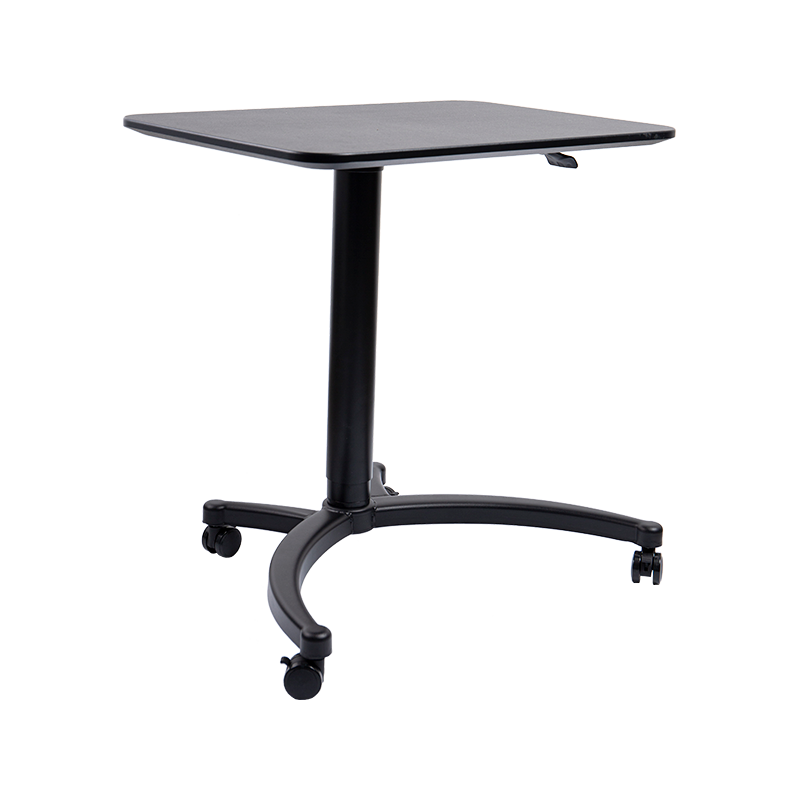
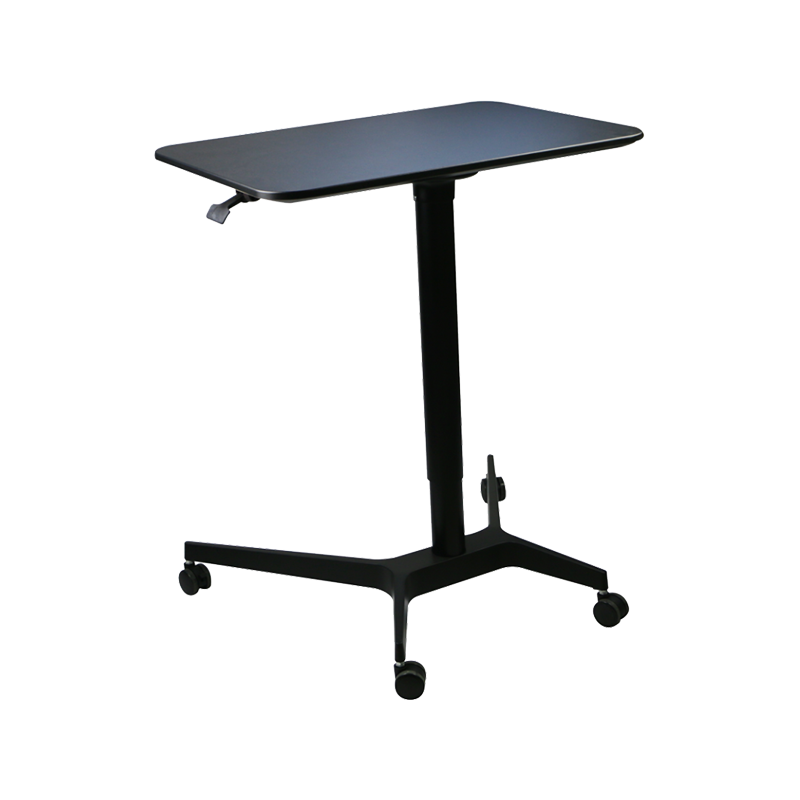
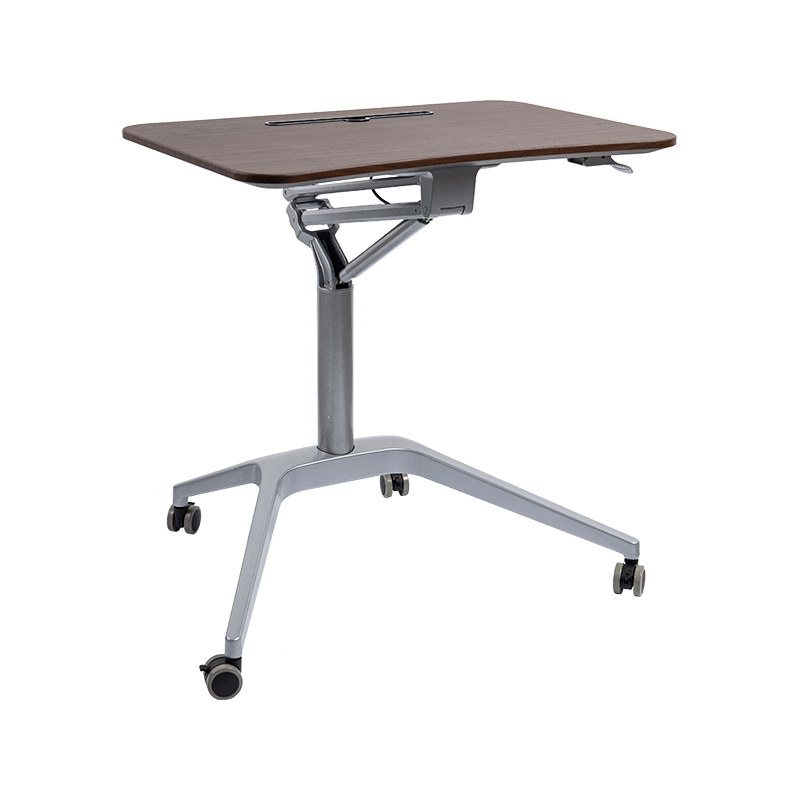
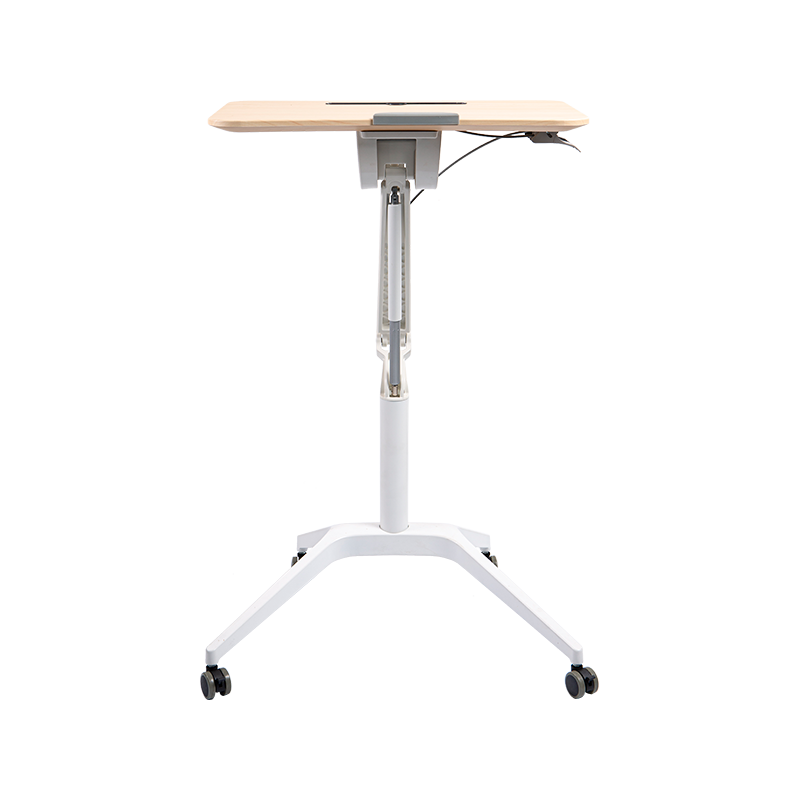
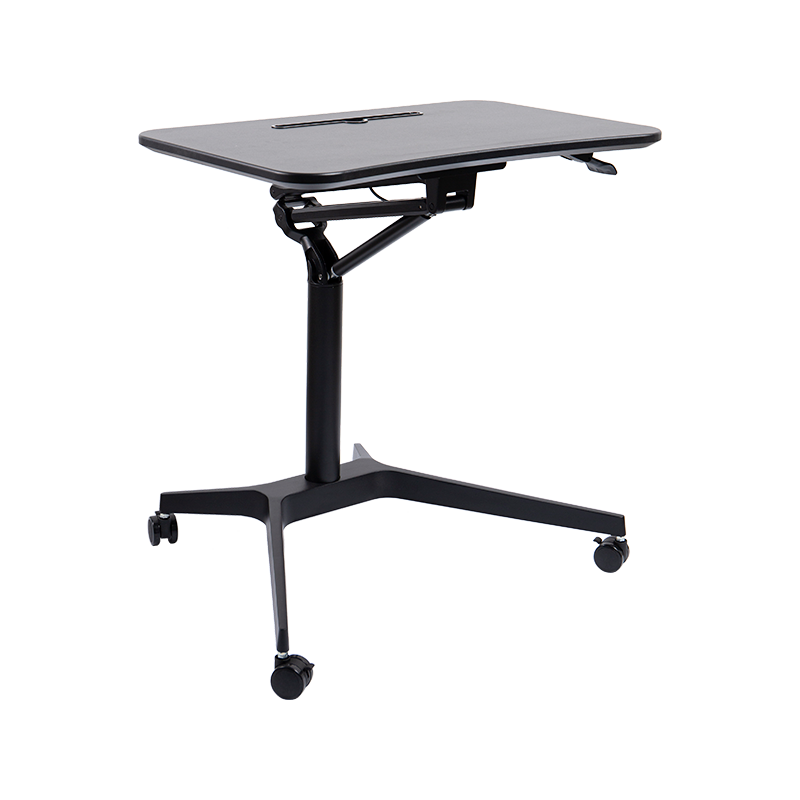
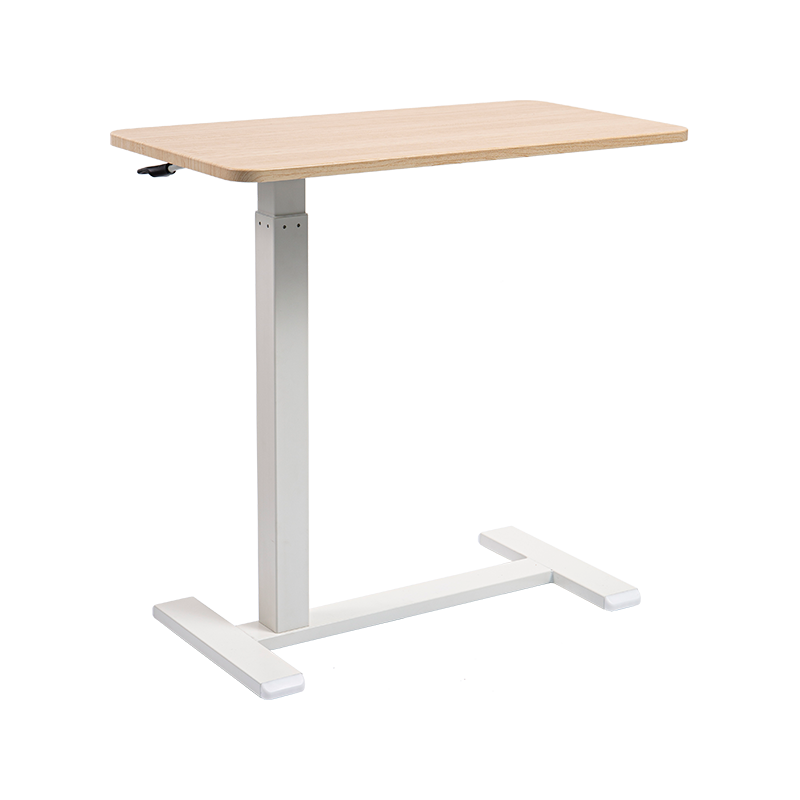
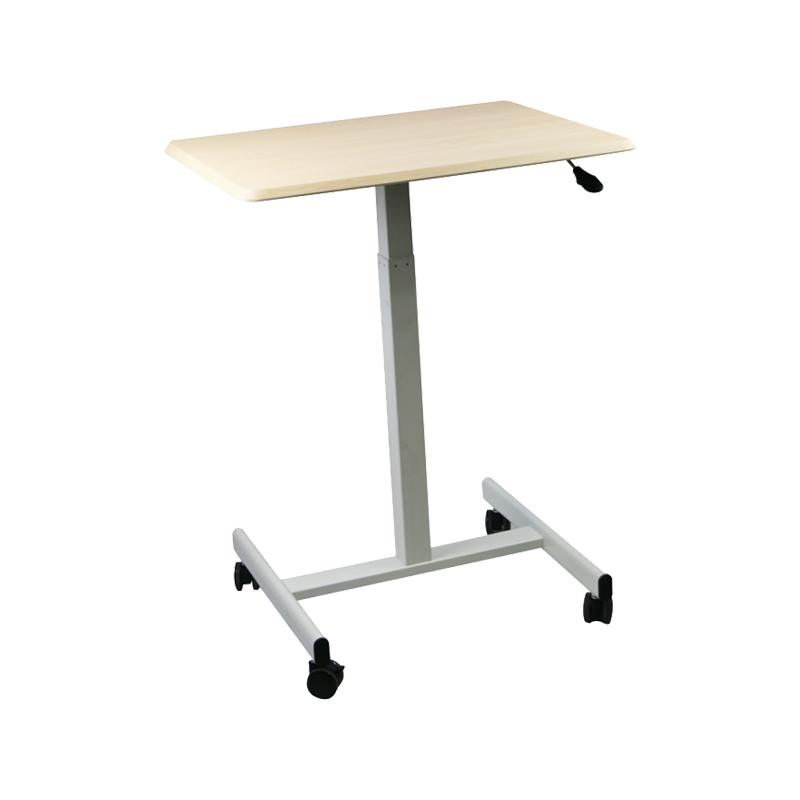
TH-13 (Cat Head Leg Column with Square Panel Column) Pneumatic Height-Adjustable Desk
Product Overview
The TH-13 is designed around a pneumatic lifting column combined with a column cat paw foot structure and a square panel tabletop. Its visual identity is clean and functional, while its mechanical design emphasizes user-friendly height adjustment and stable positioning. The product is available in black and white surface colors, allowing it to match common office interiors, laboratory environments, educational spaces, and healthcare-related work areas.
At the center of the desk is a gas spring lifting system. This mechanism allows the desktop to move smoothly within the specified vertical range and remain at the selected height. Because the system does not require electricity, the desk can be placed anywhere without concern for power sockets, cable management, battery charging, or electronic controller failure. For dynamic working spaces, this is a major advantage. The user can reposition the desk and adjust the height according to immediate needs, whether the task involves typing, reading, displaying materials, inspecting samples, or performing light manual operations.
The main structure uses aluminum and iron. This combination helps achieve a strong yet practical framework. Aluminum contributes corrosion resistance and a relatively lightweight structural advantage, while iron provides rigidity and reliable load-bearing support. The powder-coated surface treatment improves resistance to daily wear and provides a clean, professional finish. In office and industrial environments where furniture may be moved frequently, wiped often, or used by multiple people, this type of surface finish is important for long service life and easy maintenance.
The base includes four cast wheels, two with locks and two without locks. This design makes the desk easy to roll from one area to another while still allowing stable placement after relocation. The user can unlock the desk, move it to a meeting area, classroom corner, laboratory bench line, warehouse station, or home office zone, and then lock it in place. This mobility is particularly valuable in spaces where fixed furniture limits efficiency.
Key Specifications
Item |
Specification |
Practical Meaning |
Product Type |
Pneumatic Height-Adjustable Desk |
Supports flexible sit-stand use without electric power |
Lifting Range |
720 mm to 1130 mm |
Suitable for seated, standing, and intermediate working postures |
Tabletop Size |
715 mm by 495 mm |
Compact work surface for office, education, laboratory, and mobile tasks |
Material |
Aluminum and Iron |
Combines structural strength, stability, and practical durability |
Surface Color |
Black or White |
Matches modern interiors and professional environments |
Surface Treatment |
Powder Coating |
Improves wear resistance, appearance, and cleanability |
Cast Wheels |
Two with Lock and Two without Lock |
Allows convenient movement and secure stationary positioning |
Working Principle |
Gas Spring Lifting |
Provides smooth manual height adjustment without motors or electricity |
Ergonomic Value of Pneumatic Height Adjustment
Ergonomics is no longer a luxury feature in work furniture. It is a central part of healthy, efficient, and sustainable workspace planning. A fixed-height desk forces the user to adapt to the furniture. A height-adjustable desk allows the furniture to adapt to the user. The TH-13 is built on this principle. With a height range from 720 mm to 1130 mm, it can support a wide variety of body heights and working positions.
In seated use, the lower range can help users align their elbows, wrists, and shoulders more comfortably while typing, writing, or reading. In standing use, the upper range can help reduce prolonged sitting and encourage posture variation. The ability to change height during the day is important because static posture, whether seated or standing, can become uncomfortable over time. The goal is not simply to stand all day, but to alternate between postures based on task, comfort, and energy level.
The pneumatic system makes this adjustment quick and intuitive. In many shared workplaces, users may avoid adjusting furniture if the process is slow, noisy, or complicated. A gas spring mechanism reduces this barrier. The desk can be lifted or lowered manually, making it convenient for hot-desking areas, training rooms, classrooms, temporary workstations, and multipurpose offices where many users may interact with the same desk.
The compact tabletop also contributes to ergonomic flexibility. A large fixed desk can dominate a room, but the TH-13 can be positioned closer to the user, moved aside when not needed, or placed beside another workstation as an auxiliary surface. It can function as a laptop desk, presentation stand, medical documentation surface, teaching platform, inspection bench, or mobile support table. This adaptability makes it an efficient tool for environments that prioritize agility.
Advantages Over Traditional Fixed-Height Desks
Traditional fixed-height desks remain common because they are familiar and simple. However, they are limited in several ways. First, a fixed-height desk cannot properly accommodate users of different heights. Second, it does not support posture alternation. Third, it is often difficult to move, especially in spaces where furniture layouts change frequently. The TH-13 addresses these limitations directly.
Its adjustable height allows one desk to serve multiple users. This is a clear advantage for shared work zones, flexible offices, educational facilities, libraries, laboratories, and training areas. Instead of purchasing separate furniture for different users or tasks, organizations can use a single adjustable solution. The desk can be set lower for seated computer use, raised for standing discussion, or positioned at an intermediate height for inspection or demonstration.
Mobility is another important advantage. Fixed desks are often heavy and stationary. Moving them requires effort and may disrupt the workspace. The TH-13, equipped with four cast wheels, can be repositioned quickly. Two locking wheels provide secure placement once the desk reaches its destination. This feature reduces time wasted on rearranging spaces and makes the desk suitable for activity-based working environments.
Traditional desks also tend to occupy a fixed footprint. The TH-13’s compact tabletop and mobile base help optimize space. In small offices or home work areas, this can be especially valuable. The desk can be used when needed and moved away when the room must serve another purpose. In professional environments, multiple units can be deployed temporarily for projects, training sessions, testing activities, or collaborative work.
Advantages Over Electric Height-Adjustable Desks
Electric height-adjustable desks are popular, but they are not always the best solution for every environment. They require motors, control panels, cables, power supplies, and sometimes electronic synchronization systems. These components can increase cost, complexity, and maintenance requirements. The TH-13 uses a pneumatic gas spring lifting principle, offering a simpler and more independent alternative.
One of the greatest advantages is freedom from power dependence. The desk does not need to be placed near an outlet. It does not require cable routing. It does not stop functioning during power interruptions. It does not introduce electrical cords into walkways or shared spaces. This makes it highly practical in classrooms, laboratories, medical support areas, exhibition spaces, temporary offices, and industrial work zones where electrical access may be limited or safety rules may restrict cable clutter.
The gas spring system also reduces noise. Electric desks may produce motor sound during operation, which can be distracting in quiet offices, libraries, teaching spaces, or consultation rooms. Pneumatic adjustment is generally smooth and quiet, supporting a more comfortable environment. For settings where many desks may be adjusted during the day, this can be a meaningful benefit.
Maintenance simplicity is another competitive advantage. Electric desks include components that may require troubleshooting, such as control boxes, handsets, motors, wiring, and sensors. The TH-13’s non-electric mechanism reduces the number of failure points. For organizations managing many desks, this can lower maintenance burden and improve long-term reliability.
Portability also favors the pneumatic design. Electric desks often have heavier frames and must remain connected to a power source. The TH-13 is designed as a mobile workstation, making it easier to move across departments, rooms, or task zones. This mobility creates value in environments where the workstation is not permanently assigned to one location.
Advantages Over Lightweight Mobile Laptop Carts
Some mobile laptop carts are designed mainly for occasional use. They may be easy to move but can lack surface area, structural stability, and long-term durability. The TH-13 provides a more robust solution. Its aluminum and iron construction gives it a stronger foundation than many lightweight carts, while its 715 mm by 495 mm tabletop provides more functional workspace for a range of tasks.
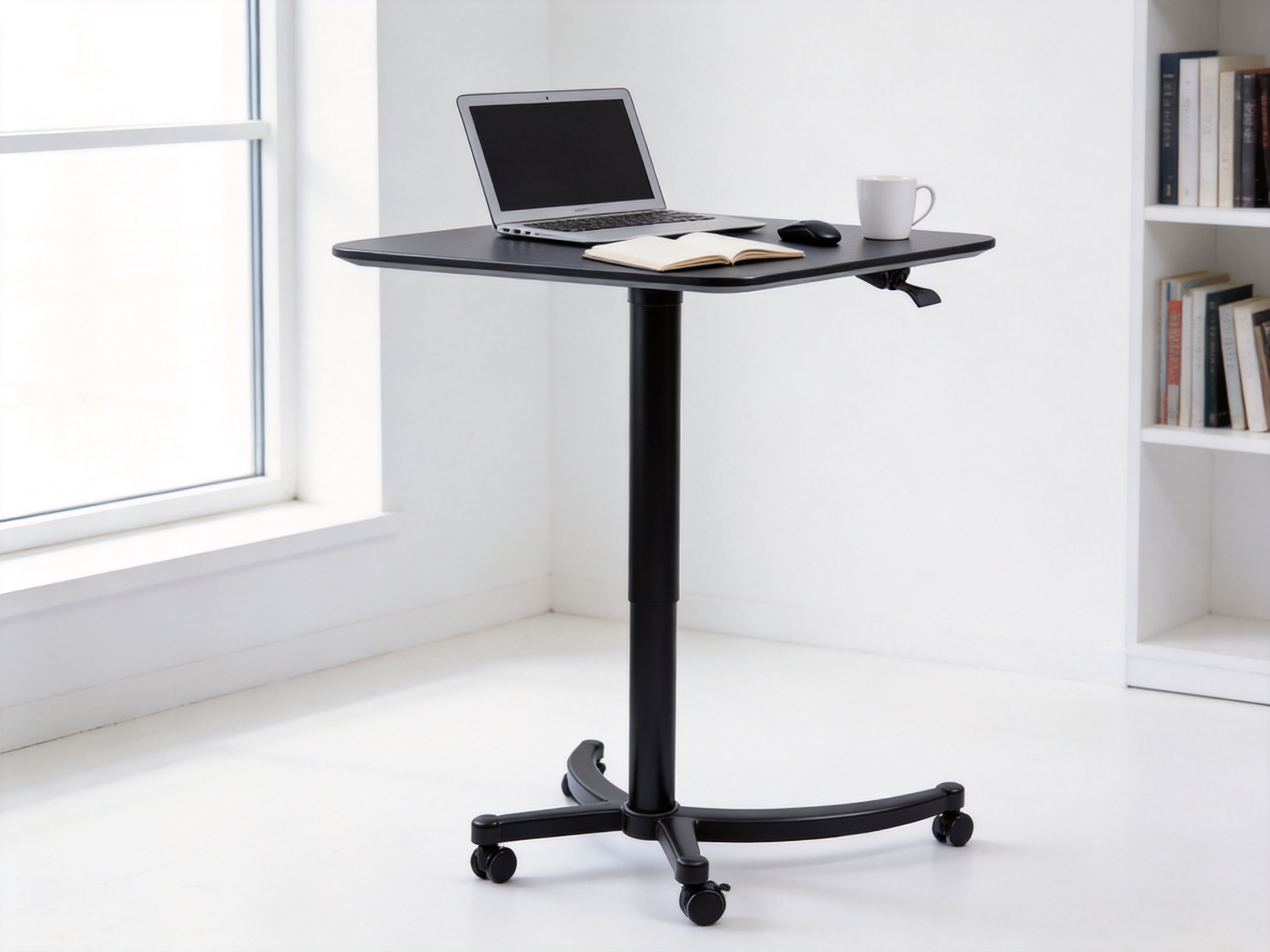
The square tabletop is large enough to support common office tools while remaining compact. A user can place a laptop with an external mouse, a compact monitor with keyboard, a notebook and documents, a testing device, or classroom materials. The surface is not oversized, but it is intentionally practical. In many real-world environments, excessive tabletop size makes a mobile desk harder to maneuver. The TH-13 balances usability and movement.
The locking caster configuration is also important. Mobile carts that lack secure locking may shift during use, causing instability and frustration. The TH-13 uses two locking wheels to help keep the desk in place when the user is working. The other two wheels assist with smooth movement. This combination supports both mobility and security.
The powder-coated metal structure also offers an advantage in durability and cleanability. In shared environments, furniture is touched frequently and must be cleaned regularly. Powder-coated surfaces are generally easier to wipe and more resistant to scratches than untreated or low-quality finishes. This improves appearance over time and supports professional presentation.
Material and Structural Design
The product’s material selection reflects a balance between strength, function, and manufacturability. Aluminum and iron are widely used in professional furniture systems because they offer reliable mechanical properties. Aluminum can provide a clean appearance, resistance to corrosion, and reduced weight in selected components. Iron provides strong support and structural rigidity, especially for load-bearing sections.
The column structure is central to the desk’s performance. A height-adjustable desk must not only move vertically but also remain stable at different heights. Stability is particularly important at the upper end of the lifting range, where wobble can become more noticeable if the structure is poorly engineered. The TH-13’s column-based support, metal construction, and base geometry are designed to maintain a dependable platform through the full adjustment range.
The column cat paw foot structure is a functional base concept that helps distribute support while keeping the footprint suitable for movement. A mobile desk must pass through doorways, around chairs, and between workstations, so the base cannot be excessively wide. At the same time, it must provide enough support to prevent unsafe movement during use. The TH-13’s base and caster arrangement support this balance.
Powder coating further improves product quality. Unlike simple paint, powder coating is applied as a dry powder and then cured to form a protective layer. This process can produce a consistent finish with good adhesion and resistance to wear. In black or white, the desk can match different interior design styles. Black often conveys a technical, industrial, or modern appearance, while white can create a clean, bright, and minimal look.
Gas Spring Lifting Principle
The gas spring lifting mechanism is one of the defining elements of the TH-13. A gas spring typically uses compressed gas contained within a cylinder to provide controlled force. In height-adjustable furniture, this force helps lift the working surface and makes adjustment easier for the user. The mechanism allows smooth movement and supports positioning within the designed height range.
Compared with mechanical crank systems, gas spring adjustment is faster and more convenient. Crank desks require repeated manual rotation, which can discourage frequent adjustment. Pneumatic systems are more immediate. The user can change height when posture or task changes, which supports the purpose of ergonomic furniture more effectively.
Compared with electric systems, the gas spring mechanism is mechanically simpler. It does not require a power supply or electronic controller. This simplicity can be an advantage in manufacturing, maintenance, logistics, and daily use. It also makes the desk suitable for locations where electrical systems are not desired or where furniture must remain highly mobile.
For procurement teams, facility managers, and distributors, the gas spring design can represent a practical middle path. It offers more ergonomic value than a fixed desk and more independence than an electric desk. It provides a modern height-adjustable experience while avoiding some of the complexity associated with motorized furniture.
Mobility and Space Efficiency
Workspaces are increasingly dynamic. Offices may shift between individual work, collaboration, training, and meetings. Schools may need furniture that can support lectures, group activities, examinations, and presentations. Laboratories may require movable work surfaces for instruments, samples, or documentation. In these environments, mobility is not a minor feature; it is a core requirement.
The TH-13 is equipped with four cast wheels. Two wheels include locking functions, helping users secure the desk after positioning. This makes the desk easy to move without sacrificing stability during use. A staff member can roll the desk into a meeting room for a presentation, move it beside a workstation as an auxiliary surface, or relocate it to a corner when the room needs to be cleared.
The compact tabletop contributes to space efficiency. With a size of 715 mm by 495 mm, it provides enough area for many practical tasks without overwhelming the room. This makes it particularly useful for apartments, small home offices, flexible coworking areas, reception spaces, and classroom settings. In dense work environments, smaller mobile desks can be arranged more flexibly than large fixed tables.
Mobility also supports equipment sharing. A department may not need a dedicated workstation in every location. Instead, a mobile adjustable desk can be moved to the area where it is needed. This can improve utilization and reduce unnecessary furniture purchases. For facilities with changing workflows, the TH-13 can help create a more responsive furniture system.
Applications in Office Environments
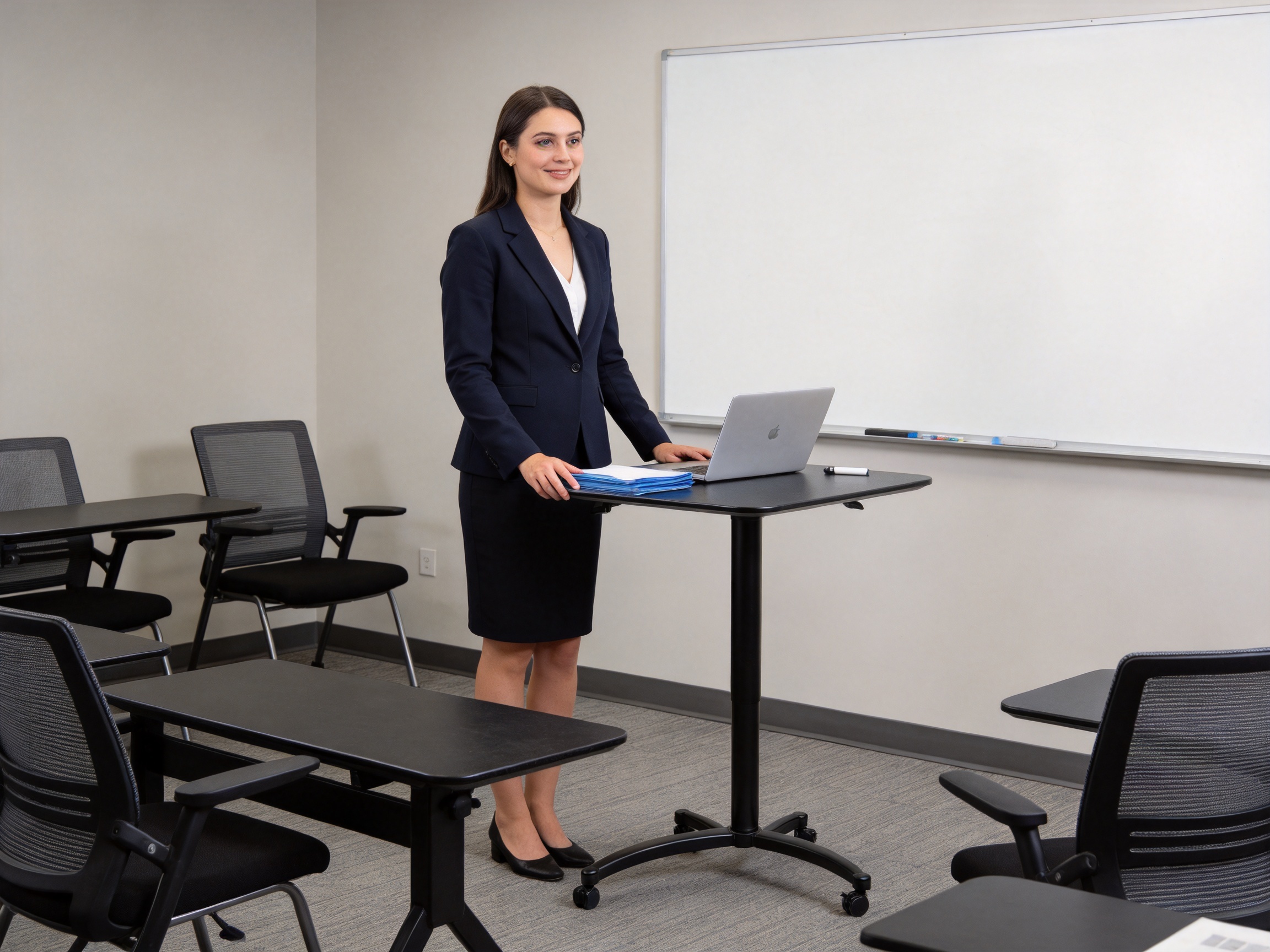
In office spaces, the TH-13 can serve several functions. It can be a primary workstation for compact tasks, a side desk for laptop work, a standing meeting table, a temporary hot-desk station, or a mobile presentation platform. Its adjustable height allows it to accommodate different employees and different work modes throughout the day.
For home offices, the product is especially practical. Many people do not have space for a large electric standing desk. A compact pneumatic desk can provide sit-stand flexibility while fitting into bedrooms, living rooms, study corners, or multipurpose spaces. Because it does not require electricity, it can be positioned where natural light, room layout, or personal preference makes the most sense.
In corporate offices, the desk can support flexible work models. Employees may use it for temporary tasks, standing discussions, document review, or laptop-based collaboration. In reception areas, it can serve as a mobile check-in or display surface. In meeting rooms, it can support a projector, laptop, speaker system, or presentation materials.
For hot-desking areas, height adjustability is crucial. Different users have different body dimensions and working habits. A fixed desk may be comfortable for one person but unsuitable for another. The TH-13 allows each user to set a more suitable height, improving comfort and reducing the limitations of shared furniture.
Applications in Education and Training
Schools, universities, and training centers benefit from furniture that can be rearranged quickly. A classroom may need to support lectures in the morning, group work in the afternoon, and examinations later in the week. The TH-13 supports these changes because it is movable, height-adjustable, and compact.
Teachers can use the desk as a mobile teaching station. It can hold a laptop, documents, teaching aids, or demonstration materials. The height can be adjusted for seated preparation or standing instruction. When the class format changes, the desk can be moved easily.
Students can also benefit from adjustable work surfaces in specialized learning environments. Design studios, computer labs, maker spaces, and science classrooms often require flexible furniture. A pneumatic desk can support activities that involve drawing, coding, assembling, testing, or presenting. Because the desk does not need power for height adjustment, it can be placed wherever the learning activity requires.
Training rooms in corporate or institutional settings can use the TH-13 for instructors, facilitators, or temporary equipment stations. The locking casters keep the desk stable during presentations, while the mobile base allows quick room reconfiguration after the session ends.
Applications in Laboratories and Light-Duty Industrial Settings
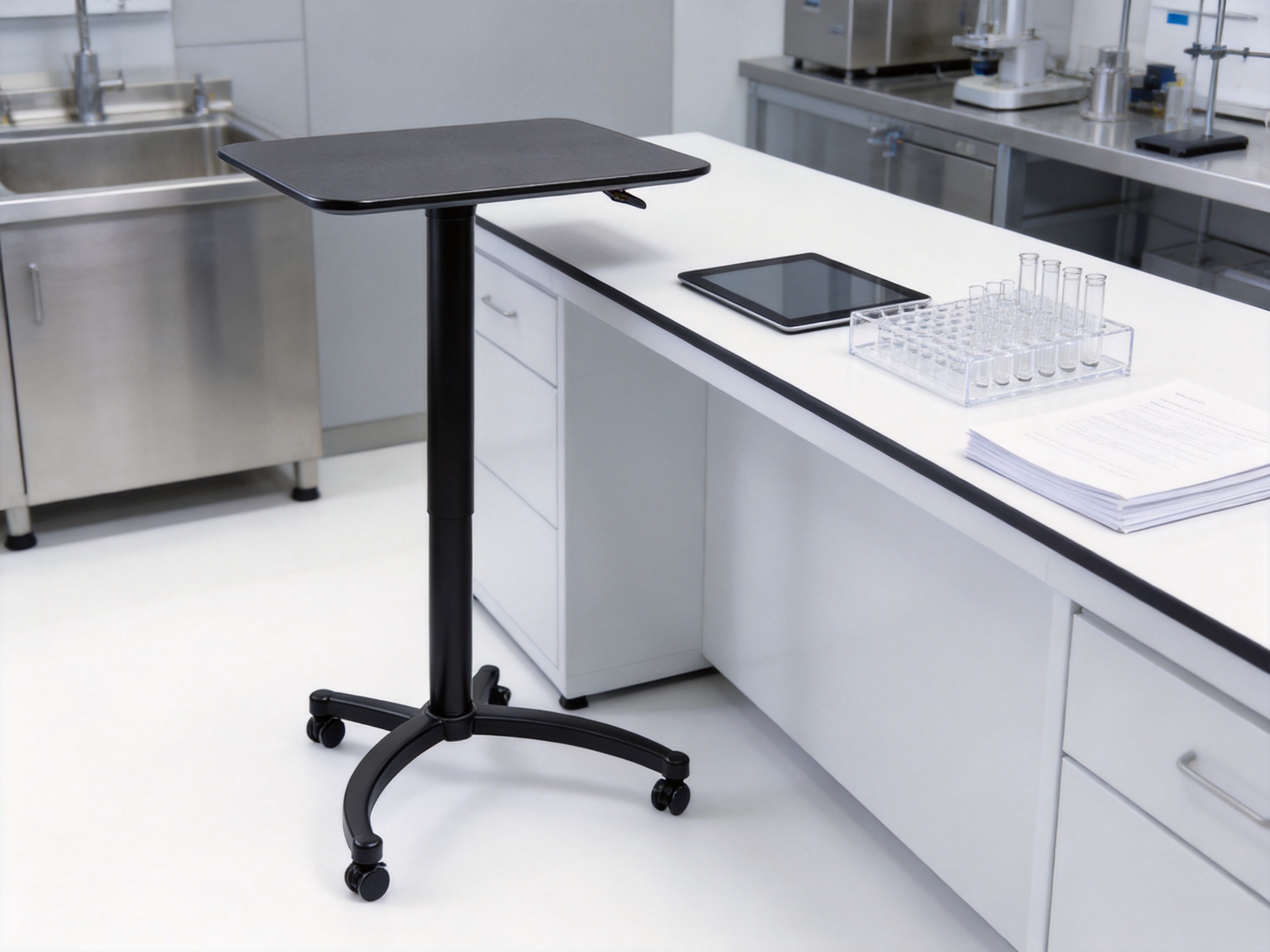
Laboratories and light-duty industrial workplaces often require adjustable surfaces for inspection, documentation, testing, and instrument support. The TH-13’s metal construction, powder-coated finish, and mobility make it suitable for many non-heavy-duty operational scenarios. It can be used as a mobile documentation desk, a testing support table, a sample review station, or a compact workstation beside larger benches.
Height adjustment is valuable in laboratories because different tasks require different working positions. Some tasks are better performed while seated, especially if they require concentration or data entry. Others are better performed while standing, such as observation, sorting, inspection, or movement between stations. The TH-13 allows users to adapt the surface height to the task rather than forcing one fixed position.
In light-duty industrial areas, the desk can help supervisors, technicians, and operators manage paperwork, tablets, tools, labels, or inspection equipment. The caster system allows the workstation to move along a process line or between work cells. The locking wheels help stabilize the desk when in use.
Because the lifting system is pneumatic rather than electric, the desk avoids issues related to power cables in operational spaces. This can improve flexibility and reduce trip hazards. It also makes the desk easier to deploy in areas where outlets are not conveniently located.
Manufacturing Strength Behind the Product
SuZhou Skyhone Intelligent Technology Co., Ltd. is a manufacturing enterprise focused on the research, development, production, sales, and service of standing desks and related adjustable office solutions. Located in Suzhou, within the economically developed Yangtze River Delta region, the company benefits from a mature furniture industry base, a strong supplier network, advanced manufacturing resources, and efficient logistics connections.
The company’s manufacturing strength supports the TH-13 in several important ways. First, experience in standing desk development helps ensure that the product is designed around real ergonomic and mechanical requirements. Height-adjustable furniture must be stable, smooth, durable, and user-friendly. These qualities depend not only on appearance but also on engineering decisions, material selection, component matching, and production control.
Second, an integrated production approach helps maintain consistency. In adjustable furniture, small differences in column structure, gas spring performance, welding quality, surface treatment, and caster assembly can affect the user experience. Advanced manufacturing processes help control these variables. This is especially important for customers who purchase in volume and need consistent quality across many units.
Third, the company’s service capability supports customization and long-term cooperation. Customers may require different colors, packaging, branding, component configurations, or application-specific adjustments. A manufacturer with R&D and production capabilities can respond more effectively than a simple trading supplier. This creates value for distributors, project contractors, office furniture brands, and institutional buyers seeking reliable supply.
Advanced Production Processes
The quality of a pneumatic height-adjustable desk depends on the entire production chain. A strong product begins with design verification and material selection, continues through cutting, forming, welding, surface finishing, assembly, and inspection, and ends with packaging and delivery. Each step influences performance and durability.
Metal processing is central to the TH-13. Aluminum and iron components must be shaped accurately to ensure proper assembly and stable operation. Precision in column parts is particularly important because the lifting system must move smoothly. Poor dimensional control can lead to friction, instability, or uneven adjustment. Advanced manufacturing equipment and process control help prevent these issues.
Surface treatment is another critical process. Powder coating requires proper pre-treatment, coating application, curing temperature, and quality inspection. A well-executed powder-coated finish improves resistance to wear, corrosion, and cleaning chemicals commonly used in offices and shared facilities. It also improves the product’s visual quality, which is important for professional interiors.
Assembly quality directly affects the user experience. The gas spring, tabletop, column, base, and casters must be integrated correctly. Locking wheels must function reliably. Moving parts must operate smoothly. Fasteners must be tightened properly. A manufacturer experienced in adjustable desks understands that assembly is not merely a final step but a key part of product performance.
Quality inspection should cover appearance, dimensions, lifting function, stability, caster movement, locking performance, and packaging condition. For export customers, consistent inspection standards are especially important because products must withstand transportation and arrive ready for efficient installation or distribution. Strong production management helps reduce defects and after-sales issues.
Quality Control and Reliability
Reliability is essential for any adjustable desk. Users may adjust the height many times, move the desk across different floor surfaces, and rely on it for daily work. The TH-13 is designed with a simplified pneumatic lifting system and durable metal structure to support dependable performance.
A major reliability advantage comes from the absence of electrical components. There are no motors to overload, no control panels to fail, no cables to disconnect, and no power adapters to replace. This does not mean the product requires no quality control; the gas spring and mechanical components must still be manufactured and assembled carefully. However, the simpler system reduces certain categories of failure common in electric desks.
The caster system also requires attention. Wheels must roll smoothly and support the expected use environment. Locking mechanisms must engage securely. In shared workplaces, users may move furniture frequently, so caster quality has a direct effect on satisfaction. The TH-13’s configuration of two locking and two non-locking casters provides a practical balance of maneuverability and stability.
The powder-coated surface supports long-term appearance. Furniture in commercial and institutional settings can experience impacts, cleaning, and daily contact. A strong finish helps preserve the desk’s professional look. Black and white options also make it easier for customers to integrate the desk into existing furniture programs.
Design Balance: Compact Yet Functional
One of the most important design decisions in the TH-13 is the tabletop size. At 715 mm by 495 mm, the surface is intentionally compact. This makes the desk easy to move and easy to place in smaller areas. However, it is still large enough for many common work tasks. The result is a design that avoids the extremes of being too small for practical use or too large for flexible movement.
For laptop users, the tabletop can hold a laptop and basic accessories. For office users, it can support a keyboard, mouse, notebook, and monitor depending on equipment size. For educators, it can hold teaching materials and a computer. For laboratory or inspection work, it can hold documents, small instruments, or sample trays. This versatility increases product value.
The square tabletop also supports balanced use. Unlike narrow carts that restrict placement, the TH-13 provides a more complete surface. Users can arrange items according to their workflow. This is especially useful when the desk serves multiple roles in different environments.
The height range further improves functionality. A compact desk with fixed height would have limited value, but a compact desk with pneumatic adjustment becomes far more adaptable. It can serve as a seated desk, standing desk, mobile podium, auxiliary table, or equipment support surface.
Purchasing Considerations for Distributors and Project Buyers
For distributors, office furniture dealers, project contractors, and institutional buyers, the TH-13 offers several commercial advantages. It is a differentiated product that combines mobility, height adjustment, non-electric operation, and durable construction. This makes it suitable for multiple market segments rather than only one narrow category.
Because it does not rely on electric components, it may be easier to manage in certain supply chains. There are fewer electronic compliance concerns compared with motorized products, and the structure may simplify after-sales support. Customers who are concerned about power compatibility, plug types, cable management, or motor troubleshooting may prefer a pneumatic solution.
The product’s compact size can also improve project flexibility. It can be sold to offices, schools, home office users, laboratories, studios, and light industrial customers. A dealer can position it as an ergonomic office table, mobile sit-stand desk, flexible teaching station, or adjustable work platform. This broad application range supports inventory efficiency and marketing versatility.
For project buyers, the desk can help create adaptable spaces without major renovation. Instead of installing fixed benches or powered workstations, organizations can deploy mobile pneumatic desks wherever needed. This is useful for fast-growing companies, temporary offices, educational programs, training centers, and multipurpose facilities.
Competitive Positioning
The TH-13 occupies a strong position between simple fixed desks and complex electric sit-stand systems. It provides meaningful ergonomic benefits without requiring power. It provides mobility without sacrificing professional construction. It provides a compact footprint without becoming merely a lightweight cart. This balanced positioning makes it competitive in markets where customers value practicality, durability, and flexibility.
Competitors may offer electric height adjustment, but this often increases cost and complexity. Others may offer low-cost carts, but they may not provide the same stability, surface quality, or professional appearance. The TH-13 differentiates itself through its gas spring lifting mechanism, metal structure, powder-coated finish, locking caster system, and useful height range.
Another competitive strength is simplicity. In product design, simplicity can be a major advantage when it removes unnecessary failure points and improves daily usability. The TH-13 does not overwhelm the user with buttons or cables. It performs the essential task: allowing a stable work surface to be adjusted and moved easily.
For many customers, this is exactly what is needed. Not every workstation requires programmable height memory, dual motors, or large desktops. Many environments require a dependable, movable, adjustable surface. The TH-13 is designed for that practical need.
Sustainability and Long-Term Use
Sustainable furniture decisions are not only about materials; they are also about product lifespan, maintenance needs, adaptability, and avoidance of premature replacement. A desk that can serve multiple users and multiple tasks may reduce the need for several single-purpose furniture items. The TH-13 supports this type of efficient use.
Because the desk is height-adjustable, it can remain useful even when users or workflows change. Because it is mobile, it can be relocated instead of discarded when a room layout changes. Because it is non-electric, it avoids some electronic waste concerns associated with motorized desks. Because it uses durable metal construction and powder coating, it is designed for long service life.
Adaptability is a form of sustainability. Furniture that can move from a home office to a classroom, from a meeting room to a laboratory, or from a temporary workstation to a permanent support station has greater lifecycle value. The TH-13’s design supports this adaptable use pattern.
Recommended Use Practices
To achieve the best experience with the TH-13, users should adjust the height according to task and posture. For seated work, the desktop should generally allow relaxed shoulders and comfortable elbow positioning. For standing work, the surface should support neutral wrist posture and avoid shoulder elevation. Users should alternate between sitting and standing rather than staying in one posture for excessive periods.
When moving the desk, users should unlock the locking casters, guide the desk smoothly, and avoid pushing it over unsuitable obstacles. After positioning the desk, the locking wheels should be engaged to improve stability. The desk should be used on reasonably even floors for best performance.
Regular cleaning can be performed with suitable non-abrasive methods according to the environment. The powder-coated surface is designed for easy maintenance, but harsh tools or chemicals should be avoided unless approved for the finish. Periodic inspection of caster locks, fasteners, and moving components can help maintain reliable operation.
Users should also consider appropriate load placement. Items should be positioned in a balanced manner on the tabletop, especially when the desk is raised to standing height. Good use habits help preserve stability and extend product life.
Why This Desk Fits the Future of Work
The future of work is flexible. Employees may divide time between home and office. Companies may reconfigure spaces frequently. Schools may blend digital instruction with active learning. Laboratories and studios may need mobile work surfaces. Industrial and service environments may need compact documentation stations. Furniture must support these changes rather than restrict them.
The TH-13 fits this trend because it is adjustable, mobile, compact, and independent from electricity. It allows spaces to change quickly. It supports different users. It enables posture variation. It can be used in professional, educational, creative, and technical environments. These qualities make it more than a simple desk; it is a flexible work platform.
Its manufacturing background also strengthens its market value. Produced by a company focused on standing desk development and intelligent office solutions, the product benefits from relevant industry experience and production capability. Customers are not only purchasing a single piece of furniture; they are choosing a product supported by a manufacturing system capable of consistent quality and ongoing service.
Q&A Section
What is the lifting range of the TH-13 Pneumatic Height-Adjustable Desk?
The desk adjusts from 720 mm to 1130 mm. This range supports seated work, standing work, and intermediate positions for different users and tasks.
Does the desk require electricity?
No. The desk uses a gas spring lifting mechanism, so it does not require motors, control boxes, power cables, or electrical outlets for height adjustment.
What is the tabletop size?
The tabletop measures 715 mm by 495 mm. It is compact enough for mobile use while still providing a practical surface for laptops, monitors, documents, teaching materials, or light work tools.
What materials are used in the desk?
The main structure is made from aluminum and iron. This combination provides durability, rigidity, and practical performance for daily use.
What colors are available?
The desk is available in black and white surface colors. Both options use powder coating for a clean and durable finish.
Is the desk easy to move?
Yes. It includes four cast wheels, two with locking functions and two without locks. This allows the desk to move conveniently and remain stable after positioning.
How does it compare with an electric standing desk?
Compared with an electric standing desk, the TH-13 is simpler, does not require power, avoids cable management issues, and has fewer electronic components that may require maintenance. It is especially suitable for mobile and flexible environments.
Where can this desk be used?
It can be used in home offices, corporate offices, hot-desking areas, classrooms, laboratories, creative studios, training rooms, light-duty industrial stations, and temporary workspaces.
Why is the gas spring system useful?
The gas spring system allows smooth manual height adjustment without electricity. It makes changing posture easier and supports flexible use in locations where powered furniture may be inconvenient.
What makes the product competitive?
The product combines ergonomic height adjustment, mobile design, durable metal construction, powder-coated surface treatment, and non-electric operation. This gives it advantages over fixed desks, many lightweight carts, and some electric desks in applications where mobility and simplicity matter.
Conclusion
The TH-13 Pneumatic Height-Adjustable Desk is a practical response to modern workspace needs. It offers a wide lifting range of 720 mm to 1130 mm, a compact 715 mm by 495 mm tabletop, an aluminum and iron structure, powder-coated black or white finishes, and a mobile caster base with two locking wheels. Its gas spring lifting system allows smooth height adjustment without electricity, making it suitable for spaces where flexibility, safety, mobility, and simplicity are important.
Its advantages are clear. Compared with fixed desks, it supports multiple users and postures. Compared with electric desks, it reduces dependence on power and lowers mechanical complexity. Compared with lightweight carts, it offers stronger construction and a more professional work surface. For offices, homes, schools, laboratories, studios, and light-duty industrial environments, it provides an adaptable platform that can move with the user and change with the task.
Supported by the manufacturing strengths of SuZhou Skyhone Intelligent Technology Co., Ltd., the TH-13 reflects a combination of product engineering, metal processing, surface finishing, assembly control, and adjustable desk expertise. It is not merely a piece of office furniture; it is a compact ergonomic solution designed for the flexible future of work.
References
International Ergonomics Association. Ergonomic Principles and Human-Centered Workplace Design.
Grandjean, E. Fitting the Task to the Man: A Textbook of Occupational Ergonomics.
Kroemer, K. H. E., and Grandjean, E. Fitting the Task to the Human: A Textbook of Occupational Ergonomics.
Bridger, R. S. Introduction to Human Factors and Ergonomics.
Sanders, M. S., and McCormick, E. J. Human Factors in Engineering and Design.
Occupational health literature on sit-stand workstations, posture variation, and workplace comfort.
Industrial furniture manufacturing references on powder coating, metal structure design, caster performance, and gas spring lifting systems.
Product: TH-13 (Cat Head Leg Column with Square Panel Column) Pneumatic Height-Adjustable Desk


- Contact Info
-
-
 Phone+86-15950656125
 -
 Email
Email -
 AddressRoom 1007-1, South Building, Suyue Plaza, Suzhou Industrial Park, Suzhou City, Jiangsu Province, China
-
- Products
- Follow Us
- Need help? Please contact us
Copyright ©
SuZhou Skyhone Intelligent Technology Co., Ltd.
All Rights Reserved.
Privacy
Custom Ergonomic Adjustable Office Tables Manufacturers

