

 English
  русский
  Español
  عربى
عربى 
Content
- 1 Product Overview
- 2 Ergonomic Value in Daily Work
- 3 Gas Spring Lifting: Quiet, Efficient, and Low Maintenance
- 4 Compact Tabletop Design for Focused Work
- 5 Frame, Base, Mobility, and Stability
- 6 Advantages Over Competing Desk Types
- 7 Manufacturing Strengths Behind the Product
- 8 Quality Control and Product Reliability
- 9 Applications in Offices, Education, Laboratories, Studios, and Home Workspaces
- 10 User Experience and Daily Operation
- 11 Why the Design Is Well Suited to Modern Ergonomic Procurement
- 12 Design Details That Improve Practical Performance
- 13 Maintenance and Care
- 14 Company Capabilities and Customization Potential
- 15 Q&A Section
- 15.1 What is the main purpose of the TH11 Pneumatic Height-Adjustable Desk?
- 15.2 What is the height adjustment range?
- 15.3 How does the lifting mechanism work?
- 15.4 What makes a pneumatic desk different from an electric standing desk?
- 15.5 Does the tabletop tilt?
- 15.6 What materials are used in the desk?
- 15.7 Is the desk easy to move?
- 15.8 What panel colors are available?
- 15.9 Why is the combination of concealed wheels and leveling feet important?
- 15.10 What types of users benefit most from this desk?
- 15.11 How does the product compare with a basic laptop cart?
- 15.12 Is the desk suitable for long-term ergonomic office planning?
- 16 Conclusion
- 17 References
- 18 Product: TH11 (Cat Head Leg) Pneumatic Height-Adjustable Desk
Pneumatic Height-Adjustable Desk for Flexible Sit-Stand Workspaces
2026-06-13
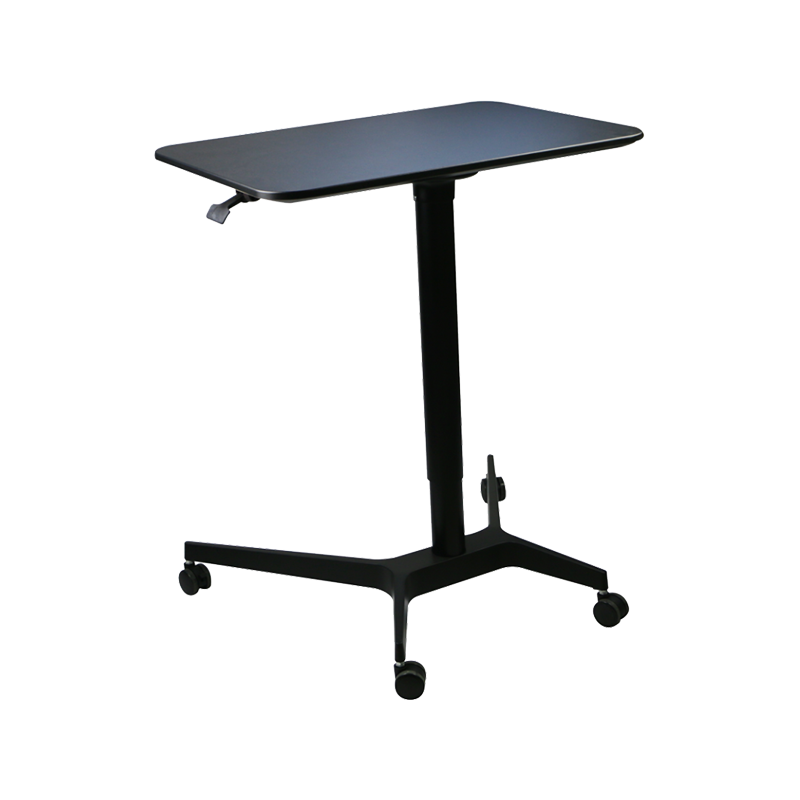
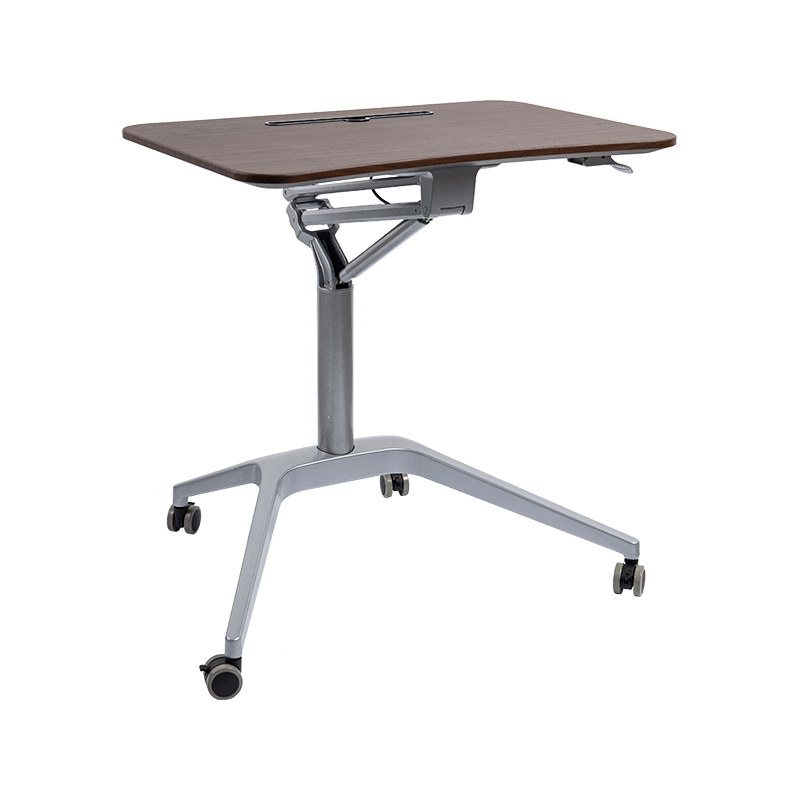
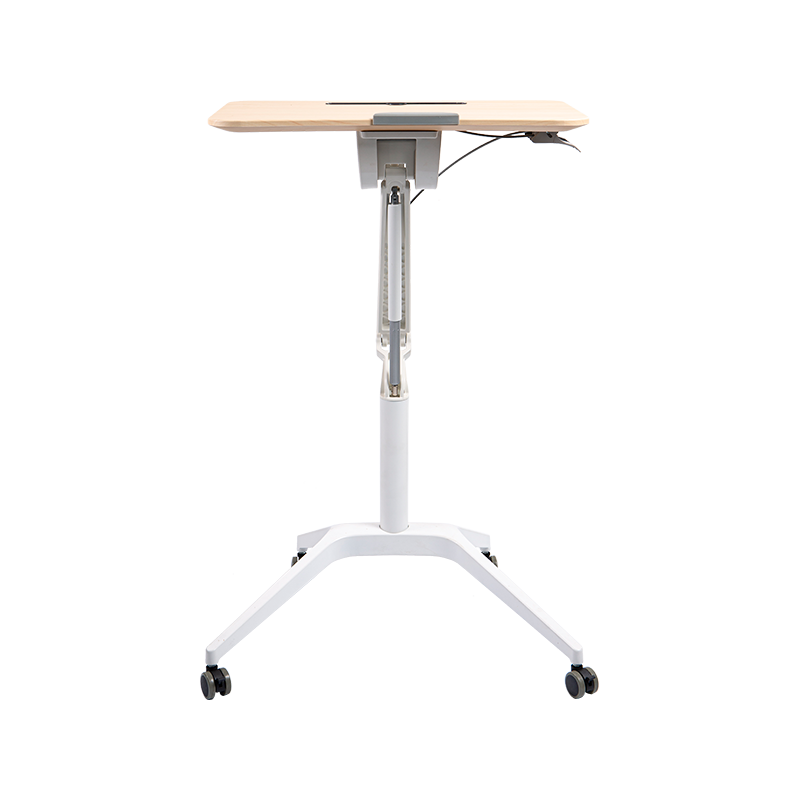
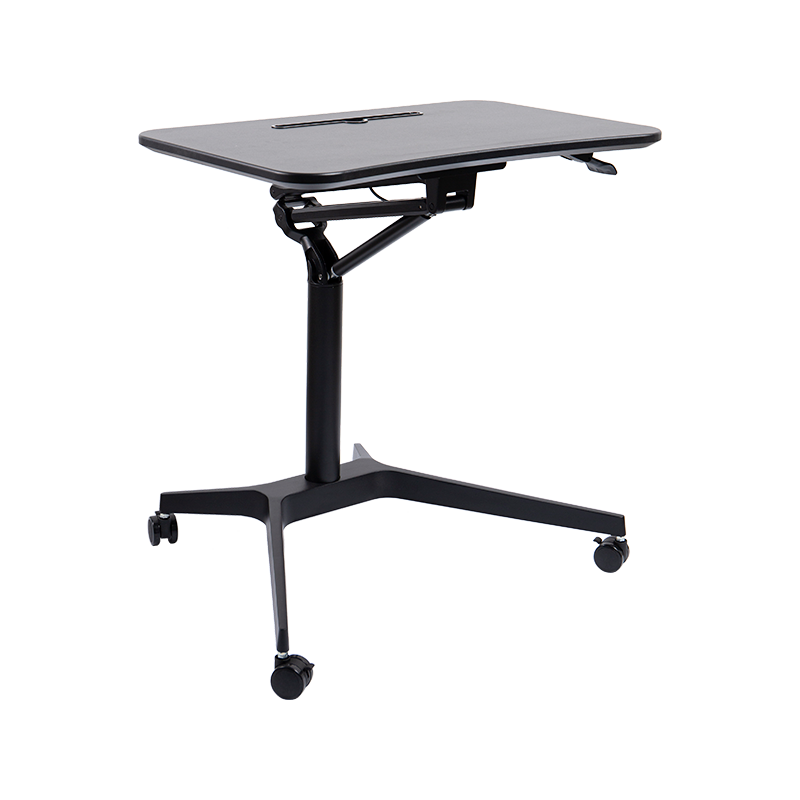
Modern work environments are no longer defined by a single fixed posture, a single task, or a single type of workstation. Offices, classrooms, laboratories, studios, healthcare support areas, and light industrial spaces increasingly require furniture that can adapt quickly to different users and different work modes. The TH11 Cat Head Leg Pneumatic Height-Adjustable Desk is designed for exactly this need: a compact, mobile, manually operated height-adjustable table that supports sitting, standing, angled reading, mobile work, and temporary workstation layouts without depending on electrical power.
This product belongs to the pneumatic height-adjustable table category and is closely connected to the broader fields of adjustable height desks, gas spring lifting systems, and ergonomic office furniture. Its core value comes from a gas spring lifting mechanism that enables smooth, quiet, and convenient adjustment from 700 mm to 1100 mm. This range allows the desk to serve users of different heights and supports transitions between seated and standing work. Unlike fixed desks that force the user to adapt to the furniture, this desk allows the furniture to adapt to the user, the task, and the surrounding environment.
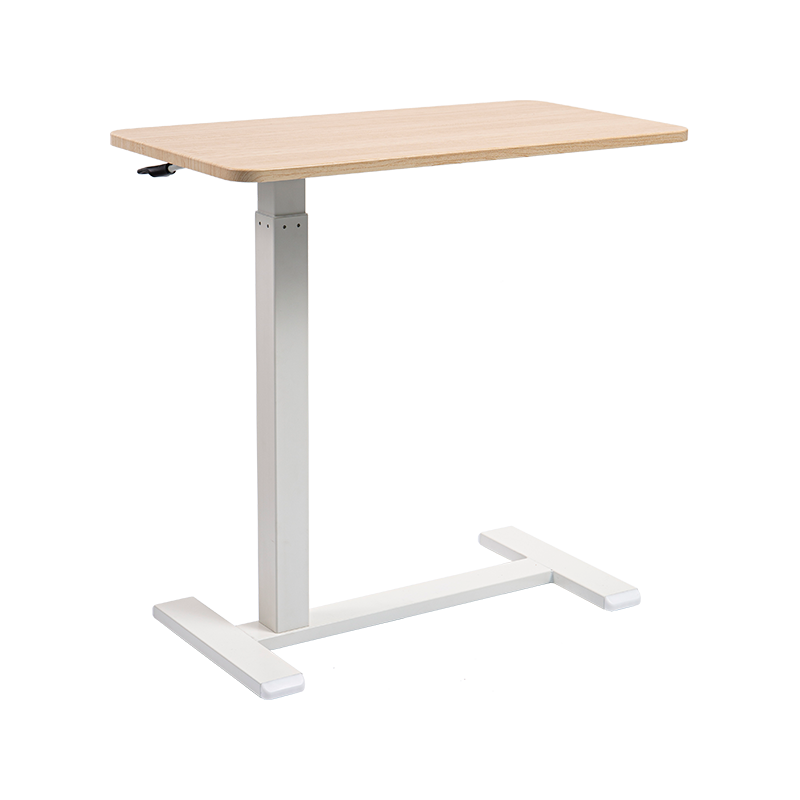
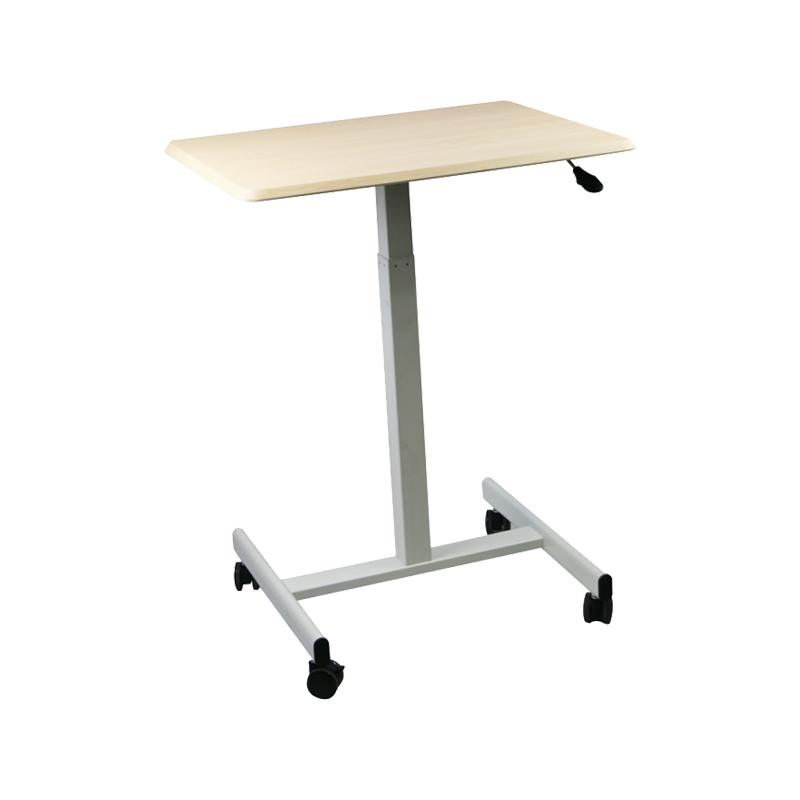
The design combines a 25 mm MDF tabletop with PVC vacuum forming, an aluminum and iron frame, a white powder-coated surface, two concealed wheels, and two leveling feet. The main panel includes a tilt function, allowing the tabletop angle to be adjusted for reading, writing, presenting, sketching, or device operation. The desk is available with white and maple wood panel color options, making it suitable for both professional and residential interiors.
TH11 (Cat Head Leg) Pneumatic Height-Adjustable Desk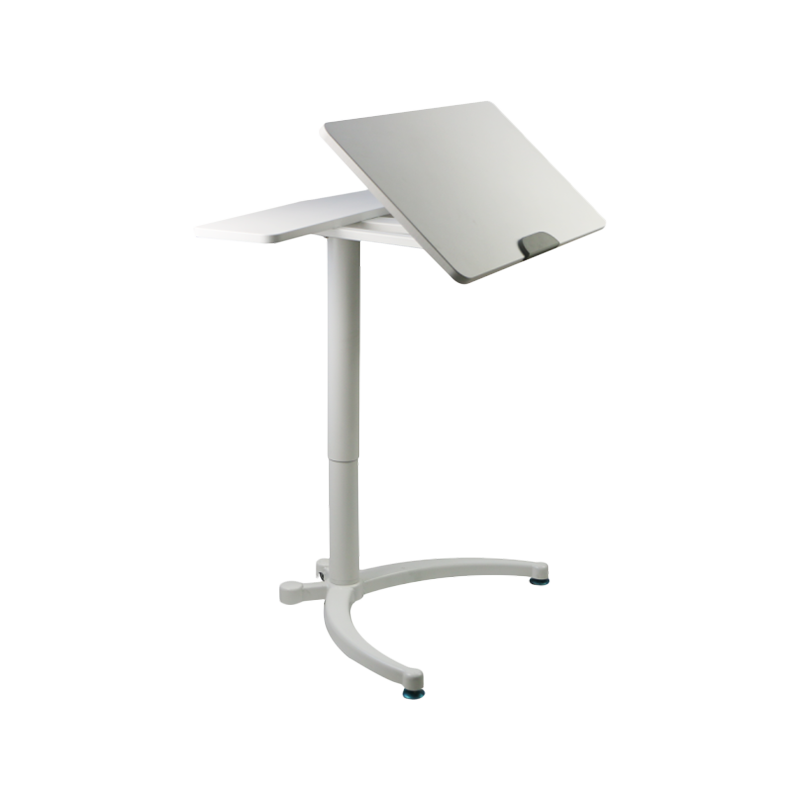
Product Overview
The TH11 Pneumatic Height-Adjustable Desk is a practical solution for users who require flexibility without complicated installation or electrical dependency. It is especially useful in spaces where people share workstations, where room layouts change frequently, or where users need a surface that can move between locations. Its compact tabletop size, integrated mobility features, and gas spring lifting system make it highly adaptable for daily use.
The lifting range of 700 mm to 1100 mm provides a strong ergonomic foundation. At the lower end, the desk can function as a seated workstation, side table, study desk, laptop table, or support surface. At the upper end, it becomes a standing desk, demonstration table, temporary lectern, or operational platform. Because the movement is driven by a gas spring rather than a motor, users can adjust height quietly and efficiently with minimal maintenance requirements.
The tabletop construction uses 25 mm MDF combined with PVC vacuum forming. MDF provides a stable and consistent substrate, while PVC vacuum forming creates a smooth, cleanable, and visually refined surface. The listed tabletop dimensions include a main desktop of 760 mm by 400 mm by 25 mm, along with an additional 760 mm by 20 mm element. This compact format is suitable for laptops, documents, tablets, writing tools, small instruments, teaching materials, and light workstation equipment.
The frame is made from aluminum and iron, balancing strength, stability, weight control, and cost efficiency. Aluminum contributes corrosion resistance and a refined structural appearance, while iron provides load-bearing support and rigidity. The white powder-coated surface helps improve durability and resistance to daily wear. The base includes two concealed wheels and two leveling feet, giving the product a valuable combination of mobility and stable positioning.
Specification |
Details |
Product Type |
Pneumatic height-adjustable desk |
Lifting Range |
700 mm to 1100 mm |
Tabletop Dimensions |
760 mm × 400 mm × 25 mm plus 760 mm × 20 mm element |
Tabletop Material |
25 mm MDF with PVC vacuum forming |
Frame Material |
Aluminum and iron |
Surface Color |
White |
Surface Treatment |
Powder coating |
Mobility and Support |
Two concealed wheels and two leveling feet |
Panel Color Options |
White and maple wood |
Working Principle |
Gas spring lifting with main panel tilt function |
Ergonomic Value in Daily Work
The most important advantage of a height-adjustable desk is not simply that it moves up and down. Its real value is that it supports posture variation. Long periods of static sitting are associated with discomfort, reduced circulation, and lower alertness. Standing all day is also not ideal, because it may cause fatigue in the legs and lower back. A sit-stand workstation allows the user to alternate between positions, which encourages movement and reduces the strain caused by remaining in one posture for too long.
The 700 mm to 1100 mm height range makes this desk suitable for a broad range of common working positions. At lower settings, users can sit comfortably while writing, typing, reading, or using a laptop. At intermediate settings, the surface can be aligned with stools, drafting seats, or active seating. At higher settings, it supports standing work, product demonstration, teaching, or brief meetings. This flexibility is especially valuable in shared spaces because one desk can accommodate multiple users with different body sizes and preferences.
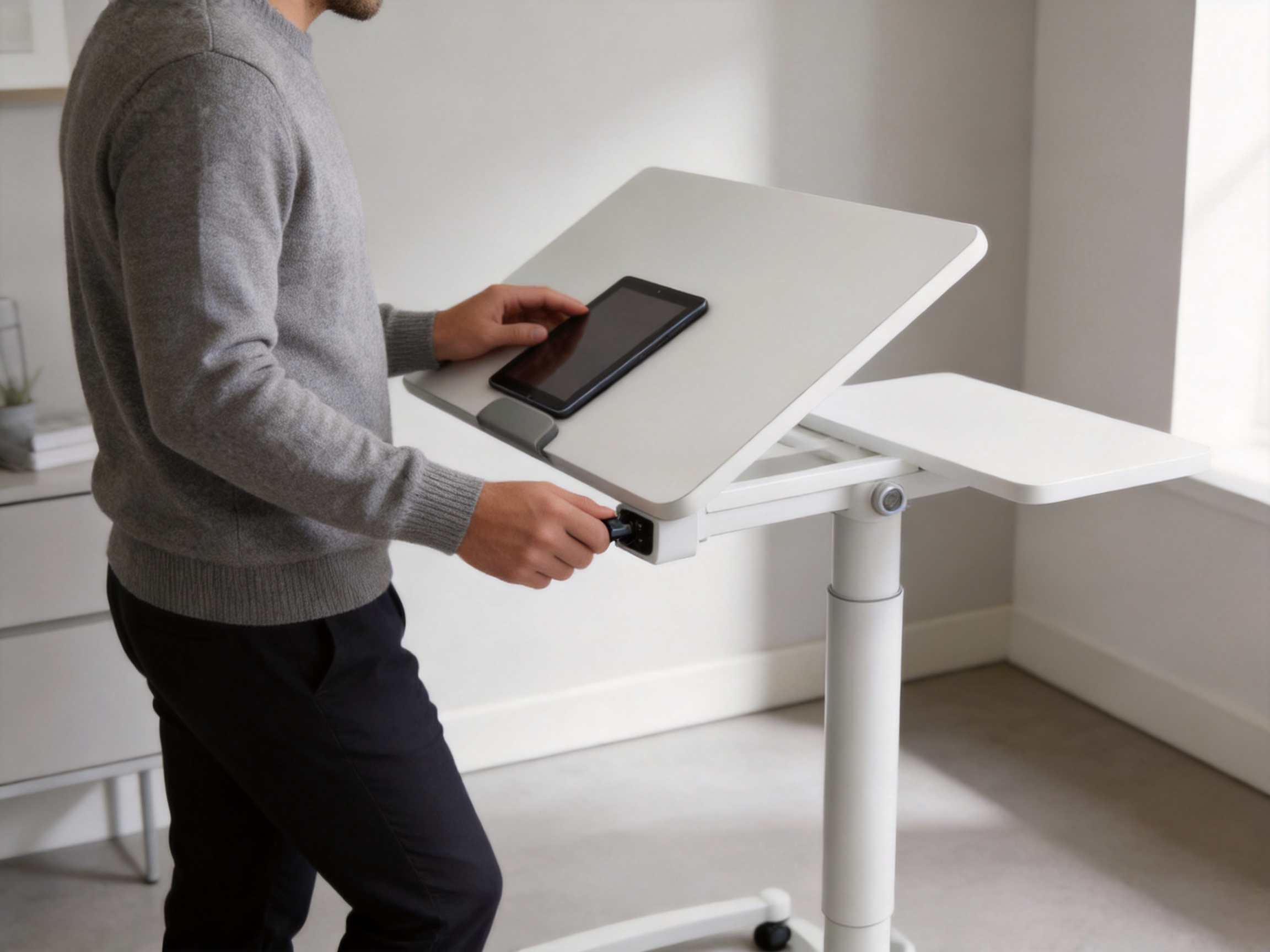
The tilt function of the main panel provides another ergonomic advantage. A flat surface is suitable for typing and equipment placement, but angled surfaces can improve comfort for reading, writing, drawing, and reviewing printed material. By adjusting the panel angle, the user can reduce neck bending and improve line of sight. This is useful for students, designers, technicians, instructors, and office workers who frequently shift between screen-based and paper-based tasks.
Because the adjustment is powered by a gas spring, the user does not need to rely on a power outlet, cable management system, or electric controller. This is especially helpful in multi-purpose rooms, classrooms, training centers, workshops, and home offices where furniture may need to be repositioned. The desk can be placed where it is needed rather than where electricity is available.
Gas Spring Lifting: Quiet, Efficient, and Low Maintenance
The desk uses a gas spring lifting mechanism, which is one of its strongest functional advantages. Gas springs are widely used in ergonomic furniture, medical equipment, automotive components, and industrial devices because they provide controlled motion in a compact structure. In a height-adjustable desk, the gas spring assists lifting and lowering so that users can reposition the tabletop smoothly and with reduced effort.
Compared with electric height-adjustable desks, a gas spring desk offers several practical advantages. It does not require a motor, control box, power cord, or electrical outlet. This reduces complexity and eliminates common electrical concerns such as cable damage, motor noise, controller failure, or power interruption. The absence of an electric drive system can also make the product lighter, simpler to maintain, and easier to move between locations.
Compared with manual crank desks, the gas spring system is faster and more intuitive. Crank systems require repeated rotation, which may be inconvenient in high-frequency adjustment environments. A gas spring mechanism allows users to change height more directly, making it better suited for applications where different people use the same desk throughout the day or where posture changes are frequent.
Compared with non-adjustable utility tables or rolling carts, the TH11 offers superior ergonomic adaptability. A fixed-height cart may be useful for storage or transport, but it cannot be optimized for different users or tasks. The pneumatic desk provides both mobility and height customization, making it a more versatile workstation rather than just a movable surface.
The quiet operation is another benefit. In classrooms, offices, clinics, libraries, shared workspaces, and laboratories, noise control matters. Electric motors may be relatively quiet, but they still create an audible mechanical sound. A well-designed gas spring system allows height changes with minimal noise, supporting professional environments where concentration and communication are important.
Compact Tabletop Design for Focused Work
The tabletop size of 760 mm by 400 mm is intentionally compact. It provides enough space for focused tasks while avoiding the bulk of a full-size office desk. This makes the product suitable for rooms where space efficiency is important. The desk can function as a laptop workstation, a writing surface, a reading stand, a teaching support table, a mobile presentation table, or an auxiliary side desk.
The 25 mm MDF tabletop gives the desk a solid feel. MDF is widely used in furniture because of its smooth surface, uniform density, and reliable processing characteristics. When combined with PVC vacuum forming, the tabletop gains a clean, finished appearance and a surface that is easier to maintain in daily use. PVC vacuum forming also allows the surface to wrap smoothly around contours, reducing sharp transitions and improving the visual quality of the desk.
The availability of white and maple wood panel finishes allows the desk to fit different interior styles. White panels match modern, clean, minimalist, medical, educational, and technology-oriented environments. Maple wood offers a warmer appearance suitable for home offices, studios, classrooms, and collaborative spaces. These choices help the desk integrate naturally into existing interiors instead of looking like a temporary or purely industrial object.
The main panel tilt function expands the practical role of the tabletop. For reading, an angled surface can reduce the need to bend the neck downward. For handwriting, sketching, or reviewing drawings, a slight tilt can improve wrist and shoulder comfort. For teaching or presenting, the tilt can help position notes or devices at a better viewing angle. This makes the desk more adaptable than many basic height-adjustable tables that only offer vertical movement.
Frame, Base, Mobility, and Stability
The frame is built from aluminum and iron, a combination that balances durability and practicality. Aluminum is appreciated for its light weight, corrosion resistance, and clean appearance. Iron provides strength and structural rigidity. Together, these materials help the desk remain stable while still being movable. This is important because a mobile height-adjustable desk must be strong enough for repeated use but not so heavy that it becomes difficult to relocate.
The powder-coated white finish improves surface durability and visual consistency. Powder coating is commonly used for metal furniture because it creates a tough protective layer that resists chipping, scratching, and corrosion better than many ordinary liquid coatings. The white finish also gives the product a bright, clean, and professional look suitable for offices, learning spaces, and healthcare-adjacent environments.
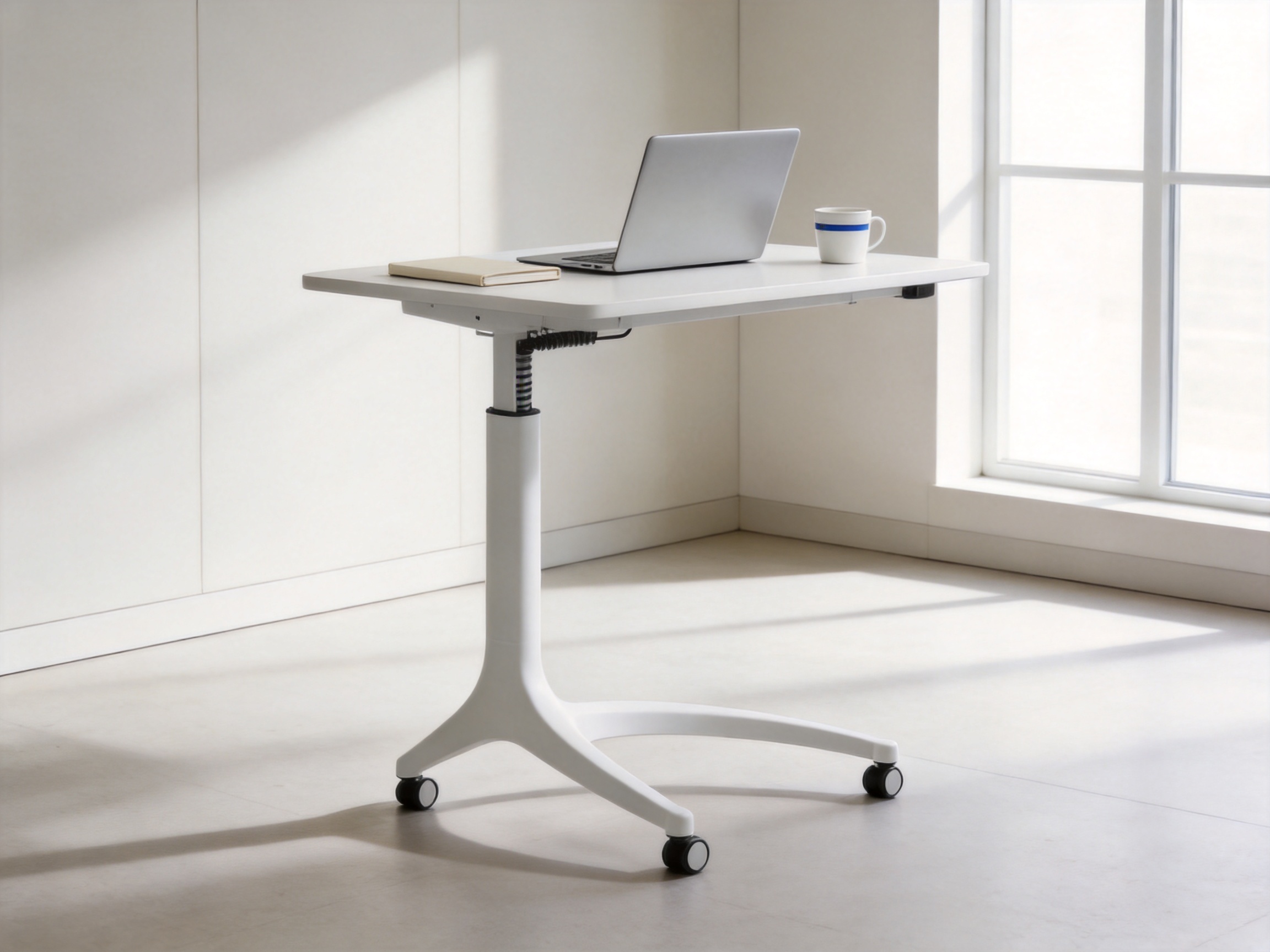
The base design includes two concealed wheels and two leveling feet. This combination is more refined than a fully wheeled base that may drift during use or a fixed base that is difficult to move. The concealed wheels allow the desk to be relocated when needed, while the leveling feet help stabilize the desk once it is in position. This is a major advantage in flexible environments where a workstation may need to move from one side of a room to another but must remain steady during writing, typing, or equipment operation.
Concealed wheels also improve appearance. Instead of exposed casters that may make furniture look temporary or institutional, hidden wheels support mobility while maintaining a cleaner design. This helps the desk fit into modern offices and home settings where aesthetics matter as much as function.
Leveling feet are particularly valuable on uneven floors. Many real-world environments have slight floor variations, especially in older buildings, workshops, and multi-purpose rooms. Adjustable leveling points help reduce wobble and improve user confidence. For a height-adjustable desk, stability is essential because the user must trust the surface while changing height, writing, leaning lightly, or placing devices on it.
Advantages Over Competing Desk Types
The TH11 Pneumatic Height-Adjustable Desk competes not only with other pneumatic desks but also with electric standing desks, fixed desks, laptop carts, lecterns, and manual adjustable tables. Its competitive advantage comes from combining multiple useful qualities in one compact product: height adjustment, tabletop tilt, mobility, stability, power-free operation, and a professional finish.
Compared with electric standing desks, the TH11 is easier to deploy in locations where power access is limited. Electric desks often require a nearby outlet, a cable path, and careful wire management. In busy shared spaces, exposed cords can create inconvenience or safety concerns. The pneumatic desk avoids these issues entirely. It can be placed in the center of a room, beside a hospital-style bed, near a classroom board, in a workshop aisle, or beside a sofa without needing electrical planning.
Electric desks are excellent for full-size office workstations, especially when heavy monitors and accessories are used. However, they may be excessive for compact mobile applications. Their motors, control boxes, and frames add cost and weight. For users who need a flexible mobile surface rather than a permanent workstation, a gas spring desk can be the more efficient and cost-effective choice.
Compared with low-cost laptop carts, this desk offers a more professional and durable structure. Many basic carts emphasize portability but sacrifice stability, lifting quality, surface strength, or visual appeal. The aluminum and iron frame, MDF tabletop, PVC surface, powder-coated finish, and leveling feet provide a more robust experience. The tilt function also makes it more versatile for reading, presenting, and writing tasks.
Compared with fixed-height tables, the desk supports a much wider range of users and activities. A fixed table may be comfortable for one person but uncomfortable for another. It may work for sitting but not standing, or for writing but not presenting. The TH11 solves this limitation through adjustable height and panel angle. In shared environments, this can reduce the need to purchase multiple specialized tables.
Compared with manual screw or crank adjustable desks, the gas spring mechanism is faster and more convenient. If users need to change height several times per day, they are more likely to actually use the adjustment feature when it is quick and easy. Ergonomic features only deliver value when users adopt them consistently. The pneumatic lifting system encourages practical daily use because adjustment does not feel like a chore.
Manufacturing Strengths Behind the Product
The product is supported by the manufacturing capabilities of SuZhou Skyhone Intelligent Technology Co., Ltd., a professional enterprise focused on the research and development, production, sales, and service of standing desks and ergonomic office solutions. Located in Suzhou, within the Yangtze River Delta region, the company benefits from one of China’s most developed manufacturing ecosystems. This regional advantage provides access to a mature furniture supply chain, metal processing resources, coating services, precision component suppliers, packaging partners, and export logistics support.
A key strength of the company is its specialization in height-adjustable desk systems. This focus matters because adjustable furniture requires more than basic furniture assembly. It involves structural engineering, lifting mechanism selection, material compatibility, surface treatment control, ergonomic design, packaging reliability, and after-sales service. A manufacturer deeply engaged in standing desks can refine these details through repeated development and production experience.
The company’s manufacturing approach emphasizes intelligent office space solutions. This means products are not designed merely as furniture pieces but as tools for healthier, more efficient working environments. For the TH11, this philosophy is reflected in the combination of pneumatic height adjustment, tabletop tilt, mobility, stability, and compact workspace design. Each feature serves a functional purpose rather than existing only for appearance.
Advanced manufacturing begins with material selection. Aluminum and iron must be chosen according to strength, durability, weight, processing performance, and finish compatibility. The tabletop substrate must provide dimensional stability and surface quality. The gas spring must be selected for appropriate lifting force and smooth operation. The concealed wheels and leveling feet must be integrated into the base in a way that supports both movement and stationary stability.
Metal fabrication is another important area. Components must be cut, formed, welded, drilled, and finished with accuracy. Poor tolerance control can lead to wobble, uneven lifting, difficult assembly, or inconsistent product quality. A professional manufacturer uses controlled production processes to ensure that the frame geometry supports stable lifting and reliable daily use.
Powder coating requires proper surface preparation, coating application, curing temperature, and finish inspection. A clean and durable coating helps protect the frame while contributing to the product’s appearance. Inconsistent coating can cause color variation, weak adhesion, or premature surface damage. The white powder-coated finish of this desk reflects the importance of both durability and visual refinement.
The tabletop production process also affects quality. MDF panels must be cut precisely, edges must be prepared correctly, and PVC vacuum forming must be applied with consistent pressure and temperature. A well-formed PVC surface improves tactile quality and makes the desktop easier to clean. For furniture used in offices, schools, and workspaces, these details influence daily satisfaction and long-term durability.
Quality Control and Product Reliability
Reliable height-adjustable furniture depends on careful quality control. The lifting mechanism must operate smoothly, the frame must remain stable, the tabletop must be securely mounted, and the finishing must withstand normal use. For a pneumatic desk, gas spring performance is especially important. If the lifting force is poorly matched, the desktop may feel too heavy, too fast, or unstable. A properly engineered gas spring provides controlled movement within the intended adjustment range.
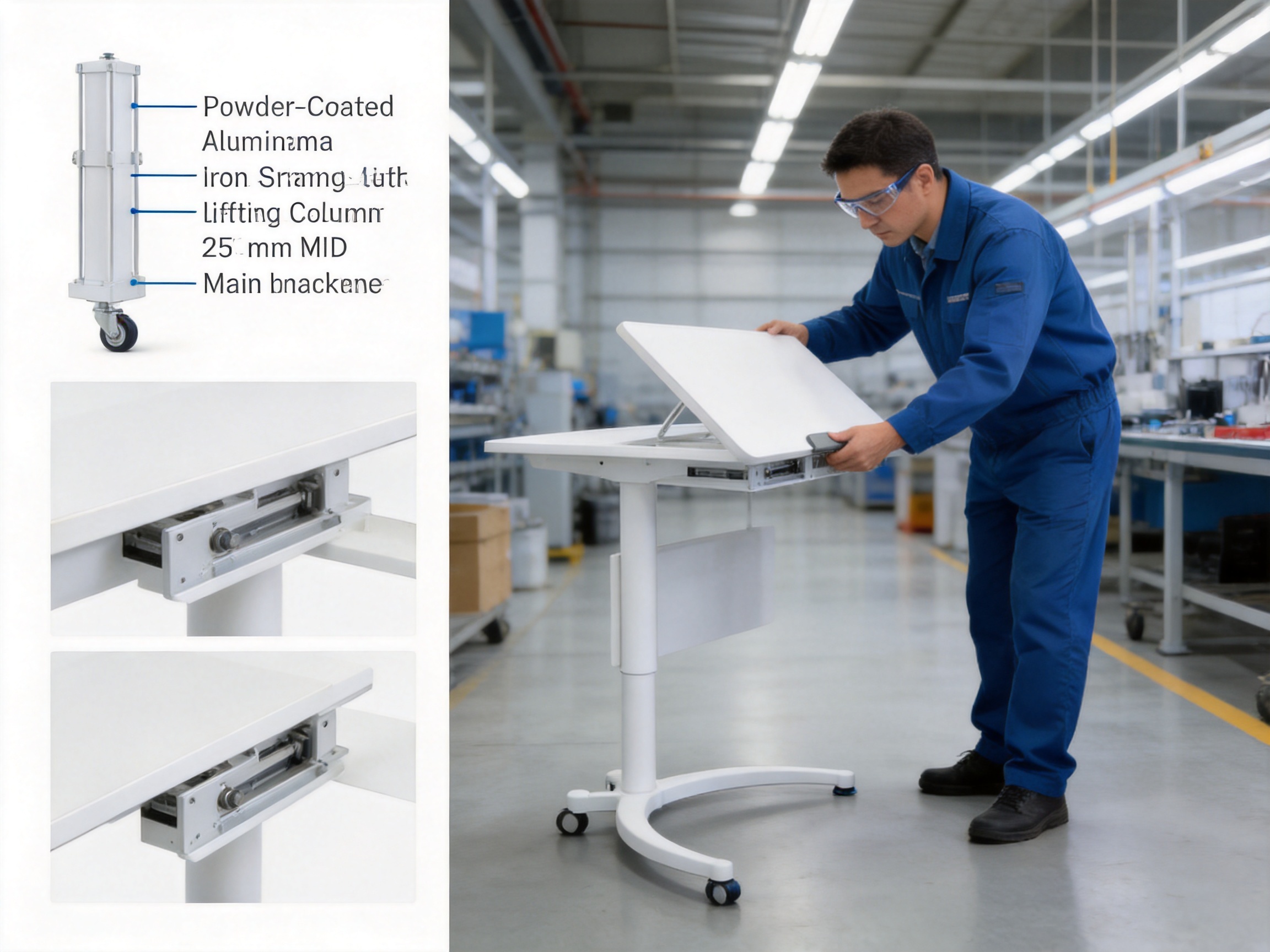
Quality control can include dimensional inspection of metal parts, coating adhesion checks, visual surface inspection, assembly fit verification, lift function testing, tilt function testing, stability evaluation, and packaging drop or vibration assessment. These steps help ensure that the product delivered to customers performs as intended. In export markets, packaging is particularly important because desks may travel long distances through multiple handling stages.
The company’s experience in standing desk manufacturing supports continuous improvement. Feedback from customers, distributors, installers, and end users can be used to refine components, simplify assembly, strengthen packaging, and improve product details. This feedback loop is one of the differences between a specialized manufacturer and a general supplier. Specialized manufacturers understand recurring application scenarios and can design products around real user needs.
Another reliability factor is the simplicity of the pneumatic system. Fewer electrical components mean fewer potential failure points related to wiring, controllers, or motors. This does not mean pneumatic desks require no engineering; rather, the engineering is concentrated in the mechanical lifting structure, balance, and frame stability. When well executed, this simplicity becomes a practical advantage for users who want dependable operation with minimal maintenance.
For institutional buyers, reliability also includes ease of deployment. A desk that is simple to assemble, easy to move, and intuitive to operate can reduce training and maintenance burden. Teachers, office managers, technicians, and home users should be able to adjust the product without complicated instructions. The TH11’s gas spring lifting and straightforward support structure align with this need.
Applications in Offices, Education, Laboratories, Studios, and Home Workspaces
The TH11 Pneumatic Height-Adjustable Desk is suitable for many environments because it is not locked into one fixed role. In a home office, it can serve as a compact sit-stand desk for laptop work, online meetings, writing, and reading. Its mobility allows users to move it between rooms, position it near natural light, or use it beside an existing desk as an auxiliary surface.
In corporate offices, the desk can support flexible work zones, temporary stations, hot-desking areas, small meeting rooms, and wellness-oriented spaces. Not every office needs a full-size electric desk at every location. A compact pneumatic desk can provide adjustable functionality in areas where flexibility matters more than permanent installation.
In educational institutions, the desk can be used by teachers, lecturers, students, and administrators. The tilt function is helpful for reading teaching materials or displaying notes. The height adjustment allows the desk to serve seated and standing activities. The concealed wheels make it easier to reposition the desk between classroom layouts, while the leveling feet help maintain stability during lessons.
In laboratories and technical environments, the desk can support instruments, tablets, documentation, sample review, and temporary work positions. While users must always match the product to load and environmental requirements, the height flexibility is valuable when tasks occur at different working levels. The non-electric lifting system may also be preferred in spaces where minimizing cable clutter is important.
In studios and creative spaces, the desk can be used for sketching, reviewing drawings, positioning a laptop, or supporting creative tools. The angled panel is particularly relevant for visual work. Designers, artists, architects, and hobbyists often need a surface that can move between flat and inclined positions. The desk’s compact size makes it useful even in smaller studios.
In healthcare-adjacent or wellness environments, the desk can function as a mobile support table for documentation, devices, or consultation materials. Its quiet adjustment and clean appearance help it fit into calm professional settings. The white powder-coated finish gives a hygienic visual impression, while the power-free design avoids cable clutter.
User Experience and Daily Operation
A good adjustable desk should feel natural to use. If the adjustment process is difficult, users may stop using the feature and return to static postures. The pneumatic lifting mechanism addresses this issue by enabling smooth height changes. Users can raise or lower the tabletop according to the task without waiting for a motor or turning a crank repeatedly.
The desk’s compact footprint also improves user experience. Large desks are useful for multi-monitor setups, but they can dominate a room and limit layout flexibility. This desk offers a focused surface that can be positioned where it is most useful. It can complement a main workstation, act as a standing laptop table, or serve as a movable work support in shared spaces.
The two concealed wheels make relocation easier. Users can move the desk when rearranging a room, cleaning, shifting between tasks, or sharing the desk with another person. Once positioned, the leveling feet help create a stable working condition. This balance between mobility and stability is one of the product’s defining practical advantages.
The surface finish and color choices also affect user experience. White creates a clean, modern appearance that can brighten the workspace. Maple wood adds warmth and a more natural character. In both cases, the desk is visually adaptable and does not require a specialized interior design scheme.
Why the Design Is Well Suited to Modern Ergonomic Procurement
Organizations purchasing ergonomic furniture often face a challenge: they want flexibility and health-oriented features, but they must also manage cost, installation complexity, maintenance, and space efficiency. The TH11 Pneumatic Height-Adjustable Desk offers a practical middle path. It provides genuine height adjustment and tilt functionality without the cost and infrastructure needs of a full electric workstation.
For procurement teams, the non-electric design reduces concerns about plug standards, cable routing, power availability, and motor-related service issues. For facility managers, the mobile base supports changing room layouts. For end users, the gas spring adjustment is easy to understand. For designers, the white and maple finishes integrate into common interiors.
The product is also suitable for phased ergonomic upgrades. Instead of replacing all fixed desks with electric sit-stand systems, an organization can introduce pneumatic adjustable desks in shared areas, classrooms, small meeting rooms, training zones, or temporary workspaces. This allows more users to experience adjustable furniture without requiring a major renovation.
Compared with many competitors that focus on only one feature, such as mobility or height adjustment, this desk combines several features in a balanced way. It is not just a standing desk, not just a cart, and not just a tilting table. It is a compact adjustable workstation that supports multiple postures and tasks. This multi-function value helps justify the investment.
Design Details That Improve Practical Performance
The product’s lifting range is one of its most important specifications. A 700 mm lower height allows the desk to work with seated positions, while 1100 mm supports standing use for many users. This range covers common work scenarios without creating excessive mechanical complexity. The height adjustability is broad enough to be useful but controlled enough to maintain stability in a compact structure.
The 25 mm tabletop thickness contributes to a stronger and more premium feel than thin boards commonly used on low-cost carts. Thickness matters because it influences rigidity, edge quality, screw retention, and user confidence. A stable tabletop improves writing comfort and reduces the perception of vibration during use.
The aluminum and iron frame reflects a practical material strategy. All-aluminum structures may be lighter but can be more expensive or less rigid depending on design. All-iron structures can be strong but heavy. Combining both materials allows the desk to balance durability, stability, mobility, and manufacturing efficiency.
The powder-coated surface treatment supports long-term use in active environments. Furniture in offices and schools is frequently touched, moved, cleaned, and occasionally bumped. A durable coating reduces visible wear and helps protect the underlying metal. White coating also makes it easier to spot dirt and maintain a clean appearance.
The concealed wheel design is a subtle but important feature. Exposed wheels may be functional, but they can disrupt the appearance of a desk. Concealed wheels preserve mobility while giving the base a cleaner form. The leveling feet complement the wheels by ensuring that the desk is not simply mobile but also stable when in use.
Maintenance and Care
The desk is designed for low-maintenance daily use. Because it does not rely on electricity, users do not need to maintain motors, cables, control panels, or power supplies. Routine care mainly involves keeping the tabletop clean, checking that fasteners remain secure, ensuring that the lifting and tilt mechanisms operate smoothly, and confirming that wheels and leveling feet function properly.
The PVC-formed tabletop surface can usually be cleaned with a soft cloth and mild cleaning solution. Harsh chemicals, abrasive pads, or excessive moisture should be avoided because they may damage the surface or edges over time. Users should also avoid placing extremely hot objects directly on the tabletop unless protective pads are used.
The powder-coated metal frame should be cleaned gently to preserve the finish. If the desk is used in a workshop or laboratory, dust and residue should be removed regularly. The leveling feet should be adjusted when the desk is moved to a new location, especially if the floor is uneven.
Users should operate the height adjustment within the intended range and avoid overloading the tabletop. Like all adjustable furniture, performance depends on using the product according to its design purpose. When treated properly, the simple mechanical structure and durable materials support reliable long-term service.
Company Capabilities and Customization Potential
SuZhou Skyhone Intelligent Technology Co., Ltd. provides custom ergonomic adjustable office table solutions and has experience serving buyers who require practical sit-stand products. As a manufacturer located in Suzhou Industrial Park, the company is positioned close to a strong industrial chain that supports precision production, component sourcing, surface finishing, and export-oriented service.
The company’s strengths include product development, manufacturing coordination, quality control, and customer service. For buyers, this means the product is backed by a supplier that understands both the technical requirements of adjustable desks and the commercial needs of distributors, contractors, project buyers, and institutional customers.
Customization can be important in ergonomic furniture. Different markets may require different color preferences, packaging methods, tabletop finishes, base details, or application-specific adjustments. A professional manufacturer can help evaluate these needs and align product specifications with practical use cases. The TH11 already offers white and maple wood panel options, demonstrating attention to interior compatibility.
Manufacturing strength is not only about producing a single model. It is about the ability to maintain consistent quality across batches, improve designs based on feedback, and support customers with dependable communication. The company’s focus on standing desks and intelligent office solutions gives it a solid foundation for serving long-term ergonomic furniture demand.
Q&A Section
What is the main purpose of the TH11 Pneumatic Height-Adjustable Desk?
The main purpose is to provide a flexible, compact, and ergonomic work surface that can be adjusted between seated and standing heights. It is suitable for offices, home workspaces, classrooms, laboratories, studios, and other environments where users need to change working height or tabletop angle.
What is the height adjustment range?
The desk adjusts from 700 mm to 1100 mm. This range supports seated work, standing work, and intermediate positions depending on user height and task requirements.
How does the lifting mechanism work?
The desk uses a gas spring lifting system. The gas spring assists height adjustment, allowing the tabletop to move smoothly and quietly without electricity.
What makes a pneumatic desk different from an electric standing desk?
A pneumatic desk does not require a motor, power cord, control box, or electrical outlet. It is easier to move, simpler to maintain, and useful in spaces where power access is limited. Electric desks are often better for permanent heavy-duty workstations, while pneumatic desks are excellent for flexible and mobile applications.
Does the tabletop tilt?
Yes. The main panel includes a tilt function, making the desk useful for reading, writing, sketching, presenting, and adjusting viewing angles.
What materials are used in the desk?
The tabletop uses 25 mm MDF with PVC vacuum forming. The frame combines aluminum and iron. The surface treatment is white powder coating.
Is the desk easy to move?
Yes. It includes two concealed wheels for mobility and two leveling feet for stable positioning. This makes it suitable for spaces where furniture layouts change frequently.
What panel colors are available?
The panel color options include white and maple wood. These finishes allow the desk to match modern, professional, educational, and home interiors.
Why is the combination of concealed wheels and leveling feet important?
Concealed wheels make it easier to move the desk without compromising appearance, while leveling feet help stabilize the desk during use. This combination offers mobility when needed and steadiness when stationary.
What types of users benefit most from this desk?
Office workers, teachers, students, designers, laboratory staff, home office users, trainers, and anyone who needs a compact adjustable surface can benefit from this desk. It is especially useful for shared workspaces and multi-purpose rooms.
How does the product compare with a basic laptop cart?
Compared with many basic laptop carts, the TH11 offers stronger ergonomic performance through its height range, gas spring lifting, tilt function, aluminum and iron frame, MDF tabletop, powder-coated finish, and stability-enhancing leveling feet.
Is the desk suitable for long-term ergonomic office planning?
Yes. It can be used as part of a broader ergonomic strategy by introducing sit-stand flexibility into offices, classrooms, training spaces, and home work areas without requiring electrical installation.
Conclusion
The TH11 Cat Head Leg Pneumatic Height-Adjustable Desk is a versatile solution for modern spaces that demand adaptability, ergonomic value, and practical mobility. Its 700 mm to 1100 mm lifting range supports seated and standing work, while the gas spring mechanism provides smooth, quiet, and power-free adjustment. The main panel tilt function expands its usefulness for reading, writing, sketching, teaching, and presentation tasks.
Its construction reflects a strong balance of materials and design choices. The 25 mm MDF tabletop with PVC vacuum forming provides a stable and clean work surface. The aluminum and iron frame offers structural strength. The white powder-coated finish supports durability and a modern appearance. The concealed wheels and leveling feet deliver both mobility and stability, a combination that many competing products fail to achieve effectively.
Compared with electric desks, the product is simpler, more mobile, and independent of power outlets. Compared with fixed tables, it offers far greater ergonomic flexibility. Compared with low-cost carts, it provides a more stable, professional, and multi-functional experience. These advantages make it an excellent option for offices, educational institutions, laboratories, studios, home workspaces, and flexible commercial environments.
Behind the product is SuZhou Skyhone Intelligent Technology Co., Ltd., a professional manufacturer focused on standing desks and ergonomic office solutions. The company’s location in Suzhou, its access to the Yangtze River Delta manufacturing ecosystem, and its experience in adjustable furniture support reliable production, product development, and customer service. For buyers seeking a compact, practical, and power-free height-adjustable desk, the TH11 represents a well-balanced combination of ergonomic performance, manufacturing quality, and everyday usability.
References
Bridger, R. S. Introduction to Human Factors and Ergonomics. CRC Press.
Kroemer, K. H. E., and Grandjean, E. Fitting the Task to the Human: A Textbook of Occupational Ergonomics. Taylor & Francis.
Pheasant, S., and Haslegrave, C. M. Bodyspace: Anthropometry, Ergonomics and the Design of Work. CRC Press.
Hedge, A. Ergonomic Workplace Design for Health, Wellness, and Productivity. CRC Press.
Sanders, M. S., and McCormick, E. J. Human Factors in Engineering and Design. McGraw-Hill.
Dul, J., and Weerdmeester, B. Ergonomics for Beginners: A Quick Reference Guide. CRC Press.
Product: TH11 (Cat Head Leg) Pneumatic Height-Adjustable Desk


- Contact Info
-
-
 Phone+86-15950656125
 -
 Email
Email -
 AddressRoom 1007-1, South Building, Suyue Plaza, Suzhou Industrial Park, Suzhou City, Jiangsu Province, China
-
- Products
- Follow Us
- Need help? Please contact us
Copyright ©
SuZhou Skyhone Intelligent Technology Co., Ltd.
All Rights Reserved.
Privacy
Custom Ergonomic Adjustable Office Tables Manufacturers

