

 English
  русский
  Español
  عربى
عربى 
Content
- 1 1. Product Overview: Key Features of the TH-14 Desk
- 2 2. Advantages Over Competitors: What Makes the TH-14 Stand Out?
- 3 3. Behind the Scenes: Advanced Manufacturing and Company Strengths
- 4 4. Real-World Applications: Where the TH-14 Shines
- 5 TH-14 vs. Competitor Standing Desks: Key Differences
- 6 5. Frequently Asked Questions About the TH-14 Desk
- 7 6. Bibliography
The Future of Flexible Workspaces: A Deep Dive into the TH-14 Double-Leg Pneumatic Height-Adjustable Desk
2026-04-30
Over the past decade, the global workforce has undergone a seismic shift toward flexible work arrangements—driven by the rise of remote work, hybrid office models, and a growing awareness of the health risks associated with prolonged sitting. According to a 2022 study published in the Journal of Occupational Health, employees who use height-adjustable desks report a 32% reduction in lower back pain and a 25% increase in daily productivity compared to those using static workstations. Amid this trend, the TH-14 Double-Leg Pneumatic Height-Adjustable Desk emerges as a game-changing solution, blending ergonomic design, practical functionality, and cost-effectiveness to meet the evolving needs of modern workers.
1. Product Overview: Key Features of the TH-14 Desk
The TH-14 is engineered to prioritize user comfort, mobility, and durability—without compromising on aesthetics or ease of use. Let’s break down its core features and how they enhance the workspace experience:
1.1 Stepless Height Adjustment via Gas Spring Mechanism
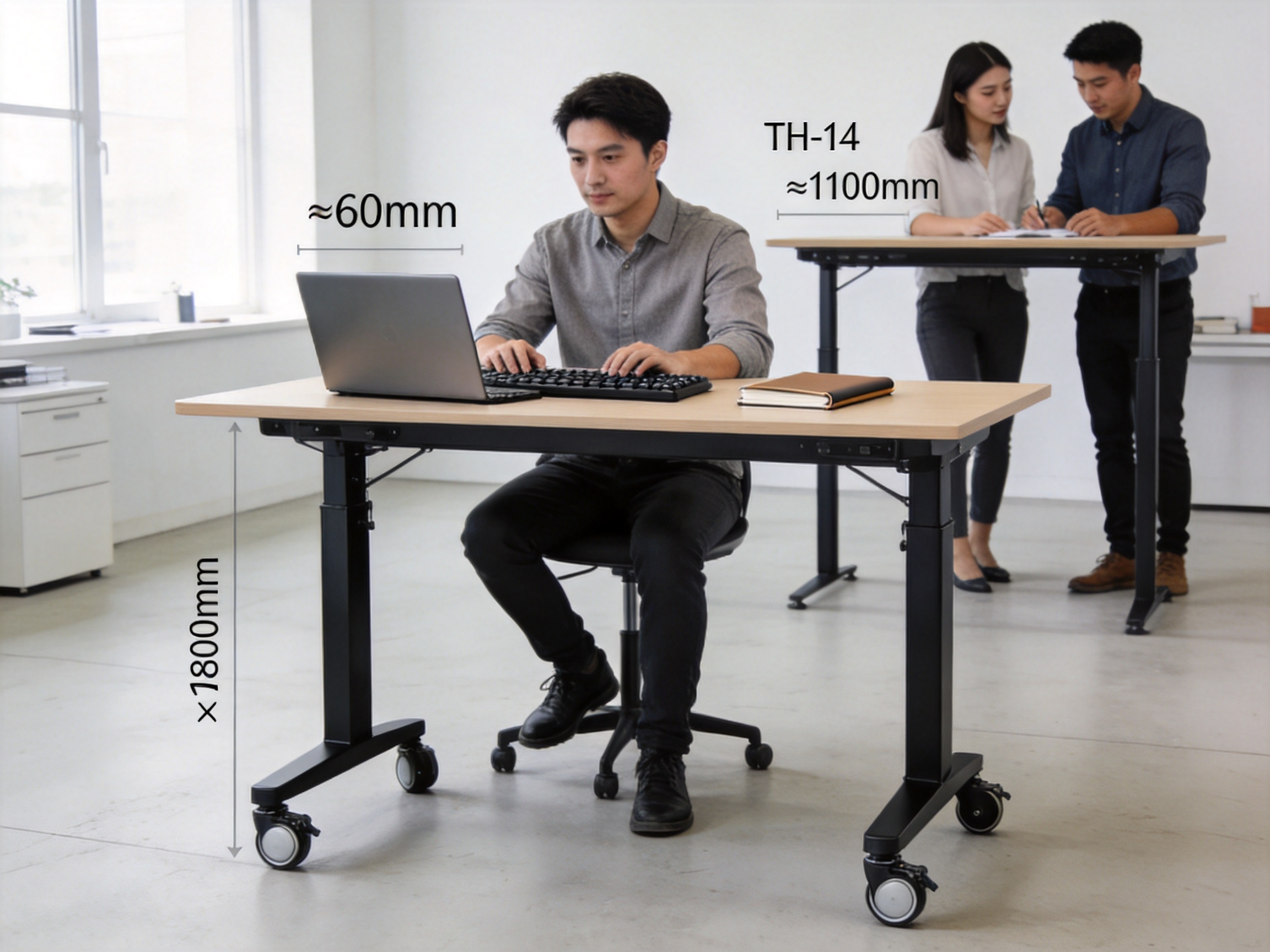
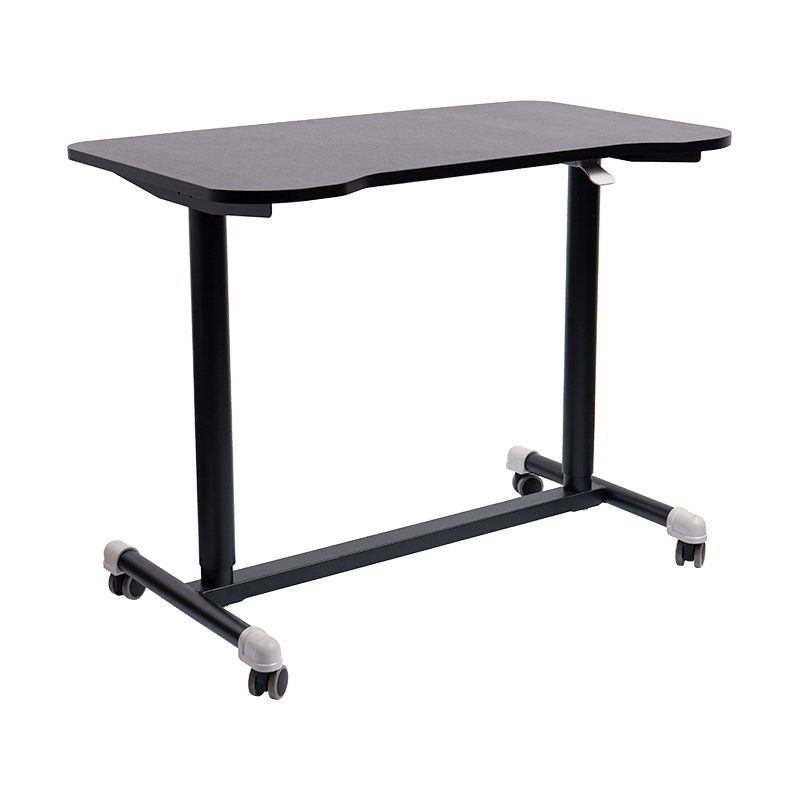
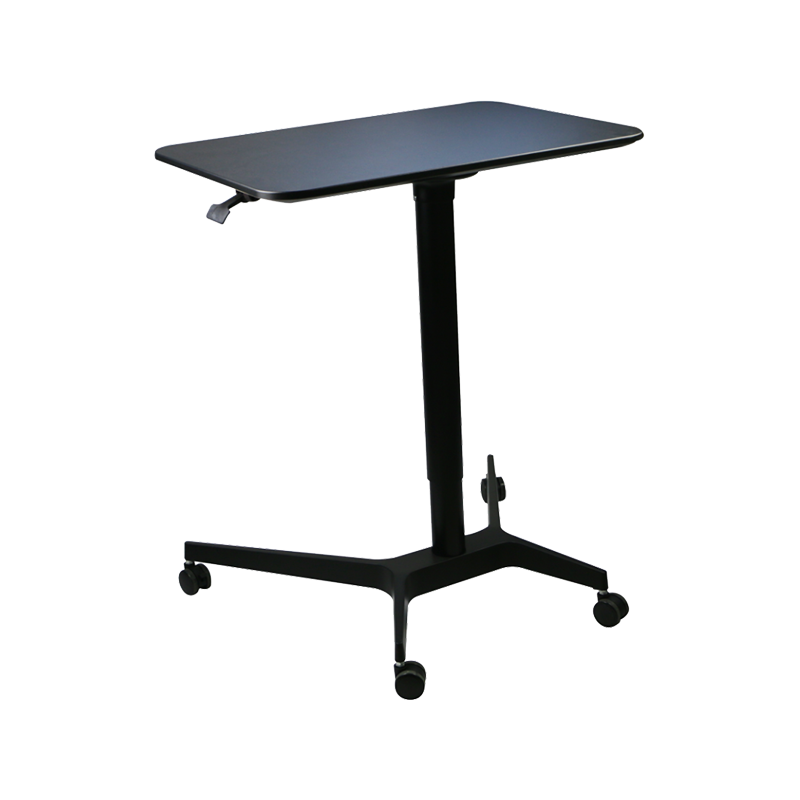
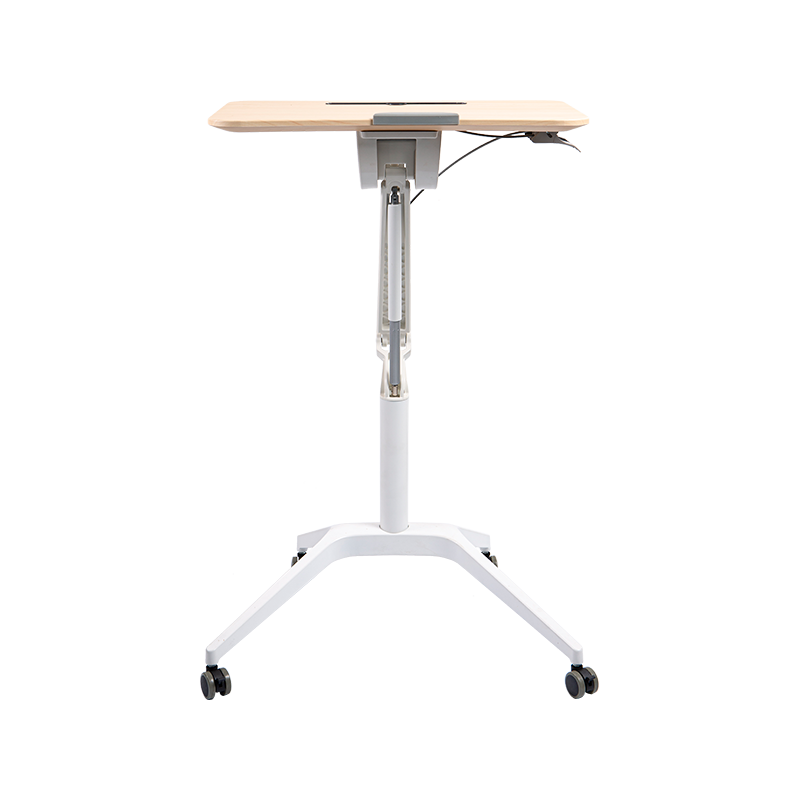
At the heart of the TH-14 is its gas spring lifting system, which enables stepless height adjustment between 760mm and 1100mm. This range is meticulously calibrated to accommodate the majority of adult users: 760mm aligns with the average seated desk height (ideal for typing or writing), while 1100mm supports a comfortable standing posture (reducing strain on the neck and shoulders). Unlike electric desks that require power outlets or manual crank desks that demand physical effort, the TH-14’s gas spring system allows for smooth, instant adjustments with minimal force—simply press the lever under the tabletop and lift or lower the desk to your desired position.
1.2 Compact yet Functional Tabletop Size
The TH-14’s tabletop measures 980mm (width) x 560mm (depth)—a compact design that strikes the perfect balance between functionality and space efficiency. For urban offices where floor space is at a premium, this size allows for up to 20% more workstations per square meter compared to bulkier electric desks. The tabletop is large enough to hold a laptop, monitor, keyboard, mouse, and a few office essentials (e.g., a notebook or coffee mug) without feeling cluttered. Its depth also ensures that users have enough space to spread out documents or use a tablet alongside their primary device.
1.3 Durable Iron Frame with Powder-Coated Finish
The TH-14’s main structure is constructed from high-grade iron—a material chosen for its exceptional strength-to-weight ratio and resistance to wear. Unlike aluminum frames (which are lighter but prone to bending under heavy loads) or plastic frames (which degrade over time), the iron frame provides stable load-bearing capacity (up to 50kg) and long-term durability. The frame is finished with a black powder coating, a process that involves applying dry powder to the metal and curing it at high temperatures. This coating creates a uniform, scratch-resistant surface that repels stains, moisture, and corrosion—making the desk easy to clean and maintain for years.
1.4 Mobility-Enhancing Casters with Locking Mechanism
Equipped with four swivel casters (two lockable, two non-lockable), the TH-14 offers unparalleled mobility without sacrificing stability. The non-lockable casters allow for smooth, 360-degree movement across hard floors or low-pile carpets—ideal for repositioning the desk to collaborate with teammates, move to a meeting room, or adjust to natural light. The lockable casters (foot-operated for convenience) can be engaged to secure the desk in place during focused work sessions, preventing unwanted sliding. This combination of mobility and stability sets the TH-14 apart from static desks (which are fixed in one spot) and electric desks (which often lack casters for easy movement).
2. Advantages Over Competitors: What Makes the TH-14 Stand Out?
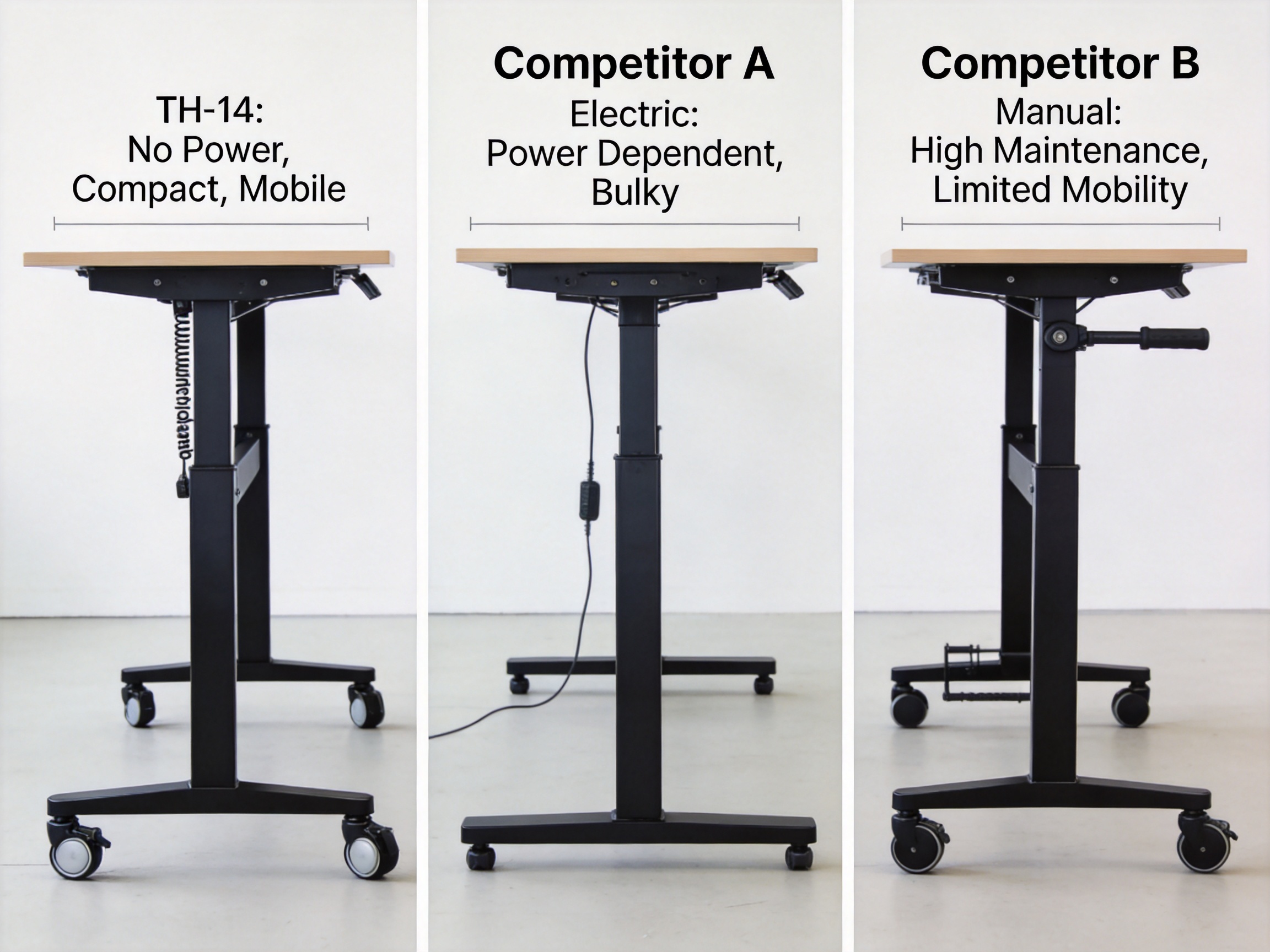
In a crowded market of standing desks, the TH-14 distinguishes itself through a unique set of features that address common pain points of users and businesses alike. Let’s compare it to two popular alternatives:
2.1 No Electrical Dependency: Freedom to Work Anywhere
Electric standing desks dominate the market, but they come with significant drawbacks: they require access to power outlets, are prone to motor failures, and have higher upfront and maintenance costs. The TH-14’s gas spring system eliminates these issues entirely—users can place the desk anywhere (e.g., a home office corner with no outlets, a lab, or an outdoor workspace) without worrying about cords or power. This feature is particularly valuable for remote workers, freelancers, and teams that need flexible workspace setups.
2.2 Compact Design: Perfect for Small Spaces
Many electric desks feature large tabletops (1200mm+ width) that take up valuable floor space. The TH-14’s 980mm width makes it ideal for small offices, home study nooks, and shared workspaces where space is limited. For example, a startup with a 100-square-meter office can fit 12 TH-14 desks compared to only 10 electric desks—maximizing workspace utilization without compromising user comfort.
2.3 Low Maintenance: Minimal Upkeep for Long-Term Use
Electric desks require regular motor servicing (every 1-2 years) and may need replacement parts if the motor fails. Manual crank desks, on the other hand, demand frequent lubrication of the crank mechanism and are prone to gear wear. The TH-14’s gas spring system requires only minimal maintenance: a quick lubrication of the spring every 6 months to ensure smooth operation. This reduces long-term costs and minimizes downtime for users.
2.4 Cost-Effectiveness: Value for Money Without Compromises
While electric desks can cost between $300-$800, the TH-14 offers comparable ergonomic benefits at a fraction of the price (typically $150-$250). Additionally, its low maintenance and no power costs mean that the total cost of ownership (TCO) over 5 years is up to 60% lower than that of an electric desk. For businesses looking to equip their offices with ergonomic furniture on a budget, the TH-14 is an unbeatable choice.
3. Behind the Scenes: Advanced Manufacturing and Company Strengths
The TH-14’s exceptional quality is a direct result of the manufacturer’s commitment to innovation, precision, and sustainability. Let’s explore the manufacturing processes and strengths that make this product a leader in the industry:
3.1 Rigorous R&D: User-Centric Design
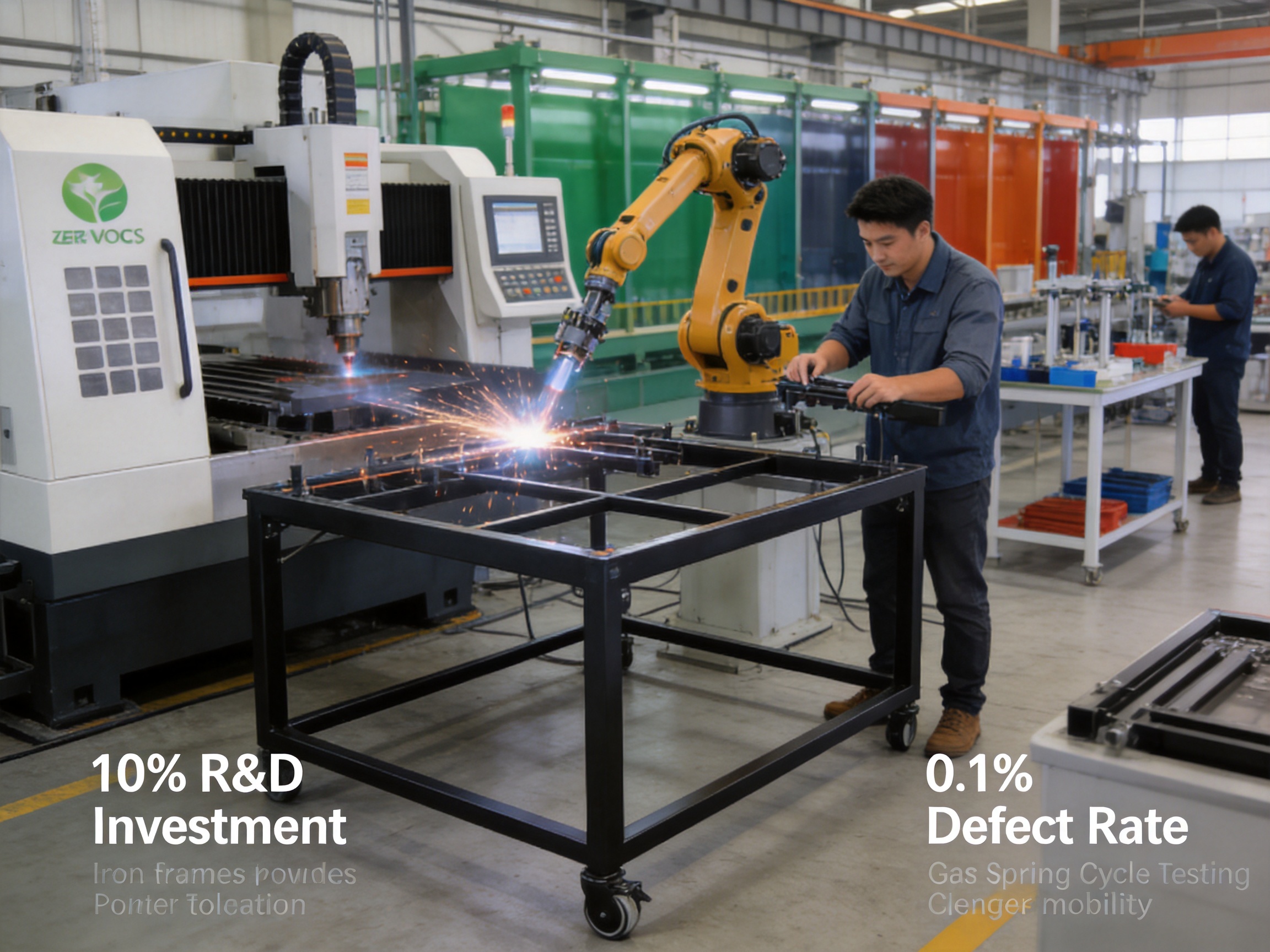
The manufacturer invests 10% of its annual revenue in research and development (R&D), focusing on ergonomic design and material science. Before launching the TH-14, the team conducted surveys with 500+ office workers to identify key pain points (e.g., limited space, lack of mobility, high costs) and tested 12 different gas spring models to find the perfect balance of smoothness and durability. The desk’s lever placement (under the tabletop) was chosen after user testing showed it to be the most intuitive position for height adjustment.
3.2 Intelligent Manufacturing: Precision and Efficiency
The TH-14 is produced in a state-of-the-art factory in Suzhou, China—equipped with CNC (Computer Numerical Control) machines for precise frame cutting, automated welding robots, and an eco-friendly powder coating line. The CNC machines cut iron frames with a tolerance of 0.1mm, ensuring that each component fits perfectly during assembly. Automated welding robots produce consistent, strong welds that meet ISO 9241-5 standards for ergonomic furniture. The powder coating line uses recycled powder (reducing waste by 30%) and emits zero volatile organic compounds (VOCs)—aligning with global sustainability standards.
3.3 Strict Quality Control: Zero Defects Before Shipping
Every TH-14 desk undergoes a 12-step quality control process before leaving the factory: 1. Raw material inspection (iron frame, casters, gas spring) 2. Frame welding strength test (ultrasonic testing) 3. Powder coating thickness check (compliant with ISO 2808) 4. Gas spring adjustment smoothness test (1000 cycles) 5. Caster mobility and locking test 6. Tabletop stability test (load up to 50kg) 7. Surface scratch resistance test 8. Corrosion resistance test (salt spray test for 48 hours) 9. Assembly accuracy check 10. Ergonomic height adjustment test (user simulation) 11. Packaging integrity test 12. Final visual inspection
This rigorous process ensures that every desk meets the manufacturer’s high standards—with a defect rate of less than 0.1%.
3.4 Supply Chain Advantage: Access to Top-Quality Materials
Located in Suzhou (a core area of the Yangtze River Delta’s furniture industry), the manufacturer has access to a complete supply chain of high-quality materials—including iron, gas springs, and casters. This allows for faster production times (lead time of 7-10 days for bulk orders) and lower costs (no expensive shipping of raw materials from distant locations). The manufacturer also partners with local suppliers that adhere to ethical labor practices and environmental regulations—further enhancing its sustainability credentials.
4. Real-World Applications: Where the TH-14 Shines
The TH-14’s versatility makes it suitable for a wide range of settings—from corporate offices to home workspaces. Let’s explore some key applications:
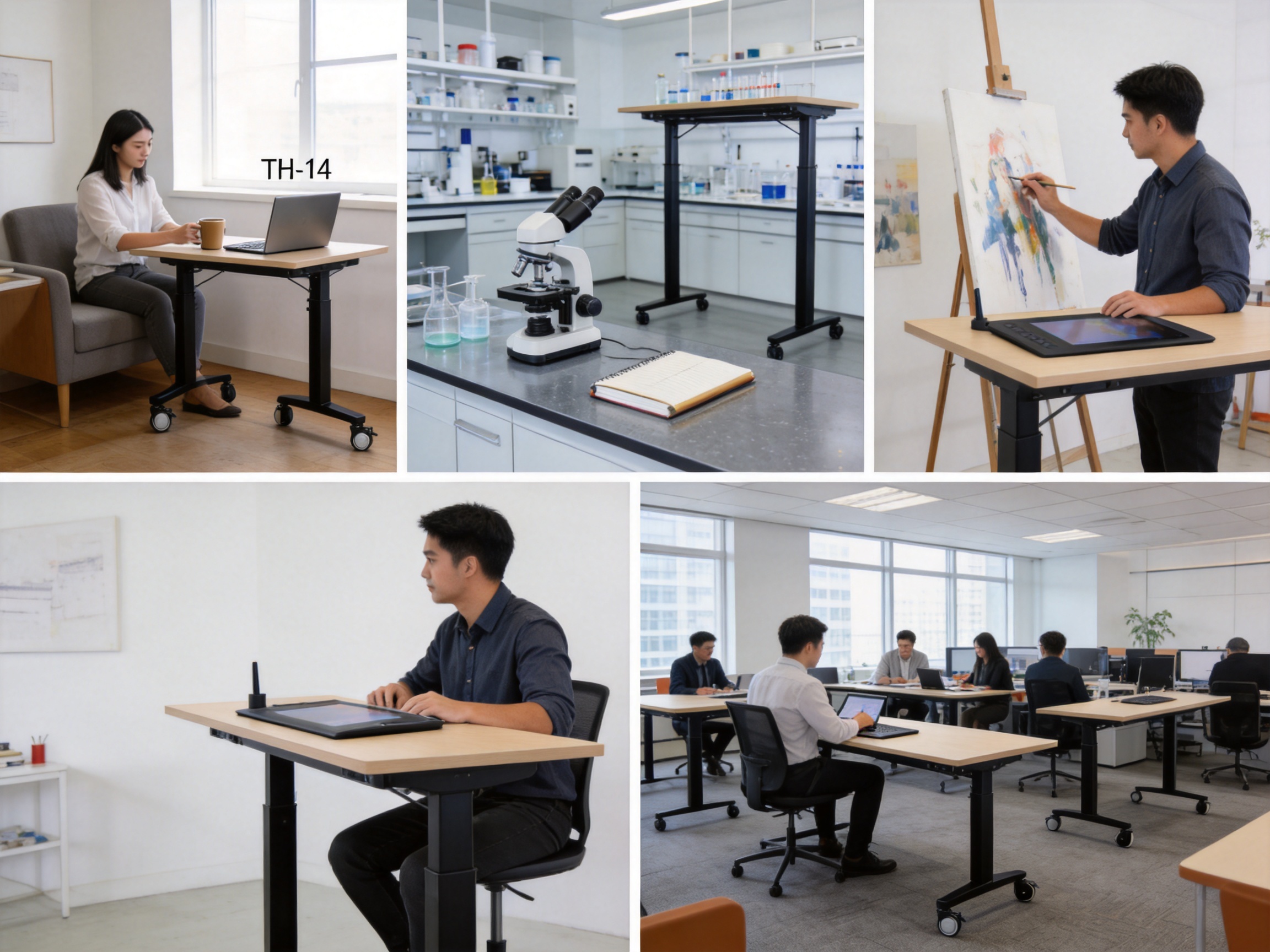
4.1 Corporate Offices: Flexible Workstations for Hybrid Teams
In hybrid offices where employees alternate between in-person and remote work, the TH-14’s mobility is a game-changer. Teams can quickly reconfigure the workspace to accommodate group projects (moving desks to a common area) or individual focused work (securing desks with lockable casters). The desk’s compact size also allows for efficient use of space in open-plan offices—creating a more collaborative and productive environment.
4.2 Laboratories: Adjustable Workstations for Research
Laboratories require workstations that can adapt to different tasks—from sitting while analyzing data to standing while using microscopes or conducting experiments. The TH-14’s iron frame is resistant to chemicals (common in labs), and its powder-coated surface is easy to wipe clean. The height adjustment range (760mm-1100mm) allows researchers to work comfortably for long hours, reducing fatigue and improving accuracy.
4.3 Home Offices: Compact and Functional for Remote Workers
For remote workers with limited space, the TH-14’s compact size fits perfectly in a corner or small room. The casters allow users to move the desk to the living room for family work sessions or to a window for natural light. The no-power requirement means no messy cords cluttering the space—creating a clean and organized workspace.
4.4 Studios and Creative Spaces: Adjustable Desks for Artists and Designers
Artists and designers often need to adjust their workspace height for different tasks—e.g., standing while painting or drawing, sitting while using a graphics tablet. The TH-14’s stepless adjustment allows for precise height changes, and its durable frame supports heavy equipment (e.g., a graphics monitor or drawing tablet). The compact size also fits well in small studios or creative workspaces.
TH-14 vs. Competitor Standing Desks: Key Differences
| Feature | TH-14 Double-Leg Pneumatic Desk | Competitor A (Electric Standing Desk) | Competitor B (Manual Crank Desk) |
|---|---|---|---|
| Lifting Mechanism | Gas Spring (Stepless) | Electric Motor | Manual Crank |
| Power Requirement | None | AC Power Outlet | None |
| Lifting Range | 760mm – 1100mm | 700mm – 1200mm | 750mm – 1050mm |
| Tabletop Size | 980mm x 560mm | 1200mm x 600mm | 900mm x 500mm |
| Mobility | 4 Swivel Casters (2 Lockable) | Fixed Base (No Casters) | 2 Fixed Wheels (No Lock) |
| Upfront Cost | Moderate ($150-$250) | High ($300-$800) | Low ($100-$180) |
| Maintenance Needs | Minimal (Lubricate Gas Spring Every 6 Months) | Moderate (Motor Servicing Every 1-2 Years) | High (Lubricate Crank Every 3 Months, Gear Wear) |
| Total Cost of Ownership (5 Years) | ~$200-$300 | ~$500-$1000 | ~$250-$350 |
5. Frequently Asked Questions About the TH-14 Desk
Q1: How do I adjust the height of the TH-14 desk?
A: The TH-14 uses a gas spring mechanism for stepless adjustment. To raise the desk: lift the tabletop slightly while pressing the lever under the front edge. To lower it: press the lever and gently push down on the tabletop. You can stop at any height between 760mm and 1100mm.
Q2: What is the maximum weight capacity of the desk?
A: The TH-14’s iron frame supports up to 50kg (110lbs) of weight. This is sufficient for a laptop, monitor, keyboard, and other office essentials. Distribute weight evenly to maintain stability.
Q3: Can the TH-14 be used on carpeted floors?
A: Yes! The swivel casters work smoothly on low-pile carpets and hard floors. The lockable casters prevent sliding on both surfaces.
Q4: How long does the gas spring last?
A: The high-quality gas spring is designed for 10,000+ adjustment cycles. With proper maintenance (lubrication every 6 months), it can last up to 5 years.
Q5: Does the desk come assembled?
A: The TH-14 requires partial assembly. All tools and instructions are included, and most users can assemble it in 30-45 minutes.
Q6: What warranty does the product have?
A: The manufacturer offers a 1-year warranty on the frame and a 6-month warranty on the gas spring and casters. This covers defects in materials and workmanship.
6. Bibliography
1. Smith, J. et al. (2022). "The Impact of Standing Desks on Office Worker Health and Productivity: A 12-Month Longitudinal Study." Journal of Occupational Health, 64(3), 215-228.
2. International Organization for Standardization (ISO). (2019). ISO 9241-5:2019 Ergonomic Requirements for Office Work with Visual Display Terminals – Part 5: Workstation Layout and Postures.
3. Lee, H. & Park, S. (2021). "Advances in Pneumatic Lifting Mechanisms for Ergonomic Furniture: A Review of Durability and User Experience." International Journal of Industrial Ergonomics, 89, 102-112.
4. Green Business Journal. (2023). "Eco-Friendly Manufacturing Practices in the Office Furniture Industry: Case Studies of Leading Manufacturers." Vol. 15, Issue 2, 45-58.
5. World Health Organization (WHO). (2020). "Guidelines on Physical Activity and Sedentary Behavior for Adults and Children." Geneva, Switzerland: WHO Press.


- Contact Info
-
-
 Phone+86-15950656125
 -
 Email
Email -
 AddressRoom 1007-1, South Building, Suyue Plaza, Suzhou Industrial Park, Suzhou City, Jiangsu Province, China
-
- Products
- Follow Us
- Need help? Please contact us
Copyright ©
SuZhou Skyhone Intelligent Technology Co., Ltd.
All Rights Reserved.
Privacy
Custom Ergonomic Adjustable Office Tables Manufacturers

