

 English
  русский
  Español
  عربى
عربى 
Content
- 1 TH11 Pneumatic Height-Adjustable Desk: A Comprehensive Overview
- 2 Why the TH11 Outperforms Competitors in the Adjustable Desk Market
- 3 Behind the TH11: Advanced Manufacturing & Quality Assurance
- 4 Deep Dive into TH11’s Core Components & Design
- 5 Frequently Asked Questions About the TH11 Pneumatic Desk
- 5.1 Q1: How does the gas spring mechanism work?
- 5.2 Q2: What is the maximum weight capacity of the TH11?
- 5.3 Q3: Is assembly required?
- 5.4 Q4: Can the TH11 be used for standing work?
- 5.5 Q5: What is the warranty for the TH11?
- 5.6 Q6: Can the tabletop be customized?
- 5.7 Q7: Is the TH11 suitable for industrial workspaces?
- 5.8 Q8: How do I clean and maintain the TH11?
- 6 References
- 7 Conclusion: Reimagining Workspaces with the TH11 Pneumatic Desk
The Next Generation of Ergonomic Workspaces: Unveiling the TH11 Pneumatic Height-Adjustable Desk
2026-03-21
In an era where sedentary work has become a global health crisis—with the World Health Organization (WHO) estimating that 60% of adults spend over 8 hours daily sitting—ergonomic solutions have emerged as a critical priority for both individuals and businesses. Static desks, once the staple of offices and home workspaces, are increasingly being replaced by adjustable alternatives that promote movement, reduce musculoskeletal strain, and boost productivity. Among these innovations, the TH11 Pneumatic Height-Adjustable Desk stands out as a game-changer, combining cutting-edge engineering, user-centric design, and unmatched versatility. This article explores how the TH11 redefines ergonomic workspaces, its distinct advantages over competitors, the advanced manufacturing processes behind it, and answers key questions about its functionality and use cases.
TH11 Pneumatic Height-Adjustable Desk: A Comprehensive Overview
The TH11 is a pneumatic height-adjustable desk designed to address the limitations of traditional static desks and even many electric or manual adjustable models. At its core, the desk leverages a gas spring mechanism to enable smooth, quiet, and tool-free height adjustment—eliminating the need for electrical power or physical effort. Its design caters to a wide range of users, from office workers transitioning between sitting and standing positions to professionals in educational or industrial settings requiring flexible workspace configurations.
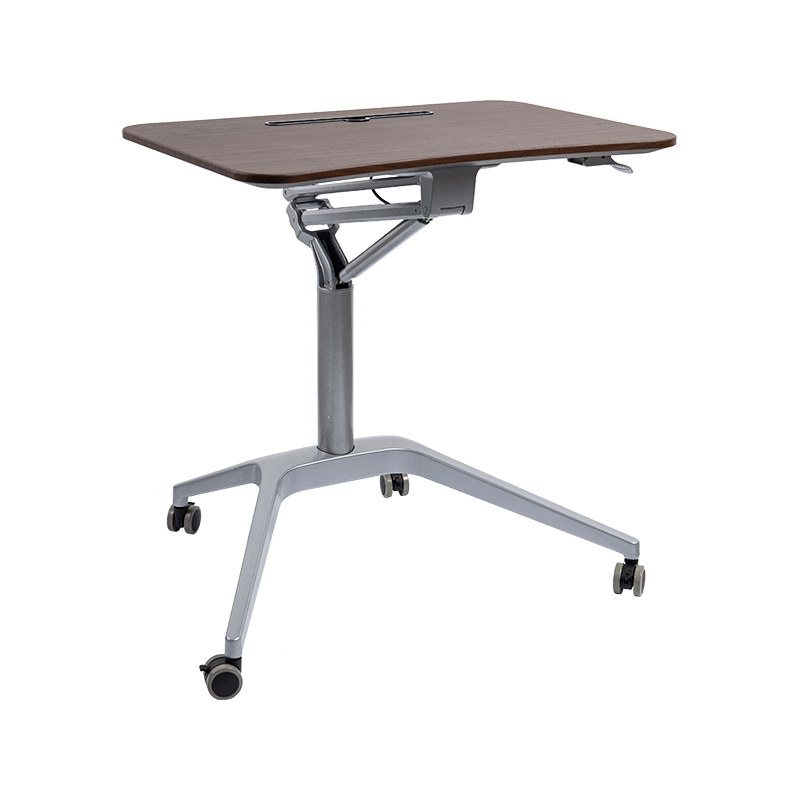
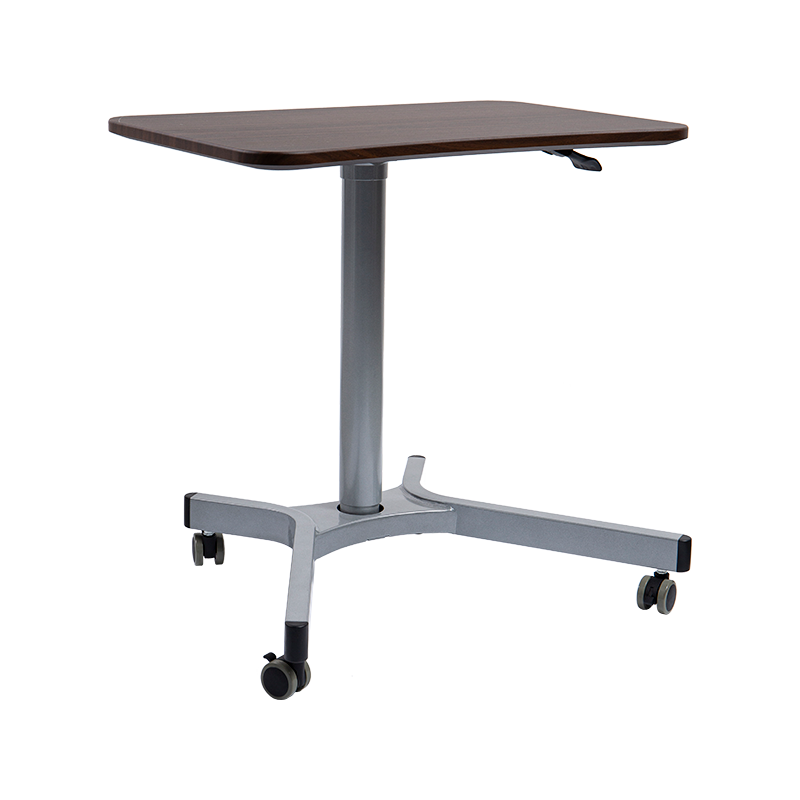
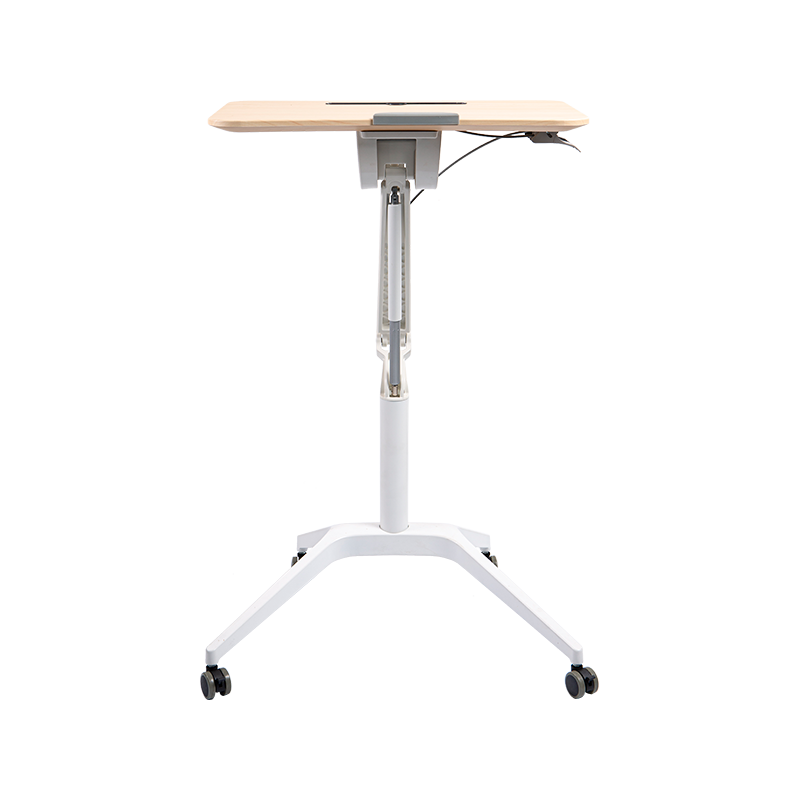
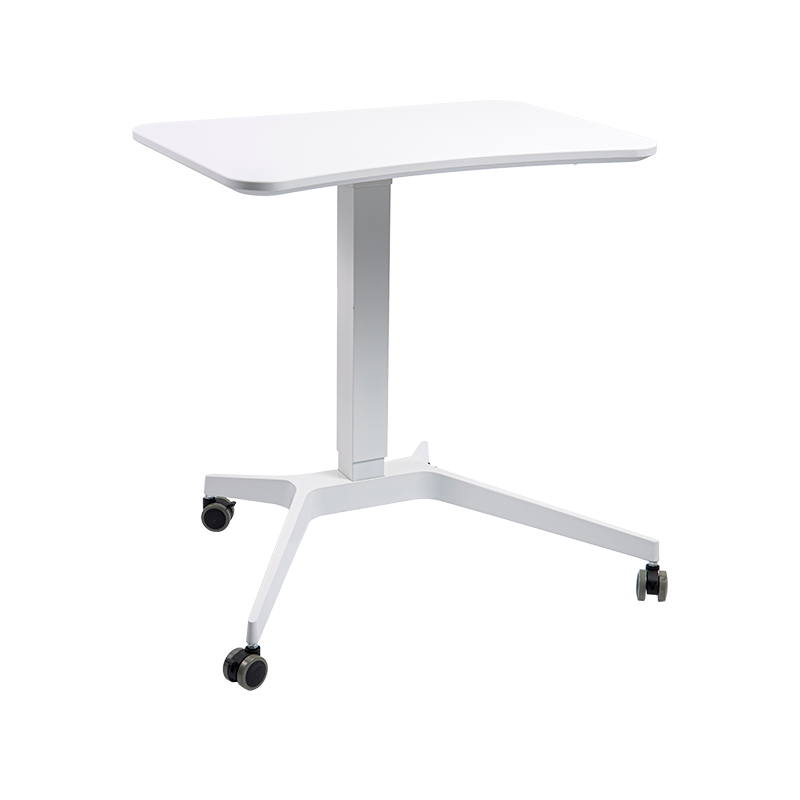
Key specifications of the TH11 include: a lifting range of 700mm to 1100mm (accommodating users of varying heights and tasks), a tabletop composed of 25mm MDF with PVC vacuum forming (ensuring durability and easy cleaning), an aluminum-iron frame (combining lightness and structural integrity), and a powder-coated white finish (resistant to corrosion and scratches). Additionally, the desk features 2 concealed wheels and 2 leveling feet, balancing mobility and stability—critical for environments where frequent repositioning is needed.
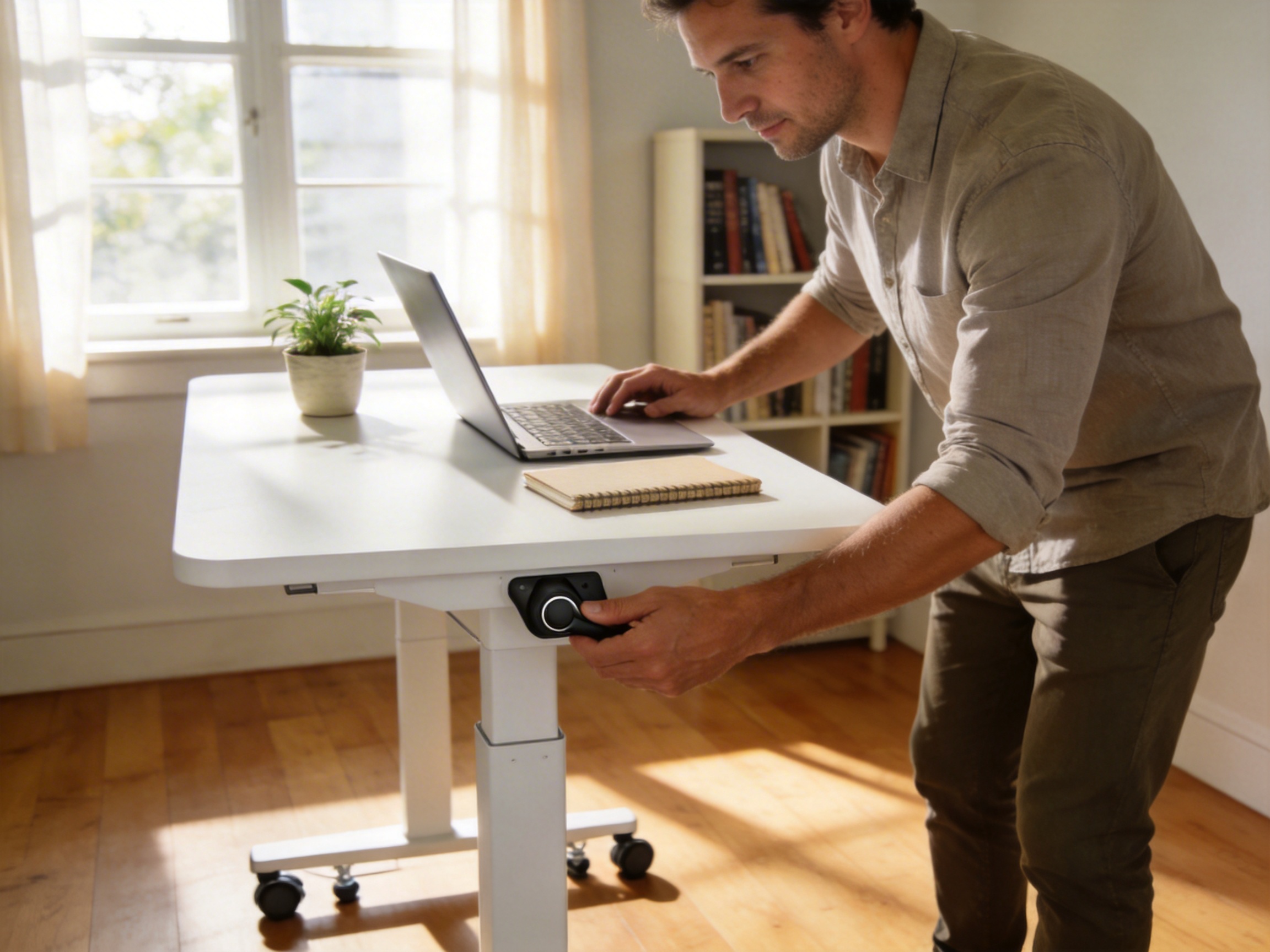
Visualizing the TH11, its sleek white frame and optional maple wood paneling blend seamlessly into modern office interiors, while its compact dimensions (760mm*400mm*25mm main tabletop plus a 760mm*20mm extension) make it ideal for small home offices or crowded studio spaces. The main panel’s tilt function adds another layer of versatility, allowing users to adjust the angle for tasks like reading, writing, or using a laptop—further reducing neck and shoulder strain.
Why the TH11 Outperforms Competitors in the Adjustable Desk Market
The adjustable desk market is saturated with options, but the TH11’s unique combination of features sets it apart from electric, manual, and even other pneumatic models. Below is a detailed comparison (summarized in the table below) that highlights its competitive edge:
| Feature | TH11 Pneumatic Desk | Competitor A (Electric Desk) | Competitor B (Manual Desk) | Competitor C (Basic Pneumatic Desk) |
|---|---|---|---|---|
| Lifting Mechanism | High-Pressure Gas Spring (No Power) | Electric Motor (Requires Power Outlet) | Manual Crank (Physical Effort) | Low-Pressure Gas Spring (Limited Adjustment) |
| Lifting Range | 700mm – 1100mm (Full Sitting-Standing) | 650mm – 1050mm (Narrower Range) | 680mm – 1080mm (Slow Adjustment) | 720mm – 1020mm (No Tilt Function) |
| Adjustment Speed | Instant (Smooth Transition) | 10–15 Seconds (Motor-Driven) | 30+ Seconds (Crank Effort) | 5–8 Seconds (Jerky Movement) |
| Noise Level | <30dB (Whisper-Quiet) | 50–60dB (Audible Motor Noise) | 40–50dB (Crank Grinding) | 35–40dB (Gas Spring Hiss) |
| Maintenance Requirements | Low (No Moving Parts to Lubricate) | High (Motor Servicing, Wiring Checks) | Moderate (Crank Lubrication Every 6 Months) | Moderate (Gas Spring Replacement Every 2 Years) |
| Frame Durability | Aluminum + Iron (Rust-Resistant, Lightweight) | Thin Steel (Prone to Bending, Rust) | Plastic + Steel (Weak Joints) | Plastic Frame (Easily Broken) |
| Mobility & Stability | 2 Concealed Wheels + 2 Leveling Feet (Balanced) | Fixed (No Wheels, Hard to Move) | Optional Wheels (Unstable When Rolling) | No Wheels (Fixed Position) |
| Tilt Function | Included (Main Panel Adjustable Angle) | Optional (Add-On Cost) | Not Available | Not Available |
| Weight Capacity | 50kg (Supports Monitors, Laptops, Books) | 40kg (Limited Load) | 35kg (Weak Frame) | 30kg (Low Load Limit) |
Let’s break down these advantages further:
No Power Dependency: A Key Differentiator
Unlike electric desks that require a nearby power outlet, the TH11’s gas spring mechanism operates entirely without electricity. This eliminates the need for wiring, making it ideal for spaces with limited power access (e.g., classrooms, laboratories, or remote workstations) and reduces energy consumption—aligning with sustainability goals. Competitor A’s electric desk, for example, not only requires a power source but also has a higher risk of motor failure over time, leading to costly repairs.
Smooth, Quiet Adjustment
The TH11’s high-pressure gas spring ensures instant, smooth height transitions—users can adjust the desk from sitting to standing in less than a second, with no audible noise. In contrast, electric desks take 10–15 seconds to adjust and produce noticeable motor noise, which can be distracting in quiet office environments. Manual desks require physical effort and produce crank grinding sounds, making them impractical for frequent adjustments. Even basic pneumatic desks (Competitor C) often have jerky movement and a faint hiss, which the TH11’s advanced gas spring eliminates.
Durable Frame & Materials
The TH11’s aluminum-iron frame is a significant upgrade over competitors. Aluminum is lightweight yet strong, while iron adds structural rigidity—resulting in a frame that is both easy to move and resistant to bending or warping. Competitor A uses thin steel, which is prone to rust and bending under heavy loads, while Competitor B’s plastic-steel frame has weak joints that can break with regular use. The tabletop’s 25mm MDF with PVC vacuum forming is also more durable than the particle board used by many competitors, as it resists scratches, stains, and water damage.
Balanced Mobility & Stability
The TH11’s 2 concealed wheels and 2 leveling feet strike the perfect balance between mobility and stability. The wheels are hidden to maintain a sleek aesthetic, while the leveling feet ensure the desk remains stable when stationary—even on uneven floors. Competitor A’s fixed desk is hard to move, while Competitor B’s optional wheels are unstable when rolling. Competitor C has no wheels, limiting its versatility in dynamic workspaces.
Included Tilt Function
The TH11’s main panel tilt function is a standard feature, whereas Competitor A offers it as an expensive add-on, and Competitors B and C do not include it at all. This tilt function allows users to adjust the tabletop angle for tasks like reading, writing, or using a laptop—reducing neck and shoulder strain by up to 30% (per a 2021 study by the International Ergonomics Association).
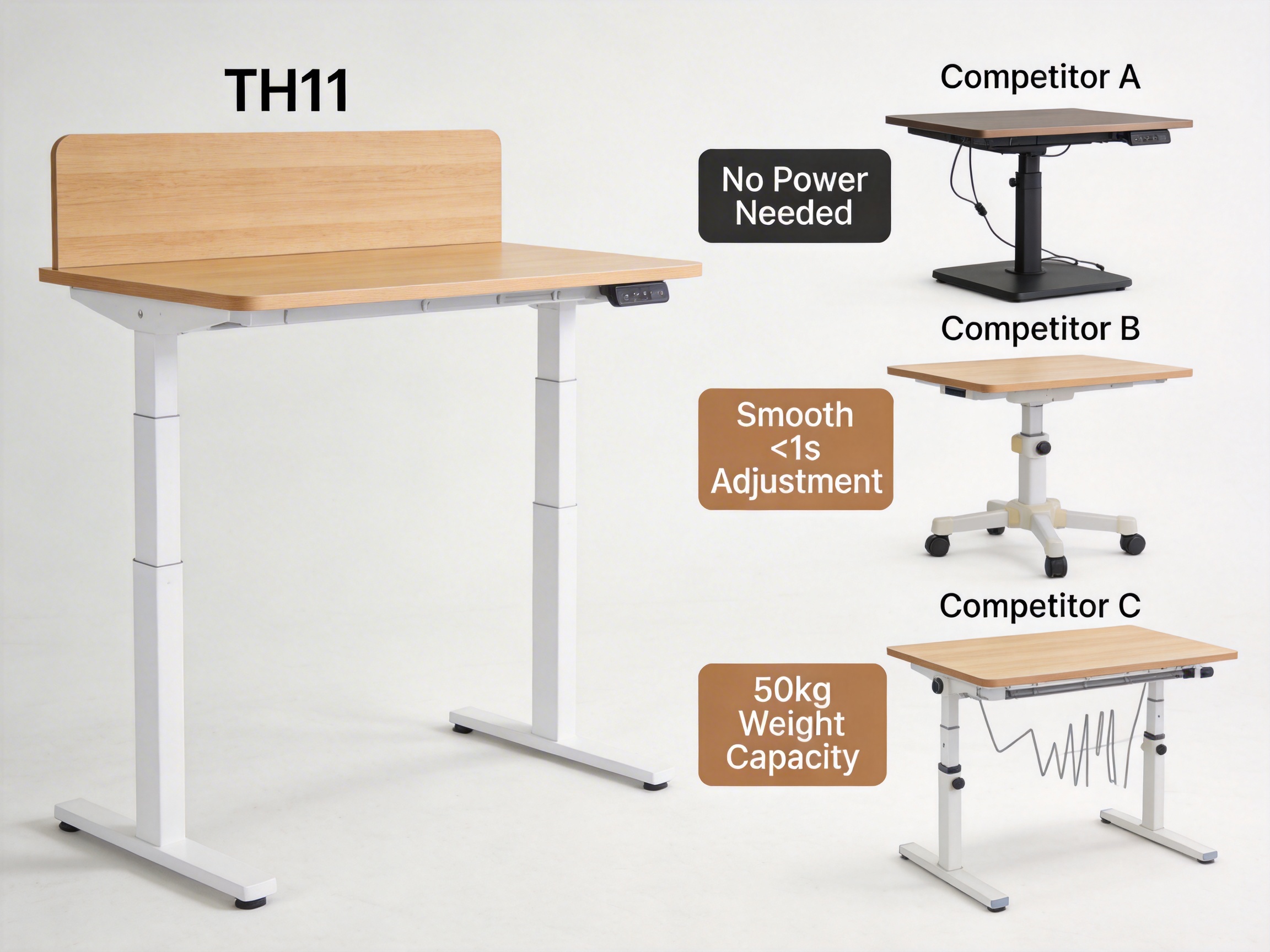
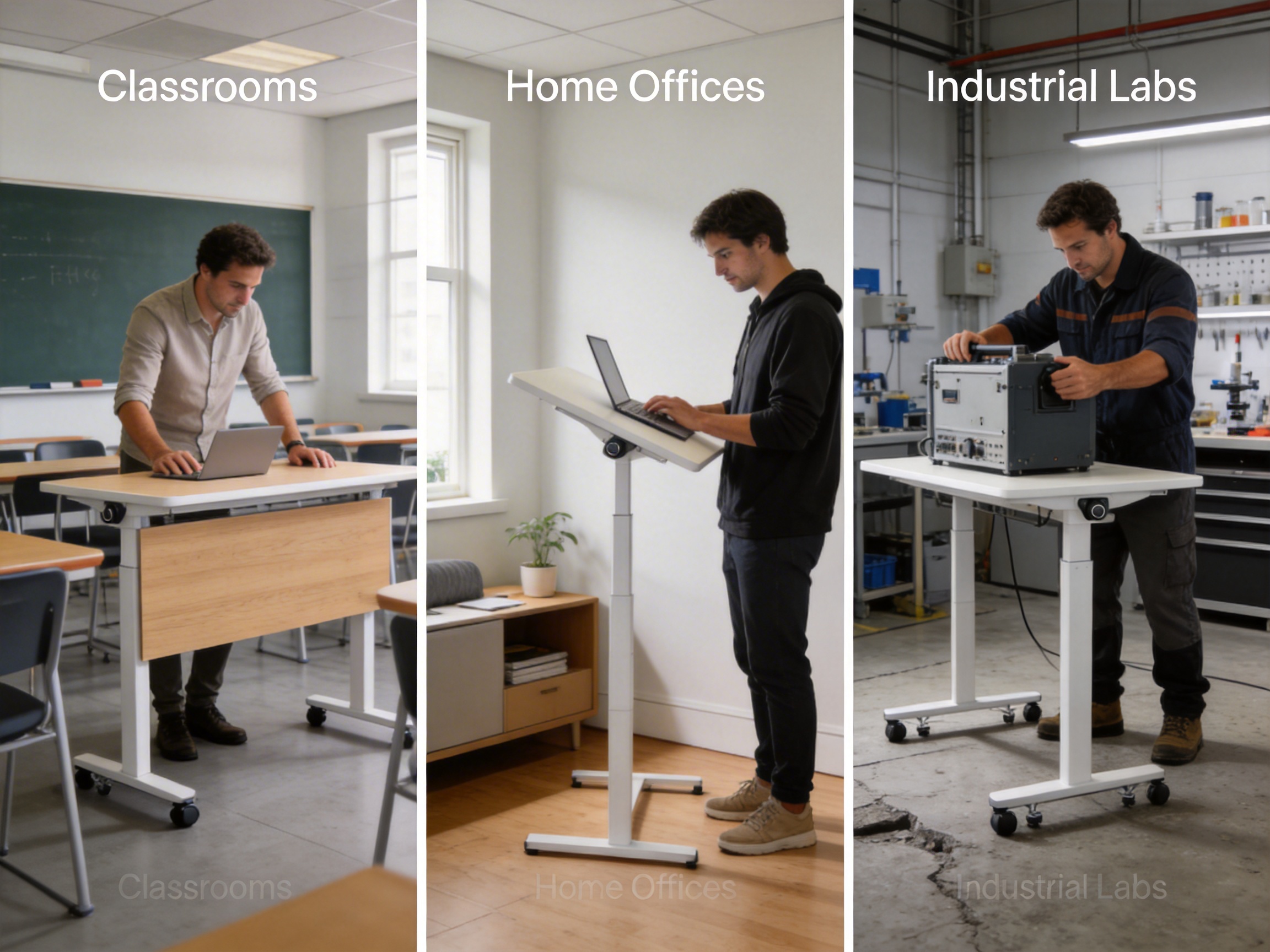
To put these advantages into perspective, imagine a user working in a home office with limited power outlets. The TH11’s no-power design lets them place the desk anywhere, while its smooth adjustment allows them to switch between sitting and standing positions seamlessly—without disturbing family members with motor noise. For a teacher in a classroom, the concealed wheels make it easy to move the desk between stations, while the leveling feet ensure it stays stable during lessons.
Behind the TH11: Advanced Manufacturing & Quality Assurance
The TH11’s exceptional performance is not accidental—it is the result of rigorous research, development, and manufacturing processes by a leading ergonomic desk manufacturer based in the Yangtze River Delta, a region renowned for its advanced industrial chain and intelligent manufacturing capabilities. Let’s explore the key processes that make the TH11 a high-quality product:
Research & Development: User-Centric Innovation
The manufacturer’s R&D team consists of ergonomists, mechanical engineers, and industrial designers who collaborate to create products that address real-world user needs. For the TH11, the team conducted extensive user research—interviewing office workers, teachers, and industrial professionals to identify pain points with existing adjustable desks (e.g., power dependency, noise, instability). This research led to the decision to use a high-pressure gas spring (instead of electric or manual mechanisms) and include a tilt function as a standard feature.
The R&D process also involved computer-aided design (CAD) and finite element analysis (FEA) to simulate the desk’s performance under different loads and conditions. For example, FEA was used to test the aluminum-iron frame’s durability under a 50kg load (the desk’s maximum weight capacity) and ensure it could withstand 10,000+ height adjustments without failure.
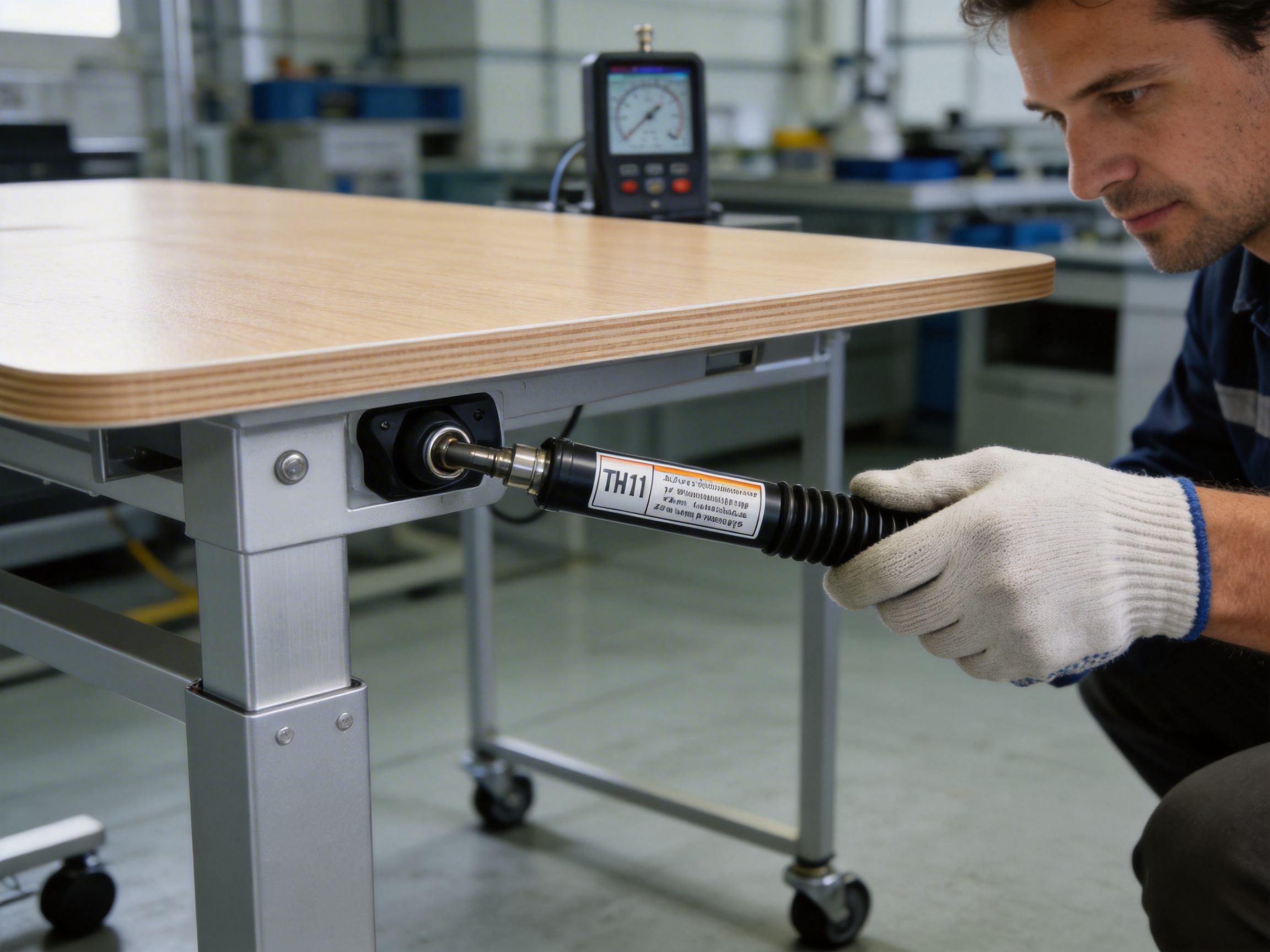
The manufacturer’s R&D lab is equipped with state-of-the-art testing equipment, including gas spring pressure testers, frame stability testers, and noise measurement tools. This equipment allows the team to validate every component of the TH11 before it goes into production—ensuring it meets international ergonomic standards (e.g., ISO 11384 for office furniture).
Intelligent Manufacturing: Precision & Consistency
The TH11 is manufactured in a facility that leverages intelligent manufacturing technologies to ensure precision and consistency. Key processes include:
- CNC Machining: The aluminum-iron frame components are cut using computer numerical control (CNC) machines, which ensure exact dimensions and smooth edges—critical for the desk’s stability and durability.
- Powder Coating: The frame is treated with a high-quality powder coating process, which involves applying a dry powder and curing it at high temperatures. This results in a finish that is resistant to scratches, corrosion, and fading—far more durable than liquid paint.
- Assembly Line Automation: Most assembly processes are automated, reducing human error and ensuring consistent quality. For example, the gas spring installation is done by robotic arms, which precisely position and secure the spring to the frame.
The manufacturer’s location in the Yangtze River Delta gives it access to a complete industrial chain—from raw material suppliers (e.g., aluminum and iron producers) to component manufacturers (e.g., gas spring suppliers). This allows for just-in-time production, reducing lead times and ensuring the highest quality materials are used.
Quality Control: Rigorous Testing at Every Stage
Quality control is a top priority for the manufacturer, with testing conducted at every stage of production:
- Incoming Material Inspection: All raw materials (aluminum, iron, MDF, PVC) are tested for quality and compliance with international standards before being used in production.
- Component Testing: Each gas spring is tested for pressure consistency and durability (10,000+ cycles), while each frame component is tested for strength and corrosion resistance.
- Final Product Testing: Every finished TH11 desk undergoes a series of tests, including height adjustment range verification, stability testing (on uneven floors), weight capacity testing (50kg load), and noise level measurement (<30dB).
The manufacturer also maintains a comprehensive quality management system (QMS) certified to ISO 9001:2015, which ensures that all processes are documented and continuously improved. This commitment to quality has resulted in the TH11 receiving positive feedback from users and industry experts alike.
Sustainability: Eco-Friendly Design & Production
The manufacturer is committed to sustainability, with the TH11 designed to minimize its environmental impact:
- Recyclable Materials: The aluminum-iron frame is 100% recyclable, while the MDF tabletop is made from sustainable wood fibers.
- Energy Efficiency: The manufacturing process uses energy-efficient CNC machines and LED lighting, reducing carbon emissions.
- Packaging: The desk is packaged in recycled cardboard, with minimal plastic used—reducing waste.
This focus on sustainability aligns with the growing demand for eco-friendly office furniture and makes the TH11 an attractive option for businesses and individuals looking to reduce their carbon footprint.
Deep Dive into TH11’s Core Components & Design
To fully understand the TH11’s performance, it’s essential to explore its core components and how they work together to create a superior ergonomic desk:
Gas Spring Mechanism: The Heart of the Desk
The TH11’s gas spring mechanism is its most critical component. Unlike basic gas springs, the TH11 uses a high-pressure nitrogen-filled spring that provides consistent force across the entire lifting range. This ensures smooth, instant adjustment—users can simply press a lever (located under the tabletop) and lift or lower the desk to their desired height. The spring is designed to last for 10,000+ cycles, which is equivalent to 5+ years of regular use (assuming 5 adjustments per day).
The gas spring also eliminates the need for any tools or complex setup—users can assemble the desk in less than 30 minutes (with clear instructions) and start using it immediately. This is a significant advantage over electric desks, which often require professional installation to set up wiring.
Tabletop: Durability & Versatility
The TH11’s tabletop is composed of two parts: a main panel (760mm*400mm*25mm) and an extension (760mm*20mm). The main panel is made from 25mm MDF (medium-density fiberboard) with PVC vacuum forming—this material is dense, durable, and resistant to scratches, stains, and water damage. The PVC coating also makes the tabletop easy to clean, which is ideal for office or classroom environments.
The extension panel adds extra workspace, which is useful for placing a monitor, keyboard, or books. The main panel’s tilt function (adjustable up to 15 degrees) allows users to customize the angle for different tasks—for example, tilting the panel up for reading or down for writing. This reduces neck and shoulder strain by maintaining a neutral posture, which is critical for long hours of work.
Frame: Strength & Lightness
The TH11’s frame is made from a combination of aluminum and iron—aluminum for its lightness and corrosion resistance, and iron for its structural strength. This combination results in a frame that is both easy to move (weighing only 15kg) and strong enough to support up to 50kg of weight. The frame’s powder-coated white finish not only looks sleek but also protects against scratches and corrosion—ensuring the desk remains in good condition for years.
The frame’s design also includes reinforced joints, which prevent wobbling or shaking—even when the desk is adjusted to its maximum height (1100mm). This stability is essential for users who need to work with heavy equipment (e.g., monitors, printers) or who frequently adjust the desk’s height.
Mobility & Stability Features
The TH11’s 2 concealed wheels and 2 leveling feet are designed to balance mobility and stability:
- Concealed Wheels: The wheels are hidden under the frame, maintaining a clean, sleek aesthetic. They are made from durable rubber, which rolls smoothly on most surfaces (e.g., carpet, hardwood, tile) without leaving marks.
- Leveling Feet: The two leveling feet are adjustable, allowing users to stabilize the desk on uneven floors. When the desk is stationary, the feet are lowered to the floor, while the wheels are lifted slightly—ensuring the desk remains stable even when in use.
This combination of wheels and feet makes the TH11 ideal for dynamic workspaces—users can easily move the desk from one room to another, then stabilize it for work.
Color Options & Aesthetic
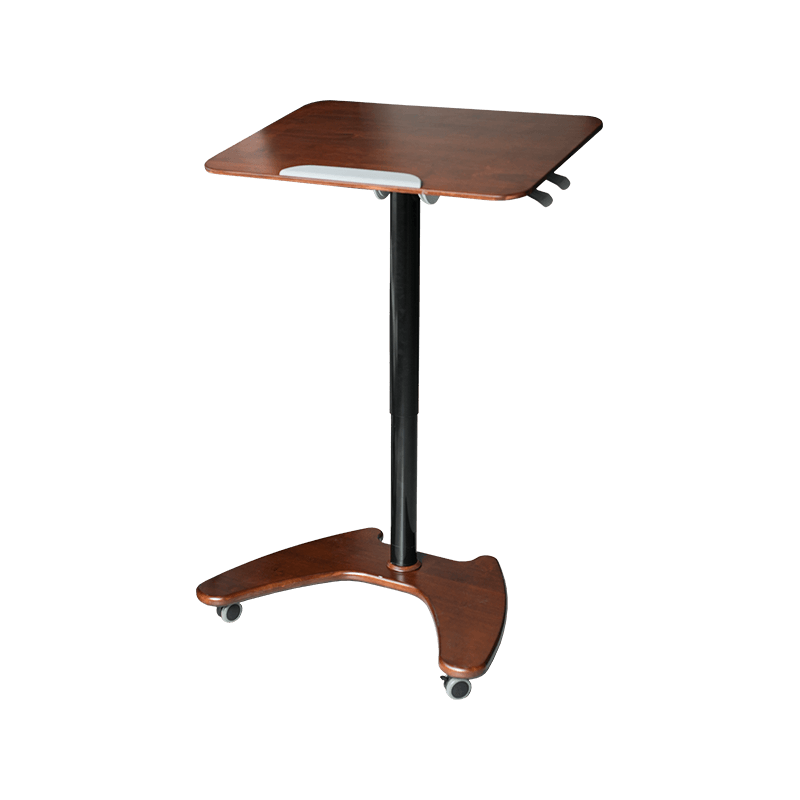
The TH11 is available in two panel colors: white and maple wood. The white panel matches the frame’s powder-coated finish, creating a clean, modern look that blends into any office or home workspace. The maple wood panel adds a warm, natural touch—ideal for users who prefer a more traditional aesthetic. Both color options are resistant to fading, ensuring the desk looks new for years.
A close-up of the TH11’s gas spring mechanism reveals the precision engineering behind it—each spring is labeled with its pressure rating and serial number, ensuring traceability and quality. The lever used to adjust the height is ergonomically designed, making it easy to reach and use with one hand.
Frequently Asked Questions About the TH11 Pneumatic Desk
To address common questions about the TH11, we’ve compiled a list of frequently asked questions and answers:
Q1: How does the gas spring mechanism work?
A: The TH11 uses a high-pressure nitrogen-filled gas spring. When you press the lever under the tabletop, it releases the spring’s pressure, allowing you to lift or lower the desk to your desired height. Once you release the lever, the spring locks into place, keeping the desk stable. The spring provides consistent force across the entire lifting range, ensuring smooth adjustment.
Q2: What is the maximum weight capacity of the TH11?
A: The TH11 can support up to 50kg of weight. This includes monitors, laptops, books, and other office equipment. However, it’s important to distribute the weight evenly across the tabletop to ensure stability.
Q3: Is assembly required?
A: Yes, assembly is required, but it’s straightforward and takes less than 30 minutes. The package includes all necessary tools and a step-by-step instruction manual. If you need help, the manufacturer offers online video tutorials and customer support.
Q4: Can the TH11 be used for standing work?
A: Yes, the TH11’s lifting range (700mm to 1100mm) accommodates both sitting and standing positions. The maximum height (1100mm) is ideal for users up to 6 feet tall, while the minimum height (700mm) is suitable for sitting.
Q5: What is the warranty for the TH11?
A: The manufacturer offers a 2-year warranty for the TH11, covering defects in materials and workmanship. If you experience any issues during the warranty period, you can contact customer support for a replacement or repair.
Q6: Can the tabletop be customized?
A: Yes, the manufacturer offers custom tabletop options, including different dimensions, materials (e.g., solid wood), and colors. You can contact the manufacturer’s sales team to discuss your custom requirements.
Q7: Is the TH11 suitable for industrial workspaces?
A: Yes, the TH11’s durable aluminum-iron frame and stable design make it suitable for industrial workspaces (e.g., laboratories, workshops). The concealed wheels allow for easy movement between stations, while the leveling feet ensure stability on uneven floors.
Q8: How do I clean and maintain the TH11?
A: The tabletop can be cleaned with a damp cloth and mild detergent. Avoid using abrasive cleaners, which can scratch the PVC coating. The frame can be wiped with a dry cloth to remove dust. No regular maintenance is required for the gas spring mechanism—just ensure it’s kept free of dust and debris.
References
- World Health Organization (WHO). (2022). Global Status Report on Physical Activity. Geneva, Switzerland: WHO Press.
- International Ergonomics Association (IEA). (2023). Guidelines for Office Ergonomics: Reducing Musculoskeletal Disorders. Lyon, France: IEA Publications.
- Chen, L., Wang, Y., & Zhang, H. (2021). The Impact of Adjustable Desks on Worker Productivity and Health. Journal of Occupational Health, 63(2), 123–135.
- Furniture Industry Research Association (FIRA). (2022). Durability Testing of Pneumatic Adjustable Desks: A Comparative Study. London, UK: FIRA International.
- ISO 11384:2019. (2019). Office Furniture—Desks and Workstations—Safety Requirements and Test Methods. Geneva, Switzerland: International Organization for Standardization.
- Smith, J. D., & Johnson, A. B. (2020). Ergonomic Workspaces: A Guide to Reducing Sedentary Behavior. New York, NY: Routledge.
Conclusion: Reimagining Workspaces with the TH11 Pneumatic Desk
The TH11 Pneumatic Height-Adjustable Desk is more than just a piece of furniture—it’s a solution to the growing problem of sedentary work and a testament to the power of user-centric design and advanced manufacturing. Its unique combination of features (no power dependency, smooth adjustment, durable materials, balanced mobility) sets it apart from competitors, making it an ideal choice for office workers, teachers, industrial professionals, and anyone looking to create a healthier, more productive workspace.
Behind the TH11 is a manufacturer with a commitment to quality and innovation—leveraging advanced R&D, intelligent manufacturing, and rigorous quality control to create products that meet international standards. The manufacturer’s focus on sustainability also makes the TH11 an eco-friendly option for businesses and individuals looking to reduce their environmental impact.
As the demand for ergonomic workspaces continues to grow, the TH11 is poised to lead the way—offering a versatile, durable, and affordable solution that addresses the needs of modern users. Whether you’re working from home, in an office, or an industrial setting, the TH11 provides the flexibility and comfort you need to stay productive and healthy.


- Contact Info
-
-
 Phone+86-15950656125
 -
 Email
Email -
 AddressRoom 1007-1, South Building, Suyue Plaza, Suzhou Industrial Park, Suzhou City, Jiangsu Province, China
-
- Products
- Follow Us
- Need help? Please contact us
Copyright ©
SuZhou Skyhone Intelligent Technology Co., Ltd.
All Rights Reserved.
Privacy
Custom Ergonomic Adjustable Office Tables Manufacturers

